
Review · BUDAPEST
Hungarian Cooking and optional Local Market Tour
Hungarian cooking is built for a shared table, and this class lets you make that table yourself. You’ll prepare three traditional dishes from scratch, taste local wine and pálinka, and hear stories about Hungarian food and customs from an English-speaking chef. The optional market visit adds a useful local-shopping lesson before you cook.
I like the real hands-on work, especially making nokedli, the small Hungarian dumplings served with paprikash. I also like the relaxed teaching style reported from instructors such as Vesna, Bernadette, Brigitte, Betty, and Adrienne. The main caution is that the market option and return transportation need careful confirmation, since the meeting and ending details can vary.
Key points to know
- Three dishes in about four hours: The menu can include goulash soup, chicken or mushroom paprikash with nokedli, and apple strudel.
- The market tour is worth adding: You’ll learn about paprika, produce, meats, cheese, pastries, and which products are worth buying.
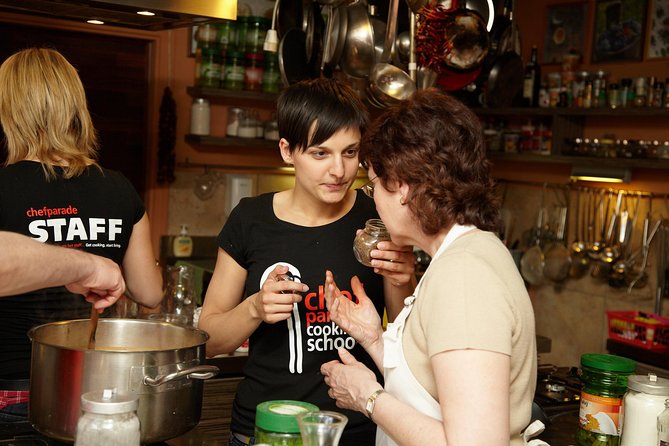
- You do the cooking: This is not a demonstration where you simply watch. You chop, stir, shape, bake, and eat.
- Small-group format: The class is capped at 15 people, and some sessions may be much smaller.
- Food and culture come together: Wine, local snacks, pálinka, and stories about Hungarian life are part of the experience.
- Check the exact logistics: The class may end at Páva Street in Pest or Bécsi Street in Buda, and the return to the market may not be included in the basic package.
Why this class works better than another restaurant meal
Budapest has no shortage of places serving goulash and chicken paprikash. A cooking class gives you something a restaurant cannot: a clear sense of how these dishes come together, and why Hungarian cooks treat paprika, onions, sour cream, pastry, and slow cooking with such care.
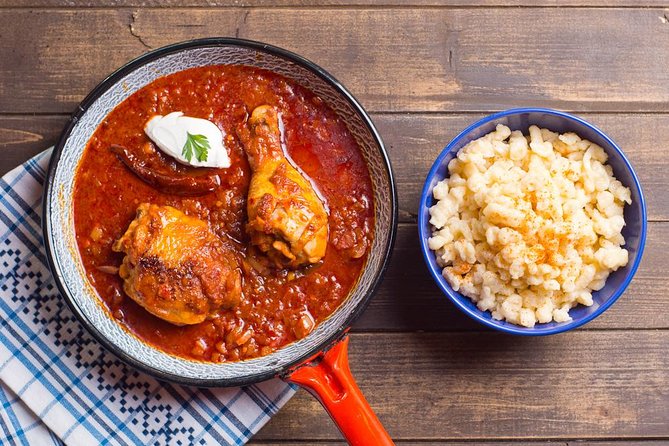
The class is built around a three-course menu prepared from the beginning. You may make goulash soup with beef and vegetables, chicken paprikash with fresh nokedli, and apple strudel. A vegetarian version can be requested, with mushroom paprikash offered as an alternative main course.
That menu gives you a useful cross-section of Hungarian cooking. The soup shows how paprika and vegetables build a hearty base. The paprikash introduces the familiar combination of meat, sauce, and sour cream. Nokedli gives you a practical skill you can use at home. Strudel brings in the pastry side of the cuisine, with thin layers and a sweet apple and cinnamon filling.
I especially like the fact that the food is not treated as a museum piece. Instructors explain techniques and alternatives, rather than asking you to copy a recipe without understanding it. One session included homemade vegetable stock, hand-prepared vegetables, fresh spaetzle-style nokedli, and apple strudel. That kind of work takes more effort than opening a packet, but it also gives you a better idea of what the dish should taste like.
More Market Tour Cooking Classes in Budapest:
- Budapest Cooking Class & Market Tour with Local Guide & Wines
★ 5.0 · 553 reviews - Budapest: Small-Group Cooking Class & Market Tour with Local
★ 5.0 · 138 reviews - Easy Cooking Class Budapest – with Market Walk (local wine & pálinka included)
★ 5.0 · 62 reviews
Starting at Central Market Hall
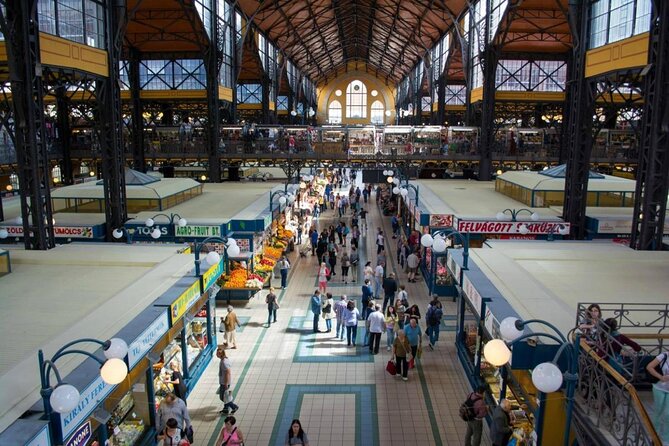
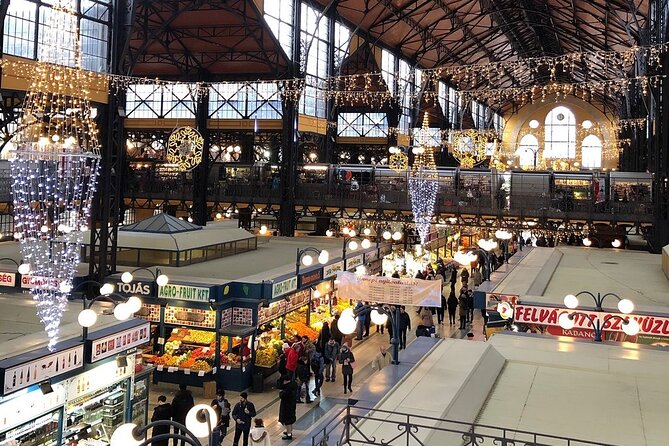
The optional market tour begins at Budapest’s Central Market Hall, at 1093 Budapest. This is a useful place to start because it puts Hungarian ingredients in front of you before you handle them in the kitchen.
The market portion is not just a quick walk past food stalls. A guide can point out local produce, meats, cheese, pastries, paprika, and other cooking staples. You may also taste some distinctly Hungarian flavors. The most useful part is learning that similar products can vary in quality, and that the first stall you see is not always the best place to buy.
The market is also a lesson in how food fits into everyday life. The tour focuses on the market atmosphere as much as on shopping. You get a look at how people browse, compare, taste, and buy ingredients for the home kitchen.
Allow roughly an hour for this part when it operates as planned. That is enough time to get oriented and sample foods, but not necessarily enough for a leisurely shopping trip. If you want paprika, condiments, or other souvenirs, tell the guide early. One account describes the market tour as rushed, with little time to purchase anything, so you should not treat the visit as a dedicated shopping expedition.
There is also an important practical wrinkle. The published meeting information points to Central Market Hall, while the cooking school may be on Páva Street in Pest or Bécsi Street in Buda. Some groups have taken taxis from the market to the school. Confirm the precise meeting instructions, class location, and return arrangements before the day begins.
Páva Street and the move to the cooking school
Páva Street appears in the itinerary and is also listed as one possible cooking-school location. The school setup has been described as professional and well equipped, with enough room for hands-on preparation and a shared meal.
The move from the market to the school can affect the feel of the morning. When transportation is organized clearly, it is a simple transition from buying and tasting ingredients to cooking them. When it is not clear, it can create needless worry, particularly if you assume the tour ends back at the market.
The basic experience is listed as ending at the cooking school. Some information also says the activity ends at the meeting point, which is not always the same thing. A premium package may include transportation back, a cookbook, and an apron, while the basic booking may not. Ask what your price includes instead of assuming that the return taxi is covered.
This is the one part of the experience I would treat with extra care. The cooking itself receives much stronger praise than the transport arrangements. If you are booked into the Buda location, plan a little extra time for getting back to central Budapest after class.
What you actually cook
The exact menu can change, but the standard pattern is clear. You prepare a starter, a main course, and a dessert, then sit down to eat what the group has made.
More Shopping Trips in Budapest:
- Budapest Market Tour & Home Cooking Class with local Chef & Guide
★ 5.0 · 23 reviews - Budapest: Cooking School – Hungarian Menu & Local Market
★ 5.0 · 7 reviews - Hanoi Cooking Class: Culture, Local Market & Meaning CSR Impact
★ 5.0 · 5,147 reviews - 5 Traditional Dishes Hanoi Cooking Class with Market Trip
★ 5.0 · 4,890 reviews
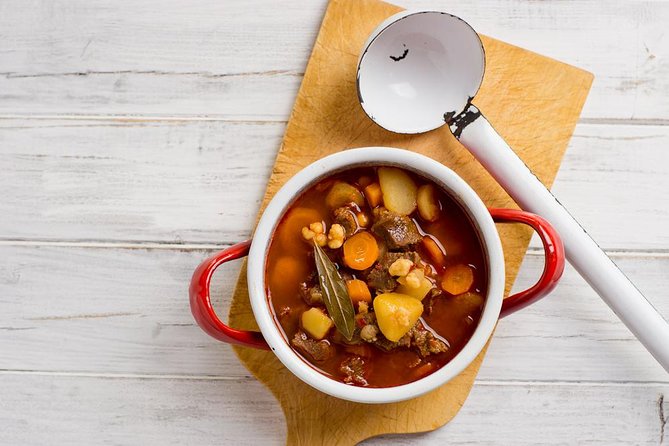
Goulash soup
Goulash soup is a hearty beef and vegetable soup rather than the thick stew many people expect outside Hungary. It gives you a chance to see how the base develops through onions, paprika, beef, and vegetables.
The class may instead include a creamy potato soup. If you have a strong preference, ask about the day’s menu when booking or shortly afterward. The ingredients and menu can vary by session.
Chicken or mushroom paprikash
Chicken paprikash is the central lesson for many people. You cook the chicken in a paprika-based sauce and finish it with a creamy element. Mushroom paprikash provides a vegetarian alternative with the same general character.
One useful lesson is patience. A detailed session involved turning the chicken and stirring the sauce carefully for about an hour to keep the meat and sauce from overcooking. That is a good reminder that restaurant versions often hide the slow, attentive work behind a seemingly simple plate.
A small warning: one class used boneless, skinless chicken rather than the cut shown in the recipe. That changed the dish and disappointed one participant. It is a reminder that the exact ingredients may not always match the printed recipe perfectly.
Nokedli
Nokedli is the Hungarian answer to a soft, fresh dumpling or spaetzle. Making it yourself is one of the most worthwhile parts of the class because it is a technique, not merely a finished ingredient.
The dumplings are served with the paprikash, where they soak up the creamy sauce. You get to see how fresh dumplings differ from packaged pasta, and you receive recipes to take home.
Apple strudel
Apple strudel closes the meal with thin pastry and a sweet apple and cinnamon filling. It is a practical pastry lesson, but it is also a good group activity because the preparation gives everyone a role.
The portions are described as generous, and one person even had extra strudel to take away. That may not happen every time, but you should expect a full meal rather than a few token bites.
The teaching style and group size
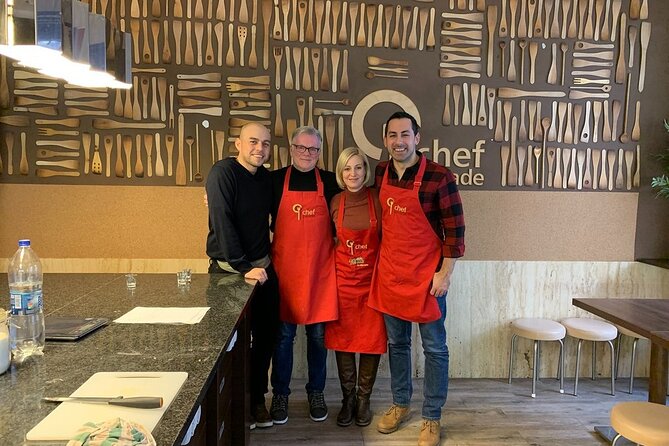
The class is offered in English and has a maximum of 15 people. That is small enough for personal instruction, although the experience will depend on the number booked that day.
Some sessions have been nearly private, with only one or two people attending. A small class means more direct help and more time to ask questions. A fuller class creates more conversation and a shared meal, but you may spend more time waiting while another person handles a task.
The strongest teaching comes from instructors who explain the reasons behind each step. Betty was praised for making techniques easy to understand. Vesna was described as patient, approachable, and skilled at explaining both the market and the kitchen. Bernadette and Brigitte also received repeated praise for clear instruction and a friendly manner.
You should expect a social class rather than a private lesson. The group may divide up the chopping, stirring, pastry work, and other jobs. Everyone then sits down together and shares the dishes. If you want to perform every step of every recipe yourself, this may feel less thorough than a private cooking session.
Still, the structure works well for couples, families with adult children, and friends. It is also suitable for people who do not cook often. The recipes are broken into manageable tasks, and you do not need to arrive as an expert.
Wine, pálinka, and the Hungarian table
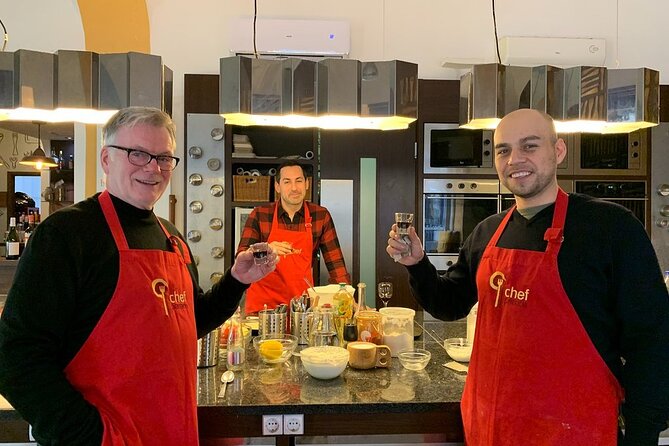
The cooking is accompanied by local wines, snacks, and drinks. Pálinka tasting is part of the experience, and Unicum may also be served in some circumstances, though it should not be assumed as a standard course feature.
Pálinka is a strong Hungarian fruit brandy, so take the tasting seriously even if you enjoy spirits. It is offered as a cultural introduction, not as a drinking contest. Wine with the meal helps explain how Hungarians might pair food and drink at the table.
The food talk is just as useful as the recipes. Instructors connect dishes to Hungarian traditions, daily life, and local ingredients. That gives the class a stronger sense of place than a generic international cooking lesson.
If you have allergies, religious dietary restrictions, or other requirements, state them when booking. A vegetarian menu is available on request, but options may be limited for some restrictions. Do not wait until you arrive and expect the menu to be rebuilt around you.
Is $126.98 a fair price?
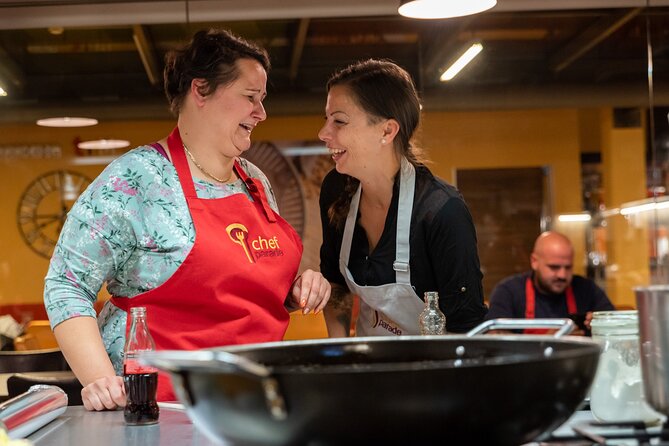
At $126.98 per person, this is not a cheap meal. You are paying for about four hours of instruction, ingredients, drinks, use of the cooking school, and the chance to make a full meal with recipes to take home.
The value is strongest when you add the market visit and make use of the teaching. If you simply want lunch, Budapest offers less expensive choices. If you want a practical memory, a cultural lesson, and recipes you can repeat at home, the price is easier to justify.
The small-group limit helps. So does the amount of food involved. You are not preparing one snack and watching someone else cook the rest. You may make soup, a main dish, fresh dumplings, and strudel, then eat the results.
The value drops if the market portion is not delivered or if return transportation is unclear. The basic package may not include the cookbook, apron, or taxi back to the market. Confirm those points before paying, especially if the description you see suggests that the activity ends where it began.
Who should book it?
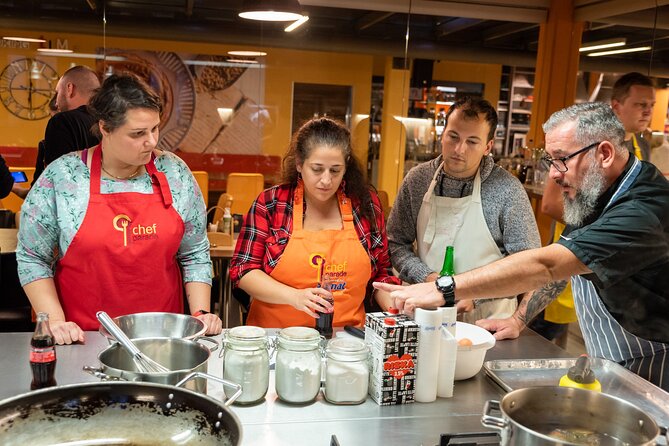
I would choose this for anyone who plans meals around food, wants to understand Hungarian cuisine, or prefers an active morning to another guided walk. It suits couples, friends, families, and solo participants who are comfortable cooking with a small group.
It is also a good choice near the end of a Budapest visit. By then, you will have tasted restaurant versions of familiar dishes, and the class can help you understand what goes into them. You leave with recipes and a better chance of recreating the meal at home.
I would think twice if you dislike group activities, have strict dietary needs, or want a relaxed market-shopping morning with plenty of time to browse. The market tour can be hurried, and the menu is not fully fixed. I would also avoid booking without checking the exact cooking-school address and return plan.
Free cancellation is available up to 24 hours before the start time. Changes or cancellations inside that window are not accepted for a refund.
My verdict on the Hungarian cooking class
This is a strong Budapest food experience because it asks you to do more than taste. You learn how paprika, dumplings, sauce, pastry, and patience fit together, then sit down to eat the results with wine and local stories.
Book it with the market tour if you want ingredient advice and a clearer sense of Hungarian food culture. Before you pay, confirm the menu, cooking-school address, and transportation back. If those details are clear, the class offers better value than another restaurant meal and gives you something useful to carry home.
FAQ
How long does the Hungarian cooking class last?
The activity lasts approximately four hours, including the cooking and, when selected, the market visit.
Where does the experience begin?
The listed meeting point is Central Market Hall in Budapest, at 1093 Hungary. Páva Street is also included in the itinerary, and the cooking class may take place at Páva Street 13 in Pest or Bécsi Street 27 in Buda.
What dishes might I prepare?
The sample menu includes goulash soup, chicken paprikash with nokedli, and apple strudel. Mushroom paprikash is available as an alternative main course, and some sessions may offer potato soup or other menu variations.
Is a vegetarian menu available?
Yes. A vegetarian menu is available upon request. You should provide dietary requirements when booking, since choices may be limited for allergies and religious dietary restrictions.
Is the market tour included?
The market tour is an optional part of the experience. It takes you through Central Market Hall, where you may learn about local produce, paprika, meats, cheeses, pastries, and other Hungarian foods.
What is the cancellation policy?
You can cancel up to 24 hours before the experience for a full refund. Cancellations or changes made less than 24 hours before the start time are not accepted.
Just added around Budapest
- Walk and Cook Budapest★ 5.0 · 6 reviews
- Hungarian Home Cooking Class with Chef Marti★ 5.0 · 30 reviews
- Budapest Market Tour & Home Cooking Class with local Chef & Guide★ 5.0 · 23 reviews
- Hungarian Cooking Class with Nelli – ONLINE over Zoom★ 5.0 · 16 reviews
- Authentic Jewish Cooking Class by a Professional chef★ 5.0 · 8 reviews
- Easy Cooking Class Budapest – with Market Walk (local wine & pálinka included)★ 5.0 · 62 reviews
- Budapest: Cooking School – Hungarian Menu & Local Market★ 5.0 · 7 reviews
- Hungarian Premium Cooking Class with 4-course meal★ 5.0 · 15 reviews
Cooking Classes with a Market Tour, compared.
Hanoi Cooking Class: Culture, Local Market & Meaning CSR Impact
Read our review →
5 Traditional Dishes Hanoi Cooking Class with Market Trip
Read our review →
Cooking Class and Lunch at a Tuscan Farmhouse with Local Market Tour from Florence
Read our review →
Chiang Mai: Cooking Class, Market & Thai Herbs Garden Tour
Read our review →
Chiang Mai: Authentic Cooking Class with Market & Farm Visit
Read our review →
Barcelona: Paella Cooking Experience & Boqueria Market Tour
Read our review →
Cooking Class Hoi An:Local Market, Basket Boat, Fishing & Cooking
Read our review →
Hoi An Cooking Class(Market,BasketBoat Crabfishing&Cooking Class)
Read our review →Browse the lists this tour appears in