
Review · MARRAKECH
Local Culinary Experience Cooking Henna and Traditional Dress
The most appealing part of this Marrakech experience is the link between the market and the meal. You may begin near Café de France, shop for ingredients in the souks with a host, then carry those ingredients to a terrace where saffron, cumin, and cinnamon set the tone for the evening. The market connection makes the cooking feel tied to daily Moroccan life, not just a recipe lesson.
I like the small group limit of eight, which should leave room for questions and hands-on work. I also like the personal touch supplied by Aimaad, Issam, Karima, and Issam’s aunt, whose hosting and teaching receive especially strong praise. The main consideration is that the four-hour class may include a fair amount of cooking and eating, so it may feel long if you want only a quick demonstration. The title mentions henna and traditional dress, but the available details focus mainly on cooking and do not explain when or how those activities happen.
Key points
- Market-to-table format: Shop for ingredients in the Marrakech souks before cooking.
- Classic Moroccan dishes: Prepare tagine, couscous, pastries, and other traditional foods.
- Terrace setting: Cook and eat among greenery, colorful lanterns, and fragrant spices.
- Small group size: The experience accepts a maximum of eight people.
- Personal hosts: Aimaad, Karima, Issam, and Issam’s aunt are named in the available details.
- Flexible booking: Free cancellation is available up to 24 hours before the start time.
Starting near Café de France in Marrakech
The experience begins at Café de France, 72 Rue des Banques, in central Marrakech. This is a practical meeting point near public transportation, and the activity returns there at the end.
The location matters because Marrakech cooking classes can begin in very different settings. Here, you are not simply dropped into a private kitchen with no sense of place. You start near one of the city’s familiar central meeting areas, then may move toward the souks to shop for ingredients.
The supplied details do not state the exact walking route, transport method, or time spent at the meeting point. Plan to arrive ready to follow local directions and keep your phone available for the mobile ticket. You should also confirm the meeting instructions before setting out, especially if your accommodation is deep inside the medina, where short distances can take longer than expected.
A few more cooking classes around Marrakech worth a look
- Marrakech: Moroccan Cooking Class with Pickup
★ 4.6 · 1,862 reviews - Marrakech: Traditional Moroccan Cooking Class & Market Visit
★ 4.8 · 1,861 reviews - Marrakesh: Moroccan Dishes Cooking Class with a Local Chef
★ 5.0 · 1,615 reviews
Shopping for ingredients in the souks
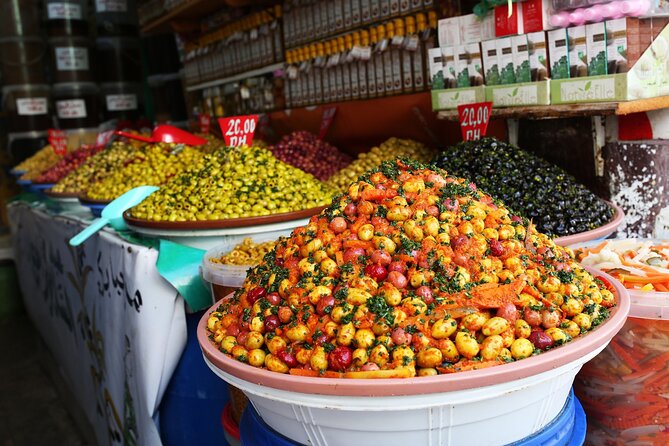
The market portion is one of the most useful features of the experience. Cooking with Moroccan ingredients is one thing. Seeing those ingredients bought in their everyday setting gives the food more meaning.
The available information describes guided shopping in the souks. You can expect this part to connect the dishes on your table with the smells, colors, and shopping habits of Marrakech. It also gives you a chance to ask about ingredients before you try to prepare them.
I especially like this format for first-time visitors who want more than a restaurant meal. A tagine ordered in a restaurant arrives finished. Here, you can learn what goes into it and how the ingredients are selected before the cooking begins.
The exact shopping list is not provided, so you should not assume you will visit every type of market stall or choose every ingredient yourself. The class description does mention saffron, cumin, and cinnamon, so those spices are likely to shape the cooking session. The food list includes tagine, couscous, and pastries, though the exact recipes can vary.
Cooking tagine, couscous, and pastries
The cooking lesson is designed around traditional Moroccan recipes and practical techniques. You are not only watching a chef work. You are expected to take part in preparing the food, with guidance on combining spices and using familiar Moroccan cooking methods.
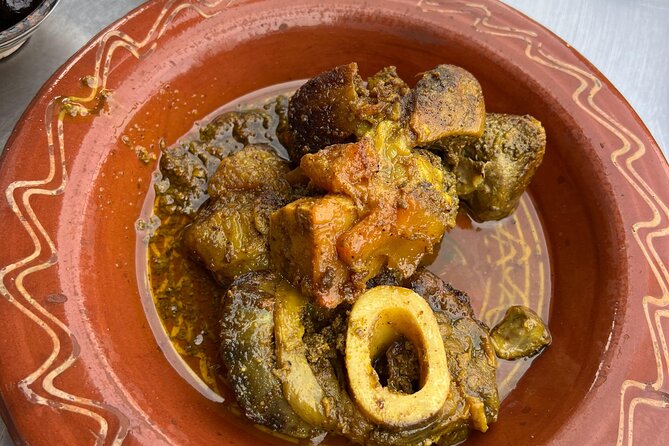
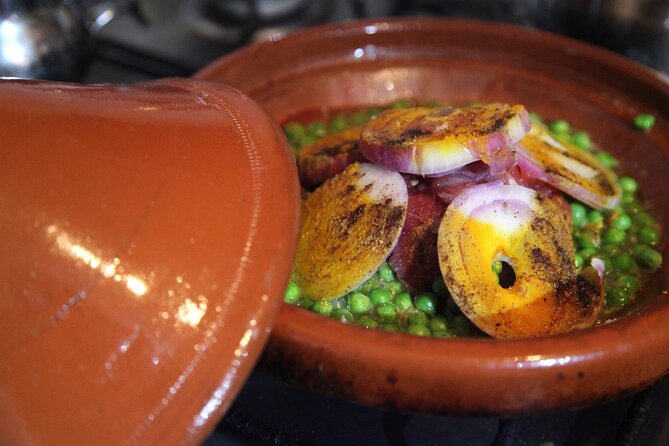
Tagine is the obvious centerpiece. The dish is named for the earthenware pot in which it is traditionally cooked, but the key lesson is the balance of seasoning and slow cooking. The class description points to saffron, cumin, and cinnamon, giving you a sense of the spice profile without reducing Moroccan food to heat. Moroccan cooking is often about aroma, sweetness, savory depth, and careful seasoning.
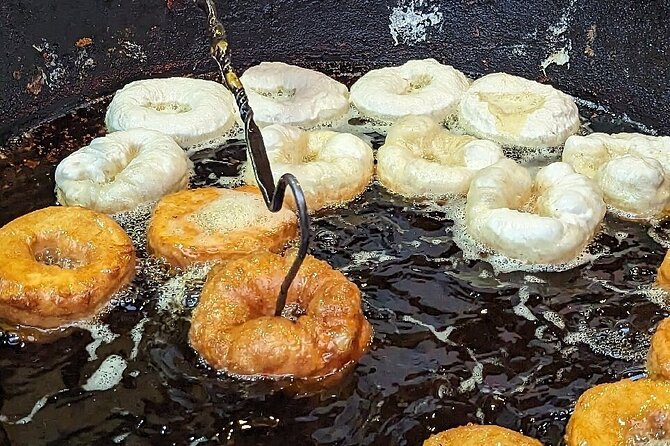
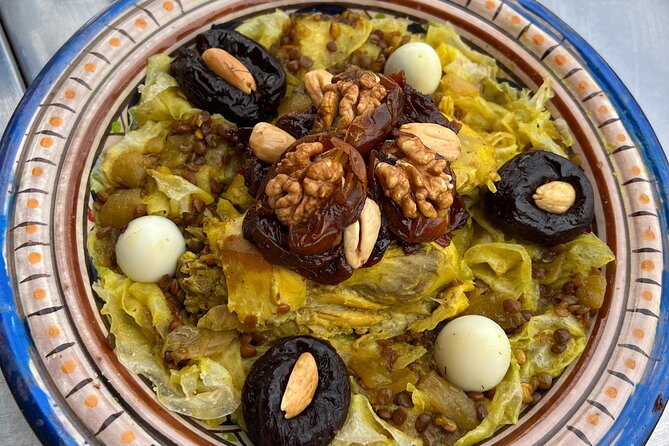
Couscous brings a different lesson. It is a staple dish with its own preparation methods, and it helps show how Moroccan meals are built around shared plates rather than a single main course. Pastries add a third element, bringing a sweet finish to the meal and more variety to the work.
The available details do not state how many dishes you make, how much hands-on time each person receives, or whether dietary needs can be accommodated. If you have allergies or follow a special diet, ask the provider before booking. Do not assume substitutions are available.
The strongest teaching names connected with the experience are Aimaad and Karima. Aimaad is described as a warm host with strong English, while Karima is identified as a talented chef who teaches how restaurant dishes are made. Issam and his aunt are also named as hosts and teachers. Since the exact staff schedule is not guaranteed in the supplied information, treat these names as helpful context rather than a promise that every person will lead your particular session.
A lantern-lit terrace for the evening meal
After the food is prepared, you gather on the terrace to eat what you have made. The setting includes colorful lanterns, greenery, and the smell of cooking spices. This gives the class a slower, social finish instead of ending as soon as the final dish leaves the stove.
I like that the meal is part of the lesson rather than an afterthought. You can taste the result while the techniques are still fresh in your mind. It also creates space for conversation with the hosts and the other people in the group.
The terrace is described as restful, which may be welcome after time in the souks. Marrakech can be energetic and noisy, so moving into a leafy terrace with soft lantern light changes the pace of the evening. The setting is not just decoration. It helps turn a cooking class into a shared cultural activity.
Still, keep your expectations grounded. The available information does not promise a rooftop view, a specific neighborhood, live music, or a particular meal schedule. The appeal here is the terrace atmosphere and shared food, not a sightseeing panorama.
Same place, a different menu:
- Moroccan Cooking Class & Marrakech Market Visit with Chef Khmisa
★ 5.0 · 1,504 reviews - Half-Day Cooking Class with Local Chef Laila in Marrakech
★ 5.0 · 952 reviews - Marrakech: Moroccan Cooking Class with a Local Family
★ 4.9 · 668 reviews - Marrakech: Moroccan Cuisine Cooking Class in Local Home
★ 4.8 · 508 reviews
What the four-hour schedule means for you
The class lasts about four hours. That is long enough to cover several dishes, shopping, cooking, and a sit-down meal, but the exact timing of each stage is not supplied.
You should treat this as an evening activity rather than a quick stop between major sights. If you are planning to visit Jemaa el-Fnaa, museums, or other parts of Marrakech on the same day, leave enough space around the class. The experience ends back at the meeting point, which makes it easier to continue your evening in central Marrakech, but the finish time may depend on the pace of the cooking and meal.
A four-hour class can be excellent value if you want instruction, food, and conversation in one booking. It may be less suitable if you dislike group meals or prefer to move quickly from one sight to another.
The maximum group size is eight. That is small enough to feel more personal than a large demonstration, though it does not guarantee one-to-one instruction. With several people preparing food, some tasks may be shared or rotated.
Assessing the $58.72 price
At $58.72 per person, the value depends on what you want from a Marrakech food experience. You are paying for roughly four hours, instruction, the cooking activity, the meal you prepare, the terrace setting, and potentially guided market shopping.
That is a fair proposition for someone who wants an active cultural experience rather than a simple restaurant dinner. The market visit adds useful context, and the small group cap makes the price easier to justify. You are also getting a meal and a class in the same outing.
The value is weaker if the food portion is your only priority. A restaurant meal may cost less, depending on where you eat, and it requires no preparation. This class earns its price through participation, teaching, and the chance to understand how Moroccan dishes come together.
The title also includes henna and traditional dress, but the supplied information does not explain those parts. Do not book based on a detailed henna ceremony or costume session unless the provider confirms that these are included, how long they last, and whether any extra cost applies.
The human side of the class
The teaching style appears to be a major strength. Aimaad is described as cheerful, talkative, and comfortable speaking English. His role seems to include more than giving instructions. He helps connect the food with conversation about Marrakech and everyday life.
Karima is associated with the cooking instruction, particularly with explaining how dishes commonly enjoyed in restaurants are made. That distinction matters. A class is more useful when the chef explains the reason behind a method, not only the order of steps.
Issam and his aunt are also named as excellent hosts and teachers. Their role includes guided souk shopping and cooking instruction. Since the experience is run by Be in Maghreb, you can expect the provider to organize the activity, but the exact host combination may vary.
I would choose this class for its personal scale and social tone. It is not presented as a formal culinary school course with technical certification. It is a welcoming introduction to Moroccan food, taught through shared work, stories, and a meal.
Who will enjoy this Marrakech cooking class?
This experience suits you best if you:
- Want to learn by doing instead of only watching
- Enjoy visiting food markets
- Like meeting local hosts and eating with a small group
- Want to prepare several Moroccan dishes in one session
- Have about four hours available for a relaxed evening
- Prefer a cultural activity that combines food, conversation, and setting
It may not suit you as well if you want a tightly timed professional lesson, a short demonstration, or a guaranteed henna and traditional dress program. The available details do not provide enough information to judge the technical level of the recipes or the precise role of those cultural elements.
Families, couples, solo visitors, and groups of friends could all find a good fit here, provided they are comfortable sharing kitchen work. The limit of eight helps keep the activity from feeling like a large class.
Practical points before booking
You receive confirmation at the time of booking, and the activity uses a mobile ticket. The meeting point is Café de France at 72 Rue des Banques, Marrakech 40000, Morocco. The activity ends back at that same meeting point.
Public transportation is nearby, which is useful if you are staying outside the central medina. If you are already in the old city, allow extra time to reach the café and identify the correct meeting spot.
Free cancellation is available when you cancel at least 24 hours before the local start time. Cancellations or changes made less than 24 hours before the start are not accepted for a refund. The activity also requires a minimum number of people. If that minimum is not reached and the provider cancels, you should receive the choice of another date or experience, or a full refund.
Because the class includes food preparation, tell the provider about allergies or dietary restrictions before the day of the activity. The supplied information does not confirm whether special menus are possible.
Should you book this experience?
Book it if you want a friendly, small-group introduction to Moroccan food that begins in the souks and ends with a shared terrace meal. The combination of market shopping, hands-on cooking, and hosts such as Aimaad and Karima gives the evening more substance than a standard restaurant visit.
Think twice if you are mainly interested in henna, traditional dress, or a formal cooking qualification. Those elements are mentioned in the title, but the detailed information centers on tagine, couscous, pastries, market ingredients, and terrace dining. Confirm those points before paying.
For most food-loving visitors, the $58.72 price is reasonable because it covers a full four-hour experience rather than only a meal. I would choose it for the human contact, the small group, and the chance to understand Moroccan dishes from market to table.
FAQ
Where does the cooking experience begin?
It begins at Café de France, 72 Rue des Banques, Marrakech 40000, Morocco.
Where does the activity end?
The activity ends back at the meeting point, Café de France.
How long does the experience last?
The experience lasts approximately four hours.
How much does it cost?
The listed price is $58.72 per person.
What food will I learn to prepare?
The class includes traditional Moroccan dishes such as tagine, couscous, and pastries. The detailed information does not specify the exact recipes.
Will I visit a market?
The experience includes guided shopping in the souks for ingredients used in the cooking class.
How many people can join?
The maximum group size is eight people.
Is cancellation free?
Yes. You can cancel for a full refund if you cancel at least 24 hours before the local start time.
Are henna and traditional dress included?
The experience title mentions henna and traditional dress, but the detailed information does not explain how or when those activities take place. Confirm their inclusion with Be in Maghreb before booking if they are important to you.
Just added around Marrakech
- Vegetarian and vegan cooking class★ 4.5 · 35 reviews
- Moroccan Cooking Class with Market Visit and Meal★ 4.5 · 18 reviews
- Moroccan cooking class with maket in the Medina of Marrakech★ 5.0 · 173 reviews
- Morocco’s Top Cooking Classes For Authentic berber Cuisine in the Atlas Mountain★ 3.5 · 8 reviews
- Cooking class with transfer★ 5.0 · 22 reviews
- Shared 4 Hours Cooking Class in Marrakesh★ 5.0 · 49 reviews
- Cooking course with genuine Berber Family at Atlas Mt★ 5.0 · 10 reviews
- Moroccan Cooking Class with chef Mama Nouzha★ 5.0 · 4 reviews
Cooking Classes, compared.
Half-Day Thai Cooking Class at Organic Farm in Chiang Mai
Read our review →
Florence: Pasta Cooking Class with Unlimited Wine
Read our review →
3 in 1 Cooking Class near Navona: Fettuccine, Ravioli & Tiramisu
Read our review →
Hanoi Cooking Class: Culture, Local Market & Meaning CSR Impact
Read our review →
5 Traditional Dishes Hanoi Cooking Class with Market Trip
Read our review →
Cooking Class and Lunch at a Tuscan Farmhouse with Local Market Tour from Florence
Read our review →
Chiang Mai: Cooking Class, Market & Thai Herbs Garden Tour
Read our review →Browse the lists this tour appears in