
Review · MOROCCO
Marrakech cooking class
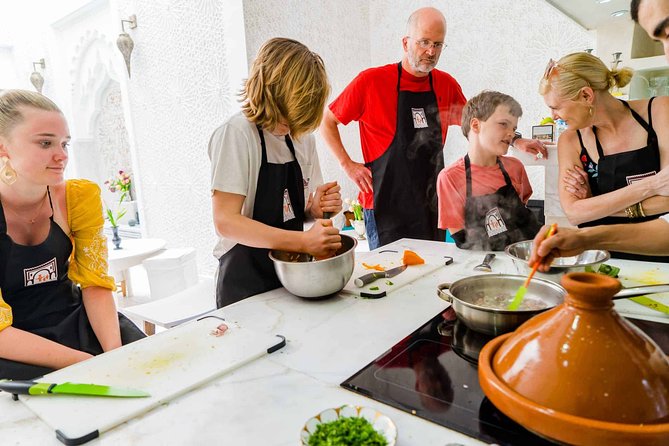
Moroccan cooking becomes much more personal when you shop for the ingredients with your hosts, then carry them home to cook in a family kitchen. This four-hour class brings you to Place de l’Horloge, into the local food market, and finally to a table set with the meal you helped prepare. Khadija and Hussein lead the experience, using family recipes and a friendly, hands-on approach.
I like the chance to choose ingredients together instead of simply arriving at a kitchen with everything already measured. I also like that you get a real lunch, Moroccan mint tea, and practical instruction in dishes such as couscous, tajine, briwate, zaalouk, and bread.
The main point to check is the exact menu. Couscous is central to the advertised class, but the hosts may also offer a choice of dishes. Dessert is not included in the stated package, so do not expect a sweet course unless you confirm it ahead of time.
Key points to know
- Shop at Place de l’Horloge: You help buy fresh chicken and other ingredients from local vendors before cooking.
- Cook in a family home: Khadija and Hussein host the class at home, giving the meal a more personal setting than a restaurant kitchen.
- Learn more than one Moroccan dish: Depending on your chosen menu, you might prepare tajine, briwate, zaalouk, Moroccan bread, or couscous.
- Lunch is part of the experience: You eat what you prepare, with Moroccan or Berber mint tea.
- Three teaching languages: Instruction is available in English, French, and Arabic.
- Four hours for $76: The price includes the class, ingredients, tea, and lunch, making the market visit part of the value rather than an extra stop.
Starting at Place de l’Horloge
The class begins at Place de l’Horloge, where you meet your hosts and start with the ingredient shopping. The meeting instructions say that clients will be shown by their full name, so have the booking name ready and make sure you know how your name will be presented.
This opening matters because it gives you a look at the food-buying side of Moroccan cooking. You are not just handed a basket of supplies. You go with Khadija and Hussein to choose what will go into the meal, including fresh chicken and other ingredients.
The exact market route and shopping time are not specified, so you should allow the class to set the pace. The food purchase is included, and you do not need to budget separately for ingredients. That makes the first part simple, though you may want to ask in advance which dishes are planned before you begin choosing.
The market stop is also useful for anyone who wants context for the meal. You see the raw materials before they are turned into lunch, and you can ask about ingredients as you go. Even if you already know Moroccan food from restaurants, this step shows you how the cooking begins with everyday shopping.
More Hands-On Workshops in Morocco:
- Marrakech: Moroccan Cooking Class with Pickup
★ 4.6 · 1,862 reviews - Marrakech: Traditional Moroccan Cooking Class & Market Visit
★ 4.8 · 1,861 reviews - Marrakesh: Moroccan Dishes Cooking Class with a Local Chef
★ 5.0 · 1,615 reviews
From market basket to family kitchen
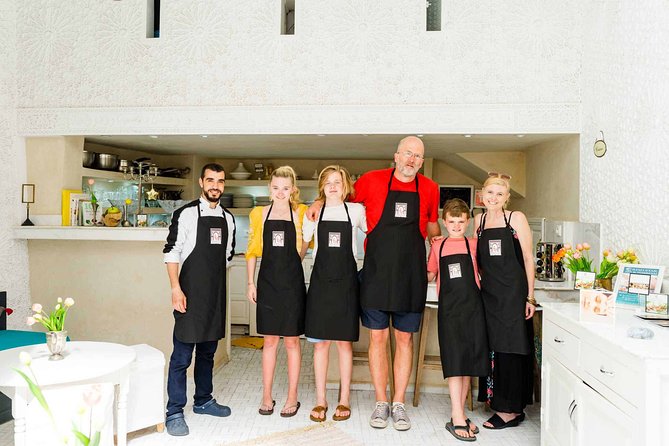
After the shopping, you return to the hosts’ home for tea and the cooking session. The setting is important. This is not described as a formal culinary school with rows of workstations. You cook in a family home, following recipes passed through Khadija and Hussein’s family.
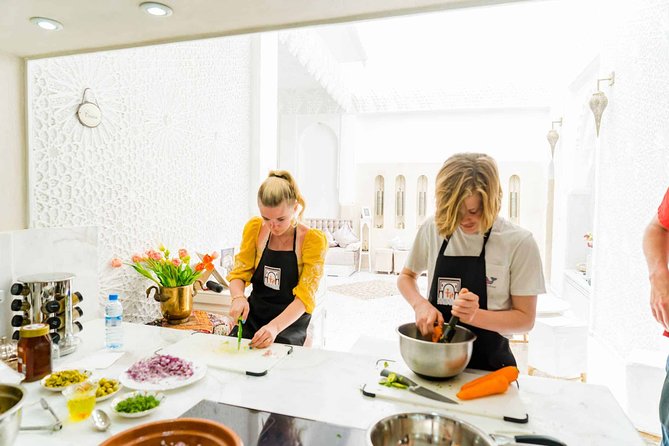
That arrangement should appeal to you if you prefer a social meal over a polished demonstration. You are there to take part, not only to watch. The class is designed around handling ingredients and preparing food together, with guidance throughout the process.
The teaching languages are French, English, and Arabic. That gives you a useful choice, especially if you are traveling with people who are more comfortable in different languages. The supplied details do not specify the class size, so ask if that affects your decision. A small group would make hands-on instruction easier, but the number of participants is not confirmed.
The first cup of mint tea helps set the tone. Tea here is not just a drink added to the menu. It is part of the welcome and gives you a moment to settle in before the cooking begins.
Learning couscous step by step
Couscous is the featured skill in the main description. The class takes you through the preparation step by step, rather than treating the dish as a quick side course. That is worthwhile because good couscous depends on process, not just ingredients.
You can expect guidance on the traditional method, though the available information does not list every technique or cooking tool. The best approach is to ask questions as you work. Find out how the hosts season it, how they judge texture, and which parts of the recipe change from one household to another.
The menu may not be limited to couscous. One booking included tajine, briwate, zaalouk, and Moroccan bread, with the option to choose what to cook. This flexibility is one of the strongest reasons to book the class instead of a fixed-menu workshop. If you have already tried couscous, you can ask about another dish. If you want the classic lesson, you can focus on couscous.
You should confirm the menu before the shopping begins. The class description puts couscous at the center, while the actual cooking can include several dishes. That is not a problem, but knowing the plan helps you judge the experience fairly and avoid expecting a particular recipe without asking.
Tajine, briwate, zaalouk, and Moroccan bread
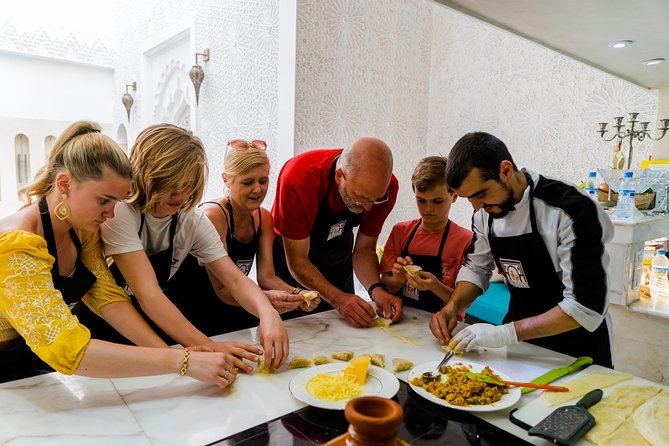
The additional dishes give the class more range. Tajine introduces one of Morocco’s best-known cooking styles. Briwate adds a pastry-based element, while zaalouk brings vegetables and seasoning into the meal. Moroccan bread gives you another practical skill and helps turn the food into a full lunch.
Because the hosts allow some choice, you can shape the lesson around your interests. Ask for the dishes that match your appetite and cooking goals. You may prefer a broad introduction with several recipes, or you may learn more by spending longer on one dish.
The available details do not promise that every class includes all five dishes. Consider them examples of what can be prepared, not a guaranteed menu. The class includes the purchase of ingredients, so your final selection may affect the market stop and the cooking order.
This flexible format is especially useful for repeat visitors to Morocco. You can skip a dish you have already learned and ask for something new. It also works well for families or friends with different tastes, though the booking information does not say how menu choices are handled for larger groups.
A few more cooking classes around Morocco worth a look
- Moroccan Cooking Class & Marrakech Market Visit with Chef Khmisa
★ 5.0 · 1,504 reviews - Half-Day Cooking Class with Local Chef Laila in Marrakech
★ 5.0 · 952 reviews - Marrakech: Moroccan Cooking Class with a Local Family
★ 4.9 · 668 reviews - Marrakech: Moroccan Cuisine Cooking Class in Local Home
★ 4.8 · 508 reviews
Eating what you prepare
Once the food is ready, you sit down for lunch. This is where the class earns much of its value. You are not leaving with a small tasting plate after two hours of instruction. The listed package includes lunch, so the cooking ends with a shared meal.
The meal is accompanied by Moroccan mint tea, also described as Berber mint tea. That tea service ties the cooking lesson to the social side of Moroccan food. You get time to eat, talk, and enjoy the results rather than rushing straight back into the city.
The strongest praise for the experience centers on the company, the kindness of Khadija and Hussein, and the quality of the lunch. One booking described the meal as the best lunch of that person’s journey. That is a high mark, but you should read it as a sign that the shared table is central to the appeal, not as a guarantee that every palate will agree.
There is no dessert listed among the inclusions. One person specifically suggested adding one. If you want a sweet course, ask before booking or bring that expectation down. Lunch and tea are included, but a dessert is not promised.
What the $76 price covers
At $76 per person, this is more than a basic cooking demonstration. The fee includes the four-hour class, the market ingredient purchase, tea, and lunch. You are paying for both the food and the time spent with the hosts.
The market visit adds value because it is part of the learning, not an optional shopping trip you arrange yourself. You see the ingredients being selected, then use them in the kitchen. The meal also means you get a substantial finish to the activity instead of paying for a separate lunch afterward.
The price will make the most sense if you value personal contact and active participation. If you only want to sample Moroccan dishes, a restaurant meal will likely cost less and take less time. If you want to understand how the dishes come together and share the meal with a local family, the four-hour format gives you more.
The class has an overall rating of 4 out of 5 from five bookings. The detailed feedback is especially strong on the hosts, the fresh market shopping, the food, and the relaxed teaching. The only clear shortcoming raised is the lack of dessert, plus the practical uncertainty over the exact menu.
Who will enjoy this four-hour class
I would choose this experience if you want food to be your way into Moroccan culture. It suits curious eaters, home cooks, couples, and small groups who like to participate rather than sit back.
It is also a good fit if you want to meet local hosts in a home setting. Khadija and Hussein are repeatedly praised for their kindness and availability, and the atmosphere appears to be as important as the recipes.
You may want a different activity if your main goal is advanced culinary training. The class is built around traditional family recipes and shared preparation, not professional certification or technical chef instruction. The listing does not provide details about equipment, class size, or advanced techniques.
It may also be less suitable if you need a tightly fixed schedule. The experience lasts four hours, but the shopping and menu choices can shape the pace. Check the available start times and allow the full block rather than trying to squeeze in another major activity immediately afterward.
Language, timing, and booking details
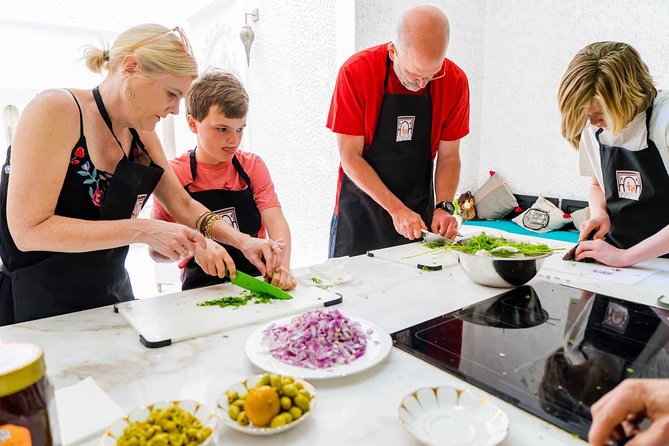
Instruction is offered in English, French, and Arabic. The four-hour duration is fixed, but starting times depend on availability, so check the date you want before making plans around the class.
You can cancel up to 24 hours in advance for a full refund. You can also reserve now and pay later, which is useful if your Marrakech schedule is still changing.
The supplied information names Marrakesh-Safi as the location and Place de l’Horloge as the starting point. One description also refers to Essaouira, which does not match the Marrakech wording. Confirm the meeting location with Rak Adventure before you go, especially if you are staying outside central Marrakesh or arranging transport.
Should you book the Khadija and Hussein cooking class?
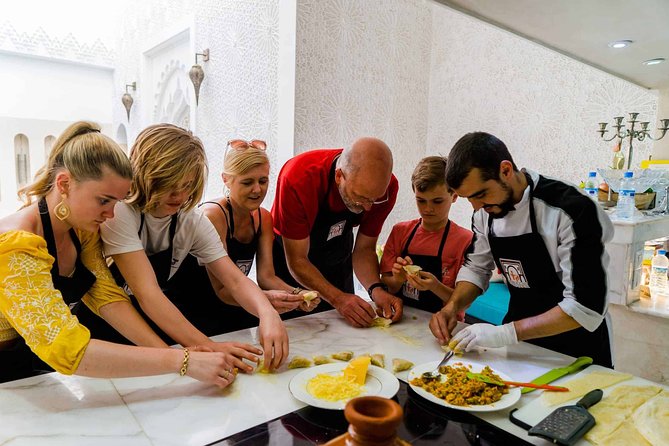
I would book this class if you want a market visit, a family-hosted meal, and real cooking in one half-day experience. The best parts are specific: shopping for fresh ingredients with the hosts, learning dishes you can help choose, and eating lunch together afterward.
Before paying, confirm the exact meeting place, the menu, and whether dessert is available. Those details will settle the only real points of uncertainty. At $76, the class is good value for you if the social setting and hands-on work matter as much as the food itself. If you only want a quick tasting or a guaranteed restaurant-style menu, choose something shorter and more fixed.
FAQ
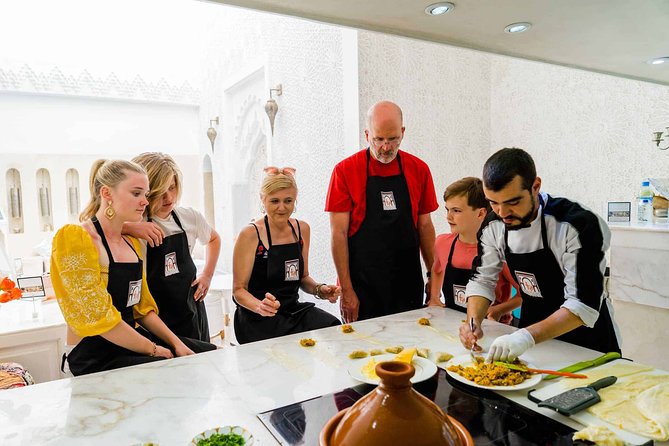
Where does the cooking class begin?
The class begins at Place de l’Horloge. The meeting instructions say clients will be shown by their full name.
How long does the experience last?
The cooking class lasts four hours.
What is included in the price?
The $76 price includes the ingredient purchase, cooking class, tea, and lunch.
Which dishes will I cook?
Couscous is the main advertised dish. Depending on the menu you choose, you might also prepare tajine, briwate, zaalouk, and Moroccan bread.
Can I choose what to cook?
The available information says the hosts offer the possibility of choosing what you want to cook. Confirm your preferred menu before shopping.
Which languages are available?
The instructors teach in English, French, and Arabic.
Can I cancel or pay later?
You can cancel up to 24 hours before the activity for a full refund. You can also reserve your place and pay later.
Just added around Morocco
- Private Moroccan Cooking Class in Casablanca with a Local Expert★ 5.0 · 12 reviews
- cooking with rabab Tagahzout★ 5.0 · 11 reviews
- Moroccan Cooking Class and Eco-Farm Visit – Full day★ 5.0 · 13 reviews
- Cooking the Moroccan Way, Tamraght★ 5.0 · 37 reviews
- Agadir Cooking Class with Locals★ 4.5 · 6 reviews
- Agadir Cooking class (tajin+msemen+thé)with 1h camel ride★ 5.0 · 8 reviews
- Cooking Class and 2 hours Camel Ride★ 5.0 · 7 reviews
- Taghazout: Authentic Moroccan Botanical Garden Cooking Class★ 4.1 · 5 reviews
Cooking Classes, compared.
Half-Day Thai Cooking Class at Organic Farm in Chiang Mai
Read our review →
Florence: Pasta Cooking Class with Unlimited Wine
Read our review →
3 in 1 Cooking Class near Navona: Fettuccine, Ravioli & Tiramisu
Read our review →
Hanoi Cooking Class: Culture, Local Market & Meaning CSR Impact
Read our review →
5 Traditional Dishes Hanoi Cooking Class with Market Trip
Read our review →
Cooking Class and Lunch at a Tuscan Farmhouse with Local Market Tour from Florence
Read our review →
Chiang Mai: Cooking Class, Market & Thai Herbs Garden Tour
Read our review →Browse the lists this tour appears in