
Review · NAPLES
Naples: Hands-On Pasta Class Making Gnocchi & Tagliatelle
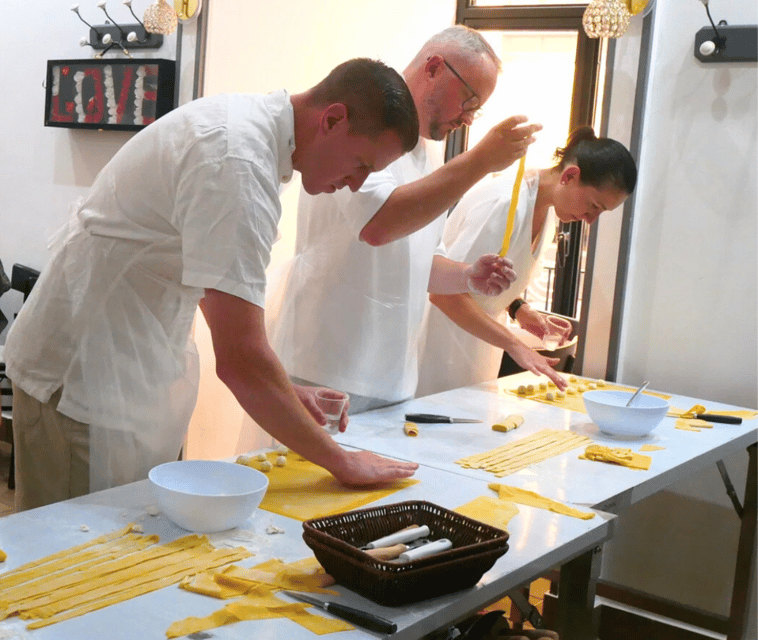
The best part of this Naples class is that you do not simply watch a chef toss dough around. You make potato gnocchi and fresh pasta with your own hands, then sit down to eat the results with homemade tomato sauce. It is a useful way to spend two hours in the old center, especially if rain has spoiled your sightseeing plans.
I like the class for two clear reasons: the work stays practical, and the meal is built into the experience. You also get an appetizer, one alcoholic or non-alcoholic drink, kitchen equipment, and a chef diploma. The main point to check is the pasta description, which mentions gnocchi and tagliatelle, while another section refers to fettuccine and ravioli. Ask what will be prepared on your date if the exact pasta shape matters to you.
Key points at a glance
- You make two fresh pasta dishes: The experience focuses on soft potato gnocchi plus a long pasta such as tagliatelle or fettuccine.
- The sauce uses Neapolitan staples: San Marzano DOP tomatoes, extra virgin olive oil, basil, and sea salt form the base.
- You eat what you prepare: The class ends with a proper lunch or dinner, not a small sample at the worktable.
- The setting is central: Naplesbay Cooking Lab is near the Duomo Cathedral in Naples’ historic center.
- The teaching is active and social: You knead, roll, cut, shape, and cook rather than sit through a demonstration.
- The price includes useful extras: At $41 per person, you get an apron, chef’s hat, tools, appetizer, drink, meal, and diploma.
Making pasta beside Naples Cathedral
This class takes place at Naplesbay Cooking Lab, a short walk from Naples Cathedral. That location matters. You can fit the lesson between visits to the Duomo and other sights in the historic center without giving up half a day to transport.
The class lasts two hours. That is long enough to work with the dough and eat, but short enough to fit into a busy Naples schedule. I would place it around the middle of your day if possible. You will leave with a full stomach, so avoid booking it immediately before a large restaurant meal.
The lab supplies the kitchen tools, apron, and chef’s hat. You do not need to arrive with specialist equipment or cooking experience. The activity is designed around direct instruction, so you can ask questions while you work.
The teaching languages are Italian, Spanish, French, and English. The chefs named in the feedback include Daniele, Lucas, and Alex. Their teaching styles may vary by date, but the useful pattern is clear: the class depends on an involved instructor who keeps the group moving and answers questions as the pasta takes shape.
More Pasta Making Classes in Naples
- Naples: Pasta Making Class with Starter and Drink
★ 4.9 · 1,060 reviews - Naples: Pasta Cooking Class with Tiramisù and a Drink
★ 4.6 · 415 reviews - Amazing Pizza and Pasta Class at Savio’s kitchen cooking school
★ 5.0 · 104 reviews
Starting with soft potato gnocchi
Gnocchi is the star of the class. The aim is to turn simple potatoes and other basic ingredients into light, tender dumplings that can hold sauce without becoming heavy.
That texture is harder than it looks. Gnocchi can turn dense if the dough is overworked, or fall apart if it is too soft. A local chef can show you the practical signs to watch for: how the dough feels, when it is ready to shape, and how to create pieces that cook evenly.
You should expect to take part in the preparation rather than stand behind a counter. The exact order may vary, but the class description centers on making the gnocchi from scratch and learning the techniques needed for a soft result.
This is one of the most useful parts to repeat at home. Gnocchi needs few ingredients, but the handling matters. A written recipe alone may tell you quantities, yet it cannot easily show you when the dough has reached the right consistency. Pay attention to that hands-on lesson.
Rolling and cutting fresh long pasta
After the gnocchi, you work on fresh long pasta. The description uses tagliatelle and fettuccine for this part, while the included items also mention ravioli. Since those are different shapes, confirm the day’s menu before booking if you are specifically hoping to make ravioli.
The long pasta process includes mixing and kneading the dough, rolling it thin, and cutting it into ribbons. Traditional tools and professional methods are part of the lesson. This gives you a better sense of why fresh pasta has a different feel from dried pasta sold in a packet.
Rolling dough takes patience. If the sheet is too thick, the finished pasta can feel bulky. If it is too thin, handling becomes harder. The class gives you a chance to see how the chef controls the dough and how the final width affects the cooked texture.
I like this two-part design. Gnocchi teaches you about softness and restraint, while tagliatelle or fettuccine teaches you about dough, rolling, and cutting. You get two different types of pasta rather than repeating one task for the entire session.
The tomato sauce brings the lesson together
The sauce is based on a simple Neapolitan combination: San Marzano DOP tomatoes, extra virgin olive oil, basil, and sea salt. It is not a complicated recipe with a long list of ingredients. That is exactly the point.
Good tomato sauce depends on the quality of the ingredients and the balance of cooking time, seasoning, and heat. You will prepare the sauce while the pasta work continues, and the kitchen fills with the smell of tomatoes, olive oil, and basil.
The sauce also lets you taste the difference between the two pasta types. Gnocchi gives you soft, rounded bites, while the long pasta carries the sauce in another way. The same simple tomato base can feel different depending on the pasta beneath it.
You should not expect a full survey of Neapolitan cuisine in two hours. This is a focused pasta class, not a broad cooking course. Its strength is showing how a few well-chosen ingredients become a satisfying meal when the dough and sauce are handled properly.
Same place, a different menu:
- Naples: Pizza-Making Workshop with Drink and Appetizer
★ 4.9 · 5,411 reviews - Authentic Pizza Making Class in Naples with Appetizers and Drink
★ 5.0 · 3,178 reviews - Naples: Neapolitan Pizza and Tiramisù Making Class
★ 4.8 · 839 reviews - Semi-Private Pizza Making Experience in Naples with Drink
★ 5.0 · 324 reviews
A small appetizer, drink, and the meal you made
The class includes a local appetizer in the middle of the experience. It gives you something to eat while the pasta is being prepared and adds a little more local flavor beyond the main dishes.
One alcoholic or non-alcoholic drink is included. The experience describes a glass of local wine with the finished pasta, but a non-alcoholic option is also available. If you do not drink alcohol, you can still take part without paying for an extra drink.
The final meal is the payoff. You sit down and eat the gnocchi and fresh pasta you helped prepare, served with the homemade tomato sauce. This is more satisfying than a demonstration followed by a small tasting because your work leads directly to lunch or dinner.
The meal also makes the class social. You eat with the other participants, and the atmosphere can be lively. One account describes the class as full of humor and constant activity, while another points to meeting new people over pasta and wine. That social side is part of the value, though a quiet private lesson is not what this format promises.
What the teaching style feels like
The strongest feature in the feedback is the energy of the class. Daniele is described as humorous and good at keeping things moving. Alex is described as attentive and ready to answer questions. Lucas is praised for teaching useful tricks during a family visit.
Those details suggest a class with a friendly, hands-on pace rather than a formal culinary lecture. You are likely to spend most of the time doing something: kneading, rolling, cutting, shaping, preparing sauce, or eating.
That active pace is useful if you want a memorable introduction to Italian cooking. It may be less suitable if you want exact professional training or a long technical discussion of flour types and regional pasta traditions. The class is built for participation and enjoyment first.
The chef also shares food traditions passed down through Neapolitan families. This gives the recipes some context. You are not only copying steps, you are hearing why simple ingredients and handmade pasta matter in local home cooking.
Is $41 a good value?
At $41 per person, the price is reasonable for a two-hour experience that includes instruction, ingredients, kitchen tools, an apron, chef’s hat, appetizer, drink, full meal, and a souvenir diploma.
The meal is the key value. If you paid separately for a pasta lunch, a drink, and a cooking lesson, the total could easily approach the class price before counting the equipment and instruction. You also receive something practical to take home: the method for making gnocchi and fresh pasta again.
The diploma is a cheerful extra rather than a serious qualification. It may be fun for children, families, or anyone who enjoys a physical reminder of the day. The real souvenir is the technique, particularly the feel of the gnocchi dough and the way the pasta sheet is rolled.
Price alone should not be your only test. You are paying for a group activity, so the experience depends partly on the chef and the other people in the room. The positive descriptions point to a warm group mood, but you should choose this class because you want to cook with others, not because you expect a private chef.
Who will enjoy this Naples activity
I would recommend this class to first-time pasta makers, families with older children, couples, and solo visitors who like social activities. The two-hour length keeps it manageable, and the practical work gives you a break from churches, museums, and street sightseeing.
It is also a strong rainy-day choice. One participant specifically found that the class lifted the mood during a wet day in Naples. You get indoors, stay active, eat well, and leave with something more memorable than another hour spent waiting for the weather to improve.
Food lovers will appreciate the ingredients and the chance to work with San Marzano DOP tomatoes. You do not need to be an expert to enjoy the process. In fact, a beginner may get more from the class because each stage offers a clear lesson.
This is less ideal if you have limited mobility. The activity is not wheelchair accessible. Participants under 18 must be accompanied by a parent or legal guardian, so younger visitors cannot attend independently.
If you have a food allergy or dietary restriction, the supplied details do not explain how substitutions are handled. Contact the provider before booking rather than assuming the standard recipes can be changed.
Practical timing and booking advice
The meeting point is Naplesbay Cooking Lab in the historic center, close to the Duomo Cathedral. Give yourself enough time to find the lab, especially if you are coming from another part of Naples. The class does not include transport, so you are responsible for reaching the meeting point.
Starting times vary. Check availability for your date before planning the rest of your sightseeing. A two-hour class can run close to the time of a museum reservation or train departure, so leave a sensible gap after it.
Free cancellation is available up to 24 hours in advance for a full refund. You can also reserve now and pay later, which helps if your Naples plans are still changing. These terms make the experience easier to fit into a flexible trip, but always check the final booking conditions for your selected date.
The pasta naming issue is worth repeating. The main description emphasizes gnocchi and tagliatelle, the preparation section says fettuccine, and the included list mentions tagliatelle and ravioli. This may reflect different versions of the class, but you should ask before arrival if making a particular shape is important to you.
Should you book the Naples pasta class?
Book it if you want an active, fairly priced food experience in central Naples. You will learn two useful pasta techniques, eat a proper meal, enjoy a drink and appetizer, and get plenty of direct time with the dough.
I especially recommend it for a rainy afternoon, a family outing with a parent present, or a solo visitor who wants an easy way to meet people. The class is not a full culinary course, and the exact pasta shapes should be confirmed in advance. Still, for $41, the combination of instruction, food, local ingredients, and a lively two-hour setting offers solid value.
FAQ
Where does the pasta class take place?
The class takes place at Naplesbay Cooking Lab in Naples’ historic center, a short walk from the Duomo Cathedral.
How long does the experience last?
The cooking class lasts two hours.
What pasta will I make?
The experience focuses on potato gnocchi and fresh long pasta. The descriptions refer to tagliatelle and fettuccine, while the included items also mention ravioli. Confirm the exact pasta shapes for your date if this matters to you.
Is a meal included?
Yes. You eat the pasta you prepare, served with homemade tomato sauce, as a lunch or dinner at the end of the class.
Is a drink included?
Yes. One alcoholic or non-alcoholic drink is included. The experience describes local wine with the finished pasta.
What else is included in the price?
The price includes kitchen tools, an apron, chef’s hat, the hands-on lesson, an appetizer, one drink, the meal, a chef diploma, and free luggage deposit.
What languages are available?
Instruction is available in Italian, Spanish, French, and English.
Can children attend the class?
Participants under 18 must be accompanied by a parent or legal guardian. The activity is not wheelchair accessible.
More Hands-On Workshops in Naples
- Naples: Premium Pizza-Making Class at a Pizzeria
★ 4.8 · 300 reviews - Naples: Neapolitan Pizza and Tiramisu Cooking Class
★ 4.9 · 258 reviews - Naples Pizza and Tiramisu Cooking Class
★ 5.0 · 173 reviews - Naples: Pizza Making Class with Local Pizzaiolo
★ 4.8 · 124 reviews
Just added around Naples
- Pizza-Making Workshop by night with glass of wine★ 4.9 · 45 reviews
- Naples: Pizza Making Class with Neapolitan Chef and drink★ 4.6 · 25 reviews
- Naples: 3 Recipes Cooking Class at Local’s Home★ 4.8 · 5 reviews
- Naples: Small Group Pizza Making with Drink Included★ 5.0 · 39 reviews
- Naples: Pizza making class with a local pizza chef★ 4.8 · 4 reviews
- Master Authentic Neapolitan Pizza & Tiramisu at Home★ 4.8 · 75 reviews
- Naples: Pasta and Gelato Cooking Class★ 4.9 · 8 reviews
- Naples: Pasta and Tiramisu Cooking Class with Local Chef★ 4.9 · 50 reviews
Pasta Making Classes, compared.
Florence: Pasta Cooking Class with Unlimited Wine
Read our review →
3 in 1 Cooking Class near Navona: Fettuccine, Ravioli & Tiramisu
Read our review →
Rome: Pasta Making Class with Wine, Limoncello, and Dessert
Read our review →
Rome Cooking Class: Make Pasta and 3 Spritz Cocktails
Read our review →
Rome: 3-in-1 Fettuccine, Ravioli, and Tiramisu Cooking Class
Read our review →
Rome: Fettuccine Pasta Cooking Class in Rome’s City Center
Read our review →Browse the lists this tour appears in