
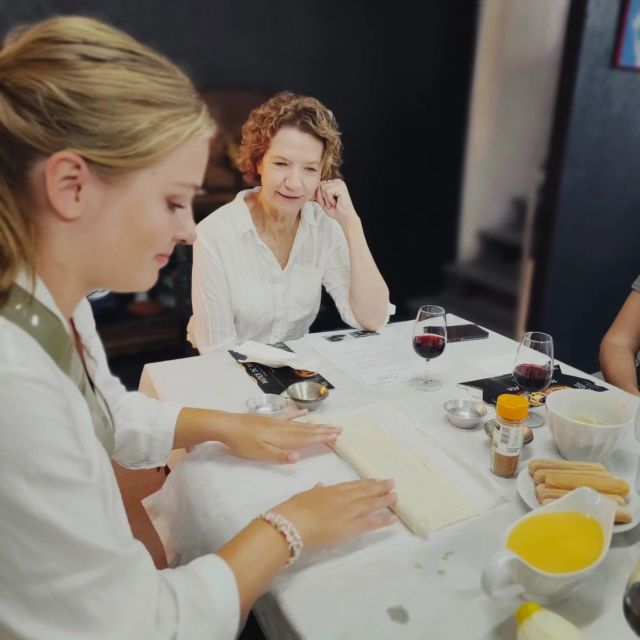
Review · PORTO
Porto: Pastel de Nata Cooking Class with Port Wine – Sé
The best part of this Porto class is that you do not simply watch a chef work. You take turns making the custard, handling the pastry, and seeing how the tarts go into the oven. The short lesson also explains how pastel de nata grew from a Lisbon specialty into Portugal’s best-known pastry.
I like the small, social format, where guides such as Teresa, Luis, Filipe, and Sofia keep the room relaxed and make sure everyone gets a turn. I also like the practical recipe, including tips for gluten-free and dairy-free versions. The main limitation is clear: the puff pastry is prepared before class, so you learn the filling and baking process more fully than the entire pastry-making process.
Key points at a glance
- Custard is the main hands-on lesson: You learn the filling, its texture, and the baking stage step by step.
- The pastry is pre-prepared: You receive the house recipe for puff pastry, but there is not enough time to make and rest it during the 90-minute class.
- Port wine keeps the class social: Port, coffee, juice, water, and sweet and savory snacks are included.
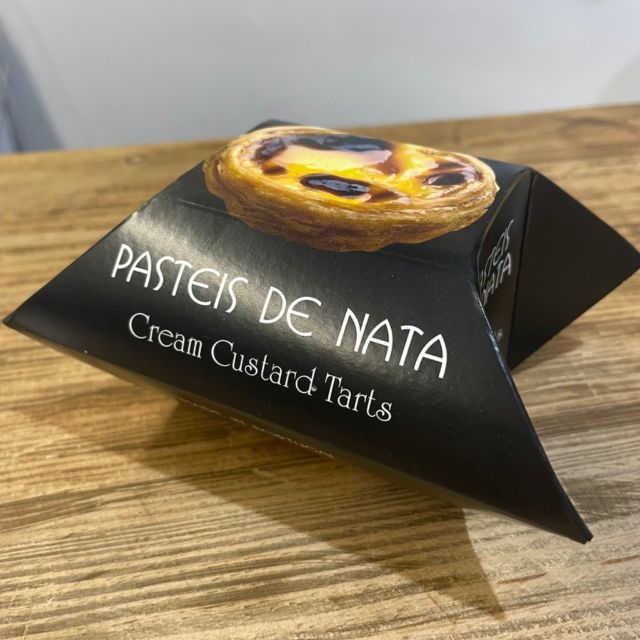
- You leave with several tarts: Your pastel de nata come in a paper box, along with recipes for the custard and pastry.
- The location is easy to pair with sightseeing: Domus Arte is downtown, near Porto Cathedral and São Bento station.
- Private participation is different: In the shared class, participants take turns. Ask about a private workshop if you want to handle every stage yourself.
Making pastel de nata near Porto Cathedral
Domus Arte is a concept store in central Porto devoted to handmade products, workshops, and art exhibitions. Its location near Porto Cathedral and São Bento station makes this an easy activity to fit between old-town sights, a station visit, or a walk downhill toward the river.
You are not arriving at a formal culinary school with a long lecture ahead. The setting is more relaxed and social. The class is built around a shared work area, an English-speaking instructor, and a recipe that moves forward in clear stages.
The 90-minute length matters. It is long enough to learn the key method and enjoy the results, but short enough to fit into a busy Porto day. You will not spend half a day baking, and you will not have time to prepare every part from scratch. That trade-off is the reason the class works for many people who want a local food activity without giving up an entire afternoon.
The workshop has earned a 4.8 rating from 888 bookings, with the strongest praise going to the instructors and the friendly atmosphere. Names vary by session, but Teresa, Luis, Filipe, Sofia, Ana, and others are praised for keeping the instructions clear and the mood light. The teaching style appears to be as important as the recipe itself.
More Cooking Classes with Wine Tasting in Portugal
- Porto: Pastel de Nata Cooking Class with Porto Wine (Sé do Porto)
★ 5.0 · 340 reviews - Portuguese Cooking Class in Porto with Portuguese Wine
★ 5.0 · 110 reviews - Porto Hands On Cooking Class-3 course-wine included-trained chef
★ 5.0 · 34 reviews
A short lesson on Portugal’s favorite tart
Before the practical work gets going, the instructor gives you an accessible introduction to pastel de nata. You learn about its origins in Lisbon and how the small custard tart became a national favorite.
This context is useful because pastel de nata is easy to treat as just another sweet in a bakery window. Its appeal is more specific: crisp pastry, a soft custard center, and a browned top produced by high heat. Understanding the basic method helps you notice what you are eating later in Porto.
The history section is brief, not a long food lecture. That is the right balance for this class. You get enough background to connect the pastry with Portugal, then move quickly to the part most people came for: making and eating it.
The guides also share local food tips. These suggestions can be useful if you want to keep exploring Porto after class, and some instructors have helped people choose a restaurant for lunch or find other places to try local food. The advice is informal rather than a planned city tour, so use it as a starting point rather than a full dining guide.
The custard is where you do the real work
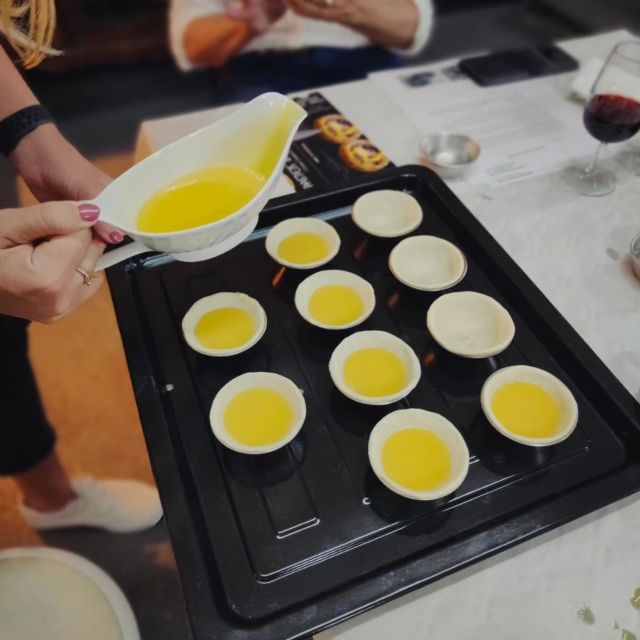
The central lesson is the custard filling. Under the instructor’s direction, you follow the recipe in order and learn the small details that affect the final texture.
You will not be left to guess what comes next. The guides explain each step, offer technical help, and watch for mistakes before they become a problem. This is especially useful if you are not confident in the kitchen. One practical strength of the class is that the process is designed to feel manageable, even for people who describe themselves as poor bakers.
Participation is shared among the group. You take turns rather than each preparing a complete batch from start to finish. That keeps the timing under control and lets the instructor guide the whole room, but it also means you may not personally handle every stage.
This point is worth understanding before booking. If you want a fully individual cooking lesson, ask about the private workshop option. The standard class is better thought of as a group baking session, with each person contributing to the recipe and learning by watching the other stages.
The puff pastry limitation, explained clearly

The puff pastry is prepared in advance. That is the one major compromise in the experience, and it is not a small technical detail.
Proper puff pastry takes several hours to prepare and rest before it is ready to shape and bake. A 90-minute workshop cannot realistically include the complete process while also covering the custard and baking. The pre-prepared dough allows you to reach the oven and eat the finished tarts during the same session.
You still receive the house recipe for the pastry, along with the custard recipe. The instructor can explain how the pastry fits into the process, and you can attempt the full version at home when you have enough time.
One useful lesson from the class is learning where the real effort lies. The custard is quick enough to teach in person, while the pastry requires planning and patience. If you are booking because you want to master every element from scratch, this class will not fully meet that goal. If you want a clear introduction and a recipe you can work on later, the arrangement makes sense.
Same place, a different menu:
- Lisbon: Pastel de Nata Baking Class
★ 4.9 · 2,106 reviews - Porto: Pastel de Nata Cooking Class with Grandma’s Recipe
★ 5.0 · 1,565 reviews - Porto: Pastel de Nata Pastry-Making Workshop
★ 4.9 · 1,542 reviews - Lisbon: Traditional Portuguese Cooking Class
★ 4.9 · 592 reviews
Shaping, baking, and tasting your own tarts
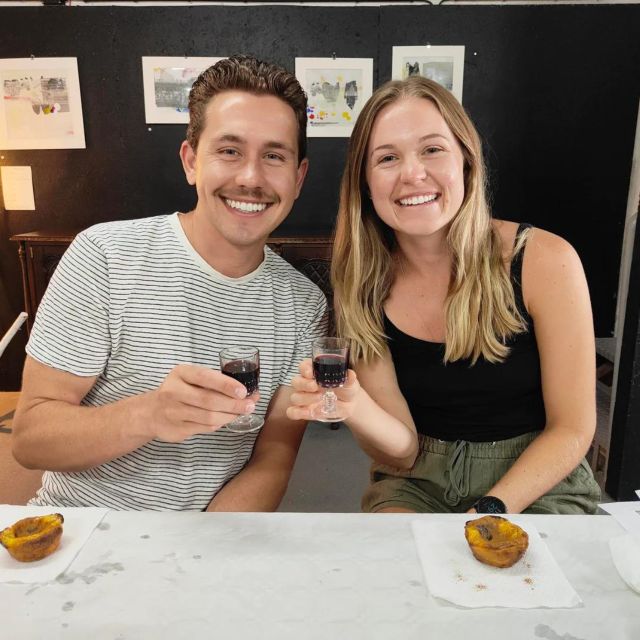
Once the custard and pastry are ready, the class moves to assembly and baking. You get to see how the filling is placed and how the tarts change in the oven.
Each person prepares several pastel de nata. The exact number can vary, but the experience includes enough for you to taste your work and take some away. Several participants have specifically praised leaving with three or more pastries, though the supplied information does not promise a fixed number.
The paper transport box is a practical touch. You can eat some at Domus Arte and carry the rest through Porto without needing to balance pastries in a napkin. Let the tarts cool enough to travel, since warm custard and delicate pastry are not ideal companions for a steep walk through the old town.
The finished pastries are the reward, but they are also a useful test. You can compare the crisp pastry with the custard texture while the instructions are still fresh. The guides may also suggest variations, flavor adjustments, or ways to adapt the recipe at home.
Port wine, coffee, and a relaxed table
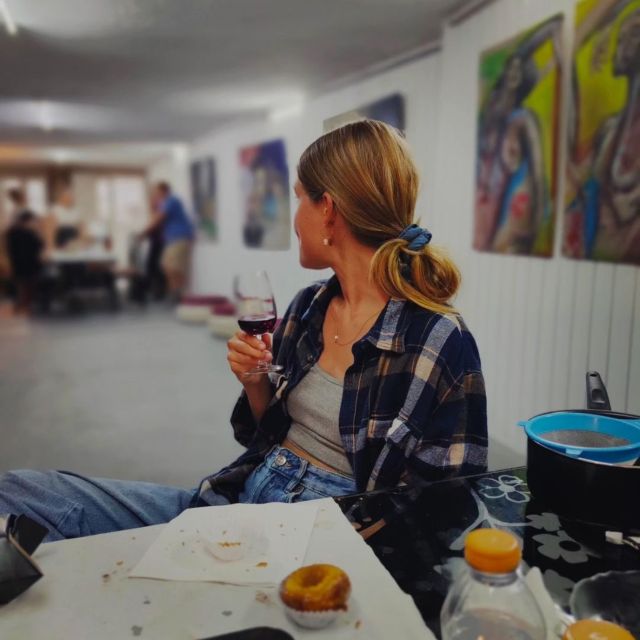
The class includes Port wine, juice, water, and coffee, plus a selection of sweet and savory snacks. This is not a tasting tour centered on Port, but the wine adds a distinctly local note to the baking session.
You can enjoy a glass while the pastries bake and chat with the other people in the room. The social side is a major part of the appeal. Solo visitors can join in without needing a companion, and couples, families, and small groups have a simple activity to share.
The atmosphere is often described as warm, funny, and easygoing. Teresa is particularly praised for remembering names and keeping people involved, while Luis and Filipe are noted for clear explanations and a relaxed sense of humor. Sofia is also praised for making the class engaging.
Do not expect complete quiet or a private lesson in the standard booking. You are sharing the preparation and the table with others. For most people, that is part of the charm. If you prefer to work alone or want intensive personal instruction, the private option is the better choice.
Is $41 a fair price?
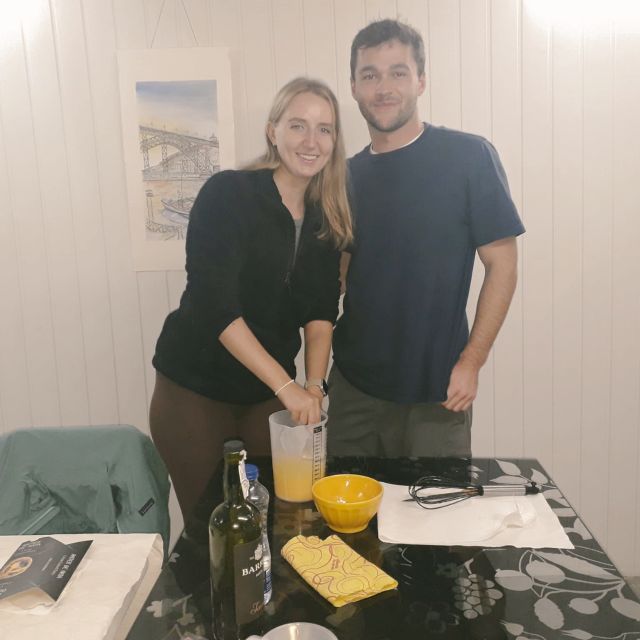
At $41 per person, this class is not the cheapest way to eat a pastel de nata in Porto. You can buy the pastry at a bakery for a small amount. The value here comes from the instruction, the shared activity, the drinks and snacks, the recipes, and the chance to take home several pastries.
I think the price is reasonable if you want an experience rather than a quick food stop. You are paying for a central location, an English-speaking instructor, all ingredients, Port wine and other refreshments, a transport box, and a guided introduction to a Portuguese classic.
The value is weaker for an experienced baker who mainly wants to learn laminated pastry from scratch. Since the puff pastry is prepared in advance, you are not getting a complete pastry course. The class is better suited to someone who wants to understand the method, gain confidence, and recreate the recipe later.
It also offers good value for a mixed-age group. Children old enough to take part can help with the process, adults can enjoy the food and wine, and nobody needs professional baking skills. Children under three are not suitable for the activity.
Who will enjoy this Porto cooking class?
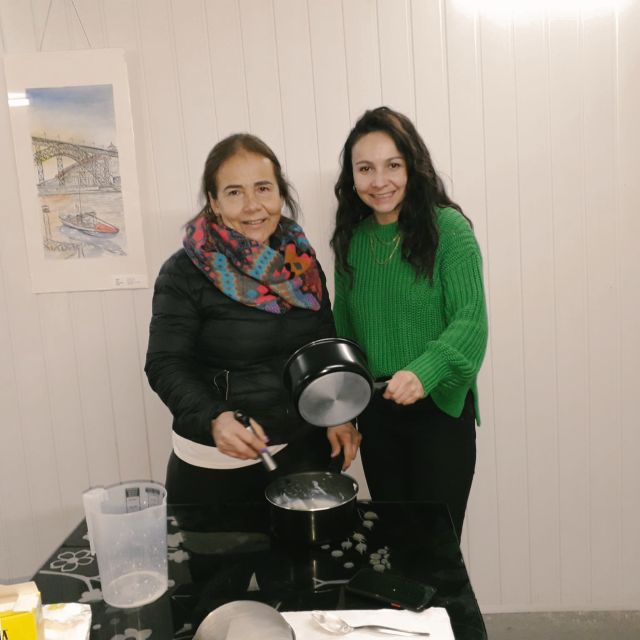
I would recommend it to several types of visitors:
- First-time visitors to Porto: You get a local food lesson and useful suggestions for what to eat next.
- Couples and friends: The shared work gives you something to do together without requiring a full day.
- Solo visitors: The social setup makes it easy to meet people while doing a practical activity.
- Families with older children: The steps are accessible, and the finished pastries provide an immediate reward.
- Beginner bakers: The instructors offer help at each stage and explain the method in plain language.
- Bakers who want a starting point: You receive both recipes and tips for adapting them at home.
I would hesitate if you need a wheelchair-accessible activity. The listed class is not suitable for wheelchair users, although Domus Arte has a second location described as wheelchair accessible. Confirm the exact venue before booking if access is important.
The space is stroller accessible, and pets are allowed. Smoking is not allowed indoors. Lactose-free, gluten-free, and vegan options are available by request, but you need to provide advance notice and wait for confirmation so the team can prepare properly.
Planning the class into your Porto day
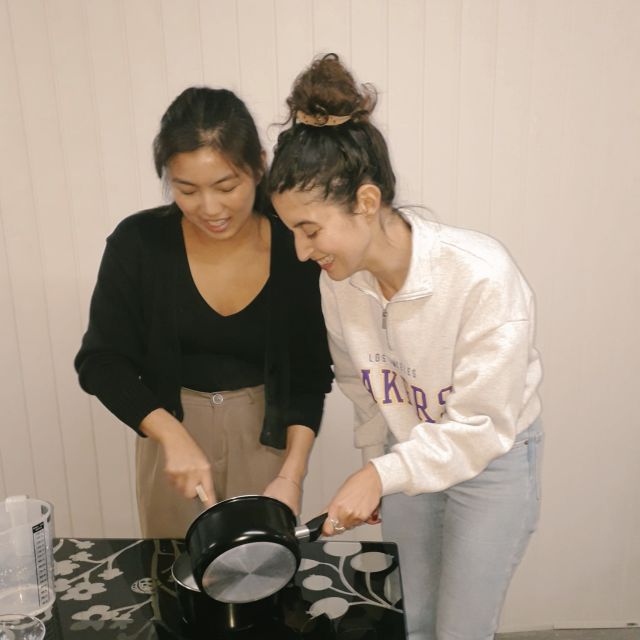
The downtown location makes this easy to combine with nearby sightseeing. Since the class is near Porto Cathedral and São Bento station, you can place it before or after exploring the historic center.
Allow enough time to find Domus Arte and arrive ready to begin. The class moves through a timed recipe, so arriving late can mean missing an early step, even though one couple who had airport trouble was kindly allowed to join after arriving late.
The workshop lasts 1.5 hours. Starting times vary, so check availability when choosing your date. Hotel pickup and drop-off are not included, but the central location makes this more of a walk-to activity than a transport excursion.
Free cancellation is available up to 24 hours before the class for a full refund. You can also reserve now and pay later, which is helpful if your Porto schedule is still changing.
My final take: book it for the method and the mood
Book this class if you want to do something hands-on, eat a Portuguese classic, and leave with a recipe you can try at home. The strongest part is the teaching: the instructors keep the steps simple, include everyone, and add enough history and local food advice to give the pastry a sense of place.
Go in knowing that the puff pastry is ready-made. You will learn the custard and baking process in person, while the longer pastry method is explained through the recipe for home use.
For $41, the class offers a pleasant mix of food, instruction, Port wine, and conversation in a central Porto setting. It is a particularly good choice for beginners, couples, solo visitors, and families with children over three. For a serious pastry lesson or full wheelchair access, ask questions before booking or choose another activity.
FAQ
Where does the pastel de nata class take place?
The workshop takes place at Domus Arte, a concept store in downtown Porto near Porto Cathedral and São Bento station.
How long does the class last?
The class lasts 1.5 hours.
What language is the class taught in?
The instructor teaches in English.
Is the puff pastry made during the workshop?
No. The puff pastry is prepared in advance because it takes several hours to become ready for use. You learn the custard and baking process and receive the house recipe for making the pastry at home.
How much do I participate in the recipe?
Participation is shared among the group, with people taking turns during the preparation. If you want to handle every stage yourself, ask about the private workshop option.
What drinks and food are included?
The class includes Port wine, juice, water, coffee, and a selection of sweet and savory snacks.
Can I take the pastries home?
Yes. Each participant receives a paper box for carrying the prepared pastel de nata away from the workshop.
Are dietary alternatives available?
Lactose-free, gluten-free, and vegan options are available upon request. You must give advance notice, and the team must confirm that the requested preparation can be arranged.
Is the class suitable for children and wheelchair users?
Children under three are not suitable for the activity. The class is stroller accessible but is not suitable for wheelchair users. Domus Arte has a second location described as wheelchair accessible, so confirm the exact venue before booking if needed.
More Hands-On Workshops in Portugal
- Porto: Pastel de Nata Cooking Class from Scratch
★ 4.9 · 468 reviews - Lisbon: 2-Hour Pastel de Nata Cooking Class
★ 4.8 · 461 reviews - Lisbon Portuguese Cooking Class with 3-Course Dinner
★ 5.0 · 445 reviews - Traditional Portuguese Cooking Class in Lisbon
★ 5.0 · 287 reviews
Just added around Portugal
- Cooking Class★ 5.0 · 17 reviews
- From Market to Table with Paula (Loulé) – Private Cookery Class★ 5.0 · 21 reviews
- Terceira Island: Azores Cooking Class Experience★ 5.0 · 14 reviews
- Porto: Cooking Class with Local Market Visit★ 5.0 · 15 reviews
- Porto: Local Market Tour & Cooking Class/Showcooking★ 4.9 · 32 reviews
- Lagos: Market Tour and Cataplana Cooking Class★ 5.0 · 9 reviews
- Lisbon: Traditional Portuguese Cooking Class★ 5.0 · 41 reviews
- Lisbon: Portuguese street food cooking class with Drinks★ 4.9 · 37 reviews
Cooking Classes with Wine Tasting, compared.
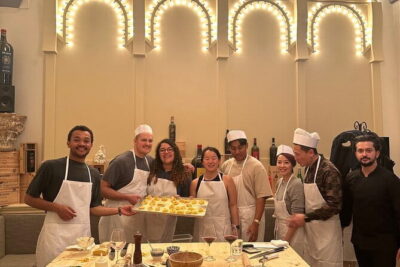
Florence: Pasta Cooking Class with Unlimited Wine
Read our review →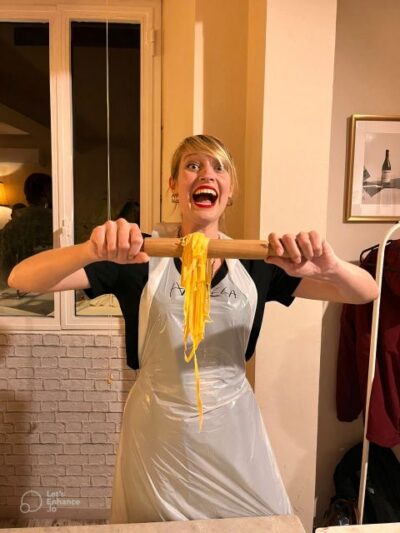
Rome: Pasta Making Class with Wine, Limoncello, and Dessert
Read our review →
Florence: Cooking Class Pasta & Tiramisu Making Unlimited Wine
Read our review →
Fettuccine & Tiramisù: Cooking Class with Wine & Limoncello
Read our review →
Pasta Making & Wine Tasting with Dinner in Frascati from Rome
Read our review →
Rome Cooking Class: Make Pasta, Dine & Drink Wine With Local Chef
Read our review →
Rome: Combo Pizza and Pasta Cooking Class with Wine
Read our review →Browse the lists this tour appears in