Review · ITALY
Private Gnocchi Cooking Class with Professional Chef in Padova
The best part of this Padua experience is that you do not simply watch a chef cook. You work with flour, eggs, and potatoes, then turn the dough into small, ridged gnocchi with a rigapasta, the little tool that helps sauce cling to each piece. Chef Francesco Coin also folds in local food knowledge and practical kitchen tips.
I like the private format, since your group gets the cooking stations and the chef’s attention without strangers at the table. I also like the useful focus on technique, especially the tomato and basil sauce and the small details that take homemade gnocchi beyond the supermarket version.
The main consideration is timing. This is a focused two-hour class with one main dish, not a full tour of Padua or a long multi-course meal. If you want a broad cooking course, you may find the menu limited. If you want to learn one classic dish and eat it afterward, the format makes good sense.
Key points to know before booking
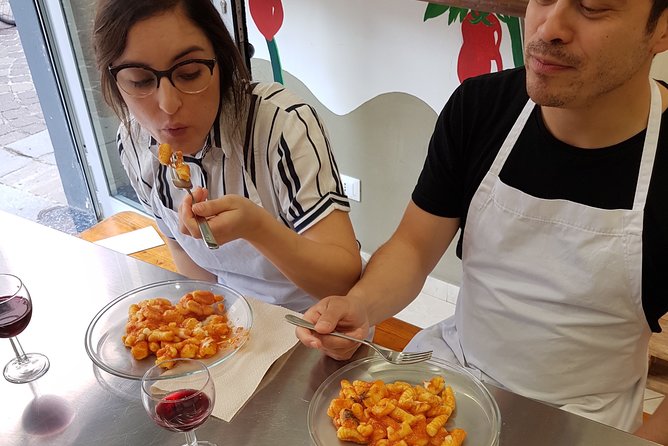
- You make the entire dish: Prepare the sauce, mix the dough, roll the pasta, cut the pieces, shape them, and cook them.
- Chef Francesco Coin leads the class: He teaches in English and explains techniques in simple, usable terms.
- The rigapasta matters: You learn why the ridges help tomato sauce cling to the gnocchi.
- Lunch is part of the experience: Your finished gnocchi becomes the main meal.
- Drinks are included: Wine and other drinks are offered without an additional charge.
- Your group stays private: Only your own party takes part.
Making Padua gnocchi at Italian Food Lab
The class begins at 9:00 a.m. at Italian Food Lab, Corso Giuseppe Garibaldi 13, in Padua. The experience ends at the same address, so you can plan your morning without arranging a separate return transfer.
You are welcomed, introduced to Chef Francesco, and given a white apron before taking your place at a working station. That simple setup tells you what kind of class this is. You are not standing behind a demonstration counter, trying to catch every movement from the back. You have a place to work and a task to complete.
The class lasts about two hours. That is long enough to cover the full process without turning a straightforward dish into a drawn-out event. It also means the pace should remain fairly active. You will be mixing, shaping, and cooking rather than lingering over a large menu.
The private setting is useful for couples, families, and small groups of friends. You can ask questions without worrying about slowing down a larger class. It also gives Francesco room to adjust his explanations to the people at the station, whether you have cooked fresh pasta before or are starting from scratch.
More Pasta Making Classes in Italy:
- Florence: Pasta Cooking Class with Unlimited Wine
★ 4.9 · 10,285 reviews - 3 in 1 Cooking Class near Navona: Fettuccine, Ravioli & Tiramisu
★ 5.0 · 7,376 reviews - Florence: Pasta & Tiramisu Cooking Class with Unlimited Wine
★ 4.9 · 6,708 reviews
Starting with tomato, basil, and garlic
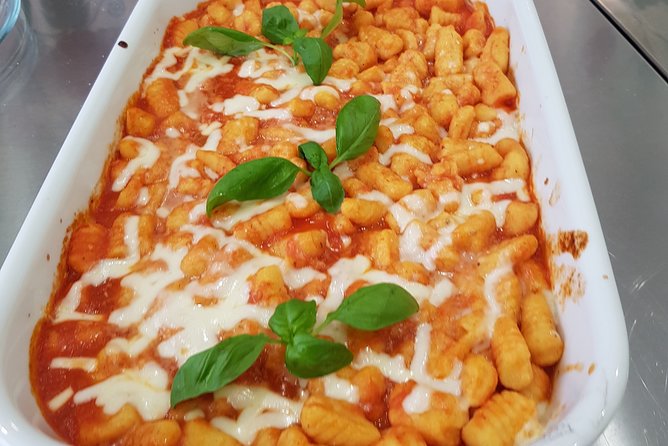
Your first kitchen task is the sauce. You prepare a tomato and basil sauce with quality ingredients, then let it simmer while you work on the gnocchi dough.
This order is practical. The sauce needs time to develop, while the dough needs your attention. Instead of waiting around for one part of the recipe to finish, you move between the two jobs. That makes the class feel like real cooking rather than a series of isolated demonstrations.
One especially useful tip concerns the garlic. The way garlic is handled can change the taste of a simple tomato sauce, and Francesco explains his method during the class. This is the sort of small lesson you can use at home right away. A recipe with only a few ingredients leaves little room to hide mistakes, so technique matters.
The sauce is also a good introduction to Italian home cooking. Tomato, basil, and garlic may sound basic, but the balance depends on timing and restraint. You get to taste the result with the gnocchi you have made, which gives the lesson a clear purpose.
Mixing potato dough by hand
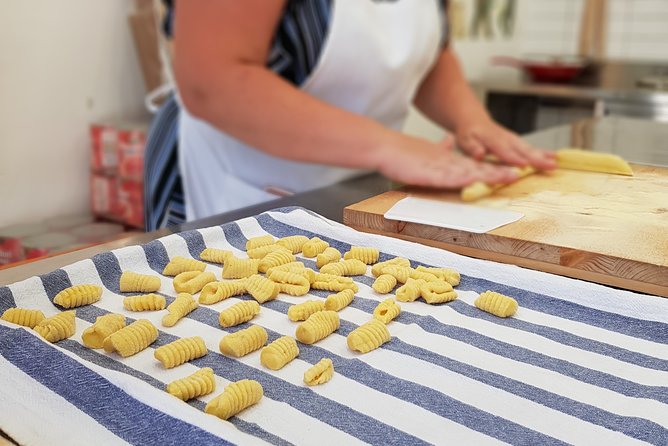
Once the sauce is simmering, you begin the dough. The ingredients are flour, eggs, and potatoes. You get your hands into the mixture and work it until it is ready to shape.
Gnocchi can look easy on a menu, but the dough is where much of the skill lies. It needs to come together without becoming heavy. Francesco’s teaching focuses on practical instructions, so you are not left with a recipe that makes sense only while you are standing in the class.
The hands-on approach is valuable here. You can feel how the mixture changes as it becomes dough. That physical sense is hard to pick up from a cookbook or a quick cooking video. You also learn that homemade gnocchi is not just a matter of buying potato pasta and adding sauce.
The class is suited to beginners because the instructions are described in clear, simple terms. At the same time, someone who already cooks should still find useful pointers in the handling of the dough and the shaping stage.
Rolling, cutting, and shaping the gnocchi
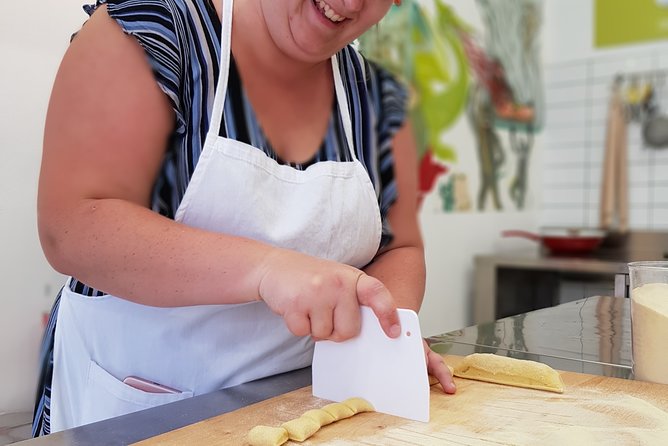
When the dough is ready, you roll it into long, thin ropes. You then cut those ropes into small cylinders, creating the familiar bite-sized pieces.
This is the part where the class becomes pleasantly messy. You are working with your hands, and the finished pieces may not all look identical. That is part of the appeal. Perfect uniformity is less important than learning the right size and shape so the gnocchi cook properly.
Next comes the rigapasta. You use this tool to create lines across each piece. The ridges are not just decoration. They give the sauce somewhere to cling, so each bite carries more tomato and basil.
That small detail helps explain why the class is more useful than a simple meal. You learn the reason behind the shape, not only the movement needed to make it. Once you understand that, the technique is easier to repeat in your own kitchen.
Francesco’s approach also includes context about Padua and Italian food traditions. The class is centered on cooking, but the conversation can add a sense of place to the meal. You are not only making a generic pasta dish. You are learning how a local style of gnocchi fits into the food culture of Padua.
More Hands-On Workshops in Italy:
- Florence: Pasta Cooking Class with Unlimited Wine
★ 5.0 · 6,413 reviews - Naples: Pizza-Making Workshop with Drink and Appetizer
★ 4.9 · 5,411 reviews - Cooking Class and Lunch at a Tuscan Farmhouse with Local Market Tour from Florence
★ 5.0 · 4,831 reviews - Authentic Pizza Making Class in Naples with Appetizers and Drink
★ 5.0 · 3,178 reviews
Cooking and eating your finished dish
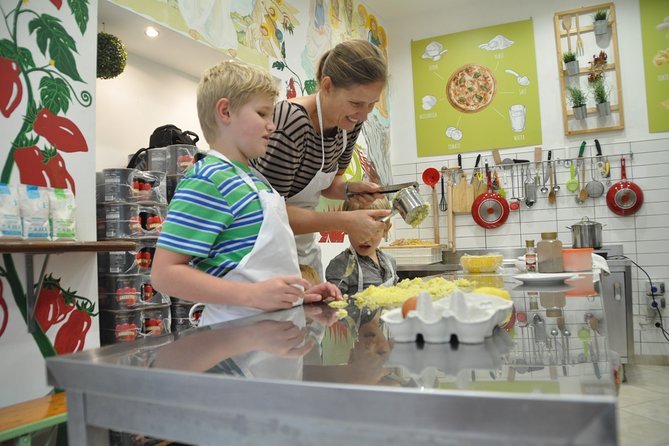
After the gnocchi are shaped, you cook them and combine them with the tomato and basil sauce. Then you sit down together and eat the meal you have prepared.
The menu is intentionally narrow: homemade gnocchi with tomato and basil sauce. That is a limitation if you are hoping to sample several regional dishes. It is an advantage if you want the class to stay focused and leave with one recipe you can confidently repeat.
Lunch is included in the experience, so you do not need to find a separate meal immediately afterward. The portion and meal details beyond the main dish are not specified, so you should book this for the cooking lesson and its finished plate, not for an elaborate tasting menu.
Wine and other drinks are included and offered without an extra charge. That makes the meal feel social and relaxed, especially for an adult group. If you do not drink alcohol, the experience also includes other drinks, according to the tour details.
The class ends back at Italian Food Lab. Since the start and finish are in the same place, you can continue exploring Padua afterward without dealing with a complicated drop-off.
What Francesco adds to the experience
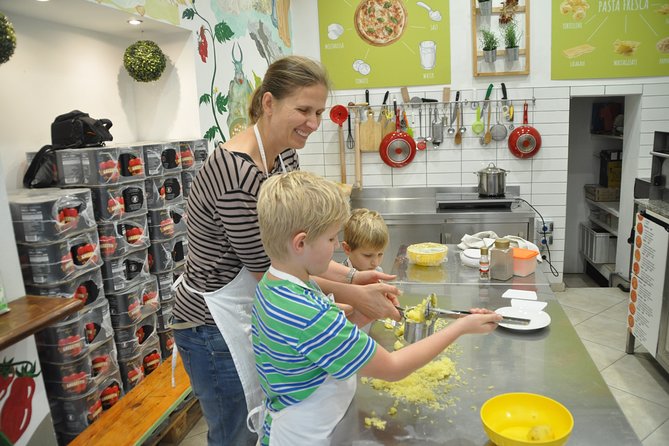
Chef Francesco Coin receives the strongest praise for his teaching style, friendly manner, and energy. The useful point for you is not simply that he knows food. He explains the process in a way that connects to ordinary home cooking.
You can expect practical advice on making gnocchi successfully, along with discussion of the city and Italian gastronomy. The instruction is designed to be remembered after you leave. That matters because a cooking class has limited value if you enjoy it for two hours but cannot recreate the dish later.
The class also appears to work well for different experience levels. Beginners get direct guidance at each stage, while more experienced cooks can pay attention to details such as the sauce, garlic, dough texture, and ridged shape.
The English-language format makes the activity accessible to international visitors. Still, cooking involves hands-on demonstration, so you should be ready to follow physical instructions as well as spoken ones.
Is the $96.12 price good value?
At $96.12 per person, this is not a budget meal. You are paying for more than a plate of gnocchi, though. The price includes a private two-hour class, instruction from a professional chef, the ingredients, lunch, and unlimited wine and other drinks.
The private format is the biggest value factor. A shared class might cost less, but you would also share the chef’s attention with people outside your party. For a couple or small group, the ability to ask questions and work at your own pace can justify the higher price.
The meal itself is simple, so do not judge the value by the number of courses. The payoff is the skill. You learn how to make the dough, shape the pieces, use the rigapasta, and prepare the sauce. If you cook the dish at home later, the experience continues to pay off.
I would consider the price reasonable for someone who wants a private food activity in Padua and enjoys a drink with lunch. It is less appealing if you mainly want a cheap meal or a broad tasting of Venetian and Paduan specialties.
Who should book this Padua cooking class?
I would recommend it to couples, families, and small groups looking for a relaxed morning activity. It suits people who like to participate rather than watch, and it gives you a practical souvenir that takes up no space in your suitcase.
It is also a good choice for anyone curious about Italian cooking but unsure about making fresh pasta at home. The recipe is approachable, and the class covers the full process from raw ingredients to the finished dish.
Families should note that the activity involves flour, dough, and hands-on work. Children may enjoy the shaping stage, although the supplied information does not specify an age range. If you are booking with children, confirm suitability before paying.
This is less suitable for someone seeking a full-day food tour, a large tasting menu, or a cooking course covering several types of pasta. The experience stays with one dish, and its strength is the focused lesson.
The 9:00 a.m. start also deserves attention. It is a good fit if you want to use the afternoon for Padua sightseeing. It may not suit late risers, particularly after a busy travel day.
Practical details for your morning
The meeting point is Italian Food Lab, Corso Giuseppe Garibaldi 13, 35121 Padova PD, Italy. The location is near public transportation, and the activity ends where it begins.
A mobile ticket is accepted, and confirmation is provided when you book. The class is offered in English. Service animals are allowed.
This is a private activity, so only your personal group participates. That makes the experience more personal, but it also means you should book for everyone who wants to take part rather than expecting to join an open class.
Free cancellation is available if you cancel at least 24 hours before the local start time. Cancellations made less than 24 hours ahead are not refunded, and changes within that window are not accepted. Give yourself enough notice if your Padua plans are still uncertain.
Should you book this experience?
Book it if you want to make one authentic Italian dish from start to finish, eat the result for lunch, and learn from a chef who explains the practical details clearly. The private format, included drinks, and focused instruction make it especially appealing for couples and small groups.
Skip it if you want a wide menu, a long food tour, or a low-cost restaurant meal. For everyone else, this is a smart two-hour use of a Padua morning, with a recipe and a few useful kitchen habits to take home.
FAQ
Where does the gnocchi class take place?
The class takes place at Italian Food Lab, Corso Giuseppe Garibaldi 13, 35121 Padova PD, Italy.
What time does the experience start?
The experience starts at 9:00 a.m.
How long does the class last?
The class lasts approximately two hours.
Who teaches the cooking class?
Chef Francesco Coin leads the experience.
Is the class offered in English?
Yes. The experience is offered in English.
Is this a private activity?
Yes. Only your personal group participates.
What dish will I make?
You will make homemade gnocchi with tomato and basil sauce.
Is lunch included?
Yes. After cooking, you sit together and eat the homemade gnocchi.
Are drinks included?
Yes. Unlimited wine and other drinks are included.
Can I cancel for a full refund?
Yes, if you cancel at least 24 hours before the experience start time. Cancellations made less than 24 hours ahead are not refunded.
Just added around Italy
- Rome Trastevere: Tiramisù & Gelato Class with Savoiardo Baking★ 5.0 · 14 reviews
- Authentic Pasta and Tiramisù cooking class at spanish steps★ 4.5 · 14 reviews
- Rome: Pasta Cooking Class, Dinner & Wine in Authentic Restaurant★ 5.0 · 38 reviews
- Rome For Kids: Small Group Pizza Making Class★ 4.5 · 49 reviews
- Rome Cooking Class★ 5.0 · 4 reviews
- Rome: Private Cooking Class with Market Shopping Tour★ 5.0 · 3 reviews
- Devour Rome Wine & Pizza Making Class in Trastevere Neighborhood★ 5.0 · 75 reviews
- Roma Foodie Experience: Cooking Class★ 5.0 · 16 reviews
Pasta Making Classes, compared.
Florence: Pasta Cooking Class with Unlimited Wine
Read our review →
3 in 1 Cooking Class near Navona: Fettuccine, Ravioli & Tiramisu
Read our review →
Rome: Pasta Making Class with Wine, Limoncello, and Dessert
Read our review →
Rome Cooking Class: Make Pasta and 3 Spritz Cocktails
Read our review →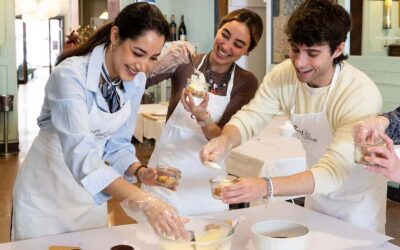
Rome: 3-in-1 Fettuccine, Ravioli, and Tiramisu Cooking Class
Read our review →