
Review · ROME
Rome Cooking Class
Rome’s best souvenir may be one you can cook. This three-hour evening class takes you from flour and filling to handmade fettuccine, ravioli, and tiramisù, with a professional chef guiding a group of no more than six.
I like the small group, which gives you room to ask questions and work at the table instead of watching from the back. I also like the practical menu: these are dishes you can repeat at home, not just admire once and forget. The main drawback is that the experience ends at the same meeting point, so you will need to arrange your own plans afterward.
Key points to know
- Three classic dishes: Prepare fettuccine, ravioli, and tiramisù during one evening.
- Maximum six people: The small group allows direct help from the chef.
- English instruction: The class is offered in English.
- Dinner is included: You eat the food prepared during the session.
- Central meeting point: Start at Via Firenze 8 at 6 pm, near public transportation.
- A practical souvenir: You leave with techniques you can use for friends and family at home.
Starting at Via Firenze 8 at 6 pm
The class begins at Via Firenze 8, 00184 Roma, at 6 pm. The meeting point is near public transportation, which makes the evening easier to reach from other parts of Rome. Still, give yourself enough time to find the address. A cooking class has a firm start, and arriving late can mean missing the first instructions.
The evening timing works well for a food-focused night in Rome. You can spend the afternoon sightseeing, return to your accommodation to freshen up, and then head to the kitchen. Since the activity lasts about three hours and ends back at the starting point, it is easy to treat this as your main dinner plan.
You receive a mobile ticket, and confirmation comes when you book. The class is offered in English, an important point if you want detailed explanations about pasta dough, fillings, and dessert rather than relying on gestures.
More Hands-On Workshops in Rome:
- 3 in 1 Cooking Class near Navona: Fettuccine, Ravioli & Tiramisu
★ 5.0 · 7,376 reviews - Rome: Pasta Making Class with Wine, Limoncello, and Dessert
★ 4.9 · 3,177 reviews - Rome Cooking Class: Make Pasta and 3 Spritz Cocktails
★ 5.0 · 2,937 reviews
A small class where your hands do the work
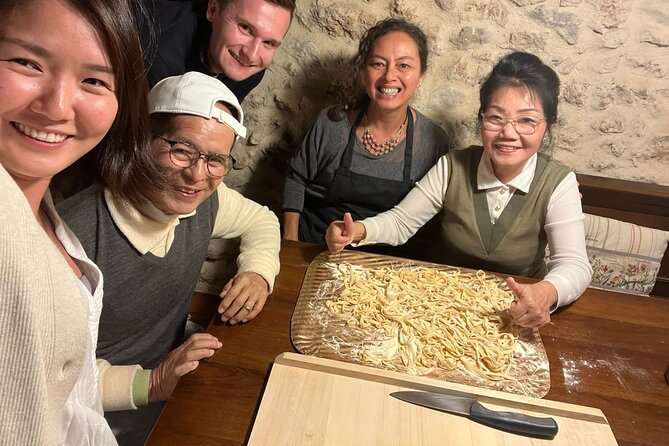
The maximum group size is six people. That matters more here than it would on a standard food tasting, because pasta making depends on close instruction. You need to see how the dough feels, how thin to roll it, and how much filling belongs inside each raviolo.
A large demonstration can make cooking look simple while leaving you unsure what to do at home. This format is designed for direct participation. The chef teaches the techniques, tricks, and small corrections that help a beginner avoid common mistakes.
You can also ask plenty of questions. That may include how to handle fresh seasonal ingredients, how to shape pasta, or how to repeat the recipes in your own kitchen. The information provided does not name the chef, but the chef is dedicated to the class, rather than being one person among several groups.
That personal attention is one of the strongest reasons to choose this activity. If you want a quiet demonstration with little participation, this is not the right fit. If you like learning by making, rolling, filling, tasting, and correcting, the format suits you well.
Making handmade fettuccine from scratch
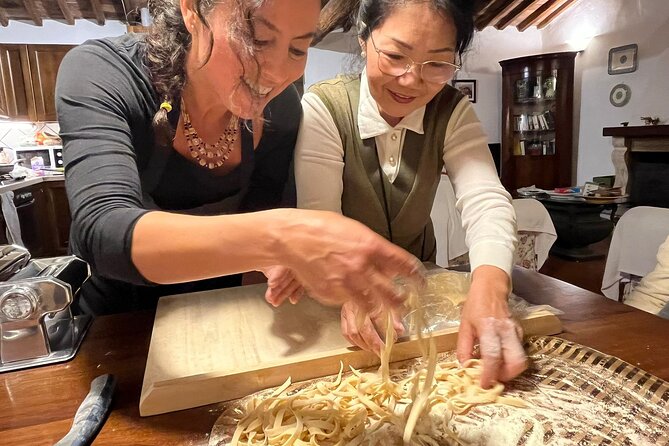
The first main dish is handmade fettuccine. Fresh pasta is a good beginner project because you can feel the dough change as you work it. You learn more than a recipe here. You learn the basic relationship between flour, moisture, kneading, and rolling.
The chef shares the methods used to prepare an authentic Italian meal, along with practical tips you can carry home. The class description does not specify the exact ingredients or equipment, but all required ingredients and cooking equipment are provided. You do not need to shop for supplies or pack special tools.
Fettuccine also gives the class a useful home-cooking advantage. You can make it with ordinary kitchen equipment once you return home, even if your first batch is not perfectly even. The goal is not restaurant-level speed. It is learning a reliable process and understanding what the dough should look and feel like at each stage.
Because this is an evening class, you are not simply preparing a sample and leaving. The food forms part of your dinner. That makes the work feel worthwhile, especially at a price of $105.33 per person.
Shaping ravioli and learning control
The second main dish is handmade ravioli. This adds a different skill from fettuccine. You are working with sheets of pasta, a filling, sealing, and portion control. Too much filling can make the ravioli difficult to close. Too little can leave the finished pasta disappointing.
The chef can address those details as you work. A small group is especially useful at this stage, because you can ask for help before a seam opens or the pasta becomes too thick. The class is beginner-friendly, so you are not expected to arrive with pasta-making experience.
The precise ravioli filling is not provided, so you should not book this expecting a particular regional recipe or a fixed set of ingredients beyond the stated menu. What is clear is that the class focuses on traditional pasta preparation and fresh seasonal ingredients.
I like that the menu includes both a long pasta and a filled pasta. You get two different techniques in one session, which gives the class more value than a lesson focused on only one shape. It also leaves you with more options to practice at home.
A few more cooking classes around Rome worth a look
- Rome: 3-in-1 Fettuccine, Ravioli, and Tiramisu Cooking Class
★ 4.9 · 2,704 reviews - Rome: Fettuccine Pasta Cooking Class in Rome’s City Center
★ 4.8 · 2,414 reviews - Fettuccine & Tiramisù: Cooking Class with Wine & Limoncello
★ 4.9 · 2,103 reviews - Pasta Cooking Class Near the Colosseum with 3 Spritz Cocktails
★ 5.0 · 1,686 reviews
Finishing with tiramisù
Dessert is tiramisù, a natural finish to a Roman cooking lesson. It is familiar enough for beginners but still involves technique and balance. The class teaches you how to prepare it as part of the full menu, not as an unrelated add-on.
The supplied details do not state the exact tiramisù method, ingredient list, or presentation. You should therefore think of this as a guided preparation lesson, not a promise of a particular family recipe. The useful part is learning the process from the chef and then tasting the finished dessert with the meal.
Including dessert helps make the three hours feel like a complete menu rather than a short pasta workshop. You prepare two main dishes, complete a classic Italian sweet, and then sit down for dinner.
Seasonal ingredients, wine, and the meal itself
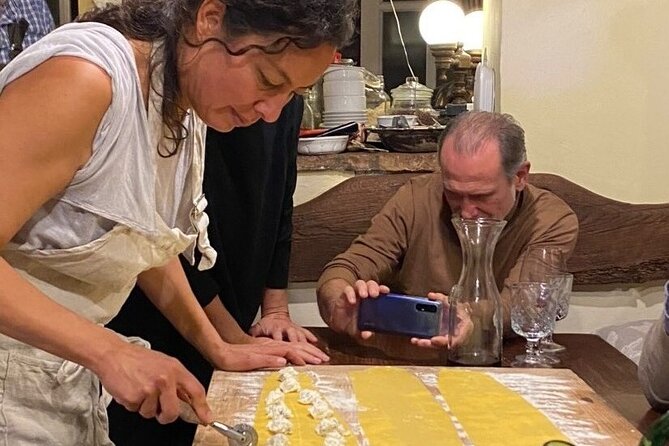
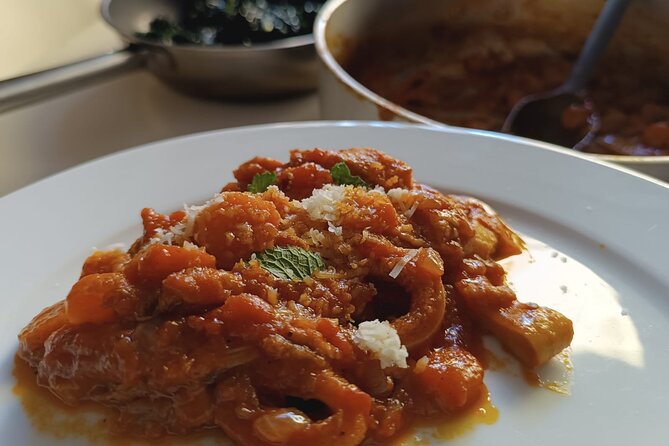
The chef works with fresh seasonal ingredients and explains Italian cooking as the class progresses. That connection matters. Italian food often depends on treating a few ingredients properly rather than covering them with complicated sauces or heavy seasoning.
The description also says you will taste good wine during the class. Wine is part of the evening’s food culture, but the included list specifically names bottled water, dinner, ingredients, equipment, and the chef teacher. It does not clearly list wine as a separate included item. If wine matters to your budget or dietary plans, check the arrangement when booking.
Dinner is included, which changes the price calculation. At $105.33 per person, you are paying for a three-hour lesson, a professional chef, all ingredients, equipment, and the meal you prepare. Bottled water is also included. Tips are not included, so plan for that extra cost if you want to thank the chef for the instruction.
The price is not the cheapest way to eat pasta in Rome. It can be good value if you want a skill-based activity and dinner in one booking. If your only aim is a low-cost meal, a restaurant will cost less. If you want to bring a useful part of Rome home with you, the class makes more sense.
What the format means for beginners
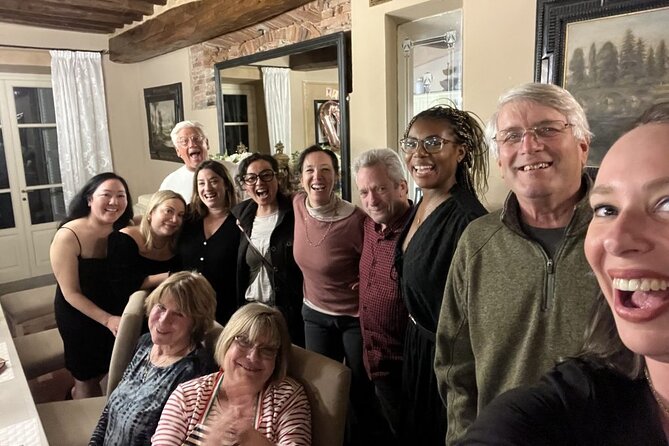
The class is clearly aimed at beginners. You do not need to arrive knowing how to make pasta, ravioli, or tiramisù. The chef provides instruction and the tools needed for the session.
I would still choose comfortable clothing and shoes suitable for standing and working in a kitchen. That is practical advice rather than a stated dress requirement. The supplied information does not specify seating, kitchen layout, dietary substitutions, or accessibility arrangements, so ask ahead if any of those points are important to you.
The small group should help you stay involved, but participation is central to the experience. You will not simply watch the chef prepare dinner. The value comes from taking part and asking questions. People who prefer a polished demonstration may find the hands-on approach less relaxing, while curious home cooks should appreciate it.
The class also suits families with older children or friends looking for an evening activity, provided everyone is comfortable with a three-hour cooking session. Since no age policy is provided, confirm suitability before booking for young children.
The skills you can take home
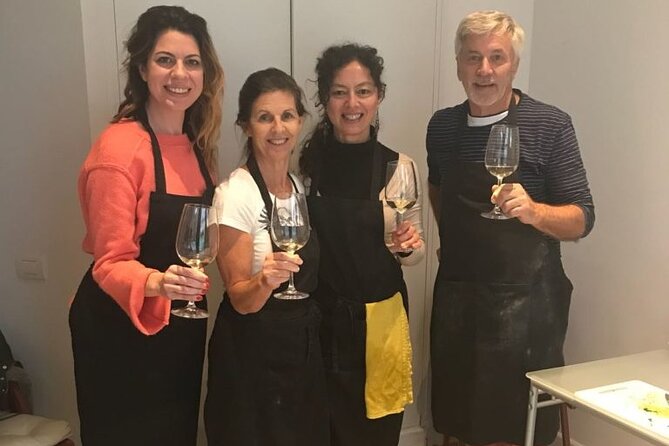
The strongest feature of this class is its usefulness after the trip. A cooking demonstration can be entertaining but easy to forget. Here, you prepare several recipes and receive direct corrections while you work.
The experience is especially helpful if you want to host an Italian meal at home. You can practice fettuccine for a simple pasta night, try ravioli when you have more time, and make tiramisù as a dessert for friends or family. The class does not promise printed recipes or take-home ingredients, so do not assume those are provided.
The chef’s explanations are meant to help you repeat the food later. That is why the opportunity to ask many questions matters. Use the time well. Ask what to do when dough feels too dry, how to avoid overfilling ravioli, and which steps deserve the most care at home.
The most praised part of the experience is its ability to turn the class into a lasting memory and a usable skill. You are not only filling an evening in Rome. You are learning something you can show off at your own table.
Who should book this Rome cooking class?
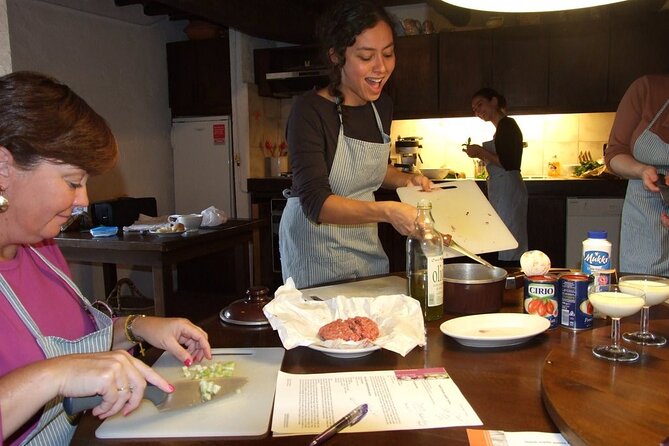
This activity is a good match for you if:
- You want a hands-on introduction to Italian cooking.
- You enjoy small groups and direct contact with the chef.
- You want dinner included with an evening activity.
- You hope to recreate Roman-style pasta at home.
- You value practical skills more than a formal sightseeing tour.
- You are comfortable spending about three hours cooking and eating.
You may want a different plan if you are looking for a quick meal, a large social event, or a class built around a highly specific regional menu. The listed menu is appealing but focused: fettuccine, ravioli, and tiramisù. The class does not promise a market visit, a city walk, or a tour of Roman landmarks.
The activity also does not include tips. Keep that in mind when comparing the total cost with other cooking classes. Free cancellation is available if you cancel at least 24 hours before the 6 pm start time. Cancellations made later are not refunded, and late changes are not accepted.
My verdict on the $105.33 price
At $105.33, this is a mid-range cooking experience rather than a bargain dinner. The value comes from the combination of instruction and food. You receive a chef teacher, fresh ingredients, equipment, bottled water, and dinner, all within roughly three hours.
The maximum of six makes the price easier to justify. Personal help is more useful in a pasta class than a crowded room where you can barely see the work surface. The English instruction also helps you follow the fine points of the recipes and ask questions without a language barrier.
The trade-off is menu certainty. You know the three headline dishes, but not the exact filling, sauce, seasonal ingredients, wine arrangements, or recipe materials. If those details matter, ask before booking.
Should you book it?
Book this class if you want to cook rather than simply eat, and if you like the idea of taking home skills that can impress your friends and family. The small group, English-speaking format, complete menu, and included dinner give it a clear purpose.
I would skip it if your Rome schedule is packed or if you want a short, inexpensive meal. For a food-minded visitor with a free evening, though, this is a practical way to spend three hours: meet at Via Firenze 8 at 6 pm, make fresh pasta and tiramisù, eat what you prepared, and leave with techniques worth trying again at home.
FAQ
How long does the Rome cooking class last?
The class lasts approximately three hours.
What time does the activity start?
The activity starts at 6 pm.
Where does the cooking class meet?
The meeting point is Via Firenze 8, 00184 Roma, Italy.
Where does the activity end?
The class ends back at the meeting point.
How many people can join the class?
The activity has a maximum of six travelers.
Is the cooking class offered in English?
Yes. The experience is offered in English.
What dishes will I prepare?
The sample menu includes handmade fettuccine, handmade ravioli, and tiramisù.
What is included in the price?
The price includes the chef teacher, fresh ingredients, required equipment, dinner, and bottled water. Tips are not included.
Just added around Rome
- Rome Trastevere: Tiramisù & Gelato Class with Savoiardo Baking★ 5.0 · 14 reviews
- Authentic Pasta and Tiramisù cooking class at spanish steps★ 4.5 · 14 reviews
- Rome: Pasta Cooking Class, Dinner & Wine in Authentic Restaurant★ 5.0 · 38 reviews
- Rome For Kids: Small Group Pizza Making Class★ 4.5 · 49 reviews
- Devour Rome Wine & Pizza Making Class in Trastevere Neighborhood★ 5.0 · 75 reviews
- Rome: Private Cooking Class with Market Shopping Tour★ 5.0 · 3 reviews
- Roma Foodie Experience: Cooking Class★ 5.0 · 16 reviews
- Pizza, Gelato & Suppli Cooking Class by Colosseum★ 5.0 · 79 reviews
Cooking Classes, compared.
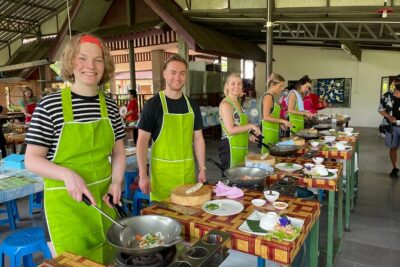
Half-Day Thai Cooking Class at Organic Farm in Chiang Mai
Read our review →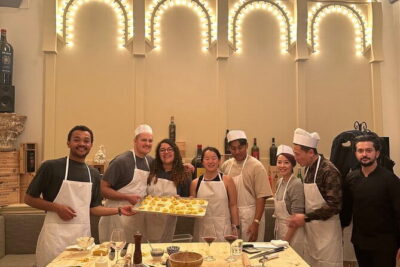
Florence: Pasta Cooking Class with Unlimited Wine
Read our review →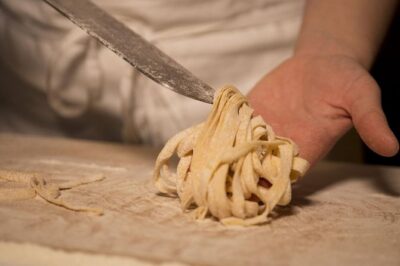
3 in 1 Cooking Class near Navona: Fettuccine, Ravioli & Tiramisu
Read our review →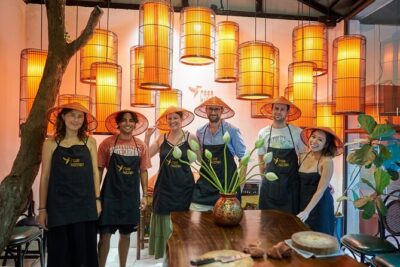
Hanoi Cooking Class: Culture, Local Market & Meaning CSR Impact
Read our review →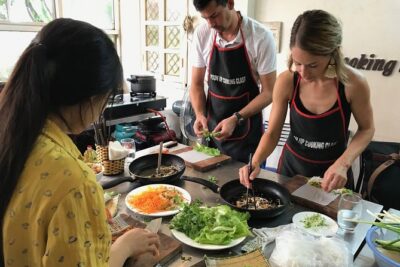
5 Traditional Dishes Hanoi Cooking Class with Market Trip
Read our review →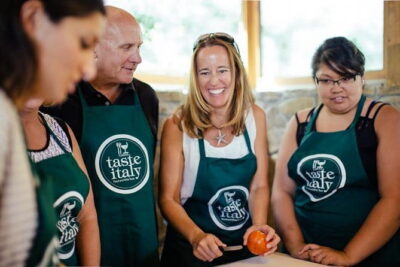
Cooking Class and Lunch at a Tuscan Farmhouse with Local Market Tour from Florence
Read our review →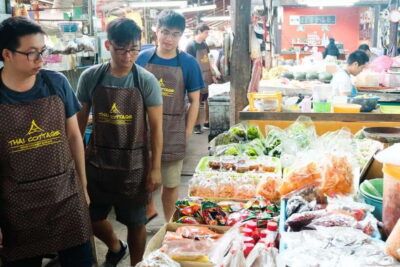
Chiang Mai: Cooking Class, Market & Thai Herbs Garden Tour
Read our review →Browse the lists this tour appears in