
Review · MOROCCAN
Traditional Moroccan Cooking Class
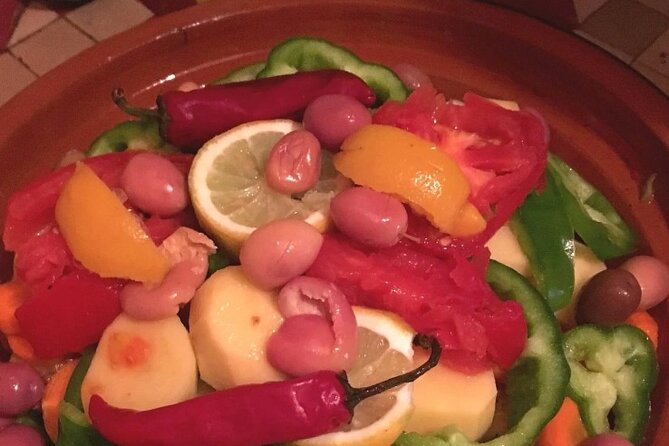
Essaouira’s best cooking lesson may begin before you reach the kitchen. With Fatima, you shop through local markets, choose fresh ingredients, then return to her home to prepare Moroccan dishes and eat what you have made. I like the market-to-table format and the chance to learn family recipes in a real home rather than a restaurant kitchen.
I also like the warm, personal scale. This is a private activity for your group, and Fatima often lets you help choose the dishes, from vegetable tagine and couscous to sardine tagine and zaalouk. The main caution is that the class may feel more like guided meal preparation than formal culinary training, especially if you want every technique explained in detail.
Key points to know before booking
- The market visit comes first: Meet Fatima at Bab Marrakech and shop for the ingredients with her.
- You cook in a private home: The setting is personal, relaxed, and more local than a purpose-built school.
- Popular dishes include tagine and couscous: Bread, Harira soup, vegetable dishes, sardines, and zaalouk may also feature.
- You share the finished meal: Mint tea is served before or after cooking, with the meal enjoyed together.
- Pastilla is not included: It takes too long for this four-hour format.
- The experience costs $39: For four hours of shopping, cooking, and lunch, that is a fair price if you value contact with a local host.
From Bab Marrakech to Essaouira’s food markets
The morning begins at 9:30 am at Parking Bab Marrakech, on Place Bab Marrakech. This is a sensible meeting point near the old medina, and the activity returns to the same place at the end.
You do not simply arrive at a prepared kitchen and start chopping. Fatima takes you into the markets to buy the food. That first step matters because Moroccan cooking depends on the quality of the ingredients, and the shopping trip shows you how a local meal comes together before any pot reaches the stove.
You may see heaps of vegetables, fresh herbs, spices, fish, and other market staples. One especially memorable part of the outing can be choosing the main ingredient yourself. A sardine tagine, for example, gives the lesson a strong Essaouira connection, while a chicken dish lets you see how a traditional Moroccan meal begins at the market.
The shopping also gives you a chance to ask questions about spices and produce. One part of the experience includes seeing spices ground for the meal, which is more useful than simply receiving a premeasured bowl of seasoning. You can pay attention to the colors, aromas, and proportions, then try to repeat the process at home.
The market portion is not a sightseeing stop with a long historical explanation. It is practical. You are there to buy lunch. That makes it a good fit if you want ordinary local life and food knowledge, but less suitable if you expect a guided tour of every corner of Essaouira’s medina.
More Moroccan Cooking Classes in Morocco:
- Marrakech: Moroccan Cooking Class with Pickup
★ 4.6 · 1,862 reviews - Marrakech: Traditional Moroccan Cooking Class & Market Visit
★ 4.8 · 1,861 reviews - Marrakesh: Moroccan Dishes Cooking Class with a Local Chef
★ 5.0 · 1,615 reviews
Fatima’s home and the Moroccan welcome
After shopping, you go to Fatima’s home. She welcomes you with Moroccan mint tea, and the pace shifts from public market to family kitchen.
This change of setting is one of the strongest parts of the activity. You are not watching a chef perform behind a counter. You are entering the space where the food is prepared and shared. Fatima teaches recipes passed down from her grandmother, so the lesson carries a personal connection that a standard cooking studio often lacks.
The home setting is also why the class feels relaxed. You can ask questions as you work, and the small-group format makes it easier to follow the steps. Fatima’s husband may also be present, adding to the feeling that you have been welcomed into a household rather than processed through a commercial class.
Still, keep your expectations clear. This is not described as a professional culinary course with a printed syllabus, individual workstations, or advanced knife instruction. The kitchen is a home kitchen, and the emphasis is on sharing food, learning traditional methods, and spending time together.
Cooking tagine, couscous, and other Moroccan staples
The exact menu can vary. The main dishes named for the class are tagine and couscous, with Moroccan bread and Harira soup also included among the dishes Fatima teaches. You may also prepare zaalouk, an aubergine salad, or a vegetable tagine.
Tagine is the natural center of the lesson. Fatima shows you how to cook it properly, including the order in which ingredients go into the dish and how the cooking vessel is used. The slow preparation gives you time to understand how Moroccan food builds flavor from simple ingredients, spices, vegetables, and meat or fish.
Couscous offers a different lesson. It is not just a side dish dropped onto a plate at the last minute. Fatima explains the preparation step by step, giving you a method you can take home. If you have only eaten couscous in restaurants, seeing the process from the beginning can change how you approach it in your own kitchen.
Zaalouk, when offered, adds a useful vegetable dish to the meal. This cooked aubergine salad is a good choice for anyone who wants more than a single main course. It also shows how Moroccan meals often bring several textures and flavors to the table instead of relying on one large centerpiece.
Moroccan bread may be part of the lesson too. Bread preparation gives the class a hands-on task and helps explain how the meal is served. Harira, a traditional Moroccan soup, may also be included, though the menu is not fixed in the information provided.
The class can therefore suit different tastes. You might cook meat, fish, vegetables, or a combination. A past experience with fresh sardine tagine shows how the menu can reflect Essaouira’s coastal setting. If you have dietary preferences, ask Fatima in advance rather than assuming every option will be available on the day.
A shared lunch, not just a demonstration
Once the food is ready, you sit down and eat the meal together. This is an important distinction. You are not handed a recipe and sent away after a short demonstration. The point is to appreciate the finished dishes, compare the flavors, and enjoy mint tea in the same social spirit as a Moroccan home meal.
I like this part because it connects the shopping and cooking to a clear result. You saw the ingredients in the market, helped prepare them, and then tasted the final dishes. That full sequence makes the lesson easier to remember.
It also leaves room for conversation. You can ask Fatima about the dishes, ingredients, and methods while eating. Some people have taken home recipes they planned to make again, which is a good sign that the class offers practical information rather than only a pleasant lunch.
At the same time, the meal takes up part of the four-hour schedule. If your goal is intensive instruction, this may feel like time that could have been spent cooking. If your goal is a personal food experience with a shared meal, the balance is likely to feel right.
More Hands-On Workshops in Morocco:
- Moroccan Cooking Class & Marrakech Market Visit with Chef Khmisa
★ 5.0 · 1,504 reviews - Half-Day Cooking Class with Local Chef Laila in Marrakech
★ 5.0 · 952 reviews - Marrakech: Moroccan Cooking Class with a Local Family
★ 4.9 · 668 reviews - Marrakech: Moroccan Cuisine Cooking Class in Local Home
★ 4.8 · 508 reviews
How much cooking do you really do?
This is the key question to ask before booking. The class is hands-on, but it is not necessarily a full professional lesson where you prepare every component alone.
You should expect to help with shopping, vegetable preparation, mixing, seasoning, and cooking under Fatima’s direction. Some parts are explained in detail, while others may be handled by the host or completed with your help. The amount of direct cooking can depend on the menu, the group, and the pace of the day.
That distinction matters because the activity suits two kinds of people. If you want to learn a few family-style Moroccan recipes while enjoying a local home, it offers good value. If you want intensive training in pastry, advanced sauces, or restaurant technique, you may find it too informal.
The strongest way to approach it is as a cooking-and-meal experience, not a school course. You will gain useful ideas for tagine, couscous, spices, bread, and salads, but you should not expect a formal certificate or a detailed technical lesson in every dish.
Why the $39 price makes sense
At $39 per person, the activity includes about four hours, a market visit, ingredient shopping, cooking instruction, the meal, and mint tea. That is a reasonable price for a private, home-based outing, especially since the cost covers more than a short kitchen demonstration.
The value depends on what you want from Essaouira. A restaurant meal might cost less, but it would not include the market visit, the preparation, or the time with Fatima. A formal cooking class might offer more structured instruction, but it could lack the home setting and personal connection.
The price is particularly fair for people who enjoy a slow morning and want an activity with food at its center. You are paying for access to a local routine as much as for the dishes themselves.
Remember that the price does not automatically mean every possible Moroccan recipe is included. Pastilla is specifically excluded because it takes too long. If that pastry is your main reason for booking, choose another class.
Timing, transport, and group size
The start time is 9:30 am, and the activity lasts about four hours. Plan for a late lunch or an early afternoon finish. Since you shop first, the schedule may not feel like a strict sequence of timed demonstrations.
The meeting point is Parking Bab Marrakech at Place Bab Marrakech. The activity ends back there, which makes it easier to fit into a day of exploring Essaouira. The experience is near public transportation, and one account describes using a small taxi to reach the market, but the fixed meeting information is Bab Marrakech.
This is a private activity, so only your group participates. That is a major advantage if you want to ask questions or work at your own pace. It also means the quality of the experience depends heavily on communication with Fatima and on the group’s interest in cooking.
Confirmation is provided when you book. The activity can be canceled if its minimum number is not reached, in which case you are offered another date or experience, or a full refund. You can cancel for a full refund up to 24 hours before the start time. Changes or cancellations inside that window are not accepted for a refund.
Who will enjoy this Essaouira cooking class?
I would choose this activity if you want a personal introduction to Moroccan food and do not need a polished culinary classroom. It is a good match for couples, families, friends, and solo visitors who enjoy talking with a host and learning through everyday tasks.
It is also a strong option for anyone interested in the source of the food. The market visit adds context to dishes that can otherwise seem mysterious when they arrive at a restaurant table. You see the vegetables, spices, fish, and other ingredients before they become lunch.
You may want to think twice if you have limited mobility or need a highly controlled schedule. The activity includes markets, a home kitchen, and food preparation, but the supplied details do not explain the specific accessibility arrangements. Contact the provider before booking if you need those details.
You should also communicate food restrictions ahead of time. The menu can include tagine, couscous, soup, bread, salads, meat, fish, or vegetables, but no specific allergy or dietary policy is given.
A personal look at the strongest parts
Fatima is the main reason this activity works. She is described as warm, patient, attentive, and generous with her home. Those qualities matter in a small class because the host sets the pace and decides how much explanation you receive.
The most praised elements are consistent: the market shopping, the welcome at home, the quality of the food, and the chance to ask questions. The best moments are likely to come when you are choosing ingredients, watching spices being prepared, or learning how to use a tagine in the way Fatima learned from her grandmother.
I also like that the menu is not presented as completely rigid. If you prefer vegetables, fish, or a certain Moroccan dish, there may be room to shape the meal. That said, treat menu choice as something to discuss, not a guarantee.
Should you book Traditional Moroccan Cooking Class?
Book it if you want four relaxed hours of market shopping, home cooking, conversation, and a shared Moroccan meal. At $39, it offers strong value for an experience that connects Essaouira’s food markets with a real kitchen and a welcoming host.
Do not book it expecting a formal chef-training course or a lesson devoted to pastilla. The cooking is practical and personal, but some of the work may involve preparation rather than detailed instruction.
For most food-focused visitors to Essaouira, I would consider this a worthwhile choice. Meet Fatima with an open schedule, ask about the menu before you begin, and think of the day as learning how a Moroccan meal is made and shared, not simply collecting a recipe.
FAQ
Where does the cooking class start?
It starts at Parking Bab Marrakech, Place Bab Marrakech, in Essaouira.
What time does the activity begin?
The start time is 9:30 am.
How long does the experience last?
The activity lasts approximately four hours.
Where does the activity end?
It ends back at the meeting point at Parking Bab Marrakech.
What dishes might I learn to cook?
The class can include tagine, couscous, Harira soup, Moroccan bread, vegetable dishes, and zaalouk. Examples also include sardine tagine and aubergine salad.
Is pastilla included?
No. Pastilla is not included because it takes too much time for this experience.
Can I cancel for a full refund?
Yes. You can cancel at least 24 hours before the local start time for a full refund. Cancellations or changes made less than 24 hours before the start time are not accepted for a refund.
Just added around Morocco
- Pastries / Baking class★ 5.0 · 3 reviews
- Moroccan Cuisine Fez Cooking Class★ 5.0 · 87 reviews
- Moroccan Cooking Class at a Riad in Fez★ 5.0 · 4 reviews
- Moroccan Cooking Workshop in Fez★ 5.0 · 3 reviews
- Full Day Fes Cooking Class Experience★ 3.5 · 3 reviews
- 2 Hours Cooking Experience in Fez★ 5.0 · 3 reviews
- Unforgettable Cooking Class in Fez★ 5.0 · 89 reviews
- Fez Souk 4-Hour Traditional Home Cooking★ 5.0 · 3 reviews
Moroccan Cooking Classes, compared.
Marrakech: Moroccan Cooking Class with Pickup
Read our review →
Marrakech: Traditional Moroccan Cooking Class & Market Visit
Read our review →
Marrakesh: Moroccan Dishes Cooking Class with a Local Chef
Read our review →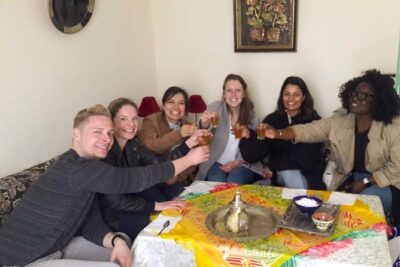
Moroccan Cooking Class & Marrakech Market Visit with Chef Khmisa
Read our review →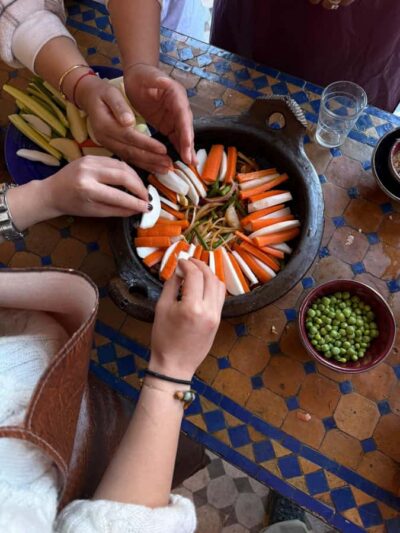
Marrakech: Moroccan Cooking Class with a Local Family
Read our review →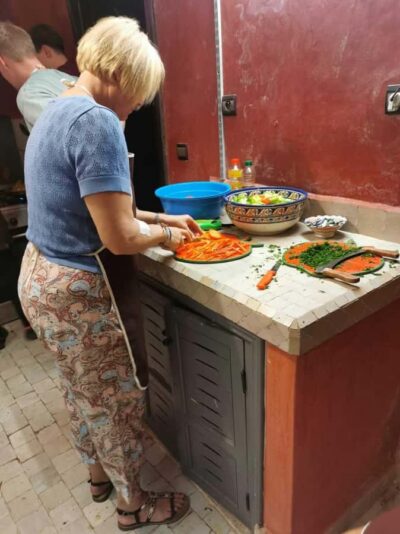
Marrakech: Moroccan Cuisine Cooking Class in Local Home
Read our review →
Marrakech: Moroccan Cooking Workshop at La Maison Arabe
Read our review →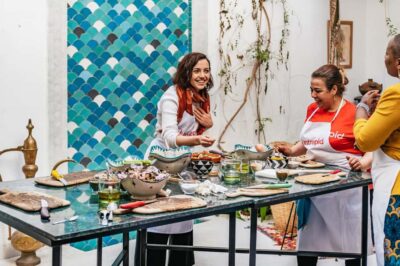
Marrakech: Tajine Cooking Class in a Traditional Riad
Read our review →Browse the lists this tour appears in