Review · KATHMANDU
Kathmandu: Local Women-Led Nepali Cooking & Momo Class
Kathmandu’s best food lesson may begin with a shopping bag and end with a plate of momos you folded yourself. This women-led cooking class takes you through a local market, a working kitchen, and a full Nepali meal, with Nishma, often called Nish, frequently leading the hands-on teaching.
I like the market stop, because you see the vegetables, spices, and other ingredients before they are chopped and cooked. I also like the patient, social teaching style. Nishma and instructors such as Bikram, Vikram, Vicky, and Jojo make room for questions, jokes, and plenty of practice.
The main consideration is the menu. Momo and dal bhat are the core dishes, while the additional choices depend on the option you select. The kitchen also has stairs, and some meeting points may require a taxi or hotel pickup, so check those details before booking.
What makes this Kathmandu cooking class worth your time
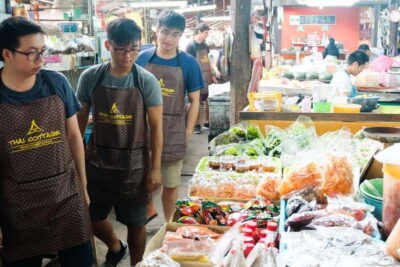
- You shop before you cook: Visit a local market to choose produce, spices, and other ingredients for the meal.
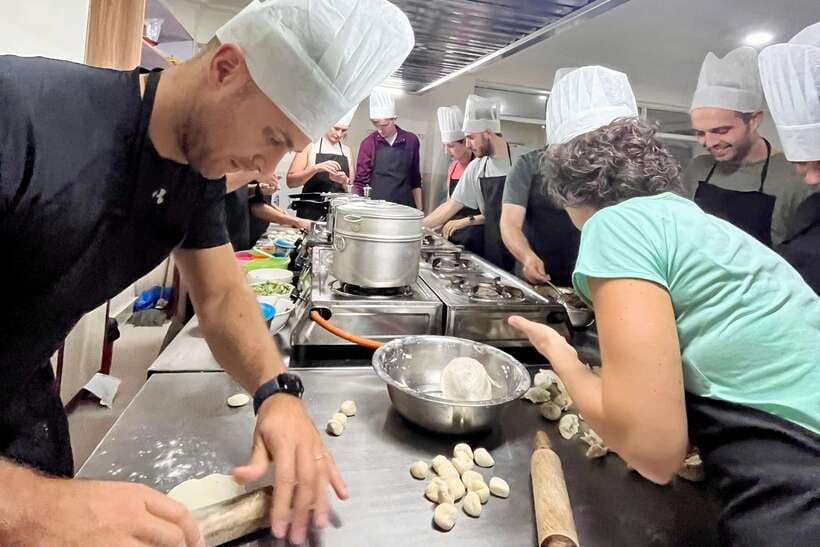
- Momo making is fully hands-on: Prepare fillings, mix dough, shape dumplings, and make dipping sauce.
- The menu goes beyond dumplings: Depending on your selection, you might prepare dal bhat, chatamari, bara, yomari, curry, thukpa, or dessert.
- Nishma leads with patience: Her clear explanations and relaxed manner suit first-time cooks.
- You eat a proper meal: The class ends with the food you prepared, plus Nepali masala tea during the lesson.
- The price is unusually low: At the stated $4 per person, it offers exceptional value, though you should confirm the exact menu and selected option when booking.
Starting in Thamel with a market visit
The experience usually begins at the cooking academy in or around Thamel, though the exact meeting point depends on the option you book. Hotel pickup and drop-off can be added for locations within Kathmandu, which is useful if you are carrying luggage, traveling with children, or simply do not want to navigate the city before breakfast or dinner.
Arrive about 15 minutes early. This gives you time to find the meeting point and settle in before the shopping walk. Some people have found the academy easy to reach on foot from a Thamel hotel, while others have encountered a steep approach or stairs. If you use a taxi, give the driver the precise location rather than relying only on a map pin.
The market visit is short but important. You are not simply being shown a finished dish. You help choose the vegetables, spices, meat, or other ingredients needed for the class. That first step gives you a clearer idea of how Nepali cooking begins, with fresh produce and seasoning decisions rather than a packet of prepared ingredients.
You might want more explanation at the market itself. The strongest part of the teaching comes once you are in the kitchen, so ask questions while shopping if you want to know how a particular spice or vegetable is used. Bring a camera if you enjoy food photography, but keep your hands free for the walk and cooking.
More Hands-On Workshops in the world:
- Half-Day Thai Cooking Class at Organic Farm in Chiang Mai
★ 5.0 · 19,087 reviews - Florence: Pasta Cooking Class with Unlimited Wine
★ 4.9 · 10,285 reviews - 3 in 1 Cooking Class near Navona: Fettuccine, Ravioli & Tiramisu
★ 5.0 · 7,376 reviews
Inside the kitchen with Nishma and the local chefs
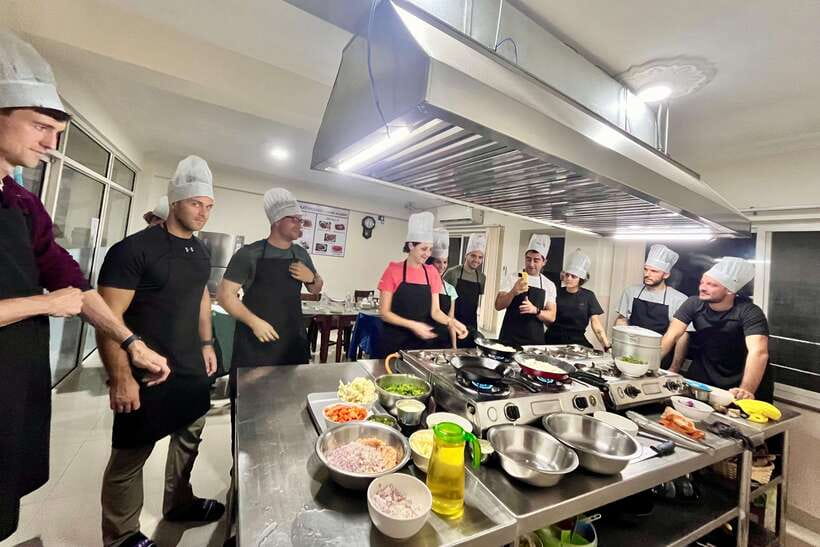
Back at the kitchen, the class settles into a small-group format. Nishma is often the main instructor, with Bikram or another chef helping prepare ingredients and guide the group. The teaching is in English, and the class is designed to keep everyone involved rather than leaving one person to watch while the chef does the work.
That matters with momo. A good dumpling is not only about the filling. You learn how to prepare the mixture, make or handle the dough, form the wrappers, fold the dumplings, and prepare the dipping sauce. The folding takes practice, and the class gives you enough time to try several shapes rather than rushing through one demonstration.
Nishma’s teaching style is a strong part of the experience. She is described as friendly, funny, patient, and easy to talk with. She makes space for questions, and the pace is generally relaxed. If you are shy in a group or not fully confident in English, the activity is still approachable, though you should tell the instructor if you need a slower explanation.
Bikram and the other chefs add support and keep the preparation moving. In a larger group, each person may have a task, from chopping to mixing to shaping. That makes the class social, but it also means your exact role can vary. If you want to practice a particular technique, speak up and ask for a turn.
The kitchen is described as clean and organized, with cooking equipment, aprons, and accessories supplied. You should wear comfortable clothing that you do not mind cooking in. Let the academy know about allergies, medical conditions, or dietary needs before the class begins.
Making momos from filling to final bite
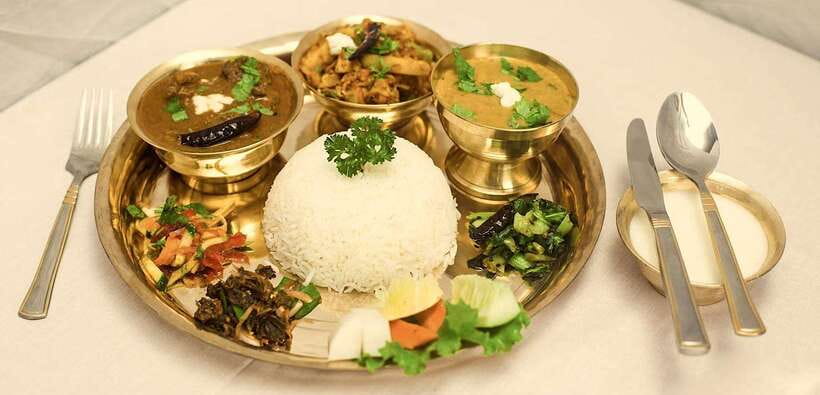
Momos are the heart of the class, and for good reason. They are one of Nepal’s most familiar foods, but making them from scratch gives you a better feel for the work behind a simple-looking plate of dumplings.
You may prepare vegetarian and meat fillings, depending on the chosen menu. Options can include chicken or buffalo, along with vegetables. The class also covers the dough and dipping sauce, so you leave with a complete method rather than one isolated step.
The shaping session is where the class becomes playful. Some people pick up the folds quickly. Others create dumplings that look more like small parcels, which is perfectly fine because they still cook and taste good. The instructors are patient, and the repeated practice makes it easier to remember the technique for home.
At the end, the momos are cooked and served while they are fresh. Portions are generous enough that you should arrive hungry. One participant who could not finish the full serving was given a bag to take the leftovers, though you should not assume this will always be available.
If momos are the main reason you are booking, confirm that your selected session includes the filling you want. The standard focus is momo and dal bhat, but the precise choices can vary. Vegetarian cooking is available, and dietary requests should be made in advance.
Choosing between dal bhat, chatamari, and other dishes
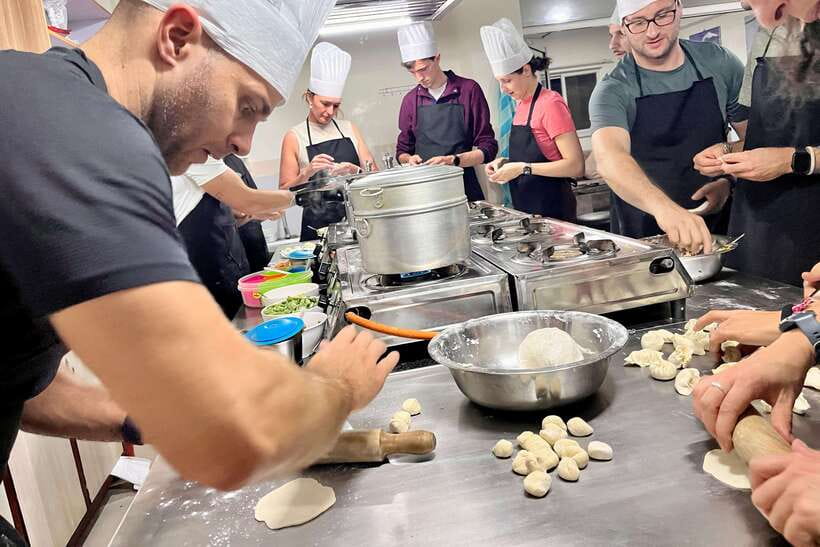
The class can be much more than a momo lesson. Depending on your selected option, you may choose additional Nepali dishes and prepare enough food for a full lunch or dinner.
Dal bhat is the most useful choice if you want a taste of everyday Nepali dining. It combines rice, lentil soup, and curry, and it shows how separate dishes come together as one meal. It is filling and practical, though it may feel less novel than shaping dumplings.
Chatamari is often described as a Nepali pizza, but that comparison only goes so far. It is a distinctive flatbread topped with selected ingredients. It is a good choice if you want to practice a dish that looks different from the familiar momo.
Bara is a lentil patty fried until crisp outside and tender inside. It gives you a different cooking task and works well as a snack or starter. Yomari, filled with jaggery and sesame, brings a sweet element and introduces a traditional dumpling with a very different flavor from momo.
Other possible dishes include Nepali chicken curry with roti, thukpa noodle soup, mushroom choila, carrot pudding, kheer, and aloo chop. Masala tea is included during the lesson, and simple local treats such as peanut sadeko may also appear as an added taste.
Do not expect to cook every dish named in the full menu during one three-hour session. The selection depends on the option you reserve, the class plan, and the time available. Ask before starting if you have your heart set on chatamari, yomari, a meat dish, or a dessert.
A few more cooking classes around the world worth a look
- Florence: Pasta & Tiramisu Cooking Class with Unlimited Wine
★ 4.9 · 6,708 reviews - Florence: Pasta Cooking Class with Unlimited Wine
★ 5.0 · 6,413 reviews - Hanoi Cooking Class: Culture, Local Market & Meaning CSR Impact
★ 5.0 · 5,147 reviews - 5 Traditional Dishes Hanoi Cooking Class with Market Trip
★ 5.0 · 4,890 reviews
Eating what you prepared
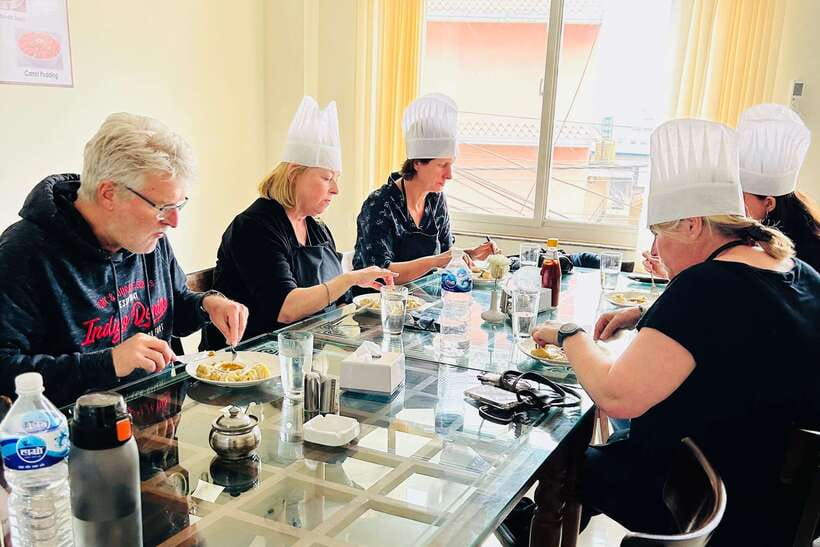
The final meal is more than a tasting spoonful. You sit down with the dishes prepared during the class, which can include several courses and enough food to leave you full. That makes the experience feel like a meal with a lesson attached, not a demonstration followed by a tiny sample.
I find this part especially useful because you can judge the seasoning while the instructions are still fresh. If the momo filling needs more spice or the dipping sauce has a flavor you want to recreate, you can ask immediately. Nepali masala tea rounds out the session and gives you another small taste of local food culture.
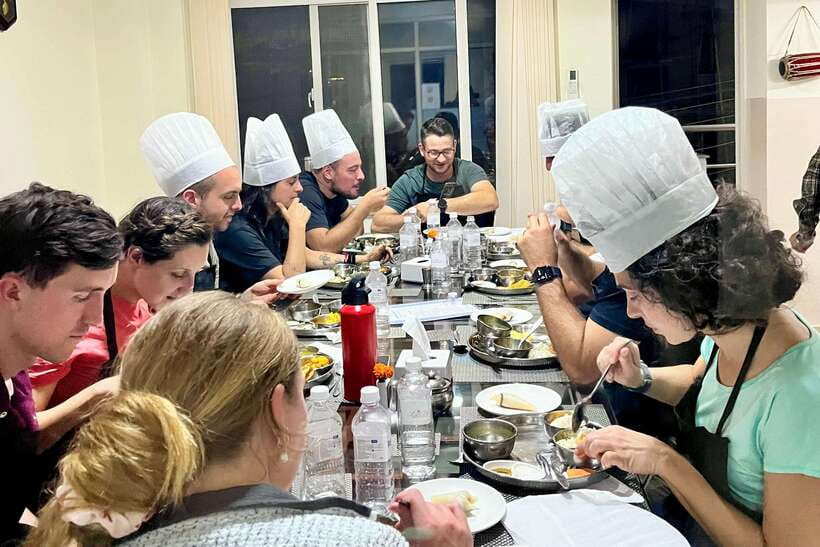
The meal also gives the group time to talk. Several people have enjoyed meeting other cooks from different countries, and the kitchen atmosphere is informal rather than formal or stiff. That social element may be a major plus if you are traveling alone. If you prefer a quiet private lesson, ask about the small-group options before booking.
The food is usually plentiful, but the experience is not designed around luxury dining. You are there to chop, stir, fold, and learn. A slightly uneven momo or improvised fold is part of the fun, not a problem.
Price, timing, and practical value
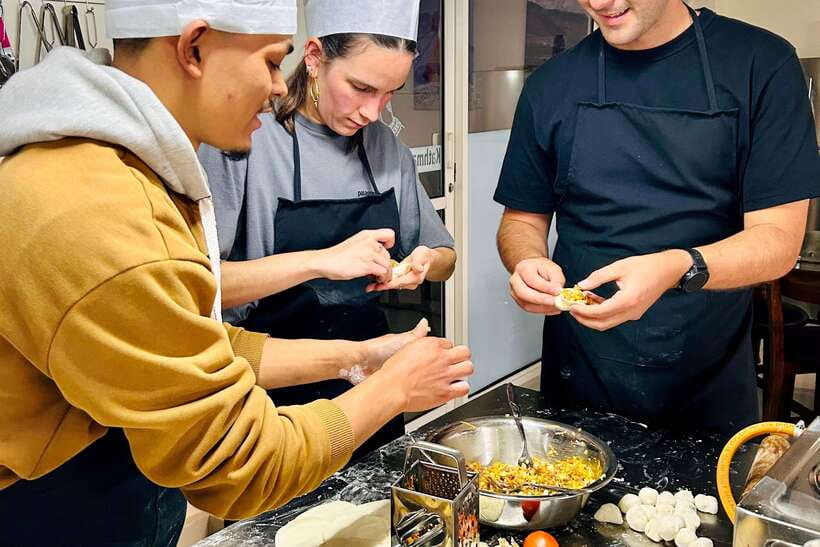
The listed price is $4 per person, which is remarkably low for a three-hour activity that includes a market visit, instruction, ingredients, equipment, cooking, and a meal. At that rate, the class is one of the easiest cultural activities to justify in Kathmandu.
Still, check the booking option carefully. The experience can run from two to four hours, with the usual session lasting about three hours. Pickup and drop-off are included only when you select that option, and specialty or alcoholic drinks cost extra.
The reserve-now-and-pay-later option helps if your Kathmandu schedule may change. Free cancellation is available up to 24 hours before the activity for a full refund. Starting times depend on availability, so choose a session that leaves enough space around your other plans.
The class is not suitable for wheelchair users or people with visual impairments. The academy may involve stairs, and some routes include a steep hill. That is worth checking before you commit, especially if you have mobility concerns.
Who will enjoy this Nepali food lesson most
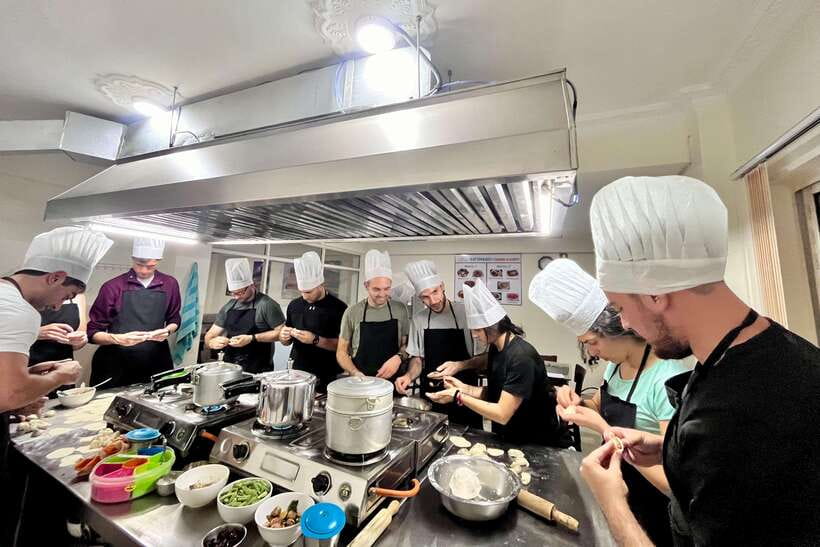
This is a strong choice for first-time cooks. You do not need advanced kitchen skills, and the instructors break the work into clear steps. The momo folding takes patience, but you can learn it with practice.
It also suits experienced home cooks who want recipes they can repeat. The cooking is hands-on, the ingredients are familiar enough to find again, and a PDF recipe book can be shared through WhatsApp after the class if you request it. Physical recipe books are available for an additional cost.
Families and groups of friends should enjoy the shared tasks, provided everyone is comfortable with the kitchen setup. Solo visitors can also fit in well because the small-group setting leaves time to chat with the chefs and other participants.
People with dietary needs should contact the provider in advance. One participant with both vegan and gluten-free requirements was accommodated with millet flour, but that does not mean every request can be handled without prior notice. Ask about substitutions before arrival.
Small drawbacks to keep in mind
The experience is not perfectly uniform in every detail. The meeting point changes by booking option, the class can involve stairs, and the route to the kitchen may be less straightforward than expected. Hotel pickup solves some of that, but only if you add it.
The market portion could also be more detailed for people who want a full food tour. You will shop for the ingredients needed for your cooking, but the main teaching happens in the kitchen. If you want long explanations of every spice and stall, you may find this part brief.
Finally, the long menu can create high expectations. You cannot prepare all of dal bhat, momo, bara, yomari, chatamari, curry, thukpa, choila, and dessert in one short session. Think of the list as a set of possible choices, not a promise that every dish will appear.
Should you book the Kathmandu momo class?
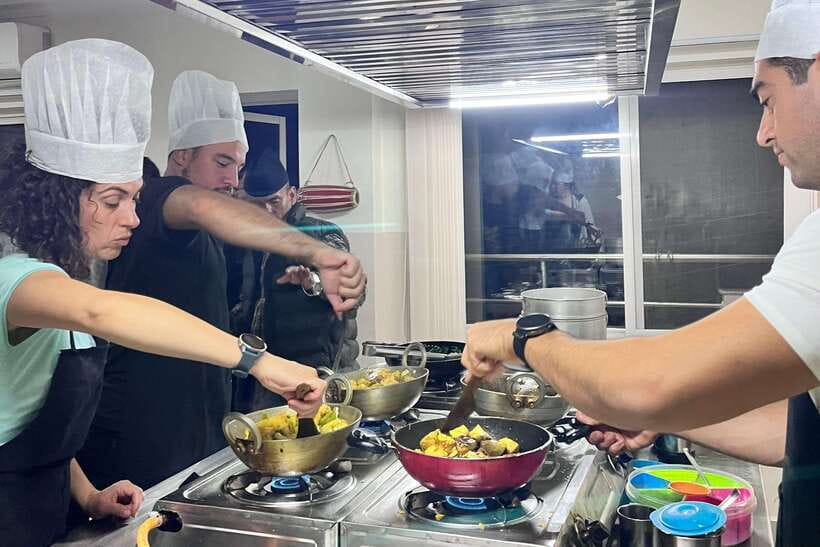
Book it if you want a practical introduction to Nepali food and would rather make your lunch than watch a chef do all the work. The market visit, patient momo instruction, and generous meal give this experience more substance than a standard cooking demonstration.
I would choose a menu that combines momos with one contrasting dish, such as chatamari, bara, or a dessert. Confirm the dishes, filling, dietary arrangements, meeting point, and pickup option before paying.
Skip it if stairs are a serious problem, you want a private luxury kitchen, or your main goal is a long guided market tour. For most people with a few free hours in Kathmandu, though, this is an excellent-value way to meet local cooks, learn a skill you can use at home, and eat a satisfying Nepali meal.
FAQ
How long does the Kathmandu cooking class last?
The activity lasts between two and four hours, with the usual experience taking about three hours. This includes the market visit, cooking session, and meal tasting.
What dishes can I learn to cook?
Momo and dal bhat are the main dishes. Depending on the selected option, you may also prepare chatamari, bara, yomari, chicken curry with roti, thukpa, mushroom choila, carrot pudding, kheer, or aloo chop.
Is the class suitable for vegetarians?
Yes. Vegetarian and meat options are available. Tell the provider about dietary preferences or restrictions in advance.
Is hotel pickup available?
Yes, pickup and drop-off are available if you select that option. Pickup can be arranged from locations within Kathmandu, and you should provide your hotel details when booking.
Is cooking equipment provided?
Yes. Cooking equipment, accessories, and aprons are provided. Wear comfortable clothing and arrive about 15 minutes before the scheduled start.
Can I get the recipes after the class?
Yes. You can request a PDF recipe book through WhatsApp after the class. Physical recipe books are available for an additional cost.
Just added around the world
- A Coruña: Local Market Shopping and Cooking Workshop★ 5.0 · 16 reviews
- Traditional Zanzibar Cooking Class including Spice Tour★ 4.5 · 14 reviews
- Verona: Pasta and Tiramisu Cooking Class with Fine Wine★ 4.8 · 633 reviews
- Vegan/Vegetarian Ramen and Gyoza by Bentoya cooking★ 5.0 · 59 reviews
- Hoi An/Da Nang: Vegetarian Cooking Class & Basket Boat Ride★ 4.8 · 90 reviews
- Hoi An : Vegetarian Cooking Class W Optional Coconut Village★ 4.9 · 28 reviews
- Hoi An Vegan Cooking School with Local Chef and Basket Boat★ 4.8 · 31 reviews
- Tbilisi: Cooking Class with a Local Family★ 5.0 · 104 reviews
Cooking Classes, compared.
Half-Day Thai Cooking Class at Organic Farm in Chiang Mai
Read our review →
Florence: Pasta Cooking Class with Unlimited Wine
Read our review →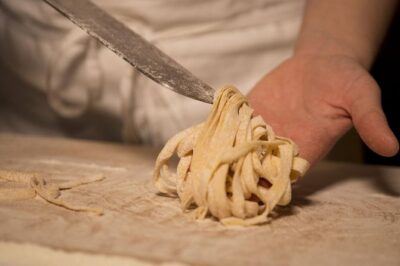
3 in 1 Cooking Class near Navona: Fettuccine, Ravioli & Tiramisu
Read our review →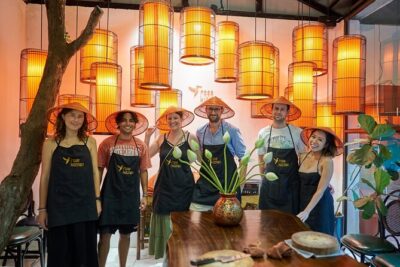
Hanoi Cooking Class: Culture, Local Market & Meaning CSR Impact
Read our review →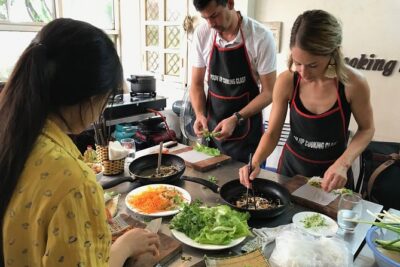
5 Traditional Dishes Hanoi Cooking Class with Market Trip
Read our review →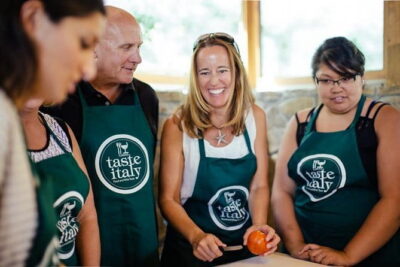
Cooking Class and Lunch at a Tuscan Farmhouse with Local Market Tour from Florence
Read our review →