
Review · INDIAN
Pondicherry: Indian Cooking Class with Market Visit
Pondicherry’s best food lesson starts before you reach the stove. You ride by autorickshaw to a local market, where your instructor explains unfamiliar produce, spices, and ingredients before helping you choose what will become dinner. Back at Sita Cultural Centre, you chop, grate, season, and cook roughly four dishes.
I like the market visit, because it gives the recipes a real local setting instead of treating Indian food as a list of spices. I also like the choice of vegetarian, vegan, North Indian, South Indian, and meat dishes, plus the final meal in the garden on food you helped prepare.
The main caution is that the cooking setup may feel modest and the number of dishes can depend on the group and instructor. One especially negative account described a cramped, poorly maintained space and fewer dishes than expected, so I would confirm the menu and language before booking.
Key points to know before booking
- Goubert Market comes first: Your instructor helps you identify and buy fresh ingredients before the cooking begins.
- You choose the menu: Options can include sambar, meen kozhumbhu, chicken Chettinad, palak paneer, and carrot halwa.
- The class is genuinely hands-on: You may chop vegetables, grate coconut, mix spices, and cook each dish yourself.
- Small groups help: With a maximum of 10 people, you have a better chance to ask questions and take part.
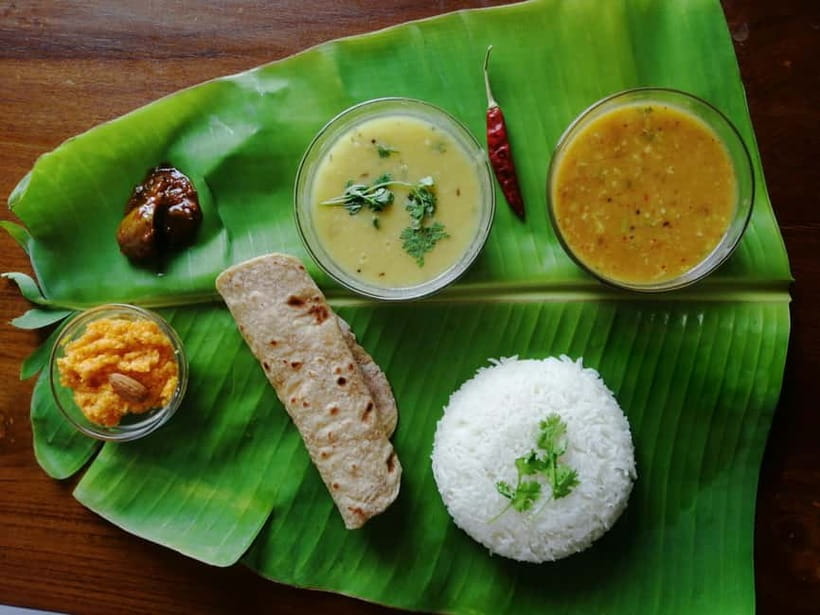
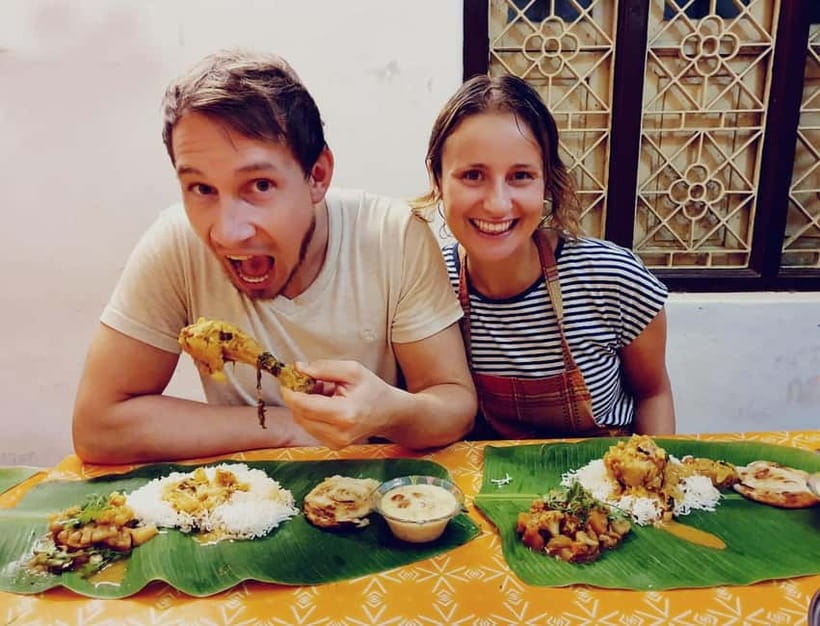
- The meal is included: You eat the dishes you prepare, often served in the garden and sometimes on a banana leaf.
- Ask about language and dish count: English, Hindi, and French are offered, but language arrangements and the final menu should be confirmed.
Why the market visit is the real beginning
The three-hour experience does not begin with a recipe card and a cooking demonstration. It begins with a ride in an autorickshaw to a local vegetable market, where your instructor gives you a short guided tour.
That matters. Indian cooking depends on ingredients that can look unfamiliar if you are seeing them for the first time. A market walk gives you a chance to connect names, shapes, colors, smells, and uses. You may see vegetables, herbs, spices, coconuts, and other produce that would be hard to understand from a printed list alone.
The market is also a useful introduction to everyday Pondicherry. Vendors call out to shoppers, fresh food is arranged for sale, and your instructor explains what is being bought for the class. You are not simply looking around for photographs. The ingredients selected there become part of your meal.
Keerthi, also spelled Keerthy in the feedback, has led some sessions through Goubert Market, while Saranya and Krishti have also been praised for guiding the class. The experience can vary by instructor, but the strongest sessions appear to depend on a teacher who enjoys answering questions and adjusting the menu to the group.
You should expect a working market, not a tidy food museum. It may be crowded, noisy, and visually intense. Wear comfortable clothing and bring a camera if you want pictures, but keep your attention on your guide and the shopping process. Smoking is not allowed during the activity.
More Market Tour Cooking Classes in India
- Jaipur Market Tour & Vegetarian Rajasthani Home Cooking Class
★ 5.0 · 113 reviews - Spice Knight (Cooking Class -> Meal -> Local Market walk)
★ 5.0 · 59 reviews - New Delhi: Traditional Indian Cooking Class & Market Visit
★ 5.0 · 32 reviews
Choosing four dishes from several Indian traditions
After the market visit, you return to the cooking school and begin the practical part of the class. The menu is flexible rather than fixed, with choices from South Indian and North Indian cooking. Vegetarian and vegan food are available, along with meat dishes.
The advertised format is about four recipes. That might give your group a balanced meal with a main dish, a vegetable preparation, a lentil or gravy dish, and dessert. It is worth asking how many separate dishes your group will actually prepare, since at least one session delivered fewer than the expected four. This is a small point, but it affects the value of a three-hour class.
Possible dishes include:
- Meen kozhumbhu, a Pondicherry-style fish curry
- Sambar, made with lentils and vegetables
- Chicken Chettinad
- Palak paneer
- Carrot halwa
- Spiced potato preparations
- Dishes using banana stem or other local produce
These examples show the range. Meen kozhumbhu and chicken Chettinad give meat eaters a taste of regional cooking, while sambar and palak paneer offer familiar entry points for vegetarians. Carrot halwa adds a sweet course and gives you a chance to see how Indian desserts use milk, sugar, nuts, and dried fruit.
The banana stem is a particularly interesting possibility. One group had never seen it before, asked how it was prepared, and had it added to the menu. That kind of adjustment is one of the strongest reasons to ask questions rather than simply accept the first menu offered.
You should mention allergies, dietary restrictions, and preferences when booking. The class can accommodate vegetarian and vegan choices, but the cooking school needs that information in advance. If you eat meat, you can still choose a menu that includes local vegetarian dishes rather than ordering an all-meat meal.
What you actually do at the stove
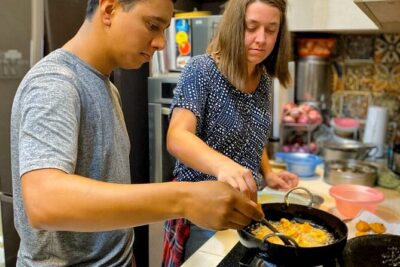
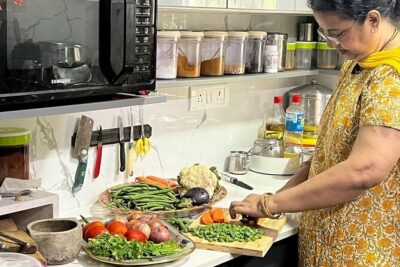
This is not meant to be a demonstration where you sit back and watch a cook work. The class is designed around participation. You may chop vegetables, grate coconut, measure or combine spices, and follow each stage of the cooking process.
I like this format because Indian food often depends on timing and sequence. You learn when ingredients are added, how a sauce changes as it cooks, and how spices are used with vegetables, lentils, paneer, fish, or chicken. The teacher can also explain possible variations, which is more useful than memorizing one rigid version of a dish.
The instructors are expected to work step by step, so you can ask about ingredients or methods as you go. The sessions taught by Saranya, Krishti, and Keerthi have received particular praise for friendly guidance and clear explanations. Still, instruction is not identical every time. One session was described as poorly organized, with an instructor who tried hard but did not meet the expected cooking standard.
That contrast suggests a practical approach: treat this as a small local class, not a professional culinary school. You are paying $24 per person for market access, ingredients, instruction, transport during the activity, and a meal. At that price, the value is strongest when you want cultural contact and active participation. It is weaker if you expect polished facilities, restaurant-level teaching, or a strict cooking curriculum.
Eating your work in the garden
The class ends with lunch or dinner made by the group. You sit together in the garden, share the food, and talk with the other participants. The meal is not an extra tasting added to the schedule. It is the payoff for the chopping, grating, stirring, and waiting.
Some sessions have served the finished food on a banana leaf, which makes the meal feel tied to local dining customs. That detail is simple but memorable. You can see the entire path from market ingredient to prepared dish, then eat the result with the people who helped make it.
The social side is part of the value. The maximum group size is 10, and the class is built around conversation. If you are traveling alone, this gives you an easy way to meet people without the forced structure of a sightseeing group. If you are traveling with family, children above age six can take part, and children aged 11 and 13 have enjoyed cooking alongside adults.
Do not expect a quiet, private dinner. You share the table and the menu with the group, and the pace depends on how quickly everyone works. That is a benefit if you like a relaxed social meal. It may be less appealing if you want a private lesson or a quick dinner before another fixed appointment.
More Indian Cooking Classes in India:
- Indian Cooking Class in an Authentic Local Home – Learn 6 Dishes
★ 5.0 · 195 reviews - Authentic Indian Cooking Classes at Palolem Beach Road Goa
★ 5.0 · 132 reviews - Mumbai: Indian Cooking Class & Cultural Delights
★ 5.0 · 38 reviews - Private South Indian Tamil Cooking Class in Chennai with Srividya
★ 5.0 · 24 reviews
The recipe booklet makes the lesson more useful
After the class, you receive an electronic booklet with the recipes you learned. This is a small but important inclusion. Without written instructions, even a good cooking lesson can fade into a pleasant memory once you leave India.
The booklet gives you a better chance of repeating at least some of the dishes at home. You can also use it to remember the spice combinations and preparation steps, particularly for recipes that were new to you.
Its usefulness depends on how closely it matches the actual menu. Since the dishes can be chosen around the group, check that the recipes you cooked are included. If you are especially interested in banana stem, meen kozhumbhu, chicken Chettinad, or carrot halwa, ask whether those recipes will be provided.
Price, group size, and what is included
At $24 per person, the price is fair for an experience that combines a market visit, local transport by autorickshaw, a cooking class, ingredients, a prepared meal, and a recipe booklet. You are paying for more than food. You are also paying for help navigating a market that might feel difficult to approach alone.
The small group limit of 10 is important. A class with too many people can turn hands-on cooking into a queue for the chopping board. Ten participants is still enough for a social atmosphere, but it should allow more direct contact with the instructor than a large demonstration.
Transport to and from the cooking class location is not included. The autorickshaw ride connected with the market visit is included, but you need to make your own way to the starting point and leave afterward. Build in a little extra time around the three-hour activity so you are not rushing to another booking.
The booking terms are flexible. You can cancel up to 24 hours before the activity for a full refund, and you can reserve now and pay later. Starting times vary, so check availability for the date you want.
Language, facilities, and the points to clarify
The session is offered in English, Hindi, or French. This is useful in Pondicherry, where French remains part of the city’s cultural identity and some visitors may prefer instruction in French.
You should still confirm the teaching language before the day of the class. One booking selected French but received English instruction instead. The participants could manage in English, but the mismatch was frustrating. If language matters to your enjoyment or understanding, do not assume the selected option will be automatic.
The physical setting is another point to keep in mind. Most of the available information presents the class as a friendly cultural center with a garden, but one very critical account described a cramped kitchen and poor hygiene. That experience does not match the more positive sessions, yet it is specific enough to take seriously.
I would ask two direct questions before booking:
- How many dishes will the group prepare?
- Which language and instructor are confirmed for my date?
You can also mention allergies, ask about meat or fish choices, and confirm whether the final meal will include the dishes you most want to learn. Those questions take little effort and can prevent disappointment.
Who will get the most from this Pondicherry class
I would recommend the experience to you if you enjoy food as a way to understand a place. It suits curious eaters who want to handle ingredients, ask questions, and share a meal rather than simply order dishes in a restaurant.
It is also a good fit for families with children over six, especially if the children like practical activities. The class gives them clear jobs and lets them eat the result. Teenagers may find the market and cooking more engaging than another formal tour.
Vegetarians and vegans have good reason to consider it, since those menus are specifically offered. Meat eaters also have plenty of choice, including chicken Chettinad and fish curry. You do not need advanced cooking skills, but you should be ready to participate.
I would be cautious if you want high-end facilities, exact recipe control, or a private professional lesson. The value depends heavily on the instructor and the condition of the cooking space. It is best approached as a local cultural activity with food at its center, not as a polished culinary institute.
Should you book it?
Book this class if the market visit, local ingredients, and shared meal sound as appealing as the cooking itself. The strongest version gives you a rare look at everyday food shopping, lets you choose dishes, and sends you home with recipes you can use.
Before paying, confirm the language, the expected number of recipes, and any dietary needs. If those details are settled, $24 is a reasonable price for three hours that combine market transport, instruction, ingredients, dinner, and a social evening in Pondicherry.
FAQ
How long does the Pondicherry cooking class last?
The experience lasts three hours, including the market visit, autorickshaw transport connected with the visit, cooking session, and meal.
What languages are available?
The class can be taught in English, Hindi, or French. If you need French instruction, confirm the language before the activity.
Is the market visit included?
Yes. The experience includes transport by autorickshaw for the visit to a local vegetable market and guidance from the instructor.
How many people can join the class?
The activity is limited to 10 participants, making it a small-group experience.
Can I choose vegetarian or vegan dishes?
Yes. You can choose from vegetarian, vegan, non-vegetarian, South Indian, and North Indian recipes. Tell the provider about allergies or dietary restrictions in advance.
What dishes might I learn to cook?
Possible recipes include meen kozhumbhu, sambar, carrot halwa, palak paneer, chicken Chettinad, and other dishes based on the group’s choices and available ingredients.
Are children allowed to join?
Children above six years old are welcome. The activity is not suitable for children under six.
Is transport to the cooking class included?
Transport connected with the market visit is included, but transportation to and from the cooking class location is not included.
What do I receive after the class?
You receive an electronic booklet with the recipes taught during the session. The meal you prepare is also included.
Can I cancel the booking?
You can cancel up to 24 hours in advance for a full refund. The activity also offers a reserve-now, pay-later option.
More Hands-On Workshops in India
- Pink City Cooking Class
★ 5.0 · 452 reviews - Five Course Cooking Class & Meal
★ 5.0 · 250 reviews - Veg and Non veg : Private Cooking Class in Delhi home (7 meal)
★ 5.0 · 226 reviews - Cooking Class in Jaipur – Family Experience with Meal & Transport
★ 5.0 · 101 reviews
More Shopping Trips in India
- Hanoi Cooking Class: Culture, Local Market & Meaning CSR Impact
★ 5.0 · 5,147 reviews - 5 Traditional Dishes Hanoi Cooking Class with Market Trip
★ 5.0 · 4,890 reviews - Cooking Class and Lunch at a Tuscan Farmhouse with Local Market Tour from Florence
★ 5.0 · 4,831 reviews - Chiang Mai: Cooking Class, Market & Thai Herbs Garden Tour
★ 4.9 · 4,824 reviews
Just added around India
- Small Group Authentic Mumbai Virtual Cooking Class with Dessert★ 5.0 · 15 reviews
- Private Vegetarian Indian Cooking Class in Mumbai★ 5.0 · 17 reviews
- Indian Curry 5-Hour Cooking Classes In Mumbai★ 5.0 · 22 reviews
- Mumbai: Indian Cooking Class & Cultural Delights★ 5.0 · 38 reviews
- New Delhi: Traditional Indian Cooking Class & Market Visit★ 5.0 · 32 reviews
- Authentic Indian Cooking Classes at Palolem Beach Road Goa★ 5.0 · 132 reviews
- Jaipur Market Tour & Vegetarian Rajasthani Home Cooking Class★ 5.0 · 113 reviews
- Indian Cooking Class in an Authentic Local Home – Learn 6 Dishes★ 5.0 · 195 reviews
Indian Cooking Classes, compared.
Indian Cooking Class in an Authentic Local Home – Learn 6 Dishes
Read our review →
Authentic Indian Cooking Classes at Palolem Beach Road Goa
Read our review →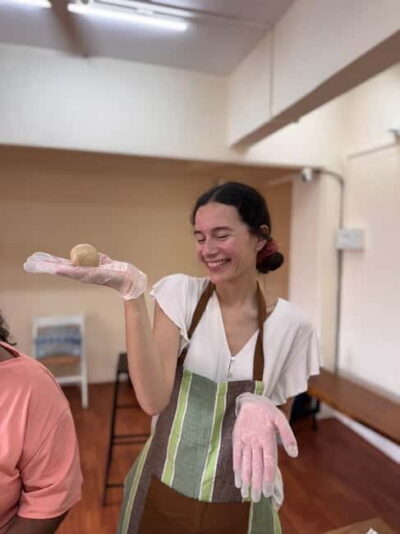
Mumbai: Indian Cooking Class & Cultural Delights
Read our review →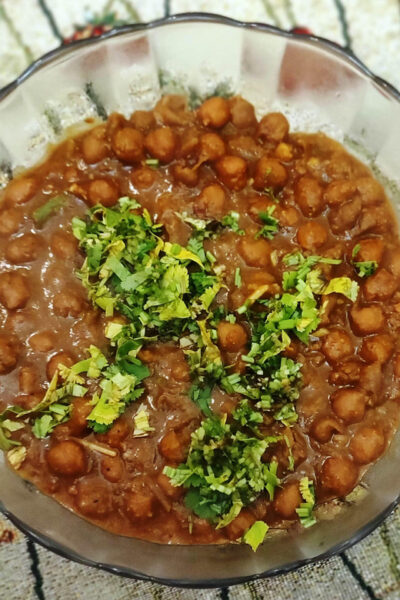
New Delhi: Traditional Indian Cooking Class & Market Visit
Read our review →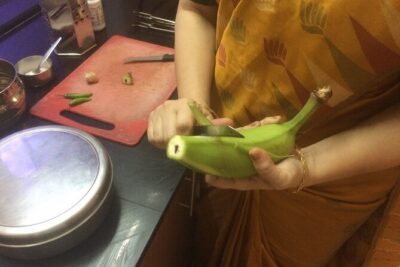
Private South Indian Tamil Cooking Class in Chennai with Srividya
Read our review →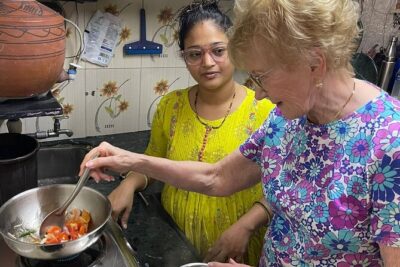
South Indian Vegetarian Cooking Class in Chennai with Meena
Read our review →Private Vegetarian Indian Cooking Class in Mumbai
Read our review →Browse the lists this tour appears in