Review · TBILISI
Tbilisi: Georgian Cooking Class with Khinkali and Khachapuri
Tbilisi’s best food lesson may be the one where you make two national favorites with your own hands, then sit down to eat them. At St. Bunny, you’ll shape khinkali and prepare Imeretian khachapuri while a chef guides each step, with Georgian wine, cheese, and salad served along the way.
I like the small-group feel and the generous amount of food for $28. I also like that the class goes beyond recipes, with stories about Tbilisi and Georgian food traditions. The main thing to know is that this is held in a restaurant courtyard and dining space, not in a working kitchen, and the session can feel as much like a shared meal as a formal cooking lesson.
Key points to know before booking
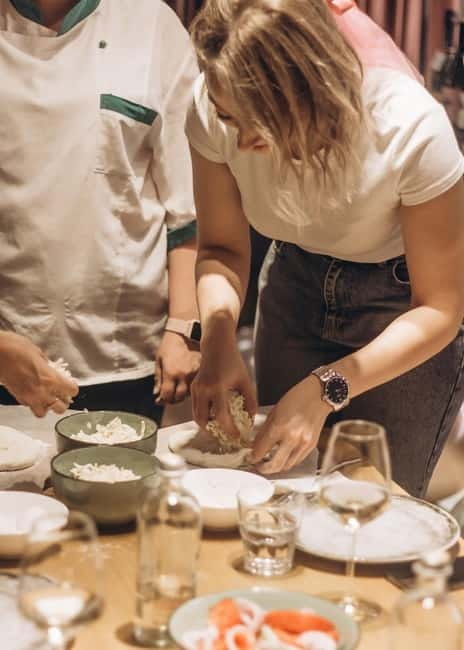
- Two Georgian classics: You prepare khinkali dumplings and Imeretian khachapuri, then eat your work.
- A social setting: Solo visitors can easily meet people from other countries during the class and meal.
- Patient instruction: Chefs including Artem, Nino, George, Nina, Seva, and others have led sessions in English or Russian.
- Plenty of extras: Local cheeses, tomato and cucumber salad, Kakheti aromatic oil, and homemade Georgian wine are included.
- A central meeting point: St. Bunny is on the third floor of Merani shopping center, near Rustaveli Avenue.
- A full 2.5 hours: The pace leaves room for cooking, cultural stories, eating, and conversation.
Why khinkali and khachapuri make a smart first taste of Georgia
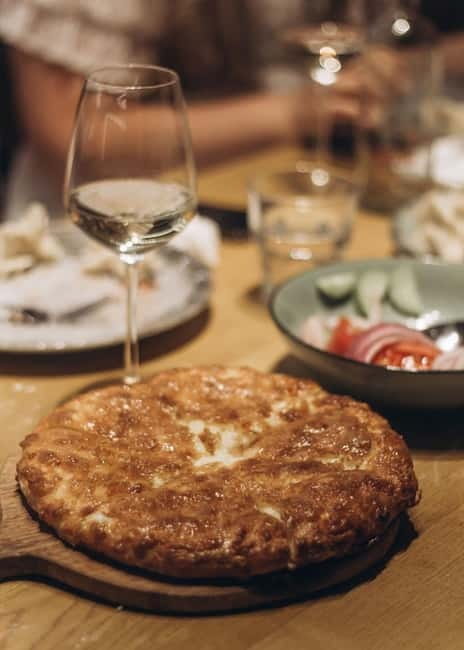
If you have only a short time in Georgia, these are sensible dishes to learn. Khinkali gives you a lesson in dough, filling, seasoning, and careful folding. Khachapuri shows the other side of Georgian comfort food: soft dough, salty cheese, and the pleasure of tearing off a hot piece with your hands.
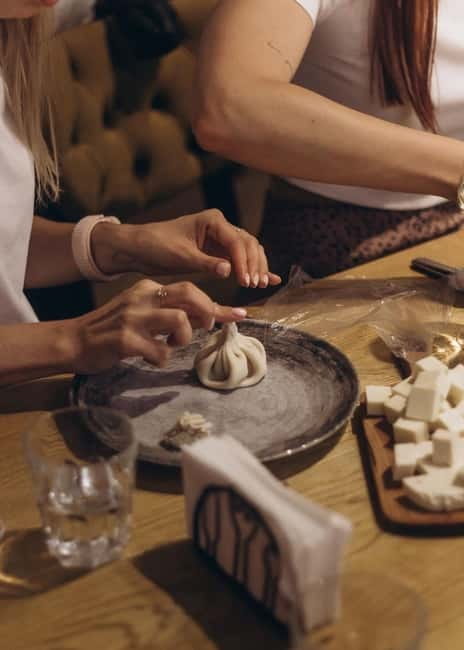
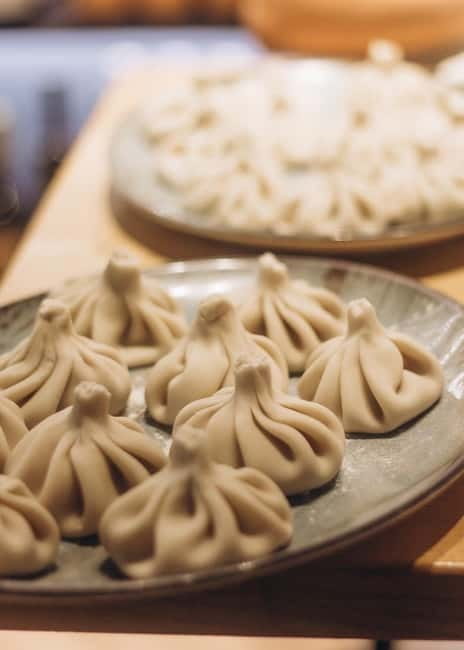
Khinkali are Georgian soup dumplings, usually filled with meat, herbs, and broth. The folding matters. You gather the dough around the filling, create a pleated top, and seal it well enough to hold the juices. It looks simple until you try to make a neat pouch.
The class makes this process approachable. The chef works step by step, watches your hands, and corrects the folds as you go. Several instructors, including Artem and George, have been praised for clear explanations, patience, and humor. That matters because the first dumpling can look more like a small wrinkled bag than a restaurant-ready khinkali.
The second dish is Imeretian khachapuri. Unlike Adjarian khachapuri, the boat-shaped version topped with an egg that you may see elsewhere in Georgia, Imeretian khachapuri is round and filled with cheese. It is a useful distinction, especially if you plan to eat your way around the country and want to recognize regional styles.
More Hands-On Workshops in the world:
- Half-Day Thai Cooking Class at Organic Farm in Chiang Mai
★ 5.0 · 19,087 reviews - Florence: Pasta Cooking Class with Unlimited Wine
★ 4.9 · 10,285 reviews - 3 in 1 Cooking Class near Navona: Fettuccine, Ravioli & Tiramisu
★ 5.0 · 7,376 reviews
Arriving at St. Bunny near Rustaveli Avenue
The meeting point is Restaurant St. Bunny, on the third floor of the Merani shopping center. You can enter from central Rustaveli Avenue or from parallel Alexander Griboyedov Street.
This is convenient if you are already exploring central Tbilisi. Give yourself a little time to find the correct entrance and reach the third floor, since the class does not meet in a street-level kitchen. The separate entrance mentioned for the activity may help you avoid waiting with ordinary restaurant customers.
The setting is part of the appeal. The restaurant occupies a distinctive building with an artistic, historic feel, and the class takes place in a Georgian courtyard atmosphere rather than a plain classroom. That makes the session feel connected to Tbilisi, even though the actual cooking setup is not a professional kitchen.
This point is worth spelling out. If you want to watch chefs working in a busy Georgian restaurant kitchen, this is not that kind of experience. You are cooking in a prepared restaurant setting with ingredients and equipment arranged for the class. For most people, that means an easier and less hectic lesson, but it may feel less authentic to serious culinary students.
The opening table: wine, cheese, and Georgian produce
The session begins with food already on the table. You receive an assortment of Georgian cheeses, a salad of tomatoes and cucumbers, and Kakheti aromatic oil. A glass of homemade Georgian wine is included.
This is not filler. Georgian meals often work best as a shared table, with fresh produce, salty cheese, bread, and wine appearing alongside the main dishes. The opening course gives you a quick taste of that pattern before you begin cooking.
The tomatoes and cucumbers are paired with aromatic oil from Kakheti, Georgia’s major wine region. The food is simple, but it helps you pay attention to the ingredients. The class also provides plenty of salad to take home, which is useful if you are hungry before the main cooking begins.
The wine portion is limited to what is included in the experience. You can order additional wine or food separately if you wish, but those extras are not part of the $28 price. That gives you control over spending, though it is worth remembering if you expect an open bar or a full wine tasting.
Folding khinkali with a chef at your elbow

The khinkali lesson is the most hands-on part of the class. You work with dough and filling, then learn how to bring the edges together into the familiar pleated shape. The instructor demonstrates the method and helps you through the awkward first attempts.
You should expect plenty of direct supervision. Past sessions have included chefs called Artem, Nino, Nina, George, and Seva, and the consistent strength of the instruction is patience. The class is designed so that beginners can follow along, not so that experienced cooks can race ahead.
That makes it a good pick for families with older children and for people who rarely cook. One session included teenagers, and another visitor described the repeated folding as almost therapeutic. There is a pleasant rhythm to the work: fill, gather, pinch, and try again.
The one limitation is that not every participant may get equal hands-on time with every stage. One person noted that they would have preferred everyone to work directly on both recipes. In a small group, this is less of a concern, but it can happen when the chef demonstrates or divides tasks.
Group size appears to vary. Some sessions have been intimate, with only four people, while larger groups of around ten have also taken part. A small group gives you more time with the chef. A bigger group creates more conversation but may mean waiting briefly while instructions are repeated.
A few more cooking classes around the world worth a look
- Florence: Pasta & Tiramisu Cooking Class with Unlimited Wine
★ 4.9 · 6,708 reviews - Florence: Pasta Cooking Class with Unlimited Wine
★ 5.0 · 6,413 reviews - Hanoi Cooking Class: Culture, Local Market & Meaning CSR Impact
★ 5.0 · 5,147 reviews - 5 Traditional Dishes Hanoi Cooking Class with Market Trip
★ 5.0 · 4,890 reviews
Making Imeretian khachapuri, then eating it hot
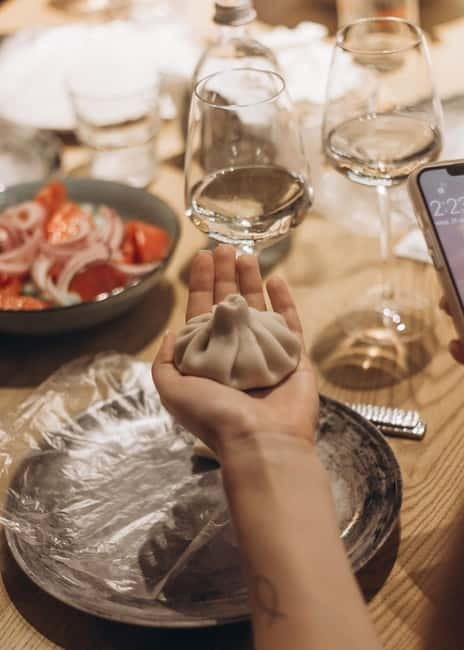
The khachapuri portion is less fiddly than the khinkali folding, but it still teaches useful basics. You prepare the dough, add the cheese filling, seal the bread, and shape it before it is cooked.
The payoff comes quickly. Once the khachapuri is ready, you can eat it while it is fresh, with the cheese still soft and warm. The salad, cheese plate, and wine round out the meal, so you are not just sampling one small piece of what you made.
Be aware that the khachapuri style may not be the boat-shaped Adjarian version you have seen in photographs. This class focuses on Imeretian khachapuri. That is a good thing if you want to learn a less obvious regional style, but it can surprise you if you booked mainly to recreate the famous egg-topped boat at home.
The portions are generous. One participant found the amount too large and suggested making half as much to avoid waste. Most people will appreciate leaving full, especially after a day of sightseeing, but you should arrive ready for a substantial meal rather than a light workshop.
Tbilisi stories and a shared table
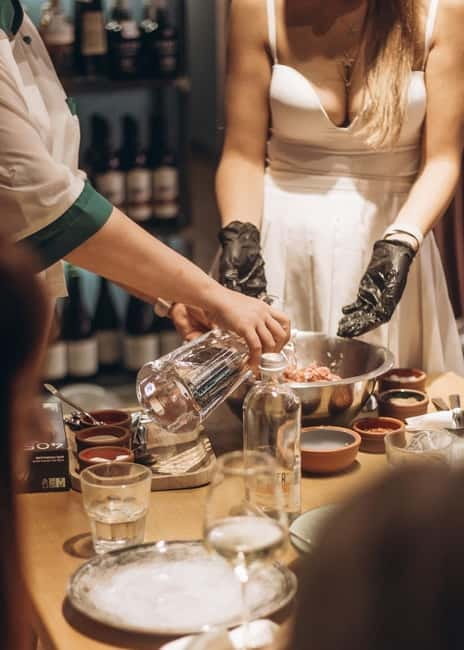
The class includes entertaining stories about Tbilisi, the dishes, and Georgian food culture. These short explanations give the cooking a sense of place. You are not simply learning how to seal dough. You are hearing why these foods matter at Georgian tables.
The social side is just as important. People arrive as couples, friends, families, and solo visitors, then often continue talking over the meal. The structure makes conversation easy because everyone is working toward the same dinner.
I would particularly recommend this for solo visitors who want a low-pressure way to meet people. The class has brought together people from several countries, and the shared work removes the awkwardness of sitting alone at a restaurant table.
It can also be a good first-night activity. You learn two dishes you are likely to see throughout Georgia, pick up a few cultural facts, and get an immediate introduction to the country’s generous food habits. Just keep your sightseeing schedule realistic, since the full session lasts about two and a half hours.
Eating your own work at the end
The final meal is the strongest part of the value. You do not cook and then leave with a small sample. You sit down in a festive atmosphere and eat the khinkali and khachapuri you helped prepare.
That changes the class from a demonstration into a complete evening activity. You get instruction, food, wine, conversation, and the satisfaction of seeing whether your dumpling folds actually held together.
The food quality has also drawn strong praise. The ingredients are described as fresh and high quality, and the dishes are prepared quickly enough that you are not waiting a long time after the lesson. The only tradeoff is the large quantity, so ask about taking leftovers with you if the meal is more than you can finish.
Recipes are another useful finish. The class has provided recipe links or recipes at the end, allowing you to repeat the dishes at home. That gives the $28 fee value beyond the afternoon itself, especially if you enjoy cooking and want a practical souvenir rather than another object in your luggage.
What the $28 price really includes
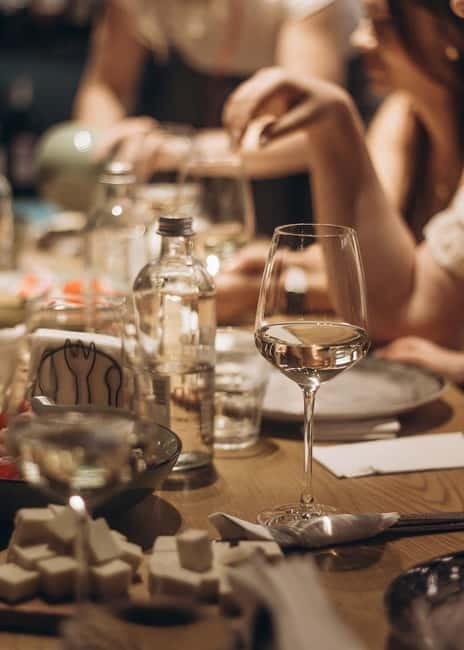
At $28 per person, this is inexpensive for a 2.5-hour activity that includes two cooking lessons, a cheese plate, salad, homemade wine, and the meal you make. You are paying for a full food experience, not just a short demonstration.
The best comparison is not with a cheap restaurant meal. It is with the cost of ordering khinkali and khachapuri, then adding a wine tasting and a guided cultural activity. Here, you get the food plus the skill of making it.
The value is strongest for solo visitors and couples who want one organized activity with a social element. It is also good for anyone who would otherwise spend an evening eating Georgian food without learning anything about it.
Plan for extra spending only if you want additional wine or a la carte food. Those are not included. Since the basic meal is already filling, you may not need much more.
Who will enjoy this class most
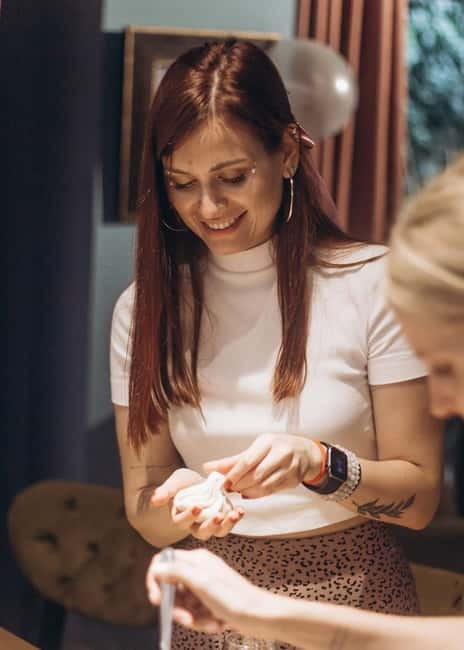
You should book this if you enjoy practical activities, want to meet people, or are curious about Georgian food beyond simply ordering it. Beginners are welcome, and the step-by-step approach means you do not need advanced cooking skills.
It suits:
- Solo visitors looking for an easy social activity
- Couples who want more than a standard restaurant meal
- Families with older children and teenagers
- First-time visitors who want a quick introduction to Georgian cuisine
- Home cooks who want recipes they can use later
- Anyone who likes generous portions and a relaxed pace
You may want something else if your main goal is professional culinary training, a market visit, or a lesson inside a working kitchen. This is a friendly restaurant-based class, with dining and conversation given nearly as much weight as technique.
The instruction languages are English and Russian. Wheelchair access is available, though the third-floor location at a shopping center is still worth confirming when you book if you have specific mobility needs.
Booking, timing, and cancellation details
The activity lasts about two and a half hours, with starting times shown according to availability. You can reserve now and pay later, which helps if you are still arranging your Tbilisi days.
Free cancellation is available up to 24 hours before the experience for a full refund. That is useful if your travel plans depend on weather, delayed transport, or a changing sightseeing schedule.
The meeting point is St. Bunny in Merani shopping center. Use either Rustaveli Avenue or Alexander Griboyedov Street to enter, then go to the third floor. The class is offered in English or Russian, and a separate entrance is available for the activity.
Should you book this Tbilisi cooking class?
I would book it if you want an affordable, filling, social introduction to Georgia. The mix of khinkali folding, Imeretian khachapuri, local cheese, Kakheti oil, wine, and Tbilisi stories gives you plenty for the price.
Go in expecting a warm restaurant class rather than a chef school. The group may be small or larger, the meal is generous, and the lesson can lean toward shared dining after the cooking is finished. For most people, those are advantages. If you want to leave Tbilisi able to shape a proper dumpling and recreate Georgian comfort food at home, this is a very sensible choice.
FAQ
Where is the cooking class held?
The class is held at Restaurant St. Bunny on the third floor of the Merani shopping center in Tbilisi. You can enter from Rustaveli Avenue or Alexander Griboyedov Street.
How long does the experience last?
The cooking class lasts approximately 2.5 hours.
Which dishes will I learn to cook?
You will learn to prepare khinkali and Imeretian khachapuri.
Is the khachapuri Adjarian or Imeretian?
The class teaches Imeretian khachapuri, not the boat-shaped Adjarian style.
What food is included?
The package includes the khinkali and khachapuri you prepare, local Georgian cheeses, a tomato and cucumber salad with Kakheti aromatic oil, and homemade Georgian wine.
Is wine included in the price?
Yes. Georgian homemade wine is included. Additional wine or a la carte food costs extra.
Which languages are offered?
The instructors teach in English and Russian.
Is the activity wheelchair accessible?
Yes, the activity is listed as wheelchair accessible.
Can I cancel for a full refund?
Yes. You can cancel up to 24 hours in advance for a full refund.
Can I reserve without paying immediately?
Yes. The reserve-now, pay-later option lets you hold a place without paying at the time of booking.
Just added around the world
- A Coruña: Local Market Shopping and Cooking Workshop★ 5.0 · 16 reviews
- Vegan/Vegetarian Ramen and Gyoza by Bentoya cooking★ 5.0 · 59 reviews
- Traditional Zanzibar Cooking Class including Spice Tour★ 4.5 · 14 reviews
- Verona: Pasta and Tiramisu Cooking Class with Fine Wine★ 4.8 · 633 reviews
- Tbilisi: Cooking Class with a Local Family★ 5.0 · 104 reviews
- Thessaloniki: Cooking & Dining Experience with Greek Family★ 4.9 · 85 reviews
- NGO Lifted Strong – Traditional Tanzanian Cooking Class★ 5.0 · 39 reviews
- 5 Hours Private Cooking Classes in Langadas Thessalonikis★ 5.0 · 14 reviews
Cooking Classes, compared.
Half-Day Thai Cooking Class at Organic Farm in Chiang Mai
Read our review →
Florence: Pasta Cooking Class with Unlimited Wine
Read our review →
3 in 1 Cooking Class near Navona: Fettuccine, Ravioli & Tiramisu
Read our review →
Hanoi Cooking Class: Culture, Local Market & Meaning CSR Impact
Read our review →
5 Traditional Dishes Hanoi Cooking Class with Market Trip
Read our review →
Cooking Class and Lunch at a Tuscan Farmhouse with Local Market Tour from Florence
Read our review →