
Review · KYOTO
Private Cooking Class Udon in Kyoto Japan
The best part of this Kyoto cooking class is the setting: you make noodles inside a beautifully restored 120 to 130-year-old townhouse filled with antique furniture and traditional music. I like the hands-on method, especially the playful foot-stomping step, and I like that you eat the udon you made soon after class.
The local teachers, including Tanaka and Hisayu, keep the lesson friendly and easy to follow in English. The class is also a fine choice for families because children can take part in nearly every step. The main drawback is that the listed class lasts about one hour, but lunch and cleanup can keep you there much longer, so do not schedule a tight afternoon connection.
Key points at a glance
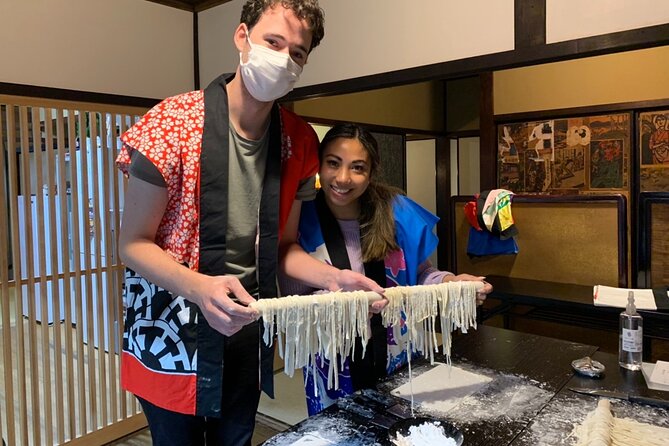
- Make udon from flour to finished noodles: Mix saltwater, knead the dough, stomp it, let it rest, roll it, cut it, and boil it.
- Learn inside an old Kyoto townhouse: The building sits about 12 minutes on foot from Kyoto Station and two minutes from Nishi Honganji Temple.
- Eat your own noodles for lunch: Your udon comes with dipping broth, vegetable tempura, ginger, and green onion.
- A strong family activity: Children can participate without handling the boiling water, which the instructors take care of.
- Local teachers add cultural context: Tanaka and Hisayu explain the food and its place in Japanese culture in a lively, approachable way.
- Private booking for your group: Only your party participates, with mobile tickets and free cancellation up to 24 hours before the start time.
Entering a Kyoto townhouse near Nishi Honganji
The meeting point is at 364 Momijicho in Shimogyo Ward, a useful location for a midday activity. You can walk there from Kyoto Station in about 12 minutes, and Nishi Honganji Temple is only about two minutes away. That makes this an easy addition to a morning around the station or a temple visit before lunch.
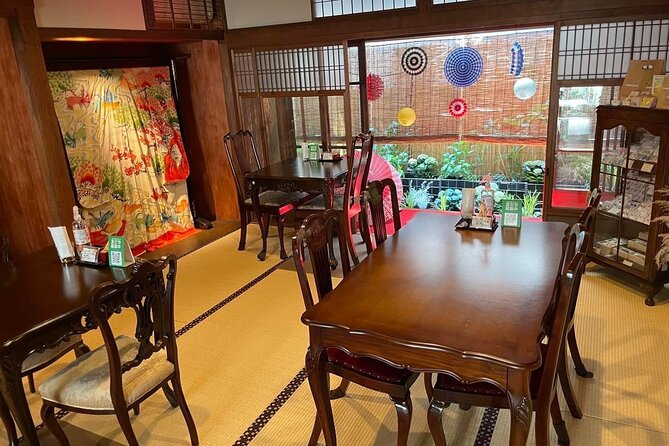
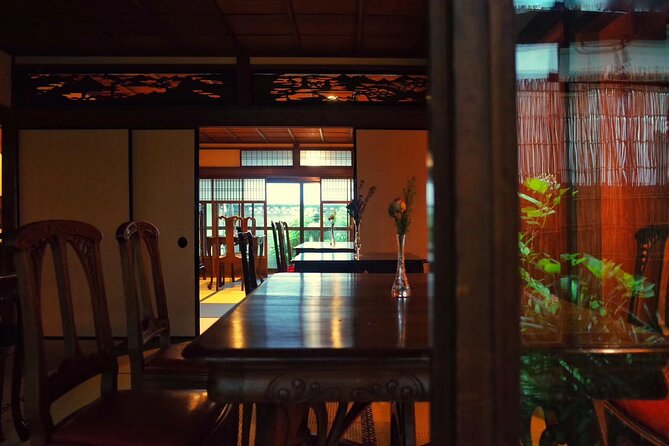
Inside, the cooking room is part of a traditional Japanese house that has been carefully renovated for teaching. Antique furniture and household objects, many more than a century old, give the room a sense of place that a modern cooking studio cannot match. Traditional Japanese music plays as you work, adding a quiet Kyoto touch without turning the class into a staged performance.
The setting matters because the lesson is not just about a noodle recipe. You are handling a basic Japanese food in a house that recalls an older style of Kyoto living. The teachers are local to Kyoto, and the class includes some explanation of Japanese culture and the background of udon.
The address is central, but you should still allow time to find the entrance. The activity begins at noon, so arrive with enough margin for a relaxed walk from Kyoto Station rather than trying to make it between tightly timed train connections.
More Sushi and Japanese Classes in Kyoto:
- Ramen Cooking Class at Ramen Factory in Kyoto
★ 5.0 · 1,937 reviews - Sushi Making in Kyoto! Same-day bookings welcome!
★ 5.0 · 713 reviews - Kyoto: Ramen Cooking Class at a Ramen Factory with Souvenir
★ 4.9 · 532 reviews
Mixing saltwater and building the dough
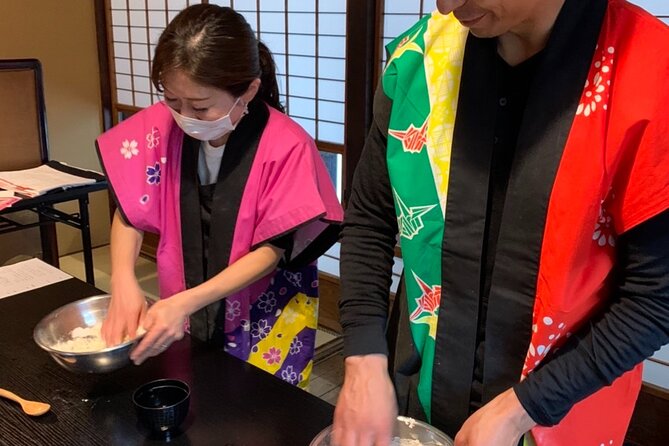
The process starts with making saltwater and combining it with the flour. Ingredients are prepared in advance, which keeps the class moving and lets you focus on the physical work rather than measuring every item yourself.
The instructors demonstrate each step and explain it in English. Tanaka is described as lively, patient, and encouraging, while Hisayu also leads the class in a warm, friendly style. The teaching approach suits beginners. You do not need prior cooking experience, and the recipe is simple enough to try again at home.
Next comes kneading. Udon dough is firm, so this is not a delicate pastry lesson. You work the dough with purpose, then move to the class favorite: stepping on it. The dough is placed so you can flatten and work it with your feet, a traditional method that also gives the session a playful rhythm.
This is where the class works especially well for families. Children can help with the dough and take part in the footwork, and the task is physical without being difficult to understand. One useful safety point is that participants do not boil the noodles themselves. The instructors handle the hot-water stage, so younger children can join in without standing over a pot.
Resting, rolling, and cutting the udon
After the dough has been worked, it rests before you stretch it out. The pause gives the instructors time to explain what comes next and gives you a chance to wash the flour from your hands.
You then roll and stretch the dough into a broad sheet. This is a satisfying stage because the rough mass you made earlier begins to look like actual noodles. The final step is knife cutting. You slice the dough into strips, trying to keep them reasonably even.
Do not expect factory-perfect noodles. Handmade udon has character, and the small differences in thickness are part of the fun. The class gives you a practical recipe and a clear sequence you can repeat at home, but the point is not to produce restaurant-standard noodles on your first attempt.
The teachers keep the pace light. One instructor even teaches an udon dance, which gives the class a cheerful, slightly silly moment that children tend to enjoy. That kind of energy helps if you are nervous about cooking in front of other people or worried that the lesson will feel too formal.
Boiling the noodles and sitting down to eat
Once the noodles are cut, the instructors take over the boiling. This is convenient, but it also means you are not learning every part of a full udon meal. You make the noodles from scratch, but you do not prepare the tempura or the broth.
That tradeoff makes sense for a one-hour class. Deep-frying and stock preparation would add time and safety concerns, especially with children. Instead, you get to concentrate on the part that is most distinctive and hands-on, then sit down to eat without waiting through another cooking lesson.
Your meal includes the udon you made, vegetable tempura, dipping broth, freshly grated ginger, and minced green onion. The combination gives you more than a plain bowl of noodles. You can taste the texture of the handmade udon with the savory broth and add the condiments to suit your preference.
The class itself is advertised at about one hour, but you should budget more time if you plan to enjoy the meal slowly. Some groups have remained for roughly another hour to an hour and a half after the lesson. That longer visit is part of the value, but it makes the noon start less suitable for anyone with a fixed early afternoon plan.
More Hands-On Workshops in Kyoto:
- Kyoto: Ramen, Gyoza, and Onigiri Cooking Class
★ 5.0 · 445 reviews - The Original Small-Group Sushi Making Class in Kyoto
★ 5.0 · 436 reviews - Kyoto: Japanese Washoku Bento Small Group Cooking Class
★ 5.0 · 380 reviews - Kyoto Ramen and Gyoza Cooking Class with Professional Chefs
★ 5.0 · 282 reviews
What the $60.43 price includes in real terms
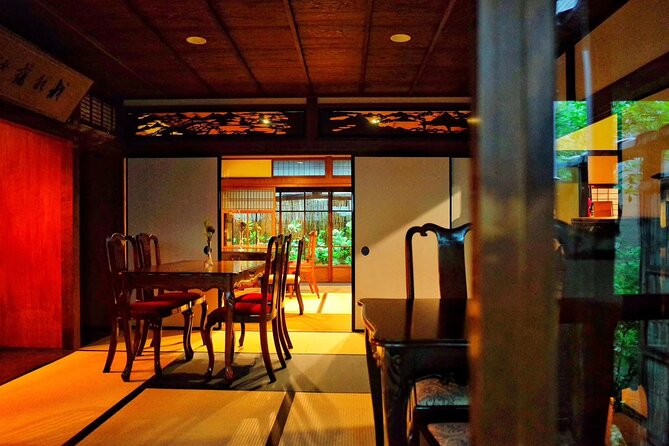
At $60.43 per person, this is not the cheapest lunch in Kyoto. You could buy a bowl of udon for much less. The value here comes from combining lunch with instruction, a private group format, and access to a traditional townhouse that you would not experience during an ordinary restaurant meal.
You are paying for the teacher’s time, the ingredients, the use of the historic house, and the chance to make a Japanese staple with your own hands. The included tempura and condiments also make the finished meal feel complete rather than like a tasting portion.
I find the price easiest to justify for families and small groups. Children are active during the lesson, the activity has a clear beginning and end, and everyone gets lunch afterward. For adults who already cook Japanese food regularly, the class may feel less useful unless the old house and cultural setting appeal to you.
The private format is another factor. Only your group participates, so you do not have to match the pace of strangers. That can be helpful for families, mixed-age groups, or anyone who wants to ask questions freely. Confirmation is subject to availability and is provided within 48 hours of booking.
Why this works well with children
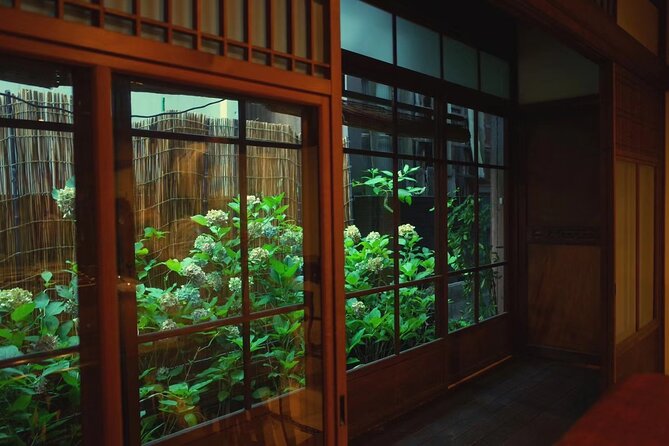
This is one of Kyoto’s more practical family activities because the children are not just watching a demonstration. They mix ingredients, handle the dough, stomp it, roll it, and cut the noodles with guidance.
The teachers are repeatedly described as kind, upbeat, and patient. Tanaka is especially good at keeping children involved, and the instructors explain the cultural background without making the class feel like a lecture.
The boiling stage is handled by the adults, which removes one of the main hazards in a noodle class. Children still get the reward of eating what they made, and the tempura gives them something familiar alongside the noodles.
The activity can also work across generations. A family group ranging from a young child to an older adult can take part at its own pace. The work is active, but it does not require a long walk or strenuous exercise.
Parents should plan for flour on hands, clothes, and work surfaces. That is part of the experience, but comfortable clothing is sensible. The class is not a polished restaurant demonstration. It is a practical workshop where making a mess is normal.
What the class does not include
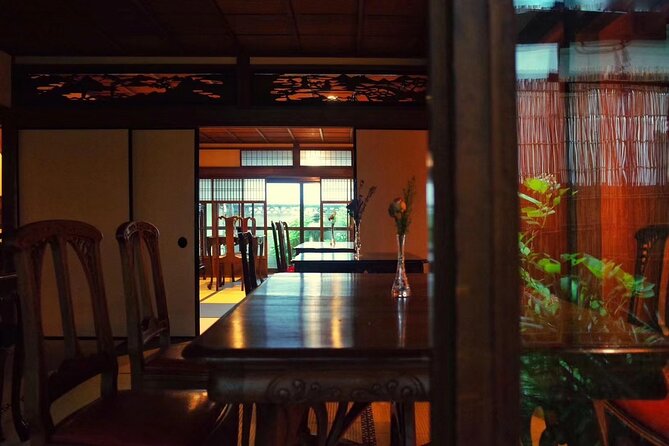
It is useful to know the limits before booking. You do not make the tempura, prepare the broth, or boil the noodles yourself. If you want a full lesson in Japanese stock, frying, and noodle service, this experience will not cover all of that.
You also should not expect a long formal tour of the townhouse. The antique objects, music, and short cultural explanations provide context, but the main focus remains the udon process.
The listed duration is about one hour, yet the meal can extend the visit to 90 minutes or two hours in practice. That is a benefit if you want a relaxed lunch. It is a drawback if you have a reservation or train to catch soon afterward.
The activity requires good weather under its operating policy. Since the class takes place indoors, this may seem surprising, but poor weather can lead to a change of date or a full refund. Check the conditions and keep your afternoon flexible.
Location, tickets, and cancellation details
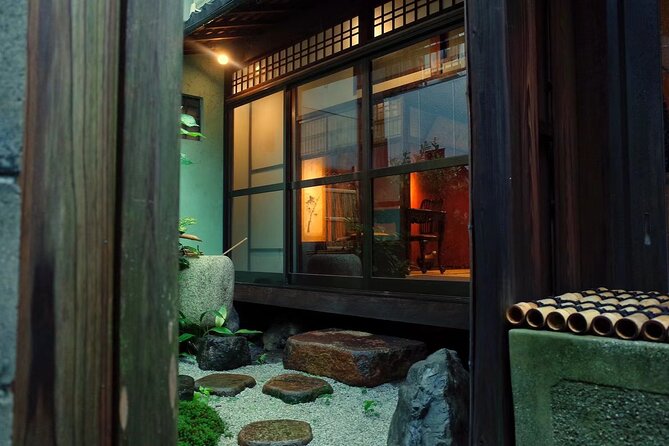
You receive a mobile ticket, and the activity begins at 12:00 p.m. at 364 Momijicho, Shimogyo Ward. The experience ends at the same meeting point, so you do not need to arrange a separate return transfer.
The site is near public transportation, with Kyoto Station within walking distance. Nishi Honganji Temple is close enough to pair with the class, giving you a simple half-day plan: visit the temple, walk to the townhouse, make lunch, then continue through central Kyoto.
Service animals are allowed. The activity is private for your group, rather than an open class where unrelated participants join.
You can cancel for a full refund if you do so at least 24 hours before the local start time. Changes made inside that window are not accepted, and late cancellations are not refunded. Since confirmation depends on availability, book early if the noon schedule matters to you. This experience is booked around 16 days in advance on average.
Should you book this udon class?
Book it if you want a hands-on Kyoto activity that combines food, local instruction, and an old Japanese home. I especially recommend it for families, first-time visitors who want more than a restaurant meal, and anyone who likes learning a recipe they can repeat at home.
The strongest reasons to choose it are the friendly teaching, the chance to make udon from scratch, and the satisfying lunch afterward. The old townhouse gives the hour a sense of place, while the private format keeps the class comfortable for your own group.
Skip it if your priority is a detailed lesson in tempura, broth, and complete Japanese meal preparation. Also skip it if you need to leave exactly one hour after noon. For everyone else, the $60.43 cost buys more than lunch: it buys a practical skill, a memorable setting, and a relaxed Kyoto experience that suits both children and adults.
FAQ
Where does the udon cooking class meet?
The meeting point is 364 Momijicho, Shimogyo Ward, Kyoto, 600-8345, Japan.
How far is the class from Kyoto Station?
The facility is about a 12-minute walk from Kyoto Station.
What nearby attraction can I visit before or after the class?
Nishi Honganji Temple is about a two-minute walk from the facility.
What time does the class begin?
The activity starts at 12:00 p.m.
How long does the experience last?
The cooking class takes about one hour. Eating afterward can extend the visit, with some groups staying roughly 1.5 to 2 hours after the lesson.
What steps are included in making the udon?
You make saltwater, rinse the water, knead and work the dough with your feet, let it rest, stretch it, cut it with a knife, and then have it boiled.
Do I make the tempura and udon broth?
No. The tempura and meal accompaniments are provided separately, while the instructors boil the noodles you make.
Can children participate?
Yes. Children can take part in the udon-making steps, and the instructors handle the boiling. Service animals are also allowed.
Is the activity private?
Yes. Only your group participates in the activity.
What is the cancellation policy?
You can cancel at least 24 hours before the local start time for a full refund. Cancellations or changes made less than 24 hours before the start are not accepted for a refund.
Just added around Kyoto
- Private Plant-Based Japanese Cooking Class – Kyoto Edition★ 5.0 · 15 reviews
- Private Kyoto Sushi Cooking Class & Tea Ceremony with Emika★ 5.0 · 66 reviews
- Private Guided Traditional Buddhist Cooking in Japan★ 5.0 · 16 reviews
- Kyoto Wagashi(Japanese sweets) Cooking Class near Fushimiinari★ 5.0 · 60 reviews
- Nishiki Market, Private Sushi class & Sake Tasting in Townhouse★ 5.0 · 6 reviews
- Private Kyoto Cooking Class with Aki in a Beautiful Wooden House★ 5.0 · 12 reviews
- Private Kyoto Market Tour and Authentic Cooking Class with Aki★ 5.0 · 15 reviews
- Kyoto Sushi Making Experience with a Professional Sushi Chef★ 5.0 · 16 reviews
Japanese & Sushi Cooking Classes, compared.
Sushi Making Tokyo Roll and Authentic Japanese Sushi Class
Read our review →
Tokyo: Roll and Authentic Sushi Making Class in Asakusa
Read our review →
Ramen Cooking Class at Ramen Factory in Kyoto
Read our review →
Tokyo: Sushi Making Class in a Happi Coat near a Famous Spot
Read our review →
Sushi Making Tokyo! Popular Maki Sushi & Japanese Sushi(+Recipe!)
Read our review →
Sushi Making Osaka Roll and Authentic Japanese Sushi Class
Read our review →
Tokyo Sushi Making Class in Tsukiji with Professional Chef
Read our review →
Ramen & Gyoza Cooking Class in Tokyo with Local Supermarket Visit
Read our review →Browse the lists this tour appears in