
Review · BEIJING
China’s Favourite Street Food Cooking Workshop
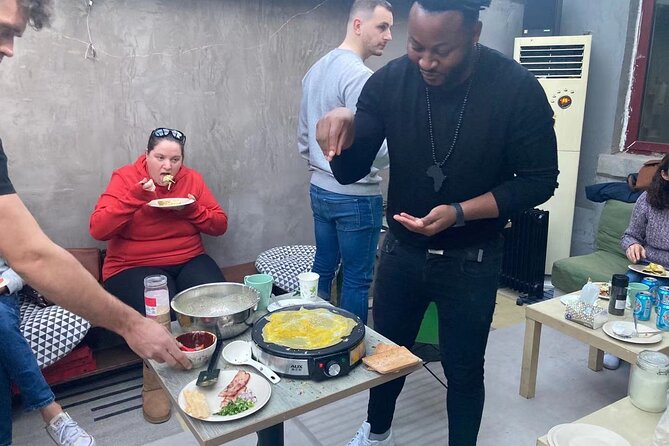
Jian bing is Beijing street food at its most satisfying: a thin, savory crepe cooked to order, folded around fillings, and eaten hot. This private class puts you behind the pan, where Dom explains the dish’s story and helps you learn the technique rather than simply handing you a snack.
I like two things right away. You get to make the batter and cook the jian bing yourself, and you can test several fillings, from traditional savory choices to chocolate and banana. The private format also means personal help for your own group, which matters when your first crepe looks more like modern art than breakfast.
The main drawback is the short 90-minute format. You will learn the basics and make plenty to eat, but this is not a full Chinese cooking course, and the meeting point in a hutong may take a little care to find.
Key points to know before you book
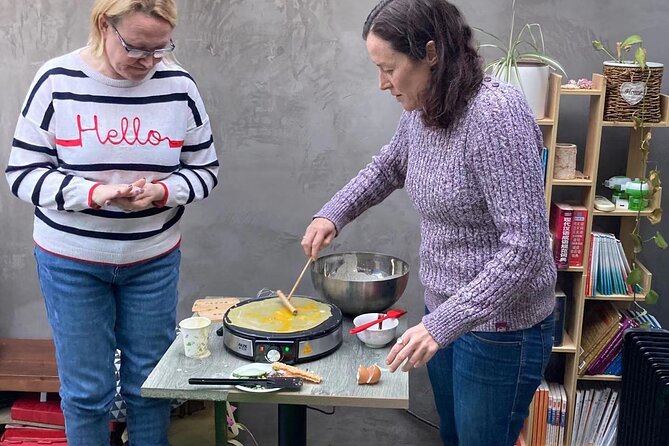
- You cook the jian bing yourself: Mix the batter, spread it on the pan, add fillings, and fold your own creations with help from Dom.
- The filling choices go beyond tradition: You can try savory combinations and sweeter ideas such as chocolate and banana.
- It is a private class: Only you and your party take part, so the pace and assistance are more personal than in a large group.
- The setting is in Dongcheng: The class begins and ends at 10 Shi Que Hu Tong, a practical addition to a day spent exploring Beijing’s hutongs.
- It works well for families: Children and adults can take part, and the hands-on format gives younger cooks a clear job.
- The price is $80: Its value depends on your group size, the amount you cook, and how much you prize a local food lesson over a quick meal.
Why jian bing makes a fine Beijing food lesson
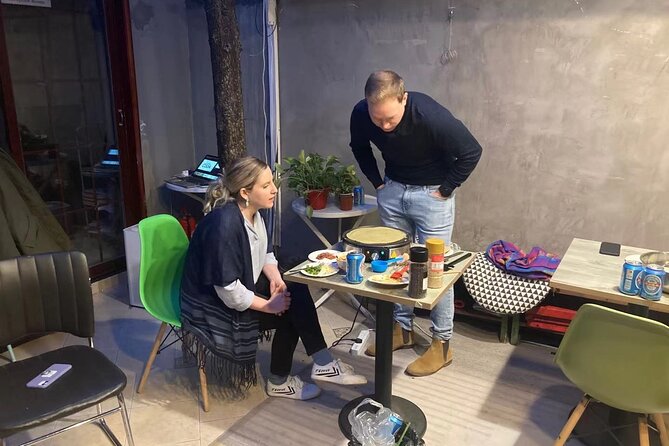
You can find jian bing at street stalls across Beijing, but eating one and making one are different pleasures. The dish looks simple until you try to spread the batter evenly, add the egg or fillings at the right moment, and fold the finished crepe without losing its shape.
That small challenge is the point of this class. You are not only learning a recipe. You are getting a practical look at the rhythm of Beijing street food: a quick batter, a hot cooking surface, a choice of fillings, and a meal made in front of you.
The workshop also gives you useful cultural context. Dom begins by explaining where jian bing comes from and why it became such a beloved Beijing staple. The history is presented as part of the cooking lesson, not as a long lecture, so you can move fairly quickly from hearing about the food to handling it yourself.
I like this balance. A food class can feel thin if it offers only a recipe, or overly academic if the talk takes over. Here, the story gives the dish meaning, then the pan gives you something to do.
More Food and Drink Tours in China:
- Small Group Cooking Class & Market Food Tour in Florence
★ 5.0 · 1,574 reviews - Pasta Making & Wine Tasting with Dinner in Frascati from Rome
★ 5.0 · 1,326 reviews - Paella Cooking Class, Wine Tasting & Central Market in Valencia
★ 5.0 · 1,150 reviews
Getting to the hutong meeting point
The class starts at 10 Shi Que Hu Tong in Dongcheng District, Beijing, and finishes at the same place. Since no separate hotel pickup is listed, you should plan your route to the meeting point before the day begins and allow time for the final walk through the hutong area.
That location matters because the workshop fits naturally into a day focused on old Beijing neighborhoods. You are not being sent to an isolated cooking studio far from the city’s local character. The meeting point gives you a chance to pair the class with hutong wandering before or after, although the food lesson itself remains the main event.
The practical detail to watch is navigation. Hutong addresses can be less obvious than large commercial streets, and the supplied meeting point is specific but does not include a transfer service. Keep the address available on your phone and confirm the booking details before setting out.
The activity is listed with a mobile ticket, which keeps the entry process simple. Confirmation is sent within 48 hours of booking, subject to availability, so last-minute planners should not assume that a booking is final at the instant payment is made.
The opening story with Dom
The session begins with an explanation of jian bing’s background. Dom, the named instructor associated with the class, introduces the dish and sets up the technique in a way that works for first-time cooks.
This opening is useful because jian bing can look familiar while remaining hard to reproduce. It is not simply a pancake with toppings. The texture, spread, folding, and filling order all shape the final result, and the introduction gives you a sense of what you are trying to achieve.
The teaching style appears to be relaxed and hands-on. You get a demonstration, then a chance to try for yourself. Dom remains available when you need help, which is especially useful during the first attempts, when controlling the batter and pan can feel less natural than expected.
Do not expect a formal culinary-school setting. The appeal is the friendly, practical format. You are there to learn a popular food, make mistakes without much fuss, and eat the results.
Mixing the batter and learning the technique
The class includes making the dough or batter and cooking it yourself on the pan. That detail is important. Some food activities let you assemble prepared ingredients, but this one takes you closer to the basic cooking process.
Your first task is to understand the consistency and movement needed to form a thin jian bing. You might find that the technique takes a few attempts. One class participant needed several tries to get comfortable, which is a useful warning for anyone expecting instant perfection.
That learning curve adds value rather than taking it away. You can buy a jian bing in seconds from a street cart, but learning why the cook moves quickly and confidently gives you a better appreciation for the food. The pan work becomes part of the memory.
The class is not designed around producing one flawless item and stopping. You can make as many jian bings as you want within the session, according to the available time and ingredients. That gives you room to improve from one attempt to the next, rather than treating the first effort as your final exam.
More Food Experiences in China:
- Flavors of Beijing: Eat Like A Real Chinese
★ 5.0 · 78 reviews - Shanghai-Cooking Dumpling & Meal in Local Family-w/Vegan
★ 4.9 · 36 reviews - Vegan Soup Dumpling Making in Shanghai
★ 5.0 · 17 reviews - Beijing: Vegan Home Cooking & Local Market Tour with Sanxia
★ 4.8 · 4 reviews
Choosing fillings, from savory to chocolate and banana
The filling selection is one of the more appealing parts of the workshop. You can work with traditional savory choices, then try combinations that move in a sweeter direction. Chocolate and banana are specifically available as playful options.
That range makes the class more flexible for mixed groups. Someone who wants the familiar savory taste can stick with it, while a child or adventurous eater can experiment with a dessert-style version. You can also compare how different fillings change the balance of the crisp crepe and soft interior.
I would treat the unusual fillings as a bonus, not the main reason to book. The essential lesson is still the jian bing itself: the batter, pan, folding, and timing. The sweet choices keep the session lively and give you a chance to make the dish your own.
Because the format is private, your party can spend more time with the combinations that interest you. The information provided does not give a full ingredient list, so you should not book expecting a particular filling beyond the stated traditional savory options and chocolate with banana.
How much food and cooking time you get
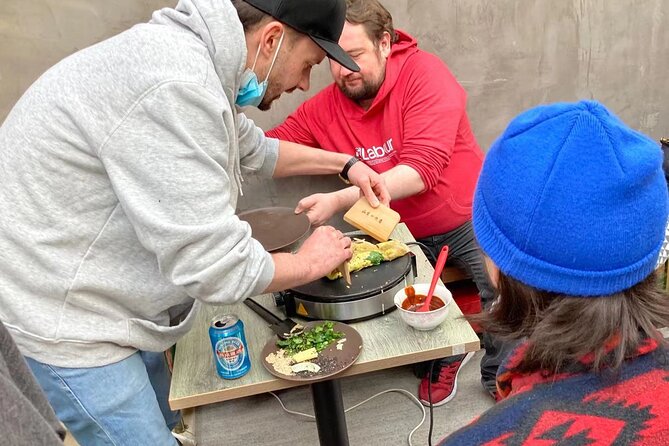
The class lasts about one hour and 30 minutes. That is enough time for an introduction, instruction, hands-on practice, and eating what you make. It is also short enough to fit into a busy Beijing sightseeing day.
The amount of cooking is a strong point. You are not given a single turn at the pan and then moved aside. The activity is set up so you can make multiple jian bings, and the private structure lets your party share the work and watch each other improve.
The time can pass quickly, especially if everyone wants several attempts. If you have a large private party, each person may have less individual cooking time even though the booking is private. The supplied details do not state the maximum group size, so ask before booking if that affects your decision.
You should also plan this as a meal or substantial snack, not a tiny tasting. The class is intended to leave you with a full belly, and the combination of repeated cooking and multiple fillings makes it a useful mid-day stop.
Why the private format matters
A private activity is the clearest advantage for families, friends, and small groups who want to learn together. Only your party participates, so you do not need to share the instructor’s attention with strangers or match the pace of a large class.
That is especially helpful for children. Young cooks can take turns mixing, spreading, adding fillings, and folding. Parents can help without worrying about holding up another group, and the activity gives children something active to do rather than asking them to sit through a long demonstration.
The private format also suits people who are nervous about cooking in front of others. You can take a few tries at the batter and pan without feeling watched by a room full of strangers.
There is a tradeoff. A private class often costs more per person than a shared group activity, and the listed $80 price does not specify whether it covers one person or the entire party. Check the final booking terms carefully. For a small group that values personal instruction, the price can make sense. For one person traveling alone, it may feel less economical unless the hands-on lesson is a priority.
A good choice for families and curious eaters
This is one of the easier Beijing food activities to recommend for a family. The food is familiar enough to appeal to cautious eaters, but the chance to create your own fillings keeps the class interesting. The activity has also been used for middle-school-aged children and their parents, which fits the format well.
Friends can enjoy the class for a different reason. You can compare cooking attempts, share fillings, and turn the pan work into a light group activity. It is social without requiring a full-day commitment.
I would also consider it for someone already living in Beijing. Jian bing is not only a sightseeing novelty. It is part of daily city food culture, and learning to make it at home gives long-term residents a practical skill they can use after the class.
Solo visitors should think about the private pricing before booking. The class can still provide personal attention, but the financial value may be stronger for a couple, family, or group of friends.
What you can take home from the lesson
The main souvenir is the technique. You learn enough about the batter and cooking method to try making jian bing for family or friends later. At least one class has also included ingredients to take home, although you should confirm whether that is a standard part of every booking.
That practical value is worth considering when comparing this with a normal food tour. A food tour gives you several tastes and often more walking or sightseeing. This workshop gives you fewer dishes but a skill you can repeat.
It will not turn you into a professional street-food cook in 90 minutes. You may need several attempts at home before the texture and folding feel natural. Still, you leave with a better idea of the process, and the class makes the dish less mysterious.
Price, timing, and cancellation
The listed price is $80, with a duration of about 90 minutes. Since this is private, value depends heavily on the number of people in your party. A group can share the cost while receiving direct instruction, making the price easier to justify than it might be for one person.
The class is also a useful way to fill a morning or mid-day gap. It ends where it begins, so you can continue exploring Dongcheng or the hutong area afterward without arranging a second transfer.
Free cancellation is available if you cancel at least 24 hours before the local start time. Cancellations made less than 24 hours before the start, along with late changes, are not refunded or accepted. Confirmation arrives within 48 hours, subject to availability, so leave room in your schedule until the booking is confirmed.
Service animals are allowed, and the meeting point is near public transportation. The supplied details do not give a full accessibility description, so contact the provider if you need specific mobility information.
Should you book the jian bing workshop?
Book it if you want a hands-on Beijing food activity rather than another sightseeing stop. The strongest reasons are the chance to cook repeatedly, the personal help from Dom, the choice of savory and sweet fillings, and the fit for families and small groups.
Skip it if you want a broad food tour, a long cultural lecture, or a formal multi-course cooking school. This is a focused lesson about one street food, delivered in a short session.
For a party of friends or a family, I think the $80 price has good potential value, especially if you care about making the food yourself and carrying the skill home. Confirm the group pricing and ingredients before booking, then arrive ready to make a few imperfect crepes before you produce one worth bragging about.
FAQ
Where does the jian bing workshop begin?
The workshop begins at 10 Shi Que Hu Tong, Dong Cheng Qu, Beijing, China, 100010.
Where does the activity finish?
The class finishes back at the meeting point.
How long does the workshop last?
The activity lasts approximately one hour and 30 minutes.
How much does the workshop cost?
The listed price is $80. The supplied details do not clarify whether that amount applies per person or to the private party, so check the booking terms.
Is the workshop private?
Yes. Only you and your party participate in the activity.
Who teaches the class?
The instructor named in the supplied information is Dom.
What will I learn to make?
You will learn to make jian bing, a popular Beijing street food, including the batter, pan cooking, fillings, and folding process.
Can I choose different fillings?
Yes. The class offers different flavors and fillings, including traditional savory choices and options such as chocolate and banana.
Can I cancel for a full refund?
Yes, if you cancel at least 24 hours before the experience start time. Cancellations made less than 24 hours before the start are not refunded, and late changes are not accepted.
More Hands-On Workshops in China
- Half-Day Chengdu Cooking Class with a Local Market Visit
★ 5.0 · 465 reviews - Beijing: Dumpling Making Workshop with Meal and Tea
★ 4.7 · 69 reviews - Online Cooking Class Beijing Dumplings and Cuisine by Sunflowerli Renowned Chef
★ 5.0 · 65 reviews - Chengdu: Cooking Class with Fresh Market Half Day Experience
★ 5.0 · 42 reviews
Just added around China
- Private Cooking Class: Make Your Own Dim Sum In Shanghai★ 5.0 · 27 reviews
- Vegan Soup Dumpling Making in Shanghai★ 5.0 · 17 reviews
- Private Home Cooking Class with Shanghai Mama★ 5.0 · 14 reviews
- Private Home Cooking Class:Dumpling Cooking Class Tour in Xi’an★ 5.0 · 7 reviews
- Beijing: Vegan Home Cooking & Local Market Tour with Sanxia★ 4.8 · 4 reviews
- Shanghai-Cooking Dumpling & Meal in Local Family-w/Vegan★ 4.9 · 36 reviews
- Chengdu: Cooking Class with Fresh Market Half Day Experience★ 5.0 · 42 reviews
- Half-Day Professional Mapo Tofu Cooking with a Local Market Visit★ 5.0 · 19 reviews
Cooking Classes, compared.
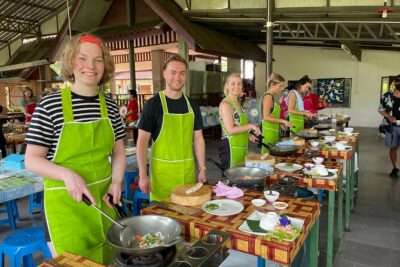
Half-Day Thai Cooking Class at Organic Farm in Chiang Mai
Read our review →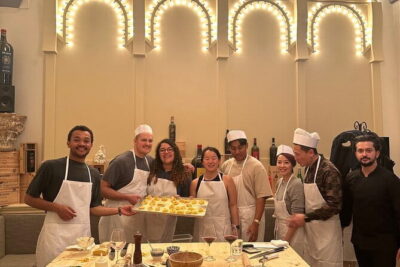
Florence: Pasta Cooking Class with Unlimited Wine
Read our review →
3 in 1 Cooking Class near Navona: Fettuccine, Ravioli & Tiramisu
Read our review →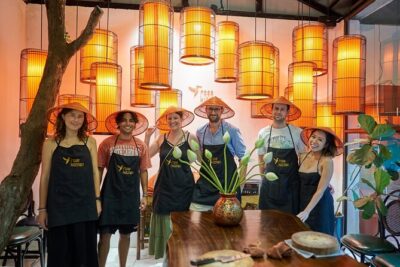
Hanoi Cooking Class: Culture, Local Market & Meaning CSR Impact
Read our review →
5 Traditional Dishes Hanoi Cooking Class with Market Trip
Read our review →
Cooking Class and Lunch at a Tuscan Farmhouse with Local Market Tour from Florence
Read our review →
Chiang Mai: Cooking Class, Market & Thai Herbs Garden Tour
Read our review →Browse the lists this tour appears in