Review · COOKING CLASSES
BA: Empanadas and Alfajores Cooking Experience in Palermo
The best part of this Palermo cooking experience is the small cultural lesson hidden inside every fold of dough. You learn that empanada shapes can signal their filling, hear stories of cooking with an abuela, and finish with alfajores held together by dulce de leche. Hands-on work and local food customs make this more than a meal.
I like the choice between beef and lentil empanadas, which makes the class useful for mixed groups, and I like that the recipes are sent to you afterward. Hosts such as Tomas, Valentino, Carolina, and Catalina have led sessions, and past classes have been praised for their patience and warm teaching.
One point to watch: the amount of actual cooking can vary. Some sessions involve chopping, stovetop work, rolling, filling, and baking, while others rely more on prepared dough and shared demonstrations. The listed drink is mate, coffee, or tea, though some classes have served wine instead.
Key points at a glance
- Empanadas with a choice of filling: Make traditional meat empanadas or a lentil-based vegan version.
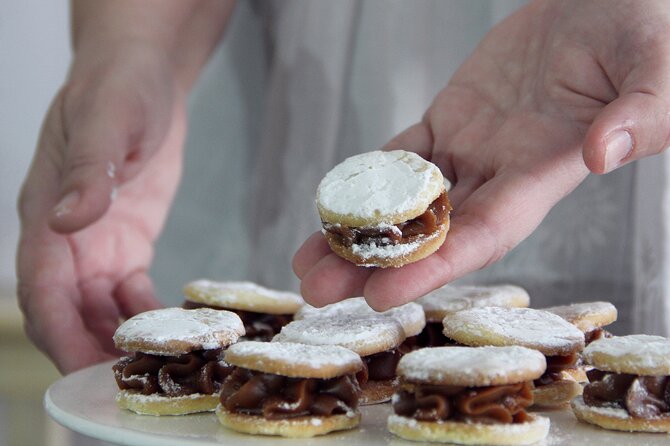
- Alfajores from dough to dulce de leche: Assemble Argentina’s beloved sandwich cookies and finish them with coconut.
- Small groups of up to 10: The size leaves room for questions, conversation, and help with tricky folds.
- A cultural lesson at the kitchen table: Learn about regional food customs, family cooking, empanada shapes, and mate.
- Family-friendly, with a knife-safety note: Children can take part, but younger cooks need help during chopping.
- A central Palermo meeting point: Meet at Gorriti 4882 and return there after roughly two and a half hours.
Why this Palermo food class works so well
Buenos Aires has no shortage of places to eat an empanada. You can buy one from a bakery, order a dozen at a neighborhood restaurant, or grab one on the go. This class gives you something a shop cannot: a look at how the food is made, why the details matter, and how it fits into Argentine home life.
The setting is in Palermo, at Gorriti 4882. The meeting point is near public transportation, so you can fit the class into a day of exploring the neighborhood. You do not need to arrange transport as part of the booking, and the activity ends at the same location.
The class lasts about two hours and 30 minutes. That is long enough to prepare two different foods without turning the afternoon into a full cooking marathon. You should have time to work, eat, chat with the group, and ask questions.
The group limit is 10 people. That matters here. Empanada folding is simple to explain but surprisingly fussy to do well. In a smaller group, the host can correct your technique, show you how to seal the edge, and help children or first-time cooks without leaving everyone else waiting.
A few more cooking classes around the world worth a look
- Half-Day Thai Cooking Class at Organic Farm in Chiang Mai
★ 5.0 · 19,087 reviews - Florence: Pasta Cooking Class with Unlimited Wine
★ 4.9 · 10,285 reviews - 3 in 1 Cooking Class near Navona: Fettuccine, Ravioli & Tiramisu
★ 5.0 · 7,376 reviews
Starting with Argentina’s most useful food
The class begins with empanadas, one of Argentina’s essential everyday foods. The host explains the process, then guides you through the filling and assembly.
Depending on the option selected or available for your group, you may work with meat or a vegan lentil filling. This is a practical strength for couples and families with different diets. Nobody needs to sit out while the rest of the group cooks.
The work may include chopping vegetables and meat, preparing the filling on the stovetop, rolling dough, and stuffing the empanadas. Some sessions use premade shells for part of the process, so do not expect every stage to be made entirely from scratch every time. The class is designed for participation, but it is not necessarily a technical pastry course.
That distinction is worth knowing before you book. You will get to make the food, but the amount of knife work and dough preparation can vary by session. One class may feel like a proper beginner lesson, while another may move faster and put more emphasis on shaping, cultural background, and eating together.
The small art of folding an empanada
The most useful skill you take away may be the fold. An empanada is not just a round pastry with filling inside. The shape and edge can help identify what is tucked within, and the host shows you how different fillings may receive different folds.
This is where the class becomes more memorable than following a recipe at home. You can find ingredient lists online, but a live demonstration helps you see how much filling is enough, how firmly to press the dough, and how to keep the edges closed.
If you are cooking with children, expect to help with the sharp knives during the chopping stage. The class has been a hit with families, including children around 10 and 13, but younger cooks should not be left to manage the cutting on their own.
Once shaped, the empanadas are cooked and served for you to enjoy. The payoff comes quickly: you eat the food you prepared, compare folds with the rest of the group, and see how small changes affect the finished pastry.
Making alfajores without crushing them
After the savory course, the class turns to alfajores. These soft cookies are filled with dulce de leche, Argentina’s creamy caramel-like milk spread.
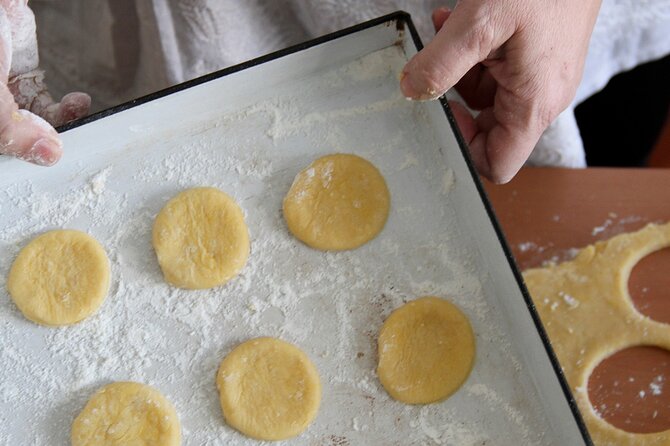
You mix the ingredients, work with the dough, bake the cookies, and assemble them with the filling. The final touch may include rolling the edges or outside in coconut. Some groups also have fun shaping the cookies in different forms.
The cookies can be fragile. Handle them gently when adding the dulce de leche, since pressing too hard can break them. This is a small but useful tip, especially for children who are eager to build their sandwich cookies quickly.
The timing of the alfajores also makes sense in a two-and-a-half-hour class. While the empanada filling cools, you can prepare the cookies. It keeps the class moving and avoids long stretches of standing around waiting for food to reach the right temperature.
At the end, you eat both dishes. The alfajores provide the sweet finish, and the recipes give you a way to repeat the experience at home.
Same place, a different menu:
- Florence: Pasta & Tiramisu Cooking Class with Unlimited Wine
★ 4.9 · 6,708 reviews - Florence: Pasta Cooking Class with Unlimited Wine
★ 5.0 · 6,413 reviews - Hanoi Cooking Class: Culture, Local Market & Meaning CSR Impact
★ 5.0 · 5,147 reviews - 5 Traditional Dishes Hanoi Cooking Class with Market Trip
★ 5.0 · 4,890 reviews
Mate, stories, and Argentine family cooking
The listed drinks include coffee or tea, with mate described as the signature Argentine infusion. Mate is more than a warm drink. It is tied to social time, conversation, and daily routines, so its place in the class helps connect the food with local customs.
Drink arrangements can vary. Some sessions have included wine, and several groups enjoyed a glass while cooking. Wine is not something I would assume is guaranteed, since the official inclusions specifically name coffee, tea, and mate.
The cultural side of the class is one of its strongest features. Hosts have explained the origins of the dishes, Argentine geography, and the way recipes pass through families. One particularly charming detail from the teaching stories is the old family rule that children had to whistle while working so an abuela knew they were not eating the filling.
That kind of detail is worth more than a long historical lecture. It gives you a sense of food as family practice, not just something listed on a menu.
Hosts have included Tomas, Valentino, Carolina, Catalina, and Thomas in different sessions. The strongest teaching experiences have been described as friendly, patient, and clear, with time for questions. The quality of the cultural explanation may depend on who leads your class, so keep your expectations focused on an informal food lesson rather than a formal culinary school.
How much cooking will you really do?
This is the main point to consider before booking. The experience is interactive, but it is aimed at beginners and families. You are not likely to spend the full 150 minutes preparing every ingredient from raw produce and baking every component from the start.
You may chop ingredients, cook the filling briefly, roll and fill the empanada shells, and shape the pastries. For the alfajores, you may work with cookies that have already been prepared for part of the process, then add dulce de leche and coconut. Other sessions have involved making nearly everything from scratch.
That range explains why the class suits some people better than others. If you want a relaxed introduction to Argentine food, it is a good fit. If you are an experienced cook seeking advanced pastry methods, the class may feel too simple.
The experience also depends on group participation. With 10 people, one person may be mixing while another watches for a moment. A negative experience can result if the host lets only one participant do the practical work. If hands-on time is your top priority, ask at the start how the tasks will be divided among the group.
A good choice for families and first-time cooks
The class is designed to welcome families. Children can help with shaping, filling, mixing, and assembling, and the food is familiar enough to appeal to cautious eaters while still introducing new flavors.
The knife work needs adult help. That is not a flaw, but you should treat it as part of the plan. An adult may need to handle the chopping, while children take over at the filling and decorating stages.
Solo visitors can also fit in comfortably. The small group format encourages conversation, and the cooking gives you an easy way to meet people without forcing small talk. Couples get a shared activity that is more memorable than simply choosing another restaurant.
The class is also useful on a day when jet lag or a late arrival has left you with limited energy. It is indoors, social, and structured, with food at the end. You do not need to spend the whole afternoon moving between sights.
Price, timing, and what you receive
At $49 per person, the value depends on how much you care about participation and local context. You are paying for roughly two and a half hours, the ingredients for two dishes, cooking tools, a native professional host, and drinks listed as coffee, tea, or mate.
That is a fair price if you would otherwise pay for a meal plus a separate activity. You receive more than the food itself because the class includes instruction, cultural background, and recipes to use later.
The recipes are an important part of the value. You can return home and make empanadas for friends, practice the folds again, and recreate the alfajores without relying on memory. For a family, the recipe handoff turns a one-time Buenos Aires activity into something you can repeat together.
The class is often booked well ahead, with an average booking time of about 37 days before the date. If your schedule is fixed, reserve early. Confirmation is provided at booking, and free cancellation is available up to 24 hours before the start time. A cancellation inside that window is not refundable.
What can go wrong?
Most of the feedback is very positive, with a 4.9 rating from 112 reviews and a 96 percent recommendation rate. The recurring strengths are clear: friendly hosts, tasty food, a comfortable small group, and a class that works well for families.
Still, the experience is not perfectly uniform. One session was criticized for having too much watching and too little doing. Another found the recipes plain and the food lacking flavor. A cancellation and rescheduling problem also caused serious frustration for one booking.
Those reports are a reminder to keep the class in perspective. The host makes a real difference, and the food may not satisfy you if you expect restaurant-level complexity. The recipes are beginner-friendly, not built around elaborate spice blends or advanced techniques.
I would also treat wine as a possible extra rather than a promised feature. Mate, coffee, or tea are the listed drinks. If wine appears, enjoy it, but do not book on that expectation.
Who should book this experience?
You should book it if you want an easy, social introduction to Argentine food and prefer making a meal to simply eating one. It works especially well for families, couples, solo visitors, and mixed-diet groups because of the meat and lentil options.
It is also a good fit if you want a cultural activity that does not require a full day. The class gives you local food customs, a few useful cooking skills, and recipes you can carry home.
You may want to skip it if you are looking for advanced culinary training, extensive from-scratch preparation, or a guaranteed wine tasting. You may also be disappointed if you prefer to work alone rather than share stations and tasks with a group.
Should you book the Palermo empanada and alfajor class?
For most visitors, yes. At $49, the class offers a practical way to meet local hosts, cook two Argentine staples, and learn why empanada folds and family recipes matter. The small group and recipe follow-up add real value.
Book it with sensible expectations. This is a friendly beginner class, not a professional kitchen session. Ask to take part as much as possible, help your children safely with knives, and handle the alfajores gently. If you do that, the experience can give you more than a good meal: it gives you a story, a skill, and a recipe you can use long after Palermo.
FAQ
Where does the cooking experience begin and end?
The class begins at Gorriti 4882, C1414BJN, in Buenos Aires. It ends back at the same meeting point.
How long does the activity last?
The experience lasts approximately two hours and 30 minutes.
How many people can join the class?
The maximum group size is 10 participants.
Are vegetarian or vegan options available?
Yes. You can choose between meat empanadas and a vegan lentil option.
Are drinks included?
The listed inclusions are coffee or tea, including mate, Argentina’s famous infusion. Some sessions have also served wine, but wine is not specifically listed as a guaranteed inclusion.
Can I cancel for a full refund?
Yes. You can cancel at least 24 hours before the local start time for a full refund. Cancellations or changes made less than 24 hours before the start time are not accepted for a refund.
Just added around the world
- Cooking, Farming and Waterfall In Vietnam Countryside★ 3.0 · 6 reviews
- Busan Tailored Korean cooking class (Vegan OK)with market tour★ 5.0 · 66 reviews
- Korean cooking class in Haeundae, Busan★ 5.0 · 92 reviews
- Private Argentine Cooking Class and Tango Lesson in Buenos Aires★ 5.0 · 37 reviews
- Hungarian Home Cooking Class with Chef Marti★ 5.0 · 30 reviews
- Cooking Class with dinner/lunch in Ulcinj Montenegro★ 5.0 · 8 reviews
- Budapest Market Tour & Home Cooking Class with local Chef & Guide★ 5.0 · 23 reviews
- Hungarian Cooking Class with Nelli – ONLINE over Zoom★ 5.0 · 16 reviews
Cooking Classes, compared.
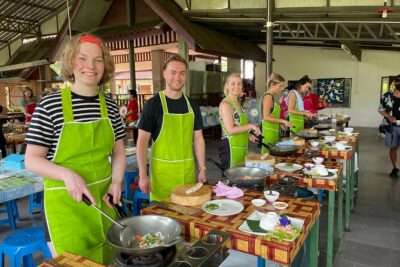
Half-Day Thai Cooking Class at Organic Farm in Chiang Mai
Read our review →
Florence: Pasta Cooking Class with Unlimited Wine
Read our review →
3 in 1 Cooking Class near Navona: Fettuccine, Ravioli & Tiramisu
Read our review →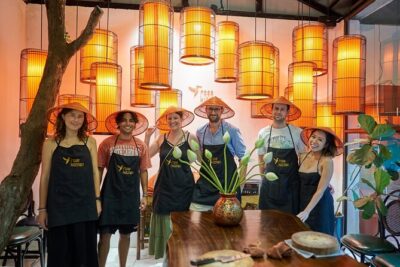
Hanoi Cooking Class: Culture, Local Market & Meaning CSR Impact
Read our review →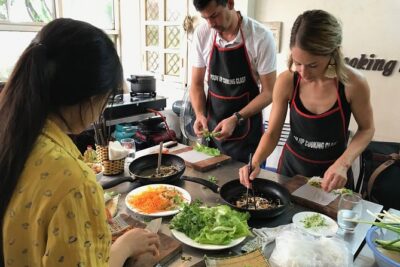
5 Traditional Dishes Hanoi Cooking Class with Market Trip
Read our review →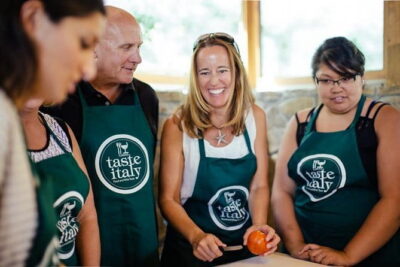
Cooking Class and Lunch at a Tuscan Farmhouse with Local Market Tour from Florence
Read our review →