
Review · KOREAN
Korean cooking class in Haeundae, Busan
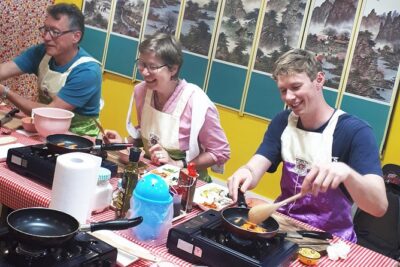
The most appealing part of this Busan experience is that you do not merely watch someone cook Korean food. You work at your own station, then sit down to eat the meal you prepared. Min, also referred to as Minkyung, folds food customs, language, and Joseon-era palace traditions into a friendly three-hour lesson.
I like the small class size, which gives you room to ask questions and get help without feeling lost. I also like the thoughtful finish: a traditional bapsang meal, Korean tea, dessert, and a participation certificate. The main consideration is the price, $100 per person, which makes this a better choice for people who want hands-on instruction and cultural context than for anyone seeking a quick cooking demonstration.
Key points to know before booking

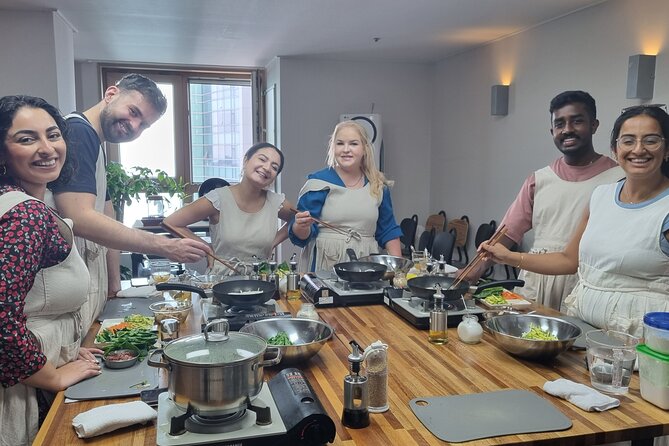
- Cook at your own station: You prepare the dishes yourself rather than simply watching a chef.
- Min leads the class: Expect clear instruction, friendly conversation, and help with Korean food, language, and customs.
- The menu has real variety: Bibimbap, seaweed soup, and Korean pancakes are typical, but the menu can change by date.
- The meal has a traditional setting: You eat your finished food at a Korean bapsang table, with chairs available if floor seating is difficult.
- The class stays small: The main description lists a maximum of seven people, while the additional booking information allows up to eight.
- You leave with a keepsake: A participation certificate is included, along with tea and a simple Korean dessert.
What the $100 price buys you in Haeundae
At $100 per person, this is not a budget meal or a casual market stop. It is a compact cultural class with food, instruction, ingredients, personal equipment, a sit-down meal, dessert, and a certificate included.
The value comes from the participation. You are not paying only for three prepared dishes. You are paying for the chance to learn the basic logic behind Korean cooking, taste the main sauces, ask questions, and repeat the recipes at home. Several dishes are approachable enough for a beginner, and the class is designed for people without previous culinary training.
I would compare the cost with other guided food experiences in Busan, not with the price of eating bibimbap in a restaurant. If you want a quick lunch, $100 is a lot. If you want a relaxed lesson that gives you a new way to understand Korean food, the price is easier to justify.
The class usually begins at 10:00 a.m. and lasts about three hours. That timing leaves the afternoon open for Haeundae Beach, Dongbaekseom, or other Busan sights. Since the experience is booked an average of 38 days ahead, you should reserve early if your schedule is fixed.
More Korean Cooking Classes in South Korea:
- Local Home Korean Cooking Class & Market Adventure in Seoul
★ 5.0 · 1,024 reviews - Master Korean traditional cooking with a Kimchi chef
★ 5.0 · 385 reviews - Seoul: Korean Cooking Class at a Local Home and Market Tour
★ 5.0 · 348 reviews
Meeting Min and putting on the palace-style apron
The class begins at 37 Marine City 3-ro in Haeundae. The location is near public transportation, and the activity returns to the same meeting point. Build in a little extra time to find the exact entrance, especially if you are staying elsewhere in Busan.
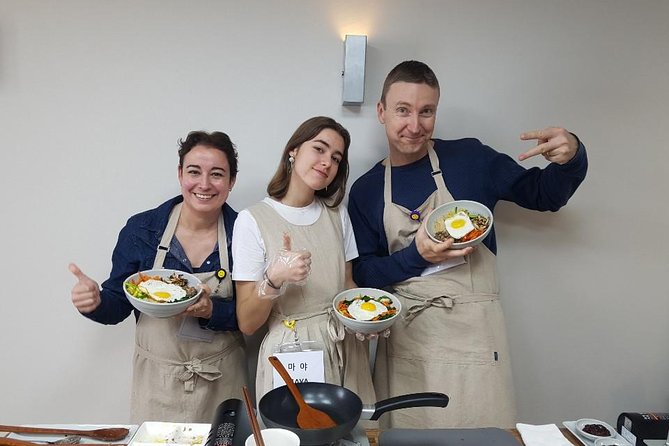
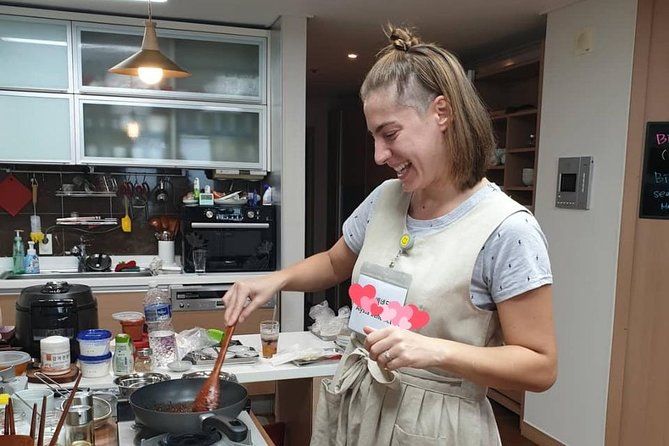
The first step is putting on a traditional Korean apron. This is not just a practical cover for your clothes. The apron is presented as the kind worn by cooks in the palace, which gives the class an immediate link to older Korean food customs.
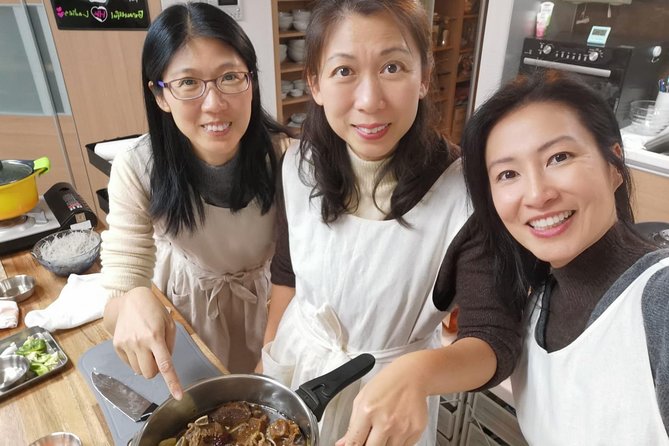
Min sets the tone with a welcome drink and an introduction to the session. Her teaching style, based on the many details shared about the class, is warm and hands-on. She explains each task clearly, keeps the conversation moving, and gives individual help when someone needs another explanation.
That personal attention matters. Cooking instructions can feel rushed in a large group, especially when you are working with unfamiliar ingredients or trying to follow a new technique. Here, you have a better chance to ask how to read a Korean menu, what a sauce is used for, or how a dish fits into Korean daily life.
Tasting Korean sauces before the cooking starts
Before you begin chopping and mixing, you taste the main Korean sauces. This is one of the most useful parts of the class because sauces carry much of the identity of Korean food.
Instead of treating the finished dish as a fixed recipe, you get a sense of how flavor is built. You can pay attention to salt, sweetness, spice, and fermented notes before they are combined with vegetables, rice, soup, or batter.
The lesson also connects food with Korean culture and language. Min has helped people understand Korean menu terms, and she explains the cultural meaning behind dishes and ingredients. That extra context can make later meals easier to order and easier to appreciate.
This is also where the class may suit cautious eaters. You can ask questions about the food before preparing it, and dietary needs have been accommodated in the past, including gluten-free and vegetarian meals. Still, you should tell the provider about your needs in advance rather than assume every menu can be changed on the day.
Preparing bibimbap, seaweed soup, and Korean pancakes
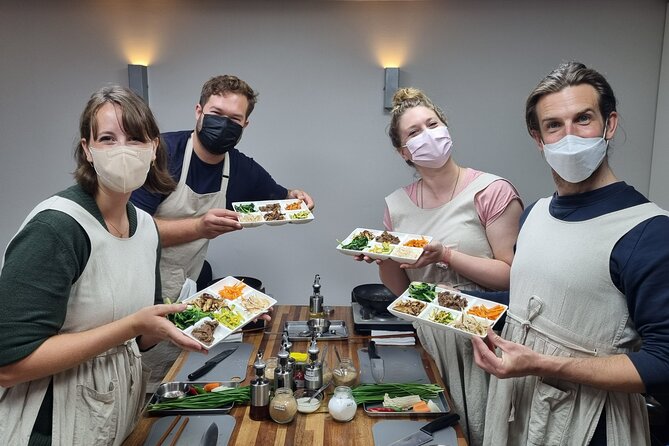
The cooking section is the heart of the experience. A typical menu includes bibimbap, seaweed soup, and a Korean pancake, often a chive pancake. The exact menu can vary by date, so do not book with the expectation that every session will feature precisely the same dishes.
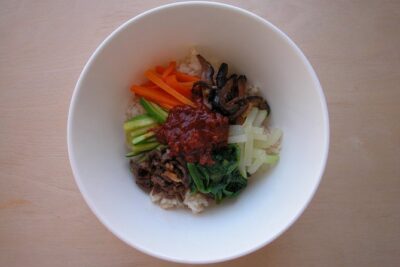
Bibimbap gives you a good introduction to Korean cooking because it brings several components together in one bowl. You learn how separate ingredients, rice, vegetables, and sauce can be combined at the table. It is also a dish you can realistically try again at home.
Seaweed soup adds a different lesson. It is a familiar Korean home-style food with a simpler, more comforting character than bibimbap. Making it alongside the other dishes shows you that Korean cooking is not only about heat and spice.
The Korean pancake brings a more tactile element. Mixing the batter and cooking it gives beginners a clear task with an appetizing result. The chive version has been especially well received by people who enjoy a crisp, savory dish.
You do not need to be an experienced cook. The class is built for beginners, and Min provides close guidance. A little kitchen confidence may help you move faster, but it is not required. The important thing is to pay attention, ask questions, and enjoy the process rather than worry about producing restaurant-perfect food.
More Hands-On Workshops in South Korea:
- Seoul: Taste of Korea, Authentic Home Style Cooking Class
★ 4.9 · 166 reviews - Korean Cooking Class with Grocery Shopping at Seoul Local Market
★ 5.0 · 107 reviews - Seoul: Royal Seoul Cooking Class in a 100-Year-Old Hanok
★ 5.0 · 96 reviews - Busan Tailored Korean cooking class (Vegan OK)with market tour
★ 5.0 · 66 reviews
Eating your work at a traditional bapsang table
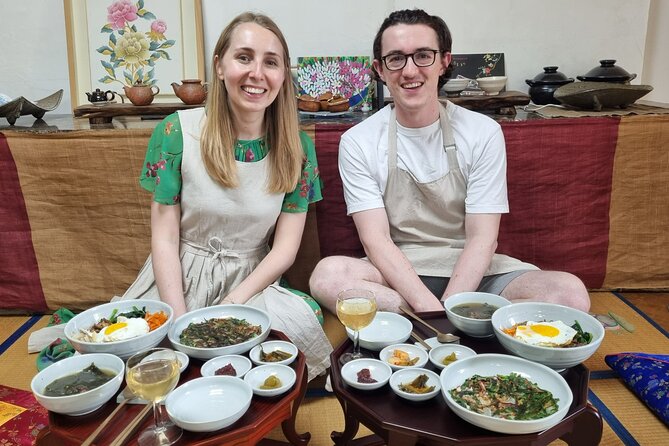
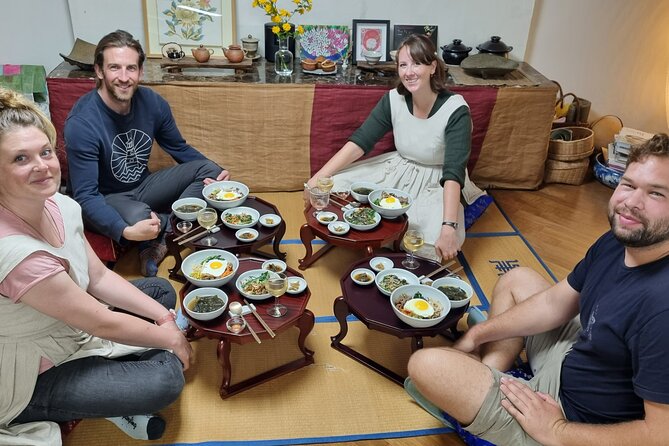
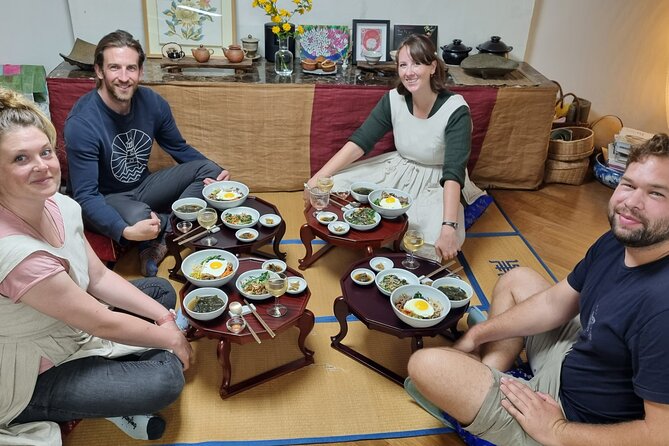
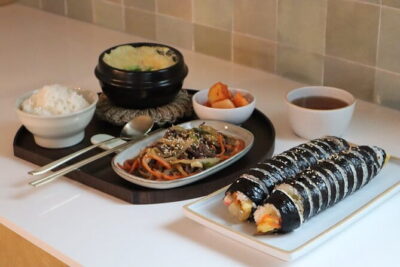
Once the dishes are ready, you sit down to eat at a bapsang, a traditional Korean dining table. This changes the mood from lesson to shared meal. You can taste the food while the instructions are still fresh and see how the different dishes work together.
The bapsang setup is part of the cultural value. Korean meals are often understood through the arrangement of several dishes, not just one large plate. Sitting down to eat what you made gives the cooking a clear purpose and helps connect the ingredients to everyday dining customs.
Floor seating is available, but it is not compulsory if it is uncomfortable. You can have the meal at a regular table with a chair. That small accommodation is useful for older participants, anyone with knee or hip problems, or anyone simply unused to sitting on the floor.
The meal is also a good point to compare results with the other people in the class. The small group format creates an easy social setting, and the class often includes people from different countries. You get the shared pleasure of eating together without needing to join a large organized group.
Tea, dessert, and the certificate
After the meal, you enjoy Korean tea with a simple dessert. This is a quiet ending after the busier cooking period. The dessert is not presented as a full pastry course, but it adds a sweet taste and another small look at Korean food customs.
A participation certificate follows. It is a modest souvenir, but it can be fun to take home, particularly for children, families, and anyone building a collection of cooking experiences.
The class has also included a small surprise gift at the end. Since that detail may not be guaranteed on every date, treat it as a possible extra rather than part of the promised package.
How the Haeundae stops fit into the day
The listed route includes Dongbaekseom, Haeundae Beach, The Bay 101 Yacht Club, and Nurimaru APAC House. These are Haeundae area highlights, but the cooking class itself is described as beginning and ending at the Marine City meeting point. Do not assume you are booking a separate guided sightseeing tour through all four locations.
Dongbaekseom is a wooded coastal area at the edge of Haeundae and a natural place to add a walk before or after the class. Haeundae Beach gives you Busan’s best-known seaside setting, while The Bay 101 is associated with Marine City views and evening city scenery. Nurimaru APAC House adds a formal cultural and civic landmark to the area.
The practical advantage is location. If you are staying in Haeundae, you can pair the cooking class with nearby sightseeing instead of spending the whole day crossing Busan. If you are staying in another district, remember that the class starts at 10:00 a.m. and ends back at Marine City, so allow time for local transport in both directions.
Who will get the most from this class
This is a strong choice for first-time visitors who want more than restaurant meals. It is also well suited to families, couples, solo participants, and people who enjoy meeting others around a shared table.
Children and teenagers can take part, provided they can follow cooking instructions. The class has worked well for young participants, including children aged 12 and 16, and the hands-on format gives them something concrete to do.
You will also like it if you enjoy taking recipes home. The dishes are familiar enough to repeat, and the instruction focuses on practical cooking rather than a purely ceremonial demonstration.
The class may be less suitable if you want a fast, highly polished chef performance, a large menu, or a full-day culinary tour. Three hours is enough for a satisfying introduction, but not enough to cover every Korean regional style or cooking method.
Practical details that affect your decision
The activity is offered with a mobile ticket, and confirmation is received when you book. Service animals are allowed, and the meeting point is near public transportation.
The class requires good weather. If poor weather causes cancellation, you are offered another date or a full refund. You can cancel for a full refund up to 24 hours before the start time, but changes or cancellations inside that window are not accepted.
The usual menu may change by date. Special cooking dates and temple food dates are listed as not scheduled for 2025, so do not count on a palace-specialty menu or vegan temple-food session unless the provider confirms one for your chosen date.
The group size deserves one small note. The main description gives a maximum of seven people, while the additional booking information says a maximum of eight travelers. Either way, this is designed to be a small class, but you can confirm the exact number when booking if that matters to you.
My recommendation for Bapsang in Busan
Book this class if you want to cook, eat, and understand more about Korean food in one well-paced morning. Min’s personal teaching, the small group, and the chance to prepare several dishes make it more useful than a simple food tasting.
I especially recommend it to families, beginners, and people staying in Haeundae who want an activity that fits neatly beside the beach and Marine City sights. The $100 price is not low, but the hands-on instruction, meal, tea, dessert, and cultural explanation give it reasonable value for a special occasion.
Skip it if you only want the cheapest way to eat bibimbap, or if you dislike group classes and floor-style dining. For everyone else, this is a practical and friendly way to turn a Korean meal into a skill you can carry home.
FAQ
Where does the Korean cooking class meet?
The meeting point is 37 Marine City 3-ro in Haeundae, Busan, South Korea.
What time does the class begin?
The stated start time is 10:00 a.m.
How long does the experience last?
The class lasts approximately three hours.
What dishes will I cook?
The typical menu includes bibimbap, seaweed soup, and a Korean pancake. The menu may vary by date.
Do I need previous cooking experience?
No. Previous culinary experience is not necessary, and the instructor provides guidance during the cooking session.
Who teaches the class?
The class is taught by Min, also referred to as Minkyung in the experience information.
How many people can join?
The main description lists a maximum of seven people. Additional booking information gives a maximum of eight travelers, so confirm the exact group size if needed.
Will I eat at a traditional Korean table?
Yes. You eat the food you prepare at a bapsang, a traditional Korean dining table on the floor. A regular table with chairs is available if floor seating is difficult.
What else is included after the meal?
You receive Korean tea, a simple dessert, and a participation certificate.
Can I cancel for a full refund?
Yes, if you cancel at least 24 hours before the experience start time. Cancellations or changes made less than 24 hours before the start time are not refunded or accepted. If poor weather cancels the experience, you are offered another date or a full refund.
Just added around South Korea
- Busan Tailored Korean cooking class (Vegan OK)with market tour★ 5.0 · 66 reviews
- Seoul: Premium Korean Feast Cooking Class★ 5.0 · 3 reviews
- Seoul: Korean Cooking Class with Local Grocery Shopping★ 5.0 · 13 reviews
- Seoul: Korean Kimchi Cooking Class in the Heart of the City★ 5.0 · 3 reviews
- Seoul: Kimchi Dishes Cooking Class with Wine Pairing★ 4.7 · 38 reviews
- (Seoul) Korean Cooking Class with a Professional Chef★ 5.0 · 14 reviews
- Seoul: Taste of Korea, Authentic Home Style Cooking Class★ 4.9 · 166 reviews
- Seoul: Cooking Class and Tour with Michelin-Trained Chef★ 5.0 · 11 reviews
Korean Cooking Classes, compared.
Local Home Korean Cooking Class & Market Adventure in Seoul
Read our review →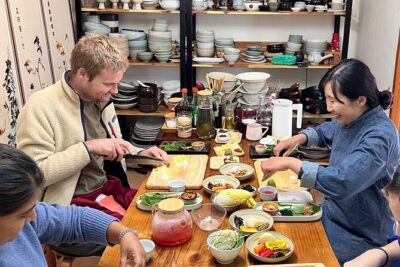
Master Korean traditional cooking with a Kimchi chef
Read our review →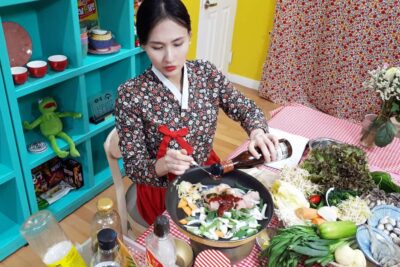
Seoul: Korean Cooking Class at a Local Home and Market Tour
Read our review →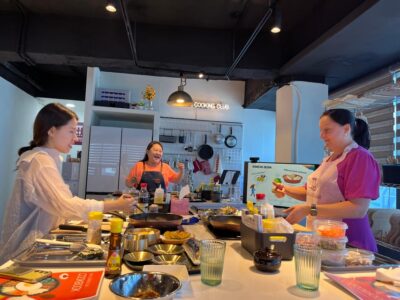
Cook 3 Authentic Korean Dishes with Local Market Tour
Read our review →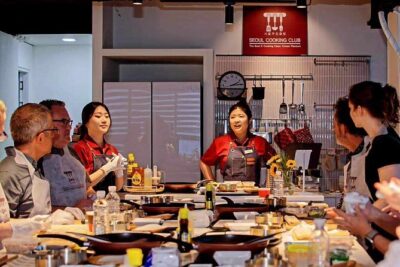
Korean Cooking Class with Grocery Shopping at Seoul Local Market
Read our review →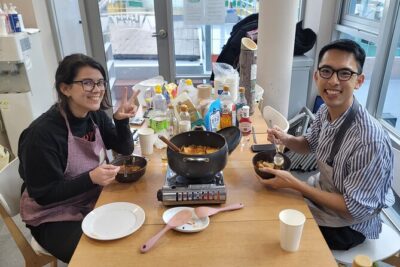
Busan Tailored Korean cooking class (Vegan OK)with market tour
Read our review →Browse the lists this tour appears in