
Review · KOREAN
Korean Cooking at Seoul Cooking Club
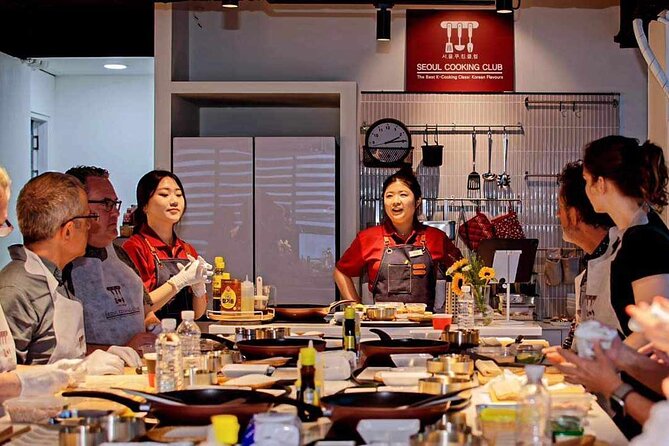
Seoul Cooking Club turns a cooking lesson into a full Korean meal, with bulgogi, bibimbap, gimbap, japchae, several jeon pancakes, drinks, and dessert appearing across the class menu. You do not just watch a chef cook. You help prepare the food, then sit down to eat it.
I like the small group of no more than 12, which gives the instructors room to help with folding gimbap, seasoning dishes, and handling unfamiliar ingredients. I also like the broad menu and the care given to dietary needs, including vegan, vegetarian, pescatarian, gluten-free, halal, and some allergy requests.
The main consideration is that this is designed for beginners. Most ingredients are prepared before class, so you get useful assembly, seasoning, and cooking practice, but not a full professional-kitchen lesson from raw ingredients.
Key points to know before booking
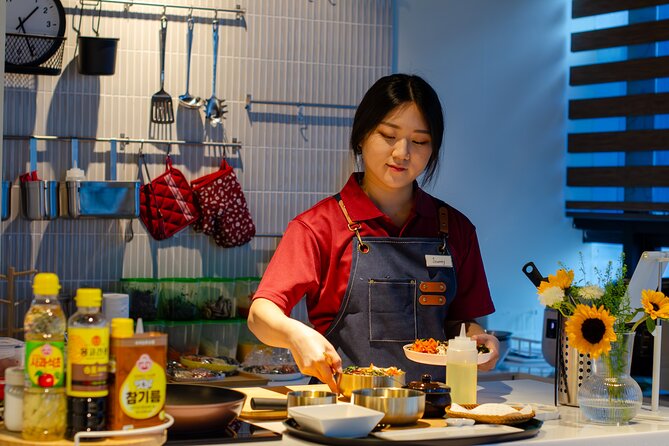
- Seven or more Korean dishes: Depending on the session, you may prepare bulgogi, bibimbap, japchae, gimbap, three kinds of jeon, and dessert, with menus offering a notably wide range of flavors.
- Instructors with a friendly teaching style: Olivia, Sally, Elly, and Grace are named instructors associated with the class, and the teaching focuses on clear demonstrations and simple techniques.
- A generous meal at the end: You taste what you make, often with enough food left to take away.
- Dietary requests are welcome: Vegan, vegetarian, pescatarian, gluten-free, halal, and some allergy-related needs can be accommodated when arranged properly.
- A useful first-day activity: The class helps you recognize ingredients, understand menu terms, and get your bearings with Korean food early in your Seoul stay.
- A recipe souvenir: A cookbook is provided, and some sessions also include a small tote bag.
What the 2.5-hour class is really like
The class begins and ends at 71-6 Jongno 2(i)-ga, Jongno District, in central Seoul. The experience lasts about two hours and 30 minutes, and the group is limited to 12 people. That is small enough to keep the class social without turning it into a private lesson.
You can book it for brunch, lunch, or dinner. The timing gives you a bit of flexibility in a busy Seoul schedule, and the meal itself can replace one restaurant stop. That matters at $109 per person. The price is not cheap for a cooking class, but it includes instruction, a substantial amount of food, drinks, dessert, and recipes to use at home.
The pace is meant to be comfortable rather than rushed. You may sit between stages, taste ingredients, ask questions about Korean food, and share the finished dishes with the rest of the group. If you want a serious chef-training session, this may feel light. If you want an accessible way to learn several familiar Korean dishes in one afternoon or evening, the format makes sense.
More Korean Cooking Classes in Seoul:
- Local Home Korean Cooking Class & Market Adventure in Seoul
★ 5.0 · 1,024 reviews - Master Korean traditional cooking with a Kimchi chef
★ 5.0 · 385 reviews - Seoul: Korean Cooking Class at a Local Home and Market Tour
★ 5.0 · 348 reviews
From ingredients to a Korean feast
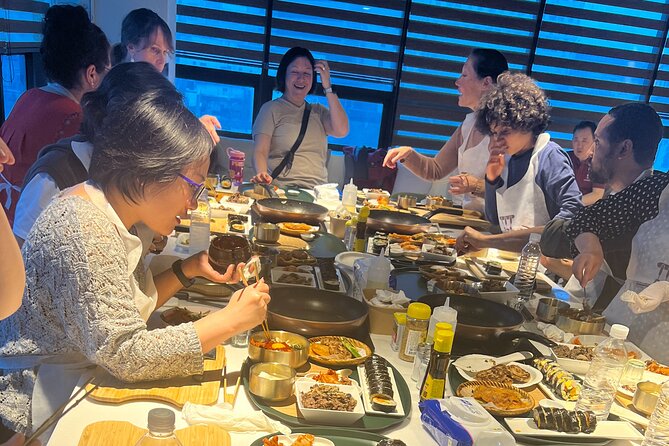
The strongest part of the experience is the range. Rather than spending two hours on one dish, you work through many parts of a Korean meal. Menus described for the class include bulgogi, bibimbap, japchae, gimbap, three types of jeon, appetizers, and dessert.
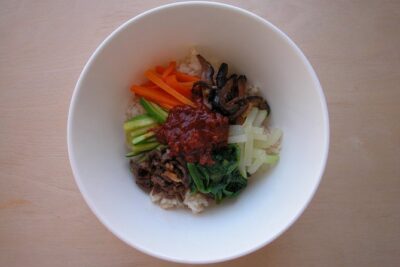
Bulgogi gives you a look at one of Korea’s best-known dishes. You learn how the marinade shapes the flavor and how a few basic ingredients can create a dish that tastes far more complex than its preparation suggests. Bibimbap shows another side of Korean cooking, with separate ingredients brought together in one bowl.
Japchae adds a different texture and style. Gimbap is especially useful because the rolling technique can look harder than it is. Elly has been praised for explaining the process clearly, including practical tips that help you repeat it at home without frustration.
The jeon portion brings variety to the table. These savory pancakes are familiar street-food and home-cooking staples, and preparing three kinds gives you a chance to compare textures and ingredients. You also get a better sense of how Korean meals balance savory, sweet, soft, crisp, and fresh elements.
The exact menu may vary by session, so do not treat every listed dish as guaranteed at every booking. The reliable promise is a three-course Korean meal, more than 10 Korean flavors across the experience, and a mixture of savory food and sweets.
What you actually cook, and what is prepared for you
This is hands-on, but it is not a class where you start by washing, chopping, marinating, and cooking every ingredient from scratch. Much of the preparation is done before you arrive. That keeps the two-and-a-half-hour schedule workable and allows the group to cover a large menu.
You will assemble, season, shape, cook, and follow demonstrations. Instructors explain the purpose of ingredients and show techniques step by step. This works well for people who rarely cook, families, and anyone who wants a relaxed cultural activity rather than a demanding kitchen shift.
The trade-off is worth understanding before you pay. One participant found the class closer to assembling than cooking because ingredients were already prepared or precooked. That is a fair criticism, especially if you already cook regularly and want to practice knife work, sauce-making, or timing several raw dishes over heat.
For most visitors, the preparation is a practical choice. You get to taste many finished foods instead of spending the whole session on prep. I would describe it as a guided Korean cooking workshop, not a technical culinary course.
The instructors make the difference
The class has several named instructors, including Olivia, Sally, Elly, and Grace. The strongest praise centers on their patience, clear instructions, and warm manner. That matters because Korean recipes can contain unfamiliar ingredients, and a good explanation can make the difference between confusion and confidence.
Olivia is associated with clear demonstrations and patient help. Sally is praised for keeping the mood relaxed while guiding the group through several dishes. Elly is noted for her gimbap instruction, cultural explanations, and willingness to answer questions. Grace focuses on the foundations of Korean flavor and why particular ingredients are used.
The teaching style appears friendly rather than formal. You should expect plenty of explanation, encouragement, and chances to taste and adjust. The class also gives you cultural context, helping connect ingredients to dishes you may see later in markets and restaurants.
Because the group can include beginners and more experienced home cooks, the level may feel uneven. Beginners get the most from the simple demonstrations. Confident cooks may wish for more detail on fermentation, knife technique, raw preparation, or regional differences.
A few more cooking classes around Seoul worth a look
- Seoul: Korean Cooking at Seoul Cooking Club!
★ 5.0 · 311 reviews - Seoul: Taste of Korea, Authentic Home Style Cooking Class
★ 4.9 · 166 reviews - Korean Cooking Class with Grocery Shopping at Seoul Local Market
★ 5.0 · 107 reviews - Seoul: Royal Seoul Cooking Class in a 100-Year-Old Hanok
★ 5.0 · 96 reviews
A lot of food, with Korean drinks and dessert
Come hungry. The meal is one of the best parts of the value, and the portions can be large enough that you may not finish everything at the table. Leftovers are often packaged to take away, which can turn the class into lunch plus a later meal.
The class includes a dessert, and you may also taste Korean drinks such as tea or sujeonggwa, a sweet cinnamon-based punch. These touches add more than calories. They show how a Korean meal moves beyond the main savory dishes and give you another flavor to recognize during your stay.
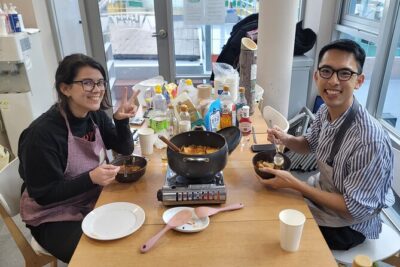
The social setup is easygoing. You prepare food with other people, sit down together, and share the results. For a solo visitor, this offers a natural way to meet people without joining a sightseeing group. For couples and families, it gives everyone a task and a shared meal at the end.
The large amount of food is also the one practical issue to plan around. Do not schedule this immediately after a big restaurant meal. If you are staying somewhere without a refrigerator, leftovers may be less useful, though the class itself still provides plenty to eat.
Dietary needs and ingredient planning
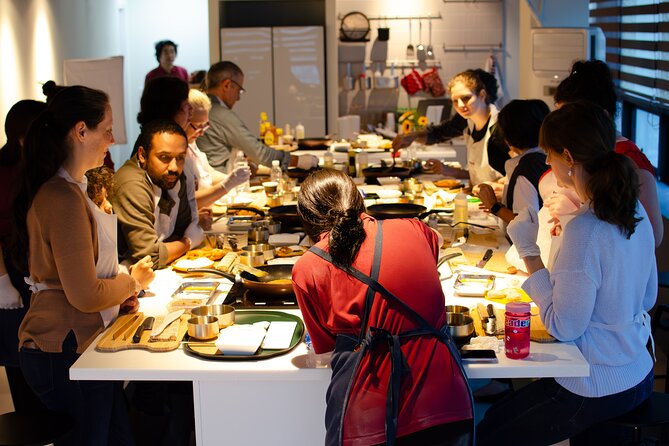
The class is designed to handle a wide range of diets, including vegan, vegetarian, pescatarian, gluten-free, and halal choices. A participant with a peanut allergy and restrictions against beef and pork was able to eat the food prepared for the class, which shows that staff can work carefully with specific needs.
Still, you should provide your dietary information when booking and confirm it before the class. Korean cooking often uses sauces, stocks, marinades, seafood products, and ingredients that may not be obvious at first glance. A general dietary label is not always enough for a serious allergy.
This flexibility makes the experience more useful for mixed groups. One person can choose a halal or vegetarian version while others prepare the standard menu. The class is not limited to people who already eat everything in Korean cuisine.
Why it helps you eat better in Seoul
A cooking class can be more useful than a food tour if your goal is to understand menus. After preparing bibimbap, japchae, gimbap, or jeon, you will recognize those names more easily and have a better idea of what to expect when ordering.
You also learn how Korean meals build flavor. The class introduces the balance of sweet, salty, savory, spicy, and fermented notes without requiring you to memorize a long list of culinary terms. Those lessons can help you make sense of side dishes, sauces, pancakes, rice dishes, and grilled foods during the rest of your trip.
I especially like this as an early Seoul activity. It gives you a food vocabulary before you start exploring markets and restaurants. You may also find that the class makes street food look less mysterious, since you have handled several dishes yourself.
The cultural information is part of the appeal, though the emphasis remains practical. You are not attending a lecture on Korean food. You are learning through preparation, tasting, and conversation.
Is $109 a fair price?
At $109 per person, Seoul Cooking Club costs more than a simple market meal or casual restaurant lunch. The comparison is not quite fair, since you are paying for instruction, ingredients, a full meal, drinks, dessert, a small group, and recipes to take home.
The value is strongest if you plan to use the cookbook after returning home. You are not buying just one meal. You are getting a set of recipes and basic methods for several Korean dishes, plus an introduction to ingredients that can make future restaurant visits easier.
The value is weaker if you mainly want to eat Korean food cheaply, or if you already have strong cooking skills and expect advanced instruction. Much of the preparation is completed ahead of time, and the class aims for broad coverage rather than technical depth.
For families and couples, the price can also replace a meal and provide an activity that suits different ages and abilities. For solo visitors, the small group and shared table add a social benefit that a restaurant meal cannot provide.
Getting there and planning your visit
The meeting point is at 71-6 Jongno 2(i)-ga in Jongno District, and the class is near public transportation. Your mobile ticket is accepted for the booking, and the activity returns to the same meeting point.
Allow enough time to find the address, especially if you are coming from another part of Seoul. The class itself is fixed at roughly two hours and 30 minutes, so avoid booking another time-sensitive activity directly afterward.
The experience allows service animals. Confirmation is provided when you book. Free cancellation is available if you cancel at least 24 hours before the local start time. Cancellations or changes within 24 hours are not refunded or accepted.
Who should book Seoul Cooking Club?
I would choose this class for:
- First-time visitors who want an easy introduction to Korean food
- Solo visitors looking for a social activity
- Couples who prefer learning and eating to a standard restaurant meal
- Families who want a practical Seoul experience
- Beginners who like clear instructions and prepared ingredients
- People with dietary requirements who need advance accommodation
- Home cooks who want a broad sample of Korean recipes
I would hesitate if you want advanced technique, a market-to-kitchen experience with extensive shopping, or every ingredient prepared from scratch. One participant specifically preferred to skip the market lesson and focus on cooking, so be aware that any shopping or ingredient introduction should not be treated as the central feature.
Should you book it?
Book Seoul Cooking Club if you want to eat a generous Korean meal, learn several recognizable dishes, and leave with recipes you can try at home. The small group, friendly instructors, and wide menu make it a strong introduction, especially early in a Seoul visit.
Skip it if your main aim is serious culinary training or a deep lesson in raw preparation. For most people, though, the balance is right: enough cooking to feel involved, enough explanation to learn something useful, and enough food to make the $109 price easier to justify.
FAQ
How long does the Seoul Cooking Club experience last?
The class lasts approximately two hours and 30 minutes. It begins and ends at 71-6 Jongno 2(i)-ga in Seoul’s Jongno District.
How many people can join the class?
The maximum group size is 12 people. This keeps the class small enough for demonstrations and individual guidance.
What dishes might I prepare?
The menu can include bulgogi, bibimbap, japchae, gimbap, three kinds of jeon, appetizers, and dessert. The experience includes more than 10 Korean flavors, but the exact dishes may vary.
Can the class accommodate dietary restrictions?
Yes. Vegan, vegetarian, pescatarian, gluten-free, and halal options are available. Some specific allergies and ingredient restrictions can also be accommodated, so provide your requirements when booking.
Is food included?
Yes. You prepare and eat a three-course Korean meal, with savory dishes, dessert, and Korean drinks such as tea or sujeonggwa. The portions may be large enough for leftovers.
What is the cancellation policy?
You can receive a full refund if you cancel at least 24 hours before the local start time. Cancellations or changes made within 24 hours are not accepted and are not refunded.
Just added around Seoul
- Seoul: Premium Korean Feast Cooking Class★ 5.0 · 3 reviews
- Seoul: Korean Cooking Class with Local Grocery Shopping★ 5.0 · 13 reviews
- Seoul: Korean Kimchi Cooking Class in the Heart of the City★ 5.0 · 3 reviews
- Seoul: Kimchi Dishes Cooking Class with Wine Pairing★ 4.7 · 38 reviews
- (Seoul) Korean Cooking Class with a Professional Chef★ 5.0 · 14 reviews
- Seoul: Taste of Korea, Authentic Home Style Cooking Class★ 4.9 · 166 reviews
- Seoul: Cooking Class and Tour with Michelin-Trained Chef★ 5.0 · 11 reviews
- Seoul: Authentic Korean Cooking Class and Market Tour★ 5.0 · 6 reviews
Korean Cooking Classes, compared.
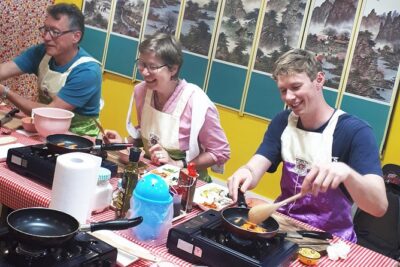
Local Home Korean Cooking Class & Market Adventure in Seoul
Read our review →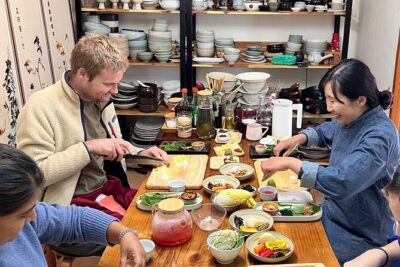
Master Korean traditional cooking with a Kimchi chef
Read our review →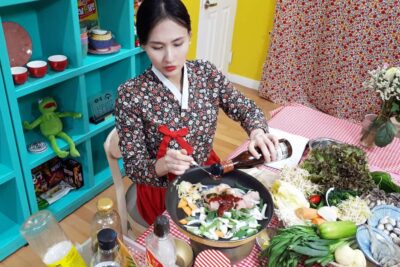
Seoul: Korean Cooking Class at a Local Home and Market Tour
Read our review →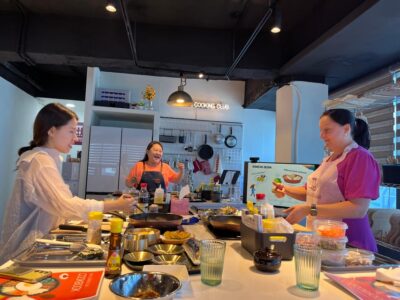
Cook 3 Authentic Korean Dishes with Local Market Tour
Read our review →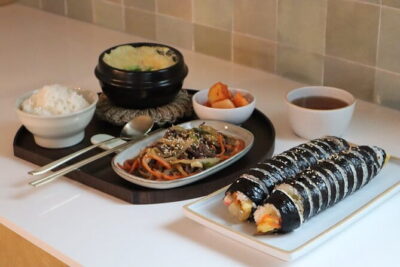
Korean Cooking Class with Grocery Shopping at Seoul Local Market
Read our review →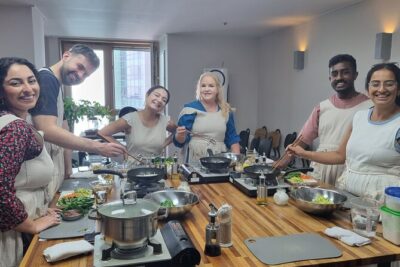
Busan Tailored Korean cooking class (Vegan OK)with market tour
Read our review →Browse the lists this tour appears in