
Review · KATHMANDU
Momo, Dhalbhat & Thukpa Cooking Class, Nepal
The best part of this Kathmandu cooking class happens before the stove is lit. Esther Rai takes you to a local vegetable market near Patan, where you can meet sellers, choose ingredients, and see the everyday food system behind Nepal’s best-known dishes. Back in the cooking space, you prepare momos, dal bhat, and thukpa, then sit down to eat the meal you helped make.
I like the market visit because it gives the class a real local setting rather than a sealed-off kitchen. I also like the location, just a five-minute walk from Patan Durbar Square and the Golden Temple, so food and sightseeing fit neatly into one morning. One thing to consider: some preparation may already be done, so you may not handle every step from start to finish.
Key points to know
- Market first: Shop for vegetables and other ingredients with Esther before cooking begins.
- Three Nepali staples: Learn to make momos, dal bhat, and thukpa, with other dishes possible by request.
- Patan setting: The class begins near Golden Temple and Patan Durbar Square, in Lalitpur.
- Small group size: The class accepts no more than 10 people, which should allow for hands-on instruction.
- A meal at the end: You eat the food after cooking, including dishes such as curry, dhal, and rice when included in the menu.
- Good value at $25: For roughly three hours, the fee covers a market outing, instruction, and a full meal.
A market morning in Patan
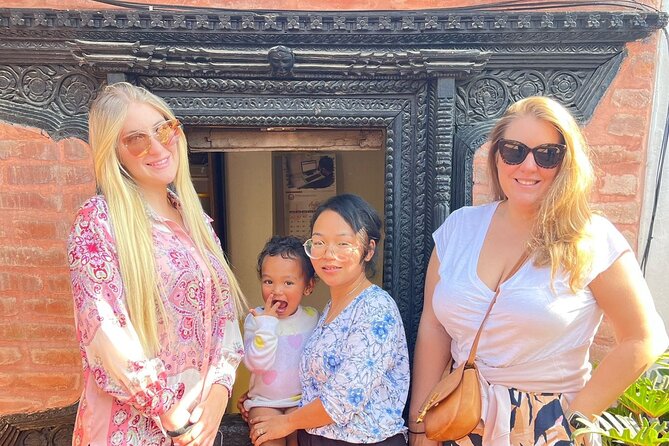
This class begins at Nagabahal, on Nyadha Galli in Lalitpur. That puts you in Patan, an older part of the Kathmandu Valley with a strong connection to Newari art, temples, courtyards, and daily street life.
Before cooking, Esther takes you to a local vegetable market. This is a small but important part of the morning. You are not simply handed a bowl of prepared ingredients. You see the produce, shop alongside your host, and interact with local sellers.
I like this start because it helps you understand the food before you taste it. You can see the vegetables used in the meal, learn about unfamiliar spices, and get a feel for how ingredients reach a Nepali kitchen. The market also gives you a chance to ask Esther questions while walking, before the more focused cooking begins.
The market may be lively and practical rather than polished. That is part of the point. If you want a staged cooking demonstration with every ingredient neatly measured in advance, this may feel less tidy. If you like seeing ordinary local life, the market adds real value.
The class is close to Golden Temple, also called Hiranya Varna Mahavihar. The planned stops include the temple and Patan itself, so you can connect the food lesson with the local setting. The food is not presented as something separate from Nepalese life. It is tied to family, shopping, customs, and the daily rhythm of the neighborhood.
More Hands-On Workshops in Kathmandu:
- Half day cooking class in Thamel kathmandu
★ 5.0 · 607 reviews - Kathmandu: Local Women-Led Nepali Cooking & Momo Class
★ 4.9 · 360 reviews - Kathmandu: Local Lead Nepali Cooking & Momo-Making Class
★ 5.0 · 212 reviews
What you cook: momos, dal bhat, and thukpa
The core menu covers three dishes that give you a useful introduction to Nepali food.
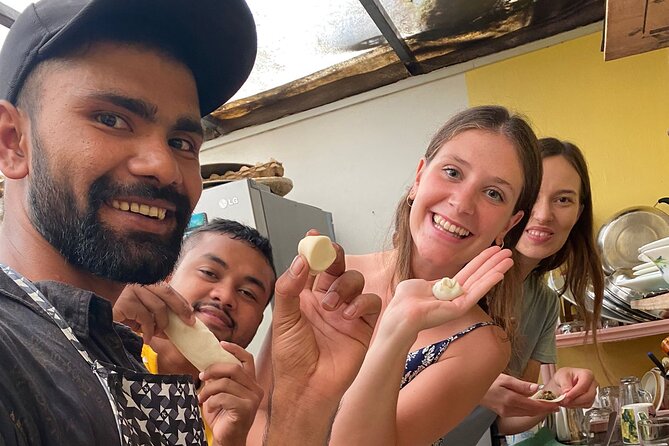
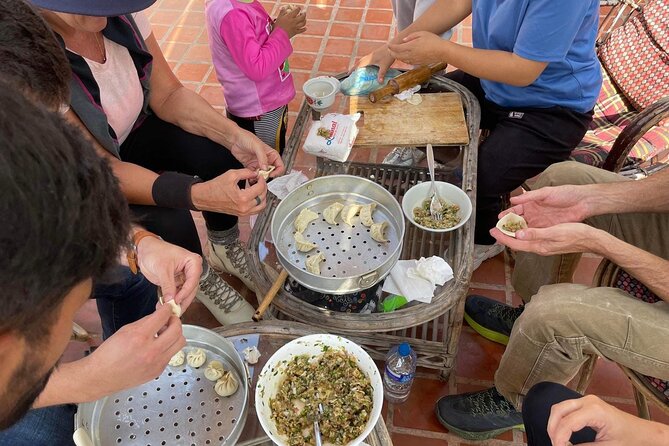
Momos are the most hands-on choice. You can expect to work with filled dumplings, including the shaping process that makes them instantly recognizable. The class is called a momo, dal bhat, and thukpa class, but the exact menu can change if you request something else.
Dal bhat is the meal that gives the class its fullest picture of everyday Nepali cooking. Dal provides lentils, while bhat means rice. The meal can include vegetables, curry, and other side dishes. One menu described during the class included chicken curry and dhal bhat, with new spices introduced along the way.
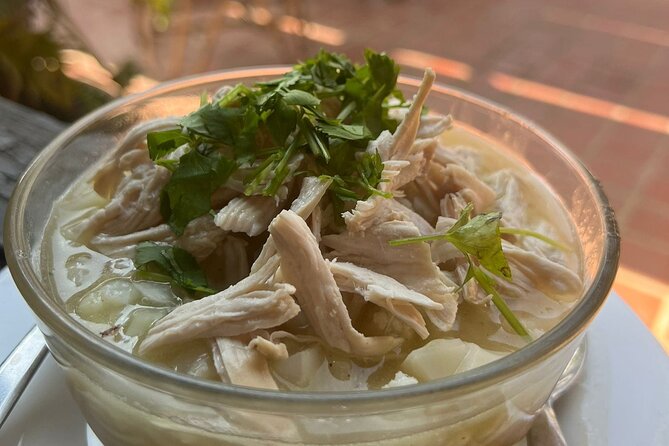
Thukpa is a noodle soup associated with Himalayan food traditions. Making it alongside momos and dal bhat gives you contrast: dumplings, a rice and lentil meal, and a warming noodle dish. You are not learning only one recipe. You are getting several different approaches to Nepali home cooking.
The instructor also accepts menu requests. That is useful if you have already eaten one of these dishes elsewhere or want to focus on a particular meal. Still, you should confirm your preferred menu when booking, since the available description does not promise that every request will be included.
Cooking with Esther Rai and Amos
Esther Rai’s interest in cooking began at home, where she spent time in the kitchen with her mother and sister. She later started the cooking program during the Covid-19 period as a way to support her family financially.
That background matters because the class is built around home cooking and family life, not just restaurant technique. Esther presents food as something shared among relatives and friends. The meal becomes a way to talk about customs, education, family roles, and daily life in Nepal.
Esther is joined by Amos or another cooking partner during the class. The setting may be a rooftop cooking space, according to the available description. That gives the lesson a more personal feel than a large culinary studio, though the exact layout can vary.
The class size is limited to 10 people. That is small enough to make questions possible and should give you a fair chance to practice. With a group at the maximum size, you may still need to share workstations or wait for a turn during certain tasks, but this is not designed as a mass-market cooking show.
One practical point is worth keeping in mind. The class is not guaranteed to involve every stage of every dish. Some ingredients or preparation may already be handled before you arrive. One person found this disappointing, especially if you want full control over chopping, mixing, and cooking.
I would treat this as a guided home-style lesson rather than a professional chef’s course. You will learn methods, ingredients, and flavors, but the main goal is cultural contact and a shared meal.
A meal you helped prepare
After the cooking, you eat the food. This simple detail changes the mood of the class. You are not sampling a small plate while the instructor does all the work. You are sitting down with the result of the morning’s shopping and preparation.
Several dishes may appear depending on the selected menu. Dal bhat, momos, thukpa, chicken curry, and dhal are all connected with the class, but you should not assume all five will be served in one session. Esther offers menus based on guest requests, so the final meal can differ.
The food is the strongest reason to choose this activity. The class has received especially high praise for its dal bhat, and the meal is often remembered as one of the best eaten during a Nepal trip. That does not mean the result will match your own taste. Spice levels, meat choices, and cooking methods can vary, so tell Esther about preferences or restrictions before the class begins.
I also like the shared meal because it gives you time to talk. The class covers more than recipes. It can lead to conversations about Nepalese customs, family life, and the country’s education system. Those subjects make the morning feel personal rather than purely instructional.
A few more cooking classes around Kathmandu worth a look
- Local Women Lead Nepali Cooking Class
★ 5.0 · 125 reviews - The best Private Nepali Cooking Class in Kathmandu
★ 5.0 · 83 reviews - Kathmandu: Local Women-Lead Nepali Cooking & Momo Class
★ 4.9 · 45 reviews - Kathmandu: Local Lead Nepali Cooking & Momo Making Class
★ 4.9 · 40 reviews
Golden Temple and Patan between the bites
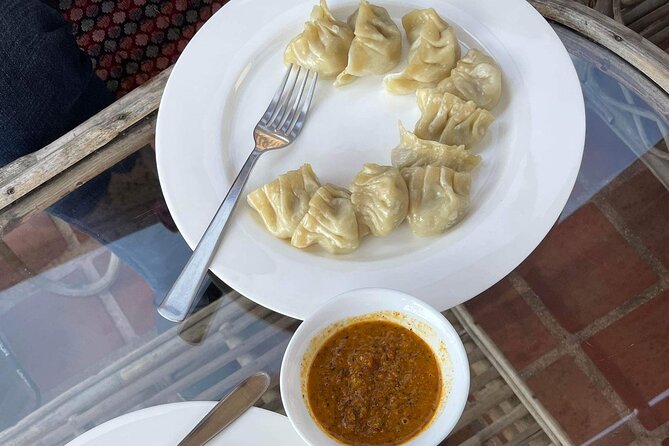
The class lists Golden Temple, or Hiranya Varna Mahavihar, as a stop. This Buddhist monastery complex is one of Patan’s notable religious sites, and its presence helps explain why the location was chosen.
Patan, also known as Lalitpur, is a useful base for this kind of activity. You are close to Patan Durbar Square, but the class is not simply a sightseeing walk with a meal attached. The local market and kitchen keep the focus on ordinary life.
The activity ends back at the meeting point. That makes it easy to continue exploring Patan afterward, especially if you plan your morning around the five-minute walk to the square. You should allow extra time if you want a relaxed visit to the temple or historic center, since the cooking session itself lasts about three hours.
The sightseeing portion may be brief compared with a dedicated Patan tour. If your main aim is architecture, set aside separate time for the square and Golden Temple. If you want food to serve as your guide to the neighborhood, the format works well.
Is $25 a fair price?
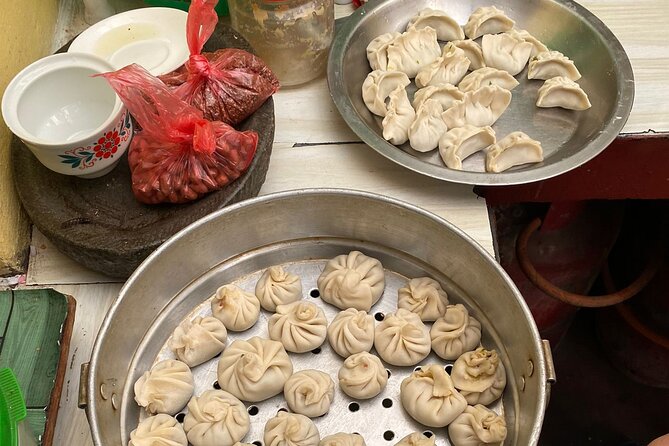
At $25 per person, this is a strong value if you want more than a restaurant meal. The price covers about three hours, a market visit, cooking instruction, and the food you prepare and eat.
A comparable meal in Kathmandu might cost far less than $25, but that is not the right comparison. You are paying for time with Esther, access to a local market, cooking practice, and a personal connection to Patan. The activity also gives you recipes and techniques you can try again at home.
The value is best for people who take part actively. If you mainly want to watch someone cook, the price may feel less attractive. Some preparation is done in advance, and the class is not presented as a full professional training session.
It is also a useful choice for people staying in or around Kathmandu who want to get beyond the Thamel restaurant circuit. The class takes you toward Lalitpur and combines food with a sense of place. The low price makes it an easy addition to a Nepal itinerary, especially early in your trip when you are still learning what you like to eat.
Timing, group size, and practical details
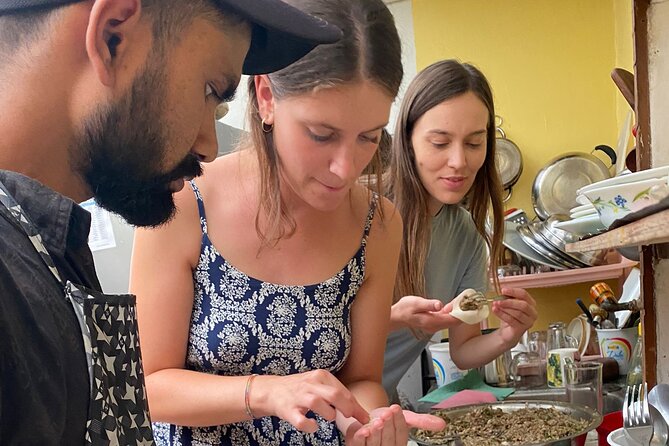
The activity lasts approximately three hours. A morning booking is a sensible choice because the market visit comes first and the meal follows the cooking. The exact starting time is not provided, so confirm it when you book.
The meeting point is Nagabahal, Nyadha Galli, Lalitpur 44600, Nepal. The class is near public transportation, and the activity returns to the same location. A mobile ticket is available, and confirmation is provided when you book.
The class normally accepts a maximum of 10 people. That limit helps keep the experience personal, but the level of individual practice can still depend on the final group size and the tasks planned that day.
The cooking space may be on a rooftop. If weather is poor, the activity can be canceled, with a different date or a full refund offered. For that reason, keep some flexibility in your schedule.
You can cancel for a full refund up to 24 hours before the start time. Cancellations or changes made within 24 hours are not refunded or accepted. The cutoff uses local Nepal time.
Who will enjoy this class most
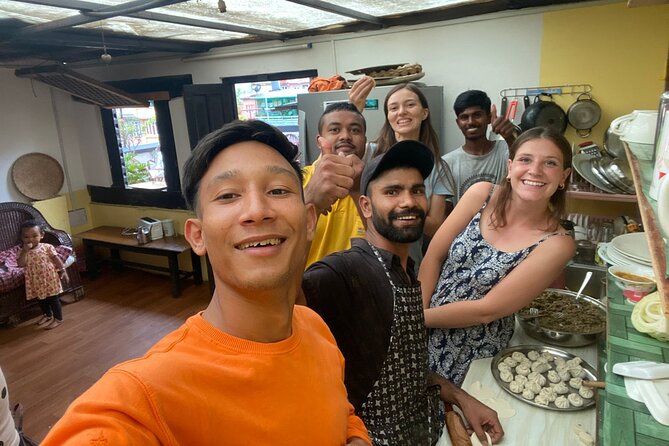
I would choose this class if you want food, conversation, and a local neighborhood in the same morning. It suits first-time visitors who want context for dishes they will see throughout Nepal.
It also works well for:
- People who enjoy cooking but do not need a formal culinary course
- Couples, families, and small groups looking for a shared activity
- Anyone curious about momos, dal bhat, thukpa, and Nepali spices
- Visitors staying in Kathmandu who want to spend time in Patan
- People who value meeting a local host and learning about family life
You may want a different activity if you need a strict recipe lesson with every ingredient prepared in front of you. The market can also be less appealing if you prefer a fast, polished demonstration without shopping or conversation.
Tell Esther about dietary needs and menu preferences before the class. The available information confirms that the menu can be adjusted by request, but it does not provide a full list of dietary options.
Should you book it?
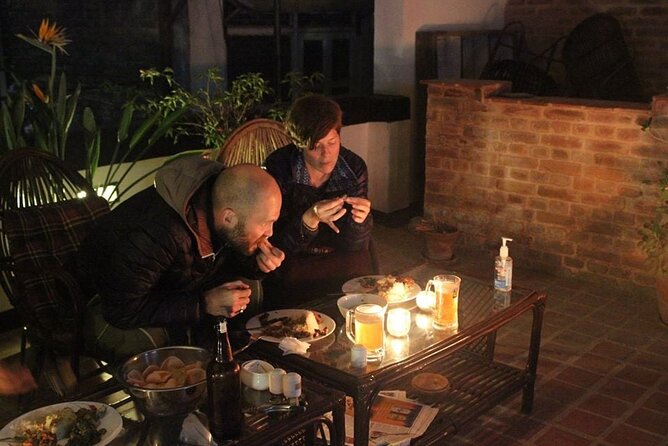
I would book this class if you want to understand Nepali food through the people and places connected to it. The market visit, Patan setting, home-style cooking, and shared meal give the $25 fee real value.
The strongest reasons to go are Esther’s personal approach, the chance to cook several staple dishes, and the walkable location near Golden Temple and Patan Durbar Square. The main caution is that some preparation may already be complete, so do not expect to perform every task yourself.
For an affordable morning that mixes food, local contact, and a taste of Lalitpur beyond the main tourist streets, this is an easy choice.
FAQ
Where does the cooking class begin?
It begins at Nagabahal, Nyadha Galli, Lalitpur 44600, Nepal.
How long does the activity last?
The cooking class lasts approximately three hours.
What dishes can I learn to cook?
The core dishes are momos, dal bhat, and thukpa. The menu may also include items such as chicken curry and dhal, and menu requests are possible.
Does the class include a market visit?
Yes. You visit a local vegetable market before cooking, buy ingredients, and interact with local sellers.
Where is the class located in relation to Patan Durbar Square?
The cooking location is about a five-minute walk from Patan Durbar Square.
Is Golden Temple included?
Golden Temple, also called Hiranya Varna Mahavihar, is listed as a stop during the activity.
How many people can join?
The activity has a maximum of 10 participants.
Do I eat the food after cooking?
Yes. You eat the food once it has been prepared.
What is the cancellation policy?
You can cancel at least 24 hours before the start time for a full refund. Cancellations or changes made less than 24 hours before the start time are not refunded or accepted. If poor weather causes cancellation, you are offered another date or a full refund.
Just added around Kathmandu
- Women Empowerment Project(Nepali cooking class & jewelry workshop★ 5.0 · 15 reviews
- Best Nepali Cooking Class in Thamel with Local Market Trip★ 5.0 · 26 reviews
- Nepali Cooking training & Cultural Homestay Experience★ 5.0 · 3 reviews
- Kathmandu: Local Women Lead Nepali Cooking & Momo-Making Class★ 5.0 · 17 reviews
- The best Private Nepali Cooking Class in Kathmandu★ 5.0 · 83 reviews
- Cook and Eat: Cooking Class in Kathmandu near Thamel★ 5.0 · 3 reviews
- Cook and Dine with a Local family★ 5.0 · 7 reviews
- Kathmandu: 3-Hours of Cooking Class with Meals★ 5.0 · 10 reviews
Cooking Classes, compared.
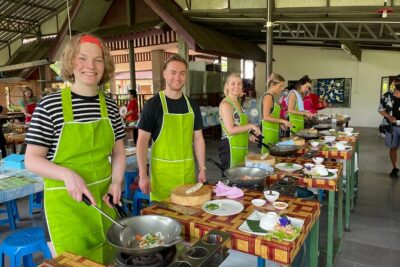
Half-Day Thai Cooking Class at Organic Farm in Chiang Mai
Read our review →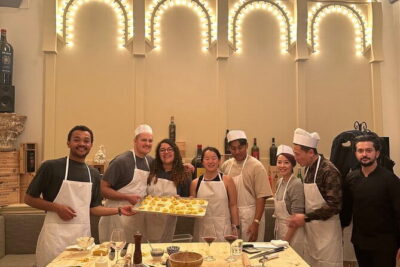
Florence: Pasta Cooking Class with Unlimited Wine
Read our review →
3 in 1 Cooking Class near Navona: Fettuccine, Ravioli & Tiramisu
Read our review →
Hanoi Cooking Class: Culture, Local Market & Meaning CSR Impact
Read our review →
5 Traditional Dishes Hanoi Cooking Class with Market Trip
Read our review →
Cooking Class and Lunch at a Tuscan Farmhouse with Local Market Tour from Florence
Read our review →
Chiang Mai: Cooking Class, Market & Thai Herbs Garden Tour
Read our review →Browse the lists this tour appears in