
Review · COOKING CLASSES
Learn to Cook Nshima, the Zambian Staple Food
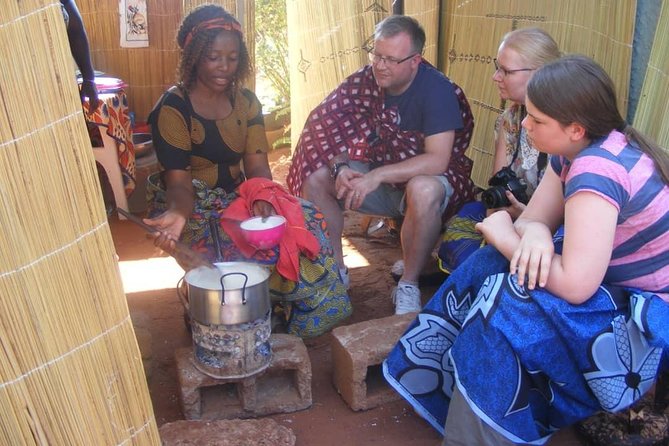
Nshima is not just a mound of maize meal on a plate. It is the food around which many Zambian meals, family gatherings, and daily routines are built. In Livingstone, Sophie welcomes you into her home, shows you how to prepare it, and explains why this simple dish carries such weight in local life. I like the home setting and the chance to hear Sophie’s own view of Zambia, rather than getting a quick food demonstration in a tourist venue. I also like that you take part in a traditional hand-washing ceremony before sitting down to eat.
The main point to consider is the short schedule. The class lasts about two hours and runs on Mondays and Tuesdays between 11 a.m. and 2 p.m., so you need to plan your Livingstone day around it. The meeting point is Mukuni Park Curio Market, followed by a short walk to the Maramba neighborhood where the cooking takes place.
Key points at a glance
- Cook nshima with Sophie in a local home in Livingstone’s Maramba neighborhood.
- Learn why nshima matters to Zambian family life, food traditions, and social connection.
- Exchange greetings in several Zambian languages, part of a welcome that refers to Zambia’s more than 72 languages.
- Join a hand-washing ceremony before eating the meal you helped prepare.
- Choose a meat or vegetable relish to serve with your nshima.
- Keep the group small, with a maximum of 10 people and a price of $15.39 per person.
Why nshima matters beyond the plate
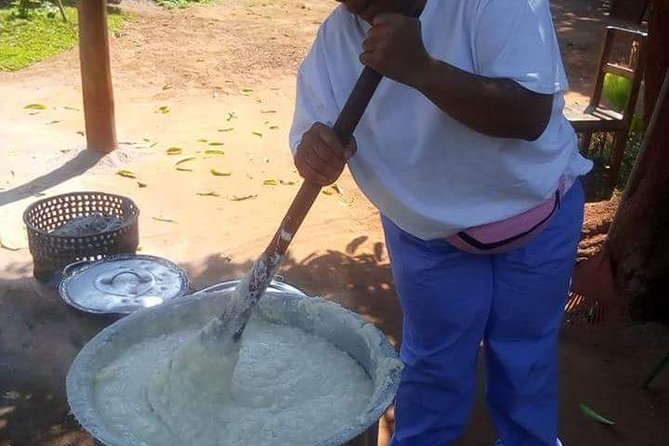
If you have spent time in southern Africa, you may recognize nshima by sight. It is a thick maize meal dish, usually shaped into a soft mound and eaten with a relish. In Zambia, though, its importance goes beyond ingredients and technique.
The welcome for this class presents nshima as a food connected to bonding, love, and daily life. That framing matters. You are not simply learning how to stir maize meal. You are being shown how a familiar staple fits into the way people gather and eat.
The class also includes a short history of nshima and its place in Zambian culture. That gives the cooking a useful setting. Without this background, you might remember only the method. With it, you can better understand why a modest lunch can be a social occasion.
I like this kind of food lesson because it gives you a direct way into local life. You do not need to know much about Zambian cooking before arriving. The activity is built around doing, talking, and sharing a meal, so it suits anyone who wants more than a restaurant stop.
More Food and Drink Tours in the world:
- Small Group Cooking Class & Market Food Tour in Florence
★ 5.0 · 1,574 reviews - Paella Cooking Class, Wine Tasting & Central Market in Valencia
★ 5.0 · 1,150 reviews - Athens: Food Market Visit and Cooking Class with Wine
★ 4.9 · 1,087 reviews
Meeting Sophie at Mukuni Park Curio Market
The activity begins at Mukuni Park Curio Market on Mwela Street in Livingstone. This is your clear starting point, and it is important to arrive there rather than heading directly to the home in Maramba.
From the market, you take a short walk to the neighborhood where the class is held. That walk is part of the transition from a central meeting point into a more residential setting. One past participant described Sophie taking her group on a tour of the neighborhood before bringing them into her home, so you should expect the setting to feel personal and community-based rather than staged for a large audience.
The walk also means you should wear comfortable shoes and allow a little extra time before the cooking begins. The supplied details describe it as short, but they do not give an exact distance or travel time. If mobility is a concern, ask the provider for more detail before booking.
Sophie is the host named in the activity information, although her name also appears as Sophia in one description. Either way, the welcome centers on her home and her personal insights. That is a major part of the appeal. You are not only following a recipe. You are meeting the person who is explaining how the food fits into her community.
A welcome that begins with language
The first part of the visit includes a Mwaboonwa Cultural Experience welcome. You will also exchange greetings in several Zambian languages.
Zambia has more than 72 languages, according to the introduction to this activity. You will not become a language expert in two hours, of course. The value is in recognizing that Zambia is not culturally uniform, and that greetings can be a friendly first step into that variety.
This opening should help set the tone for the class. It gives you something small and practical to take part in right away. You are not expected to sit quietly while a host talks at you. The format calls for exchange, which makes the visit feel more like a meeting than a formal demonstration.
The welcome is also one reason this class can work well for first-time visitors to Livingstone. If you have limited time in Zambia, a few greetings and a short conversation about local life can add context to everything else you see in town.
The short history of nshima
Before cooking, Sophie gives a brief history of nshima and explains its place in Zambian culture. The word brief is worth noting. This is not a full lecture or a museum-style presentation. The history supports the cooking lesson rather than taking over the visit.
That balance is sensible. You will have enough context to understand the dish, then move quickly to the hands-on part. The activity description places food, culture, and personal exchange together, so the lesson is likely to feel conversational rather than academic.
I would pay close attention here, since this is where a familiar-looking dish gains meaning. The ingredients may be simple, but staple foods often tell you how people organize daily meals and time together. Nshima is described as special, bonding, and part of life, which gives you a useful clue about what the host wants you to notice.
This is also the part of the activity that sets it apart from simply ordering nshima at a restaurant. A restaurant lets you taste the finished dish. Sophie’s class helps you understand why it is served and shared in the first place.
More Food Experiences in the world:
- Undiscovered Charleston: Half Day Food, Wine & History Tour with Cooking Class
★ 5.0 · 948 reviews - Vietnamese Food Cooking Class in Hanoi with Market Experience
★ 5.0 · 778 reviews - Milan: Italian Cooking Class with Food and Wine
★ 4.7 · 509 reviews - Mexican Cooking Class with Food Market Visit in Mexico City
★ 5.0 · 506 reviews
Making nshima with Sophie
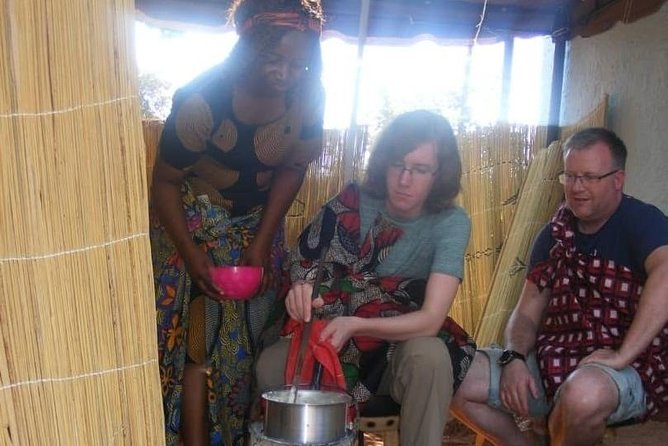
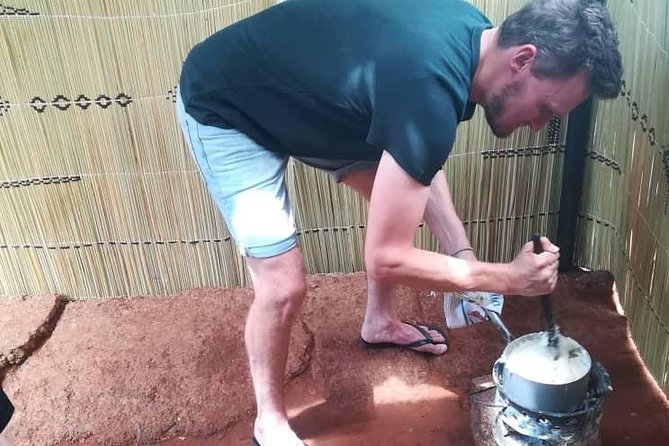
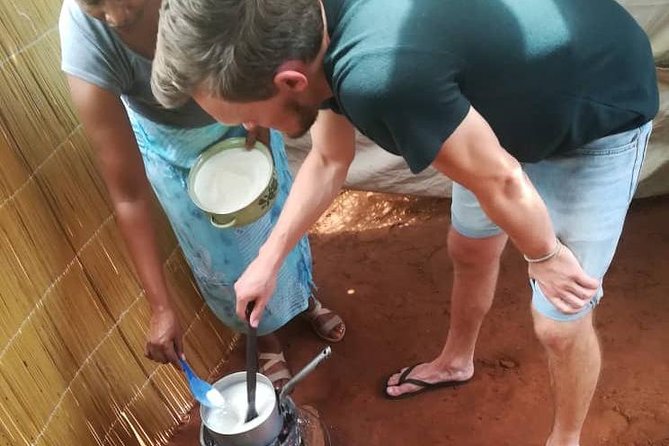
The hands-on cooking session is the heart of the visit. You will make nshima with Sophie, rather than only watching her prepare it.
The supplied information does not list each cooking step, the equipment used, or the specific maize meal recipe. That means you should not expect a printed technical course with exact measurements. Instead, think of it as a practical introduction guided by the host, with the food prepared for the lunch you will eat together.
This format is a good fit if you learn best by handling ingredients and asking questions as you go. It also leaves room for conversation. The earlier welcome and neighborhood walk suggest that the cooking is part of a broader cultural visit, not an isolated kitchen class.
You should be ready for a shared activity. The group can include up to 10 people, which is small enough for a personal setting but not necessarily private. If you want a one-on-one lesson, this is not advertised as one. If you are comfortable cooking alongside a few other people, the group limit should keep the visit manageable.
The class takes place around lunchtime and lasts about two hours. That makes it easy to pair with other Livingstone plans, but only if you watch the clock. The listed opening hours are Mondays and Tuesdays from 11 a.m. to 2 p.m., while the class itself is approximately two hours. Confirm your booked start time and avoid scheduling another fixed activity too close afterward.
The hand-washing ceremony before lunch
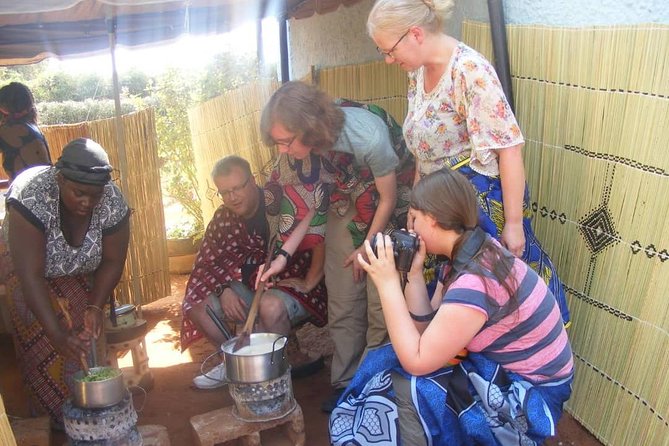
Before eating, you take part in a traditional hand-washing ceremony. This is more than a practical rinse before a meal. It marks the change from cooking and conversation to sitting down together.
The ceremony gives the lunch a clear sense of occasion. You have prepared the food, but you do not simply grab a plate and begin. The group pauses for a shared custom before eating.
This part may be especially useful if you have not encountered Zambian dining traditions before. It gives you a respectful way to join the meal and observe how the host frames hospitality. Pay attention to the order of the ritual and follow Sophie’s lead.
The activity information does not specify the exact form of the ceremony, so you should let the host explain it on the day. That is preferable to arriving with assumptions. The important point is that hand washing is included as a cultural part of the meal, not added as an afterthought.
Eating nshima with a relish
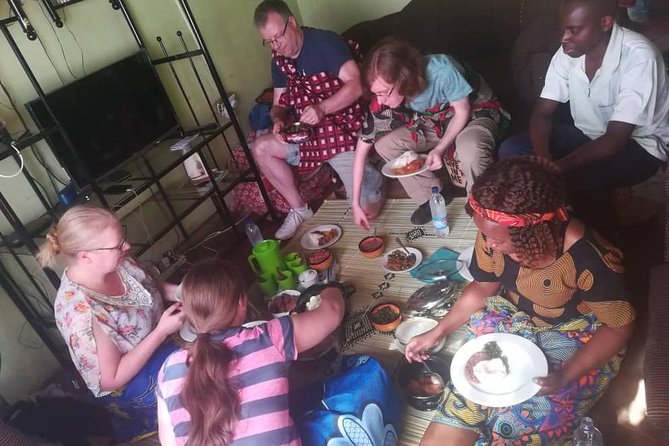
Once the nshima is ready, you eat it with a relish of your choice. The options are a vegetable relish or a meat relish, and both are included in the price.
That choice is useful for different diets and preferences. It also shows how nshima works as the base for a meal, paired with something more strongly seasoned or varied in texture. The dish is not presented alone.
The food is eaten together after the hand-washing ceremony. This shared lunch is likely to be the most social part of the visit, since you are enjoying something you helped prepare in the same home where you cooked it.
If you have dietary restrictions, ask before booking or as soon as you meet Sophie. The information confirms a vegetable option, but it does not explain the ingredients, preparation method, or whether other dietary needs can be accommodated. Do not assume that a vegetable relish is suitable for every diet without checking.
I like that the meal is included rather than treated as an extra purchase. At $15.39 per person, you are paying for the welcome, neighborhood visit, cultural explanation, cooking session, ceremony, and lunch. That is strong value if you want a personal food experience instead of a basic restaurant meal.
What the two-hour format gives you
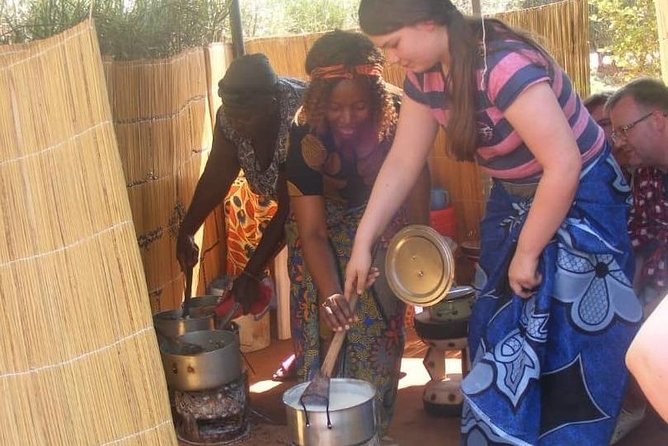
Two hours is enough for a focused introduction, but it also sets limits. You should come expecting one staple dish, a short cultural lesson, and a shared lunch. You should not expect a full survey of Zambian cuisine or several separate recipes.
That focused scope is a strength for many visitors. You can fit it into a morning or afternoon in Livingstone, and the meal gives the class a natural finish. The activity does not ask you to commit half a day to cooking.
The time limit may feel short if you want a long conversation about Zambia or a broader cooking course. The neighborhood walk, greetings, history, cooking, ceremony, and lunch all need to fit into the same visit. The experience works best when you value a clear introduction rather than extensive culinary training.
The Monday and Tuesday schedule is the biggest planning issue. If your Livingstone stay is brief, check the available day before arranging other activities. The information gives a booking pattern of about 18 days in advance, so reserving ahead is sensible, especially if you have only one Monday or Tuesday available.
Group size, value, and the home setting
A maximum of 10 people keeps this from being a large bus-style activity. Still, the class may feel different depending on whether you attend with two people or a full group of 10. A smaller gathering will naturally leave more room for questions and personal conversation.
The home setting is the strongest reason to choose this over a standard cooking demonstration. You meet Sophie in her own community, walk through the neighborhood, and eat in the same personal setting where the lesson takes place. That creates a direct connection between the food and everyday life.
The setting also asks you to be a considerate visitor. Follow Sophie’s guidance, listen during the welcome, and remember that you are entering a local home rather than a commercial kitchen. The warmth of the visit depends on mutual respect.
At $15.39, the cost is modest for a two-hour activity that includes food. The price becomes particularly good if you value conversation and cultural context. If your only goal is to learn precise cooking measurements, you may find a specialist culinary school more suitable, but that is not what this activity is trying to be.
Service animals are allowed, and the meeting point is near public transportation. Confirmation is received when you book. These details make the basic logistics simple, though you should still check the route from your accommodation to Mukuni Park Curio Market.
Who should book this Livingstone cooking class?
I would recommend this class to you if you want to meet a local host, learn about an important Zambian food, and share a meal in a home setting. It is especially well suited to visitors who enjoy conversation, cultural customs, and hands-on activities.
It also works for couples, friends, and small family groups. The maximum of 10 people means it can accommodate a modest group without becoming a large tour. The included meat or vegetable relish gives you a basic choice at lunch.
You may want to skip it if your schedule does not include Monday or Tuesday, if you need a long professional cooking course, or if you prefer activities with exact recipes and detailed kitchen instruction. The class is about nshima and the place it holds in Zambian life, not about mastering a broad menu.
Free cancellation is available if you cancel at least 24 hours before the start time. Inside that 24-hour window, the payment is not refunded, and changes are not accepted. The activity can also be moved or refunded if poor weather affects it or if the minimum number of participants is not met.
Should you book Learn to Cook Nshima?
Book it if you want a short, affordable way to connect food with local life in Livingstone. The combination of Sophie’s welcome, the neighborhood walk, language greetings, hands-on nshima preparation, hand-washing ceremony, and shared lunch gives the visit more substance than a simple cooking lesson.
Before booking, check that you can attend on Monday or Tuesday and that a two-hour cultural visit matches your plans. If those details work, this is a good choice for an authentic home-based introduction to Zambia, with a meal you help make and a host who puts the food into personal context.
FAQ
Where does the nshima cooking class begin?
The class begins at Mukuni Park Curio Market on Mwela Street in Livingstone, Zambia.
Where does the activity finish?
The activity finishes in Maramba, Livingstone, where the class is held in a local home.
Do you walk from the meeting point to the cooking location?
Yes. The meeting point is followed by a short walk to the neighborhood where the class takes place.
How long does the activity last?
The cooking class lasts approximately two hours.
What days and times is the class available?
The listed opening hours are Monday and Tuesday from 11 a.m. to 2 p.m.
What food will you prepare?
You will learn to make nshima, a Zambian staple food, and eat it with either a vegetable or meat relish.
Is lunch included?
Yes. The meal you prepare, paired with a vegetable or meat relish, is included in the price.
How many people can join the class?
The activity has a maximum of 10 participants.
Can you cancel for a full refund?
Yes. You can receive a full refund if you cancel at least 24 hours before the experience starts. Cancellations or changes made within 24 hours are not refunded or accepted.
Just added around the world
- Tribal Cooking Class in Luang Prabang Forest and visit★ 5.0 · 15 reviews
- Hands On Pasta and Gelato Cooking Class in LUCCA★ 5.0 · 14 reviews
- Typical Dining & Cooking Demo at Local’s Home in Lucca★ 4.5 · 6 reviews
- Evening Bamboo weaving & Cooking classes join-in★ 5.0 · 17 reviews
- Traditional Market Tour and Private Laotian Cooking Class with a Local★ 5.0 · 13 reviews
- Luang Prabang Cooking, Pottery & Candle Experience★ 5.0 · 4 reviews
- Full Day bamboo experience with cooking class & Kuang si waterfalls★ 5.0 · 5 reviews
- The Namkhan – Cooking Class★ 5.0 · 8 reviews
Food, compared.
Small Group Cooking Class & Market Food Tour in Florence
Read our review →
Athens: Food Market Visit and Cooking Class with Wine
Read our review →
Undiscovered Charleston: Half Day Food, Wine & History Tour with Cooking Class
Read our review →
Vietnamese Food Cooking Class in Hanoi with Market Experience
Read our review →
Milan: Italian Cooking Class with Food and Wine
Read our review →
Mexican Cooking Class with Food Market Visit in Mexico City
Read our review →
Ao Nang: Hands-on Learn to Cook 3 Popular Thai’s street food
Read our review →
Florence: Cooking Class with Local Food Market Tour
Read our review →Browse the lists this tour appears in