
Review · LUANG PRABANG
The Namkhan – Cooking Class
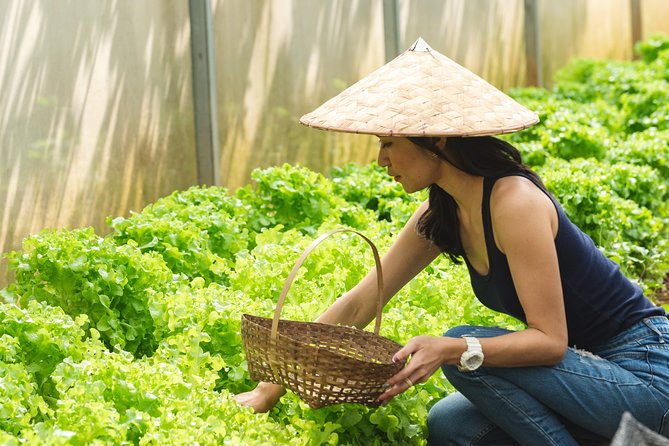
The best part of this Luang Prabang cooking class happens before you reach the stove. At The Namkhan, you pick vegetables from the resort’s organic gardens and greenhouses, then carry them into the kitchen for a Lao meal made under the guidance of a local chef.
I like the small six-person limit, which gives the cooking time a personal feel, and I like the full garden-to-table path: harvest, clean, prepare, cook, and eat. The staff also pays attention to the small things, with Carl, the general manager, checking that everything is going well.
The main thing to consider is the weather. This is an outdoor farm visit as well as a cooking lesson, and poor weather can lead to a change of date or a cancellation. At $63.34 per person, it is not the cheapest cooking lesson in Southeast Asia, but the organic garden visit, meal, resort setting, and recipes afterward help explain the price.
Key points at a glance
- Pick your own vegetables: Start in The Namkhan’s organic gardens and greenhouses, gathering seasonal produce for the meal.
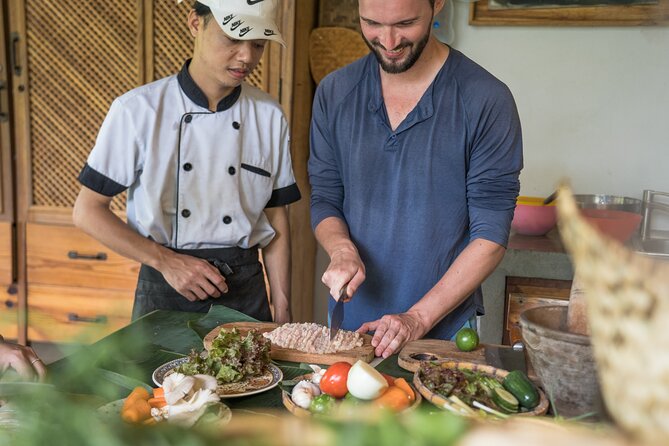
- Cook with a local chef: Learn the preparation of traditional Lao dishes with guidance throughout the class.
- Small group setting: The class accepts a maximum of six people, useful if you want time to ask questions and take part.
- Farm-to-table meal: Eat the food you helped prepare at The Namkhan’s restaurant.
- About three hours: The schedule gives you enough time for gardening, cooking, and a relaxed meal.
- Recipes to take home: You receive the recipes afterward, so the class can continue in your own kitchen.
From organic garden to Lao kitchen
Many cooking classes begin with a market visit. This one begins at the source. At The Namkhan Activity Center, you head into the resort’s organic gardens and greenhouses with the chef and select vegetables for the dishes you will prepare.
That first step gives the class a useful connection to Lao food. You are not simply handed a basket of ingredients with no explanation. You learn to identify the produce, pick it, clean it, and prepare it. The process is simple, but it helps you see how a meal develops from local, seasonal ingredients.
The gardens are also a practical reason to choose this class over a standard kitchen-only lesson. You get time outside and a clearer sense of the resort’s farming work. Since the vegetables come from The Namkhan’s own organic growing areas, the meal has a direct link to the place where you are cooking.
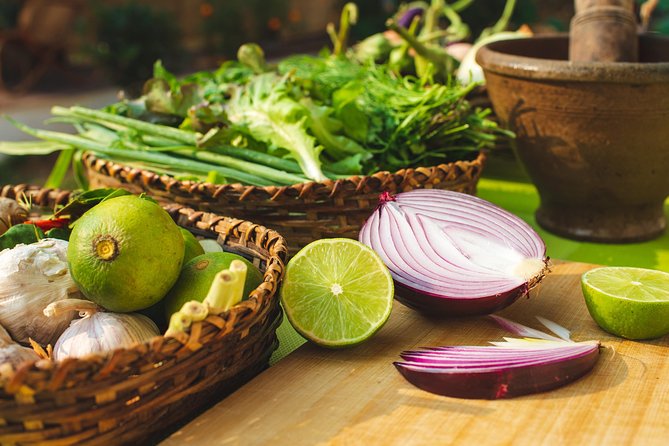
The available information does not name each dish or list every ingredient, so you should not book this expecting a fixed menu of specific recipes. What is clear is that the food is traditional Lao cooking, shaped by what is available in the garden and guided by the chef.
More Hands-On Workshops in Luang Prabang:
- Luang Prabang: Evening Cooking Class & Local Baci Ceremony
★ 4.9 · 151 reviews - Luang Prabang: Bamboo Weaving Workshop & Cooking Class
★ 5.0 · 96 reviews - Luang Prabang: Cooking Class at the Former Royal Palace
★ 4.9 · 51 reviews
What the three-hour schedule feels like
The class lasts about three hours, and the time is divided between several tasks rather than spent at a table listening to a long demonstration. You begin at the meeting point, The Namkhan Wellness Center in Don Keo Village, then continue to the activity area and garden.
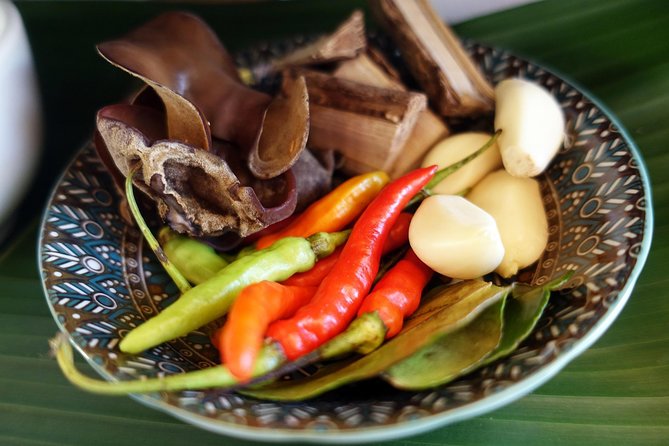
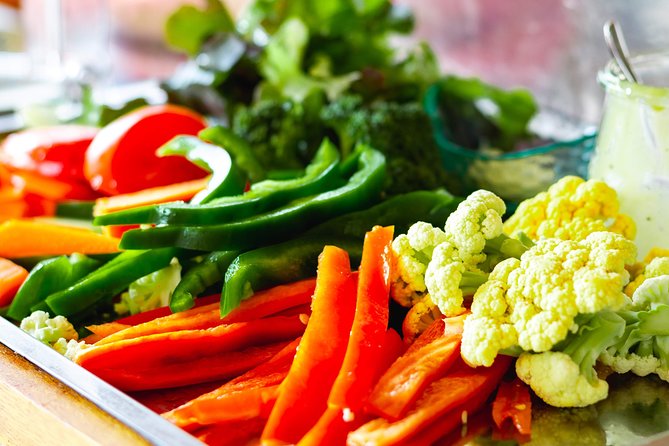
The garden portion comes first. You pick vegetables, then learn how to clean and wash them. This may sound basic, but it is part of the value of the class. You take part in the complete preparation rather than arriving after the work has already been done.
Next comes the cooking session at the farm-to-table restaurant. The chef leads the preparation and explains the steps as you work. A strong command of English is reported for the guide, which matters when you are learning unfamiliar cooking methods or asking about Lao food customs.
The class finishes with you eating the dishes you prepared. That gives the activity a satisfying end, since the meal is not a separate restaurant stop detached from the lesson. You see the ingredients in the garden, work with them in the kitchen, and then taste the result.
At three hours, this fits neatly into a day in Luang Prabang. It is long enough to feel like a real activity, but short enough to leave room for the town’s temples, markets, and riverfront.
Why the small group matters
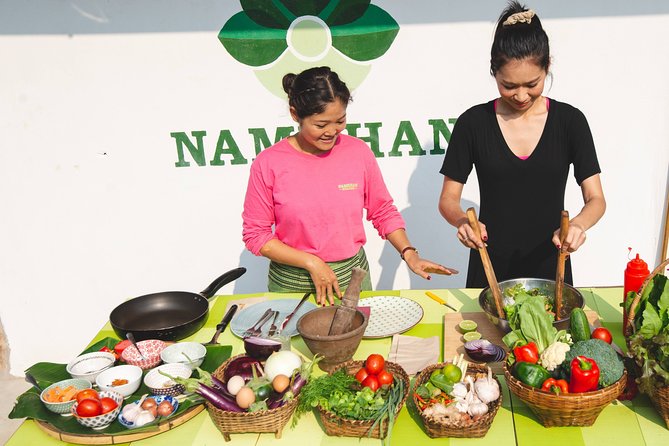
A maximum of six people is one of the strongest practical features here. Cooking lessons can become frustrating when a large group gathers around one cutting board or watches a chef work from several steps away. This class is designed on a smaller scale.
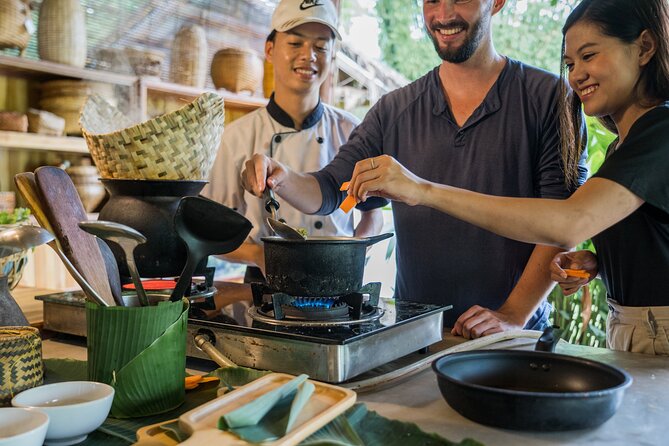
With six or fewer participants, you should have a better chance to handle the vegetables, follow the preparation, and ask questions. The chef can offer direction while you cook, instead of delivering only a general demonstration.
The small size also suits people who want a calmer setting. The Namkhan is a resort beside the Khan River, and the cooking activity takes place in that resort environment rather than in a crowded city kitchen. The setting may be part of the appeal for you, especially if you want a slower afternoon outside central Luang Prabang.
Still, a small group does not mean the experience is private. The maximum is six, not one booking party only, so you may share the class with other people. The benefit is a compact group, not complete solitude.
The local chef and Lao food traditions
The chef is the main teacher, and the class focuses on traditional Lao dishes rather than a broad survey of Asian cooking. You learn by doing, with the chef guiding the steps from washing vegetables to cooking the finished food.
The instruction also includes explanation of Lao culture. That matters because food in Laos is tied to daily life, local produce, and shared meals. You are not just following a recipe with unfamiliar names. You are getting some context for how the ingredients fit into local cooking.
The guide’s English is described as very good, which should make the lesson easier to follow. The staff also includes cooks who help with the experience, and Carl, the general manager, is involved in checking that participants are satisfied.
That personal attention is useful, but it may also mean the pace depends on the group. If one person needs extra help, the chef may slow down to explain a technique. For some people, that is exactly what makes a class worthwhile. If you want a fast, polished demonstration with little participation, this may feel more hands-on than expected.
A few more cooking classes around Luang Prabang worth a look
- Day-time Bamboo weaving & Cooking Classes join-in
★ 5.0 · 38 reviews - Evening Bamboo weaving & Cooking classes join-in
★ 5.0 · 17 reviews - Tribal Cooking Class in Luang Prabang Forest and visit
★ 5.0 · 15 reviews - Traditional Market Tour and Private Laotian Cooking Class with a Local
★ 5.0 · 13 reviews
Eating what you prepared at The Namkhan
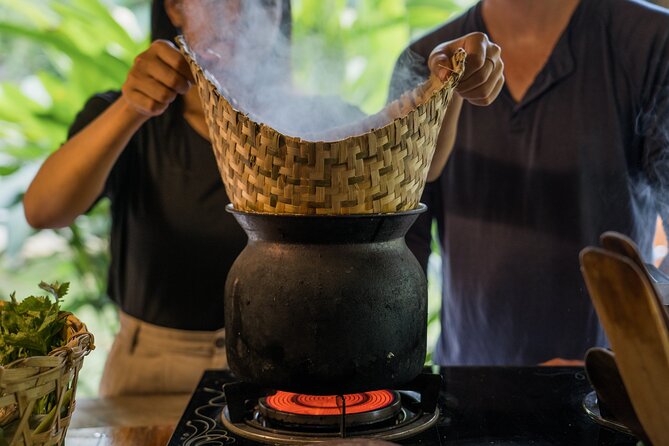
The meal is served at the farm-to-table restaurant, in the same setting connected to the garden and cooking activity. You are not simply tasting a chef’s finished version. You eat the dishes you helped make.
That makes the meal an important part of the value. At $63.34 per person, you are paying for more than a short lesson. The fee supports a three-hour activity with a garden visit, instruction, cooking time, and a meal in a resort setting.
The setting also gives the class a more relaxed finish. After handling vegetables and cooking, you can sit down and enjoy the result instead of rushing straight back to town. The supplied details describe The Namkhan as an eco-resort beside the Khan River, so the surroundings are part of the experience even though the cooking remains the main reason to book.
Do not expect this to be a formal fine-dining event based on the information provided. The appeal is the process and the connection between the farm and the plate. You will likely value it most if you enjoy learning how food is prepared, not simply eating a restaurant meal.
Is $63.34 a fair price?
The price is $63.34 per person. That is a moderate-to-high cost for a three-hour activity in Luang Prabang, so the value depends on how much of the full experience you use.
If you only want to learn one or two Lao recipes, a less expensive class may meet your needs. The Namkhan adds several elements: an organic garden visit, seasonal vegetables, a small group, a local chef, a meal, a resort setting, and recipes to use afterward.
The maximum of six makes the price easier to justify for people who care about personal instruction. You are not paying for a huge group activity where your role is limited. You also get to eat the dishes you make, rather than paying separately for a meal after the lesson.
The best value comes when you treat this as both a food lesson and a half-day outing. If you are comparing it with a basic kitchen demonstration, it may seem expensive. If you want garden time, direct participation, and a meal in a peaceful setting, the cost is more reasonable.
The class is booked, on average, 39 days ahead. That suggests you should reserve early if your Luang Prabang dates are fixed, especially since the group is limited to six people.
The resort setting and practical meeting details
You meet at The Namkhan Wellness Center in Don Keo Village, Luang Prabang 06000, Laos. The activity ends back at the meeting point, so you do not need to arrange a different pickup location at the end.
The information says the meeting point is near public transportation. It does not provide a shuttle schedule or hotel pickup details, so confirm your route to The Namkhan before booking if you are staying elsewhere in Luang Prabang.
The resort setting may appeal to you if you want a break from town. The Namkhan sits alongside the Khan River, and the class takes place through its activity center, garden, and restaurant areas. This is not a street-food crawl or a market tour. It is a contained experience in one property.
That focus has both benefits and limits. You spend less time moving between places, which keeps the three-hour schedule efficient. On the other hand, you will not get the same direct look at a Luang Prabang market that a market-based class might offer.
Weather, timing, and who should book
The activity requires good weather. Since the schedule begins with outdoor garden work, rain or poor conditions can affect the experience. If the class is canceled because of weather, you are offered another date or a full refund.
You can cancel for a full refund up to 24 hours before the start time. Changes or cancellations made less than 24 hours before the start are not accepted for a refund. The activity also requires a minimum number of participants, so it can be changed or canceled if that minimum is not reached.
This class is a good fit for:
- Food-focused visitors who want to learn Lao recipes and cooking methods.
- Couples and small groups who prefer a quiet, hands-on activity.
- People who like farm visits and want to see where the ingredients come from.
- First-time visitors to Laos who want a simple introduction to local food and culture.
- Families or mixed-age groups who can take part in gardening and cooking, provided the activity suits everyone in the party.
It may be less suitable if you want a market tour, a highly specific menu, or an indoor-only activity. The garden visit is central, and the class may change if weather conditions are poor.
What to bring and how to prepare
The supplied details do not list a required dress code or equipment list, so you should confirm any special needs before the day. Practical clothing for garden work and cooking is sensible, since you will handle vegetables and spend time outdoors.
Arrive ready to participate. The value comes from doing the tasks yourself, including picking, washing, and cooking. If you prefer to watch rather than handle ingredients, you may not get as much from the class.
The activity allows service animals and is near public transportation. The legal drinking age on the premises is over 18, and that rule is strictly enforced. The class information does not promise alcohol as part of the experience, so do not treat drinks as an included feature.
Recipes that continue after Luang Prabang
The recipes provided afterward are a useful touch. A cooking class can fade into a pleasant memory once you leave, but written recipes give you a way to repeat the dishes at home.
You may not be able to find every Lao ingredient in your local shop, and the exact garden produce can vary by season. Still, the recipes can help you remember the preparation and adapt the dishes with available ingredients.
That follow-up material also makes the class more worthwhile for serious home cooks. You are not only taking photographs or sampling food. You are leaving with something practical that can bring a taste of the experience back to your own kitchen.
Should you book The Namkhan Cooking Class?
Book it if you want a small, hands-on introduction to Lao cooking with a clear farm-to-table idea. The strongest reasons are the organic garden, local chef, maximum group size of six, cooked meal, and recipes afterward.
Think twice if your priority is the lowest price, a market visit, or a guaranteed indoor schedule. At $63.34, this is best viewed as a three-hour food and resort experience rather than a simple cooking demonstration.
For most food-minded visitors with room in the budget, I would choose it for the complete sequence: pick the vegetables, prepare them, cook the dishes, and eat your own work beside the Khan River. Just allow for weather changes and reserve well ahead of time.
FAQ
Where does The Namkhan Cooking Class meet?
The class meets at The Namkhan Wellness Center in Don Keo Village, Luang Prabang 06000, Laos.
Where does the activity end?
The activity ends back at the meeting point.
How long does the cooking class last?
The experience lasts approximately three hours.
How many people can join the class?
The activity has a maximum of six participants.
What happens first during the class?
You begin by harvesting vegetables in The Namkhan’s organic gardens and greenhouses.
Who teaches the cooking class?
A local chef guides the cooking session. The available information does not provide the chef’s name.
What kind of food do you cook?
You cook traditional Lao dishes using local, seasonal vegetables from the organic garden.
Are recipes provided after the class?
Yes. Recipes are provided afterward.
Can I cancel for a full refund?
Yes. You can cancel at least 24 hours before the experience start time for a full refund. Cancellations made less than 24 hours before the start time are not refunded.
Just added around Luang Prabang
- Tribal Cooking Class in Luang Prabang Forest and visit★ 5.0 · 15 reviews
- Evening Bamboo weaving & Cooking classes join-in★ 5.0 · 17 reviews
- Traditional Market Tour and Private Laotian Cooking Class with a Local★ 5.0 · 13 reviews
- Luang Prabang Cooking, Pottery & Candle Experience★ 5.0 · 4 reviews
- Full Day bamboo experience with cooking class & Kuang si waterfalls★ 5.0 · 5 reviews
- Laos Cooking Class in Luang Prabang★ 4.5 · 7 reviews
- Luang Prabang: Bamboo Forest Cooking-class & Farm Visit★ 5.0 · 3 reviews
- Luang Prabang: Mekong River Cooking Class with Hotel Pickup★ 5.0 · 3 reviews
Cooking Classes, compared.
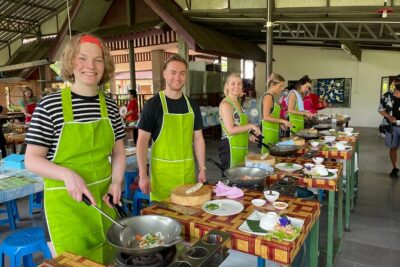
Half-Day Thai Cooking Class at Organic Farm in Chiang Mai
Read our review →
Florence: Pasta Cooking Class with Unlimited Wine
Read our review →
3 in 1 Cooking Class near Navona: Fettuccine, Ravioli & Tiramisu
Read our review →
Hanoi Cooking Class: Culture, Local Market & Meaning CSR Impact
Read our review →
5 Traditional Dishes Hanoi Cooking Class with Market Trip
Read our review →
Cooking Class and Lunch at a Tuscan Farmhouse with Local Market Tour from Florence
Read our review →
Chiang Mai: Cooking Class, Market & Thai Herbs Garden Tour
Read our review →Browse the lists this tour appears in