
Review · LUANG PRABANG
Luang Prabang: Bamboo Weaving Workshop & Cooking Class
The most memorable part of this Luang Prabang experience is the way bamboo connects craft, food, music, and daily life. You do not just hear that bamboo matters in Laos. You handle it, cut it, weave it, cook with it, and see it used in instruments and household tools.
I like two things especially. First, the weaving class gives you something real to do, not just a demonstration. Second, the cooking session ends with a meal served in a traditional bamboo tray, so the afternoon or evening has a clear, satisfying purpose. The main consideration is comfort: the rural setting and hands-on work are not suited to people with mobility impairments, wheelchair users, or pregnant women.
Key points at a glance
- Weave your own bamboo souvenir: Learn to sharpen a knife, prepare bamboo strips, and create a small overlapping mat or coaster with help from a local weaving teacher.
- Cook with bamboo shoots: Prepare dishes such as bamboo shoot soup, banana-leaf-steamed bamboo shoot, and bamboo shoot dip.
- Choose the best time for your plans: The 8:30 AM session offers better light for photographs, while the 4:00 PM option lets you prepare dinner.
- Meet a local Lao team: Guides including John and Sia have led guests through the craft, food, music, and cultural explanations in English.
- Eat in a traditional setting: Your lunch or dinner arrives in a bamboo tray at a rustic pavilion modeled on a Lao house.
- See bamboo beyond the kitchen: The introduction covers fishing tools, household objects, construction, and musical instruments played by local musicians.
Why bamboo is the real star of the day
Luang Prabang is full of temples, markets, and river views. This outing gives you a different way to understand Lao life. Bamboo is presented as a practical material rather than a decorative theme. It can become a basket, a fishing tool, part of a house, a cooking vessel, or a musical instrument.
That context makes the craft lesson more meaningful. You are not simply making a souvenir to carry home. You are learning why the material is so useful and how Lao families have worked with it for generations.
The setting helps. The activity takes place in a rustic pavilion modeled on a traditional Lao house, outside the center of Luang Prabang. The surrounding greenery, bamboo, and rice fields create a quieter setting than anything you will find along the main tourist streets.
The team uses English, and the explanations cover bamboo, rice, Lao food, and local customs. John is noted for guiding the cutting, weaving, and cooking clearly, while Sia has been praised for bringing in local music and cultural details. The exact instructor may vary, but the format remains personal and practical.
More Hands-On Workshops in the world:
- Half-Day Thai Cooking Class at Organic Farm in Chiang Mai
★ 5.0 · 19,087 reviews - Florence: Pasta Cooking Class with Unlimited Wine
★ 4.9 · 10,285 reviews - 3 in 1 Cooking Class near Navona: Fettuccine, Ravioli & Tiramisu
★ 5.0 · 7,376 reviews
Arriving by tuk-tuk from Luang Prabang
Hotel pickup is included, with the morning session scheduled around 8:30 AM and the afternoon session around 4:00 PM. You should wait in your hotel lobby five minutes before pickup. A tuk-tuk ride takes you from town to the traditional house and later returns you to your hotel.
The transport is part of the appeal. You leave the dense center and reach a more open setting, where the experience feels connected to village life. It is still a short half-day activity, so you do not need to give up an entire day of sightseeing.
The timing matters. Pick the morning if you want the best opportunity for photographs and prefer to have the rest of the day free. Pick the evening if you want to prepare your own dinner and enjoy the food soon after cooking it.
The tour requires punctuality. A no-show or a delay of more than 30 minutes after the scheduled pickup can result in cancellation without a refund. That is worth remembering if you are arranging other activities on the same morning or afternoon.
Starting with bamboo tools and household objects
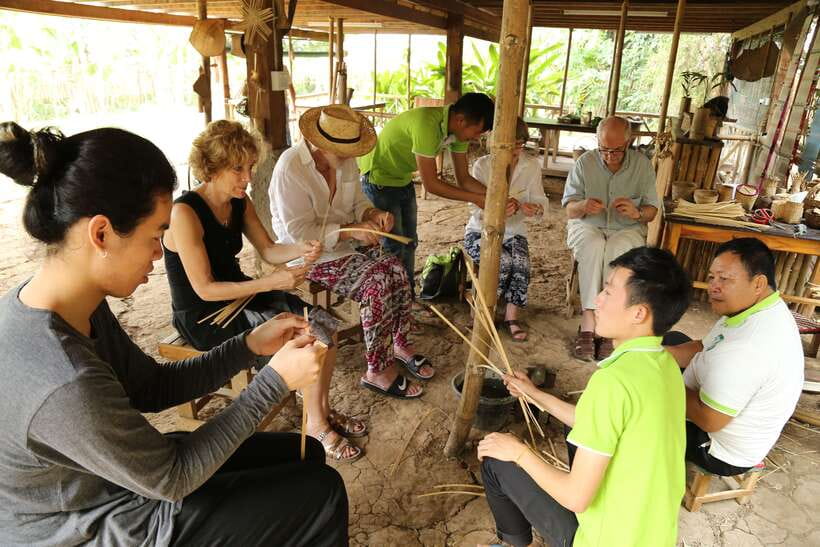
After a welcome, often with tea, your instructor explains how bamboo appears in traditional Lao homes. You may handle examples of bamboo objects and see how the same plant serves very different purposes.
The introduction covers practical items such as fishing tools and musical instruments. It also explains how bamboo can be used in construction and everyday household work. This section gives you useful context before you begin handling the material yourself.
I like this order. If you started weaving without the explanation, the craft could feel like a simple workshop project. Instead, you see it as one small part of a larger Lao tradition of making useful things from local materials.
The information is delivered in a relaxed way, with room for questions. You may find the pace especially helpful if you have little experience with crafts or cooking classes. The instructors are there to guide your hands, not simply perform in front of you.
Making a small bamboo mat or coaster
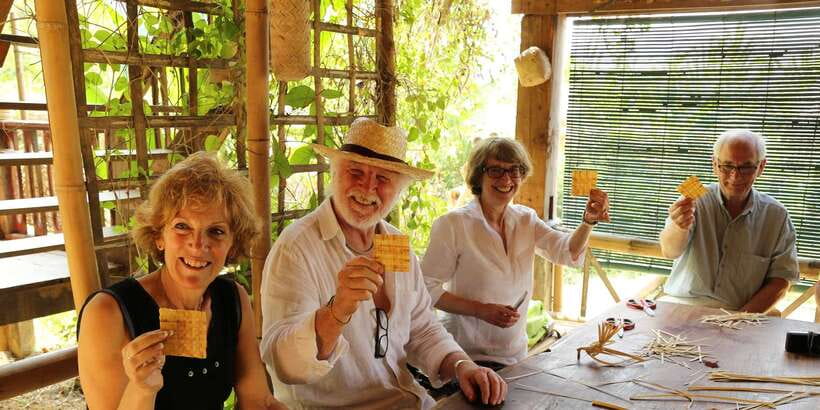
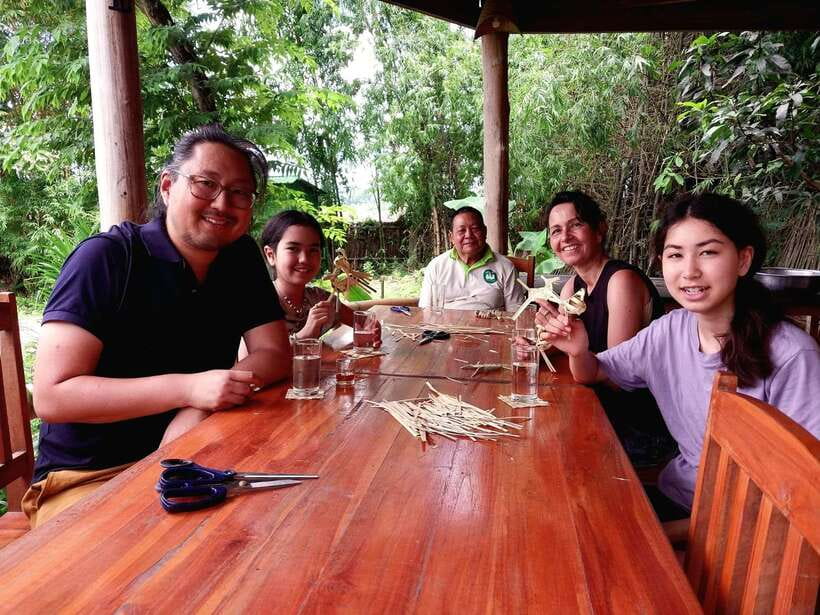
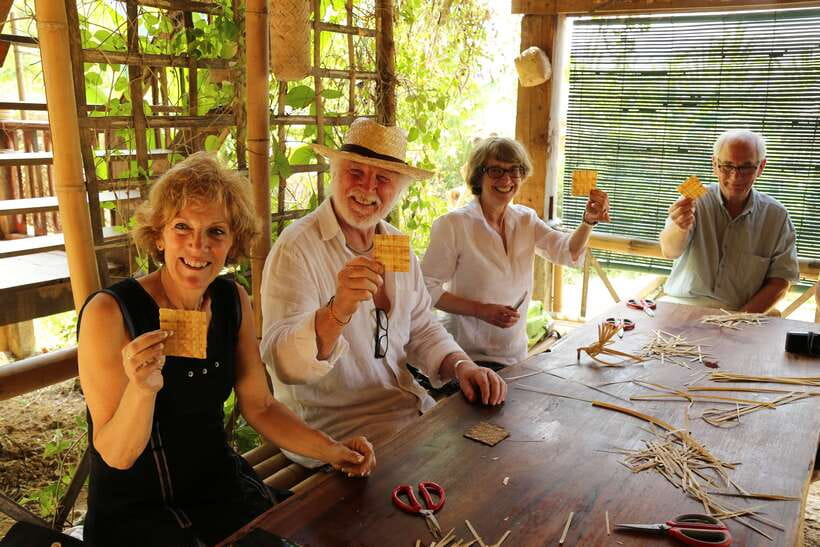
The weaving session is the most hands-on part of the first half. You learn how to sharpen knives and cut bamboo into narrow strips, then arrange those strips in an overlapping pattern to form a small mat.
Some descriptions call the finished piece a souvenir mat, while past participants have also referred to it as a coaster. Either way, expect a small woven item rather than a large basket or complex household object.
A local weaving master demonstrates the process and helps correct mistakes as you work. That support matters because the strips can shift, and the pattern is not as automatic as it first appears. You will need patience and careful fingers.
This is a relaxing activity, but it is not completely effortless. You may handle a knife and prepared bamboo, so comfortable clothing and shoes are sensible. The class is designed for beginners, yet anyone expecting a polished professional craft in minutes may find the process more demanding than expected.
The finished piece has more meaning than a shop-bought souvenir. You have learned the basic logic of the weave and seen the work involved in turning a raw plant into something useful. It also gives children and families a clear task, although very young children may need help around knives and bamboo strips.
A few more cooking classes around the world worth a look
- Florence: Pasta & Tiramisu Cooking Class with Unlimited Wine
★ 4.9 · 6,708 reviews - Florence: Pasta Cooking Class with Unlimited Wine
★ 5.0 · 6,413 reviews - Hanoi Cooking Class: Culture, Local Market & Meaning CSR Impact
★ 5.0 · 5,147 reviews - 5 Traditional Dishes Hanoi Cooking Class with Market Trip
★ 5.0 · 4,890 reviews
Cooking bamboo shoots over real fire
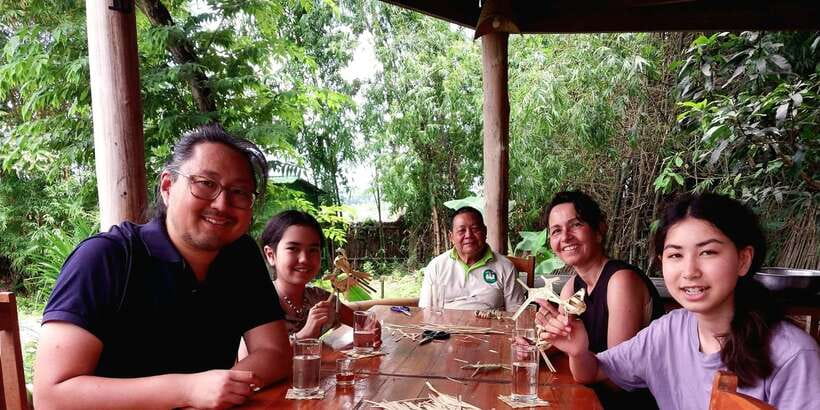
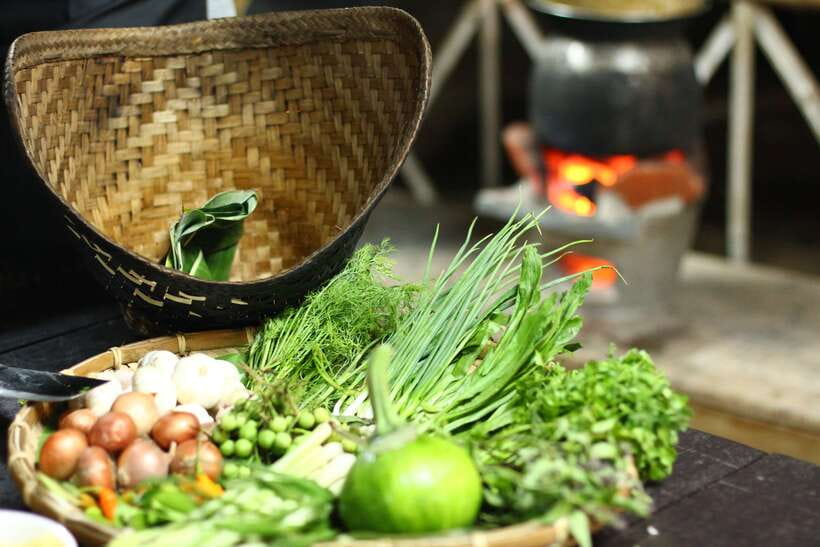
After weaving, the class turns to food. A local cook demonstrates how bamboo fits into Lao cuisine, and you help prepare dishes with bamboo shoots as a key ingredient.
The planned dishes include:
- Bamboo shoot soup
- Bamboo shoot steamed in banana leaf
- Bamboo shoot dip
The menu may also include meat and fish dishes, and vegetarian choices have been available during the cooking sessions described. The central idea remains the same: you are learning how bamboo is prepared as food, not merely tasting it as an unusual side dish.
The cooking takes place in the garden setting, and some sessions use a real fire. That gives the class a more direct connection to traditional cooking than a modern indoor demonstration. You can see the ingredients being prepared and follow the steps before sitting down to eat.
Bamboo also appears in the serving and cooking equipment. Rice may be steamed in bamboo baskets, and bamboo containers or trays help reinforce the theme without turning the meal into a staged display.
The food is a strong part of the value. You are not paying only for a lesson and a small craft. You receive lunch or dinner in a traditional bamboo tray, depending on the session. Alcoholic drinks are not included, and outside food and drinks are not allowed.
Eating in a traditional bamboo house
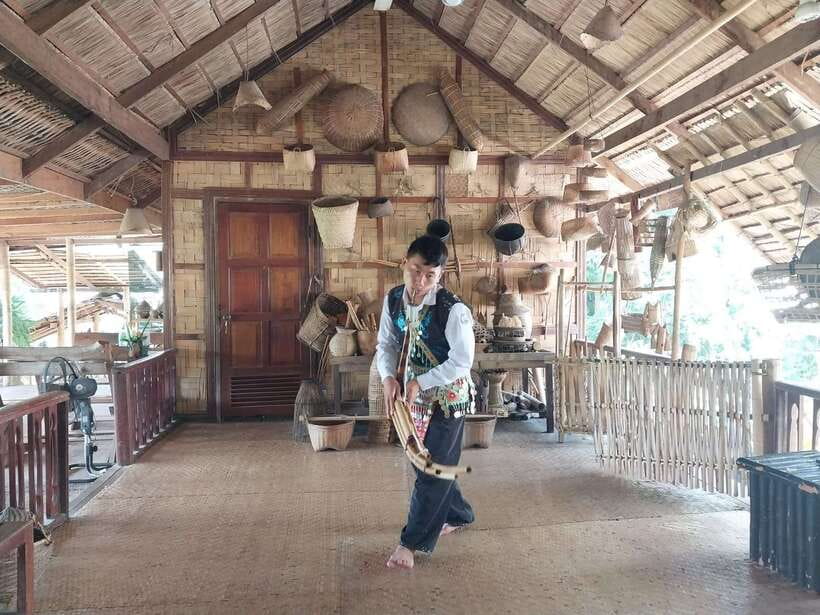
The meal takes place in or around the bamboo pavilion, with greenery and rice fields adding to the atmosphere. The setting is simple, but that is precisely why it works. You are not eating in a polished restaurant designed to imitate village life.
The food is local and tied to the lesson. You have seen the bamboo shoots prepared, helped with the cooking, and then taste the finished dishes. That makes the meal feel like the natural end of the class rather than a separate lunch stop.
If you choose the evening session, you prepare your own dinner and eat it afterward. This is the better choice if food is your main interest or if you prefer a slower end to the day. The morning version may suit you better if you want clear photographs and an afternoon for Luang Prabang’s temples or riverfront.
Do not expect a menu built around familiar Western dishes. Bamboo shoot has a distinct texture and flavor, and the menu focuses on Lao cooking. Vegetarian food is available, but tell the instructor about your needs when booking or at the start of the class.
Music and a wider view of Lao culture
The bamboo story continues through music. Local Lao musicians demonstrate bamboo instruments, and you may have the opportunity to see or try an instrument yourself.
This part adds welcome variety after the focused weaving and cooking work. It also shows that bamboo is not limited to practical tools and food. The plant has a place in social and artistic life as well.
Some past sessions have included dancing or a chance to participate in a bamboo-related performance. The confirmed activity includes a musical performance, but the precise entertainment can vary by visit, group, and schedule. Think of it as a cultural addition rather than a guaranteed full evening show.
The team also creates time for conversation. You meet local people, ask about their work, and learn how bamboo fits into daily life. Families may appreciate the friendly approach, and solo visitors can expect a setting that is easier for conversation than a large sightseeing group.
Is the $44 price fair?
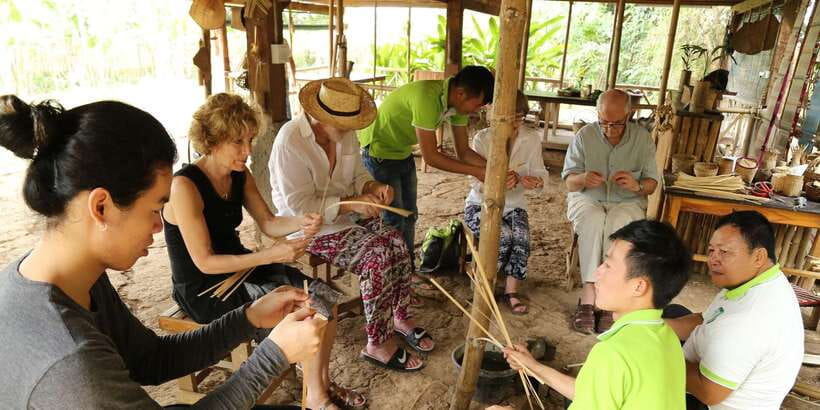
At $44 per person, this is not the cheapest cooking activity in Luang Prabang. It is also more than a simple craft demonstration. The price includes round-trip hotel transport, English instruction, the bamboo workshop, the cooking class, and a full lunch or dinner.
That combination makes the cost reasonable if you want one activity that covers food, craft, culture, and a meal. You would otherwise need to arrange transport and pay separately for a cooking class and a cultural visit.
The value is strongest for people who take part fully. If you only want to watch a chef cook, or if you have no interest in making a bamboo item, the price may feel high. One past participant considered it expensive but still found it among the best activities of a long Southeast Asia trip. That is a fair way to view it: you are paying for time, instruction, materials, transport, and access to a local family-run setting.
The small group atmosphere can add value. Some sessions have been intimate enough for one person or a very small party to receive close attention. Group size is not specified, so do not book on the assumption that you will have the kitchen entirely to yourself.
Who should book this experience?
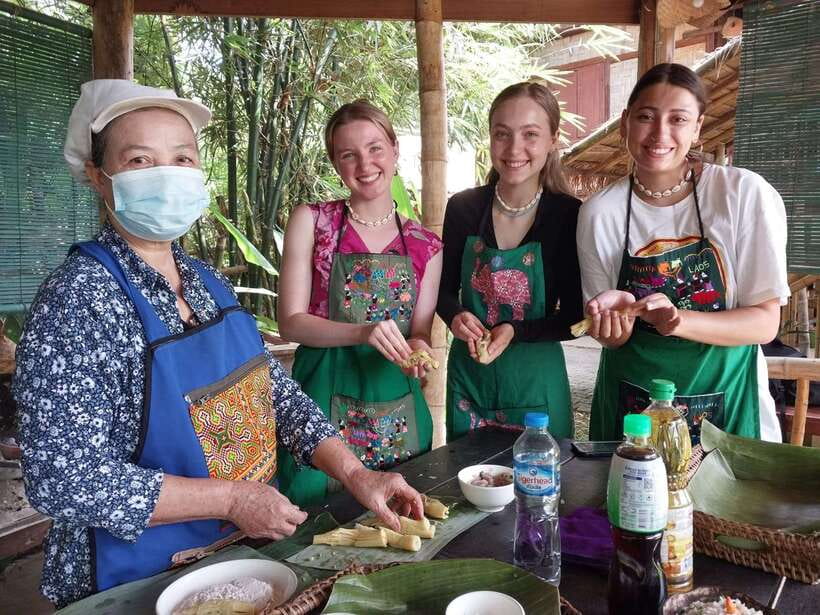
I would choose this for you if you want a break from temples and caves, enjoy practical activities, or like to understand a place through food and ordinary materials. It works particularly well for couples, families with older children, solo visitors, and anyone who wants a slower half-day outside central Luang Prabang.
You should also consider it if you care about locally run experiences. The activity is operated by a Lao company and takes place with local hosts, rather than placing you in a generic cooking studio.
It is less suitable if you need step-free access, use a wheelchair, have mobility limitations, or are pregnant. The activity takes place in a traditional bamboo house and includes craft work, movement around the site, and cooking. Comfortable shoes and clothes are the sensible choice.
The tour has a 5 out of 5 rating from 96 reviews, and the most consistent strengths are the setting, friendly instruction, weaving activity, food, and cultural detail. Those are the parts to value when deciding. Do not book it simply because it includes a meal. Book it because you want to take part in making something and learning how bamboo shapes Lao life.
Morning or evening: which session fits best?
The morning departure around 8:30 AM gives you better light for photos. It also leaves your evening open for dinner in Luang Prabang, the night market, or another activity.
The 4:00 PM departure leads into dinner. You will work through the bamboo presentation and weaving before preparing food, then eat what you helped cook. This timing gives the experience a more complete rhythm, especially if you like the idea of ending the day with music and a meal.
Both sessions last about four to five hours, including pickup and return. Check the available start time when booking because schedules can vary.
Should you book the Bamboo Weaving Workshop and Cooking Class?
Yes, if you want an activity with real participation and a strong local focus. The weaving is simple enough for beginners but substantial enough to feel like work, while the cooking class gives you a practical introduction to bamboo shoots and Lao flavors.
Choose the morning for photography and flexibility. Choose the evening for the dinner experience. At $44, the outing is fair value when you use the transport, instruction, meal, and cultural program as a package.
Skip it if your priority is a fast sightseeing stop, luxury comfort, or a fully accessible venue. For everyone else, this is one of Luang Prabang’s more distinctive half-day choices, especially after you have had your fill of temples.
FAQ
How long does the bamboo weaving and cooking experience last?
The activity lasts about four to five hours, including the workshop, cooking class, meal, and hotel transfers.
What time does the tour start?
The morning session begins with pickup around 8:30 AM. An evening session is listed around 4:00 PM. Check availability for the exact starting time.
Is hotel pickup included?
Yes. Pickup and drop-off from hotels in Luang Prabang are included. Wait in your hotel lobby five minutes before the scheduled pickup.
What will I make during the weaving workshop?
You will use prepared bamboo strips to make a small souvenir mat. Past descriptions also refer to the finished item as a coaster.
What food will I cook?
The class includes Lao dishes such as bamboo shoot soup, bamboo shoot steamed in banana leaf, and bamboo shoot dip. Other meat, fish, or vegetarian dishes may also be included.
Is a meal included?
Yes. Lunch is included with the morning session, and dinner is included with the evening session. It is served in a traditional bamboo tray.
Are drinks included?
Alcoholic drinks are not included. Food and drinks from outside are not allowed during the activity.
Is the workshop suitable for wheelchair users?
No. The activity is not suitable for wheelchair users or people with mobility impairments. It is also not recommended for pregnant women.
Can I cancel the booking?
You can cancel up to 24 hours in advance for a full refund. A no-show or delay of more than 30 minutes after the scheduled pickup may result in cancellation without a refund.
Just added around the world
- Private Moroccan Cooking Class in Casablanca with a Local Expert★ 5.0 · 12 reviews
- Cooking Class and Wine Pairing in Capri★ 5.0 · 57 reviews
- Private Cape Malay Cooking Class in Cape Town with a Local Family★ 5.0 · 24 reviews
- South African Cooking in Cape Town with Local Chef Richard★ 4.5 · 10 reviews
- Langa Township and Bokaap Cooking Class Half Day Tour★ 5.0 · 4 reviews
- Private Authentic Mexican Cooking Class in Cancun with Alberto★ 5.0 · 3 reviews
- Private Authentic Cape Malay Cooking Class in Manenberg with Locals★ 5.0 · 5 reviews
- Cape Town Shore Excursion| South African Cooking & Port Transfers★ 5.0 · 3 reviews
Cooking Classes, compared.
Half-Day Thai Cooking Class at Organic Farm in Chiang Mai
Read our review →
Florence: Pasta Cooking Class with Unlimited Wine
Read our review →
3 in 1 Cooking Class near Navona: Fettuccine, Ravioli & Tiramisu
Read our review →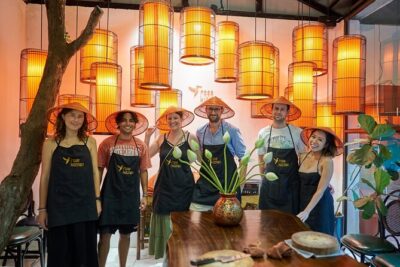
Hanoi Cooking Class: Culture, Local Market & Meaning CSR Impact
Read our review →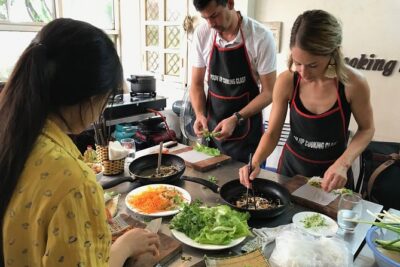
5 Traditional Dishes Hanoi Cooking Class with Market Trip
Read our review →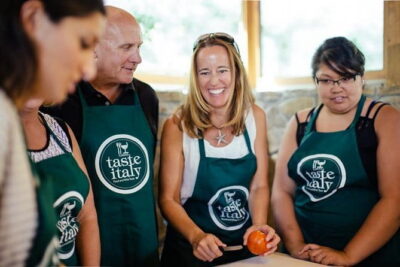
Cooking Class and Lunch at a Tuscan Farmhouse with Local Market Tour from Florence
Read our review →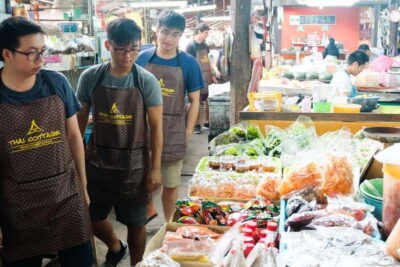
Chiang Mai: Cooking Class, Market & Thai Herbs Garden Tour
Read our review →Browse the lists this tour appears in