
Review · LUANG PRABANG
Luang Prabang: Evening Cooking Class & Local Baci Ceremony
The most memorable part of this Luang Prabang evening is not the cooking alone. It is the chance to enter a local family setting for a Baci ceremony, receive a blessing, and share food and music in a rustic pavilion above the rice fields. Guides such as Somsay and Si add useful context at the market and explain what the ceremony means.
I like the market stop because it gives you a reason to look closely at Lao ingredients before you cook them. I also like the small group, limited to six people, and the mix of food, family life, ceremony, and music. The main consideration is that this is a cultural visit as much as a cooking lesson, so anyone wanting a highly structured class with many recipe choices may find it less focused than expected.
Key points
- Baci blessing with local elders: Join a ceremony connected with healing, homecomings, births, marriages, festivals, and other important moments.
- Market visit before cooking: Learn how fresh herbs, produce, meat, fish, and other local ingredients fit into daily Lao meals.
- Five home-style dishes: Prepare a filling dinner with guidance from the host family, using traditional cooking methods.
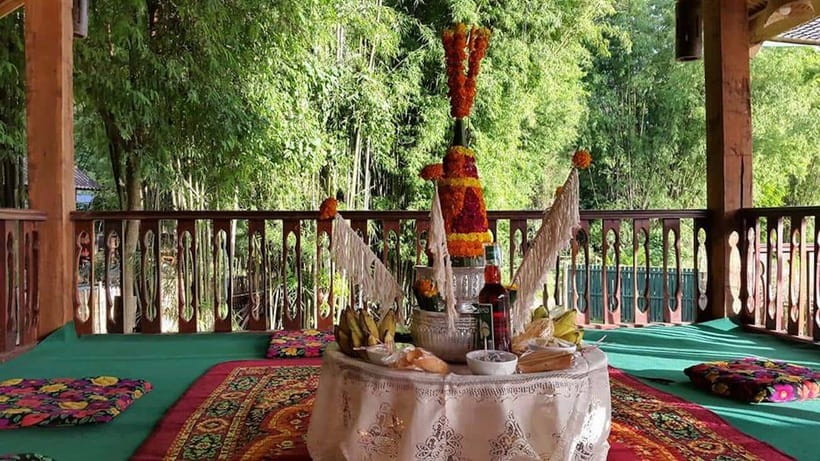
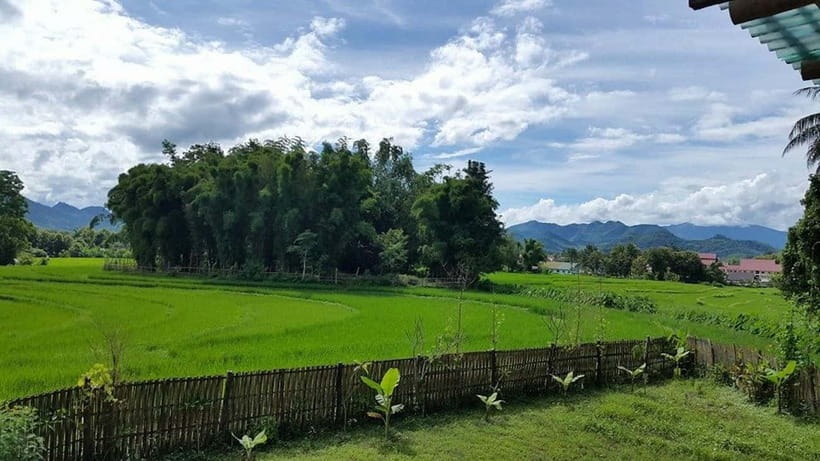
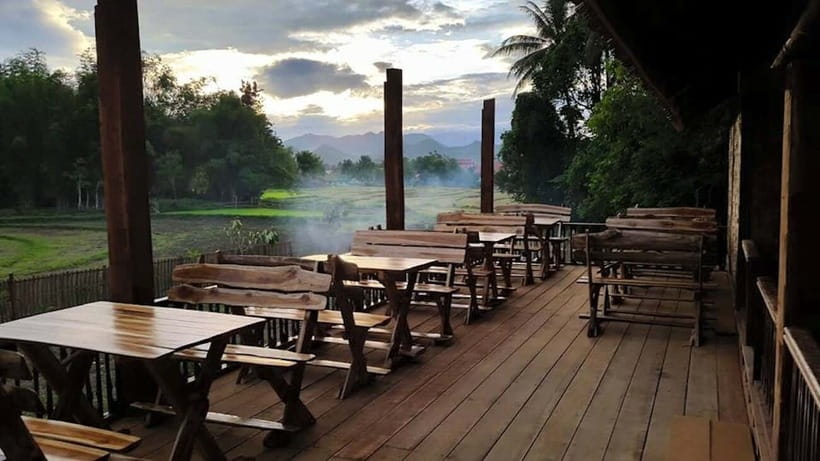
- Open-air pavilion and rice-field views: Cook and eat in a simple structure modeled on a traditional Lao house.
- Music after dinner: Hear local instruments, including the Khene, and possibly try playing one yourself.
- Small group setting: With no more than six participants, you get more personal help than in a large cooking school.
A Four-Hour Evening That Reaches Beyond a Cooking Class
This experience begins at about 4 PM with hotel pickup in Luang Prabang. That timing matters. You get a little daylight for the market and countryside views, then arrive at the cooking site as the day cools and the light softens over the rice fields.
The activity costs $51 per person. I consider that fair value because the fee covers transport, an English-speaking host, the market visit, cooking instruction, dinner, the Baci ceremony, and live music. A basic cooking class may cost less, but it usually does not include a family welcome, a spiritual ceremony, or an evening of cultural explanation.
You should expect a relaxed four hours rather than a tightly timed demonstration. The evening includes several parts, and the cooking itself shares the spotlight with conversation and ceremony. That makes it a good choice if you want a broader introduction to Lao life, but less ideal if your only goal is to master a long list of recipes.
More Hands-On Workshops in the world:
- Half-Day Thai Cooking Class at Organic Farm in Chiang Mai
★ 5.0 · 19,087 reviews - Florence: Pasta Cooking Class with Unlimited Wine
★ 4.9 · 10,285 reviews - 3 in 1 Cooking Class near Navona: Fettuccine, Ravioli & Tiramisu
★ 5.0 · 7,376 reviews
Starting at the Local Market
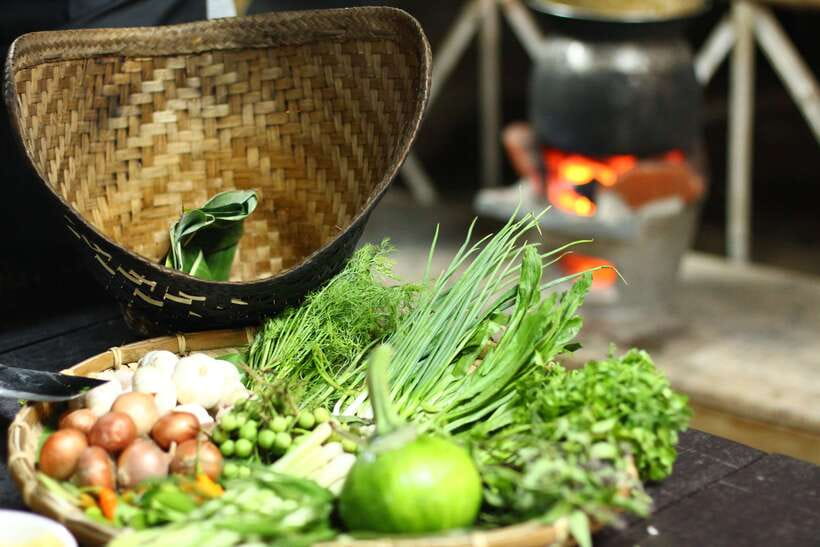
Your first stop is a local food market. Here, the guide explains the herbs, vegetables, meat, fish, and other ingredients used in everyday Lao cooking. The value of this stop is not just knowing what goes into dinner. It helps you see how food connects with daily routines in Luang Prabang.
Guides such as Somsay have been praised for explaining how the market fits into local life, not simply pointing out ingredients. You can ask questions as you go, and the guide can connect unfamiliar produce with the dishes you will prepare later.
This is a working local market, not a polished food hall arranged for visitors. That can make it more interesting, though it may also feel less comfortable for anyone unused to traditional markets. You might see ingredients you do not recognize, and not everything on display will be used in your meal.
One small limitation is that the market explanation may focus mainly on ingredients needed for dinner. If you want a full tour of every stall and a long discussion of Lao food beyond the evening menu, you may need to ask questions directly. The guide is there to help, but this is not a market-only tour.
Cooking Five Lao Dishes With the Host Family
After the market, you travel to the cooking location outside the city area. The setting is an open-sided pavilion modeled on a traditional Lao house, with views across rice fields and toward the surrounding hills. The simple design suits the meal. You are not cooking in a glossy studio, but in a family setting with an outdoor kitchen.
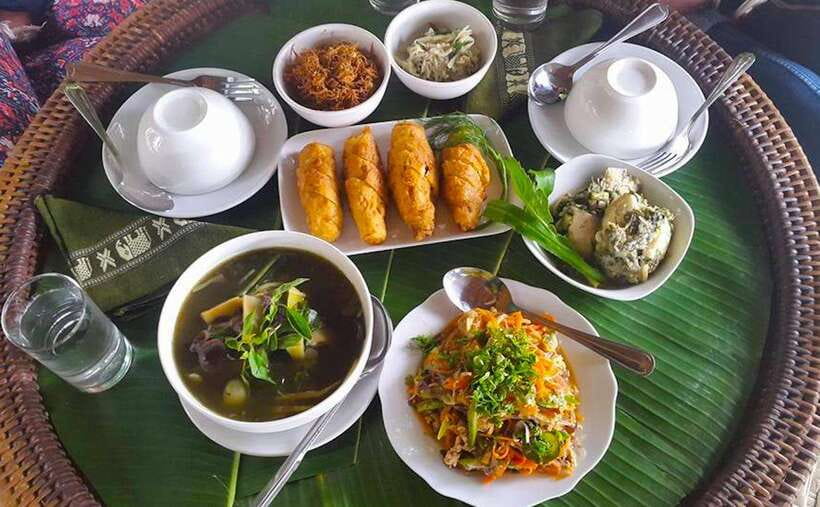
The exact dishes can vary, but the meal may include fish, meat, soup, sticky rice, and dips such as tomato or eggplant. One evening described a pumpkin soup, pork lard, sticky rice, and two dips. Other meals have included several dishes prepared for sharing, giving you a useful taste of the balance between soup, vegetables, meat, fish, and dipping sauces in Lao food.
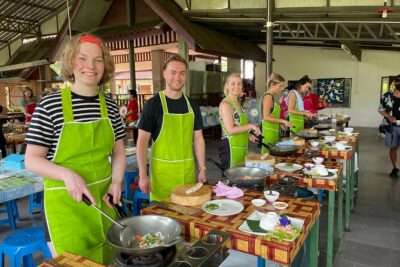
The class is hands-on. You help prepare the meal rather than sitting through a long demonstration. The hosts guide you through the work, and the small group size means you should have a better chance to chop, mix, shape, cook, and taste the food yourself.
Still, keep your expectations sensible. This is a home-style activity, not a professional culinary course. One person wanted more choice in what to cook and more instruction, while another participant who cooked alone found the experience highly hands-on. Your level of involvement may depend on group size, timing, and how actively you join in.
Vegetarians can be accommodated according to the experience information and past use of the class. It is wise to state your dietary needs when booking, since the menu includes meat and fish in some versions.
The food is cooked with traditional methods, including charcoal burners and a basic outdoor kitchen. That is part of the appeal, but it also means conditions may be more rustic than in a modern cooking school. Wear clothes that are comfortable and suitable for cooking, and choose shoes that are easy to stand and walk in.
What Dinner Tells You About Lao Food

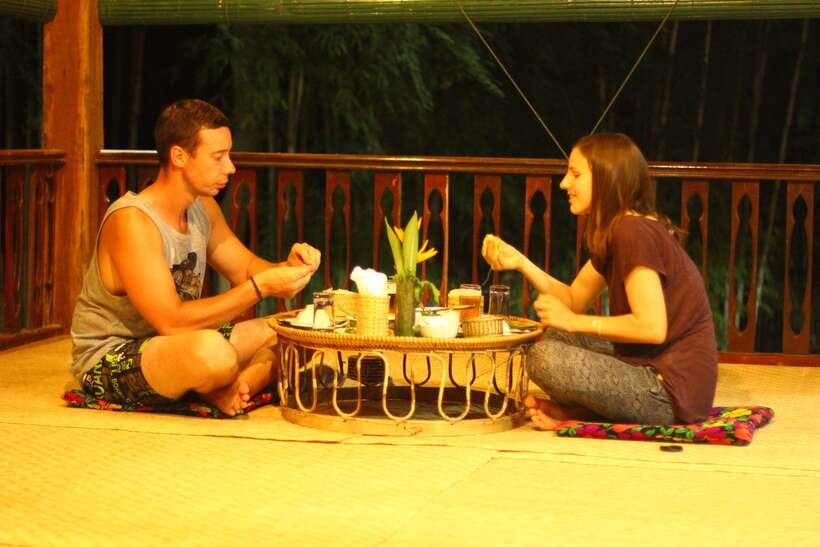
The meal is eaten together in a traditional Lao style. Sticky rice is especially important, and the dishes are made for sharing rather than served as separate restaurant courses. The result is a better sense of how food works in a Lao home.
You may prepare several small dishes rather than one large main course. That gives you a wider taste of local cooking and makes the meal feel generous. The combination can include soup, dips, meat, fish, vegetables, and sticky rice, depending on the evening’s menu.
I like this format because you can connect each dish with the ingredients you saw earlier at the market. The meal becomes a lesson you can eat. It also gives you practical ideas for recreating Lao flavors at home, though a printed recipe sheet is not guaranteed. If you want recipes, ask your host to write down key ingredients and methods before you leave.
Alcoholic drinks are not included, and food or drinks from outside are not allowed. The meal itself is included, so you do not need to plan a separate dinner afterward. Portions have been described as filling, which makes the $51 price easier to justify.
More Evening Classes in the world:
- Chiang Mai: Evening Cooking Class and Local Market Visit
★ 4.9 · 648 reviews - Paris Evening Cooking Class French Dinner and Market Visit Option
★ 5.0 · 430 reviews - Evening Cooking Class in Organic Farm with Local Market Tour
★ 5.0 · 394 reviews - Tingly Thai Cooking School Evening Class
★ 5.0 · 335 reviews
The Baci Ceremony and Its Meaning
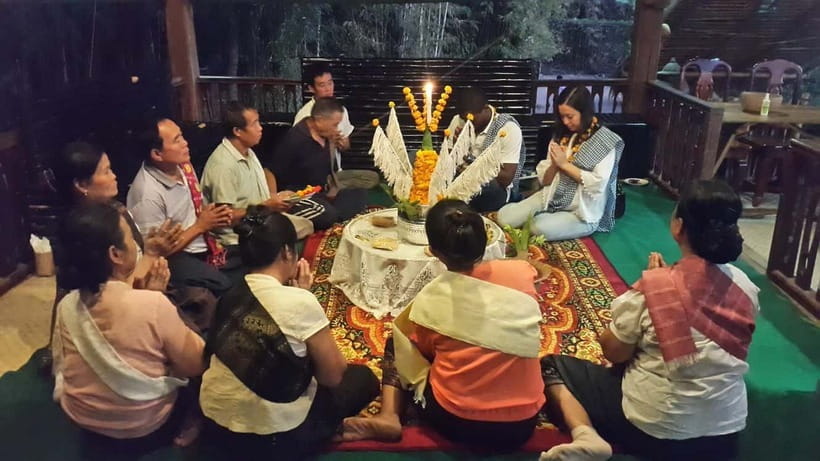
The Baci ceremony is the emotional center of the evening. It is a Lao custom used for important occasions, including a marriage, a birth, a homecoming, recovery from illness, recovery after childbirth, a festival, or the arrival of monks at a temple.
During the ceremony, local elders offer blessings, chanting, food, and symbolic cotton threads tied around your wrists. Some participants have also received small treats and a little banana whiskey. The exact details can vary, but you should expect a respectful ritual rather than a staged performance.
Your guide explains what is happening before the ceremony begins. That explanation matters because Baci is connected to Lao spiritual beliefs and ideas about blessing, good fortune, and well-being. Without context, the ritual could seem mysterious. With context, you can take part with more care.
You should also remember that this is a real cultural practice being shared with you. Dress modestly, with your knees and shoulders covered. You may sit on the floor, so comfortable clothing helps. The activity is not suitable for people with mobility impairments or wheelchair users, and the ceremony may be physically awkward if you have difficulty folding your legs or sitting low.
The ceremony can feel personal because it involves local elders and family members rather than a scripted stage show. That is also why you should follow the guide’s instructions, avoid treating the ritual as a photo prop, and take your cues from the hosts.
Music, Instruments, and the Final Course of the Evening
After dinner and the ceremony, local musicians perform traditional music. The performance may include a musician in Hmong traditional clothing and the Khene, a Lao mouth organ associated with local musical traditions.
This section is short but worthwhile. It gives the evening a strong finish and adds a cultural element that most cooking classes do not offer. At times, you may be invited to try the instrument or join in with a song. One group even sang a song for the host family, which became a warm moment of exchange.
The music takes place with the rice fields and hills around the pavilion. If the weather is clear, the late light can be beautiful. It is not a concert hall performance, and the sound may be informal, but that is exactly why it fits the rest of the evening.
You do not need musical experience. The point is participation and listening, not giving a polished performance. If you prefer to observe quietly, that is fine too.
Guides, Family Hospitality, and Group Size

The experience is run by Wander Laos Tour Co., Ltd. Named guides and hosts in the feedback include Somsay, Si, Chian, and Sam, though the guide assigned to your booking may differ. The strongest part of the guiding is the effort to explain rather than simply move you from one activity to the next.
A group limit of six is a real advantage. You get more room to ask questions at the market, more access to the cooking work, and a better chance to speak with the host family. On quieter dates, you may even find yourself in a very small group or alone, which can make the cooking more personal.
The family setting is welcoming, but remember that you are entering someone’s home and community. This is not a restaurant with a fixed service routine. The evening may include laughter, pauses, questions, and informal exchanges. That slower rhythm is part of the value.
English is the stated language of the activity. The guide handles the main explanations, while the family helps with cooking and the ceremony. Communication may be informal, but the purpose of each part is explained clearly enough for you to take part.
Is $51 Good Value in Luang Prabang?
At $51, this is not the cheapest way to eat dinner in Luang Prabang. It is not meant to be. You are paying for a four-hour experience that combines transport, food shopping, cooking, a full meal, a ceremony, music, and a small group.
The value is strongest for someone who would otherwise book several separate activities. A market visit, a cooking class, a village outing, and a cultural performance could easily take more planning and cost more when arranged individually. Here, they are joined into one evening.
The price also includes hotel pickup and drop-off within Luang Prabang city. You wait in the hotel lobby about five minutes before the scheduled pickup. That removes the need to arrange a taxi at the end of the evening, which is useful after a meal outside the city.
The value is weaker if you dislike group cooking, ceremonial activities, or rustic settings. You could spend less on a simple restaurant meal, and you may prefer a formal class if you want printed recipes, a choice of dishes, and exact measurements. This activity gives you contact with local people, not a polished cooking-school format.
Free cancellation up to 24 hours before the activity and the option to reserve now and pay later also make it easier to fit into a changing itinerary. Check the available start time when booking, since the exact schedule can vary.
Who Should Book This Evening?
I would choose this for food lovers who also want cultural context. It suits families, couples, solo visitors, and small groups who are comfortable trying new foods and taking part in a respectful ceremony.
It is especially good for you if you want to understand Lao daily life beyond the temples and night market. The market, family home, shared meal, Baci blessing, and music create a fuller picture of the area.
You should think twice if you have limited mobility, cannot sit on the floor, or need wheelchair access. The activity is also not suitable for pregnant women. Covered shoulders and knees are required, and comfortable shoes and clothes are the practical choice.
If you are a serious home cook, ask about the menu and level of instruction before booking. The food is praised for its flavor, and the class is hands-on, but the range of dishes and amount of technical teaching may vary.
My Verdict: A Strong Choice for Food and Culture
I would book this evening if I wanted one activity in Luang Prabang that combines dinner with a meaningful look at local life. The cooking is enjoyable, but the Baci ceremony is what makes the experience different from a standard class.
The best reasons to go are the small group, the family setting, the rice-field pavilion, and the chance to receive a blessing from local elders. The main trade-off is the informal format and limited menu control. Go with an open mind, dress respectfully, and expect a shared cultural evening rather than a restaurant-style show.
FAQ
How long does the Luang Prabang cooking and Baci experience last?
The activity lasts four hours. Pickup begins at about 4 PM, with the market visit, cooking, dinner, Baci ceremony, music, and return transfer included within the evening.
Is hotel pickup included?
Yes. Pickup and drop-off are included for hotels in Luang Prabang city. You should wait in your hotel lobby about five minutes before the scheduled pickup time.
How many people can join the activity?
The group is limited to six participants. This keeps the cooking more personal and gives you a better chance to ask questions and help with the meal.
What should I wear to the Baci ceremony?
Wear comfortable clothing with your knees and shoulders covered. Comfortable shoes are also recommended. The ceremony may involve sitting low or on the floor.
Is the activity suitable for vegetarians?
The cooking class can accommodate vegetarians. Tell the provider about your dietary needs when booking so the meal can be planned appropriately.
Is the activity suitable for wheelchair users or people with mobility impairments?
No. The activity is not suitable for wheelchair users or people with mobility impairments. It is also listed as unsuitable for pregnant women.
Just added around the world
- Cooking, Farming and Waterfall In Vietnam Countryside★ 3.0 · 6 reviews
- Busan Tailored Korean cooking class (Vegan OK)with market tour★ 5.0 · 66 reviews
- Korean cooking class in Haeundae, Busan★ 5.0 · 92 reviews
- Private Argentine Cooking Class and Tango Lesson in Buenos Aires★ 5.0 · 37 reviews
- Hungarian Home Cooking Class with Chef Marti★ 5.0 · 30 reviews
- Cooking Class with dinner/lunch in Ulcinj Montenegro★ 5.0 · 8 reviews
- BA: Empanadas and Alfajores Cooking Experience in Palermo★ 5.0 · 112 reviews
- Budapest Market Tour & Home Cooking Class with local Chef & Guide★ 5.0 · 23 reviews
Cooking Classes, compared.
Half-Day Thai Cooking Class at Organic Farm in Chiang Mai
Read our review →
Florence: Pasta Cooking Class with Unlimited Wine
Read our review →
3 in 1 Cooking Class near Navona: Fettuccine, Ravioli & Tiramisu
Read our review →
Hanoi Cooking Class: Culture, Local Market & Meaning CSR Impact
Read our review →
5 Traditional Dishes Hanoi Cooking Class with Market Trip
Read our review →
Cooking Class and Lunch at a Tuscan Farmhouse with Local Market Tour from Florence
Read our review →
Chiang Mai: Cooking Class, Market & Thai Herbs Garden Tour
Read our review →Browse the lists this tour appears in