
Review · LUANG PRABANG
Tribal Cooking Class in Luang Prabang Forest and visit
The best part of this Luang Prabang outing is that you do not simply watch someone cook. You gather ingredients, split bamboo, build a fire, and prepare lunch with tools made from the forest. A Khmu guide, including guides known as Peng or Pheng, explains how these foods and methods fit village life.
I like the hands-on work and the small group format. You make chopsticks and a drinking cup from bamboo, and you can take them home. I also like the mix of cooking and local life: some outings include a village, nearby farms, banana leaves, and simple forest materials. The main consideration is that the setting may be a farm or forest-edge area rather than untouched woodland, so expect a practical countryside experience, not a polished cooking studio.
Key points to know before booking
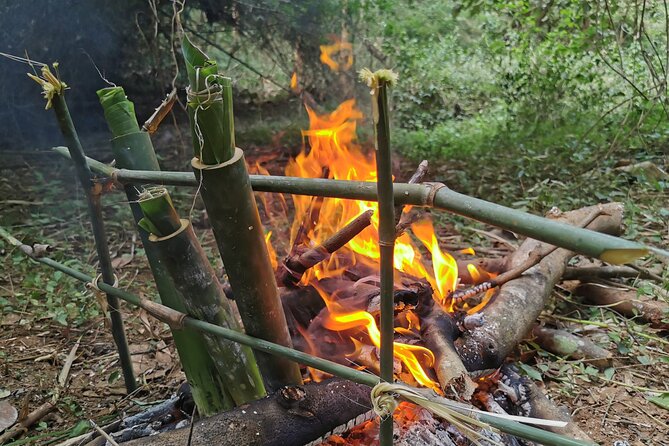
- A ten-minute walk leads to the cooking area, so you get a short taste of the forest without committing to a long trek.
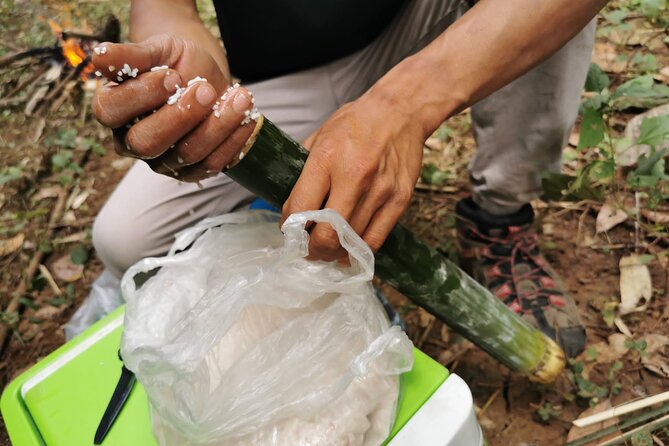
- Bamboo is the star ingredient and building material, used for chopsticks, cups, shelter, and cooking tools.
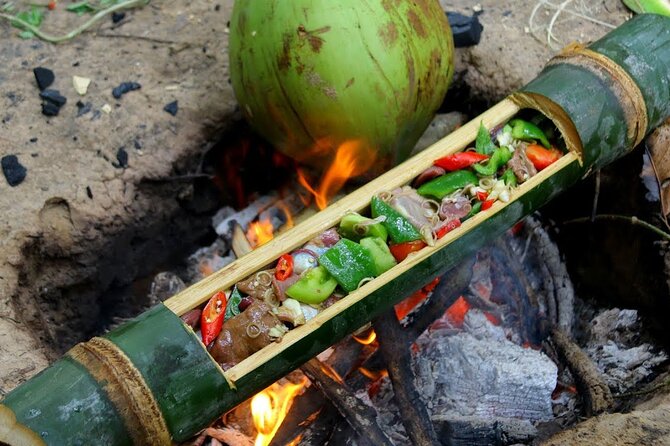
- The meal is prepared from simple local ingredients, with gathering and harvesting included in the activity.
- You may use a machete and start a fire from scratch, making this as much a practical skills lesson as a cooking class.
- The tour is private, with transportation, lunch, snacks, water, and cooking equipment included.
- The countryside setting can vary, with some sessions taking place around farms and villages rather than entirely in the forest.
From Naga Lodge to the Lao countryside
Your day begins at Naga Lodge Eco Resort in Ban Xieng Mouark, outside central Luang Prabang. Private transportation is included, which matters here because the activity is not based in the old town and the cooking area is reached beyond the lodge.
The journey itself can be part of the experience. One outing used a zebra-striped Jeep, with stops along the way to collect ingredients. That gives the day a relaxed, local feel rather than the rhythm of a standard restaurant class.
You should allow about five hours from pickup to return. The exact order of stops can vary, but the core plan is simple: travel out, collect or identify ingredients, walk into the cooking area, prepare food and utensils, eat lunch, then return to the starting point.
The tour ends back at Naga Lodge. Pickup is offered, and the ticket is mobile, so you do not need to carry printed paperwork.
More Hands-On Workshops in Luang Prabang:
- Luang Prabang: Evening Cooking Class & Local Baci Ceremony
★ 4.9 · 151 reviews - Luang Prabang: Bamboo Weaving Workshop & Cooking Class
★ 5.0 · 96 reviews - Luang Prabang: Cooking Class at the Former Royal Palace
★ 4.9 · 51 reviews
A short walk into forest and farm country
The walk to the cooking site takes about ten minutes. That is short enough for most people who are comfortable walking on an uneven path, but you should still wear shoes suited to dirt and forest ground.
The setting deserves a clear explanation. The experience is presented as forest cooking, and several activities include forest materials, fire-making, banana leaves, and plant gathering. At least one account describes the outing as farm based rather than a true wild-foraging trip. I would therefore book this for the chance to learn rural Lao foodways in a natural setting, not for a guaranteed expedition into untouched primary forest.
That difference is not necessarily a weakness. A farm and village setting can show you where ingredients really come from. It also makes the activity more grounded in daily life. You may see how food is grown, harvested, and handled before it reaches the cooking fire.
The guide is central to the experience. Peng is praised for his work as a farmer and for explaining local plants, farms, and villages. Another trip description spells the name Pheng. If you have a particular guide in mind, confirm who will lead your session when you book.
Learning what can be eaten
The first lesson is not a recipe. It is learning to recognize useful plants and ingredients. You pick items that will become part of lunch, with the guide explaining what is suitable and how local people use it.
The supplied information does not name every dish, so you should not book this expecting a fixed menu of named Lao classics. The value is in the method: ingredients are selected in context, prepared with basic tools, and cooked close to where they were found or harvested.
This is especially useful if you have already eaten Lao food in restaurants and want to understand the work behind it. Food here is tied to bamboo, leaves, fire, water, and seasonal produce. The class shows that connection better than a counter-top demonstration in town.
You also get snacks and bottled water. Lunch is included, and the meal you help prepare becomes the main reward at the end of the practical work.
Bamboo is the real classroom
Bamboo is more than a decorative detail. You use it as a raw material for the cooking process and for the things you eat and drink with.
You make your own bamboo chopsticks and drinking cup, then take them home as souvenirs. This is a clever part of the day because it gives you something useful to do while showing how much a village cook can produce from a material that grows nearby.
Some sessions also involve making simple shelter from bamboo. One account describes reaching a clearing with a small bamboo platform and using machetes to create cover from rain. That detail tells you what sort of activity this is: practical, hands-on, and a little rough around the edges.
You should be comfortable watching and handling basic tools. The tour provides the needed utensils, but the guide may still ask you to cut, shape, or split bamboo yourself. The machete work is supervised as part of the class, yet it is not the right choice if you want a purely passive food demonstration.
A few more cooking classes around Luang Prabang worth a look
- Day-time Bamboo weaving & Cooking Classes join-in
★ 5.0 · 38 reviews - Evening Bamboo weaving & Cooking classes join-in
★ 5.0 · 17 reviews - Traditional Market Tour and Private Laotian Cooking Class with a Local
★ 5.0 · 13 reviews - The Namkhan – Cooking Class
★ 5.0 · 8 reviews
Fire, leaves, and a meal made outdoors
The cooking section brings the whole day together. You help prepare a fire and cook with simple materials rather than relying on a modern kitchen.
A particularly useful skill is starting a fire from scratch. You may also work with banana leaves and other local materials. The process is slower than cooking at home, but that is the point. You see how much preparation is needed before a meal can be served when fuel, cookware, and tableware all have to be made or found.
The class has a survival-skills flavor without being sold as a survival course. One outing included making a simple trap from available materials. Treat that as an occasional extra rather than a guaranteed part of every departure, since it is not listed among the fixed inclusions.
The meal is served after the work is finished. You are not merely handed lunch, but you should also keep your expectations practical. The setting is a forest clearing, farm area, or village environment, not a restaurant with a broad menu and formal service.
That informality is a major reason to choose the activity. You get to eat what you helped prepare, using chopsticks and a cup you made yourself. The meal becomes a lesson in resourcefulness as much as a food stop.
What makes the Khmu connection important
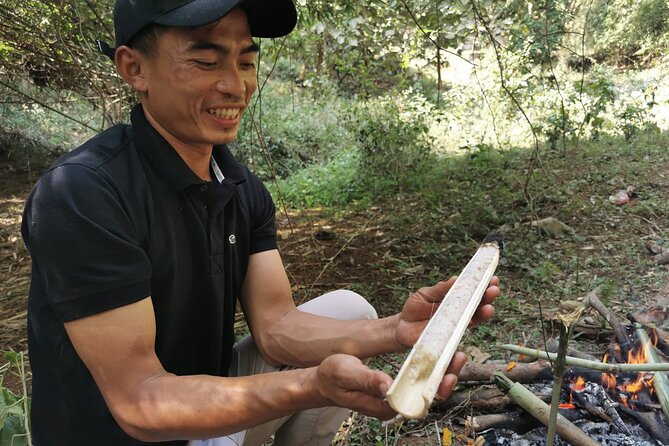
The class is led by a native facilitator from the Khmu tribe. This matters because the activity is built around local knowledge rather than a generic outdoor cooking script.
The guide explains how food is gathered, how bamboo is used, and how village cooking works with limited equipment. Peng is also described as a farmer with strong knowledge of nearby farms and villages. That background can add useful context to the ingredients you handle.
You should keep the focus respectful. This is not a staged tribal performance, and the value is not in treating Khmu culture as an exotic backdrop. The best part is the exchange: you learn practical skills while supporting a local guide and a rural community connected to the experience.
Several outings describe the guide as warm, hardworking, and patient. The private format should help here. Your group is the only group participating, so you can ask questions and work at your own pace rather than standing behind a large crowd.
The private format and the five-hour pace
A private tour is a real advantage for this kind of activity. Cooking with bamboo and hand tools takes time, and a large group could easily turn the process into a queue.
With only your party, you can spend longer on the parts that interest you. You might focus on plant identification, bamboo work, fire-making, or food preparation. The guide can also explain more if you ask questions about farms, villages, and local cooking.
The five-hour duration is long enough to make the experience feel complete, but not so long that the short walk becomes a demanding trek. Still, the day includes outdoor work, travel, and time around a fire. You should not expect the polished timing of a half-day city tour.
The booking pattern suggests that people often reserve around three weeks ahead, with an average of 23 days. That is useful if your Luang Prabang schedule is tight. The tour requires a minimum number of participants, so confirmation is subject to availability, especially for bookings made close to the date.
Is $78.08 a fair price?
At $78.08 per person, this costs more than a basic cooking class held in town. The comparison is not quite fair, though, because the price includes private transportation, lunch, snacks, bottled water, cooking tools, and a local guide for roughly five hours.
You are paying for the entire outing, not just a lesson and a plate of food. The bamboo work, countryside transport, ingredient gathering, and outdoor setup take time and labor. If your group values a private experience and wants something beyond standard sightseeing, the price is reasonable.
The value is weaker if you only want to learn Lao recipes. In that case, a shorter city class may give you more dishes and clearer written instruction for less money. This outing is better for people who care about the process, the setting, and the connection between food and rural life.
Solo visitors should check the booking terms carefully. One solo participant had to pay for two places because there was no single-person booking option. That can make the experience expensive if you are alone, even though the tour itself is private.
Who should book this experience?
I would recommend it to couples, families with older children, friends, and small groups who enjoy doing rather than watching. It suits you if you like local food, simple outdoor skills, rural settings, and activities with a personal guide.
It is also a good fit if you have already visited Luang Prabang temples and markets and want to see a different side of the area. The village and farm elements can add useful context to the city’s food and culture.
Think twice if you dislike dirt, smoke, uneven paths, hand tools, or flexible timing. You should also reconsider if you want a guaranteed list of wild plants from untouched forest. The countryside setting may be more farm based than the title suggests.
The activity is not described as wheelchair accessible, and the ten-minute path and outdoor work may present challenges. Ask the provider directly if mobility, medical, or dietary needs matter for your booking.
Booking, cancellation, and practical details
The meeting point is Naga Lodge Eco Resort in Ban Xieng Mouark, Luang Prabang. The activity returns to the same point, with private transportation included.
Confirmation normally arrives at booking. If you book within one day of departure, confirmation comes as soon as possible and depends on availability. You can cancel for a full refund up to 24 hours before the local start time. Cancellations or changes inside 24 hours are not refunded or accepted.
Bring clothing and shoes you do not mind using outdoors. The supplied information does not specify a dress code or equipment list, but the machete work, fire, bamboo shaping, and possible rain shelter make practical clothing a sensible choice.
Should you book the Tribal Cooking Class?
Book it if you want a rural Lao experience built around work, food, and local knowledge, not a polished cooking demonstration. The bamboo utensils, short forest walk, village and farm connections, and meal over an outdoor fire give the day a clear sense of place.
I would be more cautious if you are booking mainly for wild foraging. The setting can include farms and village areas, and the exact balance between forest and farm may vary. Ask for clarification before paying if that distinction is important to you.
For most small groups, the private format and included transport make the $78.08 price defensible. For solo visitors facing a two-person charge, the value is harder to judge. If you enjoy active cultural experiences, this is one of the more memorable ways to spend half a day near Luang Prabang.
FAQ
Where does the cooking class start?
The activity starts at Naga Lodge Eco Resort in Ban Xieng Mouark, Luang Prabang, Laos.
Where does the activity end?
It ends back at the meeting point at Naga Lodge Eco Resort.
How long does the experience last?
The experience lasts approximately five hours.
Is transportation included?
Yes. Private transportation is included, and pickup is offered.
Is this a private tour?
Yes. Only your group participates in the activity.
Is lunch included?
Yes. Lunch, snacks, and bottled water are included.
Do I make anything to take home?
Yes. You make bamboo eating chopsticks and a bamboo drinking cup, which you can take home.
What is the cancellation policy?
You can cancel at least 24 hours before the local start time for a full refund. Cancellations and changes made within 24 hours are not accepted, and the payment is not refunded.
Just added around Luang Prabang
- Luang Prabang Cooking, Pottery & Candle Experience★ 5.0 · 4 reviews
- Evening Bamboo weaving & Cooking classes join-in★ 5.0 · 17 reviews
- Traditional Market Tour and Private Laotian Cooking Class with a Local★ 5.0 · 13 reviews
- Full Day bamboo experience with cooking class & Kuang si waterfalls★ 5.0 · 5 reviews
- The Namkhan – Cooking Class★ 5.0 · 8 reviews
- Laos Cooking Class in Luang Prabang★ 4.5 · 7 reviews
- Luang Prabang: Bamboo Forest Cooking-class & Farm Visit★ 5.0 · 3 reviews
- Luang Prabang: Mekong River Cooking Class with Hotel Pickup★ 5.0 · 3 reviews
Cooking Classes, compared.
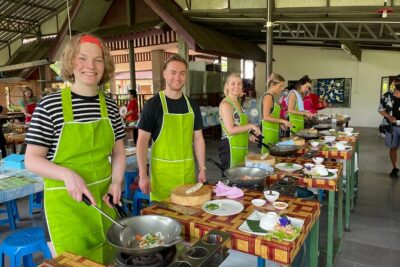
Half-Day Thai Cooking Class at Organic Farm in Chiang Mai
Read our review →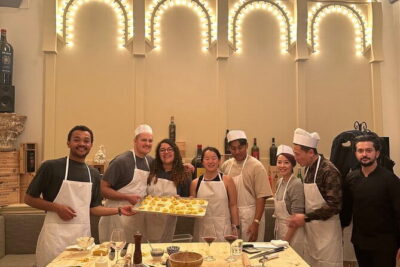
Florence: Pasta Cooking Class with Unlimited Wine
Read our review →
3 in 1 Cooking Class near Navona: Fettuccine, Ravioli & Tiramisu
Read our review →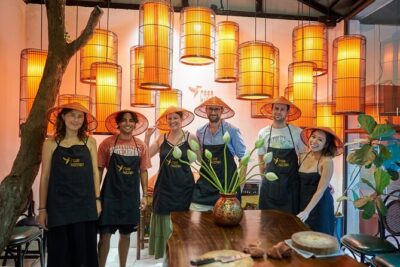
Hanoi Cooking Class: Culture, Local Market & Meaning CSR Impact
Read our review →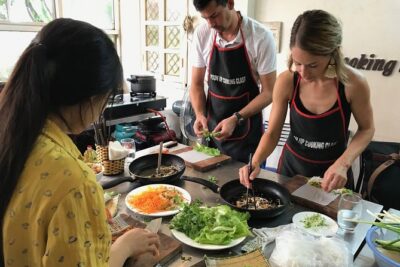
5 Traditional Dishes Hanoi Cooking Class with Market Trip
Read our review →
Cooking Class and Lunch at a Tuscan Farmhouse with Local Market Tour from Florence
Read our review →
Chiang Mai: Cooking Class, Market & Thai Herbs Garden Tour
Read our review →Browse the lists this tour appears in