
Review · MILAN
Learn to Cook Italian Recipes with an Italian Chef
Milan’s best food lesson may be the one that keeps its menu secret. At Chef and the City, you might make bruschetta, chickpea balls, gnocchi, ravioli, focaccia, tiramisu, or Milanese pan meino. Chef Ilaria explains how, when, and why, not just which buttons to press.
I like the hands-on format and the shared meal at the end. You cook from scratch, use the supplied tools, wear an apron, and leave with recipes you can repeat at home. The changing menu keeps the class fresh, though it also means you cannot book one particular dish with certainty.
The class costs $82.27 per person and lasts about three hours. That is fair value for instruction, food, wine, coffee, snacks, and recipes, but keep one point clear: the wine is shared rather than unlimited, and extra wine costs more.
Key points to know before you book
- The menu is a surprise: Expect one appetizer, one pasta or dumpling dish, and one dessert, but not a fixed set of recipes.
- You cook every course: The work is hands-on, from mixing and shaping to preparing sauces and desserts.
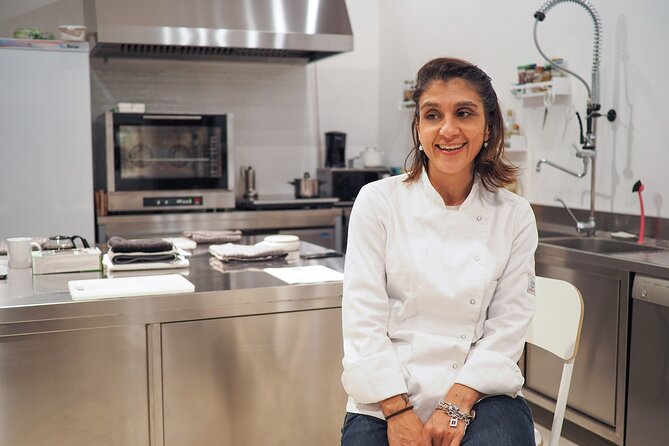
- Chef Ilaria leads many sessions: Other chefs, including Alessandro and Dalia, may also teach.
- The final meal is part of the lesson: Sit down with the dishes you helped prepare, Italian wine, water, and coffee or tea.
- The group can reach 20 people: Smaller classes have been especially well suited to questions and personal help.
- Pack light: Luggage is forbidden, and there is no luggage storage at the venue.
What the Milan cooking class is really about
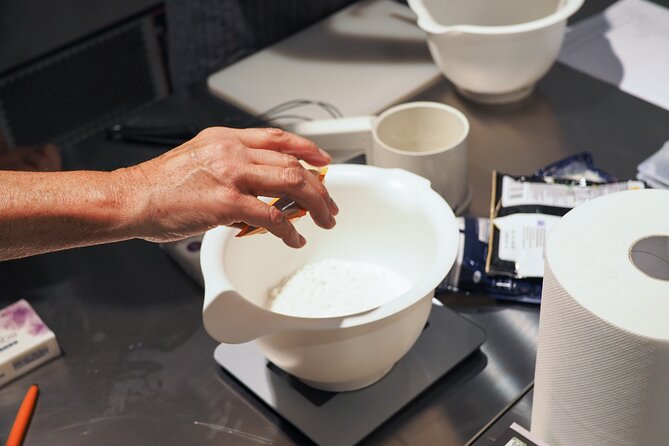
This is not a restaurant demonstration where you watch a chef work while standing safely out of the way. You take part. The goal is to understand the method behind familiar Italian food, so you can make it again after your Milan trip.
Chef and the City keeps the menu flexible. One session might feature a chickpea appetizer, potato-filled ravioli, and biscotti. Another may focus on eggplant parmigiana, gnocchi, and cantucci. Focaccia, bruschetta, fresh tagliatelle, tiramisu, and pan meino are also possible.
That uncertainty is central to the experience. If you want to learn one exact dish, this may frustrate you. If you want a broader lesson in Italian cooking, it gives the class a pleasant element of surprise.
The class is offered in English. Chef Ilaria has been praised for moving between Italian and English with ease, while other sessions have been led by Alessandro or Dalia. The teaching style can vary slightly by chef, but the basic plan remains the same: cook three courses, ask questions, and eat together.
More Italian Cooking Classes in Italy:
- Cooking Class and Lunch at a Tuscan Farmhouse with Local Market Tour from Florence
★ 5.0 · 4,831 reviews - Naples: Neapolitan Pizza and Tiramisù Making Class
★ 4.8 · 839 reviews - Tuscan Cooking Class and Dinner in Florence
★ 4.5 · 732 reviews
Arriving at Via Laura Ciceri Visconti
The meeting point is Via Laura Ciceri Visconti, 4, in Milan’s 20137 postal area. The laboratory is at street level, with three windows marked by a red Chef and the City sign.
Look for the sign and ring the front door bell. The location is near public transportation, but private transport is not included. Give yourself enough time to find the address, especially if you are planning the class around a train or flight.
There is no luggage storage, and you cannot bring luggage inside. A small personal bag may be all you need, but the stated rule is strict about luggage. Smoking is prohibited, and animals are not allowed.
The class ends back at the same meeting point. That makes the logistics simple, though you should not plan a rushed airport transfer immediately afterward. The session lasts about three hours, and the meal at the end is part of that time.
Italian welcome snacks and the first kitchen lesson
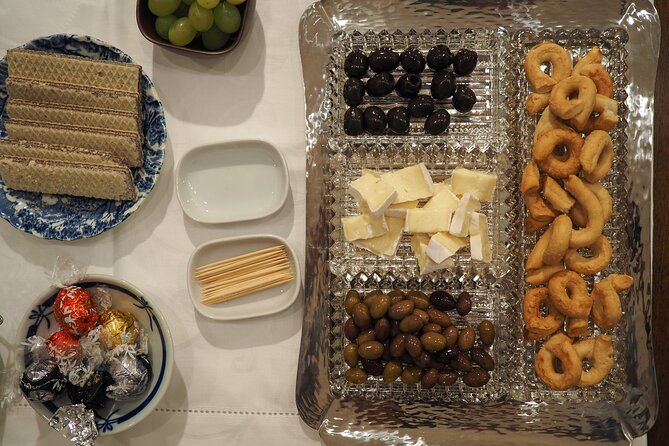
The experience begins with Italian-style welcome snacks and drinks. Bottled natural and sparkling water are available, along with American coffee, tea, and infusions.
This opening gives you time to settle in and meet the rest of the group before the cooking starts. It also sets the tone: relaxed, social, and practical rather than formal.
You receive an apron, and the cooking tools are provided. You do not need to bring equipment or special kitchen supplies. The class is designed for different ability levels, and people with little cooking experience have managed the recipes successfully.
The early instruction focuses on the logic of the food. Chef Ilaria explains why an ingredient is used, when it should be added, and how the texture should look at each stage. Those details are more useful than simply copying a recipe line by line.
The class also gives you a chance to ask questions and take notes. That matters because Italian cooking often depends on feel. Dough may need a little more flour. A sauce may need more time. A dessert may depend on texture rather than a precise minute on the clock.
Making the appetizer from scratch
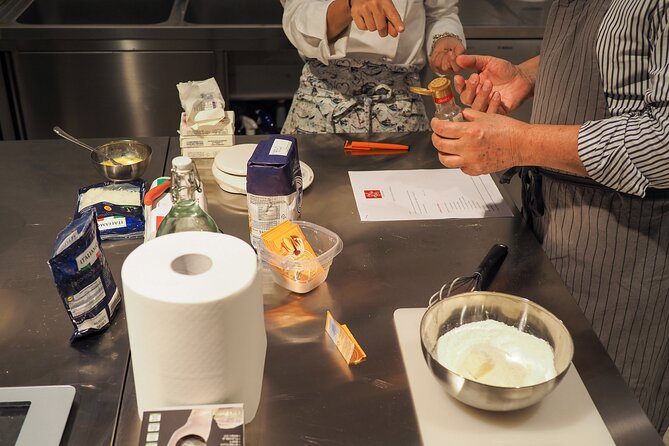
The first course is usually a traditional Italian starter. It could be bruschetta, focaccia, eggplant parmigiana, chickpea balls, or another preparation from the same family of simple, ingredient-led dishes.
The exact choice changes, but the lesson stays hands-on. You may prepare dough, season vegetables, shape chickpea mixtures, or assemble the dish before it goes to the table. The emphasis is on making the food by hand, not opening prepared ingredients.
Several menus have included chickpea preparations, and one session paired a chickpea appetizer with potato-stuffed ravioli and biscotti. Eggplant parmigiana has also appeared, along with focaccia. These are useful dishes to learn because they work as home cooking, not just as special-occasion projects.
One possible weakness is that the seasoning may be conservative. A few people have found some dishes bland, while another found the chilli flakes too strong. Italian home cooking often keeps flavors fairly restrained, and the class seems built to suit a wide range of tastes. You can ask questions about seasoning, but do not expect a highly personalized tasting menu.
A few more cooking classes around Italy worth a look
- Florence: Pasta Cooking Class with Unlimited Wine
★ 4.9 · 10,285 reviews - 3 in 1 Cooking Class near Navona: Fettuccine, Ravioli & Tiramisu
★ 5.0 · 7,376 reviews - Florence: Pasta & Tiramisu Cooking Class with Unlimited Wine
★ 4.9 · 6,708 reviews - Florence: Pasta Cooking Class with Unlimited Wine
★ 5.0 · 6,413 reviews
Fresh pasta, gnocchi, and handmade dumplings
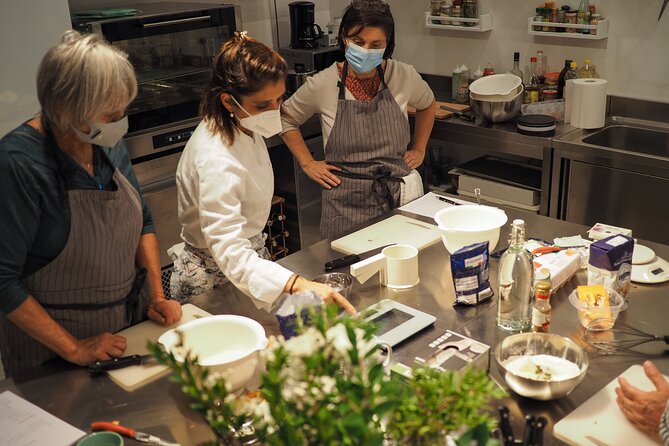
The main course is usually the class highlight. You may prepare gnocchi, tagliatelle, ravioli, or another fresh pasta or handmade dumpling, then make a sauce to go with it.
This is where the class earns much of its value. Fresh pasta looks simple once it reaches the plate, but the feel of the dough, the thickness of the sheets, and the amount of filling all matter. A teacher who explains those stages helps you avoid the usual first attempt at home: tough dough, overfilled ravioli, or dumplings that fall apart in the pot.
Gnocchi has been a favorite in several menus. Ravioli has also appeared with a potato filling, and other sessions have focused on handmade pasta that many home cooks would not try alone. You work with the group rather than preparing a separate private meal for yourself, so you may not make every single task individually.
That shared setup has both benefits and limits. It creates a social class, keeps the pace moving, and lets you watch techniques from different angles. But if you prefer individual coaching at every stage, a private lesson would offer more direct time.
The instructor manages the class as a group. When someone is talking during key instructions, the chef may pause until everyone can hear. That can feel strict in the moment, but it is necessary when several people are sharing the same lesson and need the same information.
Dessert, coffee, and the meal you helped make
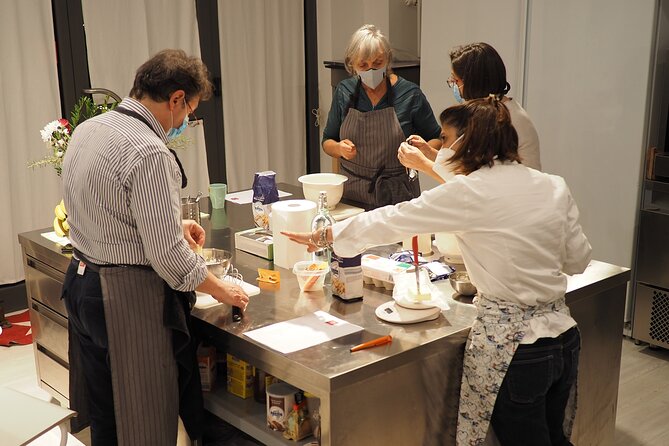
Dessert may be tiramisu, Tuscan cantucci, Milanese pan meino, chocolate tortini, amaretti, or another traditional sweet. The range is wide, from a no-bake layered dessert to a baked biscuit or cake.
Tiramisu is a particularly practical choice because you can repeat it at home without special equipment. Cantucci and amaretti also travel well as recipes, and pan meino gives you a taste of a Milanese tradition that may not appear on every restaurant menu.
Once the cooking is finished, everyone sits down to eat. The meal is not an extra stop at a nearby restaurant. It is the food you have prepared together, served as the closing part of the class.
Italian wine is included, along with water and coffee or tea. The provider describes the wine as shared, with one bottle for every three people. Wine during the meal is included, but extra wine before or beyond the shared amount costs more.
That distinction is worth understanding before you book. This is a cooking class with a meal and a wine tasting element, not an unlimited-drinks evening. If you mainly want to drink wine, this is the wrong reason to choose it. If you want a meal that makes the lesson feel complete, the arrangement is sensible.
Group size, teaching style, and the pace of the evening
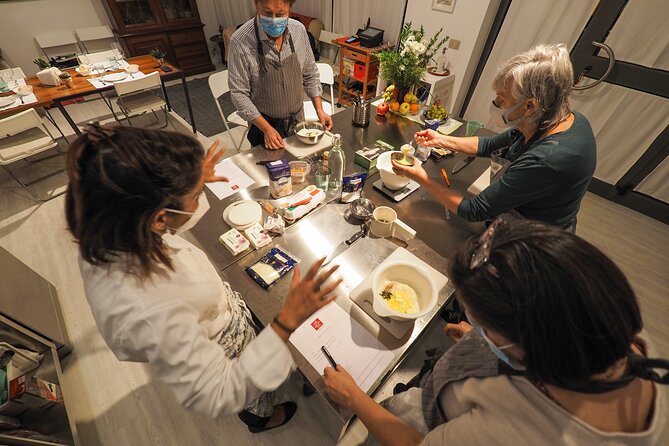
The maximum group size is 20 people. That is not a tiny class, but actual sessions may be smaller. A class of eight, for example, allows more conversation and makes it easier to ask for help.
The atmosphere is intended to be professional but relaxed. The best sessions combine clear instruction with humor, family food stories, and a shared table. Chef Ilaria has been described as warm, patient, energetic, and funny. One class included stories about her grandmother and practical advice about Italian ingredients.
Teaching quality can vary with the individual chef and the size of the group. Most of the feedback has been strongly positive, with a 4.8 rating from 283 reviews and 94 percent of people recommending the experience. A small number of less positive experiences point to stress, interruptions, or frustration over the fixed group format.
I would treat those comments as useful expectations rather than automatic warnings. This is a cooperative class. You need to listen when instructions are given, accept that the menu is shared, and be comfortable cooking alongside people you have just met.
The mixed group can be part of the fun. People from different countries often compare family recipes and cooking habits while working. For many people, that social exchange becomes nearly as memorable as the pasta.
Is $82.27 a fair price?
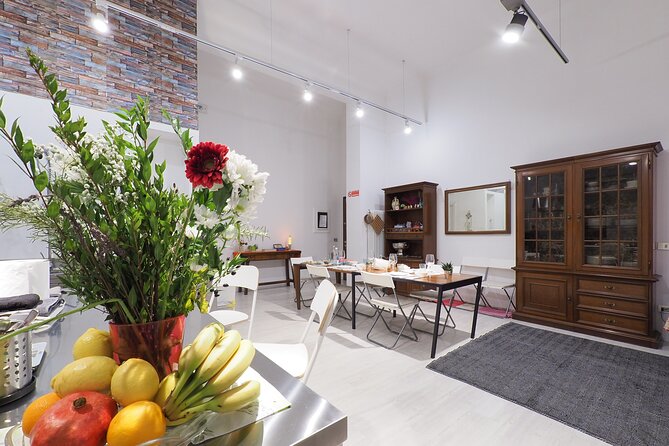
At $82.27, the price is reasonable for a three-hour activity that includes food, instruction, equipment, an apron, welcome snacks, a prepared meal, shared Italian wine, and the recipes.
You are not paying only for ingredients. You are paying for access to a working kitchen, a chef’s guidance, and techniques that can be used again. The recipes delivered at the end add real value because they turn the class into something you can continue at home.
The value is strongest if you enjoy cooking or want a break from museum visits and Milan shopping. It is weaker if you only want to eat excellent food without doing kitchen work. The dishes are designed to be approachable, and one person with a gluten allergy received an accommodation, but you should raise dietary needs before booking rather than assume every request can be handled.
The class can also fill an awkward half-day or provide a useful activity before an evening flight. Still, allow extra time after the scheduled finish. Cooking, eating, and group organization rarely run with the precision of a train timetable.
Who should book this experience?
I would recommend it to couples, families with teens, solo people who enjoy meeting others, and mixed-ability groups. Beginners can take part, while more experienced cooks may still pick up useful details about pasta, sauces, dough, or traditional desserts.
It is especially good for you if you want to understand Italian food beyond ordering it. You will learn why each step matters and leave with recipes rather than only photographs.
I would hesitate if you need a guaranteed menu, private instruction, unlimited wine, or a very quiet class. The menu changes, the group may be large, and the chef must keep everyone working at the same pace.
Free cancellation is available up to 24 hours before the start time. Changes or cancellations inside that period are not refunded, and the class can be rescheduled or refunded if the minimum number of people is not reached.
Should you book the Milan cooking class?
Book it if you want a friendly, hands-on introduction to Italian cooking with a proper meal at the end. The surprise menu, recipe handouts, and chance to make pasta or gnocchi from scratch give it more substance than a simple food tasting.
Before paying, accept three conditions: you will not choose the menu, wine is shared rather than unlimited, and you may work with as many as 20 people. If those terms suit you, $82.27 buys a useful skill, a filling meal, and a relaxed evening with Chef and the City.
FAQ
How long does the Italian cooking class last?
The experience lasts approximately three hours, including welcome snacks, cooking, and the final meal.
Where does the class meet?
The class begins and ends at Via Laura Ciceri Visconti, 4, 20137 Milano MI, Italy.
Is the class offered in English?
Yes. The experience is offered in English.
Can I choose the dishes I will cook?
No. The menu is not fixed, and you find out which appetizer, pasta or dumpling, and dessert you will prepare during the class.
What types of dishes might be included?
Possible dishes include bruschetta, focaccia, eggplant parmigiana, chickpea preparations, gnocchi, tagliatelle, ravioli, tiramisu, cantucci, pan meino, chocolate tortini, and amaretti.
Is wine included?
Italian wine is included with the meal. The wine is shared at a stated rate of one bottle for every three people. Additional wine costs extra.
Are cooking tools and an apron provided?
Yes. Each participant receives an apron, and the cooking tools needed for the course are included.
Can I bring luggage?
No. Luggage is forbidden, and luggage storage is not provided.
What is the cancellation policy?
You can cancel up to 24 hours before the start time for a full refund. Cancellations or changes made less than 24 hours before the experience are not refunded or accepted.
Just added around Italy
- Verona: Pasta and Tiramisu Cooking Class with Fine Wine★ 4.8 · 633 reviews
- Siena: Small group Cooking Class in Chianti Farmhouse★ 5.0 · 162 reviews
- Cagliari Cooking Class: Sardinian Ravioli, Wine & Local Flavors★ 5.0 · 20 reviews
- Alghero Home Cooking Pasta Class at a Farmhouse with Wine★ 5.0 · 130 reviews
- 3-hour Tuscan Cooking Class with Wine & Oil Tasting★ 4.5 · 36 reviews
- Italian Cooking Class and Wine Tasting in Tuscany★ 5.0 · 30 reviews
- Truffle Hunting and Cooking Class★ 4.5 · 26 reviews
- Cooking Class in a Secret Courtyard – Culurgiones (Sardinian Pasta)★ 4.5 · 55 reviews
Italian Cooking Classes, compared.
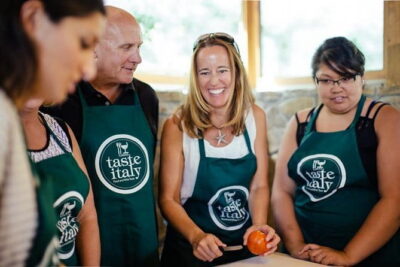
Cooking Class and Lunch at a Tuscan Farmhouse with Local Market Tour from Florence
Read our review →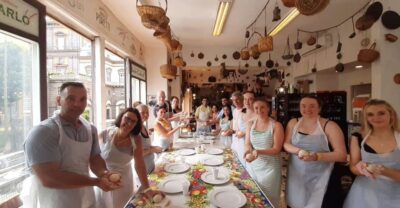
Naples: Neapolitan Pizza and Tiramisù Making Class
Read our review →
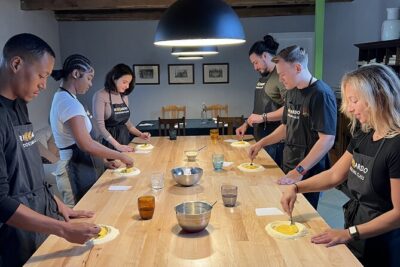
Rome Pasta Making Class with Italian Sauces and Wine Included
Read our review →
Milan: Italian Cooking Class with Food and Wine
Read our review →
Florence: Cooking Class at a Tuscan Farm & Local Market Tour
Read our review →
Browse the lists this tour appears in