
Review · NEW DELHI
Indian Cooking Class in an Authentic Local Home – Learn 6 Dishes
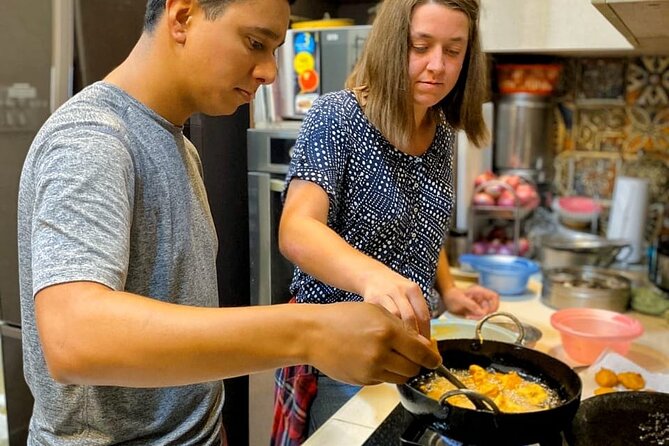
Indian food makes more sense once you see how a few spices, cooking fats, and basic techniques build an entire meal. At JD and his father’s home in Greater Kailash, you work in a real family kitchen rather than a polished cooking studio, preparing curry, rice, breads, and dessert before sitting down together.
I like the hands-on format and the clear attention to spice technique. I also like the family setting: JD and his father explain how dishes are made, why certain steps matter, and how recipes passed through the family can be adapted at home.
The main point to check is the menu. The experience is sold as learning six dishes, while the meal description lists one main dish, one rice dish, two kinds of bread, and dessert, and some sessions have included seven dishes. The exact menu may change, so ask about it if you have your heart set on a particular recipe.
Key points to know before booking
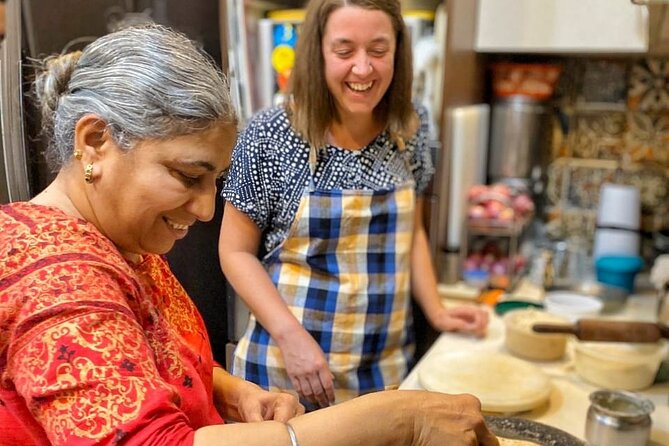
- Cook in a family home: The class takes place at R-142, Greater Kailash 1, not in a commercial cooking school.
- Learn from JD and his father: Their teaching focuses on family methods, spice use, and practical cooking decisions.
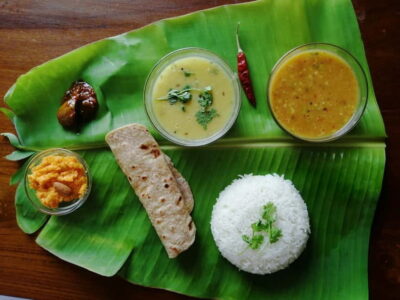
- Prepare a full meal: Expect a main dish, rice, two types of bread, and dessert, with the advertised experience centered on six dishes.
- Small-group atmosphere: The stated limit is up to 10 people, while the main description presents it as an intimate group of no more than eight.
- Eat what you make: Lunch or dinner, along with tea, coffee, and bottled water, is included.
- Good for mixed diets: Vegetarian and non-vegetarian choices are available, and dietary needs can be discussed in advance.
Starting in a Greater Kailash family home
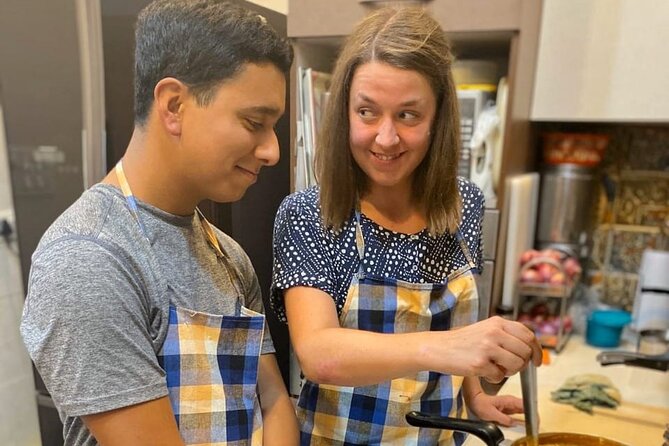
The meeting point is R-142, Greater Kailash 1, Block R, New Delhi 110048. The address is in a well-known south Delhi neighborhood and is near public transportation, but you should still allow time to find the exact house. The experience provides a mobile ticket and confirmation at booking, which makes arrival simpler.
You are not being led into a restaurant kitchen with a fixed production line. You enter a private home, meet JD and his father, and begin with the social side of Indian hospitality. One session started with masala chai and biscuits, a small touch that sets the tone before the cooking begins.
The home has air-conditioning and restroom facilities. That matters in Delhi, especially if you are cooking during a hot part of the year. It also means you can spend two and a half hours working with dough, pans, and spices without feeling worn down by heat.
The family setting is the chief reason to choose this class. You get a look at how food is taught inside a household, where the method includes stories, habits, and small corrections that are difficult to pick up from a recipe card.
More Home Cooking Classes in India
- Jaipur Market Tour & Vegetarian Rajasthani Home Cooking Class
★ 5.0 · 113 reviews - Interactive Cooking Class with a Local Family in Jaipur
★ 5.0 · 90 reviews - Traditional Cooking Class in Chennai in a Local Home with Sundari
★ 5.0 · 38 reviews
The kitchen lesson: spices before shortcuts
The cooking is designed to be practical. You learn about the spices from the beginning, rather than simply watching a chef finish dishes that were prepared before you arrived.
That distinction matters. Indian cooking is not just a matter of adding a spoonful of curry powder. The taste depends on when spices enter the pan, how they are toasted, how they combine with onions or other ingredients, and how long the base cooks. JD focuses on these choices and explains the small adjustments that shape the final result.
You also learn how one prepared base can lead to several different dishes. A session included instruction on making a base for rice, roasted foods, and breads that could then be adapted in several ways. That is useful information for your own kitchen because it gives you a method, not just a single recipe.
The class is hands-on, but it is not necessarily a full ingredient-preparation workshop from start to finish. One especially useful feature is that time is spent on spice balance and cooking technique rather than wasting the lesson on routine chopping. If you want to practice every knife skill yourself, ask how much preparation is already done.
Making the main dish and rice
The central part of the meal is a main dish, with vegetarian and non-vegetarian options available. The exact recipe is not fixed in the information provided, so you should expect the menu to depend on the session and dietary needs.
This flexibility is a benefit for a mixed group. You can learn the structure of a curry or similar main dish without being locked into one type of meat or vegetable. It also makes the class more useful for people who eat differently at home.
Rice is treated as its own dish rather than an afterthought. That is another good sign for a class focused on real Indian cooking. Rice texture depends on water, heat, timing, and handling, and the lesson gives you a chance to understand how it fits with the main dish.
I would pay close attention here to the family’s timing. The best home-cooked Indian meals are often made by coordinating several pots and pans, not by finishing each item in isolation. The class gives you a practical sense of how the meal comes together as a whole.
Rolling breads and learning the small tricks
Bread is often the most enjoyable part of an Indian cooking class because the result depends on touch. You prepare two types of bread according to the meal description, while the broader experience also refers to three types in one place. The precise number may vary, but bread is clearly a major part of the lesson.
The value is in the small corrections. Dough needs the right feel, rolling needs the right pressure, and cooking requires attention to heat. These are skills that can be hard to learn from written instructions alone.
The class has included paratha, and one session ended with especially good dals and paratha. You may find that bread work takes a little patience, particularly if you are new to Indian dough. That is not a weakness of the experience. It is one of the places where a family teacher can show you what a recipe cannot easily explain.
Because the class is practical, you should expect to participate rather than sit quietly with a demonstration in front of you. The hosts are described as patient, which is important when several people in one group work at different speeds.
More Indian Cooking Classes in India:
- Authentic Indian Cooking Classes at Palolem Beach Road Goa
★ 5.0 · 132 reviews - Mumbai: Indian Cooking Class & Cultural Delights
★ 5.0 · 38 reviews - New Delhi: Traditional Indian Cooking Class & Market Visit
★ 5.0 · 32 reviews - Private South Indian Tamil Cooking Class in Chennai with Srividya
★ 5.0 · 24 reviews
Ending with dessert and the shared meal
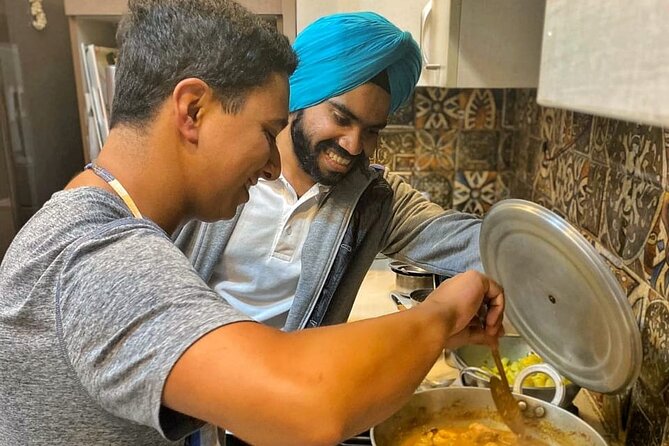
Dessert brings the cooking to a proper finish. A rice pudding has been part of the meal, and it was singled out as a satisfying end to the class. The session may also include other dessert choices depending on the menu.
Then you sit down and eat together. Lunch or dinner, tea or coffee, and bottled water are included, so the class is not simply a lesson followed by a quick taste. The shared meal is where the separate techniques become clear: bread with the main dish, rice with the sauces, and dessert after the savory food.
I like this part because it turns the class into a social evening rather than a timed demonstration. JD and his father use the meal to talk about Indian customs and food traditions, and the atmosphere is intended to feel like joining a family table.
The format works particularly well for solo visitors. A solo booking may become a private lesson if no one else signs up, or you may work with a small group and make new friends. The experience is capped at a small number, though the stated maximum differs between eight and ten people, so the exact size can depend on the booking.
What the teaching style is really like
JD is described as patient, welcoming, and careful about explaining why a method works. His father is also closely involved, giving the class a family-led feel rather than placing the whole lesson on one instructor.
The strongest teaching point is the focus on why. You are not only told to add a spice or stir a sauce. You learn how spices affect aroma and flavor, how cooking methods change the result, and which small choices make a dish taste more complete.
The class also gives context for the food. Dishes are linked to Indian tradition and family practice, so you get more than a list of ingredients. This cultural side is helpful if you want to understand what you are eating in Delhi, not simply reproduce it at home.
The setting is comfortable and clean, based on the detailed descriptions of the kitchen and preparation area. Still, this is a private home, not a purpose-built culinary school. If you prefer a formal classroom with individual workstations and a printed lesson plan, this may feel informal.
Value at $50.22 per person
At $50.22, the price is reasonable if you value the meal and the personal setting as much as the recipes. You are paying for roughly two and a half hours of instruction, the ingredients, a full meal, drinks, use of the kitchen, and time with two hosts.
The value improves if you are traveling alone or as a couple. A restaurant meal may cost less, but it will not teach you how to make the food or explain the spice work behind it. A formal cooking school may offer more equipment, but the family-home setting gives you a closer look at household cooking.
Group discounts are available, which can make the experience more appealing for families or friends booking together. I would compare the final group price before deciding, especially if your main aim is a shared activity rather than an advanced cooking course.
The class is also a useful choice near the end of a Delhi stay. You can take home several recipes and techniques, then use them to recreate part of the trip. One participant even purchased masala chai tea leaves to take home, although you should confirm availability rather than assume this is included.
Who will enjoy this class most
I would recommend it to food-focused visitors who want to cook, eat, and talk. It suits couples, friends, solo visitors, and small groups who enjoy a relaxed social setting.
It is also a good pick if you are uncertain about Indian spices. The lesson breaks down how they work instead of treating them as mysterious ingredients. You leave with a better sense of how to build flavor in your own kitchen.
Vegetarians and mixed-diet groups should find the format useful because both vegetarian and non-vegetarian options are offered. You should still share dietary requirements when booking so the hosts can plan appropriately.
Families may like the informal atmosphere, but the source information does not give a minimum age or specific child policy. Ask before booking if you are bringing children.
I would hesitate only if you want a tightly scheduled professional course, a fixed menu guaranteed in advance, or a class centered on restaurant-style presentation. This experience is about family food, technique, conversation, and eating together.
Practical details that affect your day
The activity begins and ends at the Greater Kailash address. There is no separate sightseeing stop or transport service described, so you need to make your own way to the home and back afterward.
The total duration is about two hours and 30 minutes. That is long enough for a full lesson and meal, but not so long that it takes over an entire day in Delhi. If you are planning other activities, allow extra time around the class for south Delhi traffic and for locating the meeting point.
Confirmation arrives at booking, and the mobile ticket is useful for keeping the address handy. The experience requires a minimum number of people and can be canceled because of poor weather or because that minimum is not met. In those cases, you are offered another date or a full refund.
For your own cancellation, you can receive a full refund if you cancel at least 24 hours before the start time. Changes or cancellations inside that window are not accepted for a refund. Gratuity is not included, so bring that into your budget if the hosts give you a good lesson and welcoming meal.
Should you book this New Delhi cooking class?
Book it if you want an intimate food experience led by a family, with real participation and a proper meal at the end. The best reasons are JD and his father’s personal teaching, the focus on spice technique, and the chance to learn breads, rice, a main dish, and dessert in one sitting.
Think twice if you need a guaranteed six-dish menu, since the descriptions vary on the exact count and bread selection. Before booking, confirm the day’s dishes and explain any dietary needs.
For most food-focused visitors, the $50.22 price is fair because it combines instruction, hospitality, and dinner. You leave with recipes, practical cooking habits, and a better understanding of how an Indian family meal is built.
FAQ
Where does the Indian cooking class take place?
It takes place at R-142 GK-1, Bindra’s House, R-142, Greater Kailash 1, Block R, part 1, Greater Kailash, New Delhi, Delhi 110048, India.
How long does the experience last?
The cooking class lasts approximately two hours and 30 minutes.
How many people can join the class?
The main description gives a maximum of eight people, while the additional information states a maximum of 10 travelers. The exact group size may therefore vary by booking.
What food will I prepare?
You will prepare a complete Indian meal with a main dish, a rice dish, two types of bread, and a dessert. The experience is advertised as learning six dishes, but the exact menu can vary.
Are vegetarian and non-vegetarian options available?
Yes. Both vegetarian and non-vegetarian options are available.
Are food and drinks included?
Yes. Lunch or dinner, coffee or tea, and bottled water are included.
Is the cooking space air-conditioned?
Yes. The cooking space is fully air-conditioned, and restroom facilities are available.
Is public transportation available near the meeting point?
Yes. The meeting point is near public transportation.
What is the cancellation policy?
You can cancel at least 24 hours before the start time for a full refund. Cancellations or changes made less than 24 hours before the start time are not refunded. If the experience is canceled because of poor weather or because the minimum number of participants is not met, you are offered another date or a full refund.
More Hands-On Workshops in India
- Pink City Cooking Class
★ 5.0 · 452 reviews - Five Course Cooking Class & Meal
★ 5.0 · 250 reviews - Veg and Non veg : Private Cooking Class in Delhi home (7 meal)
★ 5.0 · 226 reviews - Cooking Class in Jaipur – Family Experience with Meal & Transport
★ 5.0 · 101 reviews
Just added around India
- Small Group Authentic Mumbai Virtual Cooking Class with Dessert★ 5.0 · 15 reviews
- Private Vegetarian Indian Cooking Class in Mumbai★ 5.0 · 17 reviews
- Indian Curry 5-Hour Cooking Classes In Mumbai★ 5.0 · 22 reviews
- Mumbai: Indian Cooking Class & Cultural Delights★ 5.0 · 38 reviews
- New Delhi: Traditional Indian Cooking Class & Market Visit★ 5.0 · 32 reviews
- Pondicherry: Indian Cooking Class with Market Visit★ 4.7 · 18 reviews
- Authentic Indian Cooking Classes at Palolem Beach Road Goa★ 5.0 · 132 reviews
- Interactive Cooking Class with a Local Family in Jaipur★ 5.0 · 90 reviews
Indian Cooking Classes, compared.
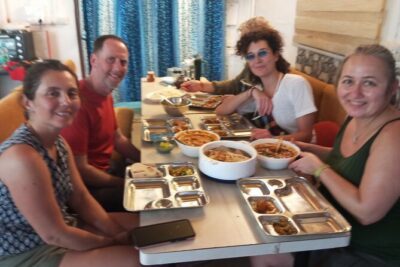
Authentic Indian Cooking Classes at Palolem Beach Road Goa
Read our review →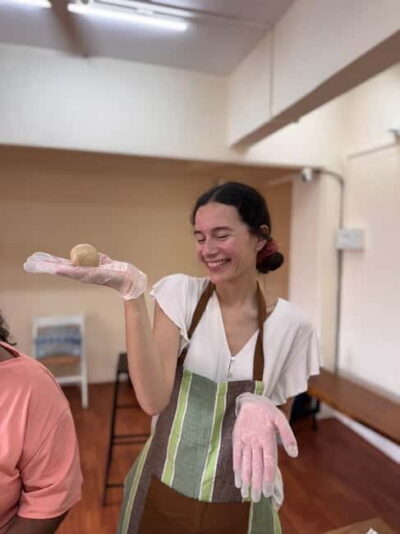
Mumbai: Indian Cooking Class & Cultural Delights
Read our review →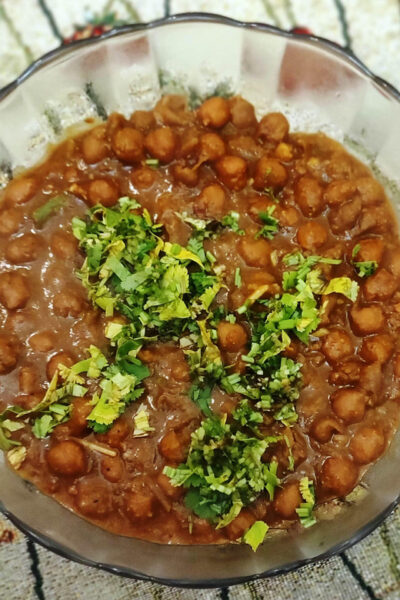
New Delhi: Traditional Indian Cooking Class & Market Visit
Read our review →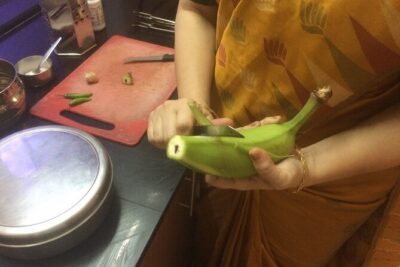
Private South Indian Tamil Cooking Class in Chennai with Srividya
Read our review →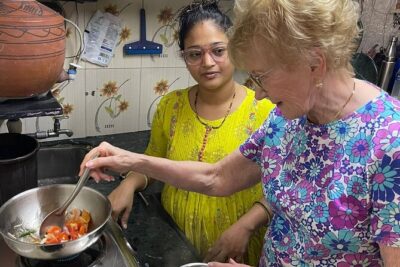
Pondicherry: Indian Cooking Class with Market Visit
Read our review →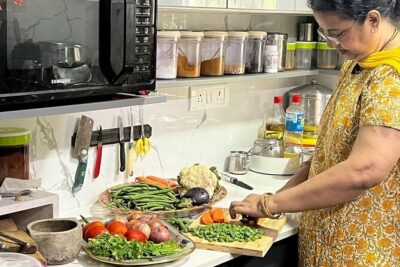
South Indian Vegetarian Cooking Class in Chennai with Meena
Read our review →Private Vegetarian Indian Cooking Class in Mumbai
Read our review →Browse the lists this tour appears in