
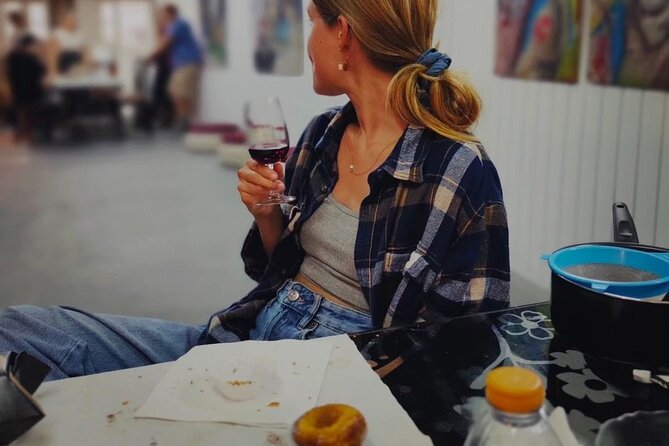
Review · PORTO
Porto: Pastel de Nata Cooking Class with Porto Wine (Sé do Porto)
The best part of this Porto experience is simple: you make the custard from scratch, bake the tarts, and eat a warm pastel de nata you helped prepare. The class also gives you a short introduction to the pastry’s place in Portuguese food culture, so it is more than a quick snack stop.
I like the friendly, hands-on teaching and the chance to take several pastries away in a transport box. I also like the relaxed extras: Port wine, coffee, juice, water, and sweet and savory snacks. The main consideration is clear: the puff pastry is prepared in advance, so this is a pastry workshop focused on the filling and baking, not a full lesson in making laminated dough.
Key points to know before booking
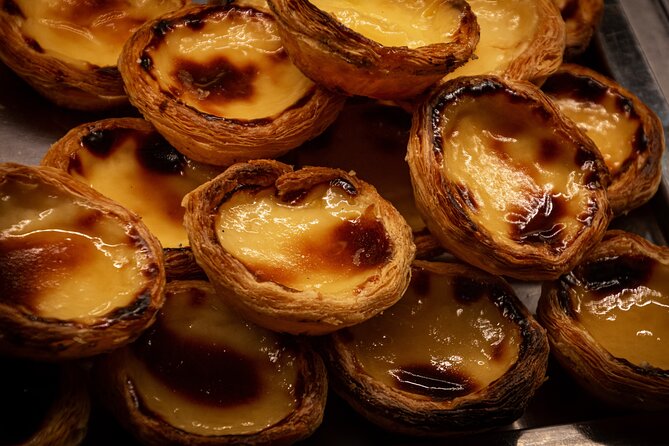
- Custard is made from scratch: You work through the filling step by step and learn the recipe that gives the tart its smooth texture.
- The pastry dough is pre-prepared: You receive a recipe and a shortcut method, but you do not make puff pastry from raw ingredients during the class.
- Warm tarts and takeaway box included: You prepare several pasteis de nata, eat some at the venue, and carry the rest away.
- Port wine is part of the experience: Coffee, juice, water, and small sweet and savory snacks are also available.
- Small group setting: The information lists a maximum of 8 people, while the highlights mention a cap of 12, so expect a compact class rather than a large demonstration.
- Good rainy-day choice: At about 90 minutes, it fits neatly into a Porto sightseeing day and gives you a useful indoor break.
Starting at Domus Arte near Sé do Porto
The class begins at Domus Arte | Concept Store, at Rua da Bainharia 135, 4050-084 Porto. This puts you near Sé do Porto, in the old central part of the city, with public transportation nearby and bathrooms available at the venue.
The meeting point is also a shop with modern and traditional Portuguese handicrafts and souvenirs. I would allow a few extra minutes before or after class to look around, but keep your main focus on finding the address promptly. The activity ends at the same place, so there is no transfer to arrange afterward.
The setting is described as simple, clean, and easy to work in. That matters for a cooking class. You are not trying to follow a recipe in a grand restaurant dining room. You are at a practical workshop where the work surface, the instructor, and the food stay at the center of the experience.
The class is offered in English. Several instructors lead sessions, including Ana, Luis, Filipe, Anita, Theresa, and Beatrice. The names vary by date, but the teaching style described across the sessions is friendly, patient, and active rather than formal.
More Cooking Classes with Wine Tasting in Portugal
- Porto: Pastel de Nata Cooking Class with Port Wine – Sé
★ 4.8 · 888 reviews - Portuguese Cooking Class in Porto with Portuguese Wine
★ 5.0 · 110 reviews - Porto Hands On Cooking Class-3 course-wine included-trained chef
★ 5.0 · 34 reviews
A short introduction to Portugal’s famous custard tart
The session begins with a brief look at the history of pastel de nata. This is useful context, especially if you have already eaten these tarts around Portugal and want to understand what makes them such an important local food.
The introduction is short, not a long lecture. That is the right balance for a 90-minute activity. You get enough background to connect the dish with Portugal, then move quickly to the part most people came for: preparing and baking it.
The pastry itself has two main parts. The outside should be flaky and crisp, while the filling is a sweet baked custard. The contrast is what makes the tart work. In this class, the custard receives most of the attention, and the instructor explains the steps in a way that home cooks can repeat.
Making the custard, one step at a time
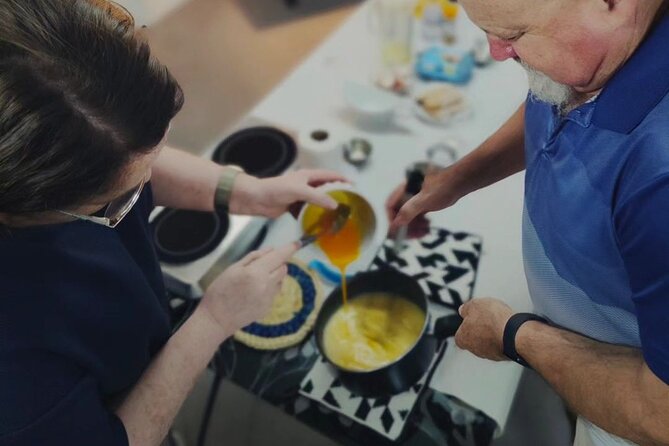
The hands-on work is shared among the group. You take turns with different parts of the preparation while the instructor explains what to do and why it matters. This is not an individual workstation where you personally handle every stage from start to finish.
That distinction is important. If you want to make an entire batch alone, ask about the private workshop option. In the regular class, the shared format keeps the group moving and gives everyone a chance to participate, but your exact role may depend on the size and makeup of your group.
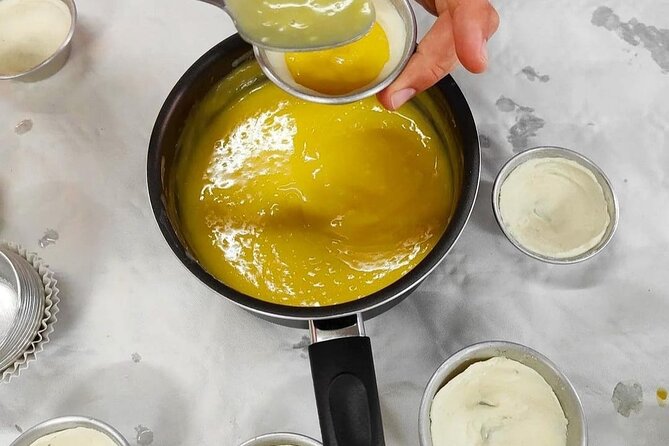
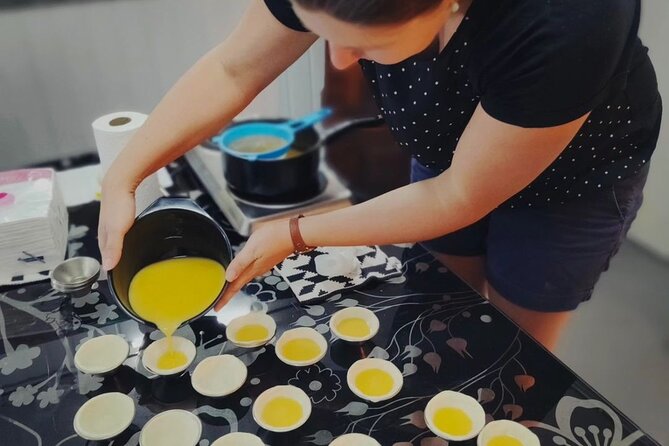
The custard is the heart of the lesson. You learn how to combine the ingredients, follow the cooking process, and reach the proper consistency before the tarts go into the oven. The method is designed to be manageable at home, even if you are not an experienced baker.
Several people who attended with children or with little baking experience found the instructions easy to follow. That matches the structure of the class. The teachers break the process into small jobs, offer practical hints, and keep the mood relaxed.
I especially like that the recipe is not treated as a secret souvenir with no explanation. You receive a house-made recipe to take home, and the class gives you enough guidance to understand how the custard should look and feel. That is more useful than simply watching a professional make the tarts.
What you do and do not make
The biggest limitation is also the clearest point to understand before paying. The puff pastry is pre-prepared. You do not make the pastry dough from scratch during the standard workshop.
That is reasonable for a class lasting about an hour and a half. Making proper laminated puff pastry takes time, chilling, rolling, and folding. Adding that process would either make the class much longer or leave little time to prepare and bake the tarts.
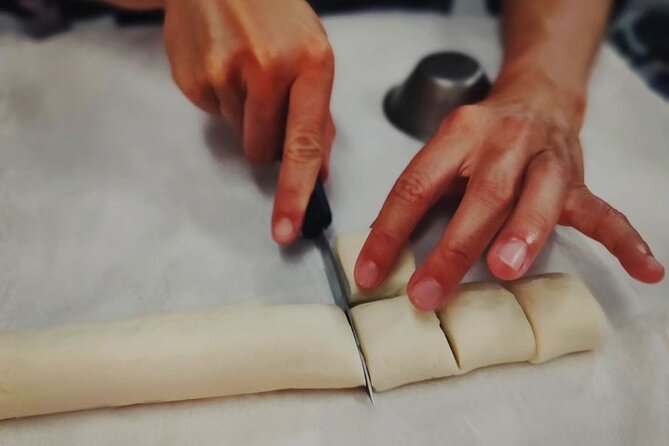
Instead, you work with prepared pastry and focus on shaping, filling, and baking. The instructors also provide a method for making the pastry at home. One of the practical tips is a shortcut approach that produces a good result without requiring a full professional pastry routine.
Still, you should book with the right expectation. If your dream is to learn every layer of puff pastry from butter block to final fold, this will feel too basic. If you want to learn the custard and leave with a repeatable home recipe, the format makes good sense.
Same place, a different menu:
- Lisbon: Pastel de Nata Baking Class
★ 4.9 · 2,106 reviews - Porto: Pastel de Nata Cooking Class with Grandma’s Recipe
★ 5.0 · 1,565 reviews - Porto: Pastel de Nata Pastry-Making Workshop
★ 4.9 · 1,542 reviews - Lisbon: Traditional Portuguese Cooking Class
★ 4.9 · 592 reviews
Baking the tarts and tasting them warm
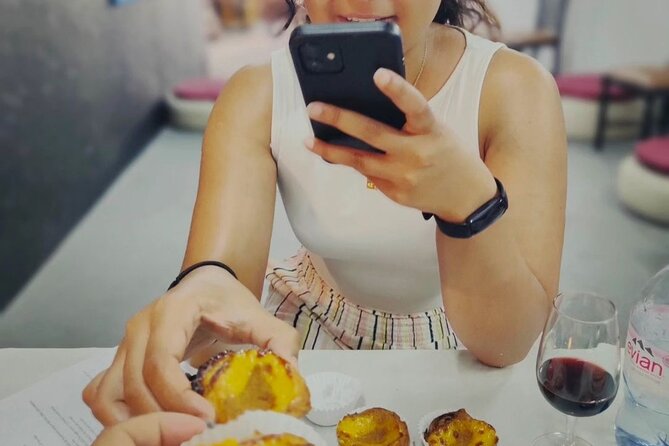
Once the custard and pastry are ready, the tarts go into the oven. The baking stage is where the separate parts come together: crisp pastry, a set custard center, and the browned surface that makes a pastel de nata look finished.
You prepare several pasteis de nata during the class. You can enjoy them on site or take them away, and a transport box is included. That small detail adds real value. Fresh custard tarts are best soon after baking, and the box lets you save some for later instead of eating the entire batch at once.
You also have Port wine during the session, along with coffee, juice, and water. Sweet and savory snacks are available while you work. The Port pairing is a natural fit for a pastry class, but it also gives the experience a more social feel than a basic cooking lesson.
If you do not drink alcohol, the other beverages make the class easy to enjoy. The available information does not list a full alternative tasting menu, so you should not book this expecting a major food spread. The snacks support the workshop rather than replace it.
Why the small group matters
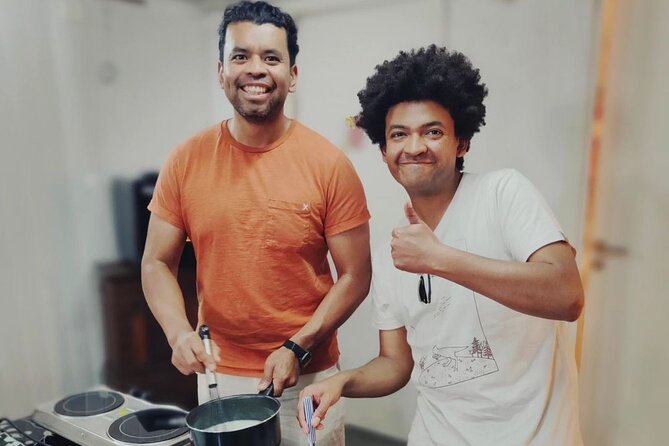
The class is described as small, with one published maximum of 8 people and another highlight listing a cap of 12. Because those figures differ, I would treat the experience as a compact group activity but confirm the exact capacity when booking.
Small numbers help most during the cooking steps. The instructor can watch how people handle the mixture, answer questions, and keep beginners from falling behind. Ana, Luis, Filipe, and the other instructors are repeatedly described as warm, patient, and engaged with the whole group.
The shared format also creates easy conversation. You may be cooking beside people from different parts of the world, and the process naturally gives everyone something to talk about. That is one reason the class works well for solo visitors as well as couples and families.
There is a tradeoff. If the group is very small, the activity may finish sooner than expected. One attendee found the cooking too simple for the price when the class consisted only of a family group. A full session with more participants may feel more social and give the activity a stronger sense of occasion.
Price and value at $42.34
At $42.34 per person, this is not the cheapest way to eat a pastel de nata in Porto. You can buy the pastry itself for much less. The value comes from the instruction, the social setting, the Port wine and snacks, the recipe, and the chance to carry away pastries you helped make.
For a first-time baker, that package is fair. You receive a useful technique rather than only a tasting. The class also saves you from having to figure out the custard by trial and error at home.
The value is weaker if you already bake often and expect advanced pastry work. Since the puff pastry is prepared in advance and participation is shared, an experienced cook may find the technical content light. In that case, the social side, local context, and warm pastries become the main reasons to book.
I would also keep the price in perspective as part of a Porto holiday. The class takes about 90 minutes, so it does not consume half a day. It can fit before or after sightseeing near the cathedral, and it is especially practical when rain makes outdoor plans less appealing.
Who will enjoy this Porto cooking class
This is a good pick for:
- First-time bakers who want a clear recipe they can repeat at home
- Families looking for an activity short enough to suit children
- Couples who prefer a shared food experience to a standard tasting
- Solo visitors who enjoy meeting people while doing something practical
- Pastel de nata fans who want to understand the custard behind the pastry
- Anyone needing an indoor activity in central Porto
It is less suitable if you want a long, technical pastry course or complete individual control over every stage. A private workshop may be the better choice if full participation matters to you.
The class can also work for people avoiding gluten, but you need to tell the organizers ahead of time so they can accommodate you. The provided information does not promise every dietary need can be handled, so mention any restriction before the session rather than waiting until you arrive.
Service animals are allowed. The venue is near public transportation, and bathrooms are available. Those are modest details, but they make the activity easier for families and for anyone planning several stops in the same part of Porto.
Small extras that improve the experience
The instructors do more than read out the recipe. They share cooking tips that can help with other dishes, answer questions about Porto, and offer local suggestions. That informal exchange is one of the stronger parts of the class.
The friendly approach can matter when travel plans go wrong. The staff have helped people with practical problems, including contacting a local person about an item left in an Uber. That is not a promised part of the pastry activity, but it shows the kind of personal attention the venue aims to provide.
The shop upstairs is another pleasant add-on. You can browse Portuguese handicrafts and souvenirs before or after the baking session. There is also a related tile-painting class at the venue, though that is a separate activity and not part of this booking.
If you want to buy small tart tins, ask about the price before purchasing. One person found cheaper tins at a nearby kitchen shop, so the convenient on-site option may not be the best bargain.
Cancellation and timing details
You receive confirmation when you book, and the experience offers free cancellation up to 24 hours before the local start time. Cancel at least 24 hours ahead for a full refund. Changes or cancellations inside that window are not accepted and are not refunded.
The activity requires a minimum number of participants. If that minimum is not met and the class is canceled, you are offered another date or experience, or a full refund.
The advertised duration is about 1 hour and 30 minutes, though you should allow a little flexibility. The food may finish early or the social part may extend the visit. One session took about two hours, so avoid scheduling a train, timed attraction, or airport transfer immediately afterward.
FAQ
How long does the pastel de nata class last?
The advertised duration is approximately 1 hour and 30 minutes. You should allow some extra time, since individual sessions may run longer.
Is the puff pastry made from scratch?
No. The puff pastry is prepared in advance for the standard class. You focus on the custard filling, preparation, and baking, and you receive a recipe and home method for the pastry.
What drinks are included?
The class includes Port wine, juice, water, and coffee. Sweet and savory snacks are also available during the workshop.
Can I take the pastries home?
Yes. You prepare several pastel de nata, and you can eat them at the venue or take them away. A transport box is included.
Where does the class begin and end?
The class begins at Domus Arte | Concept Store, Rua da Bainharia 135, near Sé do Porto. The activity ends back at the same meeting point.
Can the class accommodate gluten-free needs?
Yes, the provided information says gluten-free accommodations are possible if you tell the organizers ahead of time. Contact them before the class with your dietary requirement.
Should you book it?
I would book this class if you want a friendly, short food activity with a real hands-on element. The warm tarts, house recipe, Port wine, and helpful instructors make it a pleasant use of an hour and a half, especially on a wet day in Porto.
Go in knowing what you are buying. This is not a full pastry-school lesson, and you will not laminate the dough yourself. For most visitors, that tradeoff is sensible: the class concentrates on the custard, baking, and confidence to try the recipe at home. If that sounds like the right level of cooking for you, $42.34 is a reasonable price for an edible memory you can carry away.
More Hands-On Workshops in Portugal
- Porto: Pastel de Nata Cooking Class from Scratch
★ 4.9 · 468 reviews - Lisbon: 2-Hour Pastel de Nata Cooking Class
★ 4.8 · 461 reviews - Lisbon Portuguese Cooking Class with 3-Course Dinner
★ 5.0 · 445 reviews - Traditional Portuguese Cooking Class in Lisbon
★ 5.0 · 287 reviews
Just added around Portugal
- Lisbon Cooking Class with Market Experience★ 5.0 · 13 reviews
- Market Tour, Cooking Class And Lunch At Mercado de Arroios★ 5.0 · 23 reviews
- Lisbon Market and Food Tour with Cooking Class and Lunch★ 5.0 · 117 reviews
- Private Lisbon Market Tour & Portuguese Cooking Class with Paula★ 5.0 · 89 reviews
- Porto Hands On Cooking Class-3 course-wine included-trained chef★ 5.0 · 34 reviews
- Portuguese Cooking Class in Porto with Portuguese Wine★ 5.0 · 110 reviews
- Porto Local Market Visit & Cooking Class / Showcooking★ 5.0 · 206 reviews
- Pasteis de Nata Baking Class from Lisbon★ 5.0 · 248 reviews
Cooking Classes with Wine Tasting, compared.
Florence: Pasta Cooking Class with Unlimited Wine
Read our review →
Rome: Pasta Making Class with Wine, Limoncello, and Dessert
Read our review →
Florence: Cooking Class Pasta & Tiramisu Making Unlimited Wine
Read our review →
Fettuccine & Tiramisù: Cooking Class with Wine & Limoncello
Read our review →
Pasta Making & Wine Tasting with Dinner in Frascati from Rome
Read our review →
Rome Cooking Class: Make Pasta, Dine & Drink Wine With Local Chef
Read our review →
Rome: Combo Pizza and Pasta Cooking Class with Wine
Read our review →Browse the lists this tour appears in