
Review · ROME
Small-Group Pasta Making steps from the Vatican Museums
Just steps from St. Peter’s Basilica, this three-hour class turns a former Vatican granary into a friendly cooking table. You’ll make fresh pasta, share wine, and sit down to eat what you prepared, with Romina guiding the work in English.
I like the small group of up to eight, which gives Romina room to help with the dough and answer questions. I also like the sensible location: you can fit the class between Vatican sightseeing and the rest of your Rome day. The main thing to consider is that this is more of an introduction than a full professional cooking workshop. One past participant felt the hands-on work lasted only about 25 minutes, with Romina handling much of the sauce preparation.
Key Points at a Glance
- Former Vatican granary: The class takes place near St. Peter’s Basilica, in a kitchen with an unusual connection to the area’s past.
- Romina leads the class: She combines pasta instruction with family cooking traditions, food history, and practical tips.
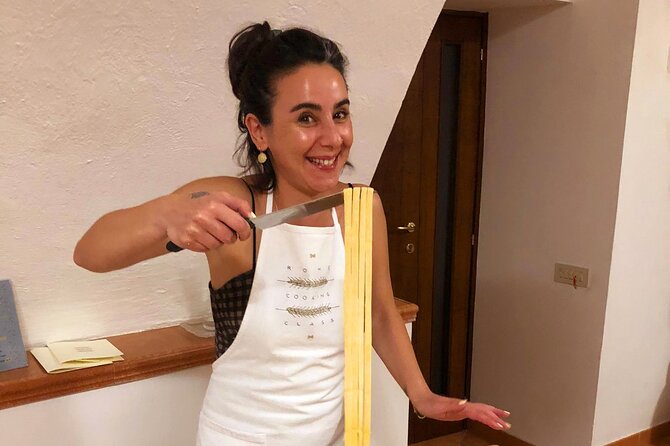
- You make two pasta dishes: The menu includes green ravioli and homemade fettuccine with Roman-style sauces.
- Welcome drinks come first: Sparkling wine and small bites set a relaxed tone before the aprons go on.
- Lunch or dinner options: You can choose the class time that fits your Vatican plans.
- A meal at the end: Your pasta is served with wine, starter, and dessert, not packed away as a cooking sample.
A Pasta Class in the Shadow of St. Peter’s
The address on Borgo Angelico puts you in an excellent part of Rome. You meet near the Vatican, close enough to make this a useful break after a morning in the museums or before an afternoon visit to St. Peter’s Basilica.
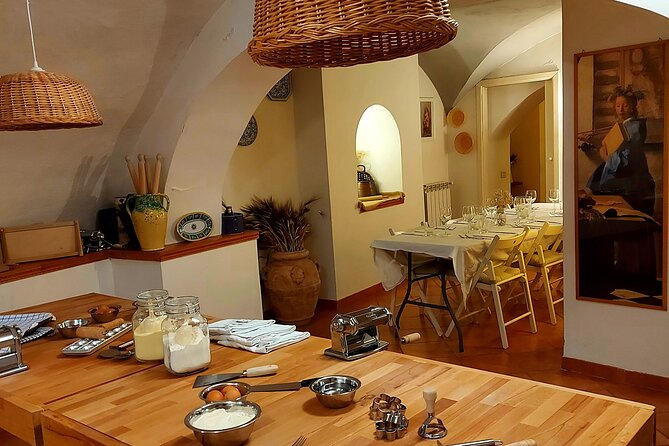
The kitchen was once used as a Vatican granary. That detail gives the class a stronger sense of place than a generic cooking studio. You are not simply making pasta in an anonymous room. You are working in a space tied to the food supply of one of Rome’s most important districts.
The activity begins and ends at the meeting point. Since transportation details are simple and the location is near public transport, planning is fairly easy. Still, leave enough time to find Borgo Angelico, especially if you are coming directly from a timed Vatican entry.
You can select a lunch or dinner class. A lunch session works well after an early Vatican visit, while dinner lets you spend the day sightseeing before settling into the kitchen. The three-hour length is long enough for cooking and a proper meal, but it is not a quick stop you can squeeze into a narrow gap.
More Pasta Making Classes in Rome
- 3 in 1 Cooking Class near Navona: Fettuccine, Ravioli & Tiramisu
★ 5.0 · 7,376 reviews - Rome: Pasta Making Class with Wine, Limoncello, and Dessert
★ 4.9 · 3,177 reviews - Rome Cooking Class: Make Pasta and 3 Spritz Cocktails
★ 5.0 · 2,937 reviews
Meeting Romina Over Sparkling Wine and Nibbles
Romina welcomes the group with sparkling wine and small bites. This opening matters. It gives everyone time to settle in, meet the other cooks, and get comfortable before handling flour and pasta dough.
The tone is social rather than formal. That works especially well if you are traveling as a couple or family and want an evening with more conversation than a restaurant meal allows. One family with children found the class a favorite part of their Rome trip, and the relaxed format encouraged the children to think about making pasta at home.
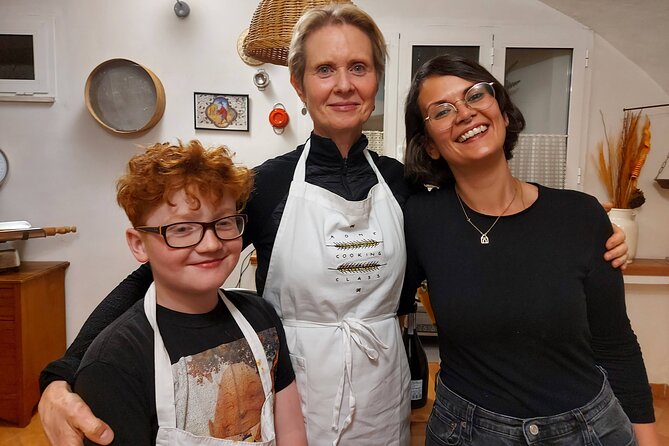
You will receive an apron before the work begins. The cooking table is shared, and the group size is capped at eight people. That limit is one of the strongest parts of the experience because a pasta lesson can quickly become frustrating if the instructor must divide attention among a large crowd.
Romina is described as patient, gracious, and fun. Those traits matter more here than a long lecture about Italian food. Fresh pasta often depends on small adjustments: how firmly to knead, how thin to roll the dough, and how much filling to use. A calm instructor can make those steps feel manageable.
Making Green Ravioli With Ricotta and Lemon
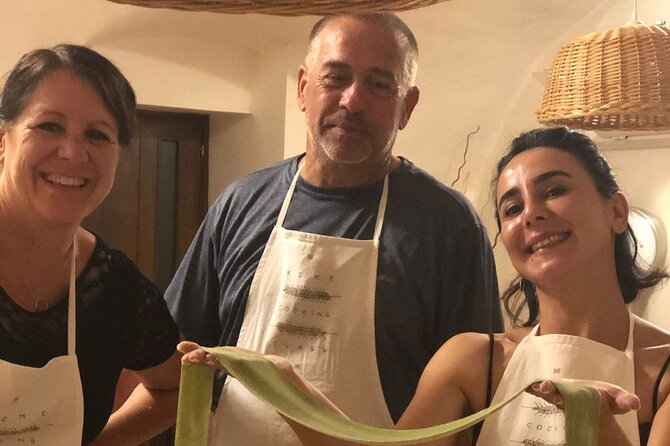
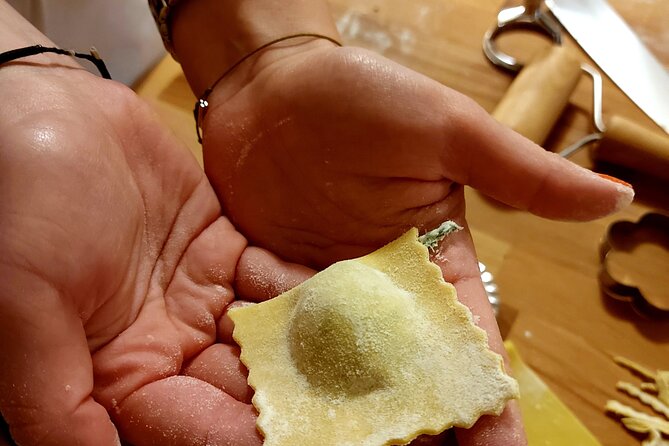
The first main dish is green ravioli filled with ricotta, pecorino, and lemon zest. The filling gives you a good lesson in balance. Ricotta brings softness, pecorino adds salt and bite, and lemon zest keeps the mixture from feeling heavy.
The ravioli is served with fresh cherry tomato sauce and basil. It is a classic Roman-area combination in spirit: simple ingredients, clear flavors, and no need to hide the pasta beneath a complicated sauce.
This is the part of the class where your hands are most involved. You work with the dough, roll it out, and shape the ravioli. The exact amount of time you spend on each task can vary, but you should expect guided practice rather than a full professional kitchen rotation.
That distinction is important. If you want to prepare every ingredient and cook every sauce from start to finish, you may find the class limited. Romina prepares some of the sauces herself, so your main practical work centers on the pasta dough and shaping.
For many people, that is enough. Ravioli is not hard because the ingredient list is long. It is hard because the dough must be thin, the filling must be placed neatly, and the edges must be sealed without trapping air. Watching Romina demonstrate those points, then trying them yourself, gives you useful skills to repeat at home.
Rolling Fettuccine and Serving Amatriciana
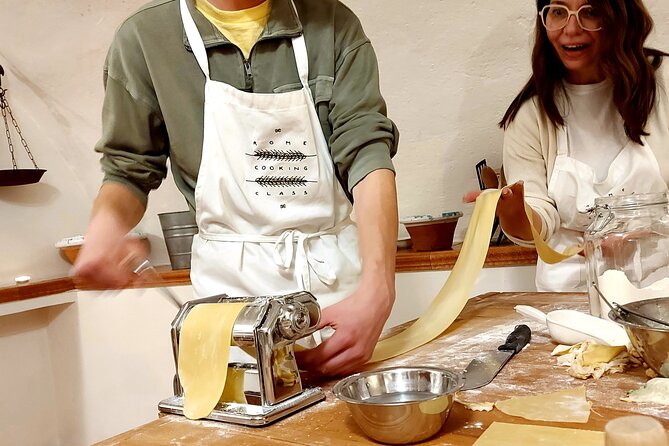
The second pasta dish is homemade fettuccine with traditional Amatriciana sauce. This gives you a different look at pasta shape and texture. Ravioli is about filling and sealing. Fettuccine is about rolling the dough evenly and cutting it into long ribbons.
Amatriciana is one of Rome’s best-known sauces, with a savory, tomato-based profile. The class also introduces other Roman staples, including Carbonara and Cacio e Pepe, so you get some food culture along with the recipe work.
One point deserves clear attention: the menu describes these sauces, but the hands-on portion does not necessarily mean you will cook every sauce yourself. The strongest practical lesson is fresh pasta preparation. Romina handles much of the sauce work while explaining the dishes and their place in Roman cooking.
That setup has advantages. You can focus on the pasta without juggling several pans and ingredients at once. It also keeps the three-hour schedule moving. But if you have taken cooking classes where every person makes a complete dish from raw ingredients, adjust your expectations.
The class is best viewed as a guided pasta workshop with a shared meal, not a full restaurant-kitchen apprenticeship. A recipe booklet is provided at the end, though the material may not include every pasta dish prepared during the session. Bring a note-taking habit if you want to remember all the small tips.
Same place, a different menu:
- Rome: 3-in-1 Fettuccine, Ravioli, and Tiramisu Cooking Class
★ 4.9 · 2,704 reviews - Rome: Fettuccine Pasta Cooking Class in Rome’s City Center
★ 4.8 · 2,414 reviews - Fettuccine & Tiramisù: Cooking Class with Wine & Limoncello
★ 4.9 · 2,103 reviews - Pasta Cooking Class Near the Colosseum with 3 Spritz Cocktails
★ 5.0 · 1,686 reviews
Bruschetta, Dessert, and the Meal You Prepared
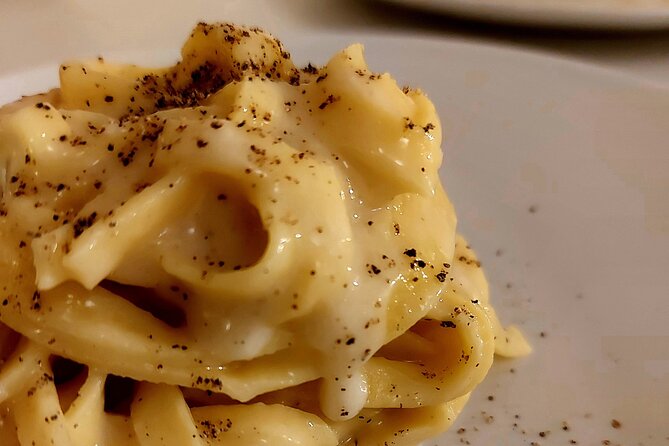
The cooking is framed by a full meal. The starter is bruschetta with cheese, roasted peppers, and olives. This is simple food, but it works well before the pasta because it does not compete with the main dishes.
After the ravioli and fettuccine, dessert is either tiramisù or strawberries and cream. The exact choice may depend on the session or seasonal ingredients. You also receive carefully selected local wine with the meal.
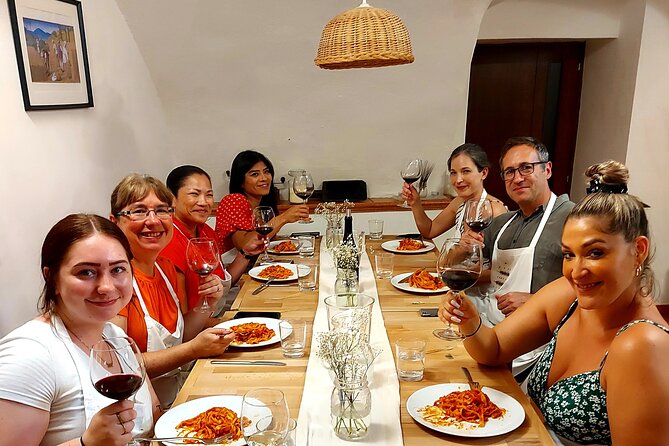
The meal is the payoff, but it is not only about eating. Sitting down together changes the pace of the afternoon or evening. You get time to talk with the group, compare your pasta shapes, and ask Romina questions that may not come up while your hands are covered in flour.
I especially like that the food you make becomes the centerpiece of the meal. This gives the class a clear purpose. You are not merely watching a chef prepare lunch while you sample a few bites. You contribute to the main dishes, then taste how the pasta turned out.
Families and couples seem particularly well suited to this format. It gives children a concrete activity, and it gives couples something to do together beyond choosing another restaurant. It also works for solo visitors who enjoy meeting people around a shared table, though the social side will depend on the mix of the small group.
How Hands-On Is the Experience?
This is the key question to ask before booking. The class includes hands-on pasta work, but not every menu item is prepared by each participant.
You should expect to:
- Work with pasta dough
- Roll out the dough
- Shape ravioli
- Prepare homemade fettuccine
- Learn about Roman dishes and food traditions
- Eat the pasta with sauce, wine, starter, and dessert
You should not assume you will independently prepare every sauce or every course. One detailed assessment of the class found that only about 25 minutes felt fully hands-on, while the rest involved watching, listening, and eating.
That criticism does not make the class a poor choice. It simply places the experience in the right category. If you are new to fresh pasta, watching an experienced cook can prevent common mistakes. If you already make pasta at home, you may want a class with more simultaneous cooking and less demonstration.
The small group helps, but it does not change the basic format. Romina can give you more attention than an instructor managing a dozen or more people, yet she still prepares some components herself.
Is $96.12 a Fair Price?
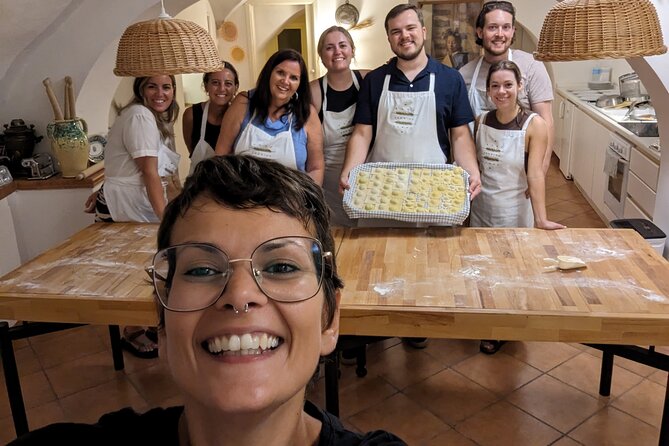
At $96.12 per person, this is not the cheapest meal in Rome. You can find a good plate of pasta for far less. The price makes more sense when you count the instruction, ingredients, drinks, dessert, and three hours in a small group near the Vatican.
The value is strongest if you want an activity rather than only a meal. You are paying for a social evening, a local host, a kitchen experience, and the chance to learn a skill you can use later.
The value is weaker if your main goal is to cook every item yourself. In that case, the limited hands-on time may leave you feeling that the price is high for an introductory lesson.
I would compare it with the cost of a guided Vatican day. A cooking class gives you a break from museum rooms and church interiors, and the location makes it easy to pair with sightseeing. It also replaces one restaurant meal, though you should not book it solely as a bargain dining option.
The 4.9 rating from 44 reviews and the 98 percent recommendation rate show very strong satisfaction overall. The praise centers on Romina’s warmth, the attractive kitchen, the small group, and the quality of the meal. The less favorable assessment focuses on hands-on time and the incomplete recipe booklet. Those are the two points to weigh carefully.
Lunch or Dinner Near the Vatican?
The choice of time can shape the whole day.
A lunch class is useful if you plan to visit the Vatican Museums in the morning. You can finish the museum visit, walk toward Borgo Angelico, and use the class as a proper midday pause. This avoids rushing into a quick sandwich between major sights.
A dinner class is better if you want a lighter sightseeing schedule or prefer to end the day with a group meal. After three hours of cooking and eating, you will already have your evening meal, though the end time should fit your later plans.
Because the experience lasts about three hours, do not schedule another timed attraction immediately afterward. Rome’s streets and public transport can be unpredictable, and the meal is intended to be enjoyed at a comfortable pace.
The class is offered in English. Confirmation arrives at booking, and the activity requires a minimum number of participants. If that minimum is not reached and the class is canceled, you can receive a different date or a full refund.
For changes of your own, cancellation is free up to 24 hours before the start time. Less than 24 hours before the class, changes and refunds are not accepted.
Who Will Get the Most From This Class?
I would recommend it most strongly to:
- First-time pasta makers
- Couples seeking a shared Rome activity
- Families with children who enjoy practical activities
- Food lovers staying near the Vatican
- Solo visitors who like small-group meals
- People who want Roman food context along with a recipe
You may want another class if you are already skilled at pasta making or want to prepare every course from beginning to end. This experience gives you a taste of the process, not a full culinary certification.
It is also a good choice for a non-cook in your group. The social format and meal reduce the pressure to perform perfectly. You can learn at the table, follow Romina’s lead, and still enjoy the result.
Should You Book It?
Book this class if you want a warm, social pasta lesson near the Vatican, with a host who gives the experience a personal touch. Romina’s patience, the former granary setting, the group limit of eight, and the complete meal make it more memorable than simply ordering pasta at a nearby restaurant.
Go in knowing that the main hands-on work is making and shaping the pasta. Sauces and some other components are prepared by Romina, so serious home cooks may wish for more active time.
For most first-time pasta makers, families, and couples, the balance is appealing. If the chance to make ravioli and fettuccine, then eat them with wine and dessert, sounds like a good use of three hours in Rome, the price is reasonable. If you want to cook every dish yourself, choose a more intensive workshop.
FAQ
Where does the pasta class meet?
The meeting point is on Borgo Angelico, 00193 Rome, Italy, near St. Peter’s Basilica and the Vatican area.
How long does the experience last?
The class lasts approximately three hours.
Is the class offered in English?
Yes. The experience is offered in English.
How many people can join the class?
The activity has a maximum of eight participants.
Can I choose between lunch and dinner?
Yes. The experience offers both lunch and dinner class options.
What pasta will I make?
You will make green ravioli filled with ricotta, pecorino, and lemon zest, along with homemade fettuccine.
What sauces are served with the pasta?
The ravioli is served with fresh cherry tomato sauce and basil. The fettuccine is served with traditional Amatriciana sauce. Carbonara and Cacio e Pepe are also introduced as Roman dishes.
Is food served before and after the pasta?
Yes. The menu includes sparkling wine and nibbles at the start, bruschetta with cheese, roasted peppers, and olives, and dessert such as tiramisù or strawberries and cream.
Does the class include wine?
Yes. Sparkling wine is served at the beginning, and local wine is paired with the meal.
What happens if I need to cancel?
You can cancel up to 24 hours before the start time for a full refund. Cancellations or changes made less than 24 hours before the start time are not accepted for a refund.
More Museums in Rome
- Multi-Variety Mole Class in a Condesa home or art gallery rooftop
★ 5.0 · 10 reviews - Multi-Variety Tamal Class in a Condesa home or rooftop gallery
★ 5.0 · 8 reviews - Private Tour: Grand Palace,Wat Phra Kaew, Museum&Cooking Class
★ 5.0 · 7 reviews - Tuscan Cooking Class in an Art Gallery in Florence
★ 5.0 · 6 reviews
Just added around Rome
- Gluten-Free Roman Feast Cooking Class with Chef Christian★ 5.0 · 36 reviews
- Authentic Pasta and Tiramisu Cooking Course in Spanish Steps★ 5.0 · 28 reviews
- Gelato and Fettuccine Pasta Cooking Class in Rome Piazza Navona★ 5.0 · 143 reviews
- Gnocchi Cooking Class in Rome – Piazza Navona★ 5.0 · 83 reviews
- Focaccia and Pesto Cooking Class in the Roman Countryside★ 4.5 · 14 reviews
- Trionfale Market Tour and Gnocchi Cooking Class with a Masterchef★ 5.0 · 5 reviews
- Gelato & Pizza Cooking Class in Rome★ 4.5 · 29 reviews
- From Rome: Pasta Fresca Cooking Class in a Farmhouse with a Local★ 5.0 · 62 reviews
Pasta Making Classes, compared.
Florence: Pasta Cooking Class with Unlimited Wine
Read our review →
3 in 1 Cooking Class near Navona: Fettuccine, Ravioli & Tiramisu
Read our review →
Rome: Pasta Making Class with Wine, Limoncello, and Dessert
Read our review →
Rome Cooking Class: Make Pasta and 3 Spritz Cocktails
Read our review →
Rome: 3-in-1 Fettuccine, Ravioli, and Tiramisu Cooking Class
Read our review →
Rome: Fettuccine Pasta Cooking Class in Rome’s City Center
Read our review →Browse the lists this tour appears in