
Review · ITALIAN
Rome: Neapolitan Pizza Cooking Class in Front of the Vatican
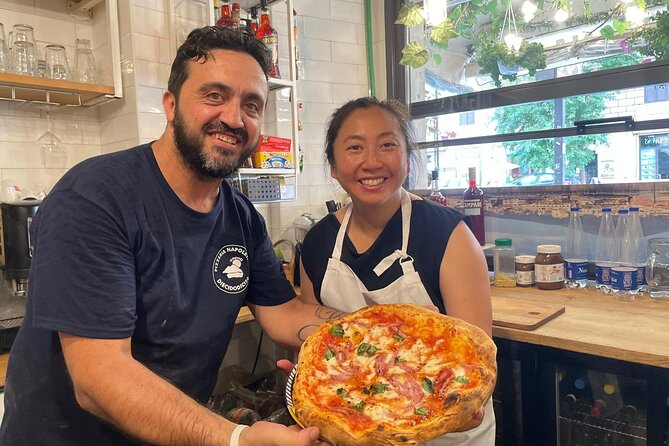
The best part of this class is that you do not just eat pizza near the Vatican, you help make it. In about an hour, a pizzaiolo shows you how to press, stretch, top, and bake your own pie in a wood-fired oven. You then sit down and eat what you made.
I like the short, hands-on format, which fits neatly after a Vatican visit or before an evening stroll. I also like the friendly teaching style reported from Elisa, Andrea, Antonio, Matteo, and the kitchen team, especially for children and first-time cooks.
The main thing to know is that you may not make the dough from flour and yeast yourself. The class focuses on working with prepared dough, so it teaches shaping and baking more than the full recipe. Ask for dough and sauce instructions if that matters to you.
Key points to know before booking
- Make your own pizza near the Vatican: The class begins and ends at Via Leone IV, close to Vatican City and public transportation.
- Bake it in a wood-fired oven: You shape and top the pizza, then help place it into the oven and take it out.
- A one-hour activity: The compact schedule works well for families, teenagers, and anyone fitting food into a busy Rome day.
- English-language instruction: Guides and the restaurant team help explain the techniques as you work.
- Vegetarian food is available by request: Ask before booking or as early as possible if you need this option.
- Check drink costs: Alcoholic beverages may be part of the meal arrangement, but the exact inclusions are not clear, so confirm before ordering.
A pizza class with the Vatican as your backdrop
This is a simple idea, but it works well in Rome. You meet at Via Leone IV, 00192 Roma, in the area just outside the Vatican. Instead of spending another hour looking at ancient stone or church art, you get your hands into dough and make dinner.
The setting gives the class extra appeal. You are close to one of Rome’s biggest sights, with a view toward the Vatican, yet the focus stays on food. That makes this a useful change of pace after a morning of museums, churches, and long periods on your feet.
The class is offered in English and has a maximum of 30 people. That is a fairly large possible group for a cooking activity, so do not expect a private lesson. The instructors still provide hands-on help, and the format is designed for beginners rather than serious culinary students.
You can choose an afternoon or evening class. I like that flexibility. An afternoon time can turn lunch into an activity, while an evening time gives you a built-in dinner plan. If you have a Vatican tour in the morning, the location may also save you from crossing Rome before your next booking.
More Pizza Making Classes in Rome
- Cooking Class in the Heart of Rome: Pizza and Tiramisu Making
★ 5.0 · 1,330 reviews - Rome: Traditional Pizza Cooking Class near Piazza Navona
★ 4.7 · 1,241 reviews - Rome: Combo Pizza and Pasta Cooking Class with Wine
★ 4.6 · 1,180 reviews
What happens when you arrive at Via Leone IV
The meeting point is near public transportation, and the address is central to the Vatican area. The activity ends at the same place, so you do not need to arrange a separate return transfer or follow a guide across town.
Bring your mobile ticket and allow enough time to find the restaurant area. The class is easy to fit into a day built around St. Peter’s Basilica or the Vatican Museums, but keep your schedule sensible. A one-hour class does not mean your whole door-to-door experience will take exactly 60 minutes, especially if you need to locate the meeting point or order drinks afterward.
The class can suit a mixed-age group. Children as young as five and nine have taken part, and older children and teenagers also have plenty to do because each person gets to make an individual pizza. The short length helps keep the activity moving.
For couples, the format is relaxed and social without taking over an entire evening. For a larger family or group, the maximum capacity of 30 means you should not expect the intimacy of a small home kitchen, but the shared restaurant setting can make the class lively.
Stretching the dough, rather than starting from flour
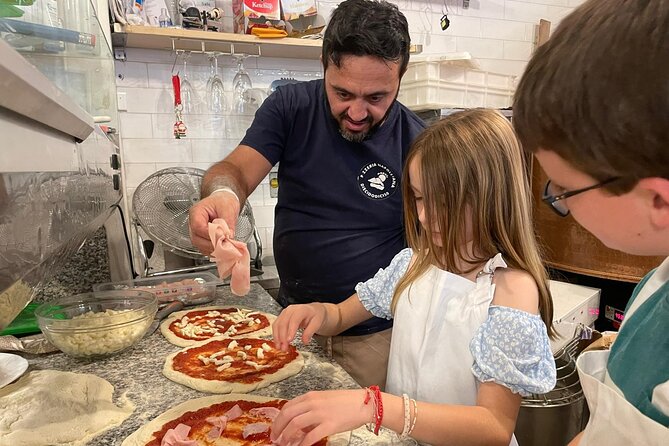
The lesson begins with the pizza base. You learn how to press out the dough, shape it, and stretch it into a round. This is the part where the class gives you a real feel for Neapolitan pizza. Dough can look easy until it sticks, tears, or refuses to become a neat circle.
The chef and guides help you work with it. Andrea has served as a guide and translator for the chef, while Elisa has helped keep the class moving and made sure participants were included. Antonio has also taught the process. Matteo and the kitchen staff have received warm praise for making beginners feel at ease.
The important limitation is clear: the dough is prepared before or outside the main class process. You work the dough, but you do not necessarily mix the flour, yeast, water, and salt from scratch. If your main goal is to learn a dough recipe for your home oven, this class may leave a gap.
I would ask for the recipe before leaving. One participant specifically wished for instructions for both the dough and sauce. The one-hour schedule explains why the full dough process is not included, but even a short printed recipe or demonstration would make the lesson more useful after your holiday.
Fresh toppings and your own pizza choices
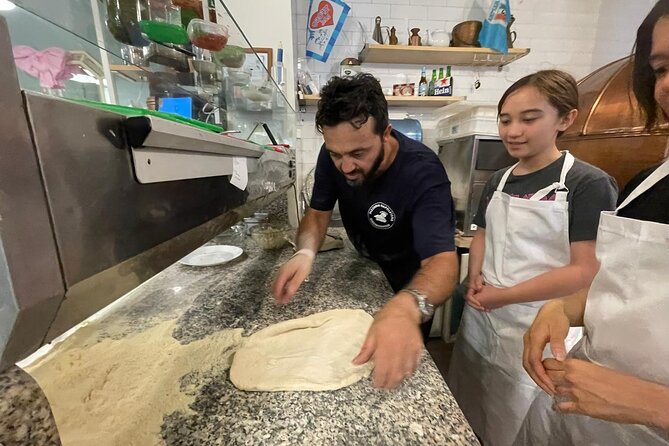
Once your base is shaped, you add sauce and toppings. The focus is on fresh, simple ingredients and on learning how to choose them. You make your own decisions about the topping, within the options available at the restaurant.
The basic example is a margherita pizza. You may also find additions such as prosciutto and rocket, as one successful combination used during the class. Vegetarian food is available by request, so say clearly what you need when arranging the activity.
This part has value beyond the finished meal. You learn that a good pizza does not need a long list of toppings. The class encourages you to pay attention to the ingredients, the amount of sauce, and the way toppings are spread across the dough.
Do not expect a full lesson in Italian food shopping or a market visit. The useful takeaway is smaller and more practical: fresh ingredients, a light hand with toppings, and a properly shaped base matter more than piling on extras.
Same place, a different menu:
- 3 in 1 Cooking Class near Navona: Fettuccine, Ravioli & Tiramisu
★ 5.0 · 7,376 reviews - Rome: Pasta Making Class with Wine, Limoncello, and Dessert
★ 4.9 · 3,177 reviews - Rome Cooking Class: Make Pasta and 3 Spritz Cocktails
★ 5.0 · 2,937 reviews - Rome: 3-in-1 Fettuccine, Ravioli, and Tiramisu Cooking Class
★ 4.9 · 2,704 reviews
The wood-fired oven is the memorable step
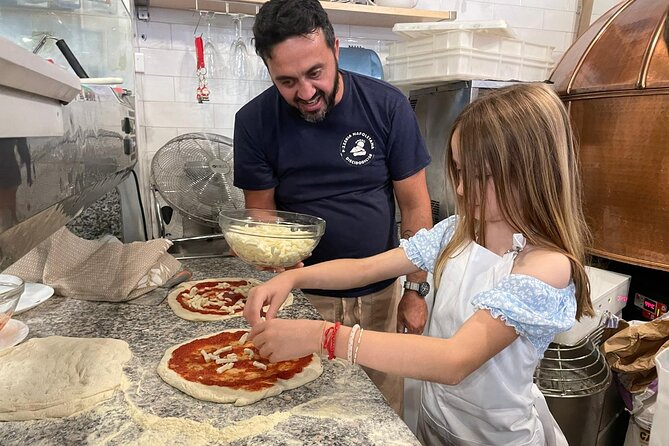
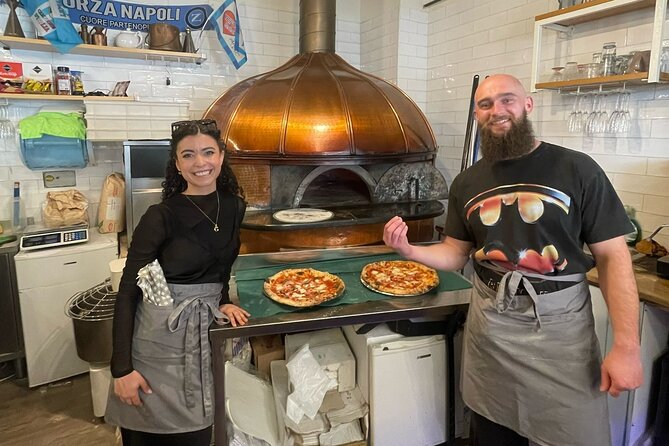
The restaurant staff bake the pizzas in a real wood-fired oven. Depending on the class flow, you help put your pizza in and take it out, with the chef and staff handling the hot kitchen work.
This is where the activity becomes more than a dough workshop. You see your soft, uneven base turn into a finished pizza, then sit down and eat it while it is still the center of attention. The oven also brings a bit of theater, especially for children and anyone who has never watched pizza being cooked this way.
The kitchen can be hot. One participant remembered the heat but also described the owner’s welcoming attitude as reassuring. Wear clothes you are comfortable moving around in, and keep young children close when the oven is being used. The staff control the dangerous part, but this is still an active kitchen, not a table-only demonstration.
The class may include both Neapolitan and Roman pizza techniques, according to one account of the lesson. The central focus remains Neapolitan pizza, so book it for the hands-on experience rather than a technical comparison of every Roman style.
Eating your creation beside the Vatican
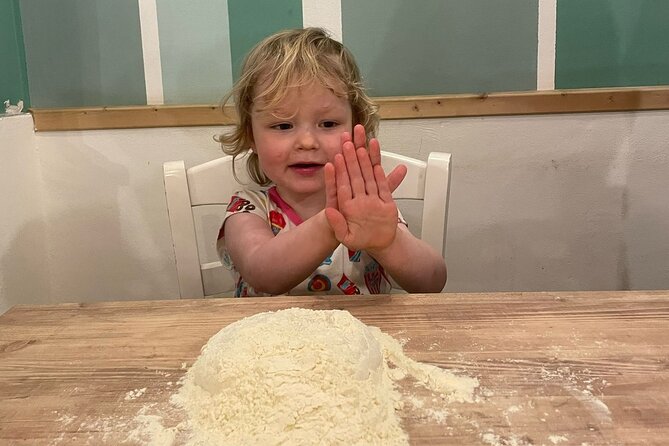
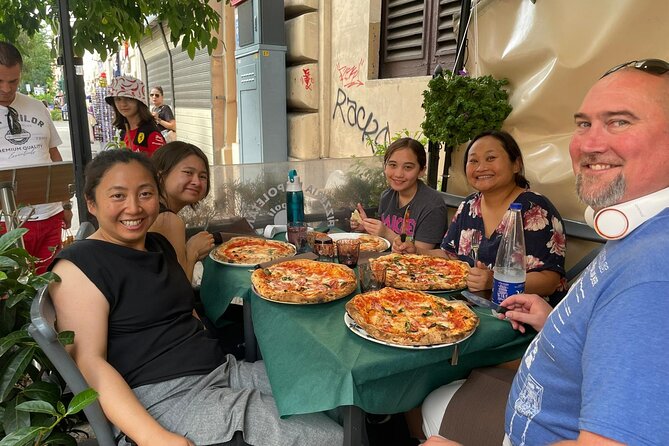
After baking, you eat your own pizza at the restaurant, sometimes at a small table outside. That final step is important. You are not making a sample and then handing it over to someone else. Your pizza becomes the meal.
The food is the reward, but it also gives you a useful way to judge what you learned. Was the crust too thick? Did you stretch it evenly? Did you add too much sauce? These are small questions, but they make the meal more engaging than simply ordering a pizza from a menu.
You can enjoy the finished pie with your group, and the setting near the Vatican gives the meal a strong sense of place. Do not assume every drink is included in the price. Alcoholic beverages are mentioned, but the exact arrangement is not fully clear. One group ordered wine and a Coke, then had to pay extra for the drinks.
My practical advice is simple: ask which drink, if any, is included before ordering. If you do not want alcohol, say so. This avoids a minor surprise at the end of a short activity.
The guides and the tone of the class
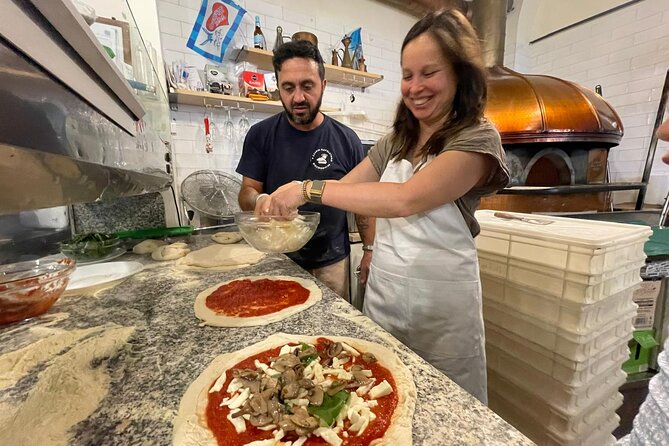
The people leading the activity seem to be a major part of its appeal. Elisa is described as warm, personable, and attentive, helping with photographs and making sure everyone took part. Andrea has helped translate the chef’s instructions. Antonio has also been part of the teaching team, while Matteo and the owner have been singled out for their welcoming approach.
That matters because pizza dough is physical and slightly messy. You need someone willing to show the movement again, correct your hands, and keep the mood light when your first circle looks more like a map of Italy.
The class does not require previous cooking experience. The instructors work with beginners, children, couples, and larger groups. A group of 16 people, including adults and teenagers, was accommodated successfully, although a class that size will naturally feel less personal than a small lesson.
The best way to approach it is as a guided food activity, not a serious chef-training course. You will learn useful techniques, but the emphasis is on participation, laughter, and a good meal.
Who gets the best value for the $88.82 price
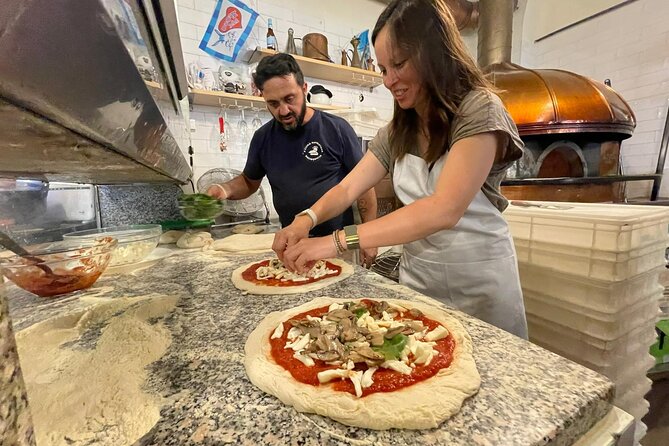
At $88.82 per person, this is not the cheapest way to eat pizza in Rome. You can order a pizza for far less. The price makes more sense if you value the lesson, the staff support, the oven experience, and the fact that the meal is also an activity.
I see the strongest value for three types of people:
- Couples looking for a light evening activity: You make dinner together instead of sitting through another formal meal.
- Families with children: Each person gets a pizza, the work is simple enough for beginners, and the one-hour format does not drag.
- Food-focused visitors: You leave with a better sense of dough handling, topping balance, and wood-fired baking.
The value is weaker if you want a full culinary course. You do not spend hours making dough from the first ingredients, studying fermentation, or learning how to run a pizza business. You also do not get a clear promise of a take-home recipe.
The price may be easier to justify as part of a full Rome day. Pairing the class with time near the Vatican saves travel, and the finished pizza replaces a separate dinner. Just remember that extra drinks may increase the final cost.
Best times to fit it into your Rome schedule
Afternoon and evening sessions are useful because they match the times you are most likely to want food. An afternoon class can break up sightseeing, while an evening class can serve as dinner.
The Vatican location is the key planning advantage. You can arrange the activity before or after other plans in that part of Rome without adding a long cross-town journey. One family was able to move to an earlier time after a morning Vatican tour, which shows that scheduling flexibility may sometimes be possible, though you should not count on a change unless the operator confirms it.
Do not build a tightly packed schedule around the exact end time. The class itself lasts about an hour, but group size, kitchen timing, and settling the bill can affect your departure. If you have a major timed ticket elsewhere, leave a buffer.
The activity is confirmed at booking, and you receive a mobile ticket. Free cancellation is available if you cancel at least 24 hours before the start time. Inside that window, the payment is not refunded and changes are not accepted.
How this compares with an ordinary Roman pizza dinner
A normal pizzeria gives you speed and choice. This class gives you a role in the meal. You learn why the dough needs stretching, see the pizza enter the oven, and eat a pie that you shaped yourself.
The class also makes sense after a day heavy on culture. Rome can fill your head with paintings, ruins, maps, and dates. Kneading and topping pizza gives you something direct and physical to do. It is a good reset, especially for children or anyone whose attention is fading after a long museum visit.
The tradeoff is that the food experience is fixed around pizza. If you want several courses, a long wine service, or a quiet dinner, choose a restaurant instead. If you want a personal story from Rome that involves your own hands, this class has more to offer.
Should you book this Vatican-area pizza class?
Book it if you want a short, friendly, hands-on activity where you make and eat your own pizza. It is especially well suited to couples, families, teenagers, and first-time cooks who want something different from another guided sight.
I would book it after checking two points. First, ask whether your preferred toppings and vegetarian needs can be handled. Second, confirm exactly which drinks are included and whether you can receive the dough and sauce recipe.
Skip it if your main goal is a full technical course on pizza dough. The prepared dough means you learn shaping, topping, and baking, not the entire process from the first mix. For everyone else, the Vatican location, helpful staff, short schedule, and wood-fired finish make the $88.82 cost reasonable when you want dinner and an activity in one.
FAQ
Where does the pizza class begin?
It begins at Via Leone IV, 00192 Roma RM, Italy, near the Vatican.
Where does the activity end?
The class ends back at the meeting point on Via Leone IV.
How long does the experience last?
The activity lasts approximately one hour.
Is the class offered in English?
Yes. The experience is offered in English.
Do I need previous cooking experience?
No previous cooking experience is required. The class is designed so beginners, families, and children can take part.
Can I request vegetarian food?
Yes. A vegetarian menu is available upon request.
How many people can join the class?
The activity can have a maximum of 30 participants.
Do I make the dough completely from scratch?
You work with the dough by pressing, shaping, and stretching it, but the experience does not clearly include mixing the dough from the first ingredients. Ask the staff if you want the dough recipe.
Are drinks included?
Alcoholic beverages are mentioned, but the exact drinks included are not specified. Confirm the drink arrangement before ordering, since additional drinks may cost extra.
Can I cancel for a full refund?
Yes, if you cancel at least 24 hours before the scheduled start time. Cancellations or changes made less than 24 hours before the start are not refunded.
More Hands-On Workshops in Rome
- Rome: Fettuccine Pasta Cooking Class in Rome’s City Center
★ 4.8 · 2,414 reviews - Fettuccine & Tiramisù: Cooking Class with Wine & Limoncello
★ 4.9 · 2,103 reviews - Pasta Cooking Class Near the Colosseum with 3 Spritz Cocktails
★ 5.0 · 1,686 reviews - Rome: Pasta & Tiramisu Cooking Class near the Spanish Steps
★ 4.8 · 1,395 reviews
More Italian Cooking Classes in Rome
- Rome Pasta Making Class with Italian Sauces and Wine Included
★ 5.0 · 645 reviews - Rome Small Group Pasta Making Class with Wine and Italian Chef
★ 5.0 · 295 reviews - Rome: Pasta-Making Class with Italian Spritzes
★ 4.8 · 229 reviews - Italian Gelato, Tiramisu and Cannolis Cooking Class in Rome
★ 5.0 · 137 reviews
Just added around Rome
- Rome Trastevere: Tiramisù & Gelato Class with Savoiardo Baking★ 5.0 · 14 reviews
- Authentic Pasta and Tiramisù cooking class at spanish steps★ 4.5 · 14 reviews
- Rome: Pasta Cooking Class, Dinner & Wine in Authentic Restaurant★ 5.0 · 38 reviews
- Rome For Kids: Small Group Pizza Making Class★ 4.5 · 49 reviews
- Rome Cooking Class★ 5.0 · 4 reviews
- Rome: Private Cooking Class with Market Shopping Tour★ 5.0 · 3 reviews
- Devour Rome Wine & Pizza Making Class in Trastevere Neighborhood★ 5.0 · 75 reviews
- Roma Foodie Experience: Cooking Class★ 5.0 · 16 reviews
Pizza Making Classes, compared.
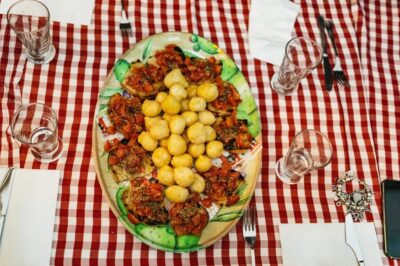
Naples: Pizza-Making Workshop with Drink and Appetizer
Read our review →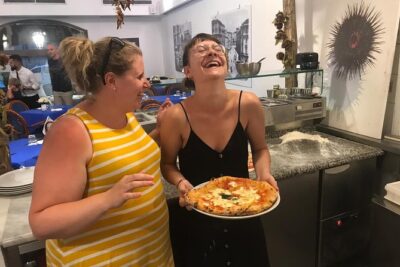
Authentic Pizza Making Class in Naples with Appetizers and Drink
Read our review →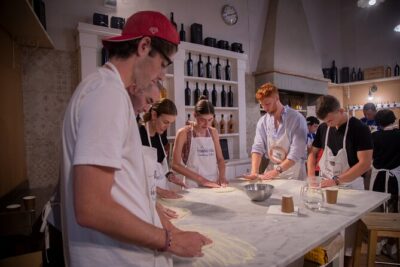
Florence Cooking Class The Art of Making Gelato & Authentic Pizza
Read our review →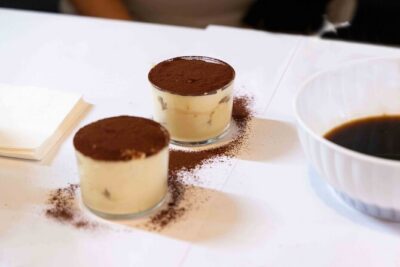
Cooking Class in the Heart of Rome: Pizza and Tiramisu Making
Read our review →
Rome: Traditional Pizza Cooking Class near Piazza Navona
Read our review →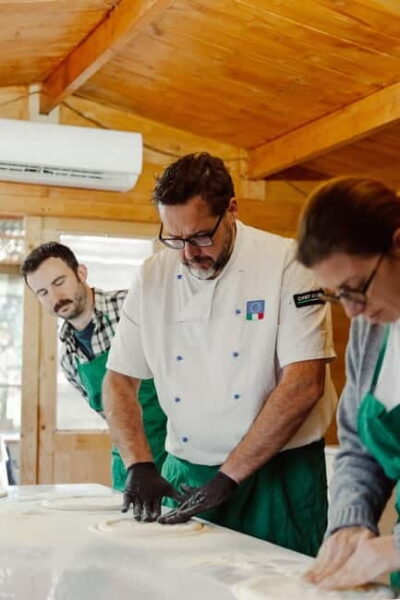
Rome: Combo Pizza and Pasta Cooking Class with Wine
Read our review →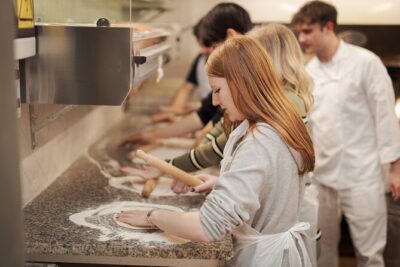
Pizza Cooking Class in Rome – Near Piazza Navona
Read our review →
Rome: Pizza & Tiramisu Class with Free Flowing Fine Wine
Read our review →Browse the lists this tour appears in