
Review · ARMENIA
Yerevan: Garni, Geghard, Symphony of Stones & Lavash Baking
Garni’s lonely pagan temple, Geghard’s cliff-carved chambers, and the basalt columns of the Azat Gorge give this six-hour outing a lot of variety. You move from ancient religion to Christian Armenia, then finish with warm bread and a local meal. It is one of the easiest ways to see several important sights outside Yerevan in one morning and afternoon.
I like the excellent value and the mix of famous sights with something ordinary and human: watching lavash being baked in a family-run setting. I also like the careful timing. Guides such as Yegor, Anna, Hasmik, and Hunan have been praised for clear explanations, friendly attention, and keeping the group moving.
The main thing to consider is that the lavash activity may be more of a demonstration than a hands-on class. One recent account described watching the bakers and tasting the bread, while another had the chance to try making it. Lunch is also extra, and vegetarian choices may be limited.
Key points to know before you book
- Garni is Armenia’s only preserved pagan temple, with a dramatic mountain setting and a strong connection to pre-Christian Armenia.
- Geghard is the emotional high point for many visitors, with dark stone chapels partly cut into the cliffs.
- The Symphony of Stones requires a short paid stop, with a modest 200 AMD entrance charge.
- Lavash baking adds a real local touch, but expect the level of participation to vary.
- The $19 price covers transport, a guide, and the baking experience, but not entry fees or lunch.
- Bring Armenian dram in cash, comfortable shoes, water, a hat, and sunscreen.
Why this half-day trip works so well
This tour is built around three strong sights that feel very different from one another. You get architecture at Garni, spiritual atmosphere at Geghard, and unusual geology in the Azat River gorge. The lavash stop then brings the day back to everyday Armenian life.
That variety matters. A tour devoted only to churches can feel repetitive, while a trip built only around scenery can leave you short on context. Here, the guide connects the sites to Armenia’s changing beliefs, architecture, and food traditions.
The trip leaves from the Komitas Yerevan State Conservatory. From there, you spend much of the day on the road, but the route is broken into manageable sections. The first drive takes about 40 minutes, followed by shorter transfers between the main stops.
You should expect a shared group outing rather than a private tour. The guide may speak English, Russian, or Armenian, and some departures use more than one language. That can mean explanations move quickly, especially when two languages are being used, but the strongest guides keep the pace lively and answer questions along the way.
More Baking Classes in the world:
- Paris Croissant Small-Group Baking Class with a Chef
★ 5.0 · 910 reviews - Paris: French Croissant Baking Class with a Chef
★ 4.9 · 712 reviews - Paris Macarons Small-Group Baking Class with a Chef
★ 5.0 · 316 reviews
Charents Arch and the first view of Mount Ararat
The first stop is Charents Arch, a simple stone arch with a grand view toward Mount Ararat when the weather is clear. It is a quick scenic pause, not a major monument, but it gives you an early sense of Armenia’s open mountain country.
The arch is named after Armenian poet Yeghishe Charents. Your guide may use the stop to place Armenia’s cultural identity in context, since Ararat is an important national symbol even though the mountain now lies across the border in Turkey.
Allow for changing conditions. In winter, snow can make the scene especially striking, but cloud may hide the mountain. In warmer months, bright sun can make the viewpoint feel exposed, so a hat and sunscreen are useful. You will have about 40 minutes here, including guided commentary and time for photographs.
Garni Temple and Armenia before Christianity
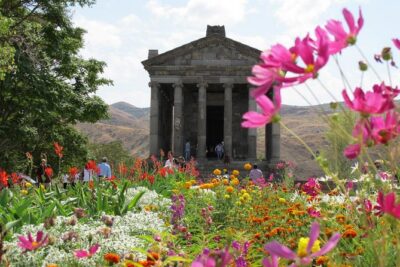
Garni is the architectural centerpiece of the first half of the trip. Its rows of classical columns look almost unexpected against the surrounding hills, and the temple is the only surviving structure in Armenia from the pagan period.
The temple was dedicated to Mihr, a sun deity, before Armenia adopted Christianity in the early fourth century. The building’s Greek-style design makes it look unlike the medieval monasteries elsewhere on this route. That contrast is exactly why the stop is worthwhile.
Your guide should help you look beyond the columns. Ask about the temple’s pagan purpose, its place in Armenian history, and the way the building relates to the wider site. Without that context, Garni can seem like a handsome ruin. With it, you see a physical reminder of an older religious world.
The visit lasts about an hour. You will have guided sightseeing, time to walk around, and views across the surrounding hills. The grounds can include uneven surfaces, so comfortable shoes are more useful than stylish ones.
Garni entry is not included. The listed fee is 1,500 AMD. Keep small local notes and coins with you, since you will also encounter the 200 AMD fee for the Symphony of Stones and possible charges for toilets or other small purchases.
The Symphony of Stones in the Azat River gorge
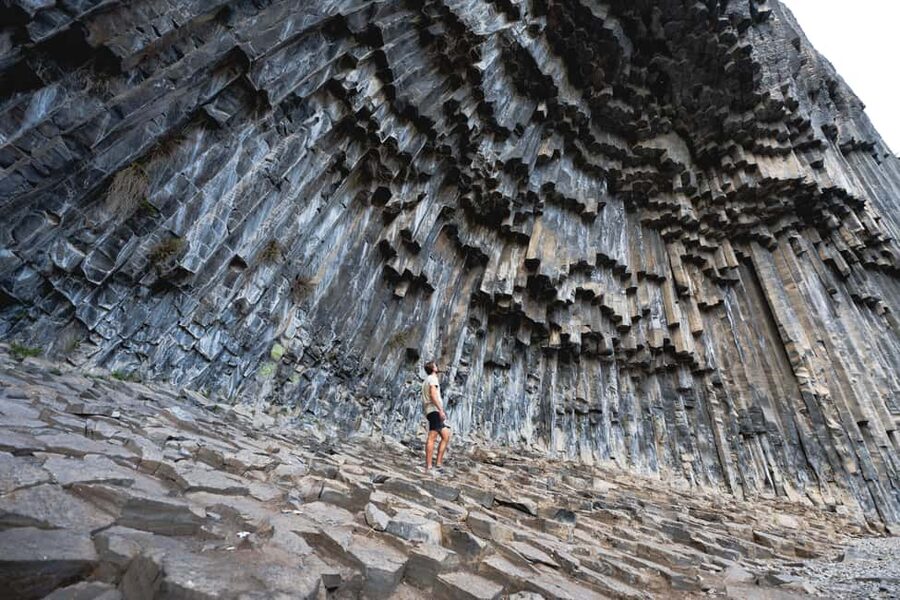
From Garni, the route continues to the Azat River gorge. Here, tall basalt columns form a striking natural wall often called the Symphony of Stones or the Basalt Organ.
The name makes sense once you see the regular vertical shapes. The columns look arranged by hand, but they were formed by cooling volcanic rock. Their dark, geometric surfaces create one of the most unusual photo stops near Yerevan.
This is a scenic stop rather than a long walk through a major park. You get about an hour for the guided visit, views, and photographs. The ground may be rough or uneven, so sturdy shoes are a sensible choice. If the weather is wet or snowy, take care on the paths.
The entrance fee is listed as 200 AMD. That is small, but it is another reason not to rely only on a bank card. Bring Armenian dram before leaving Yerevan.
The gorge is also a useful change of pace. After the formal architecture of Garni, you get a place where the rock itself is the attraction. The guide can explain the formation, but you will want a few quiet minutes to look up at the columns without rushing from one photo to the next.
Same place, a different menu:
- Half-Day Thai Cooking Class at Organic Farm in Chiang Mai
★ 5.0 · 19,087 reviews - Florence: Pasta Cooking Class with Unlimited Wine
★ 4.9 · 10,285 reviews - 3 in 1 Cooking Class near Navona: Fettuccine, Ravioli & Tiramisu
★ 5.0 · 7,376 reviews - Florence: Pasta & Tiramisu Cooking Class with Unlimited Wine
★ 4.9 · 6,708 reviews
Lavash baking in Garni
After the gorge, the group returns to Garni for a 40-minute break, food tasting, and lavash baking. Lavash is Armenia’s thin, flexible flatbread, traditionally baked against the wall of a clay oven called a tonir.
This part gives the excursion a local flavor that a standard monument circuit would miss. You can watch the bakers stretch and shape the dough, see how it is placed in the oven, and taste it fresh. Warm lavash is simple food, but it is at its best straight from the oven.
The wording of the activity deserves attention. It is called a baking class, but participation can vary. Some departures may let you try shaping or baking the bread, while others may mainly involve watching the women prepare it and tasting the result. Book it for the food tradition and the setting, not for a guaranteed full practical workshop.
Lunch is not included. The expected cost is about $5 to $10 per person, depending on what you order. The meal is arranged at a restaurant in Garni, and the food has generally been described as good and reasonably priced, though not every dish offers the same value.
Vegetarians should ask about the menu before ordering. One reported meal offered a vegetable plate with eggplant, tomato, and bell pepper, plus bread, at more than 2,500 drams. Vegetable soup may also be available. If you want more choice, ask the guide what is being served before the kitchen begins your order.
The timing is practical because you can eat while the group is based in Garni. Still, the 40-minute stop is not a leisurely restaurant lunch. If you want to linger over a long meal, this tour may feel rushed.
Geghard Monastery, the day’s most atmospheric stop
The final major sight is Geghard Monastery, also known as Ayrivank. The monastery is partly carved into the surrounding cliffs, and its stone interiors feel cool, dark, and powerful even on a bright day.
A traditional story says that the spear used to pierce Christ was kept here from the thirteenth century. Your guide will also explain the site’s religious importance and its architecture. The combination of built stone walls and excavated chambers gives Geghard a character that is hard to find elsewhere on the route.
You have about an hour for the guided visit and scenic views. Wear shoes with a good grip, especially in winter or after rain. The monastery is a place of worship as well as a historic site, so modest clothing and respectful behavior are wise.
Geghard is often the emotional high point because it feels less like an isolated monument and more like a complete sacred setting. The cliffs, stone chapels, and quiet interiors work together. If you have time for only one longer visit outside Yerevan, this is the stop I would protect.
There are also cats and dogs around the monastery, a small detail that some visitors enjoy. They add a bit of local life to an otherwise solemn place, though you should not assume every animal wants to be touched.
Guides, languages, and the pace of the day
The guide is central to the experience. The company uses different guides, including Yegor, Anna, Hasmik, Hunan, Hayk, Igor, and others. Strong guide reports repeatedly point to clear historical explanations, good English, friendly help, and firm timekeeping.
One guide, Hunan, was especially attentive about keeping the group together and reminding people of meeting times. Yegor has been praised for his enthusiasm and detailed explanations, while Hasmik and Anna are often described as warm and easy to understand. These names do not guarantee who will lead your departure, but they give you an idea of the standard the company aims for.
The language setup can affect the rhythm. Guides are available in English, Russian, and Armenian, and a bilingual presentation may be used. If you prefer a slower, single-language lecture, a private guide may suit you better. For most people, the benefit is getting a great deal of information during a well-packed half-day.
Transportation is included, as is a driver. The route is organized to return you to the Komitas Conservatory after Geghard. Several departures have been praised for safe driving and arriving back on time, which matters if you have an evening reservation or another activity planned.
What the $19 price really includes
At $19 per person, this is a strong value if you want transport and a guide to handle the route. You are paying for a six-hour trip that links four major stops, plus the lavash experience. Organizing the same route independently would require arranging transport between Yerevan, Charents Arch, Garni, the gorge, and Geghard.
The advertised price does not cover everything. Budget for:
- 1,500 AMD for Garni
- 200 AMD for the Symphony of Stones
- About $5 to $10 for lunch
- Small cash payments for toilets or other purchases
The actual cost remains modest, but do not arrive with only the $19 booking price in your pocket. One practical note from the route is to carry local cash in small denominations. That makes entry fees and small payments much easier.
Free cancellation up to 24 hours before departure and reserve-now, pay-later booking make the tour flexible. The booking is confirmed the day before, so you should wait for the operator’s message and provide a valid phone number. Severe weather can lead to a cancellation or a new date.
Who should book this Armenia day trip
I would recommend this tour to a first-time visitor staying in Yerevan who wants a broad introduction to Armenia beyond the capital. It suits anyone interested in old religions, Christian architecture, mountain scenery, food, and a tightly planned route.
It is also a good fit if you have only one free day. You see the most important sights in the Garni and Geghard area without spending time arranging transport or comparing drivers.
You should think twice if you dislike group tours, fixed meal stops, or bilingual guiding. The day has a set rhythm, and the lunch venue is selected in advance. The lavash section may not involve much hands-on work, so serious cooking enthusiasts may want a dedicated food workshop instead.
FAQ
How long does the tour last?
The experience lasts about six hours. It begins and ends at the Komitas Yerevan State Conservatory in Yerevan.
Where is the meeting point?
Meet your guide at the Yerevan Komitas State Conservatory.
What languages are available?
Guides are available in Armenian, Russian, and English.
Are Garni and Symphony of Stones entry fees included?
No. Garni costs 1,500 AMD, and the Symphony of Stones costs 200 AMD.
Is lunch included?
No. Lunch is extra and usually costs about $5 to $10 per person.
Is the lavash class hands-on?
The activity includes watching traditional lavash being baked and tasting the bread. The amount of hands-on participation can vary by departure.
What should I bring?
Bring comfortable shoes, a sun hat, sunscreen, and water. Local cash is also useful for entry fees, lunch, and small payments.
Should you book it?
Book this tour if you want a well-priced, efficient introduction to Armenia’s major sights outside Yerevan. Garni, the Symphony of Stones, and Geghard each offer something different, while the lavash stop keeps the day connected to local food and daily life.
The best reason to choose it is the balance: meaningful history, striking scenery, a famous monastery, and a modest meal stop in six hours. Just budget for the extras, wear practical shoes, and treat the lavash portion as a cultural demonstration first and a cooking class second.
Just added around the world
- A Coruña: Local Market Shopping and Cooking Workshop★ 5.0 · 16 reviews
- Vegan/Vegetarian Ramen and Gyoza by Bentoya cooking★ 5.0 · 59 reviews
- Traditional Zanzibar Cooking Class including Spice Tour★ 4.5 · 14 reviews
- Verona: Pasta and Tiramisu Cooking Class with Fine Wine★ 4.8 · 633 reviews
- Hoi An/Da Nang: Vegetarian Cooking Class & Basket Boat Ride★ 4.8 · 90 reviews
- Hoi An : Vegetarian Cooking Class W Optional Coconut Village★ 4.9 · 28 reviews
- Hoi An Vegan Cooking School with Local Chef and Basket Boat★ 4.8 · 31 reviews
- Tbilisi: Cooking Class with a Local Family★ 5.0 · 104 reviews
Baking & Bread Classes, compared.

Group Tour: Garni, Symphony of Stones, Geghard, Lavash Baking
Read our review →
Paris Croissant Small-Group Baking Class with a Chef
Read our review →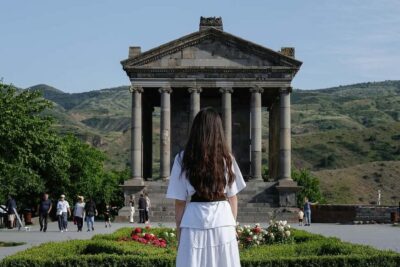
Garni & Geghard Small-Group Day Trip with Lavash Baking
Read our review →
Vienna: Gerstner KuK Hofzuckerbäcker Baking Show & Tasting
Read our review →
Paris: French Croissant Baking Class with a Chef
Read our review →
Laugarvatn Fontana: Geothermal Bread-Baking Experience
Read our review →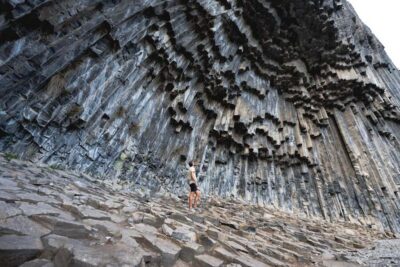
Yerevan: Garni, Geghard, Symphony of Stones & Lavash Baking
Read our review →Browse the lists this tour appears in