Review · HANOI
Hanoi: Maya Traditional Cooking Class & Market Tour
Hanoi’s food culture makes the most sense when you handle the ingredients yourself. This three to four hour cooking class starts with a walk through Yen Thai Market, then moves into a kitchen where you prepare pho rolls, mixed pho, fried spring rolls, papaya salad, and egg coffee.
I like the market visit because it gives you a practical look at Vietnamese produce rather than a staged food display. I also like the small groups of up to 10, which lets guides such as Iris, Ruby, Stephanie, Devin, and Evelyn give hands-on help.
The main thing to consider is timing. The market is usually a morning affair, so an afternoon class may have only a limited market stop, or the market may not be available that day.
Key points at a glance
- Five Vietnamese specialties in one class: Prepare four savory dishes plus Hanoi-style egg coffee.
- Yen Thai Market first: See fresh ingredients, learn their uses, and find out about possible substitutes.
- Small-group instruction: Groups are capped at 10, with English and Vietnamese spoken.
- A meal you make yourself: Sit down at the end to eat the dishes, seasonal fruit, and included drinks.
- Recipes for home: The cooking recipe gives you a way to repeat the dishes after Hanoi.
- Strong value at $22: The price includes the market tour, ingredients, instruction, food, drinks, fruit, water, wine tasting, and recipes.
Starting at Yen Thai Market in Hanoi
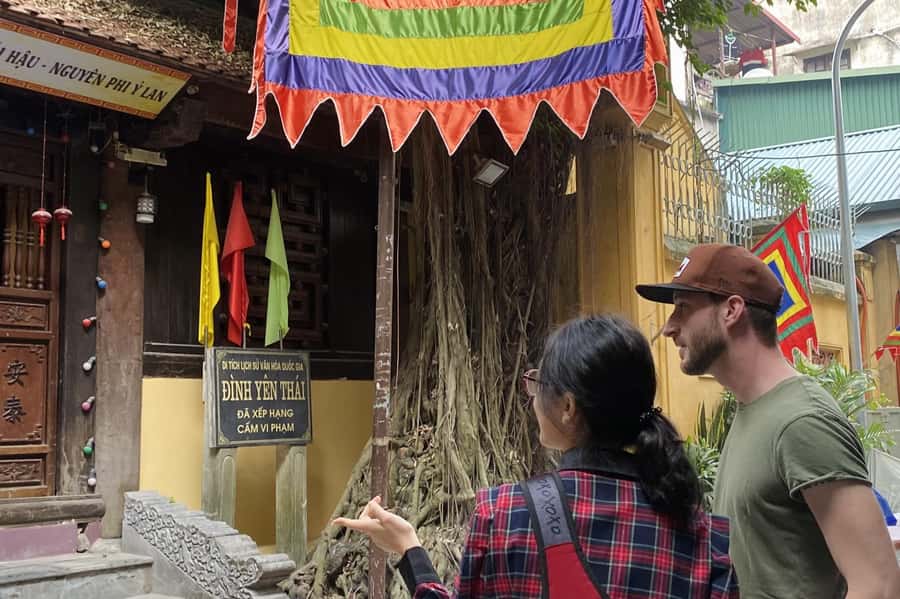
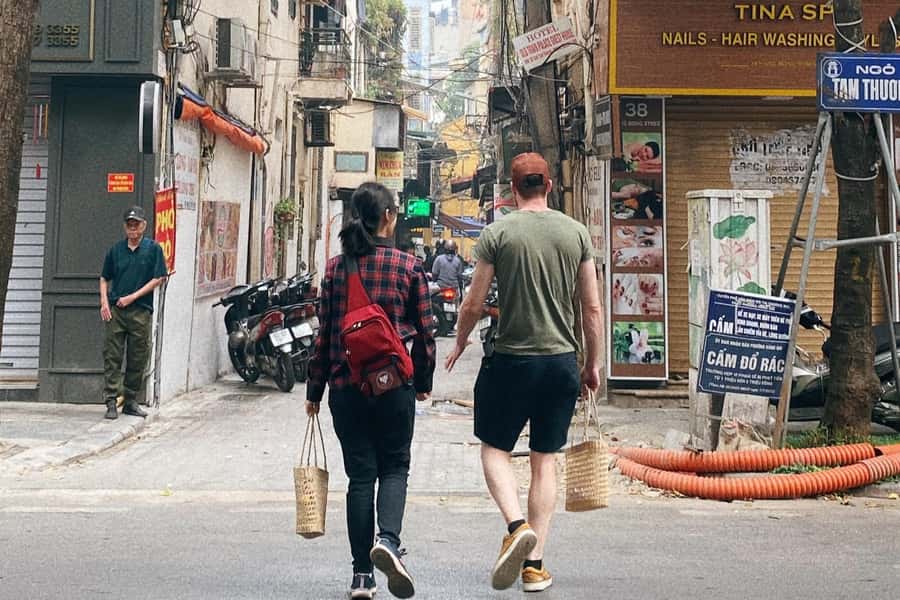
You meet at the Crossing Vietnam Tour office, then walk to nearby Yen Thai Market with your guide. This is a useful beginning because you see the raw materials before they are chopped, rolled, fried, or mixed in the kitchen.
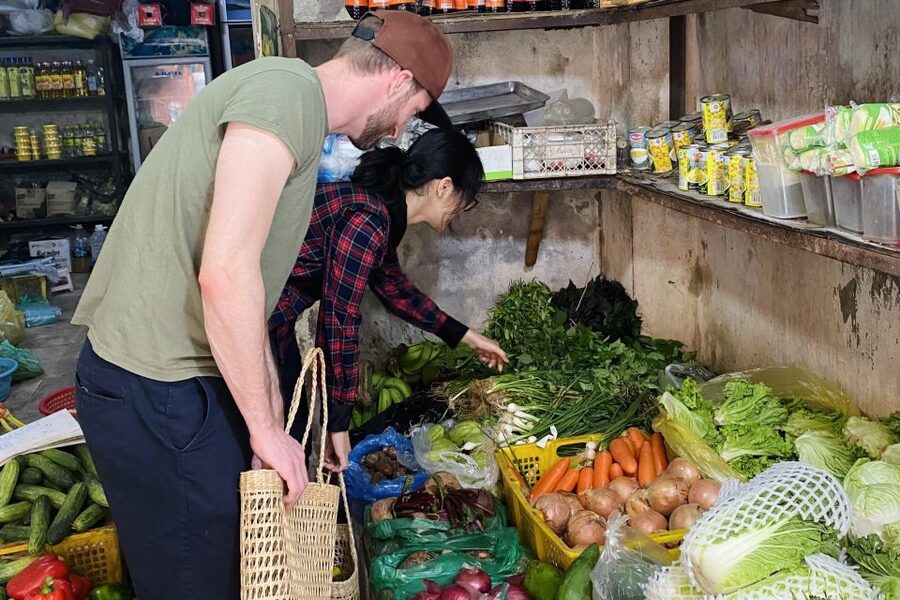
The market visit is not a long sightseeing tour. Think of it as a focused introduction to Vietnamese ingredients. Your guide helps identify fresh food, explains how it is used, and may point out substitutes for ingredients that are hard to find outside Vietnam.
That practical detail matters. Vietnamese cooking depends on balance, fresh herbs, crisp vegetables, sweet and sour notes, and sauces that can be difficult to judge from a written recipe alone. Seeing the ingredients in their everyday setting helps you understand what the finished food is meant to taste like.
You may also have the chance to buy fresh fruit for the class. Several sessions included time to choose fruit at the market, and some guides adjusted the selection around personal preferences. It is a pleasant way to add a small, personal touch to the meal.
Keep your expectations realistic. The market portion is brief compared with the kitchen session. One especially useful point is that local markets usually operate in the morning. If you select an afternoon start, the market may not be open, or the stop may be shorter. For the fullest market experience, choose a morning time when available.
More Market Tour Cooking Classes in Hanoi
- Hanoi Cooking Class: Culture, Local Market & Meaning CSR Impact
★ 5.0 · 5,147 reviews - 5 Traditional Dishes Hanoi Cooking Class with Market Trip
★ 5.0 · 4,890 reviews - Vietnamese Food Cooking Class in Hanoi with Market Experience
★ 5.0 · 778 reviews
Folding spring rolls and learning the basics
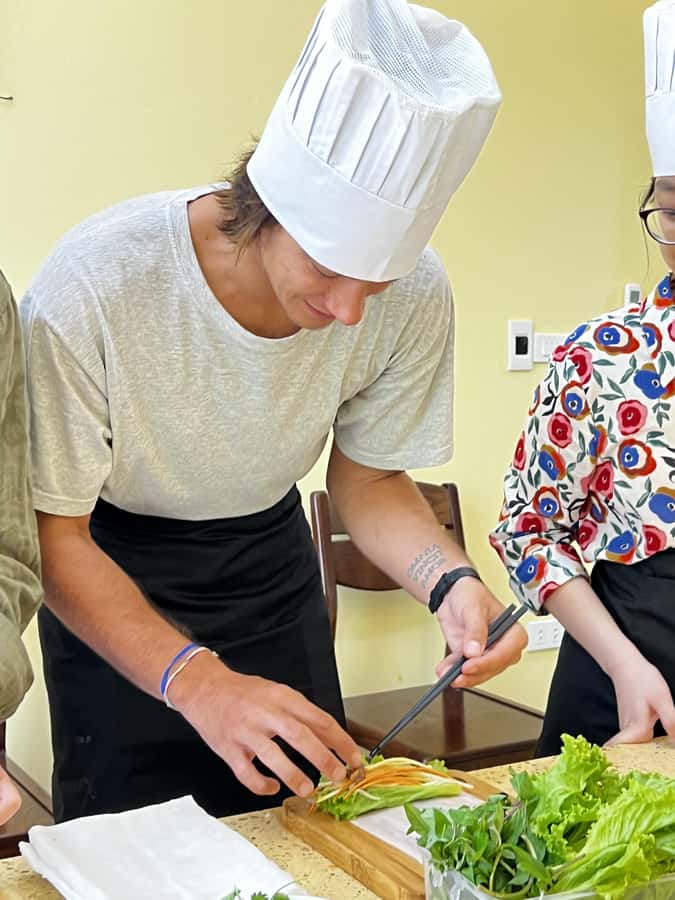
After the market, you head to the cooking space. The class begins with fried spring rolls, known locally as nem ran. This is a good first dish because it teaches a basic Vietnamese kitchen skill: rolling tightly and evenly without tearing the wrapper.
Your guide demonstrates the process, then you copy it step by step. The rolling takes a little finger control. It is not difficult, but it is the sort of small technique that is easier to learn by watching someone do it than by reading instructions.
Spring rolls also have a cultural role. They are often associated with holidays, family gatherings, and shared feasts, so this part of the class gives you more than a recipe. You learn why the dish matters and how it fits into Vietnamese meals.
The frying comes later, and the kitchen setting gives you a chance to watch how the rolls are handled. One memorable detail from a class in rainy weather was frying spring rolls on a balcony while Hanoi carried on below. That kind of ordinary city scene is part of the charm, though your exact setting can vary.
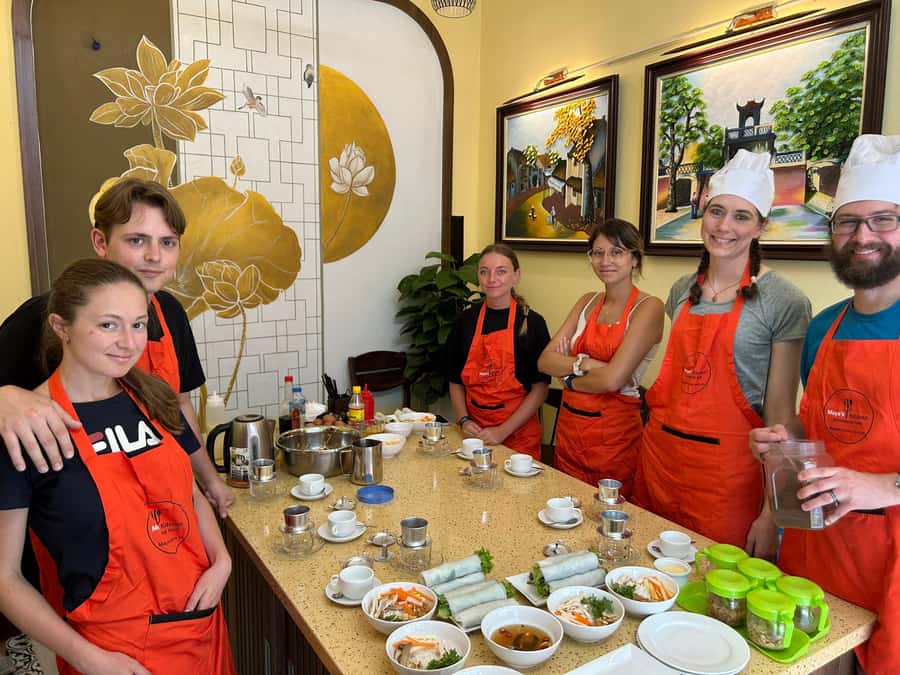
The class is hands-on rather than a demonstration where you sit and watch. Guides are there to help with technique, answer questions, and make sure each person has a role.
Fresh flavors in papaya salad
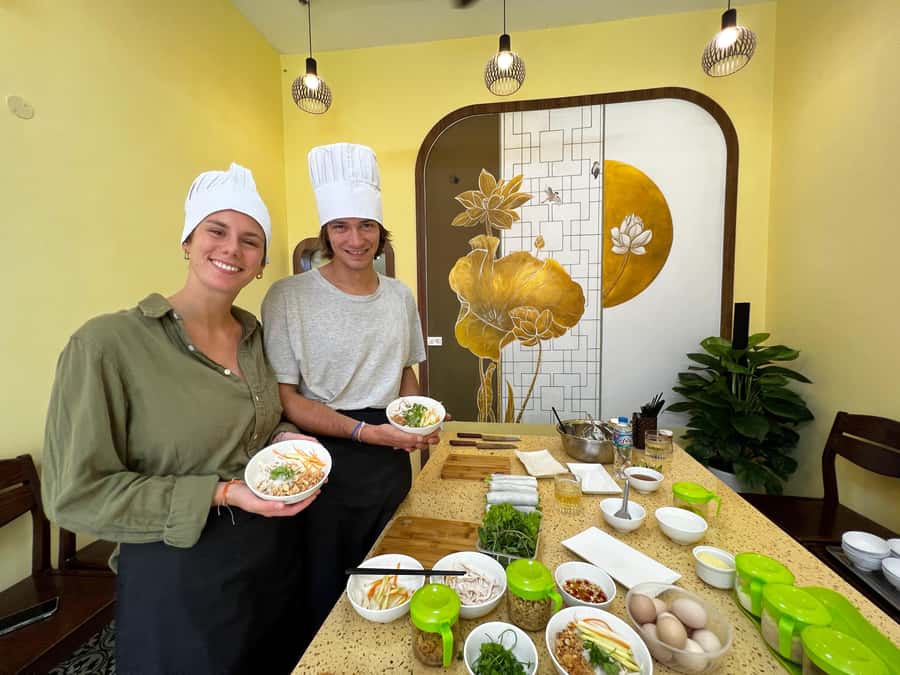
Next comes nom du du, or green papaya salad. This dish brings a different set of skills and flavors to the table. Instead of the warm, crisp texture of fried rolls, you work with a salad built around sour and sweet notes.
The class explains how the ingredients come together and how to adjust the balance. This is valuable because Vietnamese food is less about one dominant flavor and more about the relationship between salty, sweet, sour, fresh, and savory elements.
The salad is also a good dish for home cooks. It does not require the same timing as fried food, and the method is straightforward once you understand the dressing. Your guide can explain substitutes, which is especially useful if you plan to recreate it in a country where Vietnamese ingredients are less easy to find.
If you have a food allergy or dietary requirement, tell the provider before or at the start of the class. One participant with a nut allergy was accommodated without trouble, and another class adjusted the menu around dietary needs. Still, a cooking class handles several ingredients in one kitchen, so clear communication is sensible.
Making pho two ways
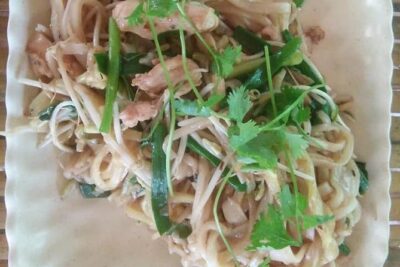
The pho portion gives you two versions of a Hanoi favorite: pho cuon, or fresh pho rolls, and pho tron, or mixed pho. This is a nice change from a standard pho lesson because you are not limited to the familiar bowl of soup.
Pho cuon uses pho sheets as wrappers. You fill and roll them, creating a fresh dish with a different texture from hot noodles. The process is approachable, but the finished rolls still look special enough to make the work feel worthwhile.
Pho tron is mixed rather than served as soup. This shows you another way noodles are used in Vietnam and gives the class a broader view of pho as a family of dishes rather than one fixed recipe.
The guides break each recipe into manageable steps. Iris, Ruby, Stephanie, Evelyn, Lena, Yuu, and Devin are among the instructors named in individual sessions, and the consistent strength of the teaching is patience and clear explanation. English instruction is available, though the exact guide depends on the date and group.
You eat the dishes after the cooking is complete, not as you go. Plan around that if you are hungry before the class. The portions are designed to let you try all four dishes without becoming uncomfortably full, but the meal still comes at the end.
More Market Tour Cooking Classes in Vietnam
- Hanoi: 5 Local Dishes Cooking Class with Meal & Market Visit
★ 5.0 · 420 reviews - Hanoi Cooking Class and Market Tour in Ancient House
★ 5.0 · 379 reviews - Rose Kitchen Hanoi: Market, Cooking & Culture Tour + Free PickUp
★ 5.0 · 342 reviews - Hanoi: Cooking Class in a Local Villa with Market Tour
★ 4.9 · 320 reviews
Whisking Hanoi egg coffee
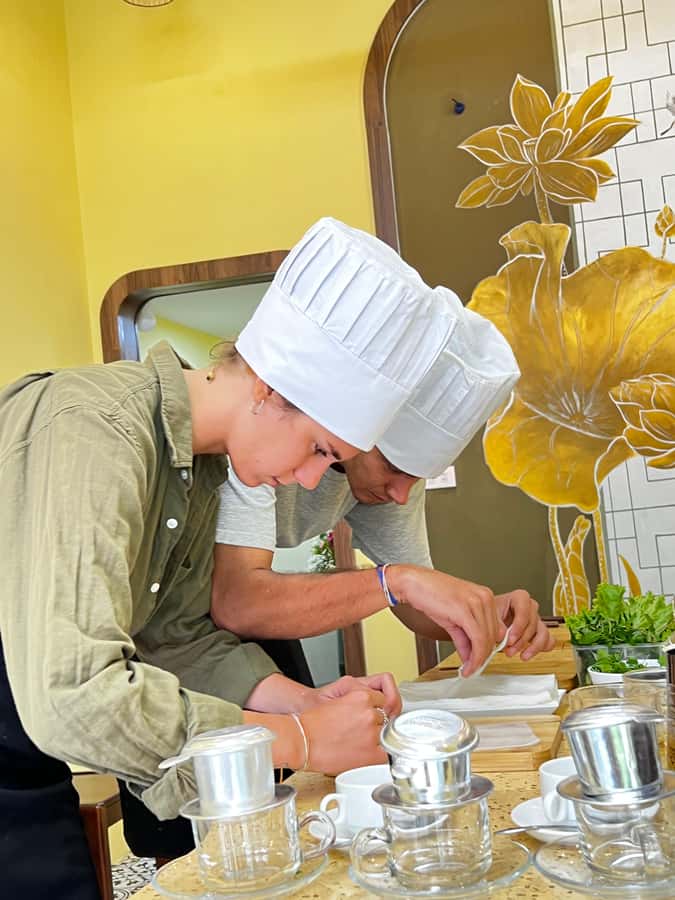
The class finishes with ca phe trung, Hanoi’s famous egg coffee. This is one of the most distinctive parts of the experience because it introduces a local drink that many first-time visitors have not tried before.
Egg coffee is made with a sweet, creamy egg mixture served with coffee. The class shows you how to prepare it rather than simply handing you a finished cup. That makes the drink easier to understand, especially if you have wondered how the rich topping gets its texture.
I would save room for this. After the savory dishes, the egg coffee works almost like dessert, though seasonal fruit is also served. The combination gives you two very different endings: a cool, fresh bite of fruit and a sweet coffee drink with a heavier texture.
Seasonal fruit can vary. The market stop may include a chance to select fruit, and guides have helped participants choose unfamiliar varieties. This is a small feature, but it adds to the sense that the meal is connected to what is available locally that day.
Sitting down to eat what you prepared
The best payoff comes after the final dish is finished. You sit down and eat the food you made, with drinking water and other included drinks available. Seasonal fruit is provided for dessert, and local wine tasting is included as part of the experience.
This is also the most relaxed time to ask questions. Guides often discuss Vietnamese food customs, local ingredients, and cooking habits while you eat. The meal turns the lesson into a social experience without making it feel like a formal lecture.
Some sessions have had enough food for leftovers to be packed up. That is not something I would count on as a guaranteed feature, but it can be useful if the portions are generous. Ask your guide at the end if you would like to take anything with you.
The kitchen setting has also received practical praise for being air-conditioned in at least one session. That can make a real difference in Hanoi’s heat and humidity, though the exact room and conditions may vary. Fresh ingredients are used, and one participant specifically noted that produce was washed with drinking water.
What $22 gets you
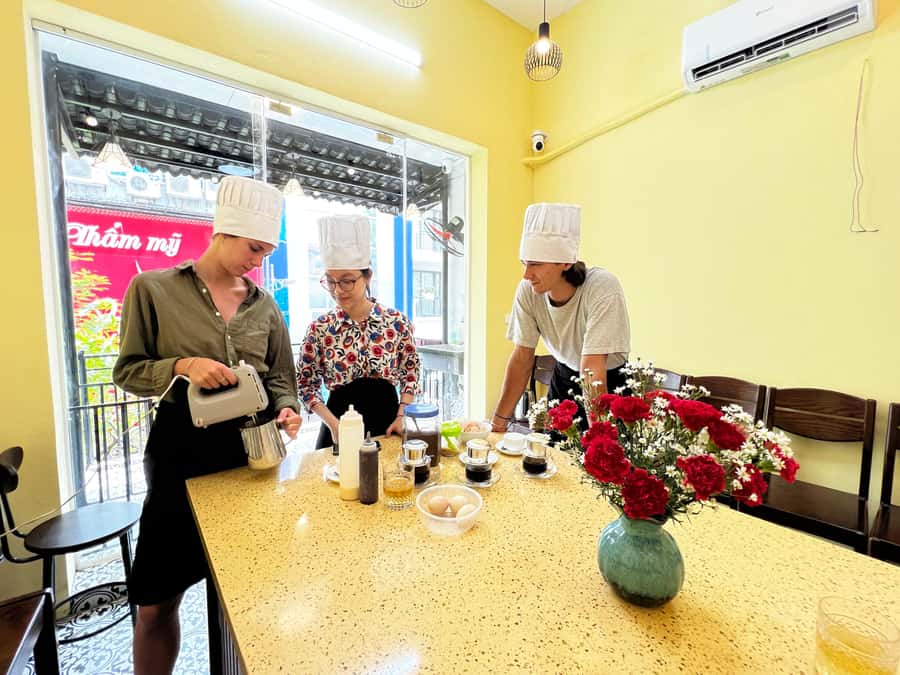
At $22 per person, this is strong value for a half-day activity. The fee covers the market tour, ingredients bought for the class, the instructor, food, drinks, water, seasonal fruit, the cooking recipe, and local wine tasting.
You are also paying for context. A restaurant meal might cost less or more depending on where you eat, but it would not show you how the dishes are prepared or explain the ingredients before they reach the plate. The class combines a food lesson, a short local market visit, and a meal.
The price makes the experience especially useful early in your Hanoi stay. You get an introduction to ingredients and dishes that you can then recognize at restaurants and street-food stalls. It may also help you decide what to order later.
There are limits. Hotel pickup and drop-off are not included, so you must make your own way to the Crossing Vietnam Tour office. The market visit is short, and the class is not designed as advanced culinary training. You will learn clear home-cooking methods, but not every detail of traditional restaurant preparation.
Still, for the cost, the mix is hard to fault. You get several dishes rather than one recipe, and you leave with instructions you can use at home.
Group size, guides, and the teaching style
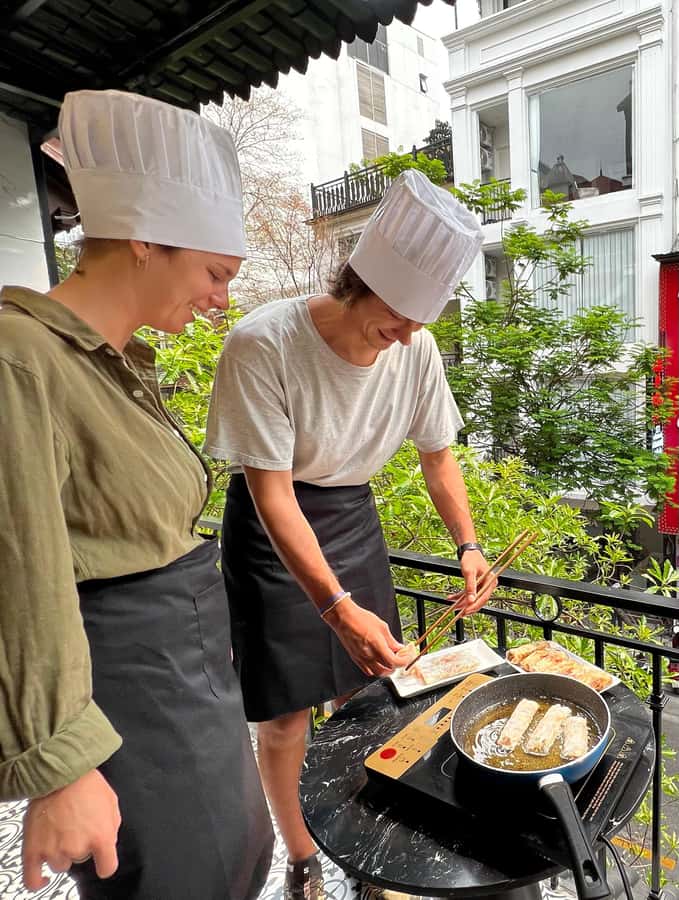
The maximum group size is 10. That is small enough for direct help, though the actual number can be lower. Some morning sessions have had only two participants, which effectively created a private class.
The individual guide makes a difference. Names associated with sessions include Iris, Ruby, Stephanie, Devin, Evelyn, Lena, Yuu, Ashley, Anne, Aurora, and Linh. The strongest pattern is a friendly, patient teaching style with clear English and plenty of room for questions.
Iris has been especially praised for making instructions easy to follow and helping participants feel comfortable. Ruby is often described as warm and engaging, while Stephanie has been noted for her energy, patience, and ability to explain each stage. Devin combines market information with cooking guidance, and Evelyn often adds background about Hanoi, food, and local customs.
Your guide is not just there to measure ingredients. Expect help with rolling, chopping, mixing, and adjusting the process. If you are a nervous cook, a beginner, or visiting with teenagers, the class should be approachable.
Who should book this Hanoi cooking class
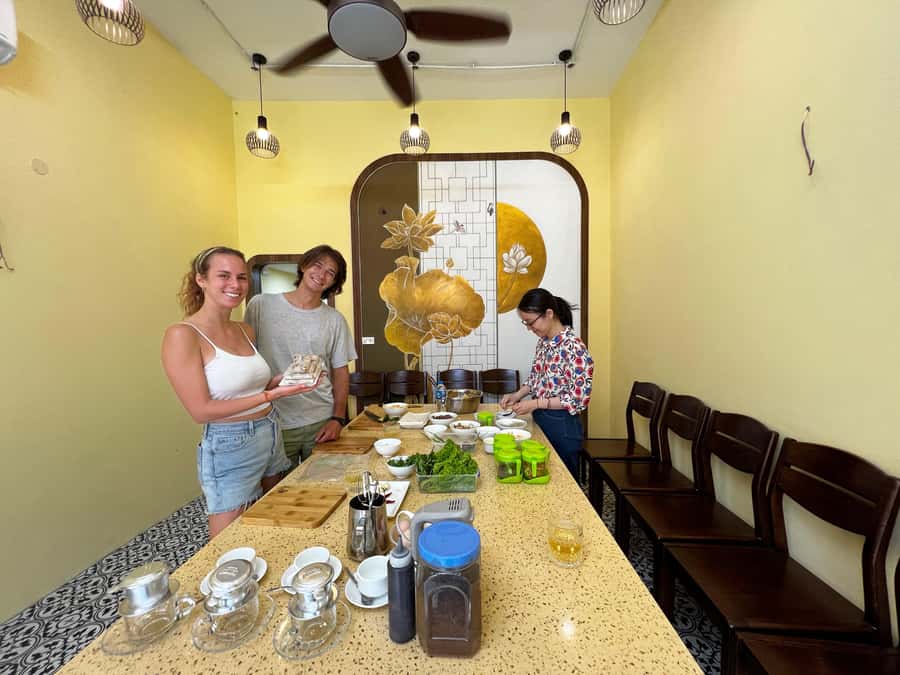
I would recommend it to first-time visitors who want an easy introduction to Vietnamese food. The menu gives you variety: fried food, fresh rolls, salad, noodles, coffee, and fruit.
It is also a good fit for couples, families, and small groups of friends. Teenagers can take part, and the limited group size gives younger participants more chances to work directly with the ingredients.
You should book it if you like eating local food but want more context than a restaurant provides. The market stop is useful for anyone curious about unfamiliar fruit, herbs, and vegetables, and the recipe sheet gives the experience value after your trip.
I would hesitate if your main goal is a long, detailed market tour. The kitchen takes up most of the three to four hours. I would also choose a morning session if the market is important to you, since afternoon availability can be limited.
Free cancellation is available up to 24 hours ahead, and you can reserve now and pay later. Those terms help if your Hanoi schedule is still moving around, but the key decision is simpler: choose this for a practical, social food lesson, not for an all-day market expedition.
Should you book it?
Yes, if you want a friendly half-day activity with real cooking, a short market visit, and a meal you help create. At $22, the combination of ingredients, instruction, food, drinks, fruit, recipes, and wine tasting offers solid value.
Choose a morning start for the best chance of seeing Yen Thai Market at its most useful. Bring an appetite for the final meal, tell the guide about allergies early, and expect the exact teaching style to depend on your assigned instructor. For a first taste of Hanoi food culture, this is a practical and enjoyable choice.
FAQ
How long does the Hanoi cooking class last?
The activity lasts approximately three to four hours.
How much does the cooking class cost?
The listed price is $22 per person.
Where does the activity meet?
You meet at the Crossing Vietnam Tour office.
Is hotel pickup and drop-off included?
No. Hotel pickup and drop-off are not included.
What dishes will I prepare?
You prepare pho tron, or mixed pho, pho cuon, or pho rolls, nem ran, or fried spring rolls, and nom du du, or papaya salad. You also prepare Vietnamese egg coffee.
Is food and drink included?
Yes. The class includes all food and drinks, drinking water, seasonal fruit for dessert, and local wine tasting.
Will I visit a local market?
Yes. The class includes a visit to Yen Thai Market, where you learn about Vietnamese ingredients and possible substitutes.
Is the market open for afternoon sessions?
The market may not be available on some afternoons because local markets usually take place in the morning.
What languages are spoken, and how large is the group?
Instruction is available in English and Vietnamese. The group is limited to 10 participants.
More Hands-On Workshops in Hanoi
- Hanoi: Handcrafted Wood Carving Workshop with Local Artisan
★ 5.0 · 733 reviews - Hanoi Cooking Class: Pho/Bun Cha/Banh Xeo…+Free Egg/Salt Coffee
★ 5.0 · 267 reviews - Private Cooking Class with 5 dishes of your choice
★ 5.0 · 227 reviews - Experience Hanoi Cooking Class with Free Wine Tasting
★ 5.0 · 210 reviews
More Shopping Trips in Hanoi
- Hanoi Maya Kitchen: Traditional Cooking Class & Market Tour
★ 5.0 · 287 reviews - Hanoi: Old Quarter Market Tour and Cooking Class with Meal
★ 4.8 · 192 reviews - Cooking Class and Lunch at a Tuscan Farmhouse with Local Market Tour from Florence
★ 5.0 · 4,831 reviews - Chiang Mai: Cooking Class, Market & Thai Herbs Garden Tour
★ 4.9 · 4,824 reviews
Just added around Hanoi
- Hanoi: Old Quarter Market Tour and Cooking Class with Meal★ 4.8 · 192 reviews
- Experience Hanoi Cooking Class with Free Wine Tasting★ 5.0 · 210 reviews
- Private Cooking Class with 5 dishes of your choice★ 5.0 · 227 reviews
- Hanoi Cooking Class: Pho/Bun Cha/Banh Xeo…+Free Egg/Salt Coffee★ 5.0 · 267 reviews
- Hanoi Maya Kitchen: Traditional Cooking Class & Market Tour★ 5.0 · 287 reviews
- Hanoi: Cooking Class in a Local Villa with Market Tour★ 4.9 · 320 reviews
- Rose Kitchen Hanoi: Market, Cooking & Culture Tour + Free PickUp★ 5.0 · 342 reviews
- Hanoi Cooking Class and Market Tour in Ancient House★ 5.0 · 379 reviews
Cooking Classes with a Market Tour, compared.
Hanoi Cooking Class: Culture, Local Market & Meaning CSR Impact
Read our review →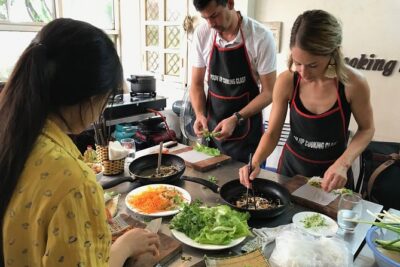
5 Traditional Dishes Hanoi Cooking Class with Market Trip
Read our review →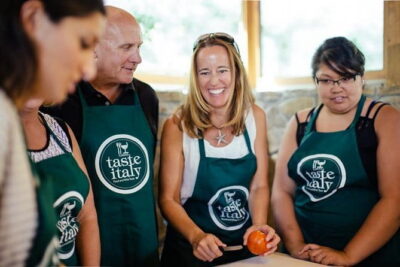
Cooking Class and Lunch at a Tuscan Farmhouse with Local Market Tour from Florence
Read our review →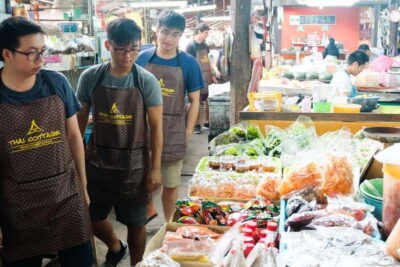
Chiang Mai: Cooking Class, Market & Thai Herbs Garden Tour
Read our review →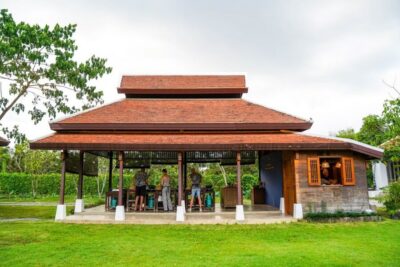
Chiang Mai: Authentic Cooking Class with Market & Farm Visit
Read our review →
Barcelona: Paella Cooking Experience & Boqueria Market Tour
Read our review →
Cooking Class Hoi An:Local Market, Basket Boat, Fishing & Cooking
Read our review →