
Review · ITALIAN
Authentic Italian Pasta Making Class in Rome
Rome’s pasta traditions become much easier to understand when you are the one kneading the dough. In this hands-on cooking class, you make three pasta shapes from scratch, then prepare two Roman sauces before eating the results.
I like the mix of gnocchi, cavatelli, and ravioli, since each teaches a different skill. I also like the relaxed teaching style reported from chefs such as Roberto, Monica, Francesco, and Victoria, which should help first-time cooks feel at ease. The main consideration is the price: at $119.21 per person, this is not a cheap meal, though it includes instruction, several dishes, and the food you prepare.
I also like that the class welcomes families, friends, and people with little or no kitchen experience. A possible drawback is that the class takes about two and a half hours, so it needs a real place in your Rome schedule rather than a quick stop between sights.
Key points at a glance
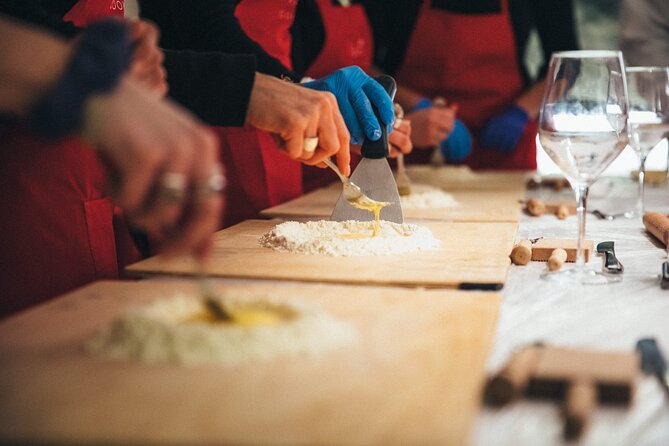
- Three pasta styles: Make pillowy gnocchi, hand-rolled cavatelli, and filled ravioli from scratch.
- Two Roman sauces: Learn cacio e pepe and amatriciana, both central to the city’s food culture.
- Small advertised group: The maximum is listed as 12 people, allowing room for hands-on help.
- English instruction: The class is offered in English and is designed for beginners.
- A meal at the end: You sit down to eat the pasta and sauces you prepared.
- Flexible dietary help: One family completed the class entirely gluten-free for members with celiac disease.
Making pasta in a Roman kitchen
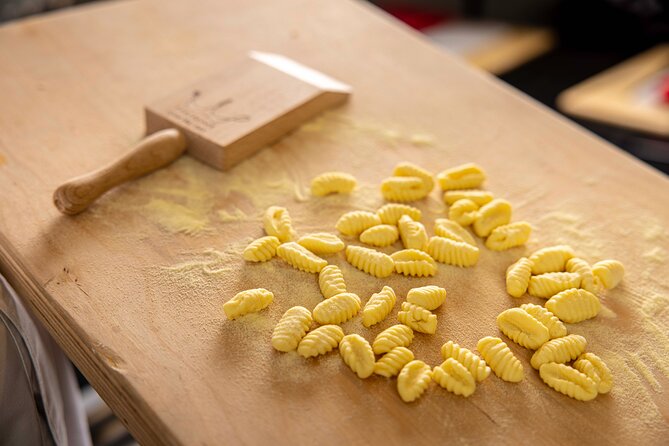
The class begins at noon at Piazza dei Ponziani, 14, in Rome. You return to the same meeting point at the end, which keeps the day simple and avoids the usual problem of finishing a food tour on the other side of town.
The setting is described as charming, exclusive, clean, and professional. That matters in a cooking class. You want enough room to work, clean equipment, and a kitchen where the focus stays on cooking rather than crowd control.
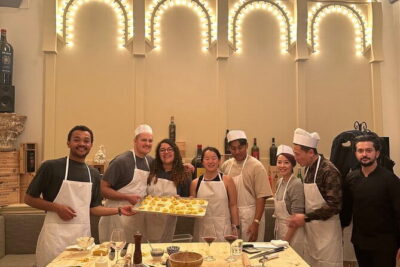
The advertised group limit is 12 people. That is a useful size for a practical lesson because you can watch the chef’s hands, ask questions, and get help when your dough refuses to cooperate. One comment refers to a much larger group of 30, so group size may vary for certain bookings or related sessions. If a small class is important to you, confirm the size before paying.
The instruction is in English. No cooking background is required, and the teaching style is meant to be relaxed. That makes this a good fit if your kitchen skills begin and end with boiling water. You should still expect to work with flour, dough, fillings, and sauces rather than simply watch a demonstration.
More Pasta Making Classes in Rome
- 3 in 1 Cooking Class near Navona: Fettuccine, Ravioli & Tiramisu
★ 5.0 · 7,376 reviews - Rome: Pasta Making Class with Wine, Limoncello, and Dessert
★ 4.9 · 3,177 reviews - Rome Cooking Class: Make Pasta and 3 Spritz Cocktails
★ 5.0 · 2,937 reviews
Gnocchi: the soft first lesson
Gnocchi gives the class a gentle start. These small potato-based dumplings are soft and pillowy, but getting the texture right takes a light touch. Too much flour can make them heavy, while too little can leave them difficult to shape.
You will learn by handling the dough, rolling it, and forming the pieces. This is the kind of cooking lesson that stays with you because the key lesson is physical: you begin to recognize how the dough should feel.
For families, gnocchi can be a useful group task. One person can work the dough while another shapes the pieces. Children can take part, though flour and sticky dough mean you should expect a little kitchen mess. That is part of the fun, but it is worth wearing clothes you do not mind getting dusty.
The class does not promise a separate children’s program, so parents should plan to stay involved. The activity is welcoming to families, but it remains a full cooking class rather than a short craft session.
Cavatelli: shaping pasta by hand
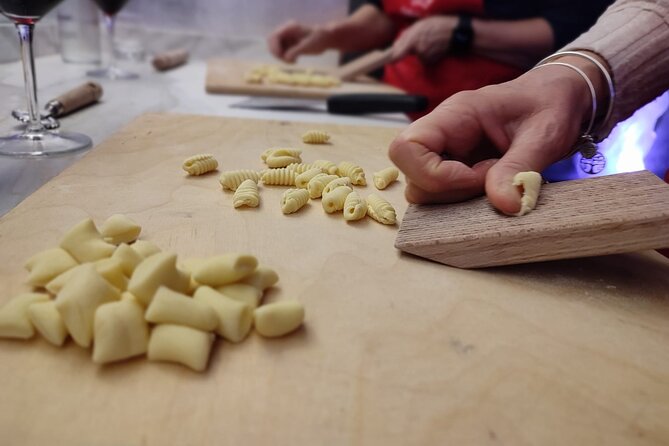
Cavatelli provides a different lesson. Instead of making soft dumplings or filled pasta, you hand-roll and shape the dough into small pieces. The method is simple enough for beginners, but repetition helps you get a consistent size.
This is where the class feels most connected to everyday Italian home cooking. You are not relying on a machine to do the work. Your hands create the shape, and small differences are perfectly acceptable.
The chef’s guidance matters here. Roberto is praised for being patient and helpful with people who do not cook, while Monica is described as good at getting everyone involved. Those details suggest that the class is built around participation, not pressure to produce perfect pasta on the first try.
You should not expect every piece to look restaurant-ready. That is fine. Handmade pasta has character, and the point is to understand the process well enough to repeat it at home.
Ravioli brings filling and patience
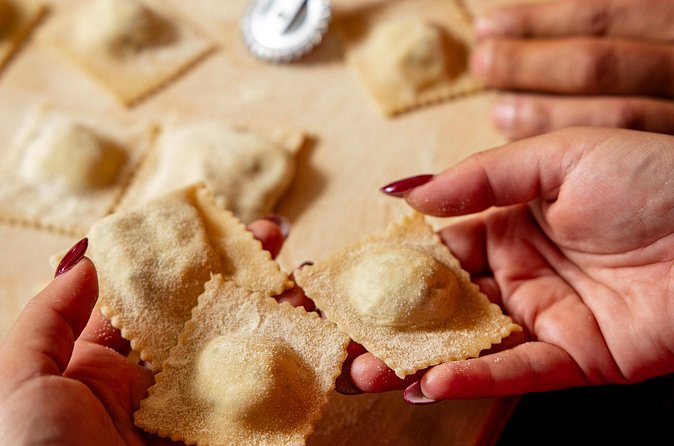
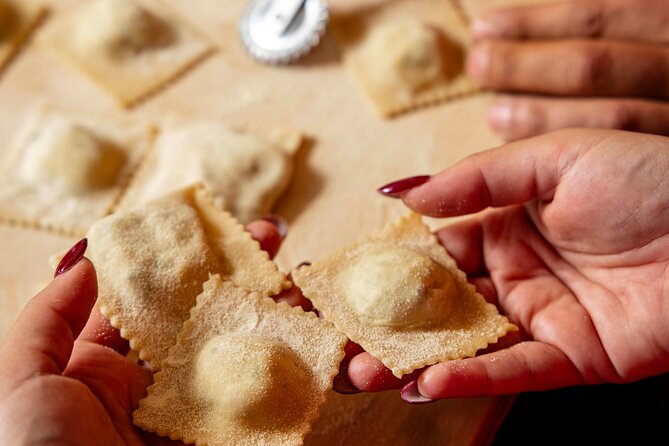
Ravioli adds another layer because you must make filled pasta. You will work with pasta sheets, add filling, seal the edges, and shape the pieces without trapping too much air or letting them split.
This part is likely to be the most delicate of the three pasta styles. If you rush, the dough may not seal well. If you use too much filling, the ravioli can become difficult to close. A patient chef can make a big difference, especially for beginners.
The class format lets you see how several pasta types come from the same basic idea: flour, dough, shaping, and careful cooking. That is more useful than learning one showy recipe and forgetting it by the time you return home.
The filled pasta also adds variety to the final meal. You are not simply eating three versions of the same dish. Each shape has a different texture and calls for a slightly different approach.
Same place, a different menu:
- Rome: 3-in-1 Fettuccine, Ravioli, and Tiramisu Cooking Class
★ 4.9 · 2,704 reviews - Rome: Fettuccine Pasta Cooking Class in Rome’s City Center
★ 4.8 · 2,414 reviews - Fettuccine & Tiramisù: Cooking Class with Wine & Limoncello
★ 4.9 · 2,103 reviews - Pasta Cooking Class Near the Colosseum with 3 Spritz Cocktails
★ 5.0 · 1,686 reviews
Two sauces that explain Roman cooking
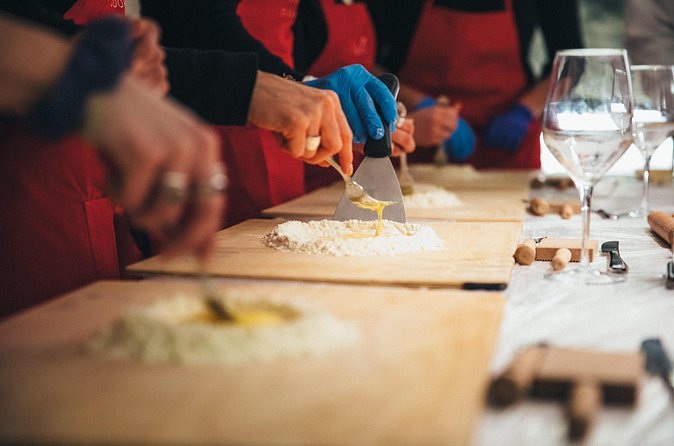
After making the pasta, you learn two famous Roman sauces: cacio e pepe and amatriciana. They are very different, which makes them a smart pairing in one class.
Cacio e pepe looks simple because it uses few ingredients, but simplicity leaves little room for error. The challenge is creating a smooth sauce from cheese, pepper, and pasta water rather than ending up with a dry or clumpy mixture. A chef can show you how the heat and liquid work together.
Amatriciana gives you a more robust Roman flavor. It is a tomato-based sauce with a savory, salty character and a different cooking rhythm from cacio e pepe. Learning both helps you see why Roman pasta is often about technique and balance, not long ingredient lists.
These sauces also have practical value at home. They do not require an elaborate pantry, and the lessons can help you improve ordinary weeknight pasta. The class is therefore more useful than a meal where the cooking ends once the plate arrives.
Sitting down to eat what you made
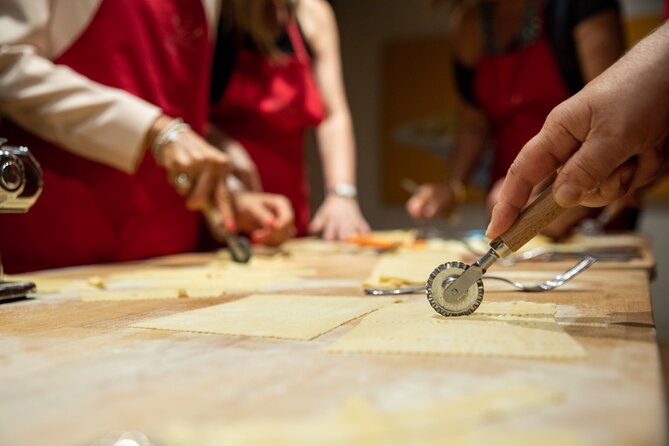
The final meal is a key part of the afternoon. You sit down together and eat the pasta, sauces, and other dishes prepared during the class. A shared table gives the activity a natural finish and lets you compare the results while the food is fresh.
Wine is included in at least one account of the cooking session, with good wine served alongside the meal. The core description promises the dishes you prepare, but it does not set out a full drinks menu, so do not book this expecting a specified wine pairing.
This meal can be especially satisfying for families. Everyone has contributed something, including the person who normally avoids the kitchen. The food becomes part of the memory because you saw the flour, shaped the dough, and helped bring the sauce together.
Do keep your expectations sensible. This is a cooking class with a meal, not a formal restaurant tasting. The value comes from the instruction and shared work as much as from the amount of food on the table.
The chefs and the teaching style
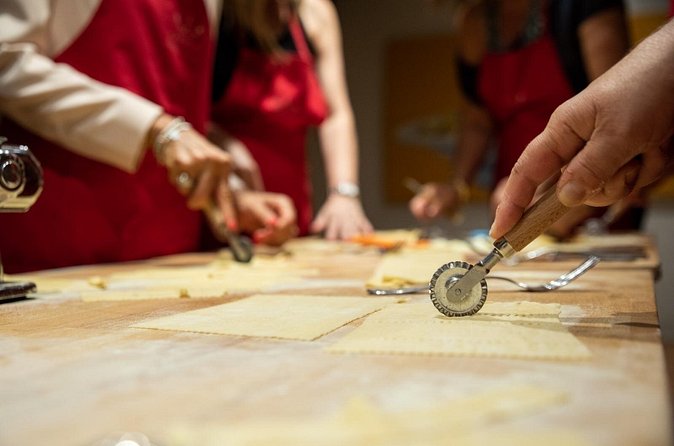
Several chef names appear in the experience feedback. Roberto is described as patient and helpful with inexperienced cooks. Monica is praised for involving everyone. Francesco is noted for sharing information about Roman cuisine in an exclusive, polished setting, while Victoria is described as warm and encouraging.
That range suggests that the exact chef may depend on the date. You should not assume that a particular named chef will lead your session unless the provider confirms it. Still, the repeated theme is clear: the teaching is intended to be friendly rather than intimidating.
One comment describes the class as a good starting point for someone worried about making mistakes. That is useful advice if you are unsure about booking a cooking lesson. Pasta-making rewards practice, and the class seems designed to let you learn by doing rather than fear getting every fold right.
The experience provider, Fabiolous Cooking Day, also offers pizza and gelato classes. Those are separate options, not part of the pasta program described here. If your family enjoys this format, you may find another class worth considering on a later Rome visit.
Price, timing, and practical value
The cost is $119.21 per person. That is a serious price for a two-and-a-half-hour activity, especially for a family of four. I would compare it with the cost of a good Roman lunch plus a short cooking lesson, rather than comparing it with a basic restaurant meal.
The price makes more sense if you value instruction. You are learning three pasta forms, two sauces, and the techniques behind them. You also eat the finished food, receive an English-language lesson, and spend time in a professional kitchen with a chef.
At noon, the class works well as a long lunch. It may be less convenient on a day when you plan to visit several timed attractions. I would keep the rest of the afternoon light, since the activity ends around 2:30 pm and leaves you ready for a relaxed walk or a later sightseeing stop.
The meeting point is near public transportation. You receive confirmation at booking, and the ticket is mobile, so you do not need to print a voucher. Service animals are allowed.
Free cancellation is available if you cancel at least 24 hours before the local start time. Changes or cancellations inside that window are not accepted for a refund, so check your Rome schedule before booking.
Dietary needs and who should book
The class may suit people with dietary restrictions better than many casual cooking activities. A family completed the pasta-making class entirely gluten-free because some members had celiac disease, and the result was described as successful and delicious.
You should still tell the provider about dietary needs before the class. The available information shows that gluten-free cooking has been accommodated, but it does not list every possible allergy or substitution.
I would recommend this activity to:
- Families who want a shared activity beyond sightseeing.
- Couples or friends who enjoy eating and want to learn a skill.
- First-time cooks who prefer patient instruction.
- Pasta fans who want more than a restaurant meal.
- People who like taking recipes home and making them again.
I would think twice if you dislike group activities, have very little time in Rome, or want a quiet meal with no participation. You will be handling dough and following instructions for much of the session.
Is this Rome pasta class worth booking?
Book it if you want your Roman lunch to be an activity as well as a meal. The strongest reasons are the three distinct pasta styles, the two classic sauces, the relaxed approach for beginners, and the chance to eat what you make.
The $119.21 price is easiest to justify for families and food-loving couples who will value the instruction and shared time. If you only want to taste excellent pasta, a Roman trattoria will cost less and require less planning.
For the best fit, book this on a day when you can reach Piazza dei Ponziani before noon and leave the afternoon open. Tell the provider about gluten-free needs in advance, and confirm the expected group size if a small class matters to you.
FAQ
Where does the pasta class begin?
The class begins at Piazza dei Ponziani, 14, 00153 Rome, Italy.
What time does the class start?
The stated start time is 12:00 pm.
How long does the activity last?
The class lasts approximately 2 hours and 30 minutes.
What kinds of pasta will I make?
You will make gnocchi, hand-rolled cavatelli, and filled ravioli.
Which sauces are included?
The class teaches cacio e pepe and amatriciana.
Is the class offered in English?
Yes. The activity is offered in English, and no previous cooking experience is required.
More Hands-On Workshops in Rome
- Rome: Pasta & Tiramisu Cooking Class near the Spanish Steps
★ 4.8 · 1,395 reviews - Rome Tipsy Cooking Class: Make Pasta and Mix 3 Spritz Cocktails
★ 5.0 · 1,357 reviews - Cooking Class in the Heart of Rome: Pizza and Tiramisu Making
★ 5.0 · 1,330 reviews - Rome Cooking Class: Make Pasta, Dine & Drink Wine With Local Chef
★ 5.0 · 1,263 reviews
More Italian Cooking Classes in Rome
- Rome Pasta Making Class with Italian Sauces and Wine Included
★ 5.0 · 645 reviews - Rome Small Group Pasta Making Class with Wine and Italian Chef
★ 5.0 · 295 reviews - Rome: Pasta-Making Class with Italian Spritzes
★ 4.8 · 229 reviews - Italian Gelato, Tiramisu and Cannolis Cooking Class in Rome
★ 5.0 · 137 reviews
Just added around Rome
- Rome Trastevere: Tiramisù & Gelato Class with Savoiardo Baking★ 5.0 · 14 reviews
- Authentic Pasta and Tiramisù cooking class at spanish steps★ 4.5 · 14 reviews
- Rome: Pasta Cooking Class, Dinner & Wine in Authentic Restaurant★ 5.0 · 38 reviews
- Rome For Kids: Small Group Pizza Making Class★ 4.5 · 49 reviews
- Rome Cooking Class★ 5.0 · 4 reviews
- Rome: Private Cooking Class with Market Shopping Tour★ 5.0 · 3 reviews
- Devour Rome Wine & Pizza Making Class in Trastevere Neighborhood★ 5.0 · 75 reviews
- Roma Foodie Experience: Cooking Class★ 5.0 · 16 reviews
Pasta Making Classes, compared.
Florence: Pasta Cooking Class with Unlimited Wine
Read our review →
3 in 1 Cooking Class near Navona: Fettuccine, Ravioli & Tiramisu
Read our review →
Rome: Pasta Making Class with Wine, Limoncello, and Dessert
Read our review →
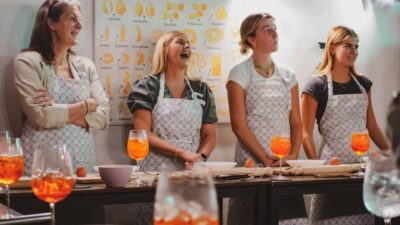
Rome Cooking Class: Make Pasta and 3 Spritz Cocktails
Read our review →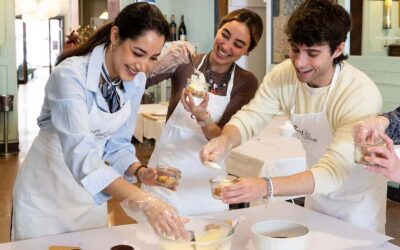
Rome: 3-in-1 Fettuccine, Ravioli, and Tiramisu Cooking Class
Read our review →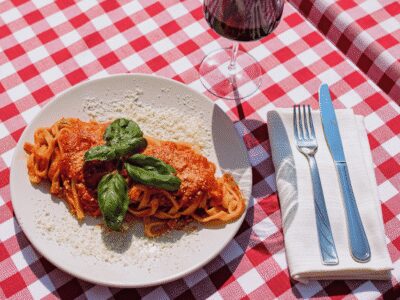
Rome: Fettuccine Pasta Cooking Class in Rome’s City Center
Read our review →Browse the lists this tour appears in