Review · COOKING CLASSES
Bosnian Cooking Lessons
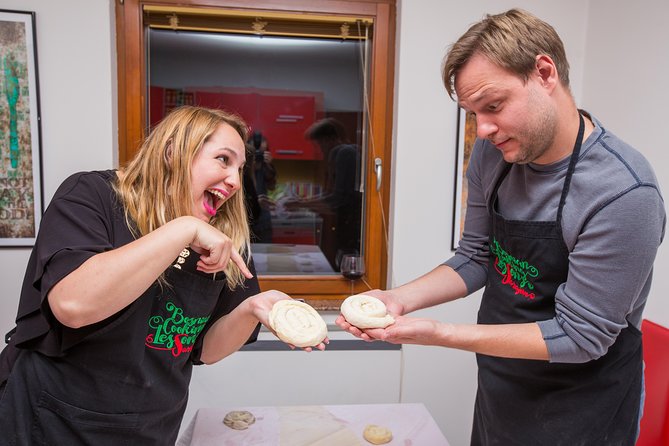
Burek is the star here. You do not simply watch someone fold pastry while standing at the edge of a kitchen. You work with the dough, stretch it thin, fill it, and learn why a couple of glasses of wine can make you feel brave enough to try. Mersiha and Mustafa add the warmth of a home visit, not a formal cooking school.
I like the class’s clear focus on dishes you can make again: stuffed onion, spinach or mangel leaves, peppers, and burek. I also like the panoramic Sarajevo setting, welcome drink, coffee or tea, and the time built in for questions and conversation. The main consideration is the four-hour length and the 2:30 pm start, which makes this an afternoon-to-evening commitment rather than a quick city activity.
Key points to know
- Burek is hands-on: You learn to stretch phyllo dough and fill it with meat, potatoes, or cheese, depending on the season.
- Several Bosnian classics share the table: Sogan dolma, japrak, dolma, and burek make this more than a single-dish class.
- The setting feels personal: The lesson takes place in a home with Sarajevo views, hosted by Mersiha and Mustafa.
- Wine is part of the experience: Herzegovina wine, soft drinks, coffee, and tea are served as you cook.
- Dietary requests are possible: Vegetarian and vegan options can be arranged if requested in advance.
- The group stays small: A maximum of 13 people keeps the format more personal than a large demonstration.
Why Burek Makes This Sarajevo Class Special
Bosnian cooking is not just a collection of recipes. It is a set of techniques built around patience, careful seasoning, and food made for sharing. This class gives you a useful introduction because you prepare several dishes rather than spending the whole afternoon on one plate.
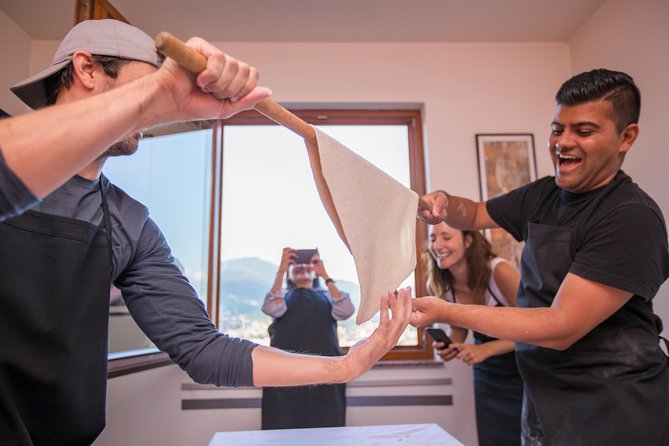
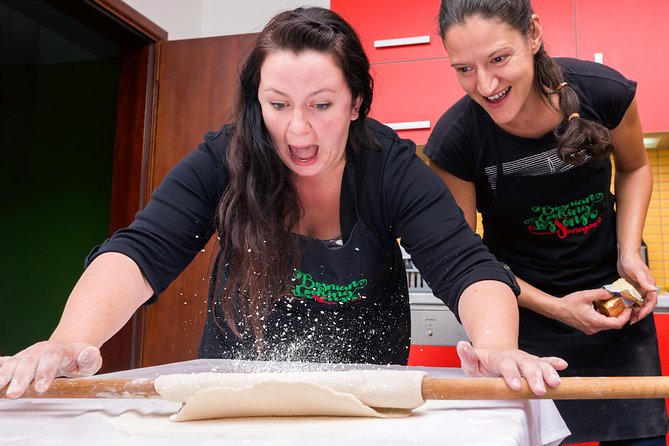
The most memorable skill is likely to be working with burek dough. Phyllo pastry is easy to buy, but making the finished dish properly depends on how thinly and confidently you handle it. You will work with the dough and learn how it is rolled and filled with potatoes, meat, or cheese, depending on the season.
The humor around the wine is part of the charm. Stretching dough can feel intimidating, especially when you are trying not to tear it. A glass of Herzegovina wine helps turn the task into a relaxed social activity instead of a test. Wine is included, but you can also choose soft drinks, coffee, or tea.
The class is shared, so you are cooking alongside other people rather than booking a private lesson by default. The maximum group size is 13. That is large enough for a social afternoon but small enough that you should have a chance to ask questions and receive guidance.
More Hands-On Workshops in the world:
- Half-Day Thai Cooking Class at Organic Farm in Chiang Mai
★ 5.0 · 19,087 reviews - Florence: Pasta Cooking Class with Unlimited Wine
★ 4.9 · 10,285 reviews - 3 in 1 Cooking Class near Navona: Fettuccine, Ravioli & Tiramisu
★ 5.0 · 7,376 reviews
Arriving at a Sarajevo Home With City Views
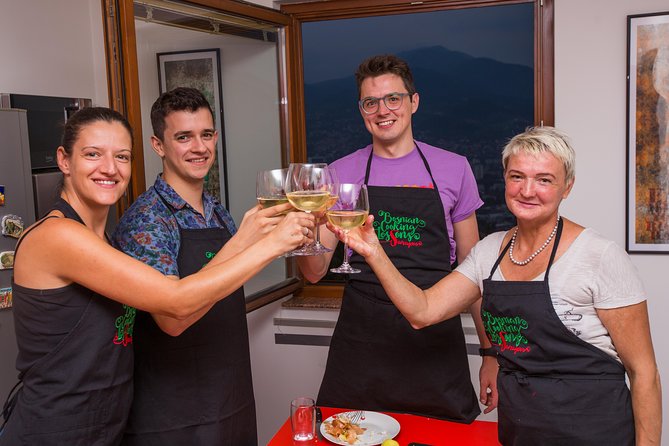
The meeting point is on Skendera Kulenovića in Sarajevo, and the activity begins at 2:30 pm. You should allow enough time to reach the address without rushing, since the class starts with a welcome drink, coffee or tea, introductions, and a panoramic view of Sarajevo.
That first pause matters. You are not pushed straight into chopping vegetables. You have time to meet Mersiha and Mustafa, settle in, and get a sense of the home where the lesson takes place. The setting helps explain why this feels different from a standard commercial cooking studio.
One person walked from Sarajevo city center in about 40 minutes and enjoyed the views along the way. That gives you a useful idea of the setting, but it is not a promise of a transfer or a fixed walking route. Private transportation is not included, so check your route carefully before setting out.
A previous participant described pickup and drop-off arrangements, but the stated details for this experience list a meeting point and exclude private transportation. I would not plan on a transfer unless it has been confirmed directly when you book.
Part One: Three Ways to Stuff Vegetables
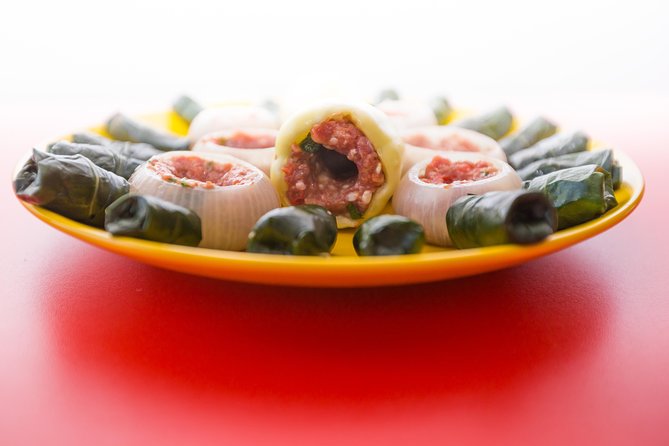
The first part of the class covers three related dishes. Each uses a filling of minced meat, rice, and spices, but the vegetable wrapper changes the character of the dish.
Sogan dolma with filled onions
Sogan dolma uses onions filled with the meat, rice, and spice mixture. It is a good lesson in how Bosnian cooks turn simple ingredients into a dish with plenty of flavor.
You will see how the filling is prepared and how the onion layers are handled. The technique is more delicate than simply packing meat into a pepper. It also gives you a useful base for understanding other stuffed dishes in the class.
A few more cooking classes around the world worth a look
- Florence: Pasta & Tiramisu Cooking Class with Unlimited Wine
★ 4.9 · 6,708 reviews - Florence: Pasta Cooking Class with Unlimited Wine
★ 5.0 · 6,413 reviews - Hanoi Cooking Class: Culture, Local Market & Meaning CSR Impact
★ 5.0 · 5,147 reviews - 5 Traditional Dishes Hanoi Cooking Class with Market Trip
★ 5.0 · 4,890 reviews
Japrak with mangel or spinach leaves
Japrak uses mangel or spinach leaves wrapped around the same general filling. The leaves make the dish softer and more delicate, and the rolling technique gives you another kind of kitchen practice.
This part is especially useful if you want to recreate the meal at home. You learn that the same filling can work across several vegetables, while the wrapping method and texture change. It is a practical lesson in adapting a recipe without losing its character.
Dolma with peppers
Dolma uses peppers filled with minced meat, rice, and spices. Compared with the onion and leaf versions, peppers are more familiar to many home cooks and easier to picture in your own kitchen.
Together, the three dishes show how much variety can come from a basic filling. You are not just collecting names. You are learning a pattern that you can use later with ingredients available in your local market.
The class covers well-known Bosnian dishes, but it does not promise a full survey of every regional food in the country. Think of it as a focused introduction built around stuffed vegetables and pastry.
Part Two: Learning the Art of Burek
Burek is the hands-on finale and the part most likely to test your patience. You work with phyllo dough and learn how it becomes thin, layered pastry filled with potatoes, meat, or cheese.
The process is valuable because the finished dish can look simple while requiring a practiced touch. You need to stretch or roll the dough thinly, add the filling, and shape it without turning the pastry into a torn mess. That is why the relaxed mood and encouragement from the hosts matter.
One solo participant appreciated Mersiha’s patient guidance when delicate handling of the dough did not come naturally. That is a good sign for beginners. You do not need to arrive with kitchen training, but you should be ready to use your hands and accept that your first attempt may not look perfect.
Seasonal filling choices mean the exact burek version can vary. You may work with meat, potatoes, or cheese rather than choosing from a fixed menu. If you have a strong preference, ask when booking.
The finished burek also teaches you something that eating it in a restaurant cannot. Once you have handled the dough yourself, you understand why the pastry becomes so crisp and layered. One participant who spoke little English still found the dough process clear and engaging, helped by demonstrations and patient instruction.
Eating the Food You Made Together
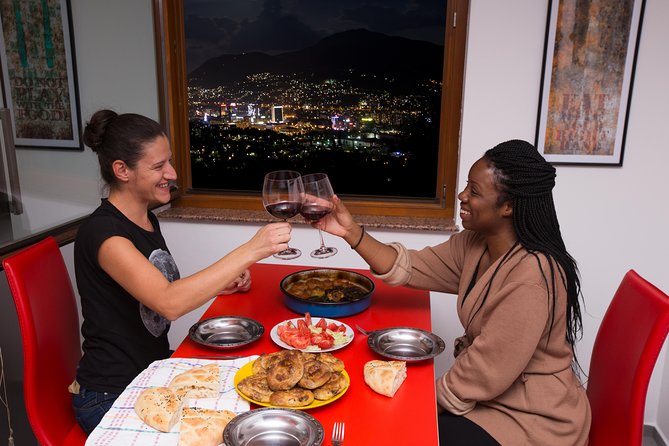
After the cooking is complete, you sit down for dinner made from the dishes prepared during the class. This is not a quick taste at the counter. The schedule leaves time to eat, talk, and ask questions about Bosnia, food, and daily life.
I like this part because it closes the loop between technique and result. You see how the stuffed vegetables and burek fit together as a meal, then have a chance to think about which recipes you would actually cook at home.
The food is served with the drinks included in the experience. Herzegovina wine is part of the plan, along with coffee and tea. Soft drinks are also served, so you are not required to drink alcohol to take part.
The meal also creates room for conversation with Mersiha and Mustafa. The personal side of the afternoon is a major part of its appeal. You can ask about growing up in Bosnia, local activities, and practical travel matters such as bus journeys. That kind of informal exchange can be as useful as the recipes.
Mersiha and Mustafa Make the Class Feel Personal
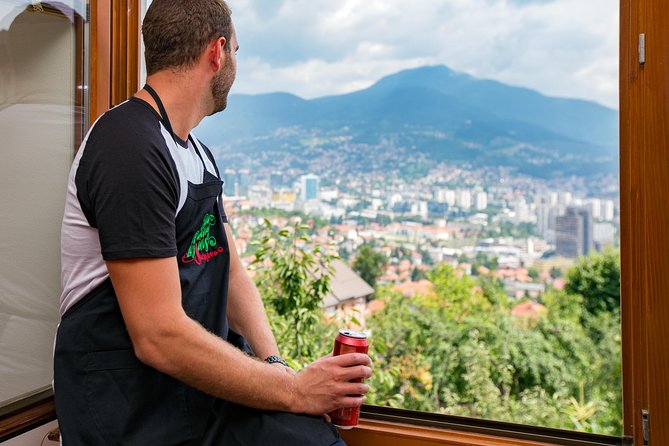
The hosts are central to the experience. Mersiha leads the cooking and explains each stage, while Mustafa helps create the relaxed social setting. Their approach is warm, chatty, and patient rather than stiff or lecture-like.
If you are traveling alone, the format has a few thoughtful touches. One solo participant appreciated that Mersiha took photographs during the class. That is not listed as a guaranteed feature, so I would treat it as a kindness rather than something to book for, but it shows the personal care that can shape the afternoon.
The home setting also means this is not the right choice if you want a fast, highly structured lesson with restaurant-style presentation. You are visiting people in their home, learning through conversation, and taking part in a shared meal. That brings warmth, but it can also mean the pace feels less formal.
English is used for the experience, and one participant who was not confident in English found Mersiha easy to understand. Still, cooking demonstrations depend on watching as well as listening, so you can follow the basic process through both explanation and practical guidance.
What the Four-Hour Schedule Means for Your Day
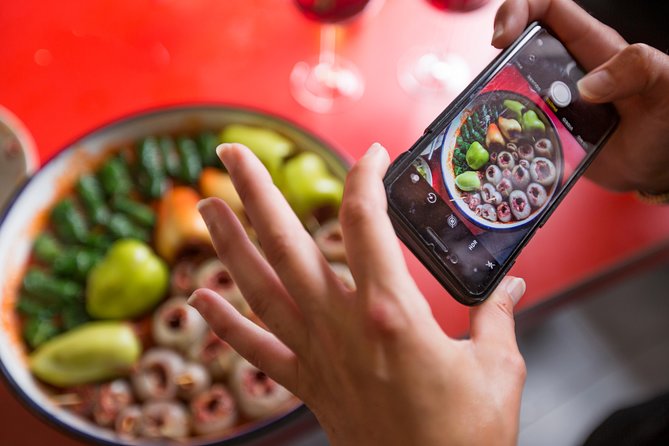
The activity lasts about four hours and starts at 2:30 pm. You should expect to spend the afternoon and early evening at the meeting location, with cooking, drinks, dinner, and conversation all included in that block.
This schedule works well on a day when you want a slower experience. It is not a good fit between two tightly timed museum visits or before an early evening departure. The cooking itself takes time, and part of the value comes from not rushing the meal.
The class ends back at the meeting point. Since transportation is not included, plan both directions in advance. If you are walking from central Sarajevo, allow extra time and be prepared for an uphill route depending on where you start. A previous participant found the walk from the center took around 40 minutes, but your route may differ.
The small maximum group of 13 helps the four-hour format. You are less likely to feel lost in a crowd, and there is more chance to ask about a particular technique or ingredient. It remains a shared class, though, so people who want one-on-one instruction may prefer a private arrangement.
Price, Value, and What Is Included
At $96.79 per person, this is not the cheapest meal you can buy in Sarajevo. The value comes from combining dinner, drinks, instruction, a home visit, and several recipes in one four-hour experience.
You are paying for more than ingredients. You receive hands-on guidance from a chef-host, practice with a technique that is difficult to learn from a cookbook, and the chance to ask questions about Bosnian food and life. The inclusion of wine, coffee or tea, and dinner makes the price easier to assess than a class where food and drinks are extra.
The strongest value is for someone who will use the recipes later. Step-by-step videos and recipes have been sent after the class in at least one case, but this is not clearly stated as a guaranteed inclusion for every booking. Ask about the current take-home materials if they matter to your decision.
Vegetarian and vegan options are available on request. Make that request before attending, rather than assuming the standard filling can be changed at the last minute. The standard dishes center on minced meat, so advance notice is important for a useful plant-based meal.
The experience is booked an average of 21 days ahead. That does not mean you must reserve exactly three weeks early, but it is a sensible warning for a small group activity with a popular host. If your Sarajevo dates are fixed, I would book before arriving.
Who Will Enjoy This Class Most
I would choose this for you if you like food, local conversation, and practical activities more than passive sightseeing. It suits couples, friends, solo visitors, and anyone who wants an evening meal with a story attached to it.
It is particularly good for:
- First-time visitors to Sarajevo who want a personal introduction to Bosnian food.
- Solo visitors who value a welcoming setting and a host who can help create a social afternoon.
- Home cooks who want recipes and techniques they can try after returning home.
- Food-focused families or friends who enjoy making dinner together.
- Vegetarian and vegan visitors who contact the provider in advance.
I would think twice if you dislike group activities, do not want to cook with meat-based fillings, or need a strictly timed itinerary. The class is social and hands-on. You will be involved, not simply served.
The wine also shapes the mood. You can choose nonalcoholic drinks, but if you want a quiet, formal lesson, this relaxed food-and-wine format may feel too casual.
Booking Details and Cancellation
Confirmation is normally sent at booking. If you book within five hours of the start time, confirmation is sent as soon as possible and depends on availability.
The experience offers free cancellation up to 24 hours before the local start time for a full refund. Cancellations or changes made less than 24 hours before the start are not refunded or accepted.
The ticket is mobile, which keeps arrival simple. Bring the booking details on your phone and remember that the listed meeting point is on Skendera Kulenovića, not a central restaurant.
Should You Book Bosnian Cooking Lessons?
I would book this class if you want to understand Sarajevo through food rather than simply eat your way through restaurants. The combination of stuffed vegetables, hand-worked burek, Herzegovina wine, city views, and conversation with Mersiha and Mustafa gives the afternoon a clear sense of place.
The best reason to choose it is the chance to learn burek properly enough to attempt it at home. The best practical warning is that this is a four-hour shared visit with transportation excluded, not a short demonstration.
Reserve ahead if your dates are limited, request vegetarian or vegan food in advance, and leave the rest of the afternoon open. If you do that, the $96.79 price buys more than dinner: it gives you a set of Bosnian recipes, a new pastry skill, and a warm introduction to Sarajevo life.
FAQ
Where does Bosnian Cooking Lessons take place?
The meeting point is on Skendera Kulenovića, 71000 Sarajevo, Bosnia and Herzegovina. The activity ends back at the meeting point.
What time does the class start?
The class starts at 2:30 pm.
How long does the experience last?
The cooking lesson and meal last approximately four hours.
What dishes will I learn to make?
The class covers sogan dolma, japrak, dolma, and burek. The stuffed dishes use minced meat, rice, and spices, while the burek uses phyllo dough with potatoes, meat, or cheese depending on the season.
Is dinner included?
Yes. Dinner made during the class is included.
Are drinks included?
Yes. The experience includes alcoholic beverages, coffee and/or tea, and soft drinks. Herzegovina wine is served during the lesson.
Are vegetarian or vegan options available?
Yes. Vegetarian and vegan options are available upon request.
How many people can join the class?
The maximum group size is 13 travelers.
Is private transportation included?
No. Private transportation is not included. The stated meeting point is the starting and ending location.
Can I cancel for a full refund?
Yes. You can cancel at least 24 hours before the local start time for a full refund. Cancellations or changes made less than 24 hours before the start are not accepted or refunded.
Just added around the world
- Private Cape Malay Cooking Class in Cape Town with a Local Family★ 5.0 · 24 reviews
- Private Moroccan Cooking Class in Casablanca with a Local Expert★ 5.0 · 12 reviews
- Cooking Class and Wine Pairing in Capri★ 5.0 · 57 reviews
- South African Cooking in Cape Town with Local Chef Richard★ 4.5 · 10 reviews
- Langa Township and Bokaap Cooking Class Half Day Tour★ 5.0 · 4 reviews
- Private Authentic Mexican Cooking Class in Cancun with Alberto★ 5.0 · 3 reviews
- Private Authentic Cape Malay Cooking Class in Manenberg with Locals★ 5.0 · 5 reviews
- Cape Town Shore Excursion| South African Cooking & Port Transfers★ 5.0 · 3 reviews
Cooking Classes, compared.
Half-Day Thai Cooking Class at Organic Farm in Chiang Mai
Read our review →
Florence: Pasta Cooking Class with Unlimited Wine
Read our review →
3 in 1 Cooking Class near Navona: Fettuccine, Ravioli & Tiramisu
Read our review →
Hanoi Cooking Class: Culture, Local Market & Meaning CSR Impact
Read our review →
5 Traditional Dishes Hanoi Cooking Class with Market Trip
Read our review →
Cooking Class and Lunch at a Tuscan Farmhouse with Local Market Tour from Florence
Read our review →