
Review · CATANIA
Catania: Pizza Cooking Class
Catania’s pizza class gives you more than a meal. You work with the dough, prepare scacciata catanese, and cook food tied to Sicilian taste. The final cannolo demonstration adds a useful dessert lesson without turning the class into a long cooking marathon.
I like the small group of eight, which gives you room to ask questions, and I like that the pizzaiolo prepares your station with the ingredients already set out. Simona is praised for careful teaching, clear explanations, and attention to questions.
The main drawback is the price: $101.96 per person is a serious amount for a three-hour food class. You should also confirm the starting time before booking, since several start times may be available.
Key points to know before booking
- Three hours in the kitchen: You prepare and cook your own pizza, then make scacciata catanese and take part in a cannolo demonstration.
- A small class: The group is limited to eight participants, a useful size for hands-on teaching.
- A local Sicilian focus: The class goes beyond standard pizza by including Catania-style scacciata and cannolo technique.
- Simona may be your teacher: She is praised for patient instruction, thorough explanations, and careful attention to questions.
- Italian and English instruction: You can take the class in either language.
- Flexible booking: You can cancel up to 24 hours before the activity for a full refund, and reserve without paying immediately.
What this Catania pizza class actually offers
The heart of the experience is simple: you learn by making food rather than watching someone cook an entire meal for you. Your pizzaiolo prepares the work station with the ingredients you need, then guides you through the lesson.
That preparation matters. You do not need to spend the first part of the class hunting for ingredients or trying to work out which bowl belongs to which step. The set-up lets you focus on the techniques and flavors.
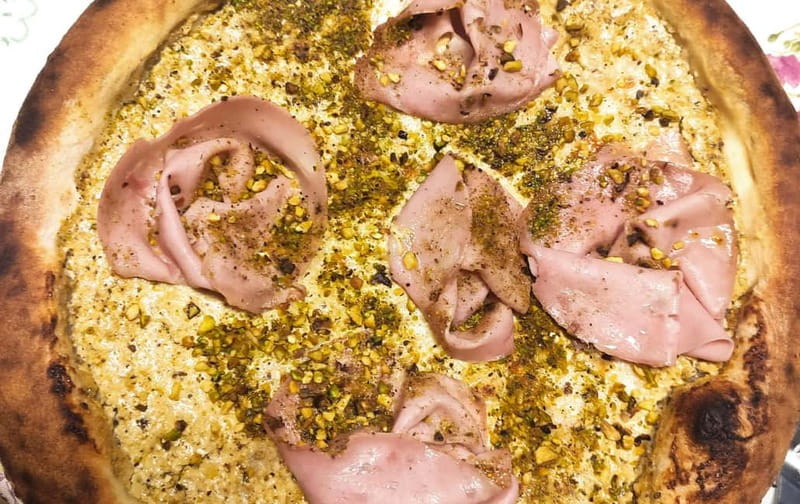
The class centers on pizza, but it is not limited to one familiar dish. You prepare your own pizza with typical Sicilian ingredients and flavors, then work on scacciata catanese. After the savory cooking, the pizzaiolo demonstrates how to prepare a famous Sicilian cannolo and shows you how to fill the pastry wafers.
You should think of this as a compact Sicilian food lesson, not a full cooking-school course. In three hours, you get several dishes and a tasting, but you will not have time for a wide survey of regional cuisine or advanced pastry work.
More Pizza Making Classes in Italy:
- Naples: Pizza-Making Workshop with Drink and Appetizer
★ 4.9 · 5,411 reviews - Authentic Pizza Making Class in Naples with Appetizers and Drink
★ 5.0 · 3,178 reviews - Florence Cooking Class The Art of Making Gelato & Authentic Pizza
★ 5.0 · 2,053 reviews
Making your own pizza in Catania
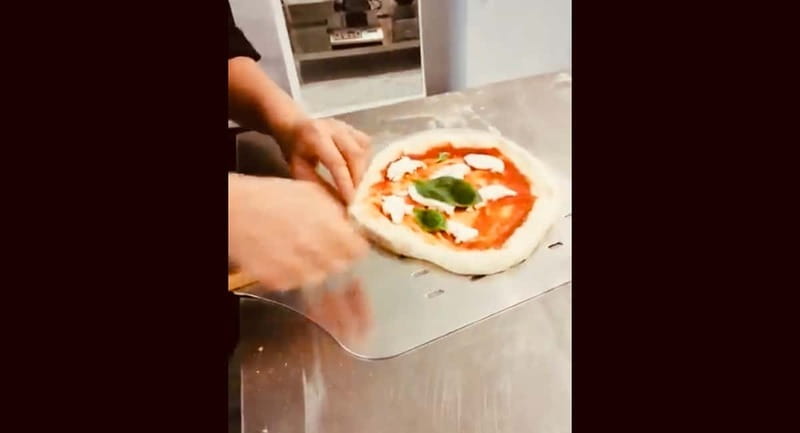
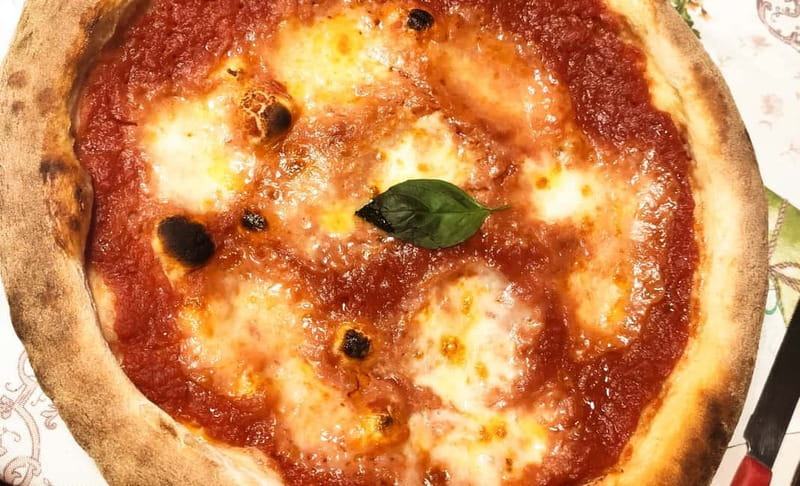
Pizza is the most practical part of the class because you get to repeat it at home. You are not simply handed a finished pie and told how it was made. You prepare and cook your own pizza, using the ingredients provided at your station.
The value here is the chance to connect separate steps. You see how the dough, toppings, heat, and timing come together, then taste the result. That makes the lesson easier to remember than a demonstration alone.
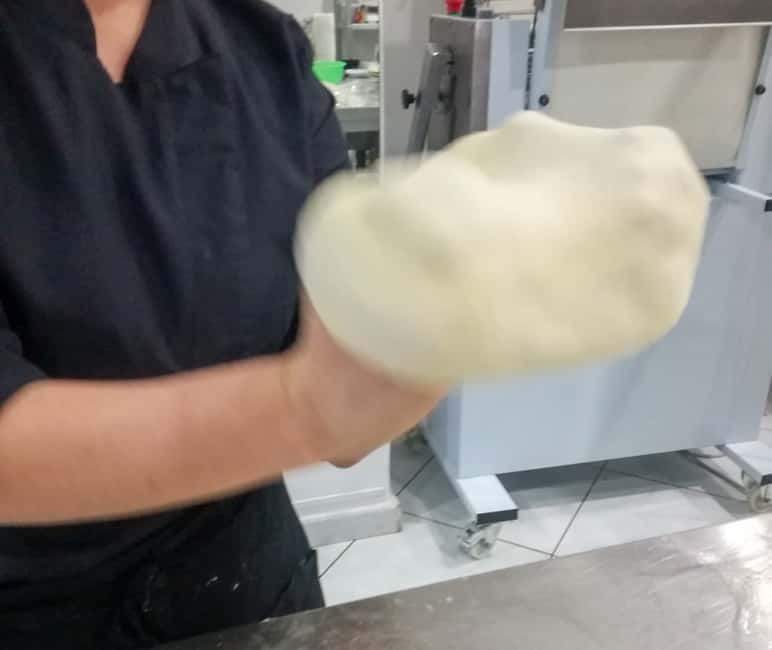
I would pay close attention to the small choices your instructor makes. Watch how the dough is handled, how ingredients are spread, and how the pizza is prepared for cooking. Even if you already make pizza at home, a professional pizzaiolo may offer useful adjustments to your method.
The class is also well suited to people who want a shared activity without committing to a whole day. Three hours gives you enough time to cook, eat, and ask questions, while leaving the rest of your day open for Catania.
You should keep your expectations sensible. The supplied information does not promise a specific pizza style, oven type, ingredient list, or recipe booklet. If you need detailed measurements to recreate the pizza later, ask your instructor during the lesson and take notes.
Scacciata catanese adds a real Catania connection
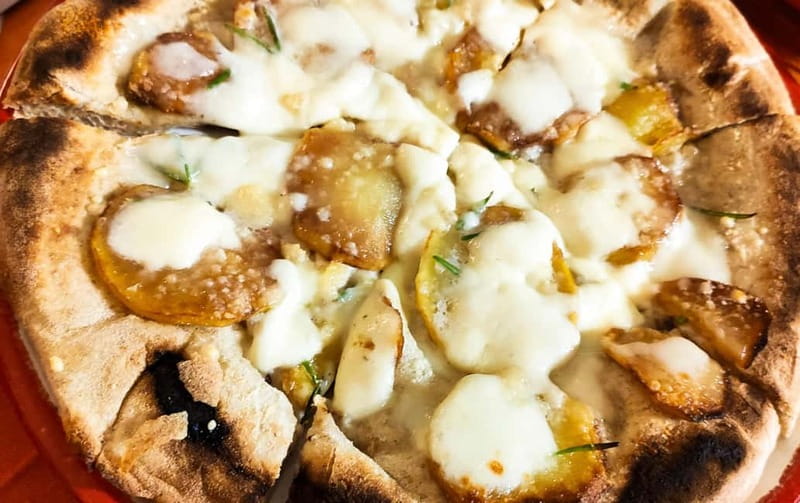
The scacciata catanese lesson is one of the best reasons to choose this class over a basic pizza workshop. Pizza classes are common in Italy. A lesson that also includes a dish associated with Catania gives you a closer link to the city’s food culture.
You prepare scacciata catanese as part of the class, so you get to work with a local specialty rather than only an internationally familiar dish. The exact fillings and method are not specified, so you should ask the pizzaiolo to explain which ingredients are typical and what makes the Catania version distinct.
This part may appeal most to repeat visitors and food-focused visitors who want something beyond the usual pizza and pasta routine. It also gives you a useful comparison: pizza shows one side of Italian baking, while scacciata offers another Sicilian form of savory dough-based food.
The limitation is that the class description does not spell out the full process. You know scacciata is included, but not how much hands-on time it receives compared with pizza. If scacciata is your main reason for booking, confirm the details when you arrive.
The cannolo demonstration finishes the meal
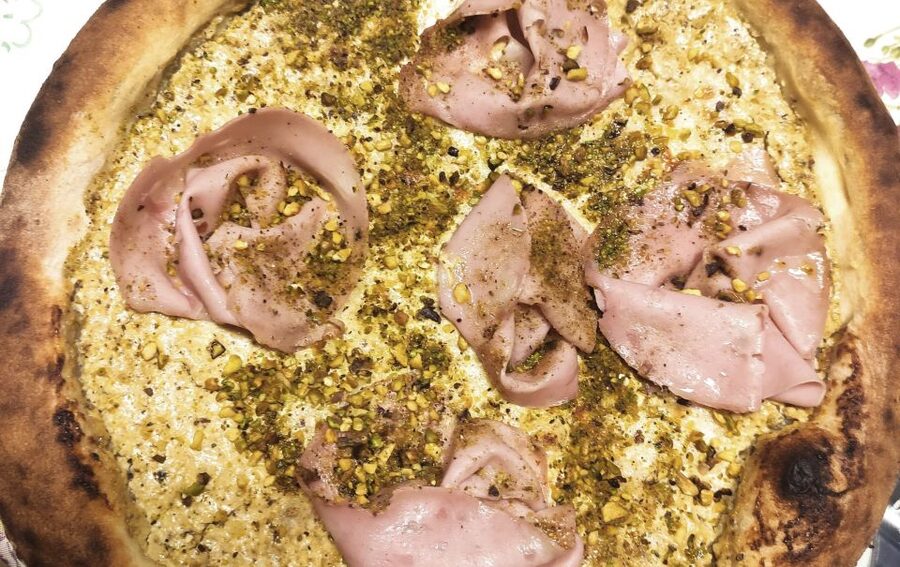
After the pizza and scacciata, the pizzaiolo moves into a cannolo demonstration. You watch the preparation of the Sicilian dessert and learn the technique for filling the wafers.
This is a demonstration rather than a clearly stated hands-on pastry workshop. That distinction matters. You should expect to watch the cannolo being prepared and learn the filling method, but do not assume you will make every part of the dessert yourself.
Still, the cannolo lesson adds variety. The class begins with savory dough and ends with a sweet Sicilian specialty, so the three-hour schedule does not feel like one long repetition of pizza work.
It also gives you a chance to ask about texture and timing. Cannolo shells and filling need to work together, and the filling technique is the useful part promised here. If you enjoy pastry, ask for advice on keeping the wafer crisp and filling it at the right point, though those specific tips are not guaranteed as part of the published class.
More Hands-On Workshops in Italy:
- Florence: Pasta Cooking Class with Unlimited Wine
★ 4.9 · 10,285 reviews - 3 in 1 Cooking Class near Navona: Fettuccine, Ravioli & Tiramisu
★ 5.0 · 7,376 reviews - Florence: Pasta & Tiramisu Cooking Class with Unlimited Wine
★ 4.9 · 6,708 reviews - Florence: Pasta Cooking Class with Unlimited Wine
★ 5.0 · 6,413 reviews
Tasting turns the lesson into a full afternoon
The experience includes a tasting after the cooking. That sounds obvious for a food class, but it changes the pace. You are not rushing from one task to the next without time to sit down and enjoy what you prepared.
The tasting is also where you can compare the pizza and scacciata. You get to judge the results of your own work, then enjoy the cannolo presentation. The food is the activity’s reward, not an unrelated meal added at the end.
A number of participants praise the food, the host, and the tasting. One recurring point is that the class feels fun as well as useful. That combination is important. A lesson can be technically sound but dull; here, the strongest feedback points to a relaxed and enjoyable time with plenty of food.
You should arrive ready to participate rather than expecting restaurant service. The class is built around preparation, cooking, explanation, and tasting. If you prefer to simply sit and eat, a Catania pizzeria will be cheaper and more direct.
Simona’s teaching style matters
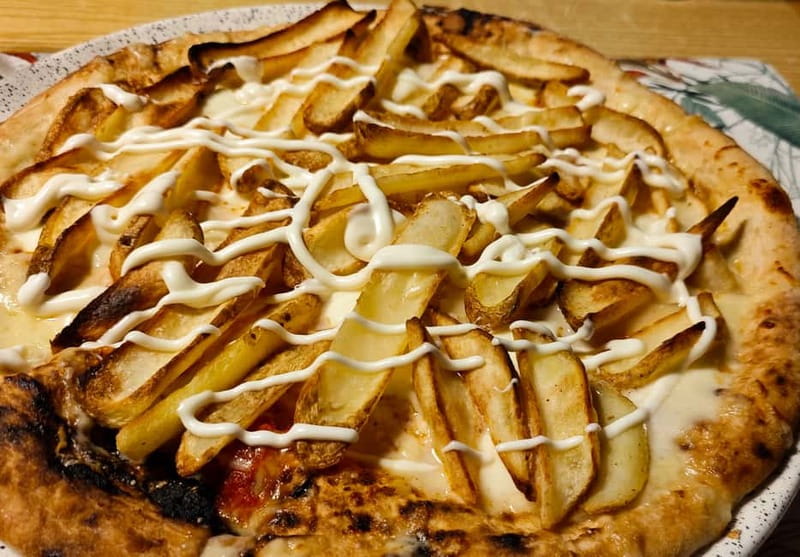
Simona is repeatedly praised as a careful teacher and chef. The strongest descriptions focus on her thorough explanations, enthusiasm, and attention to questions. One participant described her as the best cooking-class teacher they had experienced, while another praised her for explaining everything needed to make pizza.
That gives you a useful idea of the teaching style to expect if Simona leads your session. The emphasis appears to be on showing each stage clearly rather than rushing through a recipe. You can use the small group to ask about technique, ingredients, and how to repeat the dishes at home.
The name appears in the feedback as both Simona and Simone, so you should not rely on a particular instructor being guaranteed. The experience is provided by Futuro e Lavoro, and the stated languages are Italian and English.
Language should not be a major concern for English speakers. Still, cooking has its own vocabulary, and a few terms may be easier to understand by watching the demonstration than by hearing an explanation. Pay attention to the physical steps, then ask questions when you need clarification.
Why the eight-person limit is useful
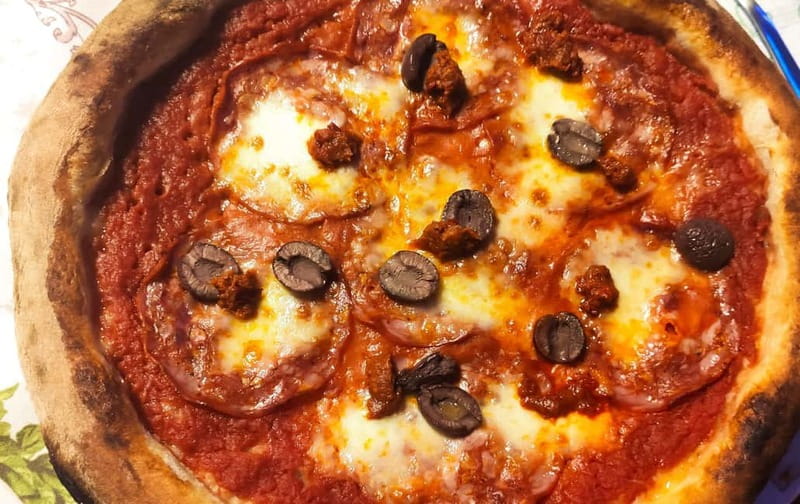
The group limit of eight is one of the strongest practical features. A large cooking class can leave you watching from the edge of a table. With eight participants, you have a better chance of hearing the instructor and getting direct answers.
A small group also makes it easier to compare results. You can see how other people handle the same task and pick up ideas from their questions. Cooking classes often work best when the group is large enough to feel social but small enough for the teacher to keep track of everyone.
There is no promise that every person gets a private work station, so do not assume the exact kitchen layout. The information does say that the pizzaiolo prepares the station with the required ingredients, which indicates an organized start.
If you are booking for a couple or a small family group, the eight-person cap should help keep the session personal. Families should consider the length and hands-on nature of the class before booking for young children, since no age guidance is provided.
Is $101.96 good value?
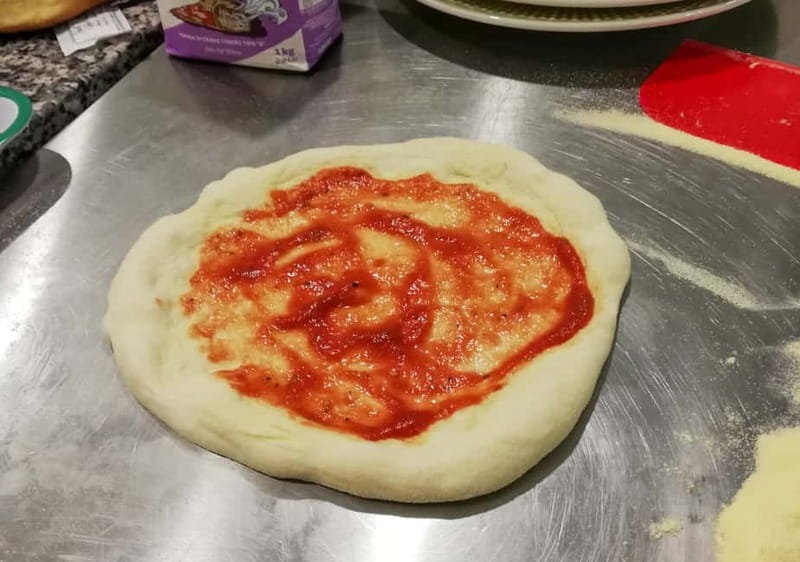
At $101.96 per person, this is not a bargain meal. You are paying for a three-hour activity, instruction, ingredients, several food preparations, a tasting, and a small group setting.
I think the price can make sense if you value the lesson as much as the food. You learn a pizza method you can try at home, prepare a Sicilian specialty, and watch a cannolo technique. The experience also gives you a social activity tied to Catania rather than a standard restaurant meal.
The value is weaker if your main goal is simply to eat pizza. You could spend much less at a local restaurant, and the class requires your time and attention. The price is easiest to justify for visitors who enjoy cooking, want a memorable food activity, or are looking for something different from sightseeing.
The tasting adds value, but the published details do not specify the amount of food, the exact menu, or whether drinks are included. Consider it a substantial cooking experience with food to taste, not an unlimited meal.
Timing, booking, and cancellation
The class lasts three hours, and you need to check availability for the starting time. That makes it easy to fit around other plans, but you should confirm the session time before arranging the rest of your day.
You can reserve now and pay later, which helps if your Catania plans are still changing. You can also cancel up to 24 hours in advance for a full refund. That policy is useful when your itinerary includes several moving parts.
The class is offered in Italian and English. It is a small-group activity rather than a private lesson, with up to eight participants.
No transportation details are provided, so you should not assume hotel pickup or a transfer is included. Check the meeting information carefully when booking and allow enough time to reach the location.
Who should book this experience?
I would choose this class for you if you meet one or more of these descriptions:
- You want to learn a practical pizza method you can repeat at home.
- You would rather take part in a local food activity than spend another afternoon sightseeing.
- You are interested in Catania-specific food, especially scacciata catanese.
- You enjoy small-group classes with room for questions.
- You want both savory cooking and a Sicilian dessert demonstration.
- You are traveling with someone who enjoys food but may not want a full-day workshop.
I would hesitate if you are looking for a low-cost meal, a private cooking lesson, or a detailed pastry course. The cannolo portion is described as show cooking, and the exact recipes, ingredient list, and kitchen facilities are not specified.
The class also may not suit you if you need a fully stated schedule before booking. The three-hour length and broad sequence are clear, but the precise timing of each dish is not.
My verdict on the Catania pizza class
Book this if you want a friendly, hands-on introduction to Sicilian cooking and you are happy to pay for instruction as well as food. The combination of pizza, scacciata catanese, tasting, and cannolo technique gives the class more substance than a basic pizza lesson.
The small group and strong praise for Simona’s teaching make it especially appealing for first-time cooking-class participants. You should ask questions, take notes, and treat the lesson as a chance to learn methods you can use after Sicily.
Skip it if your priority is simply finding the cheapest good pizza in Catania. At $101.96, the class needs to earn its price through the experience, and its value depends on how much you enjoy cooking. For food-minded visitors, it offers a pleasant three-hour link between Catania and the kitchen.
FAQ
How long does the Catania pizza cooking class last?
The class lasts three hours. Starting times vary, so check availability before booking.
What will I prepare during the class?
You will prepare your own pizza and scacciata catanese. You will also watch a demonstration of Sicilian cannolo preparation and learn how to fill the wafers.
Is the cannolo portion hands-on?
The cannolo section is described as show cooking. You will watch the pizzaiolo prepare the dessert and learn the filling technique.
How many people can join the class?
The class is limited to eight participants, making it a small-group experience.
What languages are available?
Instruction is available in Italian and English.
Can I cancel the class or pay later?
You can cancel up to 24 hours in advance for a full refund. You can also reserve your place and pay later.
Just added around Italy
- Cesarine: Home Cooking Class & Meal with a Local in Brindisi★ 5.0 · 7 reviews
- Small Group Market tour and Cooking class in Brindisi★ 4.5 · 8 reviews
- Apulian cooking class and typical dinner★ 4.5 · 5 reviews
- Dining Experience at a local’s Home in Martina Franca with Show Cooking★ 4.5 · 7 reviews
- Cooking class in a garden: handmade pasta★ 5.0 · 4 reviews
- 3 Hour Private Italian Tradition Cooking Class in Brescia★ 5.0 · 21 reviews
- Dining experience at a local’s home in Brindisi with show cooking★ 4.0 · 6 reviews
- Private Cooking Class at a Cesarina’s Home in Desenzano del Garda★ 5.0 · 6 reviews
Pizza Making Classes, compared.
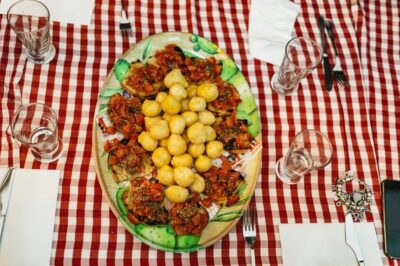
Naples: Pizza-Making Workshop with Drink and Appetizer
Read our review →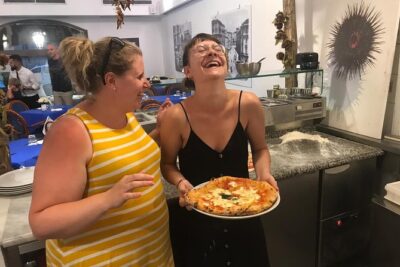
Authentic Pizza Making Class in Naples with Appetizers and Drink
Read our review →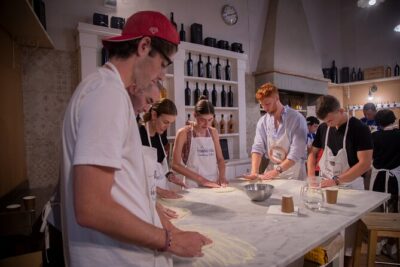
Florence Cooking Class The Art of Making Gelato & Authentic Pizza
Read our review →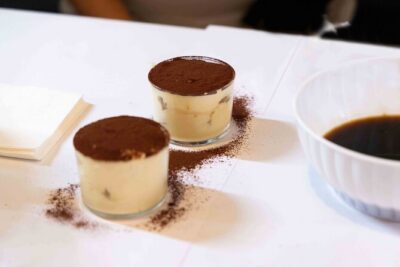
Cooking Class in the Heart of Rome: Pizza and Tiramisu Making
Read our review →
Rome: Traditional Pizza Cooking Class near Piazza Navona
Read our review →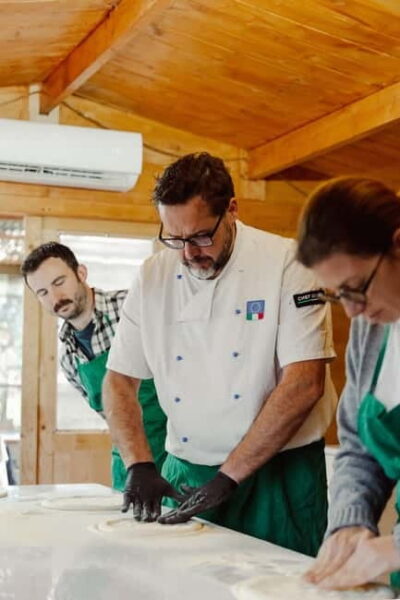
Rome: Combo Pizza and Pasta Cooking Class with Wine
Read our review →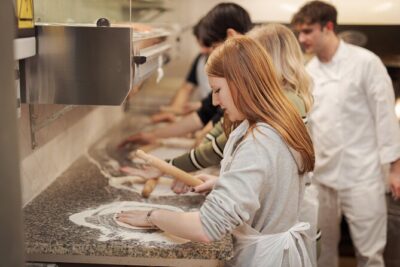
Pizza Cooking Class in Rome – Near Piazza Navona
Read our review →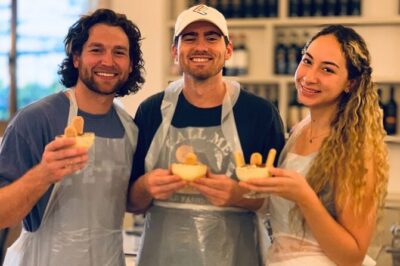
Rome: Pizza & Tiramisu Class with Free Flowing Fine Wine
Read our review →Browse the lists this tour appears in