
Review · TBILISI
Cook True Ajarian Khachapuri and Khinkali in Highlanders Style
The best part of this Tbilisi class is that you do not simply sit down to eat Georgian food. You make two of the country’s signature dishes yourself, then share the meal at the instructor’s home or workshop. Irina is often the teacher, and her patient, personal style is a big part of the experience.
I like the hands-on format, especially the chance to shape khinkali rather than watch someone else do it. I also like the small, homey setting, where you can ask questions, take notes, and learn recipes you can try later. The main consideration is that the format may vary: it is advertised as private, but some sessions have included other cooking students.
Key points
- Two Georgian staples: Make Adjarian khachapuri and five to six khinkali per person.
- A home-style setting: Classes may take place in a private apartment, creating a more personal meal than a restaurant visit.
- Patient instruction: Irina is praised for clear English explanations, careful corrections, and a good sense of humor.
- Wine with the meal: A glass of homemade wine is included, with non-alcoholic drinks available.
- Vegetarian flexibility: Meat-based khinkali can be changed to a vegetarian version, though cheese and eggs are used.
- Useful take-home skills: Recipes and ingredient details are shared so you can repeat the dishes at home.
Meeting the cooks at Chakandrila
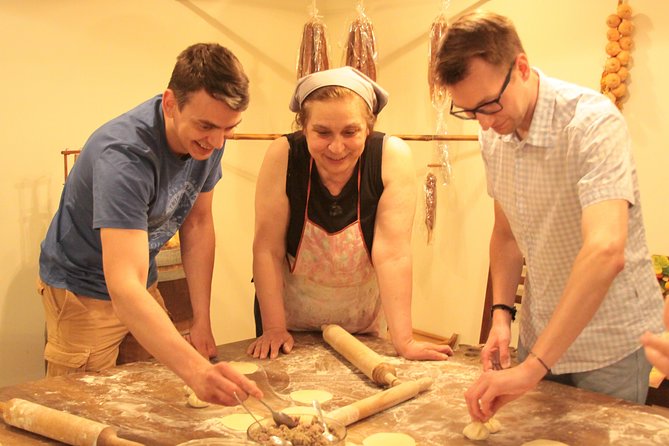
The class begins at Biblusi number 8 on Merab Kostava Street in Tbilisi. From there, you meet the hosts and head into the cozy cooking setting known as Chakandrila. The activity lasts about two and a half hours and ends back at the meeting point.
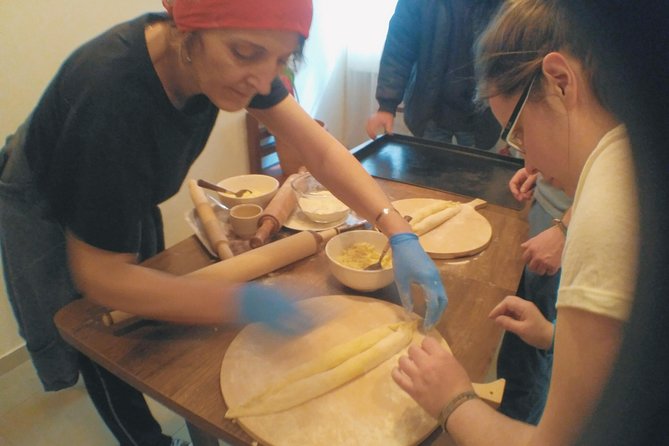
The setting is one of the strongest reasons to choose this class. Several sessions have taken place in a host’s apartment rather than a formal culinary school. That means you get a more personal look at how Georgian food is prepared in a real home kitchen. You are not just being shown a polished restaurant performance. You are working alongside the person who cooks these dishes regularly.
The hosts have included Irina, Irini, Ella, Tamara, and family members who help with the class. The exact instructor may depend on the date, so check the booking details if meeting a particular host matters to you. Irina is especially noted for explaining the steps in both English and Russian, which has helped mixed-language groups follow along.
The class is described as private, but some accounts describe cooking with several other people. That is not necessarily a problem. Shared sessions can add a pleasant social side, especially when everyone sits down to eat together. Still, if you are booking because you want a completely private lesson, confirm the group arrangement before paying.
Other cooking classes people book around the world:
- Half-Day Thai Cooking Class at Organic Farm in Chiang Mai
★ 5.0 · 19,087 reviews - Florence: Pasta Cooking Class with Unlimited Wine
★ 4.9 · 10,285 reviews - 3 in 1 Cooking Class near Navona: Fettuccine, Ravioli & Tiramisu
★ 5.0 · 7,376 reviews
Making Adjarian khachapuri from dough to table
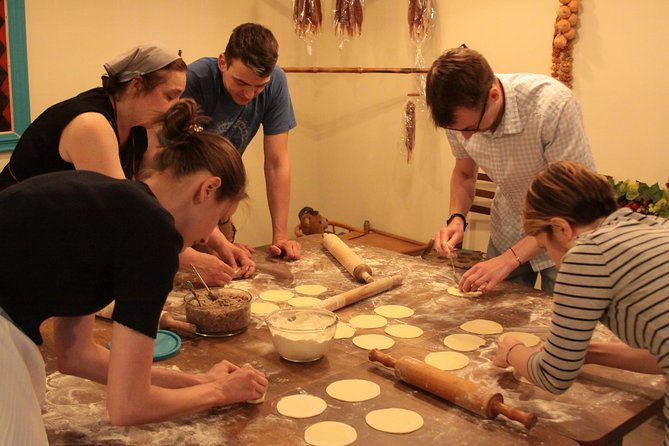
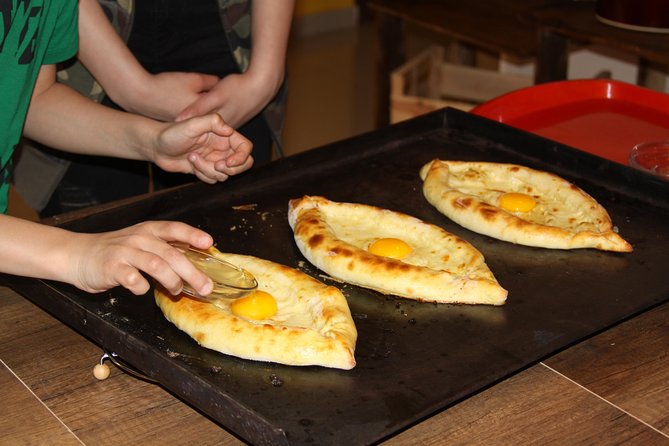
Your first main dish is Adjarian khachapuri, the famous boat-shaped cheese pie from western Georgia. The dough is stretched into a boat, filled with cheese, and finished with egg and butter. You then eat it by tearing off pieces of the crust and mixing them through the hot center.
This is a useful dish to learn because its shape looks more difficult than it is. The class breaks the process into manageable jobs: handling the dough, forming the pointed ends, adding the filling, and finishing the baked pie. One session also included two types of khachapuri, though the standard menu focuses on the Adjarian style.
There is one timing detail worth knowing. Khachapuri dough may need to rest for about two hours before cooking. The class can still teach you how the dough is made and shaped, but you may not be preparing every stage from a freshly mixed batch during the session. Ask how the dough process will be handled on your date if you want to practice the full recipe from start to finish.
You will use cheese and eggs, so this is not a suitable class for someone avoiding either ingredient. For most people, though, the dish makes a filling lunch, and your portion is included in the $39 price.
Folding five to six khinkali by hand
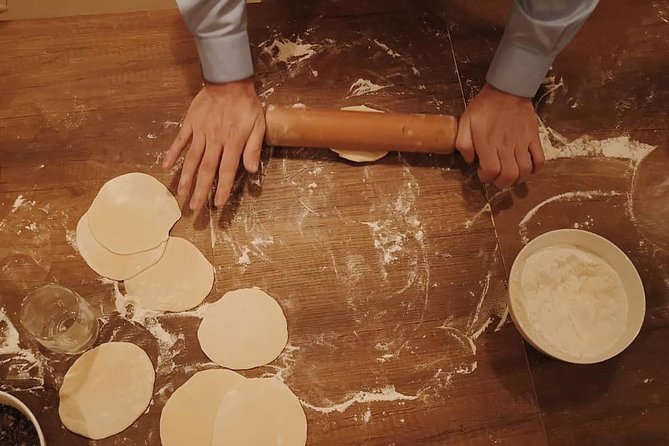
Khinkali are Georgian soup dumplings, usually filled with seasoned meat and broth. The practical lesson is learning how to place the filling, gather the dough into pleats, and seal the top so the liquid stays inside. It is a hands-on job, and the first few dumplings may look more like small parcels than the neat purses you see in restaurants.
That is part of the fun. The teachers are known for correcting technique without making beginners feel awkward. You do not need professional cooking skills, and the class is suited to people who are clumsy with dough as well as people who already cook often.
Each person receives about five or six khinkali for the meal. That is enough to make the dish properly and eat a satisfying portion, especially alongside khachapuri. If you want a meat-free meal, request the vegetarian option in advance. The information provided confirms that meat fillings can be switched, but cheese and eggs remain part of the cooking environment.
Pay attention to the sealing lesson. The pleats are not just decoration. A good seal keeps the broth inside, which is the feature that makes khinkali different from an ordinary dumpling. The class gives you a practical chance to repeat the technique at home, even if your finished dumplings are not perfectly uniform.
Eating together with homemade wine
Once the cooking is done, you eat the khachapuri and khinkali as lunch. A glass of homemade wine is included, and non-alcoholic drinks are available. Other food and drinks can be ordered for an extra charge, but snacks are not included.
I like this shared meal because it gives the cooking a clear purpose. You are not rushing off after the final fold. You get to taste the results, talk with the host, and compare your dumplings with everyone else’s. The food is also more satisfying because you have handled each stage yourself.
The wine is a natural match for the meal, but you do not need to drink alcohol to take part. Ask for a non-alcoholic option if that suits you better. Since the meal centers on two substantial dishes, arrive hungry. There is no need to plan another lunch immediately afterward.
The home setting also changes the tone. It can feel more like being invited into someone’s kitchen than attending a standard cooking demonstration. That personal warmth is a major reason this experience works well for couples, families, and small groups looking for a conversation-based activity.
Same place, a different menu:
- Florence: Pasta & Tiramisu Cooking Class with Unlimited Wine
★ 4.9 · 6,708 reviews - Florence: Pasta Cooking Class with Unlimited Wine
★ 5.0 · 6,413 reviews - Hanoi Cooking Class: Culture, Local Market & Meaning CSR Impact
★ 5.0 · 5,147 reviews - 5 Traditional Dishes Hanoi Cooking Class with Market Trip
★ 5.0 · 4,890 reviews
Why the instructor matters here
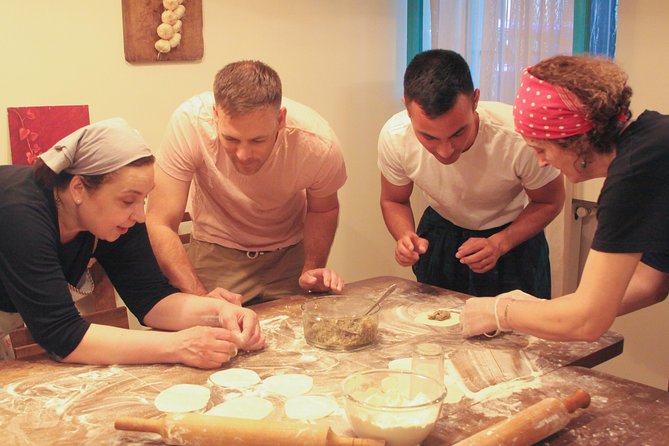
The food is important, but the teacher shapes the quality of the class. Irina is repeatedly described as patient, warm, and willing to slow down while people write recipes or take photographs. She has also explained the class in more than one language when needed.
That matters because Georgian cooking often involves techniques that are easy to understand once someone shows you by hand. Dough thickness, the right amount of filling, and the final khinkali fold are difficult to learn from a printed recipe alone. A calm instructor lets you try, make mistakes, and try again.
You can also expect cultural context during the cooking. The teaching includes family stories and information about Georgian food traditions, rather than only a list of ingredients. The exact amount of background talk will depend on the host and the pace of your group, but the experience is designed to connect the dishes with local home cooking.
Recipes and ingredient details are shared for later use. That is a real benefit at this price. You are not only paying for lunch and entertainment. You are leaving with enough guidance to attempt khachapuri and khinkali in your own kitchen.
Is $39 a fair price?
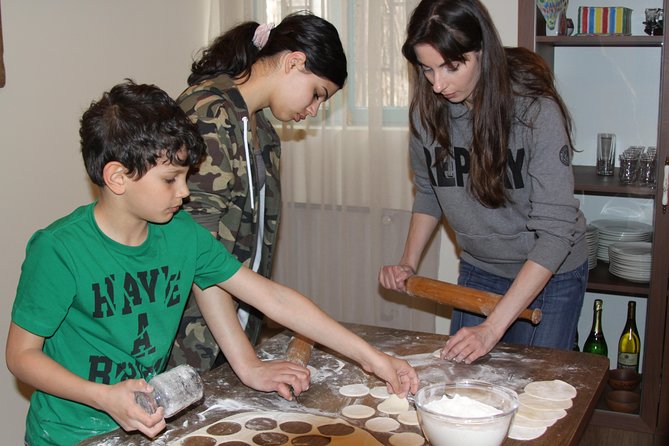
At $39 per person, the class offers two and a half hours of instruction, a full meal, five to six khinkali, Adjarian khachapuri, and a glass of homemade wine. In Tbilisi, you can find inexpensive Georgian food in restaurants, so this is not the cheapest way to eat these dishes.
The value comes from the lesson and the access to a local host. You are paying to cook, ask questions, hear family stories, and learn recipes. If you only want to taste khachapuri and khinkali, a restaurant will be quicker and less expensive. If you want a skill-based cultural activity, the price is reasonable.
The private format improves the value when it is truly limited to your group. Personalized help is easier when the instructor can watch your dough and dumpling technique closely. Since some sessions have included other people, confirm the group size if privacy is important.
The booking pattern also suggests planning ahead. This activity is booked an average of 19 days in advance, so it may not be wise to leave it until your final day in Tbilisi. Confirmation is sent within 48 hours, subject to availability.
Who will enjoy this class most?
You should consider booking if you like food, enjoy making things with your hands, or want a break from standard sightseeing. It suits beginners particularly well because the instruction is patient and the atmosphere is informal.
It is also a good choice for a family with an older child, a couple celebrating a special occasion, or friends who want a social lunch. One class was held for a birthday, and the warm setting helped make it feel personal rather than routine.
Vegetarians can take part if they request the meat-free version. You should not book if you must avoid cheese or eggs, since both are used. People who want a formal school kitchen, strict individual instruction, or a completely predictable private format should confirm those details first.
The activity is near public transportation, which makes it practical during a Tbilisi stay. Bring a phone or notebook if you want to save the recipe steps. Photos and videos have been allowed in past sessions, though it is still polite to ask before recording the host.
Booking, cancellation, and practical details
The price is $39 per person, and the ticket is mobile. The class is offered in English, with some instructors also using Russian. It begins at Biblusi number 8, Merab Kostava Street, and returns to the meeting point when the meal is finished.
Free cancellation is available up to 24 hours before the start time for a full refund. Changes or cancellations made less than 24 hours before the activity are not accepted for a refund, and cut-off times follow local Tbilisi time.
Before booking, confirm three things: the instructor for your date, whether the session is fully private or shared, and the vegetarian preparation if needed. Also remember that the class uses cheese and eggs, while extra menu items and drinks cost more.
Should you book Cook True Ajarian Khachapuri and Khinkali?
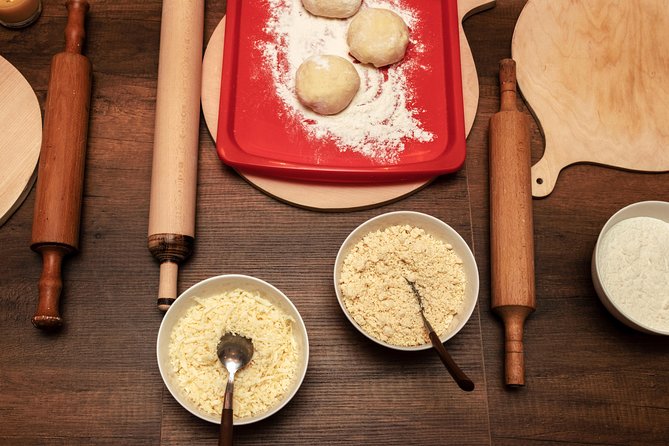
I would book this class if you want a friendly, practical introduction to Georgian food rather than another restaurant meal. The combination of Adjarian khachapuri, hand-folded khinkali, homemade wine, and a host’s kitchen gives the experience a strong personal feel.
The main caution is the possible difference between the advertised private format and the shared groups described in past sessions. Confirm that point, and ask about the dough schedule if making every stage from scratch is important to you.
For most visitors, the $39 fee is fair because you receive lunch, instruction, recipes, and a real chance to repeat the dishes at home. Come hungry, allow two and a half hours, and be ready to make dumplings that may look imperfect but taste very good.
FAQ
Where does the cooking class start?
The meeting point is Biblusi number 8 on Merab Kostava Street in Tbilisi, Georgia. The activity ends back at the meeting point.
How long does the experience last?
The class lasts approximately two hours and 30 minutes.
What dishes will I make?
You will make Adjarian khachapuri, a boat-shaped Georgian cheese pie, and khinkali, traditional Georgian dumplings.
How many khinkali are included?
Each person receives approximately five to six khinkali as part of the included lunch.
Can I request a vegetarian option?
Yes. Meat-based dishes can be switched to vegetarian options. The class still uses cheese and eggs.
Is wine included?
Yes. A glass of homemade wine is included. Non-alcoholic drinks are also available, while other food and drinks can be ordered separately.
Just added around the world
- Private Cape Malay Cooking Class in Cape Town with a Local Family★ 5.0 · 24 reviews
- Private Moroccan Cooking Class in Casablanca with a Local Expert★ 5.0 · 12 reviews
- Cooking Class and Wine Pairing in Capri★ 5.0 · 57 reviews
- South African Cooking in Cape Town with Local Chef Richard★ 4.5 · 10 reviews
- Langa Township and Bokaap Cooking Class Half Day Tour★ 5.0 · 4 reviews
- Cape Town Shore Excursion| South African Cooking & Port Transfers★ 5.0 · 3 reviews
- Private Authentic Mexican Cooking Class in Cancun with Alberto★ 5.0 · 3 reviews
- Private Authentic Cape Malay Cooking Class in Manenberg with Locals★ 5.0 · 5 reviews