
Review · FEZ
Cooking Class with Bread Workshop and Pastry in Fes
The best part of this Fes cooking class happens before the stove heats up. You visit a traditional Moroccan market, learn what the ingredients are used for, then return to a home setting to prepare your chosen menu. The session can focus on bread and pastry or dishes such as chicken tagine and pastilla.
I like the hands-on format, since you do the chopping, mixing, shaping, and cooking rather than simply watching a demonstration. I also like the shared meal at the end, with Moroccan tea and a live pastry presentation. The main consideration is time: at about two hours, the class offers a taste of Moroccan cooking rather than a long culinary course.
Key points to know
- Begin at the market: Learn about the day’s ingredients before cooking them.
- Choose your workshop: Options include bread, traditional pastries, tagine, pastilla, and other Moroccan dishes.
- Work in a home setting: The class takes place at the provider’s home venue in Fes.
- Meet the cooks: Sessions may be led by Bliss Munatas or Chaimae, depending on the booking.
- Eat what you make: The class ends with a shared meal, Moroccan tea, and Moroccan pastries.
- Plan for flexibility: The activity runs daily from 9:00 AM to 11:00 PM, with a maximum of 20 people.
Starting at Dhar Richa in Fes
Your meeting point is Dhar Richa, Fes. The activity begins and ends at the same place, which keeps the arrangement simple and avoids the problem of finding your way to a separate return point after eating.
The stated operating hours are broad, from 9:00 AM to 11:00 PM every day. That gives you useful choice when fitting the class around time in the medina, a morning visit, or an evening meal. Your selected booking time matters, so check it carefully before setting your day’s schedule.
The class is near public transportation, but no private transfer is included in the information provided. If you are staying elsewhere in Fes, allow enough time to reach Dhar Richa. A mobile ticket is provided, and confirmation arrives when you book.
More Baking Classes in Morocco
- Marrakech: Traditional Moroccan Crepes & Bread Cooking Class
★ 4.8 · 135 reviews - Moroccan Baking Bliss in Casablanca Sweet Discoveries Await
★ 5.0 · 15 reviews - Baking Workshops at Fez Cooking School at Palais Amani
★ 5.0 · 15 reviews
The market visit gives the meal a local start
The class begins with a visit to a traditional Moroccan market. This is not just a shopping errand. The guide explains the ingredients, what each one is for, and how they will fit into the dishes you are about to make.
That early explanation makes the cooking easier to follow. Instead of seeing a bowl of unfamiliar items appear in front of you, you get a sense of how the meal comes together from the start. It also gives you a chance to ask about ingredients before preparation begins.
The supplied information does not name the market or list the exact produce bought on each day. The menu and ingredients can vary according to the workshop you choose. Think of the market visit as a practical introduction to Moroccan cooking rather than a separate sightseeing stop.
I find this part especially useful if you want to repeat the recipe at home. You are not only learning a method. You are also seeing the ingredients in their everyday setting and hearing what they are used for.
Returning home to prepare the chosen menu
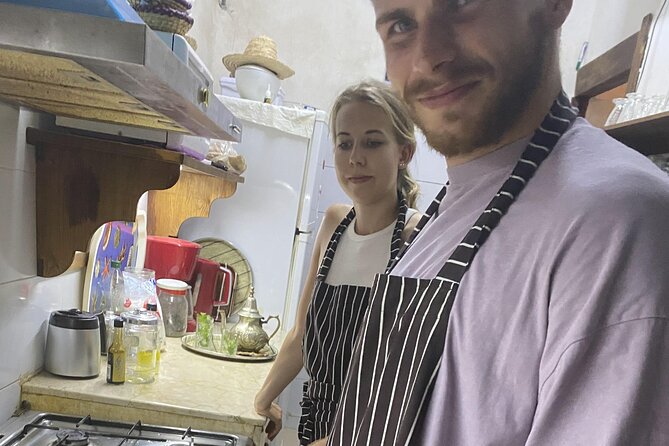
After the market, you head back to the cooking venue and begin preparing the menu you selected. The class is described as hands-on, so you take part in the preparation while the instructor gives directions and explains the techniques.
The choice of workshop is one of the most appealing features. You can concentrate on bread making, work on Moroccan pastries, or prepare a more complete dish such as chicken tagine or pastilla. If you have a strong preference, select it when booking or communicate it clearly ahead of time.
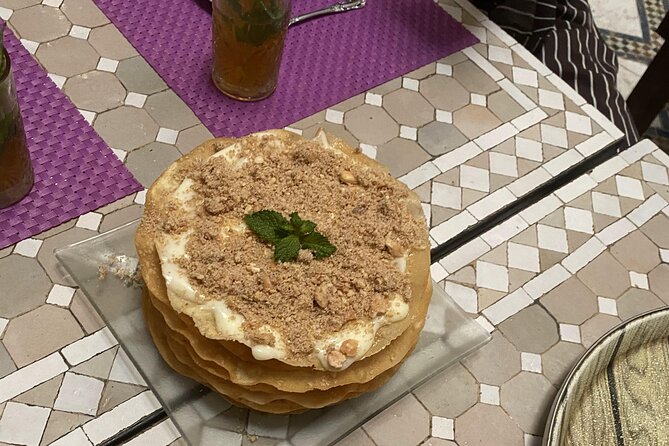
Bread and pastry are good choices if you want a focused session. They let you pay attention to dough, shaping, and presentation. The pastry workshop also suits anyone who wants to learn more about traditional Moroccan sweets rather than make only a savory dish.
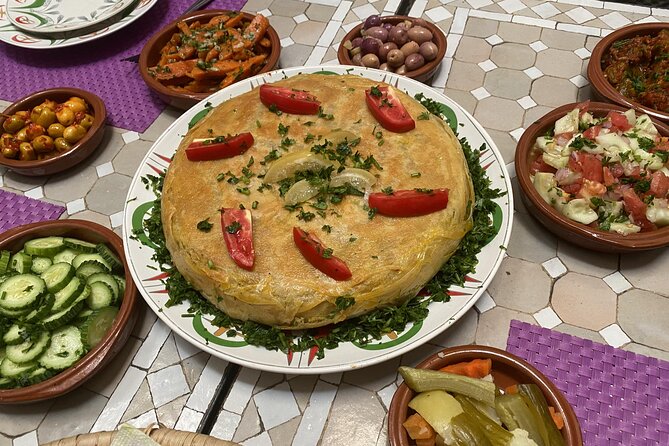
The main dish options offer a different kind of lesson. Chicken tagine introduces you to a famous Moroccan cooking style, while pastilla gives you a chance to work with one of the country’s distinctive savory pastries. The exact menu depends on what you choose with the provider.
What the instruction feels like
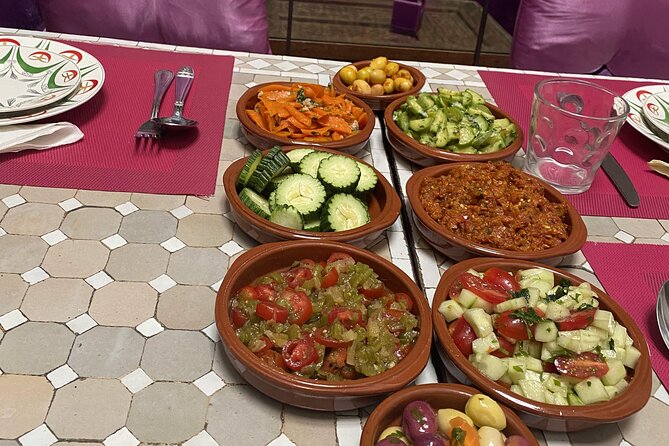
The cooking is presented as a guided workshop, not a formal demonstration where you sit back and watch. The instructor gives instructions as you prepare the food and talks with you about different subjects along the way.
Bliss Munatas has led sessions focused on bread and pastry. In that format, you receive direct instruction while preparing both dishes, and you can see the results of your work before sitting down to eat. Chaimae has led classes featuring chicken tagine and pastilla, based on dishes selected by the people attending.
Those examples show how the class can be adjusted to your interests. You are not locked into one fixed menu in every session. At the same time, the available description does not promise that every dish can be offered at every time, so confirm your preferred workshop before you rely on it.
A maximum of 20 people is listed. That is small enough to support a class format, though it is not a guarantee of a tiny private lesson. If close personal instruction is important to you, ask about the expected group size for your date.
More Dessert Classes in Morocco:
- 3 in 1 Cooking Class near Navona: Fettuccine, Ravioli & Tiramisu
★ 5.0 · 7,376 reviews - Florence: Pasta & Tiramisu Cooking Class with Unlimited Wine
★ 4.9 · 6,708 reviews - Rome: Pasta Making Class with Wine, Limoncello, and Dessert
★ 4.9 · 3,177 reviews - Rome: 3-in-1 Fettuccine, Ravioli, and Tiramisu Cooking Class
★ 4.9 · 2,704 reviews
Bread and pastry are the strongest choice for a short class
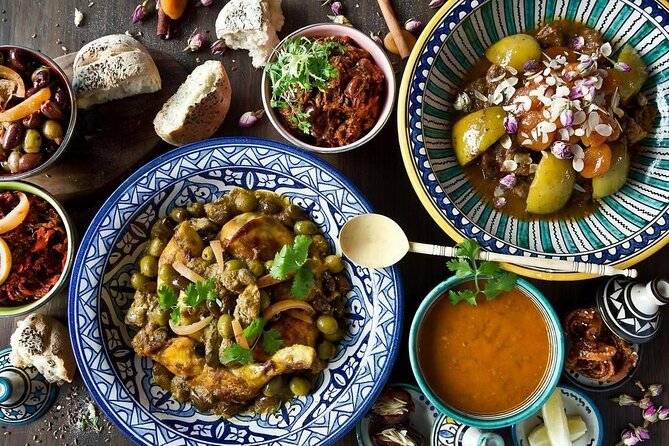
With only about two hours available, bread or pastry may give you the clearest sense of completing a project from start to finish. You can work through the preparation, see how the dough or sweets develop, and eat the results during the same visit.
The bread workshop is a good fit if you enjoy practical tasks and want something useful beyond the class. Bread is also a natural introduction to Moroccan food because it belongs beside many meals, not only as a special dish.
The pastry class adds a sweeter finish and pairs well with the tea service at the end. It may appeal more to you if your main interest is Moroccan hospitality, presentation, and traditional sweets.
You should keep your expectations in proportion. The experience does not claim to be a professional baking course, and the short duration limits how many techniques can be covered. It is best understood as a friendly introduction with enough participation to make the food feel like your own work.
Tagine and pastilla bring a different lesson
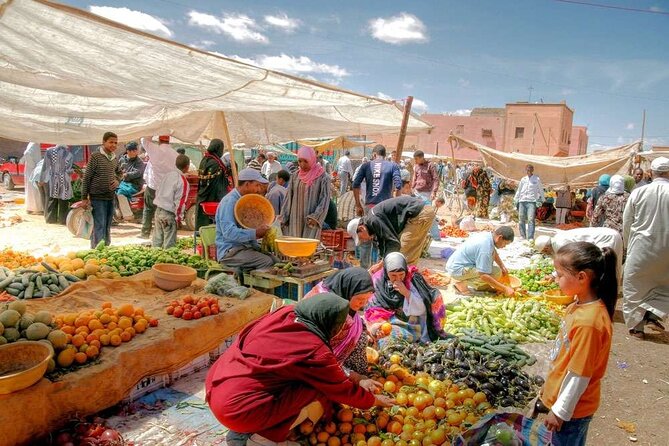
If you choose chicken tagine, the class focuses on preparing a well-known Moroccan dish and learning the steps that shape its flavor. You will be involved in the cooking rather than simply receiving a finished plate.
Pastilla offers a different experience. It combines cooking with pastry work, so it can be a smart choice if you want a savory dish that also involves careful assembly. The dish is distinctive enough to make the session feel tied to Morocco rather than like a general international cooking class.
These menu choices may be more satisfying if you want a full meal instead of a baking project. They are also useful if you plan to eat Moroccan food during your trip and want to understand more about what is on your plate.
Because the menu is chosen as part of the booking arrangement, confirm what you want before the class begins. The description allows for different Moroccan dishes, but it does not provide a fixed list of every option or promise that dietary substitutions are available.
Tea, pastries, and the meal at the end
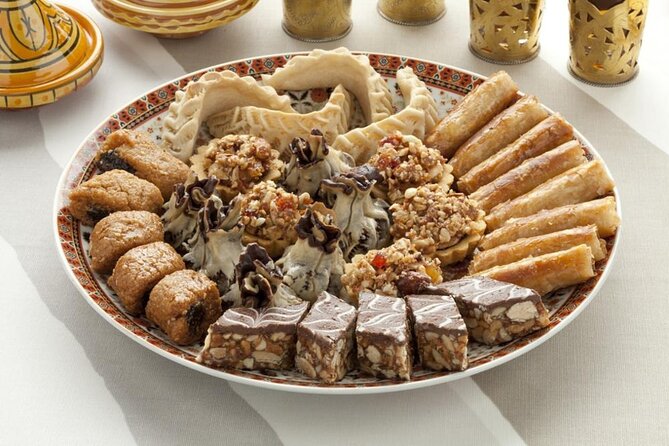
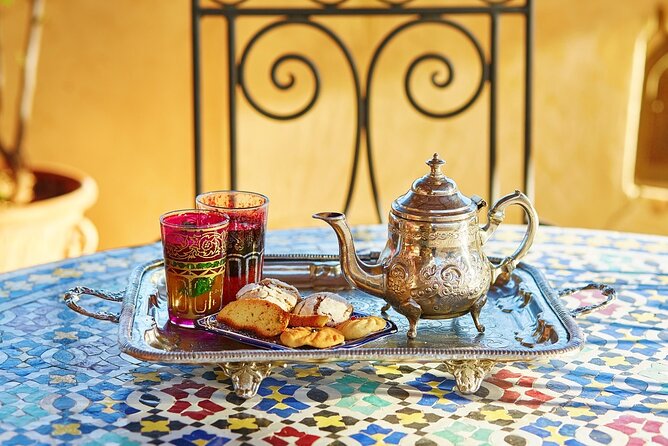
Once the cooking is done, you sit down and eat together with the class. The meal is served with Moroccan tea, and the experience includes a live show with Moroccan pastries.
This closing part matters. Cooking classes can feel rushed if everyone finishes a dish and leaves with no time to enjoy it. Here, the meal gives you a chance to taste the result, talk with the instructor and classmates, and see the social side of Moroccan food.
The tea preparation is also part of the lesson. You learn about the art of making Moroccan tea, so the drink is more than a simple accompaniment. It helps connect the cooking to the hospitality that shapes the whole visit.
The pastry presentation adds a festive touch, though you should not confuse it with a separate performance event. The available details describe a live pastry show served with the tea, not a full evening of entertainment.
Why the home setting changes the experience
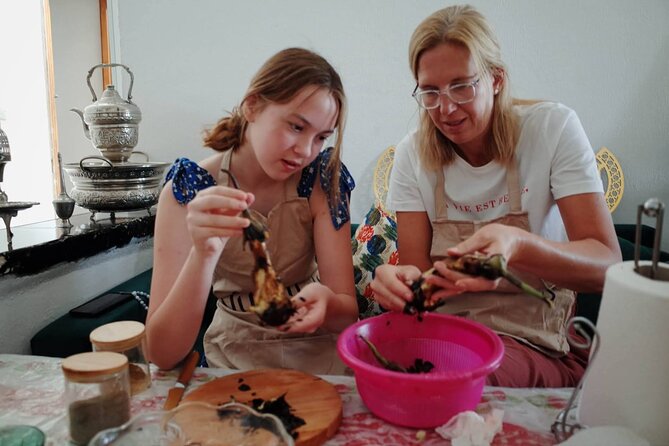
The class takes place at a home venue rather than a large commercial cooking school. That can make the meal feel more personal and gives the session a direct connection to everyday Moroccan cooking.
For me, the home setting is a strong reason to choose this activity over a standard restaurant meal. You get to ask questions while the food is being prepared, see how the instructor organizes the work, and eat in the same place where the class took shape.
It also means the experience may feel less polished than a professional culinary studio. A home setting can be warm and personal, but it may not have the equipment, space, or formal layout you would expect from a cooking school. The available details do not specify the kitchen facilities, so you should book it for the human contact and participation rather than for a showroom-style setup.
The price and what you receive for it
The listed price is $46.53 per person. For roughly two hours, that is not the cheapest way to get a meal in Fes, but you are paying for several parts at once: a market visit, instruction, ingredients, cooking, the meal, Moroccan tea, and the pastry presentation.
The value improves if you already want a cooking class and would otherwise pay separately for an organized food activity. You are also getting a practical lesson instead of only a plate of food. If you are interested in Moroccan cuisine beyond tasting it, the price is reasonable for the combined format.
The value is less clear if you mainly want a large meal or a long market tour. The class is short, and the exact menu is not fixed in the supplied details. You are paying for participation and cultural context, not an extended culinary school experience.
It is booked on average 31 days ahead, so popular dates may fill early. I would reserve ahead if you have a specific day, menu, or guide in mind.
Who should book this Fes cooking class
I would recommend it to you if you enjoy learning by doing. It suits people who want to handle ingredients, ask questions, and eat a meal they helped prepare.
It is also a good pick for couples, families, and small groups with different food interests. One person may prefer bread, another may want pastry, and someone else may be drawn to tagine or pastilla. The menu choice allows more room for personal preference than a class with one fixed recipe.
Food lovers will get the most from the market visit and the explanation of ingredients. You do not need to be an experienced cook. The class is built around instruction, and the guidance is meant to take you through the preparation.
I would hesitate if you want a highly structured culinary course, a long market walk, or a guaranteed private class. A maximum of 20 people is allowed, and the two-hour schedule leaves limited time for detailed technique work.
Service animals are allowed, and the venue is near public transportation. No other accessibility details are provided, so contact the provider if you need specific information about the cooking space or movement between the market and venue.
Booking, weather, and cancellation details
You receive confirmation at the time of booking, and the activity uses a mobile ticket. Free cancellation is available when you cancel at least 24 hours before the start time.
A cancellation made within 24 hours is not refunded, and changes made during that period are not accepted. The cut-off follows local time in Fes, so check the clock carefully if you are booking from another country.
The activity requires good weather. If poor weather causes a cancellation, you are offered another date or a full refund. A minimum number of participants is also required. If that minimum is not met, you can choose another date or experience, or receive a full refund.
Should you book it?
Book this experience if you want a personal, hands-on introduction to Moroccan food, especially if bread, pastry, chicken tagine, or pastilla interests you. The market visit, home cooking, shared meal, tea, and pastry presentation give the class more substance than a simple recipe demonstration.
Before paying, decide which workshop you want and confirm that the preferred menu is available. Also remember that the two-hour format is compact and that the group may include up to 20 people.
For most food-focused visits to Fes, I think the combination offers good value at $46.53. You leave with a meal, new cooking techniques, and a better sense of how Moroccan ingredients move from market stall to table.
FAQ
How long does the cooking class last?
The activity lasts approximately two hours.
Where does the experience begin and end?
It begins at Dhar Richa in Fes, Morocco, and ends back at the same meeting point.
What can I cook during the class?
You can choose from workshops including bread making, traditional Moroccan pastries, chicken tagine, pastilla, and other Moroccan dishes. The available menu depends on the option selected for your session.
Is the market visit included?
Yes. The experience begins with a traditional Moroccan market visit where the ingredients are explained before you return to the cooking venue.
How many people can join the activity?
The maximum group size is 20 people.
Can I cancel for a full refund?
Yes, if you cancel at least 24 hours before the experience start time. Cancellations made less than 24 hours in advance are not refunded.
More Hands-On Workshops in Morocco
- Marrakech: Moroccan Cooking Class with Pickup
★ 4.6 · 1,862 reviews - Marrakech: Traditional Moroccan Cooking Class & Market Visit
★ 4.8 · 1,861 reviews - Marrakesh: Moroccan Dishes Cooking Class with a Local Chef
★ 5.0 · 1,615 reviews - Moroccan Cooking Class & Marrakech Market Visit with Chef Khmisa
★ 5.0 · 1,504 reviews
Just added around Morocco
- cooking with rabab Tagahzout★ 5.0 · 11 reviews
- Moroccan Cooking Class and Eco-Farm Visit – Full day★ 5.0 · 13 reviews
- Cooking the Moroccan Way, Tamraght★ 5.0 · 37 reviews
- Agadir Cooking Class with Locals★ 4.5 · 6 reviews
- Agadir Cooking class (tajin+msemen+thé)with 1h camel ride★ 5.0 · 8 reviews
- Cooking Class and 2 hours Camel Ride★ 5.0 · 7 reviews
- Taghazout: Authentic Moroccan Botanical Garden Cooking Class★ 4.1 · 5 reviews
- Rabat: Authentic Moroccan Cooking Class with Expert Chefs★ 5.0 · 17 reviews
Tiramisu & Dessert Classes, compared.
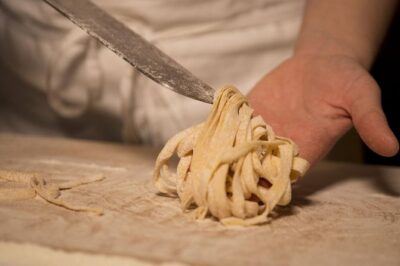
3 in 1 Cooking Class near Navona: Fettuccine, Ravioli & Tiramisu
Read our review →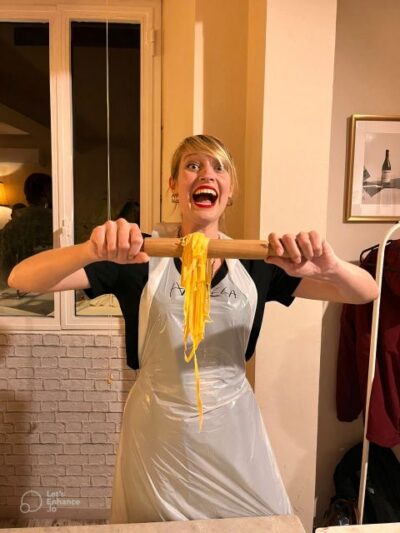
Rome: Pasta Making Class with Wine, Limoncello, and Dessert
Read our review →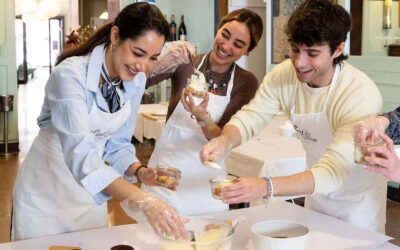
Rome: 3-in-1 Fettuccine, Ravioli, and Tiramisu Cooking Class
Read our review →
Florence: Cooking Class Pasta & Tiramisu Making Unlimited Wine
Read our review →
Fettuccine & Tiramisù: Cooking Class with Wine & Limoncello
Read our review →
Florence Cooking Class The Art of Making Gelato & Authentic Pizza
Read our review →
Rome: Pasta & Tiramisu Cooking Class near the Spanish Steps
Read our review →Browse the lists this tour appears in