
Review · MARRAKECH
Marrakech: Traditional Moroccan Crepes & Bread Cooking Class
Marrakech’s best food lessons often begin with humble dough, and this two-hour bread class puts you right in the middle of it. At a workshop near Bab Doukkala, you make msemen, harcha, and batbout from scratch, then sit down with mint tea and taste the results. I especially like the hands-on format and the small groups, capped at 10 people.
I also like that the lesson shows three different doughs and cooking methods rather than repeating one recipe. You get an apron, tools, ingredients, guidance, and electronic recipes for $37. The main consideration is communication: English, French, and Arabic are offered, but one session had a teacher who spoke no English, making questions harder to answer.
Key points to know before booking
- Three Moroccan breads in one class: Make flaky msemen, semolina-based harcha, and soft batbout.
- Mint tea is part of the lesson: You prepare and pour the tea, then drink it with your baking.
- Small groups keep the work personal: The class is limited to 10, and some sessions are much smaller.
- A local-feeling meeting point: The workshop is at 44 Der Hajra near Bab Doukkala, reached through food markets used mostly by local people.
- You leave with useful follow-up material: Electronic recipes are included, and some sessions provide a box for leftover bread.
- Bring the right appetite: The class is not suitable for people with food allergies or gluten intolerance.
Three Moroccan breads, three different techniques
The heart of this class is its variety. You are not simply shown how to make one flatbread, then sent home. You work with msemen, harcha, and batbout, three familiar Moroccan breads that look and feel quite different.
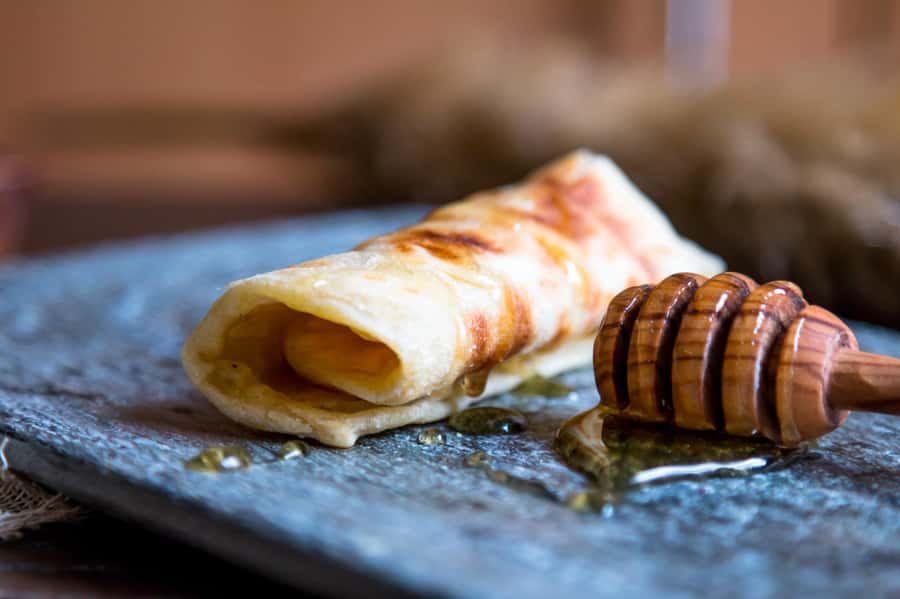
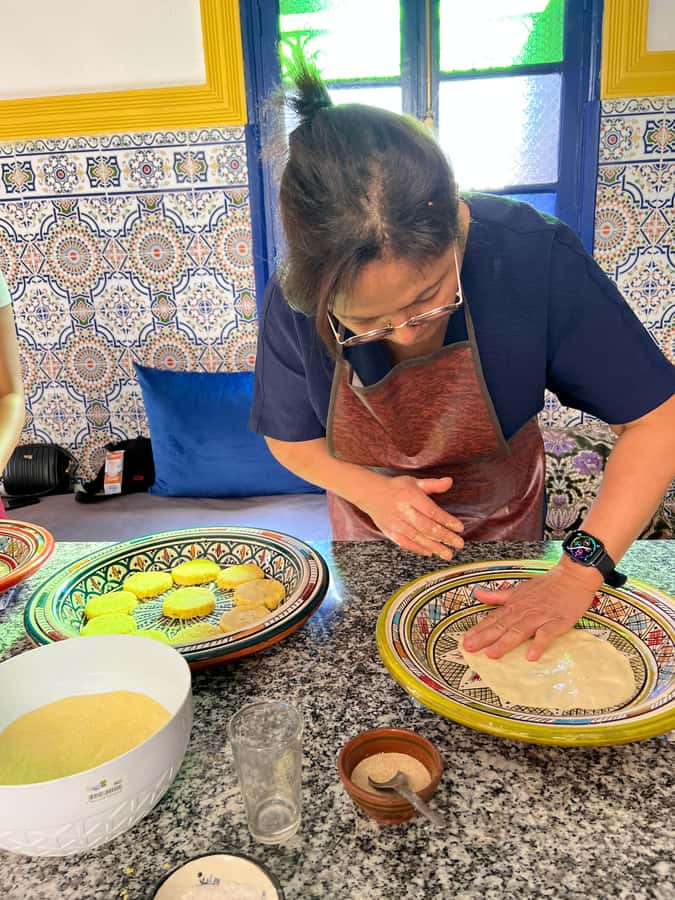
Msemen is the flaky Moroccan crepe you may have seen at breakfast tables and hotel buffets. The dough is stretched and folded, creating thin layers that cook into a crisp, chewy square. This is the bread most likely to make you rethink the word pancake. It is not fluffy in the usual Western sense, and the folding technique is the part worth watching closely.
Harcha is a semolina pancake or galette. Its texture differs from msemen, and the method gives you another feel for Moroccan home baking. Batbout is a soft, pita-like bread cooked on a pan. Together, the three recipes give you a useful introduction to different doughs, shaping methods, and cooking styles.
I like this mix because it keeps the class active. You move from handling dough to shaping it, cooking it, and tasting it. The lesson is simple enough for beginners, but it still gives you techniques you can repeat at home.
More Baking Classes in Morocco
- Cooking Class with Bread Workshop and Pastry in Fes
★ 5.0 · 57 reviews - Moroccan Baking Bliss in Casablanca Sweet Discoveries Await
★ 5.0 · 15 reviews - Baking Workshops at Fez Cooking School at Palais Amani
★ 5.0 · 15 reviews
Arriving at 44 Der Hajra near Bab Doukkala
The workshop address is 44 Der Hajra, Bab Doukkala, Marrakech. Transportation is not included, so you need to make your own way there. The location is in Marrakech, and directions may be sent by WhatsApp, which is useful because finding a workshop in the medina area can take more attention than finding a large hotel.
One particularly useful detail is the walk through food markets near Bab Doukkala. These markets are described as more local than tourist-focused, so the journey to the class gives you a small look at everyday food shopping before you start cooking. Allow enough time to find the address and avoid arriving flustered with flour waiting.
The setting is described as a beautiful Moroccan home or workshop. Do not expect a polished cooking studio designed for television. The appeal is the home-style feel, with the baking taking place in a more personal setting.
That can be a strength if you want contact with ordinary Moroccan food traditions. It may matter less if you prefer a large professional kitchen with clearly marked stations and formal presentation. For this activity, the informal setting fits the subject well.
Getting your hands into the dough
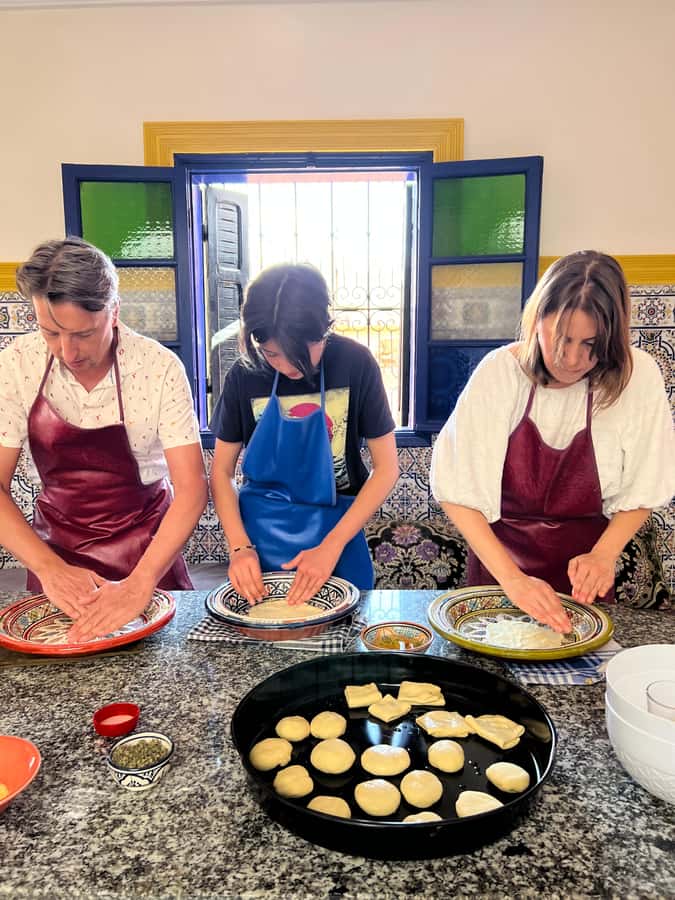
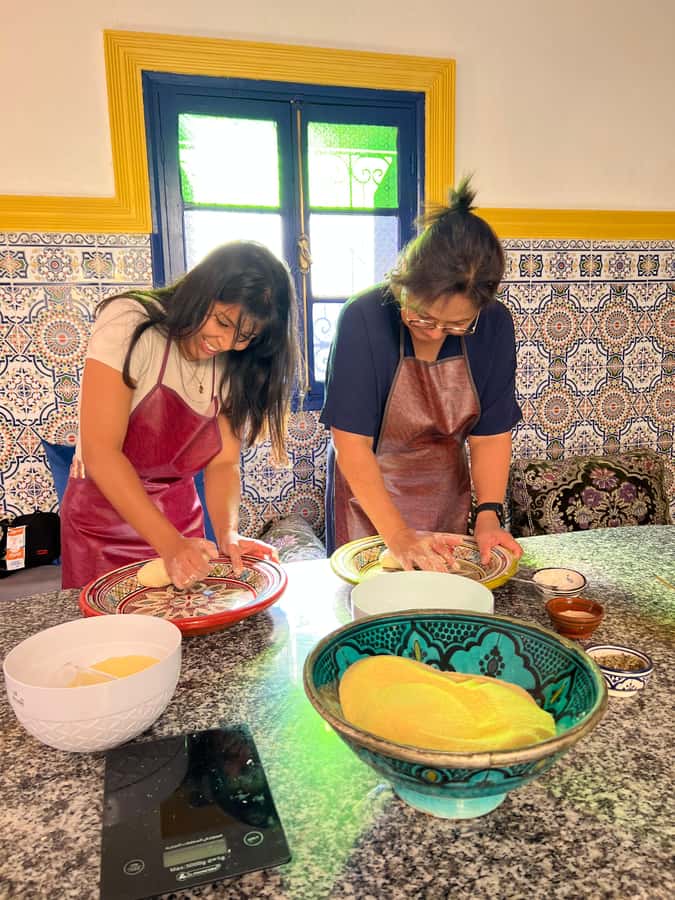
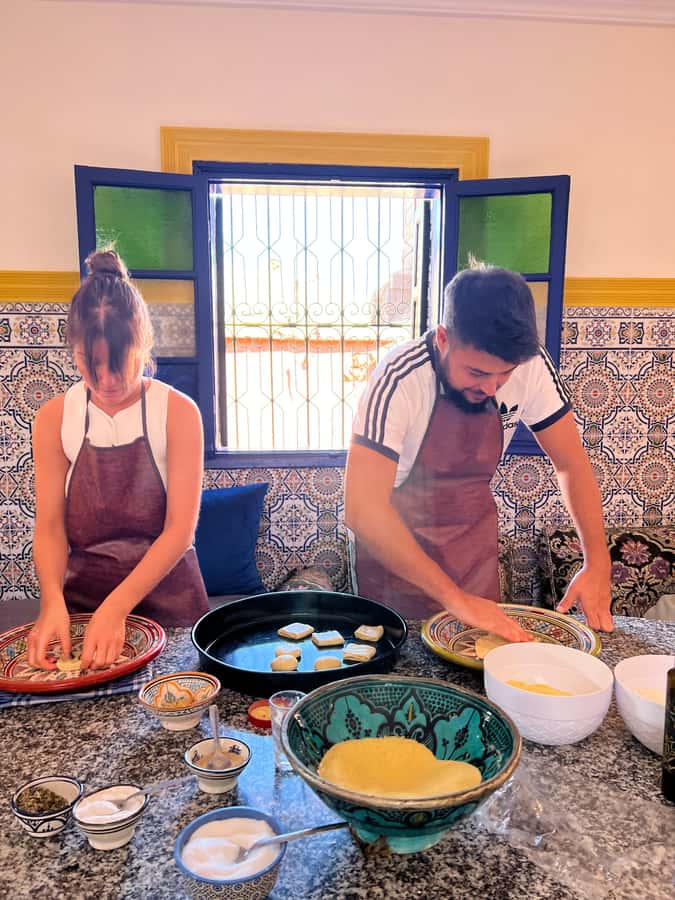
You receive an apron and the necessary ingredients and utensils. The host explains the process, demonstrates the techniques, and helps you as you work. The important point is that you are not standing at the edge of the room watching a chef do everything.
The class is designed to take you from the first mixing and shaping through cooking. You control your own creations, with the teacher stepping in when the dough needs a particular touch. Reviews of the sessions describe the teaching as hands-on, especially when language made conversation limited.
This is useful for bread. Written instructions can tell you what ingredients to use, but they cannot always show how soft the dough should feel or how to stretch and fold it. Watching the teacher’s hands, then copying the movement, is a practical way to learn.
The class should suit beginners. You do not need prior baking experience, and the recipes are presented as manageable. Still, come prepared to work. You will handle dough, flour, and cooking utensils, so comfortable clothing is sensible. Bring water as well as an appetite.
What the small group size changes
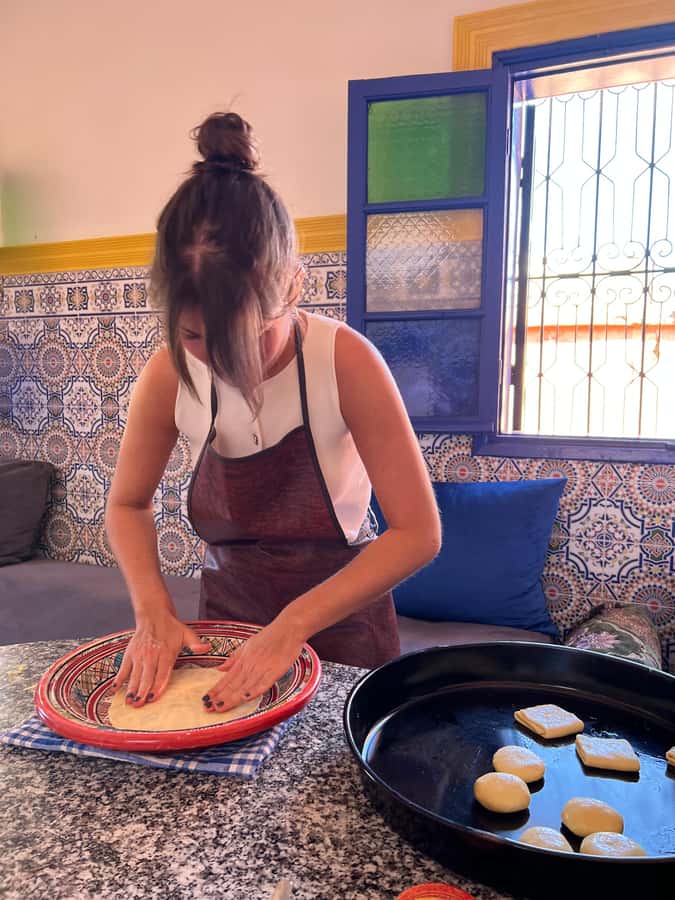
The maximum group size is 10 people. That is small enough to make it easier to ask for help, especially during the shaping and cooking stages. A class of 10 is not private, but it should feel more personal than a large demonstration.
Some sessions have been much smaller. One class had two people, while another became a private lesson for three. Small attendance can give you more time with the instructor and may leave you with more bread to take away, but you cannot count on a private class when you book.
The teaching team can work in Arabic, French, and English. The experience may include a translator or someone helping with communication. Still, the quality of language support may vary by session. One participant found the demonstration clear but could not ask questions because the teacher did not speak English.
My advice is to treat the visual demonstration as part of the lesson. Watch closely, ask questions early, and use simple words or gestures if needed. The techniques are physical, so a language gap does not ruin the class, but fluent conversation is not guaranteed at every session.
More Baking Classes in Marrakesh:
- Lisbon: Pastel de Nata Baking Class
★ 4.9 · 2,106 reviews - Group Tour: Garni, Symphony of Stones, Geghard, Lavash Baking
★ 5.0 · 1,042 reviews - Paris Croissant Small-Group Baking Class with a Chef
★ 5.0 · 910 reviews - Garni & Geghard Small-Group Day Trip with Lavash Baking
★ 4.8 · 881 reviews
The mint tea ritual after the baking
Moroccan mint tea is not just an extra drink added at the end. It is part of the experience, and you help prepare it after the dough has been made and cooked.
The ritual gives the class a natural pause. Once the breads are ready, you sit down, taste what you made, and learn how the tea is prepared and poured. You may have the breads with accompaniments such as olives, jam, honey, or similar simple items, depending on the session.
I like this part because it connects the bread to the way it is eaten. You are not only learning isolated recipes. You are seeing how a few everyday foods come together around a Moroccan tea table.
The tea also makes the class social. You can chat about your trip to Morocco while eating the results. This is one reason the activity works well early in a stay: you get food, conversation, and a few techniques that may help you understand what you are eating elsewhere in the country.
Eating your work, and possibly taking some home
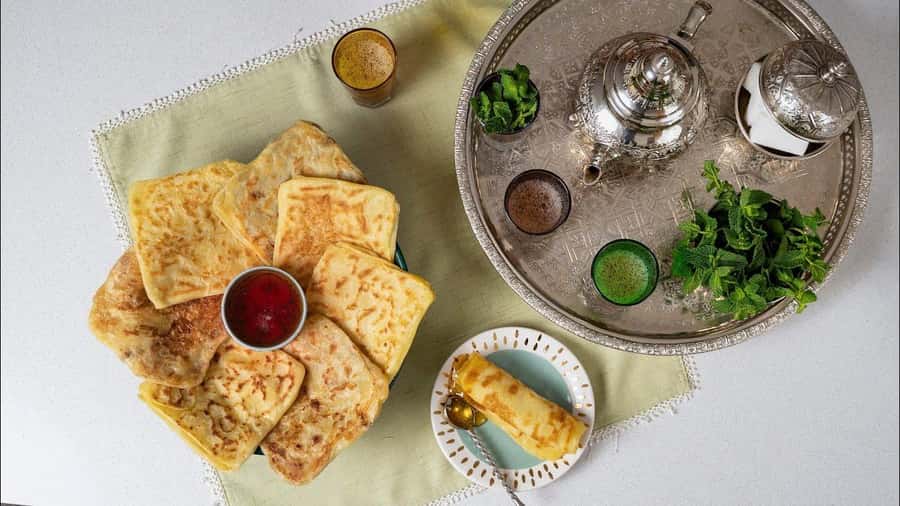
After cooking, you taste the breads while they are fresh. The amount can be generous. One person found there was too much bread to take back, while smaller classes allowed participants to bring home leftovers in a box.
That is pleasant if you have a room with somewhere to store food and plan to eat it soon. It is less useful if you are moving between hotels or heading straight to the airport. The class is focused on making and eating, not on producing a neatly packaged gift for the journey.
An electronic recipe collection is included, which gives the experience value beyond the two hours. You can try the breads at home instead of letting the class become a pleasant memory with no practical follow-up. One participant had not received the recipes yet and needed to chase them, so keep an eye on your messages after the class if they do not arrive.
The recipes are especially useful for msemen. If you have been eating the flaky crepes at your hotel, the class gives you a chance to learn the process behind them. The batbout and harcha also add variety to a home baking day.
Is $37 good value?
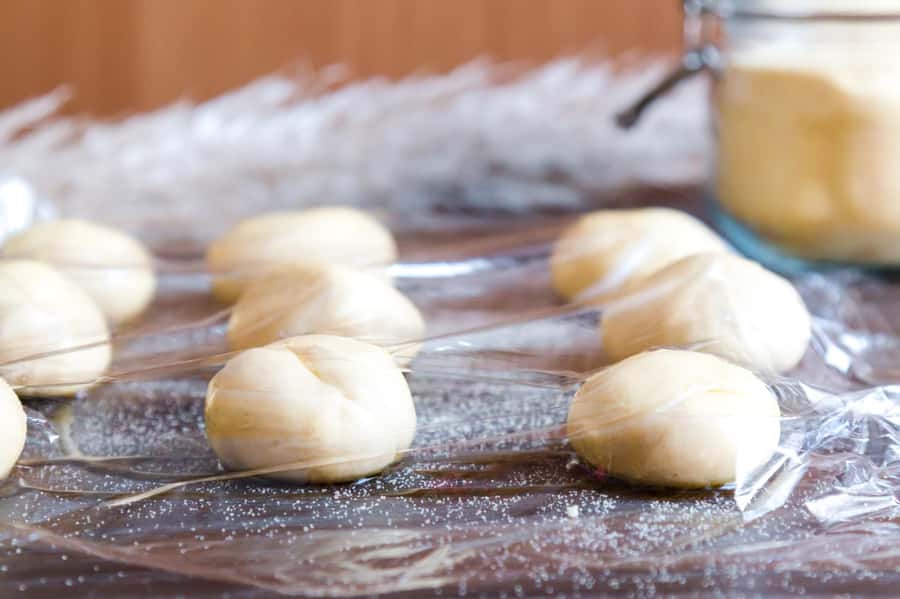
At $37 per person, the price covers a two-hour interactive class, ingredients, equipment, an apron, instruction, tasting, mint tea preparation, and electronic recipes. Transportation and personal spending are not included.
I see the value in the amount of participation. You are paying for food, but also for guided practice. A meal gives you something to eat once. This class gives you three recipes, demonstrations, time with an instructor, and a chance to repeat the dishes at home.
The price looks strongest for people who genuinely like cooking or want a food activity with more substance than a tasting. If you only want to sample Moroccan bread, buying msemen or batbout from a bakery will cost less and require no work. If you want to understand how the bread is made, $37 is easier to justify.
The small group limit helps the value. You are not paying for a seat in a large lecture. You have a chance to handle the dough and ask for help. The exact amount of individual attention will depend on attendance, but a group of 10 is reasonable for this kind of practical class.
Who should book this bread class?
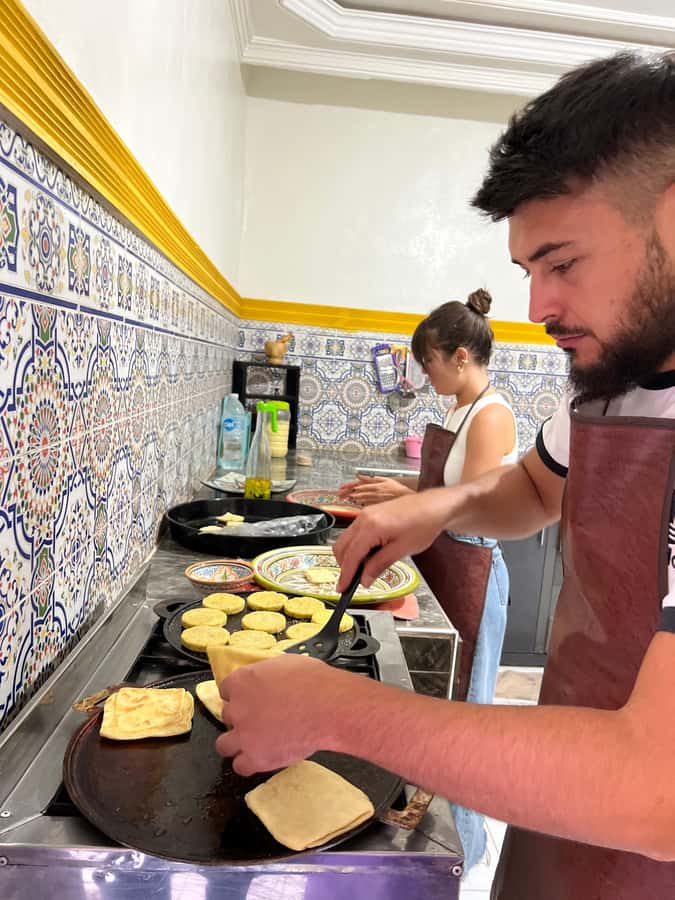
I would recommend it to first-time visitors who want a gentle introduction to Moroccan food. It is also a good choice for couples, friends, and families with older children who enjoy making things together. One family of four, including two children, found the activity fun and manageable.
It suits bread lovers especially well. If you have enjoyed msemen during your stay, this is a chance to learn the method rather than simply order another one. The lesson is also a nice break from sightseeing because the activity is slower, social, and centered on a table.
The class is not suitable for children under 4. It is also not suitable for anyone with food allergies or gluten intolerance. All ingredients are provided, so you should ask yourself whether the recipes fit your dietary needs before booking.
You should also be comfortable with a casual, hands-on format. This is not the right pick if you want a formal culinary school lesson, a long menu, or guaranteed fluent English instruction from the person leading every demonstration.
Timing, cancellation, and practical planning
The activity lasts two hours, with starting times available according to the booking calendar. A morning session could fit nicely before a day in the medina, while an afternoon class gives you a break after sightseeing. Since the exact start time is not fixed here, check availability before building the rest of your day around it.
Free cancellation is available up to 24 hours before the experience for a full refund. You can also reserve now and pay later, which is useful if your Marrakech schedule is still shifting.
Wear comfortable clothes suitable for baking. Bring water, and leave room in your day for eating what you make. If you expect to carry leftovers, bring or request a box from the host rather than assuming you will have suitable packaging.
For directions, use the workshop address and any WhatsApp instructions provided. Bab Doukkala can be busy, and a local market route may be more interesting than a direct taxi ride, but it can also take patience to locate the exact doorway.
My call: book it if you want food you can repeat
I would book this class if you want to learn three useful Moroccan breads, cook with your hands, and sit down for mint tea afterward. The strongest parts are the small groups, the clear physical demonstrations, the three different recipes, and the chance to eat your own work.
I would skip it if you have a serious allergy, cannot eat gluten, are traveling with a child under 4, or want guaranteed detailed conversation in English with the main instructor. Otherwise, the $37 price is fair for a practical class that gives you something to do in Marrakech and recipes you can use after Morocco.
Go ready to get flour on your hands. That is the point.
FAQ
Where is the Moroccan bread class held?
The workshop is at 44 Der Hajra, Bab Doukkala, Marrakech.
How long does the experience last?
The class lasts two hours.
How much does the class cost?
The listed price is $37 per person.
Which Moroccan breads will I make?
You will make msemen, harcha, and batbout.
Is mint tea included?
Yes. You help prepare the traditional Moroccan mint tea and taste it with the baked breads.
Are ingredients and cooking equipment provided?
Yes. All ingredients, utensils, and an apron are provided.
Are recipes included?
Yes. Electronic recipes are included with the experience.
What languages are available?
The activity is offered in Arabic, French, and English.
How many people can join the class?
The group is limited to 10 participants.
Is the class suitable for children and people with dietary restrictions?
Children under 4 are not permitted. The class is not suitable for people with food allergies or gluten intolerance.
More Hands-On Workshops in Marrakesh
- Marrakech: Moroccan Cuisine Cooking Class in Local Home
★ 4.8 · 508 reviews - Marrakech: Moroccan Cooking Workshop at La Maison Arabe
★ 5.0 · 446 reviews - Marrakech: Tajine Cooking Class in a Traditional Riad
★ 4.8 · 424 reviews - Marrakech: Moroccan Cooking Class with Market Visit and Meal
★ 4.9 · 347 reviews
More Moroccan Cooking Classes in Marrakesh
- Marrakech: Moroccan Cooking Class with Pickup
★ 4.6 · 1,862 reviews - Marrakech: Traditional Moroccan Cooking Class & Market Visit
★ 4.8 · 1,861 reviews - Marrakesh: Moroccan Dishes Cooking Class with a Local Chef
★ 5.0 · 1,615 reviews - Marrakech: Moroccan Cooking Class with a Local Family
★ 4.9 · 668 reviews
Just added around Marrakesh
- Marrakech: 3-Hour Open-Air Moroccan Cooking Course★ 4.9 · 74 reviews
- Moroccan Food Cooking Class with a Local Chef in Marrakech★ 4.7 · 90 reviews
- Edgy 8 Dish Private, Fusion Cooking Class, Menu Plan, Market★ 4.9 · 31 reviews
- Moroccan cooking class in Marrakech with berber chef★ 5.0 · 16 reviews
- Marrakesh: Private Cooking Class & Local Market Shopping★ 4.7 · 15 reviews
- Marrakech: Moroccan Cooking Class for vegetarians and vegan★ 4.9 · 156 reviews
- Marrakech: Moroccan Cooking Class with Amazing Local Chef!★ 4.9 · 100 reviews
- Marrakech: Moroccan Cooking Class with Local Chef★ 4.6 · 87 reviews
Baking & Bread Classes, compared.
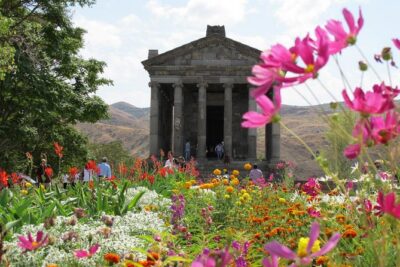
Group Tour: Garni, Symphony of Stones, Geghard, Lavash Baking
Read our review →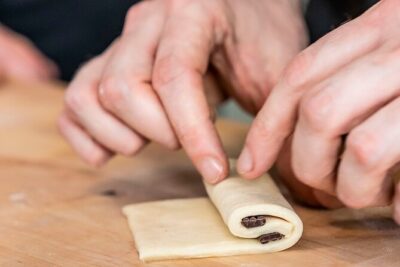
Paris Croissant Small-Group Baking Class with a Chef
Read our review →
Garni & Geghard Small-Group Day Trip with Lavash Baking
Read our review →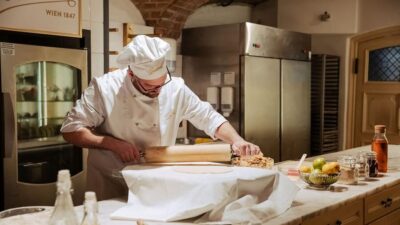
Vienna: Gerstner KuK Hofzuckerbäcker Baking Show & Tasting
Read our review →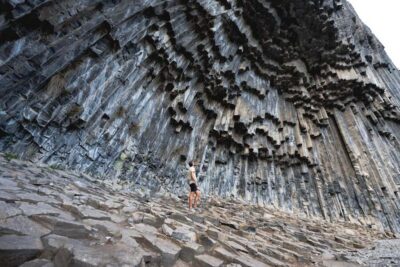
Yerevan: Garni, Geghard, Symphony of Stones & Lavash Baking
Read our review →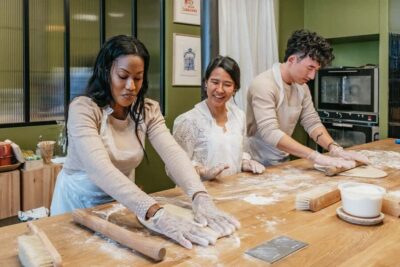
Paris: French Croissant Baking Class with a Chef
Read our review →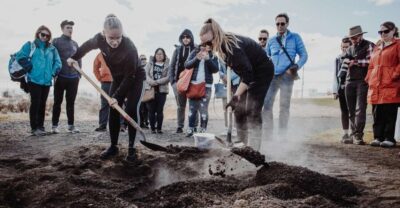
Laugarvatn Fontana: Geothermal Bread-Baking Experience
Read our review →Browse the lists this tour appears in