
Review · NAPLES
Cooking Lesson: Neapolitan pasta homemade
The best part of this Naples cooking class is its old-school method: you roll the dough by hand, cut it with simple tools, and make pasta without a machine. Chef Amos explains his family recipe for egg pasta, then helps you turn it into fettuccine and ravioli.
I like the taste of place here, from Vesuvian tomatoes and homemade bread to the final plates of pasta with Neapolitan sauce and ragù. I also like that the class is practical rather than a demonstration, and that you leave with a chef diploma and skills you can use at home.
The main drawback is the menu’s reliance on wheat and egg pasta, so this is not suitable for people with gluten intolerance. At $92 per person, it is also a better value for anyone who wants a full meal and hands-on instruction, not just a quick cooking show.
Key points to know before booking
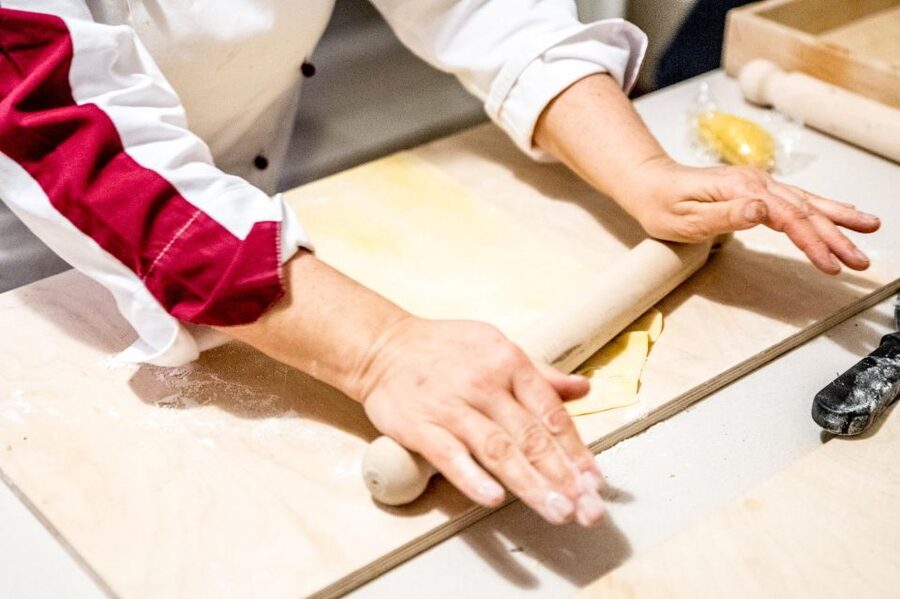
- Hand-rolled pasta: You use a rolling pin and traditional methods instead of a pasta machine.
- Two main dishes: You prepare fettuccine and ravioli, then eat them with Neapolitan sauce and ragù.
- Naples ingredients: The starter includes organic Vesuvian tomatoes and homemade bread.
- Chef Amos leads the class: Instruction is available in English, Italian, French, and Spanish.
- Central meeting point: The usual venue is Naples Cooking Lab on Spaccanapoli, in the historic center.
- A full two-hour meal: The price includes tools, apron, instruction, starter, one drink, lunch or dinner, and a chef diploma.
Rolling pasta by hand on Spaccanapoli
This class takes place at Naples Cooking Lab on Spaccanapoli, one of the main streets through Naples’ historic center. That location makes the lesson easy to pair with a day of sightseeing, especially if you are already exploring the old city on foot.
You may occasionally be directed to Pizzeria Mammina in Galleria Umberto I instead. The change is announced in advance, so check the meeting details before setting out. Both locations put the class in central Naples, but they are not the same address.
The cooking begins with a basic but useful lesson on pasta types. You learn how different shapes are made and why dough is handled in different ways. This gives the activity some context before you start mixing and kneading.
Then you work with egg pasta based on the instructor’s family recipe. The lesson includes a description of the dough ingredients and a look at an old-style recipe said to come from the 1800s. That does not turn the class into a lecture. The point is to understand what goes into the dough before your hands get messy.
More Pasta Making Classes in Naples
- Naples: Pasta Making Class with Starter and Drink
★ 4.9 · 1,060 reviews - Naples: Pasta Cooking Class with Tiramisù and a Drink
★ 4.6 · 415 reviews - Amazing Pizza and Pasta Class at Savio’s kitchen cooking school
★ 5.0 · 104 reviews
The family recipe and the waiting dough
Making pasta from scratch often looks easy until you try to get the dough smooth and workable. This is where the class earns its keep. You knead the dough, learn its texture, and let it rest before rolling it out.
While the dough rests, you are served a local starter. The supplied details specifically mention organic Vesuvian tomatoes and homemade bread. These are simple foods, but they help show why ingredient quality matters in Neapolitan cooking.
Vesuvian tomatoes are closely tied to the food culture around Mount Vesuvius. Here, you are not just adding another snack to the timetable. You are tasting the sort of local produce that gives a basic sauce its character.
The starter also gives you a pause before the more technical work begins. Two hours is not a long time for a cooking course, so this break is useful rather than wasted. You get to eat something while the dough rests, then return to the pasta with the next step ready.
No pasta machine, just a rolling pin
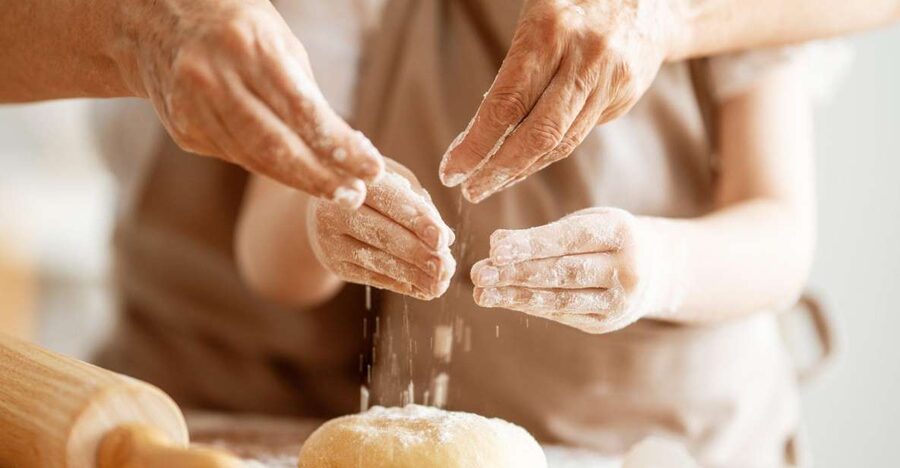
The defining feature of the lesson is the refusal to use machinery. You roll the dough with a rolling pin, following methods passed down through the instructor’s family and older home cooks.
That matters if you want to understand the feel of fresh pasta. A machine gives you neat, even sheets with less effort. Hand rolling takes more care, but it also lets you see how thin the dough becomes and how much pressure is needed.
You should not expect every piece to look factory-perfect. That is part of the charm, and it is also the point where patience matters. If you want a quick activity with no flour on your hands, this may feel like work. If you want to learn a traditional technique, the hands-on approach is the reason to book.
The class also introduces several pasta shapes. You make fettuccine and ravioli, while the chef shows you how tagliolini and pappardelle are prepared. These shapes are related, but their width and use with sauce differ.
Fettuccine is broad enough to hold a hearty sauce. Tagliolini is thinner and more delicate, while pappardelle is wider and more substantial. You do not simply receive a plate of pasta at the end. You get a quick lesson in how cutting changes the final dish.
Shaping ravioli and mixing the filling
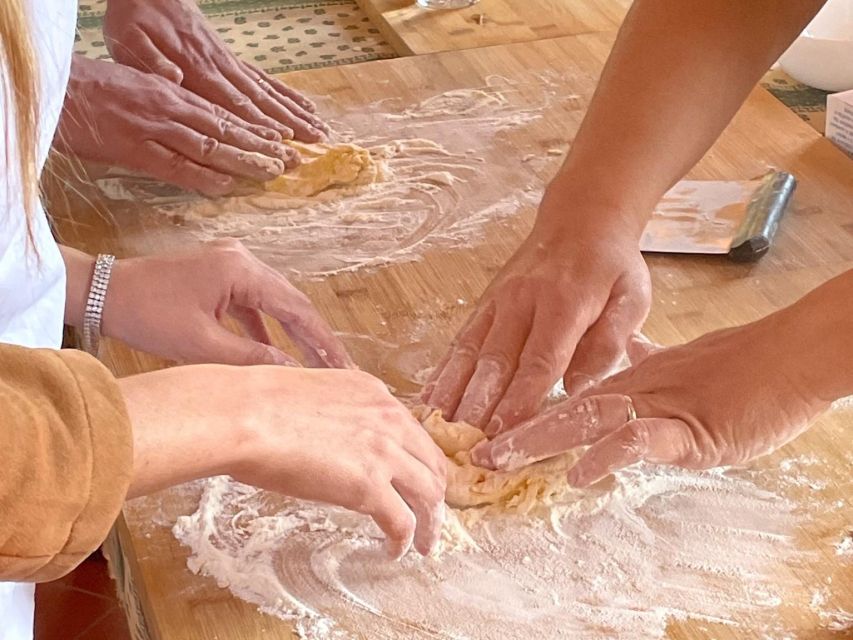
Once the pasta sheet is ready, you cut it and begin shaping the ravioli. The filling is mixed during the class, then placed into the pasta before the edges are joined.
This is a useful part of the activity because ravioli requires a little more control than a simple ribbon pasta. You need to avoid overfilling, close the edges properly, and leave enough space around the filling. The chef’s guidance matters here, especially if this is your first attempt.
The lesson description does not specify the exact filling ingredients, so do not book expecting a particular recipe beyond the stated pasta dishes and sauces. What is clear is that you will mix the filling yourself and incorporate it into the ravioli rather than watching someone else do it.
That gives the class a good balance. Fettuccine teaches you about rolling and cutting. Ravioli adds filling, shaping, and sealing. You leave with two different pasta skills instead of one repeated task.
Same place, a different menu:
- Naples: Pizza-Making Workshop with Drink and Appetizer
★ 4.9 · 5,411 reviews - Authentic Pizza Making Class in Naples with Appetizers and Drink
★ 5.0 · 3,178 reviews - Naples: Neapolitan Pizza and Tiramisù Making Class
★ 4.8 · 839 reviews - Semi-Private Pizza Making Experience in Naples with Drink
★ 5.0 · 324 reviews
Cooking the pasta and sitting down to eat
When the pasta is ready, it is cooked in water for a few minutes. The finished meal includes tagliatelle or fettuccine with Neapolitan sauce and ravioli with ragù. The wording describes both fettuccine and tagliatelle, so the exact ribbon shape on your plate may depend on the class’s preparation.
The sauces give the meal two different styles. Neapolitan tomato sauce lets the pasta and tomato come through clearly. Ragù brings a fuller, meat-based sauce to the ravioli. Eating the food you have just made is a key part of the lesson, not an afterthought.
Your lunch or dinner includes one alcoholic or nonalcoholic drink. Additional drinks after that first one are not included, so budget for them separately if you expect to linger over the meal.
A local appetizer is also included before the pasta. Together, the starter, pasta dishes, and drink make the $92 price easier to assess. You are paying for instruction and ingredients, but also for a sit-down meal in central Naples.
What the $92 price gets you
At $92 per person, this is not the cheapest way to eat pasta in Naples. It can still be fair value if you want a proper activity rather than a restaurant meal alone.
The fee includes kitchen tools, an apron, the chef’s lesson, the food you prepare, a local appetizer, one alcoholic or nonalcoholic drink, and a chef diploma. You are not paying extra to rent basic equipment or to taste the finished dishes.
The diploma is a lighthearted souvenir, but it adds a nice finish for families, couples, or a group celebrating something. The practical value is in the technique and the meal. If you already cook fresh pasta regularly, the class may offer less new material for the price.
This is especially suited to people who enjoy food enough to spend two hours making it. The class is also a good fit for a group occasion. One Italian booking described it as a fun pasta course arranged for a bachelorette party, with chef Amos guiding the group throughout.
That detail helps set the tone. You can treat the class as a serious lesson, but you do not need to be an experienced cook. The activity is designed around shared work, tasting, and eating together.
Chef Amos and the pace of the class
Chef Amos is named in the available feedback, and the comments describe him as friendly and ready to explain each step throughout the activity. That is important in a pasta class because small corrections make a difference. Dough that is too thick, ravioli that is poorly sealed, or ribbons cut unevenly can affect the final result.
The class lasts two hours, so the pace should be active. You cover pasta types, dough ingredients, kneading, resting, rolling, cutting, filling, cooking, and saucing in that window.
You should arrive ready to take part from the start. The class includes an apron and kitchen tools, but the essential ingredient is your willingness to knead, roll, cut, and shape the pasta yourself.
Instruction is offered in English, Italian, French, and Spanish. That makes the course accessible to a broad range of visitors, though the quality of your experience will still depend on the language in which you are most comfortable receiving cooking directions.
What the praise tells you about the experience
The strongest positive points are clear: people liked the fun atmosphere, the traditional hand-rolling, the amount learned, and the taste of the final meal. One English-language account specifically highlighted making pasta from scratch without a pasta machine and called the result delicious.
Another person said the class was useful enough to inspire them to try the recipes at home. That is a good test for a cooking course. The value is not just the plate you eat in Naples, but the chance to repeat the process after your trip.
The feedback is limited, with an overall rating of 4.8 from four reviews. That is encouraging, but it is not a large sample. I would put the greatest weight on the consistent details: hands-on work, traditional methods, clear instruction, and a satisfying final meal.
Who should book this Naples cooking class
Book it if you enjoy food, want a central Naples activity, and like the idea of learning by doing. It works particularly well for couples, families, and groups looking for a shared experience that ends with lunch or dinner.
It is also a good choice if you want more than the usual pizza stop. Naples is famous for pizza, but fresh pasta gives you a different look at local home cooking and the value of simple ingredients.
You may want to skip it if you have gluten intolerance, since the activity centers on wheat-based egg pasta. It is also not the best match if you want a short demonstration, a highly polished restaurant service, or a menu with many alternatives.
The course is wheelchair accessible. You can cancel up to 24 hours in advance for a full refund, and the reserve-now, pay-later option lets you hold a place without paying at the time of booking. Starting times vary, so check availability for the day you want.
Should you book it?
I would book this class if hand-made food matters more to you than speed. The strongest reason to go is the traditional method: rolling pasta by hand, shaping ravioli, and eating the results with local ingredients and two sauces.
At $92, the price makes sense when you count the two-hour lesson, equipment, apron, starter, meal, drink, and diploma. Just remember that extra drinks cost more, the exact venue can change, and gluten intolerance rules this one out.
If you want a practical Naples food experience that leaves you with a recipe and a full plate, this is a solid pick. If your main goal is simply to eat excellent pasta, spend the money at a restaurant instead.
FAQ
Where does the cooking class meet?
The usual meeting point is Naples Cooking Lab on Spaccanapoli street, in the heart of Naples’ historic center. The class may sometimes take place at Pizzeria Mammina in Galleria Umberto I, and you will be informed in advance if the venue changes.
How long does the pasta class last?
The activity lasts two hours.
How much does the experience cost?
The listed price is $92 per person.
Which pasta will I make?
You will make homemade ravioli and fettuccine. The chef also shows you how to prepare tagliolini and pappardelle.
What sauces are served with the pasta?
The meal includes tagliatelle or fettuccine with Neapolitan sauce and ravioli with ragù.
Is food included in the price?
Yes. The price includes a local appetizer, the fresh pasta meal, and one alcoholic or nonalcoholic drink.
Are kitchen tools and an apron provided?
Yes. Kitchen tools and aprons are included, along with the lesson led by the chef.
Can people with gluten intolerance take part?
No. The activity is not suitable for people with gluten intolerance.
Which languages does the instructor speak?
Instruction is available in English, Italian, French, and Spanish.
More Hands-On Workshops in Naples
- Naples: Premium Pizza-Making Class at a Pizzeria
★ 4.8 · 300 reviews - Naples Pizza and Tiramisu Cooking Class
★ 5.0 · 173 reviews - Naples: Pizza Making Class with Local Pizzaiolo
★ 4.8 · 124 reviews - Hands-On Pasta Making and Traditional Tiramisu Workshop
★ 4.5 · 71 reviews
More Italian Cooking Classes in Naples
- Naples: Neapolitan Pizza and Tiramisu Cooking Class
★ 4.9 · 258 reviews - Naples: Traditional Italian Food Cooking Class at Restaurant
★ 4.8 · 106 reviews - Naples: Authentic Neapolitan Pizza Making Class
★ 4.7 · 97 reviews - Master Authentic Neapolitan Pizza & Tiramisu at Home
★ 4.8 · 75 reviews
Just added around Naples
- Naples: Hands-On Pasta Class Making Gnocchi & Tagliatelle★ 5.0 · 18 reviews
- Pizza-Making Workshop by night with glass of wine★ 4.9 · 45 reviews
- Naples: Pizza Making Class with Neapolitan Chef and drink★ 4.6 · 25 reviews
- Naples: 3 Recipes Cooking Class at Local’s Home★ 4.8 · 5 reviews
- Naples: Small Group Pizza Making with Drink Included★ 5.0 · 39 reviews
- Naples: Pizza making class with a local pizza chef★ 4.8 · 4 reviews
- Master Authentic Neapolitan Pizza & Tiramisu at Home★ 4.8 · 75 reviews
- Naples: Pasta and Gelato Cooking Class★ 4.9 · 8 reviews
Pasta Making Classes, compared.
Florence: Pasta Cooking Class with Unlimited Wine
Read our review →
3 in 1 Cooking Class near Navona: Fettuccine, Ravioli & Tiramisu
Read our review →
Rome: Pasta Making Class with Wine, Limoncello, and Dessert
Read our review →
Rome Cooking Class: Make Pasta and 3 Spritz Cocktails
Read our review →
Rome: 3-in-1 Fettuccine, Ravioli, and Tiramisu Cooking Class
Read our review →
Rome: Fettuccine Pasta Cooking Class in Rome’s City Center
Read our review →Browse the lists this tour appears in