Review · PARIS
Croissant Baking Class, Mastering the Art with a Pastry Chef
The most useful thing about this Paris class is that you do not simply watch a pastry chef make croissants. You work the dough, roll the butter, shape the pastries, and learn why each step matters. I like the small maximum of eight people, which gives you room to ask questions, and I like the friendly teaching style associated with chefs Leo and Maria. The class feels social without turning into a crowded cooking show.
I also like that the lesson covers both croissants and pain au chocolat, with quality flour and butter at the center of the work. The main consideration is time and effort: laminating dough means repeated rolling and folding, and kneading takes some strength. At $143.92 per person, this is not a cheap pastry stop, so you should book it for the hands-on lesson and the skill you take home, not simply for a few baked treats.
Key Points Before You Book
- Up to eight people: The small group leaves room for personal help at the worktable.
- Croissants and pain au chocolat: You learn to shape both classic French pastries.
- Chef-led instruction: Leo and Maria are praised for clear explanations, patience, humor, and practical baking tips.
- Hands-on lamination: You handle the butter and dough instead of standing back and watching.
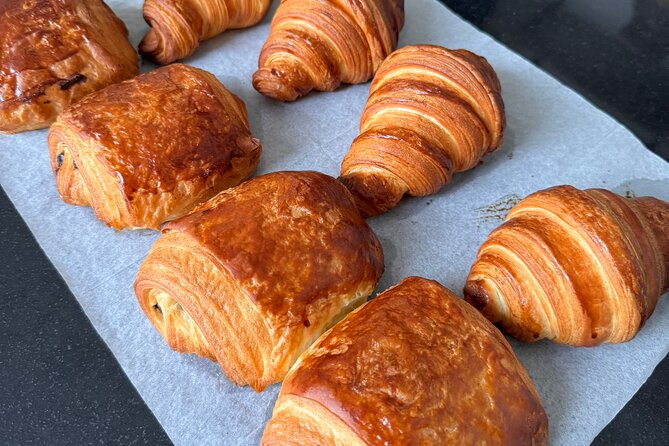
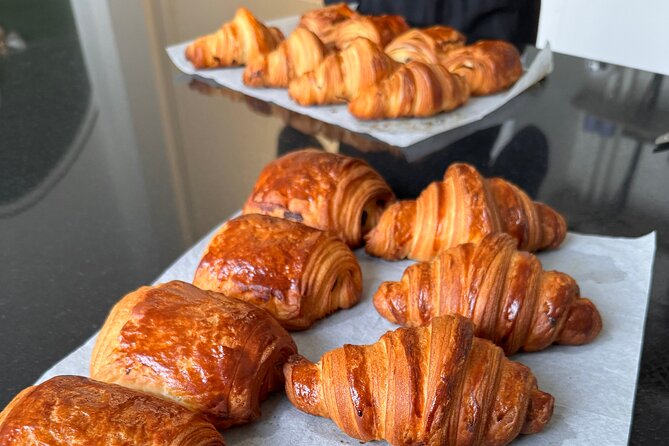
- Useful take-home results: The class can produce four croissants and four pain au chocolat per person, along with recipes and measurements.
- A three-hour commitment: Plan enough time for a focused lesson that includes rolling, shaping, baking, and tasting.
What the Three-Hour Class Actually Teaches
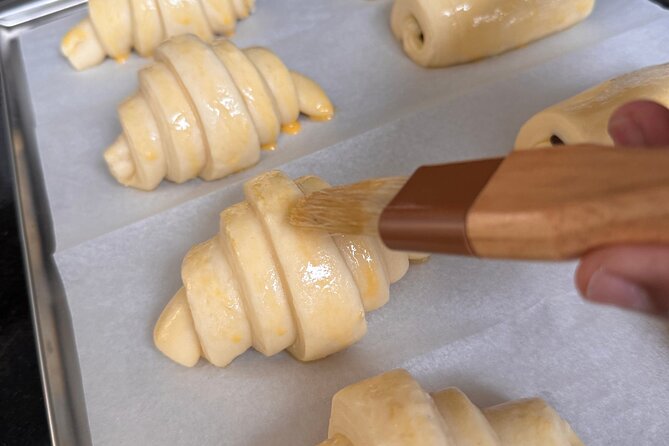
This is a lesson in process, not a quick demonstration followed by a pastry sample. You start with an introduction to French pastry making, including the role of flour, butter, measurements, and dough handling. The chef explains how small changes in temperature, pressure, and rolling affect the finished pastry.
That foundation matters. Croissant dough looks simple at first, but the final flaky layers depend on careful work. The class shows you how butter is folded into the dough and how repeated rolling and folding create the layers. One practical detail shared during the lesson is the goal of a 16-layer pastry, a useful target that gives the technique some structure.
You then work with the dough yourself. You roll it into rectangles, manage the butter layer, fold the dough, and roll it again. This is where the small class size earns its keep. If your dough is too thick, too warm, or uneven at the edges, the chef can step in and show you how to fix it.
Do not expect to finish every part at the speed of a professional bakery. The teaching is meant to be clear and manageable, but the work is still physical. You need enough strength to knead and roll the dough, and you should be ready to spend much of the class standing or working at a table.
More Baking Classes in France
- Paris Croissant Small-Group Baking Class with a Chef
★ 5.0 · 910 reviews - Paris: French Croissant Baking Class with a Chef
★ 4.9 · 712 reviews - Paris: Baking Insider Experience
★ 4.7 · 397 reviews
The Smart Dough System Behind the Lesson
One of the clever details of the class is the use of dough at different stages of preparation. Dough made by one class can be used by the next class when it has had time to proof properly. The dough you prepare may then be used by a later group.
This system solves a real problem. A three-hour class cannot easily include every waiting period needed for perfect proofing while still giving you time to learn, shape, and bake. Instead, you get to work with dough that is ready for the stage being taught, while your own dough continues its part in the bakery’s cycle.
It also means the class is more than a staged craft project. Your work becomes part of an ongoing baking process. You learn the early steps, see how the pastry develops, and work with dough in a condition that makes sense for the lesson.
The trade-off is that you may not personally watch every single stage of the exact dough you first mixed. If you want a fully start-to-finish lesson with one batch and no handoffs, ask about the class structure before booking. If your main goal is to understand the method and make pastries successfully, this approach makes good practical sense.
Rolling Butter and Building the Layers
The heart of the class is lamination. That is the process of placing butter inside the dough and rolling the two together so they form thin, separate layers. Done well, those layers expand in the oven and create the crisp exterior and soft, buttery interior you expect from a French croissant.
You will work with several rectangles during the class. The butter gets its own shape, the dough is rolled for lamination, and the final sheet is rolled again before cutting. Then you cut rectangles and triangles for the finished pastries.
This is also the part where home bakers can benefit most from careful notes. Write down the measurements for each rectangle and the size of the final pieces. One useful tip for visitors from the United States is to convert metric lengths, weights, and volumes before you leave. Your phone can handle the conversions, but trying to remember them later is a fine way to turn a good recipe into guesswork.
The chef demonstrates each stage before you try it. Leo is often described as easygoing, patient, funny, and generous with baking advice. Maria is also praised for making the lesson interactive and easy to follow. The exact instructor may vary, but the teaching style is built around showing, explaining, and then helping you at your station.
Shaping Croissants and Pain au Chocolat
Once the dough has been rolled to the proper size, you cut it into shapes. Triangles become croissants. Rectangles are used for pain au chocolat. You then roll and shape each piece so it keeps its form during baking.
This is where the lesson becomes especially satisfying. Croissants are familiar to everyone in Paris, but shaping one yourself changes how you look at the pastry. You begin to notice the taper of the triangle, the curve of the finished roll, and the way the layers should sit rather than being crushed together.
Pain au chocolat gives you a second shape to practice. It is a nice addition because you are not repeating the same pastry for three hours. You learn how the dough behaves around the chocolate and how a simple rectangle becomes a finished breakfast pastry.
The class is suitable for people with little baking experience. You do not need to arrive as a pastry expert, and the instruction is broken into clear steps. Still, you will get more from it if you pay close attention to the demonstrations and keep notes. The process includes enough measurements and rolling stages that memory alone may not be enough when you try it at home.
More Baking Classes in Paris
- Paris Macarons Small-Group Baking Class with a Chef
★ 5.0 · 316 reviews - Paris: Macaron Baking Class for Families and Kids
★ 4.7 · 270 reviews - Paris: Macaron Baking Class in Central Paris
★ 5.0 · 208 reviews - Paris Baking Insider Experience near Notre-Dame
★ 5.0 · 206 reviews
Baking, Sharing, and the Final Pastries
As the pastries bake, the pace changes. You can look over your work, talk with the people at your table, and ask final questions about dough, butter, flour, and baking at home. The social side is part of the appeal, but it does not replace the lesson.
The class can finish with four croissants and four pain au chocolat for each person. That is a generous result, especially when you have made the shapes yourself. The pastries are also the best test of the instruction. You see whether the layers opened, whether the butter stayed where it belonged, and whether the shaping held together.
Expect the pastries to be delicious, but keep the right perspective about the cost. At $143.92, you are paying for a three-hour class, chef guidance, ingredients, a small group, and the chance to repeat the method at home. If you value only the food, a Paris bakery will cost much less. If you want an activity that teaches a skill and gives you a memorable afternoon, the price is easier to justify.
Recipes are provided or emailed after the class, according to the instruction. That makes the experience more useful than a one-time tasting. You can take the measurements home, review the method, and try again with your own oven.
The Studio on Rue de Rome
The class takes place at Studio Pâtisserie, 85 Rue de Rome, in the 17th arrondissement. The address is near public transportation, and it has been easy for participants to find. The activity starts and ends at the studio, so you do not need to arrange transport between several kitchens.
Give yourself enough time to reach Rue de Rome without rushing. Arriving calm matters when the first part of the lesson covers measurements and dough preparation. Bring your mobile ticket, since the booking is mobile-friendly, and check your confirmation for the exact class time.
The studio setting is part of the charm. You are not being whisked through several tourist stops. You spend the afternoon in one working pastry space, focused on a familiar Paris food. For many visitors, that makes the activity feel more personal than another guided walk through central Paris.
The class is offered in English. That is important because the technical parts of croissant making require clear explanations. You want to understand the pressure to use, the shape to aim for, and the dimensions to remember.
Who Will Get the Most From This Class
I would recommend this class to couples, parents and adult children, friends, solo visitors who enjoy meeting people, and anyone who wants more than a bakery visit. It works well for a special afternoon because you leave with something you made rather than only something you bought.
It is also a good fit for a small group. The setting allows people to work together, compare shapes, share tips, and enjoy the class without a large crowd. Several people have found the chef’s humor and conversation as memorable as the baking itself.
You should be at least 17 years old. The physical side matters, too. Kneading and repeated rolling require effort, so this is not a passive activity. If you have trouble standing, kneading, or working dough for a sustained period, contact the provider before booking.
Service animals are allowed. The experience is near public transportation, and it ends where it begins. Those details make it fairly simple to fit into a Paris day, but the three-hour length means you should not place it between two tightly timed attractions.
Tips for Making Your Class Better
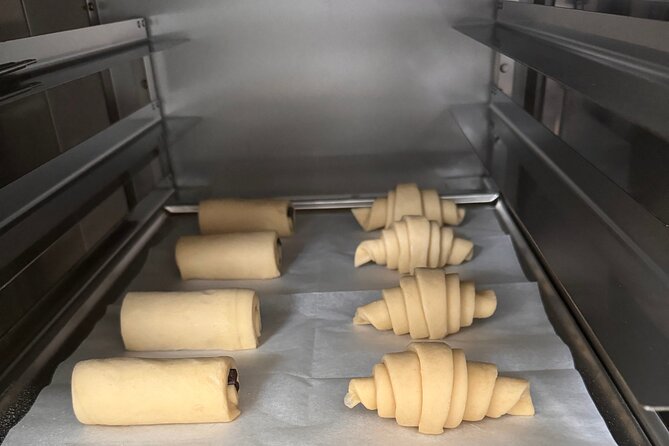
Bring a phone or small notebook for measurements. You will handle several different dough rectangles, and writing down the dimensions is more useful than trying to recall them later.
Pay close attention to the butter. The success of the pastry depends on keeping the butter and dough in a workable condition during rolling and folding. The chef can help, but you will learn more if you watch how the dough responds rather than rushing through the steps.
Ask questions as you go. The value of a class this small is the chance to get help before a minor problem becomes a ruined batch. Ask about thickness, shape, measurements, and what to do differently in a home kitchen.
If you are from the United States, sort out metric conversions during the lesson. Length, weight, and volume all matter in pastry baking. A recipe can be excellent and still fail if the measurements are converted carelessly.
Finally, do not judge your pastries only by their appearance. Croissant making is a technical process, and your first batch may not look like a bakery display. The real win is understanding the stages well enough to try again.
Should You Book the Croissant Class?
Book it if you want a hands-on Paris activity, enjoy learning from a chef, and plan to bake again at home. The small group, English instruction, practical recipes, and generous batch of pastries make this a stronger choice than a simple tasting.
Skip it if you want a fast food stop, dislike physical kitchen work, or are mainly looking for the cheapest way to eat a croissant in Paris. At $143.92, the value comes from instruction, access to a pastry chef, and the skill you carry home.
For most food-loving visitors, this is a memorable way to spend three hours. You leave with croissants, pain au chocolat, useful measurements, and a better understanding of why French pastry takes patience.
FAQ
Where does the croissant class take place?
The class takes place at Studio Pâtisserie, 85 Rue de Rome, 75017 Paris, France. It starts and ends at the same location.
How long does the experience last?
The class lasts approximately three hours.
How many people can attend?
The class has a maximum of eight participants, allowing for personal help from the instructor.
Is the class offered in English?
Yes. The experience is offered in English and includes hands-on instruction from a pastry chef.
What pastries will I make?
You will learn to make croissants and pain au chocolat, including dough preparation, butter lamination, rolling, cutting, and shaping.
What is the cancellation policy?
You can cancel up to 24 hours before the experience for a full refund. Cancellations or changes made less than 24 hours before the start time are not accepted for a refund.
More Dessert Classes in Paris
- Paris: French Pastry and Baking Workshop
★ 4.1 · 12 reviews - Paris: Eclair and Choux Pastry Making Class
★ 4.8 · 9 reviews - Paris: Lemon Tart Baking Class with a Pastry Chef
★ 5.0 · 4 reviews - Eclair Baking Class with A Pastry Chef
★ 5.0 · 3 reviews
More Dessert Classes in France
- Paris Cooking Class: Chocolate Éclairs and Cream Puffs
★ 5.0 · 87 reviews - Paris: 2.5-Hour French Pastry Cooking Class
★ 4.9 · 71 reviews - Paris Desserts and Pastries Small Group Cooking Class with a Chef
★ 4.5 · 49 reviews - Paris Cooking Class: French Desserts Class
★ 4.9 · 13 reviews
Just added around Paris
- Paris: Montmartre Macaron Baking Workshop★ 4.9 · 143 reviews
- Paris: Macarons Cooking Class with Pâtisserie Chef Noémie★ 4.8 · 179 reviews
- Paris: Hands-On Small Group Cooking Class★ 4.9 · 19 reviews
- Paris: Millefeuille baking class with a chef★ 5.0 · 5 reviews
- Paris: Macaron Baking Class★ 4.4 · 26 reviews
- Paris: Evening Cooking Class with Optional Market Visit★ 4.8 · 19 reviews
- Paris: Lemon Tart Baking Class with a Pastry Chef★ 5.0 · 4 reviews
- Paris: French Pastry and Baking Workshop★ 4.1 · 12 reviews
Tiramisu & Dessert Classes, compared.
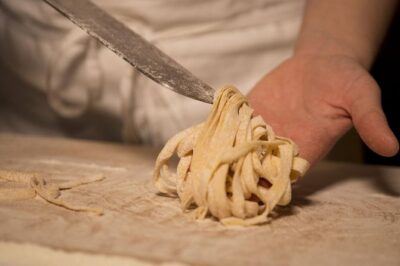
3 in 1 Cooking Class near Navona: Fettuccine, Ravioli & Tiramisu
Read our review →
Rome: Pasta Making Class with Wine, Limoncello, and Dessert
Read our review →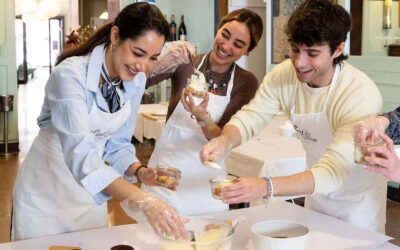
Rome: 3-in-1 Fettuccine, Ravioli, and Tiramisu Cooking Class
Read our review →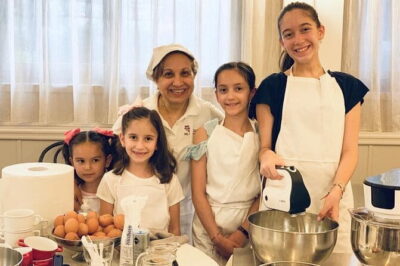
Florence: Cooking Class Pasta & Tiramisu Making Unlimited Wine
Read our review →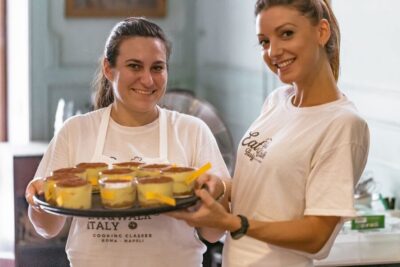
Fettuccine & Tiramisù: Cooking Class with Wine & Limoncello
Read our review →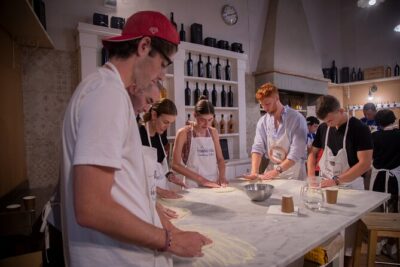
Florence Cooking Class The Art of Making Gelato & Authentic Pizza
Read our review →