
Review · SRI LANKA
Ella: Sri Lankan Authentic Cooking expirience
The best part of this Ella cooking class is that you do not simply watch a demonstration. You help make a full Sri Lankan meal, from cracking and scraping coconuts to stirring dhal, shaping coconut roti, and balancing curry spices. Ruwini, the English-speaking host at Honey Bee Garden, guides the work in her traditional home.
I like two things in particular: the generous range of dishes, and the practical advice on replacing Sri Lankan ingredients back home. The meal also gives you a proper taste of what you made, not a token sample. The main consideration is the two-hour schedule. With rice, several curries, sambal, roti, and papadam on the menu, the class moves at a useful pace rather than a leisurely one.
Key points at a glance
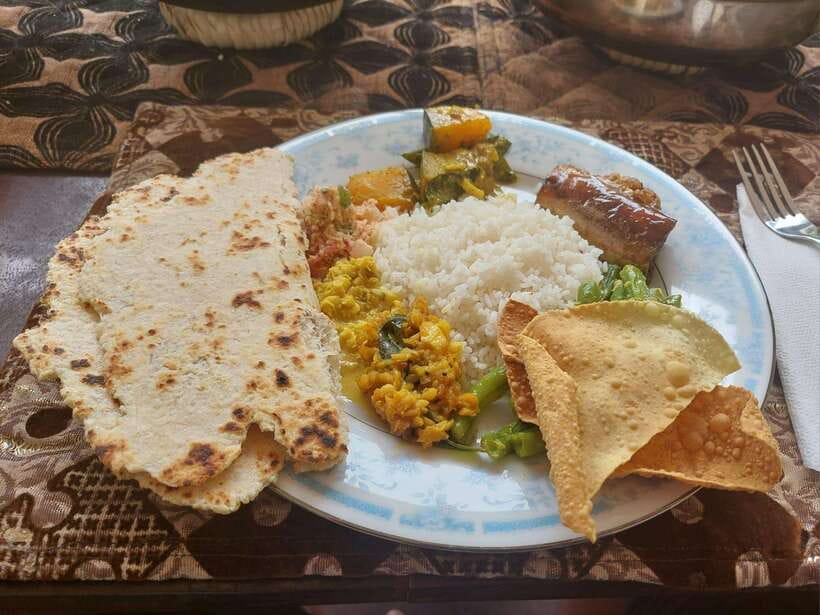
- A full Sri Lankan meal: Prepare rice, aubergine modju, dhal, pumpkin, beans, coconut sambal, coconut roti, and papadam.
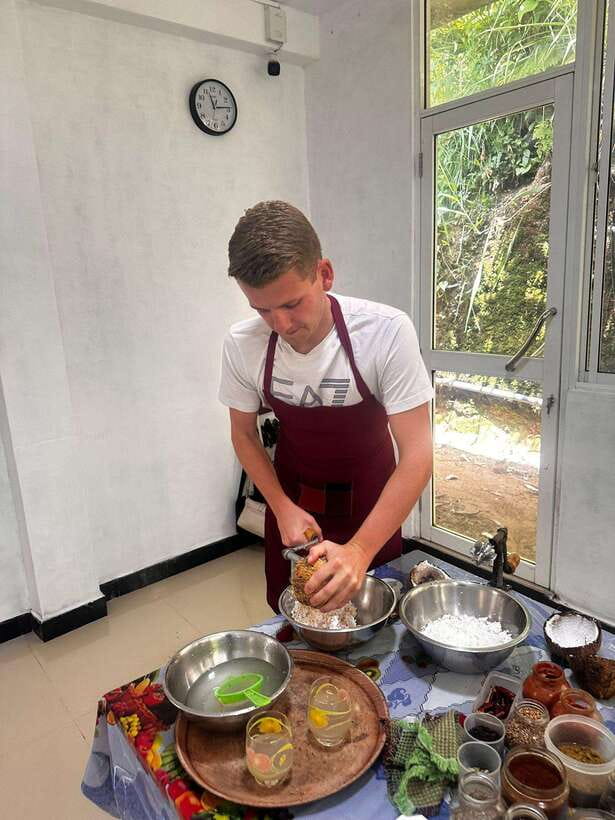
- Real hands-on work: Crack coconuts, scrape the flesh, make fresh coconut milk, and take part in the cooking.
- Ruwini leads the class: She teaches in English and explains how spices shape each dish.
- Small-group setting: The class accepts up to 10 people, with private sessions available by request.
- Useful after-class help: Recipes are sent by email, along with ideas for ingredient substitutes.
- Good value at $22: You receive instruction, ingredients, equipment, and a complete cooked meal.
Starting in a traditional Sri Lankan home
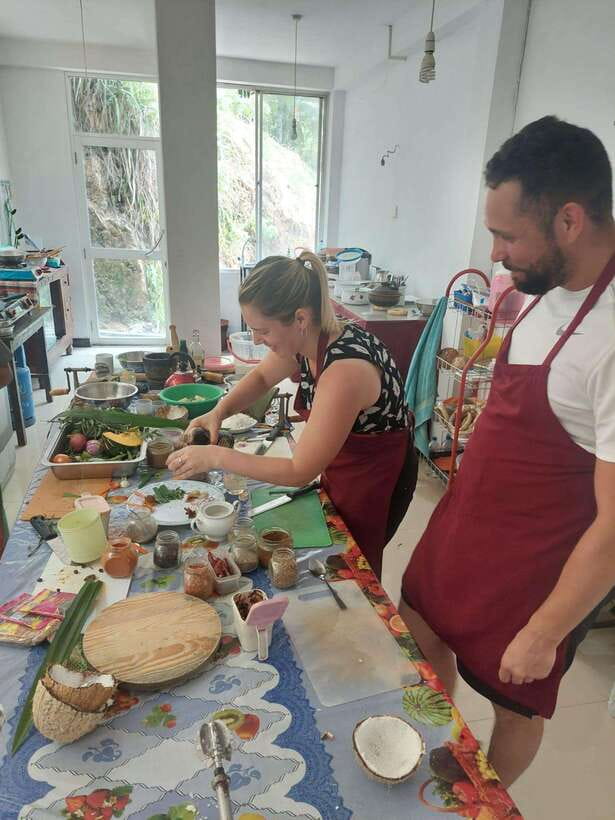
This experience begins in a setting that feels very different from a restaurant kitchen or a formal cookery school. You meet Ruwini at Honey Bee Garden, where the class takes place in a traditional Sri Lankan home.
That setting matters. Sri Lankan cooking is closely tied to daily home life, and this class presents the food in that context. You are not only learning a list of recipes. You are seeing how a local cook handles coconut, spices, vegetables, rice, and curry in the way these foods are prepared at home.
Ruwini speaks English, so you can ask about ingredients and techniques as you work. Her teaching style comes across as warm, patient, and humorous, with plenty of attention given to getting everyone involved. In a full group of 10, you may share tasks with other people. In a smaller group, you can expect a more direct role in each dish.
Private sessions are available if you request one, and the timing can be adjusted for those bookings. That option may suit couples, families, or anyone who wants a quieter class with more control over the pace.
A few more cooking classes around Sri Lanka worth a look
- Ella: Traditional Sri Lankan Cooking Class
★ 4.9 · 788 reviews - Organic cooking class sigiriya (kumara & family)
★ 5.0 · 650 reviews - Sri Lanka Cooking Class with Granny
★ 5.0 · 587 reviews
Learning the spice base before cooking
The class starts with a short introduction to Sri Lankan spices. This is a useful opening because Sri Lankan curry is not one single flavor. Different combinations and cooking methods give dhal, pumpkin, aubergine, and beans their own character.
The emphasis is practical. You learn which spices are used and how they affect the dish, rather than simply being handed a finished curry to taste. For a first-time cook, this helps explain why several curries can appear on the same plate without tasting alike.
I especially like that the instruction includes substitutions. Some Sri Lankan ingredients can be difficult to find outside the country, so Ruwini explains how to adjust recipes when you return home. That turns the class into something you can actually use, not just a pleasant holiday activity that stays in your photo collection.
The class also works well for people who are unsure about cooking with unfamiliar spices. You are shown how ingredients fit together, and you can ask questions in English as you go.
Cracking coconuts and making fresh coconut milk
The coconut work is one of the most memorable parts of the class. You get involved in cracking coconuts, scraping the flesh, and preparing fresh coconut milk.
This takes you closer to the real work behind Sri Lankan food. Coconut is not a decorative side ingredient here. It can thicken curries, add sweetness and body, and provide the base for sambal and roti.
The process also gives the class a useful sense of place. You are learning a technique that reflects local cooking rather than using a quick packaged substitute. It may take more effort than opening a carton, but that effort helps you understand why coconut appears in so many Sri Lankan dishes.
If you are looking for a class where you can stand back and take pictures while someone else cooks, this is not quite that experience. You are encouraged to take part throughout. That is a benefit for hands-on learners, but it also means you should be ready to work, listen, and share tasks.
Building a plate of rice and curries
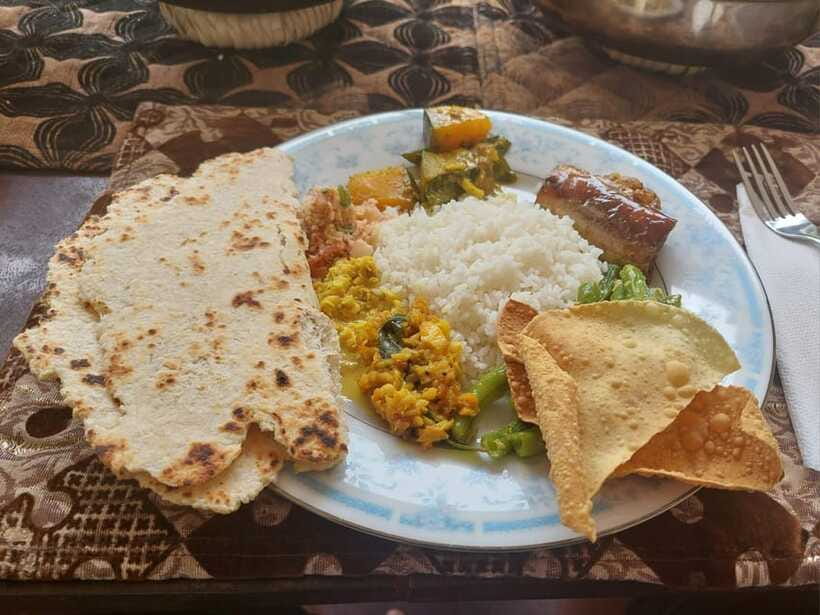
The main cooking session covers a sizeable menu. You prepare rice, aubergine modju, dhal curry, pumpkin curry, beans curry, coconut sambal, coconut roti, and papadam.
Aubergine modju is a particularly useful dish to learn because it shows how a vegetable can take on a sweet, sour, and savory character. Dhal offers a gentler, creamy curry profile, while pumpkin brings a softer and slightly sweet element to the plate. Beans provide another texture and flavor, keeping the meal from becoming a row of similar sauces.
The different dishes are the reason this class offers good value. You are not spending $22 to learn one curry and eat a small portion afterward. You are working toward a complete meal with several distinct components.
Coconut sambal brings freshness and bite alongside the cooked curries. Coconut roti adds a more substantial, bread-like element, and papadam gives the plate a crisp finish. Rice ties everything together, as it does in a classic Sri Lankan rice and curry meal.
The menu can vary slightly in practice. One class may include jackfruit curry, for example, while another may focus on the listed vegetable dishes. The supplied menu includes the core preparations, and the class has also covered four or five curries in some sessions.
Same place, a different menu:
- Kandy Village Cooking Class
★ 5.0 · 536 reviews - Sea waves sri lankan cooking class
★ 5.0 · 467 reviews - Ella: Sri Lankan Cooking Class with Neranji at Homestay
★ 5.0 · 276 reviews - Cook with Wasantha
★ 5.0 · 248 reviews
A class that gives everyone a job
Group size makes a difference here. The maximum is 10 people, which keeps the class smaller than many commercial cooking demonstrations. Still, 10 is large enough that you may need to share certain jobs.
In a group of four, each person can take a meaningful role in preparing the meal. In a full group, Ruwini needs to divide the work so everyone gets involved. Her approach is to bring the whole group into the process rather than let one person handle the main cooking.
This format is good for people who enjoy social activities and are happy to cook alongside others. It is less suited to anyone seeking a private, highly technical lesson unless you arrange a private session in advance.
The class is also well suited to vegetarians. The menu is built around rice, vegetables, lentils, coconut, and spices, and the food provides plenty of substance without needing meat. You should still tell the host about allergies or dietary restrictions before the class.
Sitting down to eat what you prepared
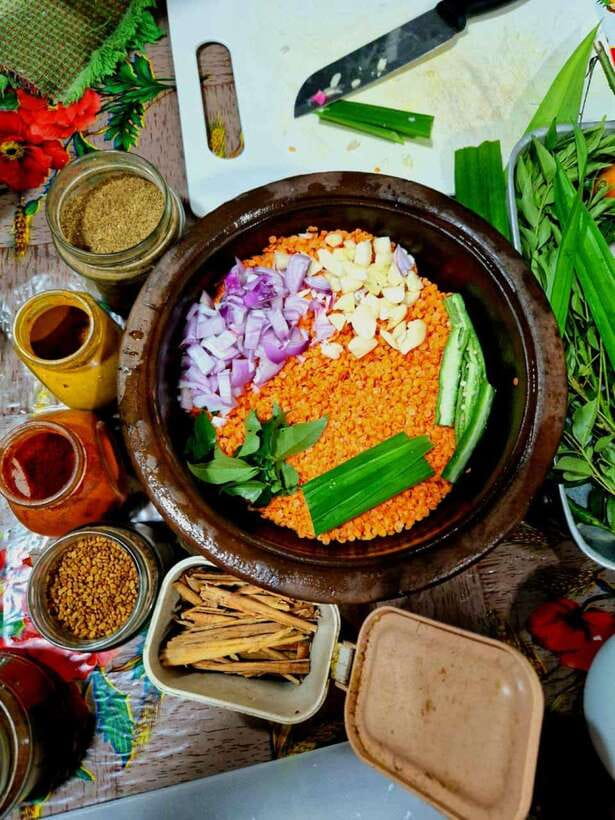
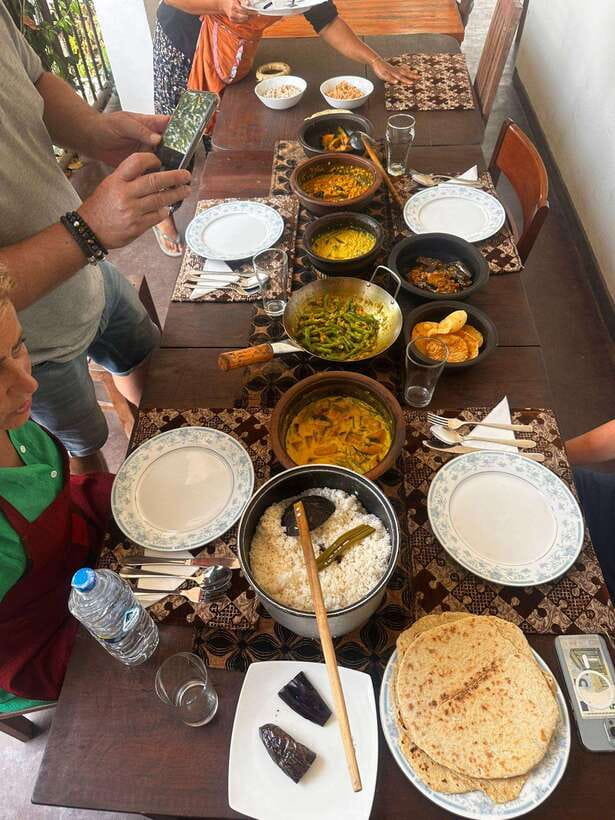
Once the cooking is finished, you sit down to eat the meal as a group. This is more satisfying than a short tasting because the menu includes the full collection of dishes you worked on.
The meal lets you compare the curries side by side. You can notice how the same broad family of spices produces different results when paired with dhal, pumpkin, beans, aubergine, or coconut.
It also gives you a chance to ask final questions while the food is fresh. If a curry seems especially good, you can clarify the spice balance or preparation method before leaving.
Portions are described as generous in the experience details, with rice, several curries, sambal, roti, and papadam included. You should arrive ready for a proper meal, not a quick snack between sightseeing stops.
Upcountry black tea is available upon request. That small extra fits the meal well, especially if you want to end the class with a familiar Sri Lankan drink.
Recipes that help after your trip
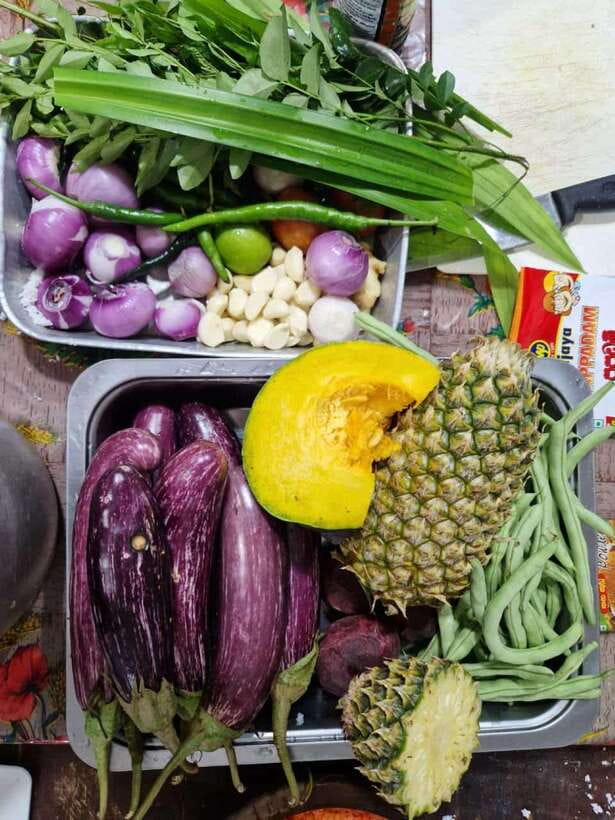
The recipes are sent by email after the class. This is one of the most useful parts of the experience because cooking classes can be hard to remember once you are back in your own kitchen.
The email gives you a starting point for recreating the meal, while Ruwini’s substitution advice helps if you cannot find every Sri Lankan ingredient. You can also make notes during the class about spice levels and changes you would like to try.
Do not expect every home kitchen to reproduce the class exactly. Coconut quality, vegetables, spice freshness, and cooking equipment can differ. Still, the recipes give you enough structure to make a serious attempt at Sri Lankan rice and curry at home.
The best approach is to choose one or two dishes first, then work through the full menu later. Dhal curry, coconut sambal, and pumpkin curry may be approachable starting points, while dishes involving coconut milk or aubergine may require more attention to texture and timing.
What the $22 price includes
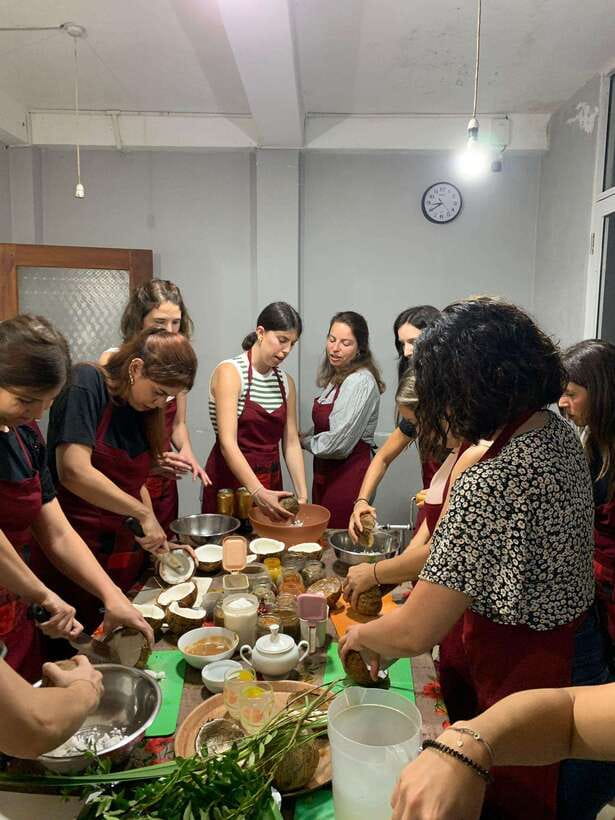
At $22 per person, the value is strong if you want both instruction and a substantial meal. The fee includes the spice introduction, hands-on teaching, ingredients, cooking equipment, and the cooked meal.
The menu itself is broad enough to make the price feel fair. You are learning several curries plus rice, roti, sambal, and papadam, not paying for a single short demonstration.
The class does not include transportation to or from the cooking location. You need to arrange your own way there, so check the meeting details before booking and allow enough time to arrive promptly.
Free cancellation is available up to 24 hours in advance for a full refund. You can also reserve the activity and pay later, which helps if your Ella plans are still changing.
The class is wheelchair accessible according to the activity details. If you need a particular arrangement, it is still sensible to confirm your needs ahead of time.
Who should book this Ella cooking class
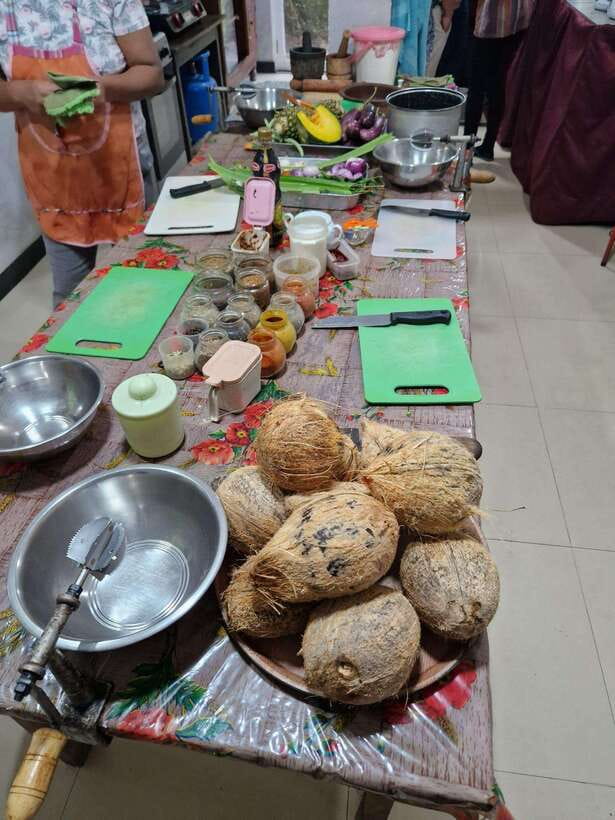
I would choose this class if you want to understand Sri Lankan food through the work of making it. It suits couples, solo visitors, families, and small groups who enjoy a social activity with a meal at the end.
It is especially good for:
- People who want several recipes rather than one demonstration
- Vegetarians looking for a substantial local food experience
- Home cooks who want spice guidance and ingredient substitutes
- Visitors who prefer a local home setting to a formal restaurant
- Anyone who enjoys taking part rather than only watching
You may want to choose another activity if you have very limited time, dislike group cooking, or want a highly polished professional kitchen. The class is practical and home-based, not a fine-dining lesson.
The two-hour length works well during an Ella stay. You get a focused food experience without giving up a whole day of sightseeing. Because the menu is ambitious, the pace can be active, so bring curiosity and be ready to help.
Should you book it?
Book this experience if you want a hands-on introduction to Sri Lankan home cooking and plan to use the recipes after your holiday. Ruwini’s English instruction, substitution tips, broad menu, and full meal make it more useful than a simple food tasting.
At $22, it is also a sensible choice for anyone who wants a filling lunch or dinner along with a local skill. Arrange transport yourself, mention allergies in advance, and request a private session if you want more control over the pace.
Skip it only if you prefer to watch rather than cook, or if two hours feels too short for a full menu. For most food-minded visitors in Ella, Honey Bee Garden offers an affordable way to meet a local cook, work with real ingredients, and leave with recipes you can try at home.
FAQ
Where is the Sri Lankan cooking class held?
The class is held in a traditional Sri Lankan home in the Ella area of Sri Lanka, at Honey Bee Garden Cooking Class.
How long does the cooking class last?
The experience lasts two hours.
How much does the class cost?
The listed price is $22 per person.
Who teaches the cooking class?
Ruwini, an experienced local home cook and fluent English speaker, leads the class.
What dishes will I prepare?
The menu includes rice, aubergine modju, dhal curry, pumpkin curry, beans curry, coconut sambal, coconut roti, and papadam.
Will I eat the food I cook?
Yes. After cooking, you sit down to enjoy the meal prepared during the class.
Are cooking ingredients and equipment included?
Yes. All cooking ingredients and equipment are included.
Are recipes provided after the class?
Yes. The recipes are sent by email after the experience.
Is the class suitable for vegetarians?
Yes. The menu includes several vegetable, lentil, and coconut-based dishes. You should still tell the host about any dietary restrictions or allergies in advance.
Can I book a private session?
Yes. Private sessions are available on request, with possible adjustments to the timing.
Just added around Sri Lanka
- cooking lesson★ 5.0 · 7 reviews
- Sri Lankan Cookery with Nilu★ 5.0 · 34 reviews
- Sri Lanka: Cooking Class★ 4.4 · 6 reviews
- Private Traditional Sri Lankan Cooking Class in Kandy★ 5.0 · 7 reviews
- Private cooking class – Personalized classic menu★ 5.0 · 5 reviews
- Nilaveli: Sri Lankan Cooking Class with a Local Family★ 5.0 · 16 reviews
- Mirissa: Cooking Class with Beer and Meal★ 3.3 · 4 reviews
- Kandy: Village Cooking Class 12 Dishes with Market Tour★ 5.0 · 6 reviews
Cooking Classes, compared.
Half-Day Thai Cooking Class at Organic Farm in Chiang Mai
Read our review →
Florence: Pasta Cooking Class with Unlimited Wine
Read our review →
3 in 1 Cooking Class near Navona: Fettuccine, Ravioli & Tiramisu
Read our review →
Hanoi Cooking Class: Culture, Local Market & Meaning CSR Impact
Read our review →
5 Traditional Dishes Hanoi Cooking Class with Market Trip
Read our review →
Cooking Class and Lunch at a Tuscan Farmhouse with Local Market Tour from Florence
Read our review →
Chiang Mai: Cooking Class, Market & Thai Herbs Garden Tour
Read our review →Browse the lists this tour appears in