
Review · KANDY
Kandy Cooking Class with Granny
Sri Lankan food is best understood with your hands busy. Here, Granny Nandy teaches you in a family home outside Kandy, not in a polished city kitchen. You learn how coconut becomes milk, how spices shape each curry, and how several simple vegetable dishes become a full Sri Lankan meal.
I like the village setting and the generous amount of cooking. I also like that you can choose a vegan menu, add egg, chicken, or fish, and receive recipe photos afterward. The main catch is transport: pickup from Kandy is included, but the return ride costs extra, and one booking reported a return quote well above the price of a local ride.
Key points
- A real village setting: Cook in a family home about 6.5km outside central Kandy, often reached by tuk-tuk through the hills.
- Seven or more dishes: Prepare rice, several vegetable curries, coconut sambol, papadam, a sweet, and a choice of fish, chicken, or egg.
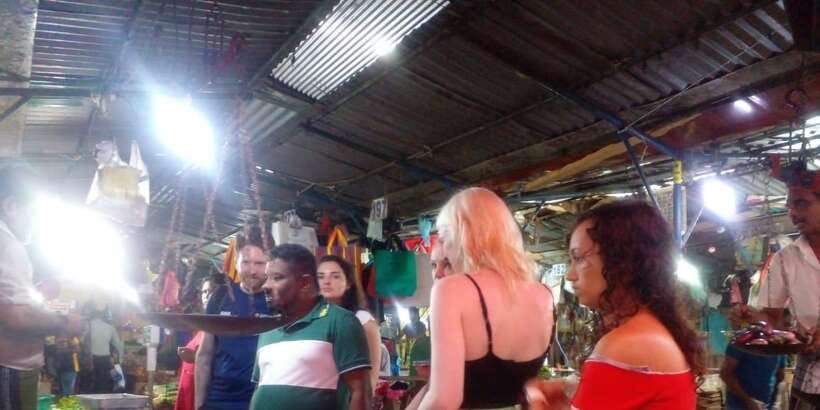
- Market add-on: Some sessions begin at a local market with a chance to learn about fruits, vegetables, and unusual Sri Lankan ingredients.
- Hands-on instruction: Granny Nandy and her helpers explain spices and techniques, then let you prepare each dish yourself.
- Flexible menus: Vegan cooking is available, with egg, chicken, or fish added if you want it.
- Useful follow-up: Recipe photos are sent after class so you can try the dishes at home.
Why this Kandy cooking class feels different
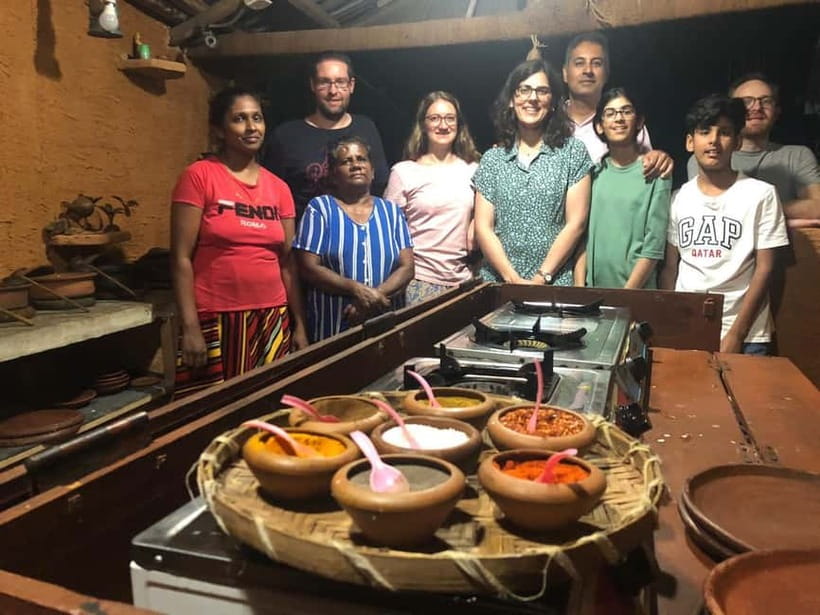
Many cooking classes take place in a restaurant or a purpose-built school. This one takes you away from central Kandy to a quiet village home, about 6.5km from the city. That change matters. You are not simply learning a recipe. You are seeing where a family prepares food and how a traditional kitchen works.
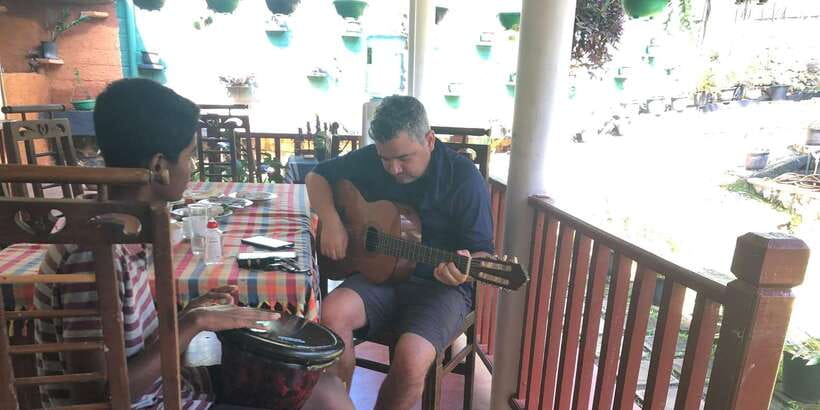
The setting is one of the strongest reasons to book. The home is described as being in the hills, near forest, with a peaceful residential feel. You may arrive by tuk-tuk, and the ride itself becomes part of the outing. It is a simple contrast to Kandy’s traffic and busy streets.
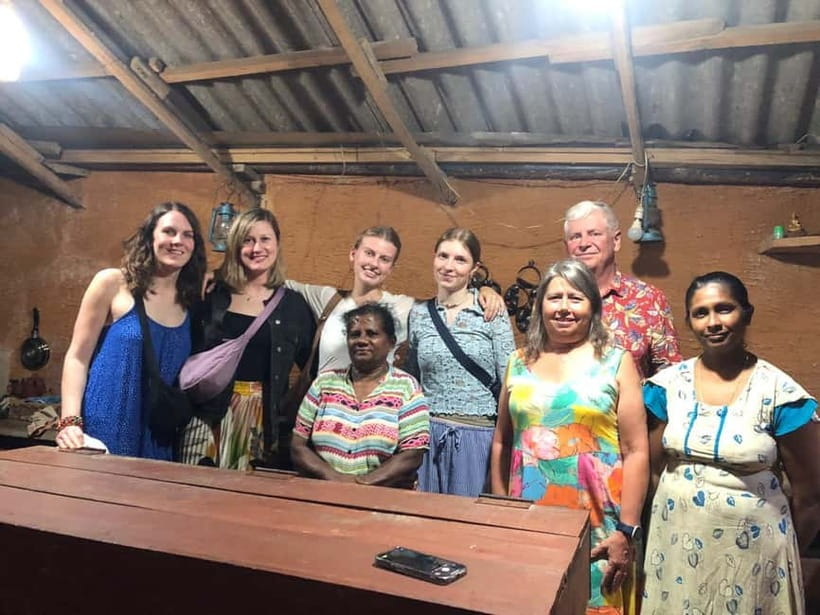
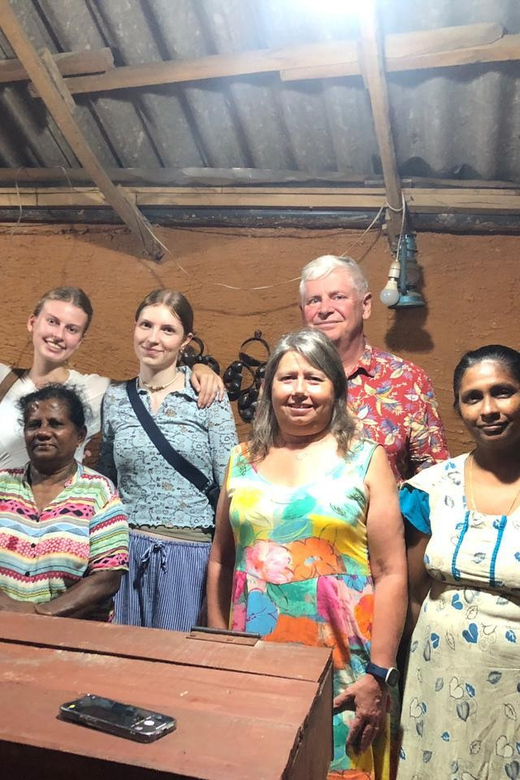
The class is led by Granny Nandy, with help from other family members. The tone is warm and informal, but the cooking is not passive. You are expected to chop, stir, grind, season, and help with several dishes. If you prefer to sit back and watch a chef perform, this may feel busy. If you want to learn by doing, it is a good fit.
The class has a 4.9 rating from 95 bookings, and the praise is remarkably consistent: the food, the family welcome, the village setting, and the amount of hands-on instruction receive the most attention. The practical details still matter, so I would not book it without checking the return transport and menu for your date.
More Hands-On Workshops in Sri Lanka:
- Ella: Traditional Sri Lankan Cooking Class
★ 4.9 · 788 reviews - Organic cooking class sigiriya (kumara & family)
★ 5.0 · 650 reviews - Sri Lanka Cooking Class with Granny
★ 5.0 · 587 reviews
The ride out of Kandy and the optional market stop
Pickup is offered from Kandy and within roughly 3km of the city. The cooking home itself is farther out, so confirm the exact meeting point when you book. The venue is not in central Kandy, and the stated distance is about 6.5km from the city.
Several class schedules include a stop at a local market before cooking. This is not described as a separate guaranteed feature for every booking, so ask ahead if it matters to you. When included, it gives the meal a useful beginning: you see the ingredients before they are peeled, chopped, and turned into curry.
A guide may explain unfamiliar vegetables and let you taste local fruit. One outing included three types of bananas, mango, and passionfruit. Another included shopping with Nandy’s grandson. These details help you understand that Sri Lankan cooking is not just about adding curry powder. The choice of vegetable, the freshness of the coconut, and the balance of spice all affect the final plate.
The market stop also helps you notice ingredients you might otherwise pass over. For a first visit to Sri Lanka, that context is valuable. You begin to connect the names and shapes of the produce with the dishes you later cook.
There is one point to keep clear: the market visit can add time to the outing. If you have a train, a temple visit, or another fixed appointment, choose a class with plenty of space afterward.
Granny Nandy’s traditional kitchen
Once you reach the home, you are welcomed with tea before the cooking begins. The kitchen is traditional rather than a concrete teaching room, and that is central to the experience. You learn in a domestic setting, with the family close by and the food prepared in the way it is served at home.
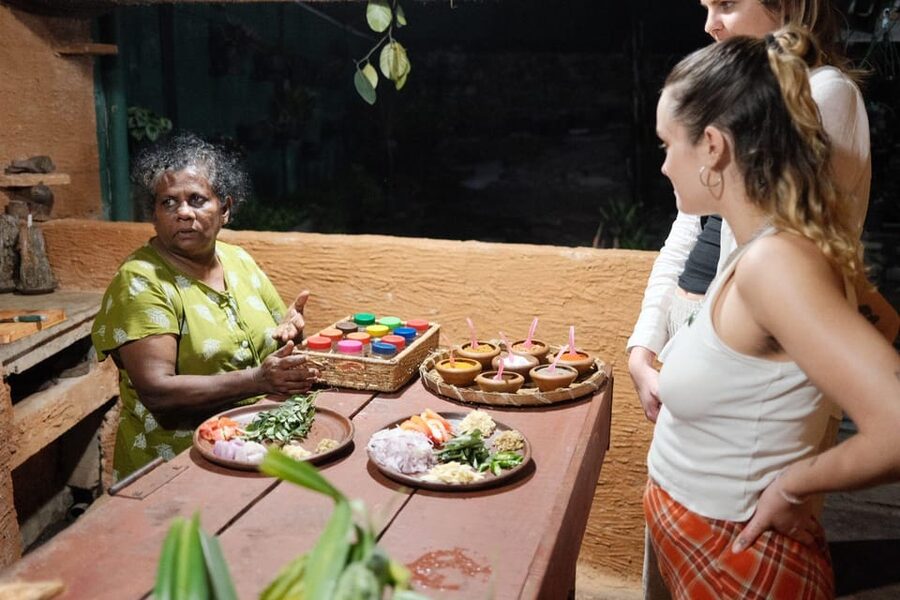
Granny Nandy first explains the spices and the role each one plays. You also learn how to make coconut milk, an essential part of many Sri Lankan dishes. This is more useful than simply receiving a list of ingredients because coconut milk can be thick or thin depending on how it is prepared and used.
The instruction is step by step. You do not need to be an experienced cook. One particularly useful feature is the balance between demonstration and participation. Granny shows you what to do, then you help prepare the dish rather than watching the whole process from the side.
The class is taught in English. The available information does not promise a formal culinary lecture, so expect practical explanations, family conversation, and guidance as you work. The atmosphere can be playful, too. Nandy is described as funny as well as patient, which helps keep the session relaxed when several pans and ingredients are in motion.
The menu: rice, curries, sambol, and a sweet
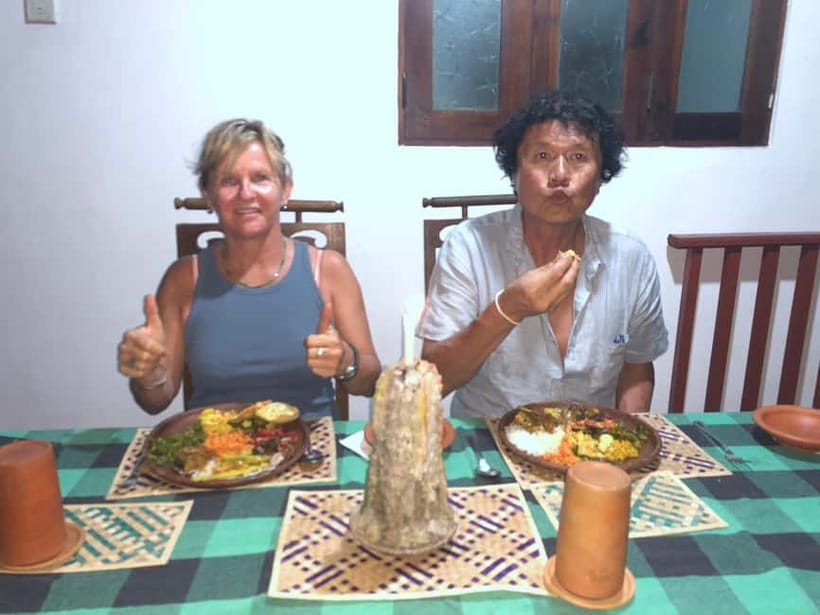
The meal is built around a generous spread. The included food lists rice, seven vegetables, fish or chicken curry, a traditional Sri Lankan dessert, coconut sambol, and papadam. In practice, some menus include more than seven dishes, with one session producing eight or more curries and another including a special curry prepared for large family occasions.
The exact menu changes by day. That is useful if you are staying in Kandy for several nights, since you may be able to ask what will be prepared on your chosen date. It also means the class is not a fixed demonstration repeated without change.
A typical selection can include dhal, one chicken curry, five vegetable curries, an egg curry, rice, papadam, and coconut sambol. Do not assume every class will contain exactly this combination. The menu varies, but the central idea remains the same: you prepare a broad Sri Lankan meal rather than a single signature dish.
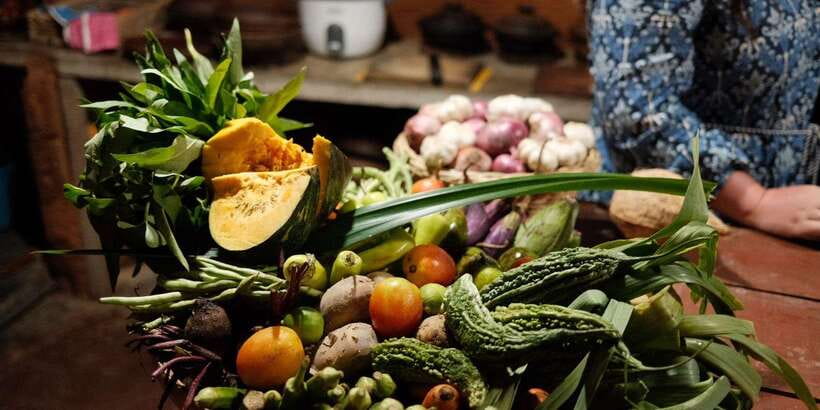
The vegetable dishes are a major part of the class. This is especially helpful for anyone interested in Sri Lankan vegetarian food, since the meal is not built around one meat dish with a few side items. You learn how different vegetables take on different spice mixtures and cooking times.
The meal can be made vegan. If you want egg, chicken, or fish, you can include one of those options. Tell the provider about your preference when booking so the menu can be planned properly. One participant with a gluten allergy was accommodated, but you should still state any allergy clearly before the class rather than relying on a last-minute adjustment.
Expect a lot of food. The portions are described as plentiful, and a menu of seven or more dishes creates a substantial meal. That is part of the value, but it may be too much for someone looking for a short, light activity.
A few more cooking classes around Sri Lanka worth a look
- Kandy Village Cooking Class
★ 5.0 · 536 reviews - Sea waves sri lankan cooking class
★ 5.0 · 467 reviews - Ella: Sri Lankan Cooking Class with Neranji at Homestay
★ 5.0 · 276 reviews - Ella : Cooking class with amazing Spice Garden Tour
★ 5.0 · 239 reviews
What you actually learn
The class gives you more than a recipe card. You learn the working logic behind Sri Lankan home cooking.
You see how spices are combined, how coconut milk is prepared, and how vegetables are cooked into separate curries instead of one mixed pot. You also learn how rice, sambol, papadam, and a sweet fit together on the plate.
The guidance is practical. You may be asked to help with each dish, so you get a feel for the pace of cooking several items at once. That is important because a Sri Lankan meal is often a collection of smaller preparations, not one main dish served alone.
I especially like the promise of recipe photos after the session. Those photos give you a better chance of recreating the meal at home than a few handwritten dish names would. Still, cooking results will depend on finding similar vegetables and fresh coconut in your own country. Treat the class as a guide to technique and seasoning, not a guarantee that every ingredient will be easy to replace.
If your cooking confidence is low, do not worry. The lesson is designed around direct help from Granny and her assistants. If you already cook often, you may get the most from asking questions about spice balance, coconut milk, and the differences between vegetable curries.
Choosing the right session time
Three class times are offered:
- Lunch class: 9:00am to 12:30pm
- Midday class: 1:00pm to 4:30pm
- Dinner class: 5:00pm to 8:30pm
The listed duration is 3.5 hours, though the session can run longer depending on the pace of the cooking. This is not a quick two-hour demonstration. Give yourself room around the class, especially if the market stop is included.
The lunch session works well if you want the rest of the day free, but check how the meal timing fits your plans. The midday class is useful between morning and evening activities. The dinner class is perhaps the most natural choice if you want to cook, eat, and finish your day at the village home.
The evening setting has a special appeal, but the return trip deserves extra attention. Pickup is included from Kandy, while the return journey is at your expense. A tuk-tuk or other transport can be arranged, but confirm the price before you leave. One booking reported a return quote three times higher than a local ride-hailing option, so I would compare the cost rather than accept the first figure automatically.
Price and overall value at $25
At $25 per person, this is a strong value if you want a full activity rather than just a meal. You receive about three and a half hours of instruction, a large cooked meal, transport from Kandy to the home, and access to a family setting that would be difficult to arrange independently.
The value improves if the market visit is included. You are then getting a short produce tour, transport, cooking instruction, and dinner or lunch in one outing. The class also covers many dishes instead of teaching one curry and sending you on your way.
The price does not cover the return journey. That is the main cost detail to build into your budget. Since the home is outside the city, the final transport is not optional. Ask for the return price before the class and compare it with a local taxi or tuk-tuk service.
There are also less measurable benefits. You get direct contact with a Sri Lankan family, a look at village life outside Kandy, and recipes you can use later. If you value personal contact and cooking practice, the price is easy to justify. If you only want to eat Sri Lankan food, a restaurant meal will cost less and take less time.
Who should book, and who should think twice
I would recommend this class to couples, solo visitors, families, and small groups who want an active cultural experience. It also suits people who already enjoy Sri Lankan food but do not know how the curries are made.
It is particularly good for vegetarians and vegans because the menu naturally includes many vegetable dishes, and vegan food is available. Meat eaters can add chicken, fish, or egg without changing the basic structure of the meal.
The private group format is another advantage. You are not placed in a large class with a crowd around one stove. The exact group size can vary, but several bookings describe small groups, including one group of four and one couple who had the class to themselves.
You should think twice if you need a wheelchair-accessible activity. The class is not suitable for wheelchair users. You should also reconsider if you dislike long meals, village transport, or a setting that is more home kitchen than professional cooking school.
The distance from Kandy is modest, but the experience is not in the city. If you want a polished facility, a fixed menu, and precise timing, choose a more formal cooking school. If you want family hospitality, flexible dishes, and a home setting, this class makes more sense.
Should you book Granny Nandy’s cooking class?
Yes, if you want to understand Sri Lankan food by preparing it yourself. The strongest reasons are the village home, the warm family-led teaching, the generous menu, and the chance to learn coconut milk, spices, sambol, curries, rice, and dessert in one session.
Before booking, confirm three things: the menu for your date, whether the market stop is included, and the cost of returning to Kandy. With those details settled, the $25 price offers a lot for a 3.5-hour experience.
I would choose the evening class for a memorable final meal in Kandy, or the lunch session if you want a free evening. Bring an appetite, wear clothes you can cook in, and leave enough time for the meal to unfold at its own pace.
FAQ
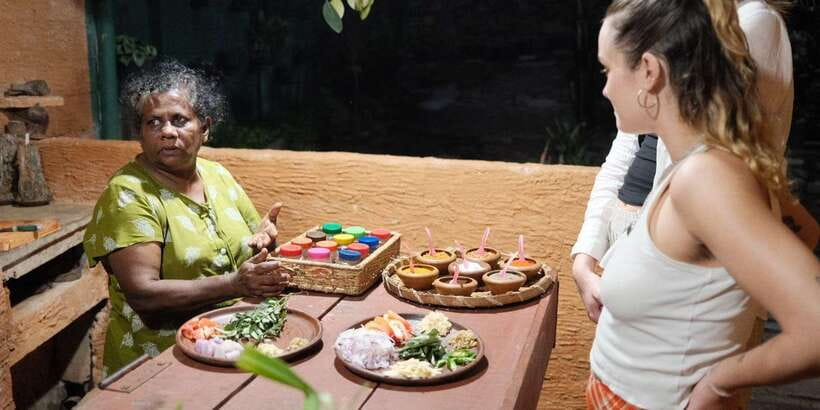
Where does the cooking class take place?
The class takes place in a village home about 6.5km outside Kandy, in a quiet residential area rather than a city building.
Is transport from Kandy included?
Pickup from Kandy and areas within about 3km of Kandy is included. You must pay separately for the return journey, so confirm the price before the class.
What food will I cook?
The food includes rice, several vegetable curries, fish or chicken curry, a traditional Sri Lankan sweet, coconut sambol, and papadam. The exact menu changes by day.
Can I choose a vegan menu?
Yes. Vegan food is available. You can also include egg, chicken, or fish if you prefer.
How long does the class last?
The scheduled duration is 3.5 hours. Lunch runs from 9:00am to 12:30pm, midday sessions from 1:00pm to 4:30pm, and dinner sessions from 5:00pm to 8:30pm.
Is the class suitable for wheelchair users?
No. The activity is not suitable for wheelchair users.
Just added around Sri Lanka
- cooking lesson★ 5.0 · 7 reviews
- Sri Lankan Cookery with Nilu★ 5.0 · 34 reviews
- Sri Lanka: Cooking Class★ 4.4 · 6 reviews
- Private Traditional Sri Lankan Cooking Class in Kandy★ 5.0 · 7 reviews
- Private cooking class – Personalized classic menu★ 5.0 · 5 reviews
- Nilaveli: Sri Lankan Cooking Class with a Local Family★ 5.0 · 16 reviews
- Mirissa: Cooking Class with Beer and Meal★ 3.3 · 4 reviews
- Kandy: Village Cooking Class 12 Dishes with Market Tour★ 5.0 · 6 reviews
Cooking Classes, compared.
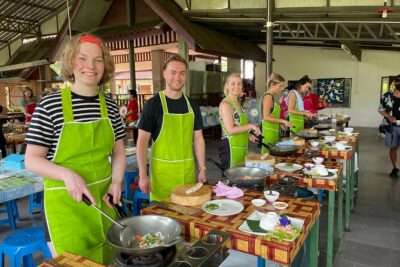
Half-Day Thai Cooking Class at Organic Farm in Chiang Mai
Read our review →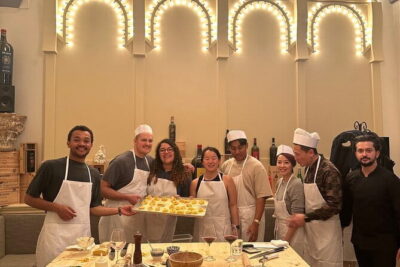
Florence: Pasta Cooking Class with Unlimited Wine
Read our review →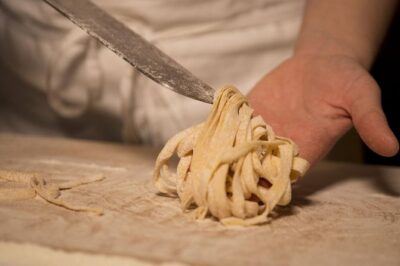
3 in 1 Cooking Class near Navona: Fettuccine, Ravioli & Tiramisu
Read our review →
Hanoi Cooking Class: Culture, Local Market & Meaning CSR Impact
Read our review →
5 Traditional Dishes Hanoi Cooking Class with Market Trip
Read our review →
Cooking Class and Lunch at a Tuscan Farmhouse with Local Market Tour from Florence
Read our review →
Chiang Mai: Cooking Class, Market & Thai Herbs Garden Tour
Read our review →Browse the lists this tour appears in