
Review · CAMBODIA
Khmer Cooking Class Full Day
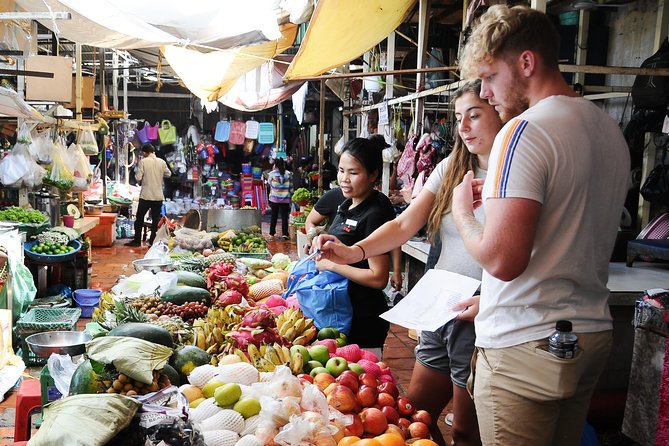
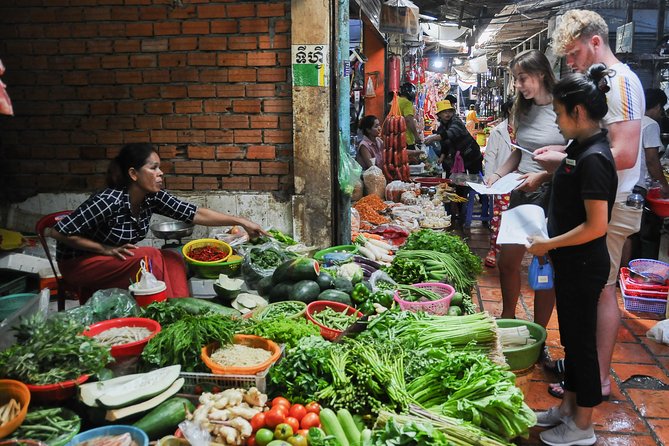
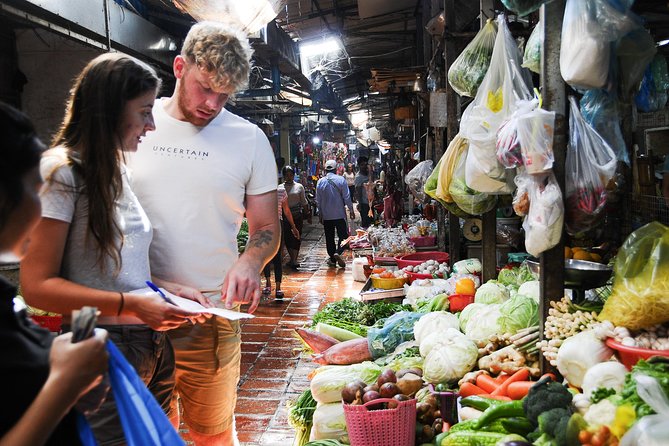
The best part of this Phnom Penh class happens before you touch a wok. You visit a local market with your chef, learn about Cambodian fruits, vegetables, herbs, and spices, then buy the ingredients you will cook later that day. It turns a recipe lesson into a useful look at daily Khmer food.
I like the market-to-table format and the fact that you get your own cooking station and wok. I also like the practical extras: recipes to take home, a certificate, and a chef who can adjust dishes for dietary needs or menu requests. The main drawback is the long schedule. From 9 a.m. to 5 p.m., this is a full day, not a casual morning activity.
Key points to know before booking
- Market shopping comes first: A chef guides you through Cambodian produce, herbs, spices, and the ingredients needed for class.
- You cook, not just watch: Each student has a personal station and wok, with help from the chef throughout.
- The full-day course includes two cooking sessions: You prepare one set of dishes before lunch and more time-consuming recipes in the afternoon.
- Popular dishes include Khmer classics: Depending on the menu, you may prepare spring rolls, mango salad, fish amok, yellow curry, and banana-based dessert.
- Private groups take part: Only your own group participates, which allows room for questions and menu changes.
- You leave with useful takeaways: Recipes, a completion certificate, and the memory of eating food you prepared yourself.
Start at 9 a.m. with a Phnom Penh market visit
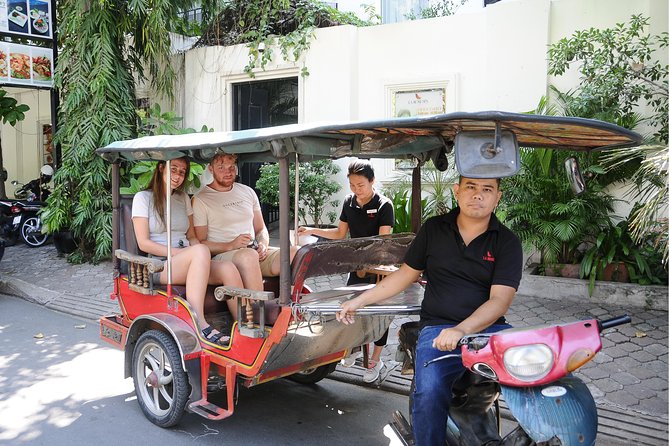
The day begins at Banana Cooking Class 1, 4b Abdul Carime Street (21) in Phnom Penh. From there, you take a tuk-tuk to a local market with your chef.
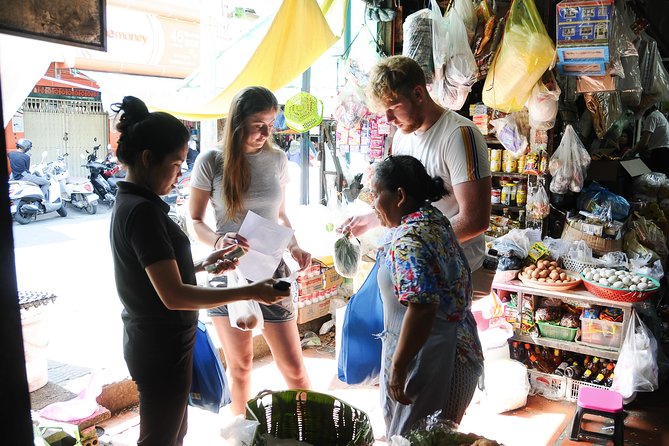
This opening hour gives the class its sense of place. Instead of starting with a prepared bowl of ingredients, you see the raw materials first. Your chef explains Cambodian fruits, vegetables, herbs, and spices, and helps you select what is needed for the day’s dishes.
That is useful for more than atmosphere. Khmer recipes often rely on ingredients that can look unfamiliar when displayed separately. A guided market visit helps you connect the finished meal with the fresh produce behind it. It also gives you a better chance of finding substitutes when you try the recipes at home.
The market visit is not presented as free time for independent shopping. It is part of the lesson, so expect to stay with the chef and follow the shopping list. You should also be ready for an active morning. The tour description does not specify market size, exact stalls, or how much walking is involved, so comfortable clothing and shoes make sense.
After shopping, you return by tuk-tuk to Banana Cooking Class at about 10 a.m. The ride is short enough to keep the morning moving, and it adds a familiar Phnom Penh touch without requiring you to arrange transport yourself.
More Hands-On Workshops in Cambodia:
- Khmer Cooking Class at a Local’s Home in Krong Siem Reap
★ 5.0 · 2,731 reviews - Siem Reap: Khmer Cooking Class at a Local’s Home
★ 5.0 · 1,108 reviews - Award-Winning Cooking Class Experience with Professional Teacher
★ 5.0 · 745 reviews
A calm reset before the cooking begins
At about 10:15 a.m., you receive a refreshing drink, a cold towel, and the recipes. This small pause matters in Phnom Penh’s heat. You have just been to the market, and the cold towel gives you a moment to settle before the kitchen work starts.
The recipe sheets are one of the most useful parts of the day. You are not expected to rely on memory after watching the chef chop, stir, and season. Several people who took the class planned to cook the dishes at home, and the recipes make that possible.
The menu can include dishes such as spring rolls, mango salad, fish amok, Khmer yellow curry, and a banana or banana palm dessert. Exact menus may vary, and the information provided includes different combinations from different class days. That is worth keeping in mind if you are booking with one dish in mind.
The chef can also respond to requests. Menu changes have been made for dietary restrictions and for people who wanted less common or more demanding Khmer dishes. You should explain your needs when booking or at the start of the class, rather than waiting until ingredients are already being prepared.
The 10:30 a.m. demonstration makes the recipes easier
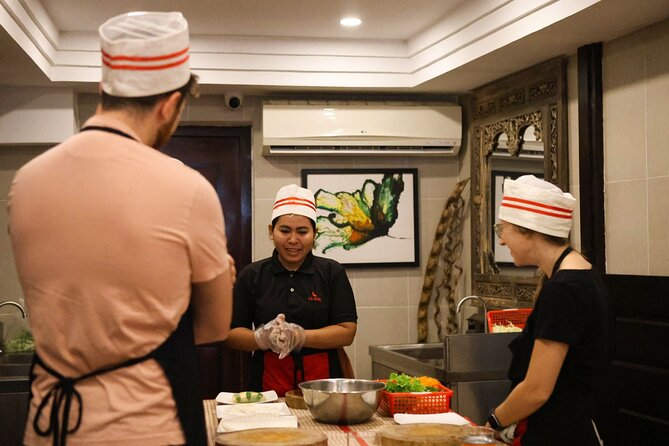
The theory class begins at about 10:30 a.m. The chef demonstrates the dishes you will prepare, explaining the steps before you begin.
This is a good order for a cooking lesson. You first see the full process, then repeat it at your own station. The class is not limited to watching a chef work at a distance. The chef assists as you use the utensils, prepare ingredients, and cook over your own wok.
Lom Ang Peark is one of the chefs associated with the class, and the supplied details describe her as friendly, clear, and good at answering questions. Another account names Chef Lon Ang. Names appear in slightly different forms, so you may meet Lom Ang Peark or another member of the Banana Cooking Class team.
The teaching style seems suited to beginners. Instructions are given in English, and the chef checks that the group understands before moving ahead. That helps if you are new to Southeast Asian cooking or unsure about unfamiliar ingredients.
Your own wok gives you real hands-on practice
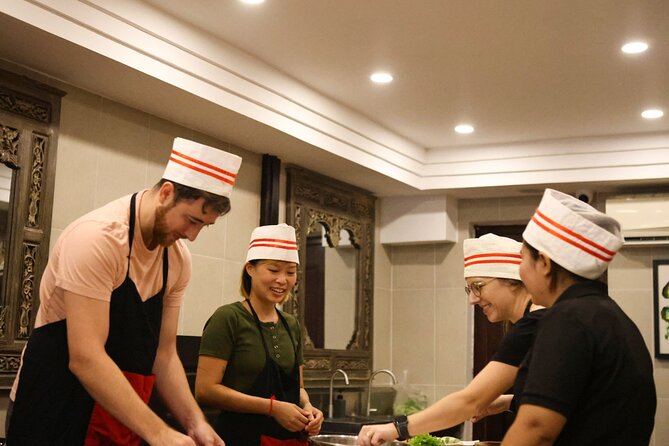
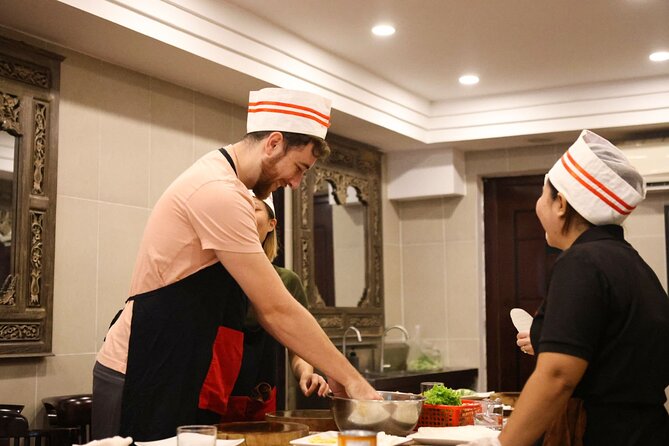
At 11 a.m., you move from demonstration to cooking. Each student has an individual cooking station and wok, while the chef provides help.
This setup is important. In some cooking classes, one person handles the pan while everyone else watches. Here, you get to carry out the work yourself. You can see how the ingredients change as they cook, and you can ask for help at the point where you need it.
The class has also been described as suitable for families, with children aged 7, 10, and 12 taking part successfully. The chef kept the children involved and adjusted when one needed a break. That makes the course a reasonable choice for families who want a shared activity, though the eight-hour schedule may still be tiring for younger children.
The kitchen has been described as spacious, with equipment in good condition. That matters when several people are working at once. Still, you should expect an active kitchen class rather than a polished restaurant demonstration. You will chop, stir, shape, and cook, with the chef stepping in when needed.
More Full-Day Experiences in Cambodia:
- Full Day Thai Cooking at Farm (Chiang Mai)
★ 5.0 · 1,127 reviews - Tokyo: Mount Fuji and Hakone Full Day Tour with Ramen Making
★ 4.5 · 476 reviews - Full-Day Jeep Safari Tour with Cooking Lesson
★ 5.0 · 284 reviews - Paris: Full-Day Cooking Class with 3-Course Lunch
★ 4.9 · 135 reviews
Lunch is the reward for the morning session
At noon, you sit down to eat the food you have prepared. This is not simply a tasting plate assembled by someone else. Your lunch comes from the work you completed during the morning session.
That makes dishes such as spring rolls or mango salad more memorable. You have handled the ingredients, followed the method, and seen the final result. If your seasoning or texture is not perfect, that is part of the lesson too. You get a chance to understand what worked and what you might change at home.
The food is classic Khmer cooking, with dishes varying by menu and request. Fish amok is a likely highlight for people who want to learn a signature Cambodian dish. It also tends to require more preparation than a quick salad, which explains why the afternoon session returns to recipes that take longer.
Lunch also gives you a proper break. The day does not rush from one recipe to the next, and you have time to enjoy what you made before the second round begins.
The afternoon focuses on slower Khmer dishes
At about 3:30 p.m., you return to the cooking stations. The afternoon session covers dishes that take more time to prepare.
This split is sensible. Some recipes can be completed before lunch, while others need longer preparation, cooking, or resting time. A full-day format lets the chef give these dishes proper attention instead of squeezing them into a short lesson.
This is where the course offers more than a quick introduction. A half-day class may suit someone who wants a light activity and one meal, but the full-day option gives you a broader set of recipes and more practice. You also have more time to ask questions about techniques, ingredients, and possible substitutions.
The afternoon can feel long if you are already satisfied after lunch. That is the central tradeoff of this booking. You get more food and instruction for your money, but you give up most of a day in Phnom Penh. I would choose the full-day option if Khmer food is a main interest, or if you want several recipes to repeat at home. If cooking is only a small part of your holiday, the half-day option may be a better fit.
At about 4:30 p.m., you taste the afternoon dishes and relax. The day closes with another chance to enjoy your own cooking rather than leaving as soon as the final pan is finished.
What the $58 price buys you
The listed price is $58 per person for the full-day course. Value depends on how much you want from the activity.
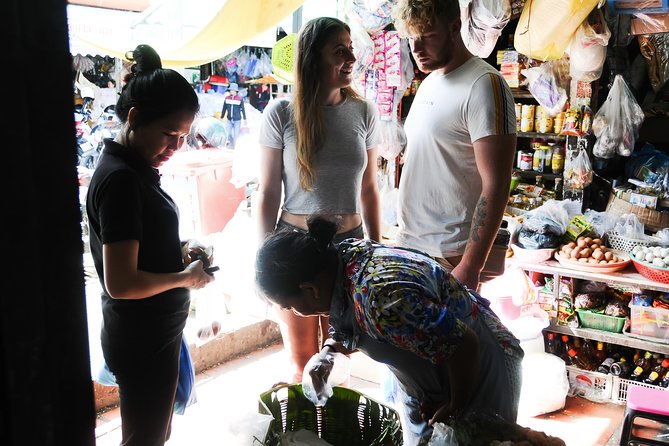
You are paying for roughly eight hours, two tuk-tuk rides to and from the market, a guided food-shopping lesson, chef instruction, cooking equipment, ingredients, meals, recipes, and a certificate. You also get a private activity for your own group rather than joining a large mixed class.
That is a fair package for someone who wants both food and cultural context. The market visit adds something you would not get from a standard cooking demonstration, while the individual wok makes the class active rather than passive.
The value is weaker if you plan to skip the second cooking session or do not care about taking recipes home. The full-day schedule is the reason to book this particular format, so you should be ready to give it most of your day.
The class is booked, on average, 28 days ahead. That does not guarantee that every date sells out, but it is a useful warning for anyone planning a short Phnom Penh stay. Reserve before arriving if your schedule is tight.
Private groups and dietary requests
Only your own group participates in the activity. The size of that group is not given, but the private format should make it easier to ask questions and request adjustments.
This flexibility has been useful for people with dietary restrictions. Menu changes have also been arranged for those who wanted different Khmer dishes, including more complex recipes not normally listed. You should treat that as possible rather than automatic. State your needs early so the chef can plan ingredients.
The class suits several types of visitors:
- First-time cooks: The chef demonstrates each dish and helps you use the equipment.
- Food-focused visitors: The market stop connects local ingredients with finished Khmer dishes.
- Families: Children have taken part successfully, though the day is long.
- Vegetarians or people with food restrictions: Adjustments may be possible when arranged ahead of time.
- Confident home cooks: You can request dishes outside the usual menu, subject to what the chef can prepare.
It is less suited to anyone looking for a short, relaxed morning. The schedule is structured and active, with a morning lesson, lunch, an afternoon session, and final tasting.
Practical details for a smooth day
The official meeting point is Banana Cooking Class 1 on 4b Abdul Carime Street (21), and the activity ends back there. It starts at 9 a.m., so plan to arrive with enough time to find the address.
Mobile tickets are accepted, and confirmation is provided when you book. The starting point is near public transportation, though the class itself provides tuk-tuk transport for the market portion.
The cooking location is identified with Banana Cooking Class, while one description places the kitchen at La Rose Suites. If the exact room matters to you, confirm the current cooking venue when arranging your date.
Wear clothes that allow easy movement, and choose shoes suitable for a market visit and kitchen work. The information does not specify air-conditioning, seating arrangements, or accessibility details, so ask the provider directly if those points affect your plans.
Free cancellation is available up to 24 hours before the start time for a full refund. Cancellations or changes made less than 24 hours ahead are not accepted, and the cut-off uses Phnom Penh local time.
The certificate is a small but useful finish
At 5 p.m., you receive a certificate and take photos before the class ends.
The certificate will not turn you into a professional chef, of course, but it is a pleasant reminder of the day. The more useful souvenir is the collection of recipes. You can return home with methods for dishes such as mango salad, yellow curry, spring rolls, fish amok, and banana dessert, depending on the menu you cook.
The final photos also help mark the full arc of the activity, from market shopping to your finished meal. After eight hours, you will have a clear sense of what you learned and which recipes you want to try again.
Should you book the full-day Khmer cooking class?
I would book this class if you want a hands-on Phnom Penh food activity and are happy to spend most of a day cooking. The guided market visit, private format, individual wok, recipe sheets, and chance to adjust dishes give it more substance than a short cooking demonstration.
I would choose it especially for food lovers, families with older children, and home cooks who want practical recipes rather than a one-time meal. Chef Lom Ang Peark and the wider teaching team appear to place real weight on clear instruction and personal help.
Think twice if you want a brief activity, dislike structured lessons, or have limited time in Phnom Penh. The full-day course asks for commitment, but that length is also what allows you to cook several Khmer dishes, eat twice, and leave with skills you can use.
FAQ
How long does the full-day Khmer cooking class last?
The class lasts about eight hours, from 9 a.m. to 5 p.m.
Where does the class begin and end?
It begins and ends at Banana Cooking Class 1, 4b Abdul Carime Street (21), Phnom Penh, Cambodia.
Does the class include a market visit?
Yes. You travel by tuk-tuk to a local market, where the chef explains Cambodian fruits, vegetables, herbs, and spices before you buy ingredients for the class.
What dishes will I learn to cook?
The menu can include spring rolls, mango salad, fish amok, Khmer yellow curry, and banana-based dessert. The exact dishes may vary, and menu changes may be possible for dietary needs or special requests.
Is this a private activity?
Yes. Only your own group participates in the activity.
Can I cancel for a full refund?
Yes, if you cancel at least 24 hours before the scheduled start time. Cancellations or changes made less than 24 hours before the start are not accepted for a refund.
Just added around Cambodia
- The Mekong Village Cooking Escape★ 5.0 · 4 reviews
- Cooking Class in Phnom Penh★ 5.0 · 7 reviews
- Battambang: Cooking Class and Market Touring★ 5.0 · 29 reviews
- Phnom Penh: Walking Tour, Food Tour & Sunset Cruise★ 4.9 · 4 reviews
- Siem Reap: Morning Cooking Class & Market Tour★ 5.0 · 7 reviews
- Siem Reap: Guided Day Trip to Local Village & Cooking Class★ 5.0 · 3 reviews
- Siem Reap: Half-Day Cambodian Cooking Class★ 4.9 · 6 reviews
- Siem Reap Khmer Cooking Class and Local Market Tour★ 4.1 · 4 reviews
Cooking Classes, compared.
Half-Day Thai Cooking Class at Organic Farm in Chiang Mai
Read our review →
Florence: Pasta Cooking Class with Unlimited Wine
Read our review →
3 in 1 Cooking Class near Navona: Fettuccine, Ravioli & Tiramisu
Read our review →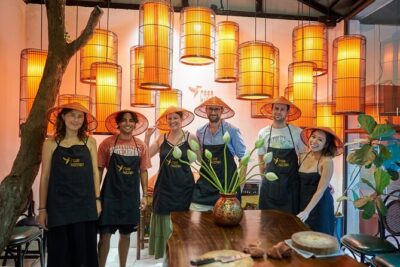
Hanoi Cooking Class: Culture, Local Market & Meaning CSR Impact
Read our review →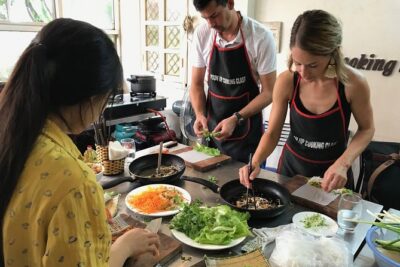
5 Traditional Dishes Hanoi Cooking Class with Market Trip
Read our review →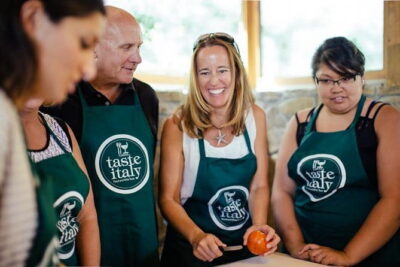
Cooking Class and Lunch at a Tuscan Farmhouse with Local Market Tour from Florence
Read our review →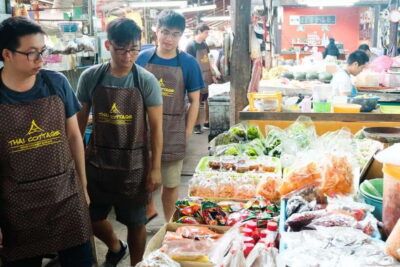
Chiang Mai: Cooking Class, Market & Thai Herbs Garden Tour
Read our review →Browse the lists this tour appears in