
Review · CAMBODIA
Cooking Class in Phnom Penh
The most interesting part of this Phnom Penh cooking class is its old-fashioned approach to flavor: you cut fresh spices, pound them into a paste, then build your dishes from there. It is not simply a demonstration. You take part in the work, from the mortar and pestle to the evening meal.
I like the small group of up to eight, which gives the cooking a personal feel. I also like the food lesson after the cooking, since it explains why rice, fish, herbs, and spices matter so much in Khmer cuisine. Host Sreng’s warm reply to participants also suggests an attentive, welcoming style.
The one drawback is the fixed evening schedule. The class runs from 5:00 to about 8:00 PM, so it may not suit you if you want a quick meal or already have firm evening plans. Confirmation can also take up to 48 hours, subject to availability.
Key points at a glance
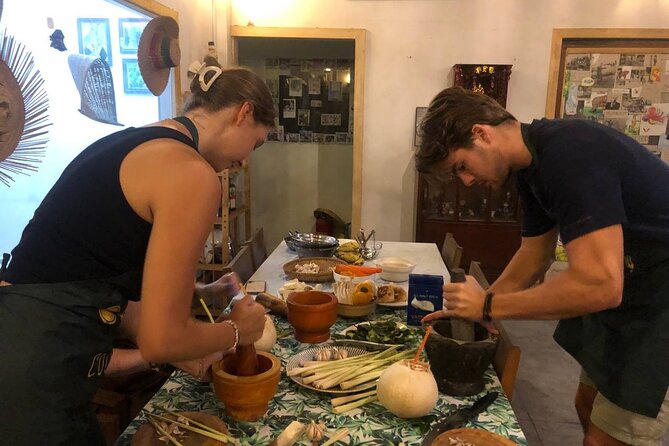
- Pound your own Khmer spice paste: The class begins with cutting spices and working them into a paste by hand.
- Small class size: A maximum of eight participants makes it easier to follow each cooking step.
- Dinner is part of the lesson: You eat the food you prepare, with water, soft drinks, and one or two beers included.
- Cambodian barbecue and dessert: The menu moves beyond one main dish and includes a Cambodian-style barbecue and a sweet finish.
- Food culture presentation: A short slide presentation explains rice, fish, herbs, spices, and neighboring influences.
- Good value at $31: For roughly three hours of instruction, food, drinks, and a small group, the price is reasonable.
Starting with coconut water at 5:00 PM
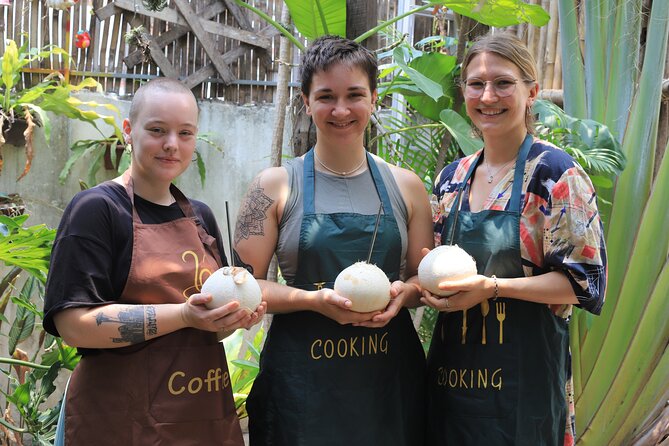
Your evening begins at Phnom Penh Spice cooking class111 on St 1MC in Phnom Penh. The class starts at 5:00 PM and ends back at the same meeting point, so you do not need to arrange a separate ride after dinner.
The opening is relaxed. You receive coconut water and seasonal fruit while learning about Cambodian spices. That first drink and snack are useful, not just decorative. They give you a moment to settle in before the practical work starts, and they introduce the local flavors before you begin cooking.
I like this gentle start because it avoids throwing you straight into a recipe. You first get a sense of the ingredients and the food traditions behind them. If you have spent the day seeing Phnom Penh’s sights, the pace should feel manageable.
The meeting point is specific, but the supplied details do not describe transport from hotels or other parts of the city. Plan to make your own way to Phnom Penh Spice and arrive ready for a prompt start. Since the activity ends where it begins, you can also plan the rest of your evening from that same location.
More Hands-On Workshops in Cambodia:
- Khmer Cooking Class at a Local’s Home in Krong Siem Reap
★ 5.0 · 2,731 reviews - Siem Reap: Khmer Cooking Class at a Local’s Home
★ 5.0 · 1,108 reviews - Award-Winning Cooking Class Experience with Professional Teacher
★ 5.0 · 745 reviews
Cutting spices and pounding the paste
At about 5:15 PM, the hands-on cooking begins. You cut spices, then pound them into a paste. This is one of the class’s most useful features because you get to feel how the flavor base is made rather than watching someone else prepare it in advance.
A mortar and pestle also show you something important about Khmer cooking. Spice paste is not an afterthought sprinkled over a finished dish. It forms part of the dish’s foundation, and the pounding helps combine the ingredients before they meet the vegetables and meat.
I would expect this part to be active but approachable. The class is built around step-by-step guidance, so you do not need to arrive with professional cooking skills. Still, you should be comfortable taking part. This is not the right choice if you want to sit back while an instructor does everything.
The work has a practical payoff later in the evening. When you eat the finished dishes, you can connect the aroma and seasoning to the paste you helped make. That link between preparation and dinner gives the class more value than a meal alone.
Seasoning vegetables and meat at 5:30 PM
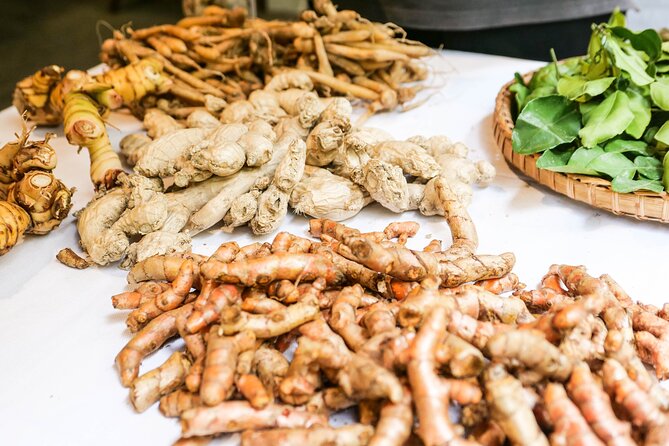
Around 5:30 PM, the spice paste is mixed with vegetables and meat. This stage lets you see how the base seasoning changes when it is combined with other ingredients.
The class description does not name the exact cuts of meat, vegetables, or recipes, so you should not book this expecting a guaranteed dish list. What you can count on is a traditional Cambodian focus, fresh local ingredients, and guided preparation of several classic Khmer-style dishes.
That flexibility can be a plus. Cambodian cooking is not only about a single famous plate. It uses the balance of rice, fish, herbs, spices, vegetables, and protein to create flavors that can be complex without feeling heavy. The class gives you a useful introduction to that balance without pretending to cover every regional dish in the country.
At this point, listen closely to how the seasoning is handled. The instructor guides the group through each step, and a small class makes it easier to keep pace. With no more than eight people, you are less likely to get lost behind a large demonstration table.
Steaming at 6:45 PM
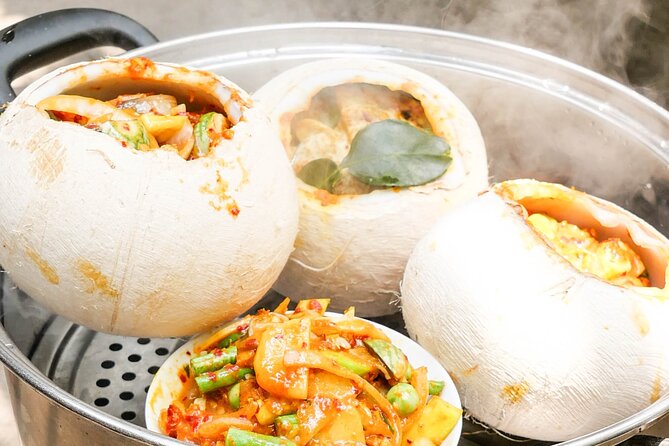
At about 6:45 PM, the prepared mixture goes into steaming. This creates a natural pause in the cooking process and gives the class a clear rhythm. You prepare the ingredients first, then allow the heat to work while moving on to the next parts of dinner.
Steaming is also a good reminder that Cambodian food is not defined only by strong spice or grilling. The cooking methods matter as much as the ingredients. A steamed dish can carry the flavor of the paste in a softer form, giving you a chance to compare textures and intensity later at the table.
The timing means the food is being prepared in stages rather than rushed into one final scramble. I appreciate that kind of structure in a cooking class. You get to see how a meal comes together, including the waiting and preparation that home cooking requires.
A few more cooking classes around Cambodia worth a look
- Khmer Cooking Class Half Day (AM or PM)
★ 5.0 · 316 reviews - Cambodian Village Cooking Class
★ 5.0 · 265 reviews - Cambodian Cooking Class from Siem Reap
★ 4.9 · 190 reviews - Battambang: Cooking Class and Market Touring
★ 4.8 · 80 reviews
Cambodian-style barbecue at 7:00 PM
At 7:00 PM, the class turns to barbecue in Cambodian style. This adds a different cooking method and gives the evening a more social feel. After cutting, pounding, mixing, and steaming, the barbecue brings direct heat and a more hands-on final cooking stage.
The phrase Cambodian-style barbecue covers the method, but the available details do not specify the exact ingredients or equipment. Keep that in mind if you are looking for a particular barbecue dish. The useful promise here is variety: you are not preparing only one recipe from start to finish.
This part should appeal to anyone who likes food with a clear connection between preparation and eating. You help create the meal, then share it soon afterward. That makes the $31 price easier to justify, especially since the class also includes dessert, drinks, and the food presentation.
Making dessert at 7:15 PM
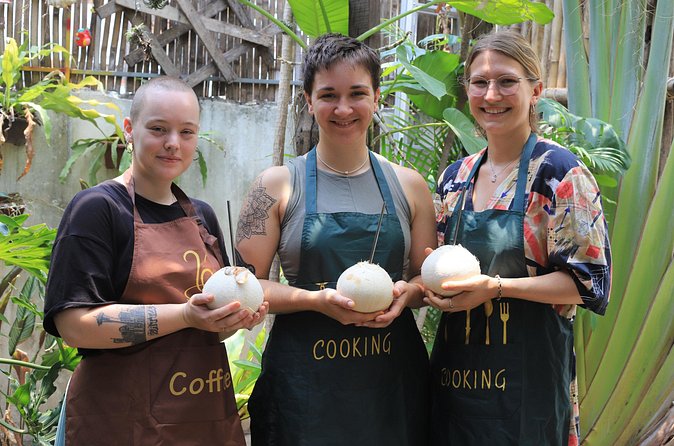
Dessert follows at about 7:15 PM. Its inclusion matters because the class presents a full meal rather than a single savory cooking exercise.
The exact dessert is not stated, so you should treat it as a pleasant part of the menu rather than book the class for one particular sweet. Still, ending the cooking with dessert gives the schedule a satisfying shape. You move from the spice paste and main dishes to a different kind of preparation before sitting down to eat.
I also like the timing. The dessert is made while the main food has already progressed, which helps keep the three-hour class moving. There is no long stretch devoted to one recipe. Instead, you work through several elements that will eventually appear at dinner.
Food culture on the screen at 7:30 PM
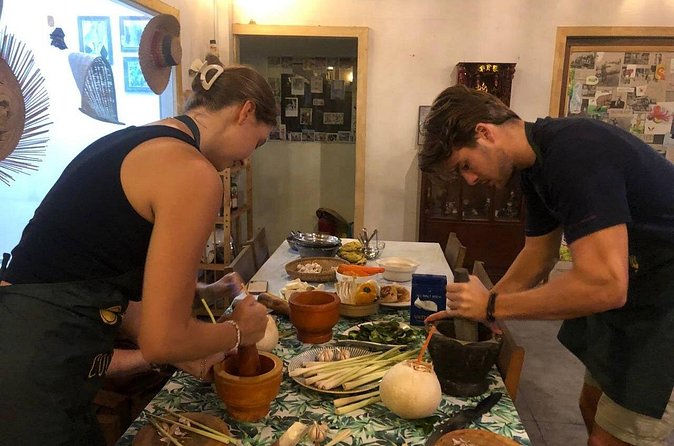
At 7:30 PM, you watch a slide presentation about Cambodian food. It covers the role of rice and fish, along with the herbs and spices that shape Khmer cooking. It also discusses influences from neighboring countries.
This presentation gives context to the food on your plate. Rice is not merely a side dish, fish is not simply a protein, and herbs are not just decoration. The lesson helps you understand how everyday ingredients fit into Cambodian food culture.
I find this especially useful for visitors who want more than a recipe to take home. You learn where the flavors sit within a wider tradition, while also seeing how neighboring cuisines have influenced Cambodian cooking. The session is described as a general presentation, so do not expect an academic lecture or a detailed study of every Cambodian region.
Its position near the end works well. You have already handled the ingredients and prepared the food, so the information has a direct connection to what you have just done. The class becomes a food lesson with dinner attached, rather than a slide show followed by a token cooking activity.
Dinner at 8:00 PM
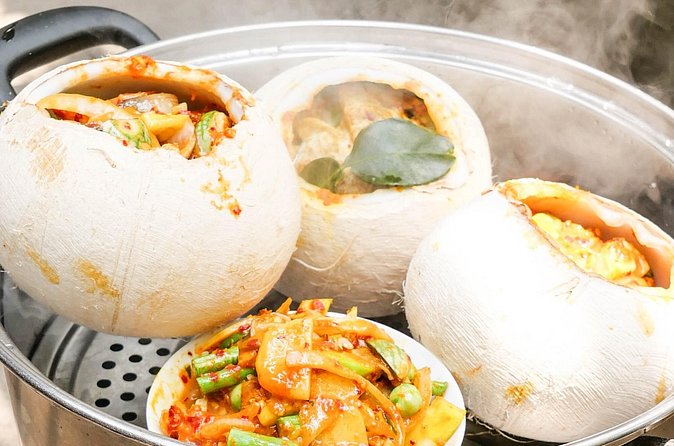
At 8:00 PM, you eat the meal you prepared. Water, a soft drink, and one or two beers are included. The exact drink serving is described as one or two beers, so the amount may vary, but you can expect beverages to be part of the dinner rather than an extra expense.
This is the payoff of the class. You can taste the results of the spice paste, the seasoned vegetables and meat, the steamed dish, the barbecue, and the dessert. The meal also gives you time to enjoy the food without needing to rush through every bite while working.
One participant described the experience as both educational and delicious, with excellent hosting. That matches the structure of the evening. It is built to teach you something while keeping the mood social and welcoming. Sreng’s personal response to participants is signed with thanks for their energy and interest in learning about Cambodia, which suggests a host who values conversation as much as the recipes.
Do remember that the meal is made by the group. If you expect restaurant-level consistency or a fixed menu prepared by a chef, this may not be your ideal dinner. If you enjoy eating food you helped create, the shared table is the point.
What $31 buys you in Phnom Penh
At $31 per person, this class offers a solid bundle: about three hours, instruction, ingredients, a full meal, dessert, coconut water, seasonal fruit, and drinks at dinner. The maximum group size of eight adds value because the class should feel more personal than a large commercial demonstration.
The price is easiest to assess against your evening plans. If you would otherwise spend $31 on a standard dinner, this gives you both dinner and an activity. You also leave with a clearer sense of how Khmer flavors are built, even though the supplied information does not promise printed recipes or a take-home ingredient kit.
The class is not designed as a luxury food event. There is no stated hotel transfer, private format, or specialized menu. Its value comes from participation, cultural explanation, and the chance to eat what you make.
For food lovers, first-time visitors to Cambodia, and people who prefer practical cultural activities, that is a fair trade. Couples can enjoy the shared work, and small groups of friends can make the evening social. The class may be less suitable for someone with a tightly packed schedule or a strong need to know every menu item before booking.
Group size, timing, and booking advice
The class accepts no more than eight participants. That limit is important because the schedule includes several hands-on tasks. A smaller group should make it easier to follow the instructor, reach the ingredients, and ask questions during the preparation.
The full program runs from 5:00 to roughly 8:00 PM. It is a good evening activity after daytime sightseeing, but leave enough space to reach the meeting point before the start. The class ends at the same place where it begins.
Confirmation arrives within 48 hours of booking, subject to availability. Since the activity is often booked about seven days ahead, reserving roughly a week before your preferred date is sensible, especially if your Phnom Penh schedule is short.
You can cancel for a full refund if you do so at least 24 hours before the 5:00 PM start time. Cancellations or changes made within 24 hours are not refunded or accepted, and the cut-off uses Phnom Penh local time.
Who should book this cooking class?
I would choose this class if you want a compact introduction to Khmer food with real participation. You will cut, pound, mix, steam, barbecue, prepare dessert, listen to a food presentation, and eat dinner, all in one evening.
It is a particularly good fit if you value food culture as much as food. The presentation explains the place of rice, fish, herbs, and spices, while the cooking gives you a physical connection to those ideas.
It also suits you if you prefer a small group. Eight people is enough to keep the atmosphere social without making the class feel anonymous. The strong praise centers on the educational side, the hosting, and the taste of the finished meal, so those are the main reasons to book.
I would hesitate only if you need a precise menu, a private class, transport, or a flexible start time. Those details are not provided. The class follows a fixed schedule and offers a broad Cambodian food experience rather than a custom lesson.
Should you book Phnom Penh Spice?
Yes, if you want a reasonably priced evening that combines cooking, culture, and dinner. The hands-on spice paste work is the heart of the class, while the barbecue, dessert, drinks, and food presentation give the three hours a good range.
Book it for the chance to understand Khmer flavors by making them yourself, not for a guaranteed named dish or luxury setting. With a maximum of eight people, attentive hosting from Sreng, and a full meal included, it offers useful value for an evening in Phnom Penh. Reserve ahead, arrive on time, and keep your schedule open until about 8:00 PM.
FAQ
Where does the cooking class start?
It starts at Phnom Penh Spice cooking class111, St 1MC, Phnom Penh, Cambodia.
What time does the activity begin?
The class begins at 5:00 PM.
Where does the activity end?
It ends back at the meeting point.
How long does the cooking class last?
The activity lasts approximately three hours, ending around 8:00 PM.
How many people can join the class?
The maximum group size is eight participants.
Are drinks included?
Yes. Coconut water and seasonal fruit are provided at the beginning. Dinner includes water, a soft drink, and one or two beers.
What is the cancellation policy?
You can cancel at least 24 hours before the start time for a full refund. Cancellations or changes made less than 24 hours before the start time are not accepted, and the amount paid is not refunded.
Just added around Cambodia
- The Mekong Village Cooking Escape★ 5.0 · 4 reviews
- Khmer Cooking Class Full Day★ 5.0 · 13 reviews
- Battambang: Cooking Class and Market Touring★ 5.0 · 29 reviews
- Phnom Penh: Walking Tour, Food Tour & Sunset Cruise★ 4.9 · 4 reviews
- Siem Reap: Morning Cooking Class & Market Tour★ 5.0 · 7 reviews
- Siem Reap: Guided Day Trip to Local Village & Cooking Class★ 5.0 · 3 reviews
- Siem Reap: Half-Day Cambodian Cooking Class★ 4.9 · 6 reviews
- Siem Reap Khmer Cooking Class and Local Market Tour★ 4.1 · 4 reviews
Cooking Classes, compared.
Half-Day Thai Cooking Class at Organic Farm in Chiang Mai
Read our review →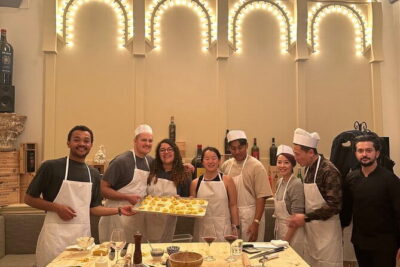
Florence: Pasta Cooking Class with Unlimited Wine
Read our review →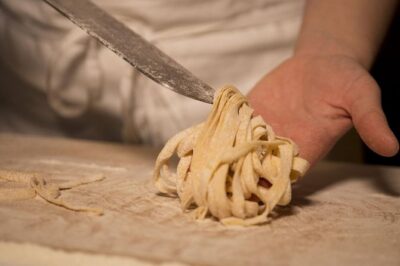
3 in 1 Cooking Class near Navona: Fettuccine, Ravioli & Tiramisu
Read our review →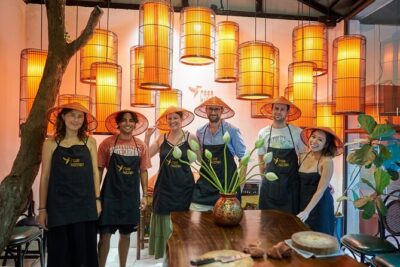
Hanoi Cooking Class: Culture, Local Market & Meaning CSR Impact
Read our review →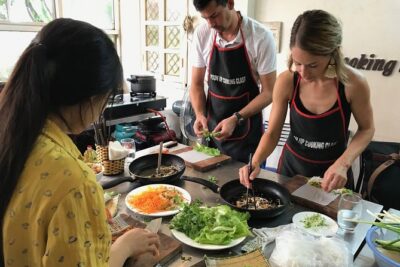
5 Traditional Dishes Hanoi Cooking Class with Market Trip
Read our review →
Cooking Class and Lunch at a Tuscan Farmhouse with Local Market Tour from Florence
Read our review →
Chiang Mai: Cooking Class, Market & Thai Herbs Garden Tour
Read our review →Browse the lists this tour appears in