
Review · CAMBODIA
Khmer Cooking Class Half Day (AM or PM)
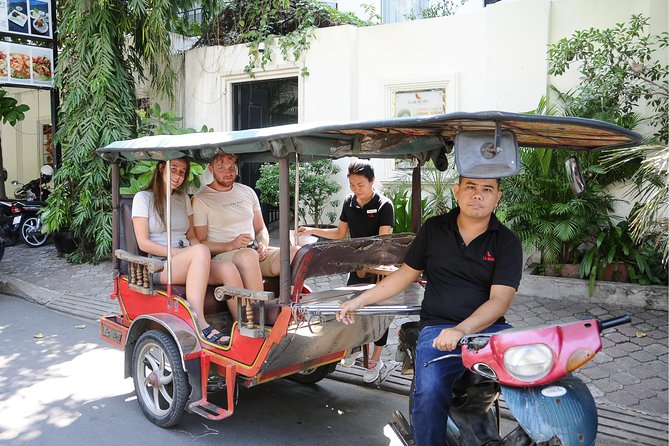
The best part of this Phnom Penh class starts before the cooking. You ride a tuk-tuk to a local market, choose the ingredients for your meal, then return to Banana Cooking Class to prepare them with a chef at your own station. Fish amok, chicken curry, spring rolls, and banana desserts all appear in the rotating menu.
I like the personal format. This is a private activity, and each participant gets a wok and cooking station, so you are not standing behind a crowd trying to see a demonstration. I also like the practical market lesson, where Chef Lom Ang, Sophen, or another instructor can explain how to select produce and which ingredients you can replace at home.
The main consideration is the small-group format. You may be the only student, which gives you plenty of instruction but can make the final meal feel a little quiet. The class also includes a market visit, so expect heat, strong smells, and ordinary local-market conditions before the calm of the cooking school.
Key points to know before booking
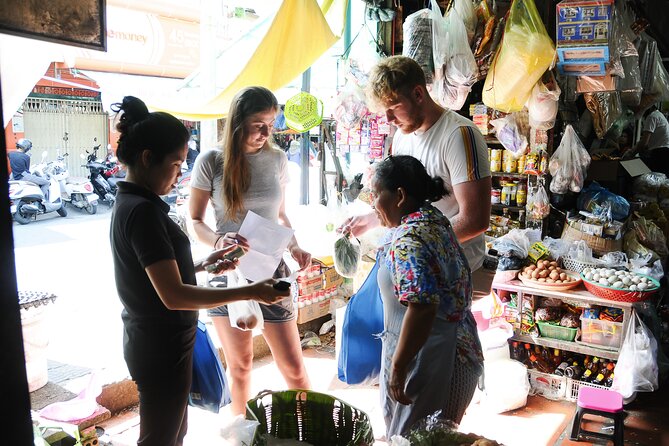
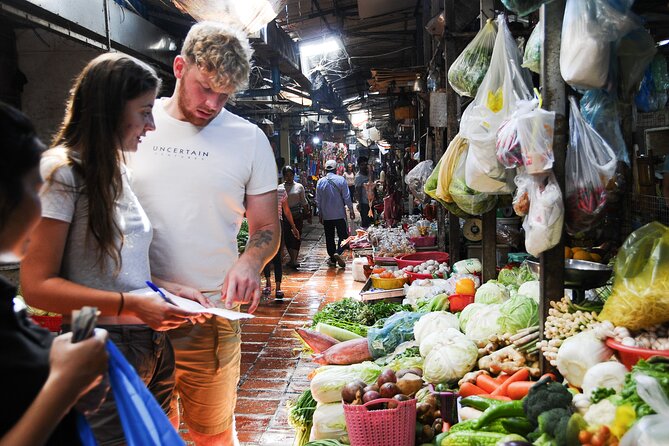
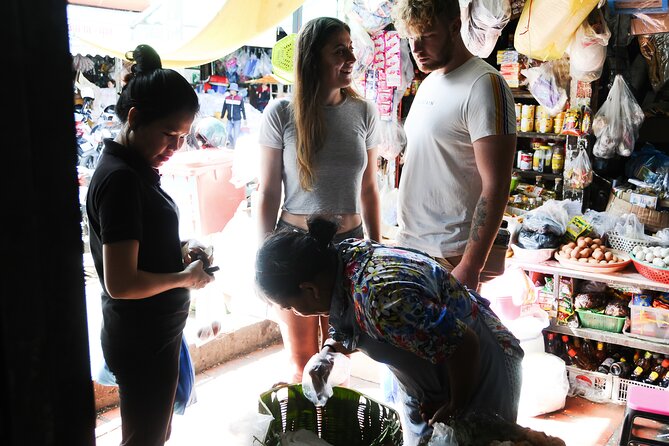
- Local market shopping comes first: A tuk-tuk takes you to buy the produce, herbs, spices, and other ingredients used in class.
- Your own cooking station: You work with individual utensils, a wok, and direct help from the chef.
- Three Khmer dishes: Menus can include fish amok, chicken curry, green mango salad, fresh spring rolls, and a banana palm sugar dessert.
- Morning or afternoon timing: Choose a 9:00 a.m. start for lunch or a 3:00 p.m. start for dinner.
- Recipes go home with you: You receive printed recipes and ingredient guidance for cooking the dishes elsewhere.
- Good value at $31: The fee covers the market ride, instruction, meal, certificate, and mobile ticket convenience.
Why this four-hour class works so well
A cooking class can be a pleasant way to fill an afternoon, but this one offers more than a kitchen lesson. It connects the food on your plate with the market where the ingredients are bought. That small link makes the experience more useful: you see unfamiliar Cambodian produce, hear how it is chosen, and then learn what it does in the finished dish.
The class is designed for hands-on participation. The chef demonstrates each step, then you repeat it. You will wash, peel, cut, season, and cook your own portion rather than simply watching a professional prepare lunch.
That format suits beginners, but it also gives experienced home cooks enough room to ask about substitutions and technique. The instructors can explain what you may use in place of hard-to-find ingredients in your own country. You leave with recipes, not just a full stomach.
The experience lasts about four hours. That includes the tuk-tuk ride to and from the market, a drink and cold towel on return, a short theory session, cooking, and a meal. The schedule is full without feeling like a rushed restaurant demonstration.
More Hands-On Workshops in Cambodia:
- Khmer Cooking Class at a Local’s Home in Krong Siem Reap
★ 5.0 · 2,731 reviews - Siem Reap: Khmer Cooking Class at a Local’s Home
★ 5.0 · 1,108 reviews - Award-Winning Cooking Class Experience with Professional Teacher
★ 5.0 · 745 reviews
Meeting the chef at Banana Cooking Class
You begin at Banana Cooking Class, at 4b Abdul Carime Street (21) in Phnom Penh. The activity also ends here, which keeps the arrangement simple. You do not need to find your way to a second location after the meal.
The instructors named in the supplied information include Chef Lom Ang and Sophen. Lom Ang is particularly associated with patient, clear instruction and market guidance. Sophen is described as a lively teacher who worked well with both adults and a parent and young adult traveling together.
The class is private, so only your group takes part. That does not always mean you will have a one-on-one class. If demand is low, you might cook alone with the chef. If you book with family or friends, the private setup lets you work together without strangers joining your table.
After the market ride, you return to the cooking school for a refreshing drink, a cold towel, and the recipes. That pause matters in Phnom Penh, where a short ride and a market walk can leave you warm before you start handling knives and hot pans.
Some class settings are described as clean, air-conditioned, and connected with a quiet boutique hotel. Those details make the cooking portion more comfortable than the market portion, especially for the midday session.
The market ride gives the class its local flavor
At 9:00 a.m. for the morning class, or 3:00 p.m. for the afternoon class, you meet at the school and take a tuk-tuk to a local market. The ride is included in the price.
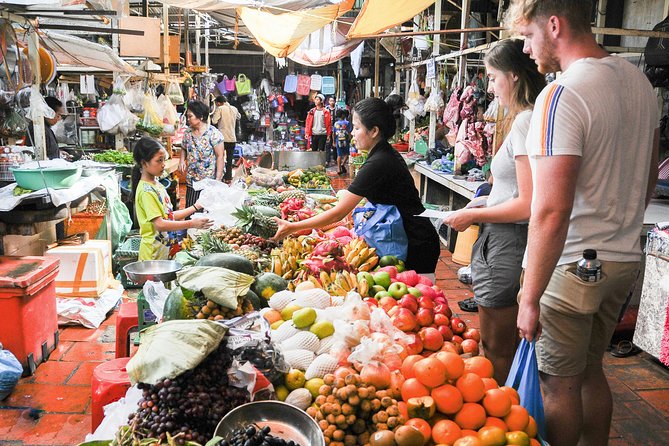
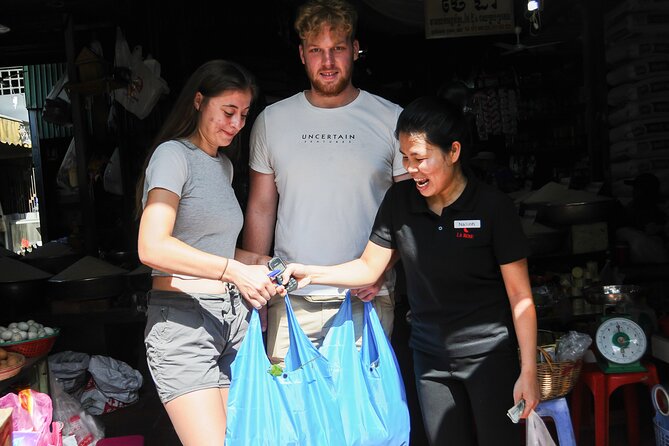
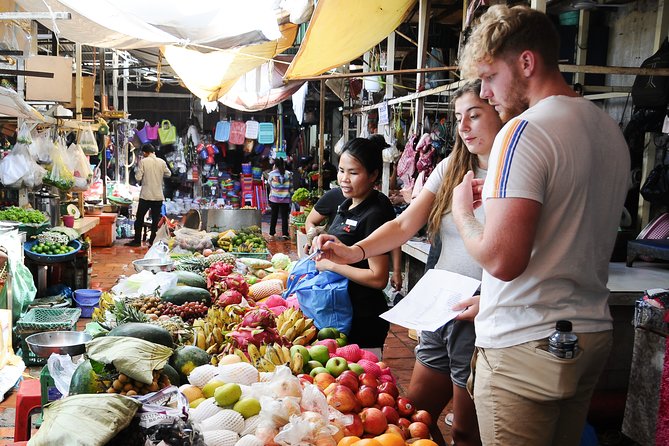
The point is not to tour every aisle or make a long shopping trip. You go to see Cambodian fruits, vegetables, herbs, and spices, and to help gather the ingredients for your three dishes. The chef guides the buying, so you are not left guessing which item is fresh or how much to purchase.
This is one of the most useful parts of the experience. A recipe can tell you to buy a particular herb, but a market lesson can show you what that herb looks like, how it is sold, and what a suitable substitute might be. For anyone who plans to cook Cambodian food at home, that advice may be worth as much as the meal.
Keep your expectations practical. This is a working local market, not a polished food hall. You might encounter strong smells, wet floors, heat, and crowded stalls. That is part of the setting, but it may not suit anyone who wants a quiet, air-conditioned morning from start to finish.
The chef handles the shopping process while explaining the ingredients. You help select the food, but this is not a lesson in bargaining or an open-ended market expedition. The trip lasts about an hour, including the ride back.
From market ingredients to a three-dish meal
At about 10:15 a.m. or 4:15 p.m., you return to the school. The drink and cold towel give you a short break before the kitchen work begins.
The theory session starts at approximately 10:30 a.m. or 4:30 p.m. The chef demonstrates the dishes and explains the basic methods you will use. This is a useful point in the schedule because you can see the complete process before handling the ingredients yourself.
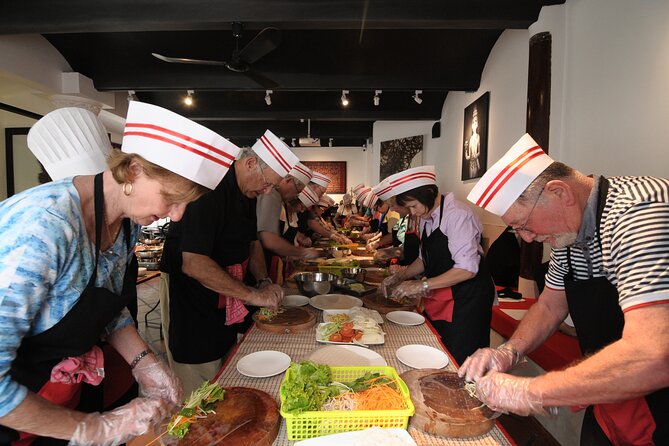
At around 11:00 a.m. or 5:00 p.m., the practical cooking begins. You work at your own station with your own wok and utensils. The chef demonstrates how to prepare the ingredients, then you follow along. Help is available when you need it, but you are expected to do the actual cooking.
The exact menu can vary. Dishes described in the class include:
- Fish amok
- Yellow chicken curry
- Fresh spring rolls or rice-paper rolls
- Green mango salad
- Banana dessert with palm sugar
The balance is appealing. You may prepare a starter, a main course, and a dessert, giving you several Khmer techniques rather than one long recipe. Fish amok introduces the fragrant, creamy side of Cambodian cooking. Chicken curry brings another use for herbs and spices. The banana dessert is simple, but one portion was found too sweet, so you can ask about reducing the sugar when you make it at home.
The chef shows you how to cut and prepare each item before you copy the step. That is helpful if you do not cook often. It also lets experienced cooks pay attention to texture, timing, and the order in which ingredients enter the wok.
A few more cooking classes around Cambodia worth a look
- Cambodian Village Cooking Class
★ 5.0 · 265 reviews - Cambodian Cooking Class from Siem Reap
★ 4.9 · 190 reviews - Battambang: Cooking Class and Market Touring
★ 4.8 · 80 reviews - Phnom Penh’s Hands-On Khmer Cooking Class in the Countryside
★ 5.0 · 54 reviews
Why the individual wok matters
Many cooking classes rely on a single group demonstration followed by shared cooking. Here, the individual stations make the result more personal. You prepare your own portions and can see exactly how each decision affects the final dish.
The private instruction is especially useful for questions. You can ask about replacing an herb, adjusting sugar, or changing the amount of spice without waiting for a large group to catch up. The class is suitable for beginners because the chef gives step-by-step directions, but you are not simply handed a finished dish.
The quality of instruction depends on the chef assigned to your session. The supplied information names Lom Ang and Sophen, and both are presented as friendly, patient teachers. English is described as understandable, though not always perfect. In practice, the demonstrations and hands-on method help bridge any language gaps.
The class is also a reasonable choice for families. A young adult and parent enjoyed the shopping and cooking together, and the individual stations give each person something useful to do. Children would still need close supervision around knives, hot pans, and woks, and the provided details do not specify a minimum age.
Eating what you cooked at noon or six
At about noon for the morning course, or 6:00 p.m. for the afternoon course, you sit down to eat the meal you prepared. This is not a tasting menu served by the school. The appeal is that you know where the ingredients came from and have handled every stage of the cooking.
The portions are described as a full meal, and some chefs pack up unfinished food for later. That may be useful if you are cooking alone or find the servings generous. One practical drawback is that a solo participant may have more food than they can comfortably eat, and the school may not allow a driver to join the meal.
The atmosphere during the meal can be part of the fun when you cook with friends or family. If you are alone, the private format is excellent for instruction but less social at the table. Think of this first as a cooking lesson and second as a group dining event.
The experience ends with a certificate and a photo session. You also take the printed recipes and ingredient information home. The certificate is a small souvenir, while the recipes are the part most likely to remain useful after your time in Cambodia.
Is $31 good value in Phnom Penh?
At $31, the price covers a lot for a four-hour activity. You get the tuk-tuk transfer to the market and back, ingredient shopping, a private or very small-group lesson, your own cooking setup, three dishes, a meal, recipes, a certificate, and photos.
The value is strongest if you want to learn rather than simply eat. A restaurant meal might cost less, but it would not teach you how to identify the ingredients or repeat the dishes. A cooking class without the market visit would also miss the part that connects the recipes to daily Cambodian food shopping.
There are a few limits. The experience does not list hotel pickup, so you need to reach Banana Cooking Class at the stated meeting point. It also does not list drinks beyond the welcome refreshment, and the menu is not fixed in the information provided. If you need a specific dish, confirm it before booking.
The mobile ticket is convenient, and confirmation is provided when you book. Public transportation is nearby, but the supplied details do not give exact directions from every Phnom Penh neighborhood.
Who should book this Khmer cooking class?
I would choose this class if you want an activity that combines food, local shopping, and practical instruction. It suits couples, families, friends, and solo cooks who value direct help more than a large social group.
It is a strong match for you if:
- You want to cook Cambodian dishes yourself.
- You enjoy visiting ordinary local markets.
- You like learning ingredient substitutions for home cooking.
- You prefer a small or private class.
- You want a substantial lunch or dinner built into the activity.
- You would use printed recipes after returning home.
You may want another type of food tour if you dislike markets, strong smells, hot weather, or hands-on kitchen work. You should also think twice if you want a fixed menu, a large social group, or a class with hotel pickup.
The morning session gives you lunch and starts at 9:00 a.m. The afternoon session starts at 3:00 p.m. and ends with dinner. Choose based on your plans in Phnom Penh, not just the time of day. The market visit and cooking portion are similar in both versions.
Free cancellation is available if you cancel at least 24 hours before the start time. Changes or cancellations within 24 hours are not accepted for a refund.
Should you book it?
Yes, if you want to understand Khmer food by preparing it from the market onward. The strongest reasons are the individual station, direct chef guidance, and the chance to take recipes home and repeat the meal.
At the same time, book with the right expectations. This is a practical cooking lesson in a local market setting, not a polished culinary show. You might cook alone, the menu can vary, and the banana dessert may be sweeter than you prefer. For $31, though, the combination of transport, instruction, three dishes, and a full meal makes this one of the better-value food activities in Phnom Penh.
FAQ
How long does the Khmer cooking class last?
The class takes approximately four hours, including the market visit, tuk-tuk rides, demonstration, hands-on cooking, and meal.
Is the class available in the morning and afternoon?
Yes. The morning session starts at 9:00 a.m. and ends around noon. The afternoon session starts at 3:00 p.m. and ends around 6:00 p.m.
Where does the activity begin?
You meet at Banana Cooking Class, 4b Abdul Carime Street (21), Phnom Penh, Cambodia.
Where does the activity end?
The activity ends back at the Banana Cooking Class meeting point.
Is transportation included?
A tuk-tuk ride to the local market and a return ride to the cooking school are included in the class schedule.
Is this a private activity?
Yes. Only your group participates in the activity, although your group size can affect how social the meal feels.
How many dishes do I cook?
You prepare three traditional Cambodian dishes. Examples include fish amok, chicken curry, spring rolls, green mango salad, and a banana dessert.
Do I receive the recipes?
Yes. Recipes and ingredient information are provided for you to take home and use later.
Does the class include a meal?
Yes. You eat the lunch or dinner you prepare during the class.
Can I cancel for a full refund?
Yes, if you cancel at least 24 hours before the experience start time. Cancellations or changes made within 24 hours are not refunded or accepted.
Just added around Cambodia
- Battambang: Cooking Class and Market Touring★ 5.0 · 29 reviews
- Phnom Penh: Walking Tour, Food Tour & Sunset Cruise★ 4.9 · 4 reviews
- Siem Reap: Morning Cooking Class & Market Tour★ 5.0 · 7 reviews
- Siem Reap: Guided Day Trip to Local Village & Cooking Class★ 5.0 · 3 reviews
- Siem Reap: Half-Day Cambodian Cooking Class★ 4.9 · 6 reviews
- Siem Reap Khmer Cooking Class and Local Market Tour★ 4.1 · 4 reviews
- Phnom Penh Evening Food Tour -On Promotion Price limit Offer★ 4.9 · 17 reviews
- Siem Reap: Cambodian Desserts Cooking Lesson with Tastings★ 4.8 · 9 reviews
Cooking Classes, compared.
Half-Day Thai Cooking Class at Organic Farm in Chiang Mai
Read our review →
Florence: Pasta Cooking Class with Unlimited Wine
Read our review →
3 in 1 Cooking Class near Navona: Fettuccine, Ravioli & Tiramisu
Read our review →
Hanoi Cooking Class: Culture, Local Market & Meaning CSR Impact
Read our review →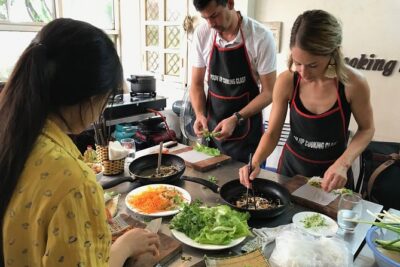
5 Traditional Dishes Hanoi Cooking Class with Market Trip
Read our review →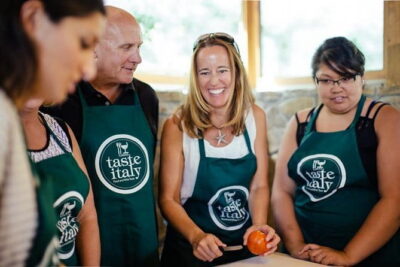
Cooking Class and Lunch at a Tuscan Farmhouse with Local Market Tour from Florence
Read our review →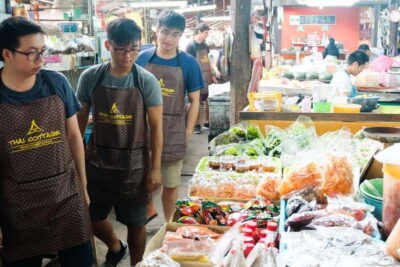
Chiang Mai: Cooking Class, Market & Thai Herbs Garden Tour
Read our review →Browse the lists this tour appears in