Review · COOKING CLASSES
Local Ghanaian Cooking Class in Accra to help support wellness community center
The best part of this Accra experience is the mix of market shopping, cooking, and community support. You travel by car to a local market, help gather ingredients, then return to prepare Ghanaian dishes such as fufu, banku, jollof rice, fried fish, and soup.
I like the small-group setting and the chance to meet local cooks such as Auntie Irene, Ms. Gifty, Ms. Pat, and their families. I also like that your $45 fee helps fund a wellness center with fitness programs, nutrition lessons, health screenings, children’s lectures, art, and dance. One thing to check before booking is the timing: the advertised length is about six hours, but one past booking lasted about two hours.
Key points to know before you book
- Shop for ingredients in a local Accra market: Transportation by car is provided from the meeting point.
- Choose from several Ghanaian staples: Possible dishes include fufu, banku, jiji, rice balls, okra soup, groundnut soup, palm-nut soup, light soup, and plain soup.
- Expect warm, personal hosting: Named hosts include Auntie Irene, Ms. Gifty, and Ms. Pat, with family members sometimes helping in the kitchen.
- Taste local spirits: Emergency, Hatso, and Uwuba are made from akpeteshie and infused with bark or tree leaves.
- Your booking supports health programs: The community center offers nutrition education, exercise programs, health screenings, and activities for children.
- Allow for schedule variation: The listed duration is six hours, but the actual cooking session may be much shorter.
A market visit that gives the class its local setting
You begin at Global Wellness Mission, at CM7, Third Oloti Street in Accra. From there, the group travels by car to a local market to buy the ingredients needed for the meal.
This first stop matters. You are not simply handed a preselected basket of food in a cooking studio. The market visit connects the meal to everyday shopping in Accra and gives you a better sense of the ingredients before they reach the cooking pot. It also gives the host a chance to shape the menu around what is available and what you want to prepare.
The market segment is not described as a formal guided food tour, so keep your expectations practical. The main purpose is to collect ingredients for the class. You may find this part most interesting if you enjoy seeing how a meal begins, rather than rushing straight to a kitchen table.
Transportation is provided by car, which helps since you will be carrying food and returning to the cooking location. The exact market and driving time are not specified, so you should allow room in your morning schedule. The meeting point is also the end point, making this easier to fit into an Accra day.
More Hands-On Workshops in the world:
- Half-Day Thai Cooking Class at Organic Farm in Chiang Mai
★ 5.0 · 19,087 reviews - Florence: Pasta Cooking Class with Unlimited Wine
★ 4.9 · 10,285 reviews - 3 in 1 Cooking Class near Navona: Fettuccine, Ravioli & Tiramisu
★ 5.0 · 7,376 reviews
Cooking Ghanaian food from the basics
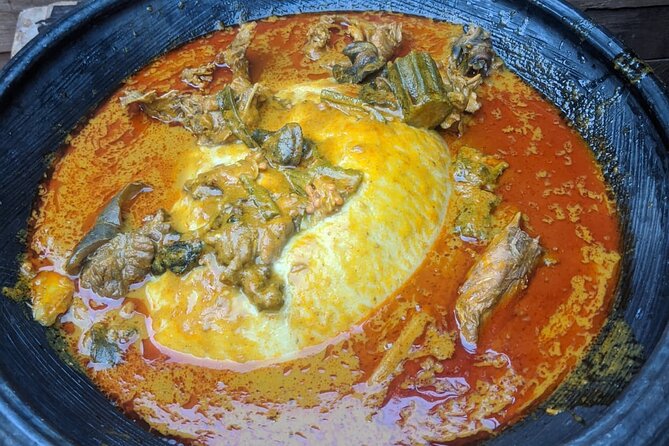
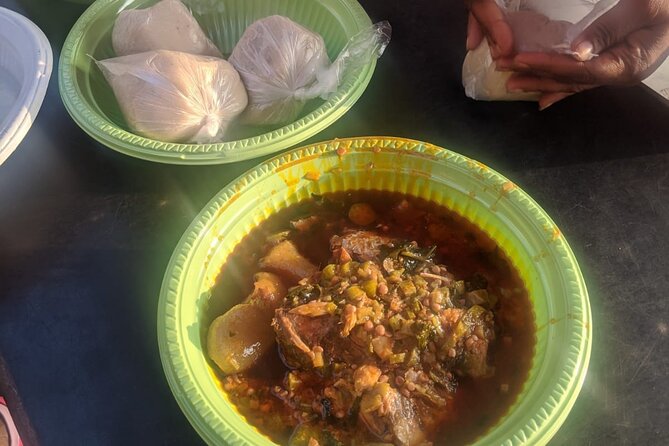
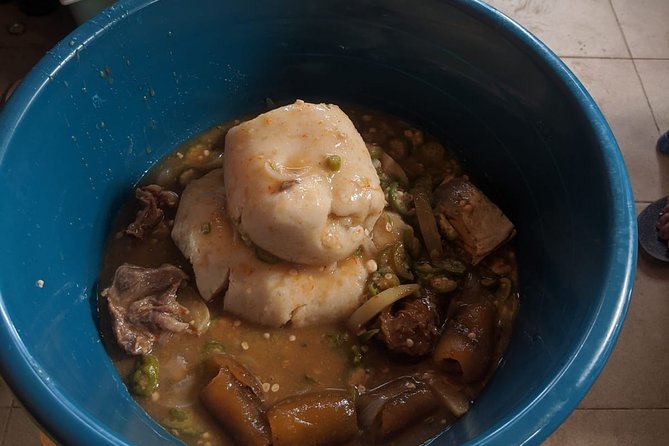
Back at the community setting, you help prepare a traditional Ghanaian meal. The food list gives you a useful sense of the class’s range. Depending on the choice made for your session, you may work with fufu, banku, jiji, or rice balls, then pair them with a soup or stew.
Possible soups and stews include:
- Okra soup
- Groundnut soup
- Palm-nut soup
- Light soup
- Plain soup
The choice of starch and soup is one of the most important parts of the experience. Fufu and banku have distinctive textures and methods, so this is not simply a lesson in following a printed recipe. You may pound fufu, stir banku, and learn how the starch is prepared for eating with soup.
The menu can also include chicken, fried fish, stew, and jollof rice. Auntie Irene received especially strong praise for teaching banku, fried fish, stew, chicken, and jollof rice, with the jollof rice singled out as a favorite. If jollof is a priority for you, ask about its availability when you book, since the menu may depend on the selected meal and the day’s plan.
One useful caution: the amount of hands-on work may vary. One person expected to prepare more of the ingredients but found that some of the chopping and preparation had already been done. If you want to do each step yourself, say so clearly at the start. Hosts may be trying to keep the class moving, but you should still be able to explain that the practical work is the main reason you booked.
The people make the meal feel personal
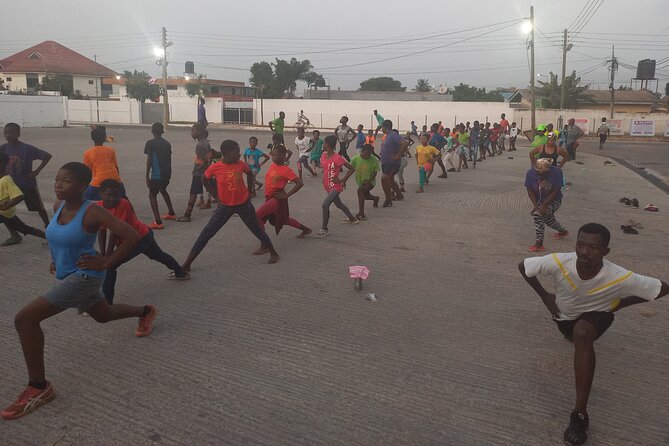
This is a small-group class, with a maximum of 20 people. That is not an intimate private lesson, but it is still a more personal format than a large commercial food demonstration. The hosts can spend time answering questions, watching your technique, and adjusting the food to dietary needs when requested in advance.
Several hosts are named in the experience: Pat and Maggie are the providers, while past sessions have included Auntie Irene, Ms. Gifty, Ms. Pat, and family members. The exact host may vary, but the pattern is clear: you are likely to cook with local women and relatives in a family-style setting rather than with a single instructor in a formal culinary school.
That family involvement is part of the appeal. You are not only learning how a dish is made. You are also sharing conversation, laughter, and a meal with the people who prepared it. One couple described leaving with full stomachs and happy hearts after a warm session with Ms. Pat and her family. Another person found Ms. Gifty patient and attentive, especially when making the foods they wanted.
At the same time, the informal style can bring some unevenness. A structured culinary school may provide more exact measurements, written recipes, and a fixed sequence. Here, the value is the personal contact and local setting. If you prefer a polished demonstration with every step timed and documented, this class may feel loose.
Local spirits before lunch
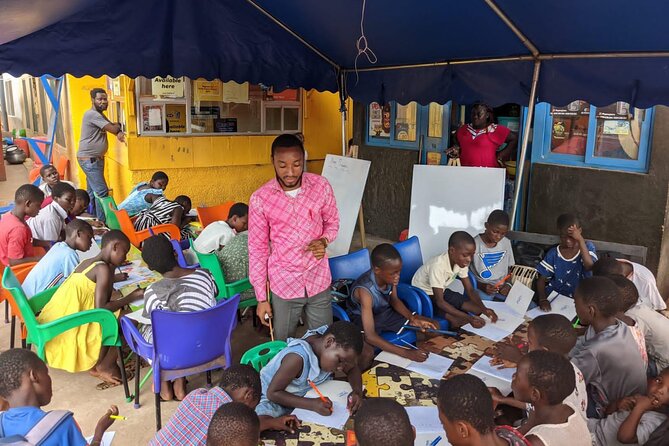
The class includes alcoholic beverages, specifically local spirits made with akpeteshie. The named drinks are Emergency, Hatso, and Uwuba. They are made from akpeteshie and soaked with local bark or tree leaves.
This tasting adds a cultural element that you will not get from a standard recipe lesson. It also deserves a little care. Akpeteshie is a strong local spirit, and the experience does not list the alcohol content or the amount served. You can ask about the drinks before tasting them, and you should not feel obliged to drink if you do not want alcohol.
Beer, soda, and other soft drinks are not included. Lunch is included, as are the local spirits. If you want a nonalcoholic drink with the meal, plan to buy one separately or ask the host what is available.
A few more cooking classes around the world worth a look
- Mini Group: Authentic Thai Cooking & Wellness Experience
★ 4.9 · 7 reviews - Thai Culinary Class by the Beach at Melati Resort & Spa
★ 5.0 · 6 reviews
Lunch is the payoff
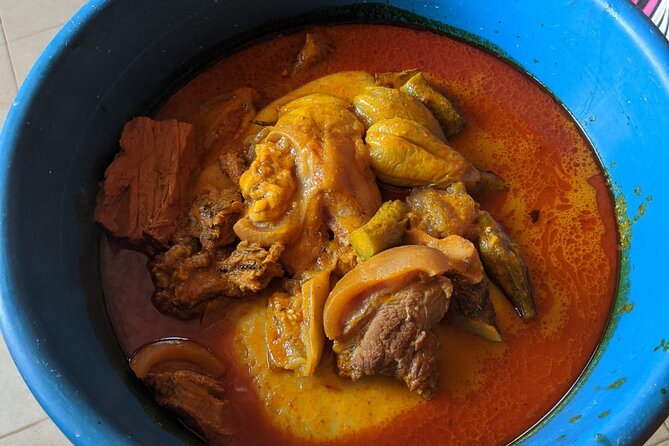
The meal at the end is not a separate restaurant lunch. You eat the food you helped prepare, which gives the final plate more meaning. The dishes may include the starch and soup you selected, along with meat, fish, stew, or rice depending on the session.
I like this format because it keeps the experience focused. You are not watching someone else cook and then being served an unrelated meal. The lunch reflects the work done during the class, and it gives you time to sit, talk, and compare the different dishes.
Portions, menu choices, and serving style are not specified, so do not book this as a guaranteed tasting menu. Think of it as a shared Ghanaian meal shaped by the day’s cooking plan. If you have dietary restrictions, make the request before arrival. The experience says dietary needs can be accommodated upon request, but it does not list specific substitutions.
Why the community connection matters
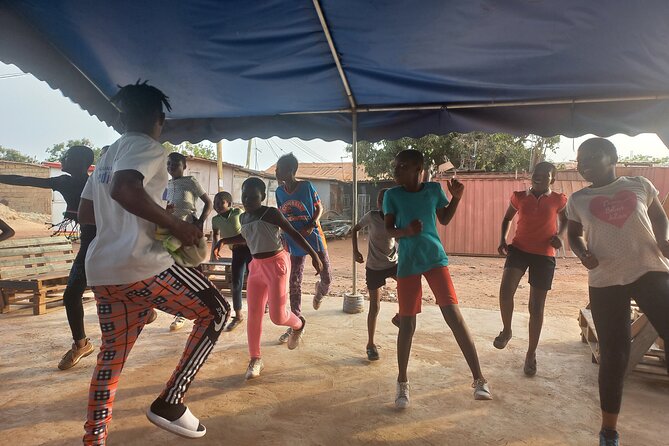
Your booking supports the Wellness Community Center connected with the experience. Its programs include physical activity, nutrition education, after-school lectures for children, health screenings, art, and dance.
That gives the activity a practical purpose beyond a morning of cooking. The connection is especially useful for visitors who want their spending to support local services while still taking part in a personal cultural activity. You can learn about Ghanaian food and help fund programs linked to health, children, and community life at the same time.
The experience does not spell out how much of the $45 fee goes to the center, so I would not treat the price as a direct donation. Still, the community link adds value, particularly when you are choosing between a standard cooking lesson and one attached to local programs.
Is $45 a fair price in Accra?
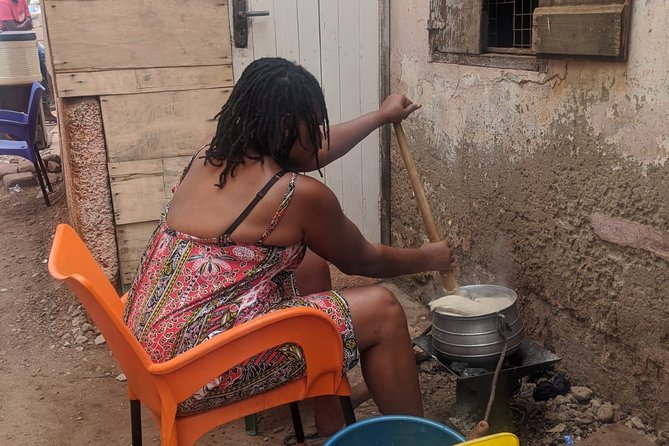
At $45 per person, the fee covers about six hours as advertised, transportation by car to the market, the cooking lesson, lunch, and local spirits. It also supports the community center. On paper, that is a solid package.
The real value depends on how long your session lasts and how much you get to do. One account describes a class lasting about two hours, which suited that person but is much shorter than the stated six-hour duration. Another description presents a fuller outing with the market visit, cooking, tasting, and meal. I would confirm the expected schedule before paying if you are building a tight itinerary.
You are paying for more than food. You are paying for access to a local household-style cooking setting, help with the market trip, a host who can explain the dishes, and a community connection. If you mainly want a long technical cooking lesson, the price may feel less attractive if much of the preparation is completed before you arrive.
The strongest value comes when you want conversation, local contact, and a meal you helped make. That is where this experience offers more than a restaurant visit.
Timing, transport, and group size
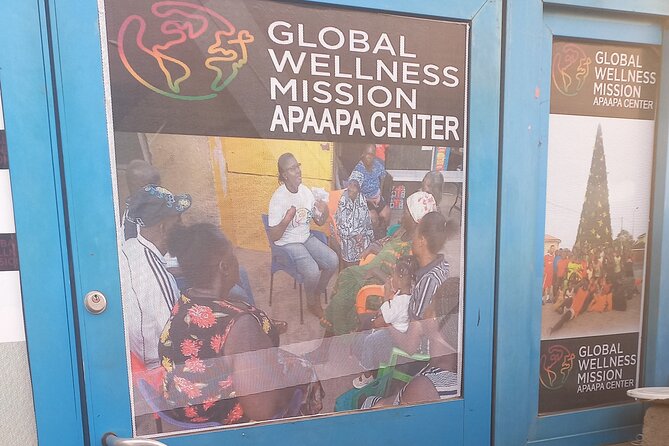
The activity is listed Monday through Saturday, with operating hours from 8:00 a.m. to noon. The advertised duration is approximately six hours, which does not line up neatly with that four-hour opening window, so confirm the exact start and finish time when booking.
The tour starts and ends at Global Wellness Mission, CM7, Third Oloti Street, Accra. You do not need to arrange separate transport to the market because a car is provided. The experience is near public transportation, and service animals are allowed.
The maximum group size is 20. Since the class is described as small-group, the actual booking may often be below that limit, but you should not assume a private lesson. If personal instruction is important to you, ask how many people are booked and whether the class will be split among several cooking stations.
Bookings are generally made well ahead, with the experience averaging about 36 days in advance. That is a useful warning if your Accra dates are fixed. Free cancellation is available up to 24 hours before the start time. Changes or cancellations made less than 24 hours before the start are not accepted for a refund.
Who will enjoy this cooking class?
You are a good match for this experience if you:
- Want a local meal rather than a polished restaurant class
- Enjoy meeting hosts and family members in a personal setting
- Are curious about fufu, banku, jollof rice, and Ghanaian soups
- Like seeing where ingredients are bought
- Want your booking to support health and children’s programs
- Can handle some flexibility in timing and kitchen organization
You may want another class if you need a strict six-hour schedule, a guaranteed dish list, written recipes, or full control over every preparation step. The informal setting is a strength for some people and a weakness for others.
It is also a good choice for couples and small groups who want a social morning. One person was able to connect with a local seamstress through the host, showing how the experience may open the door to other local contacts, though that connection is not a promised part of the tour.
Should you book the Accra Ghanaian cooking class?
Book it if you value personal contact, local food, and community benefit more than a formal cooking-school setup. The strongest parts are the market visit, the chance to prepare Ghanaian staples, the warm family-style hosting, and the shared lunch.
Before you commit, confirm three things: the exact duration, the dishes planned for your date, and how much hands-on preparation you will do. If those details suit you, $45 is a reasonable price for a market outing, cooking lesson, meal, drinks, transport, and support for a local wellness center.
FAQ
Where does the cooking class start and finish?
The class starts and ends at Global Wellness Mission, CM7, Third Oloti Street, Accra, Ghana.
How long does the experience last?
The advertised duration is approximately six hours. One past session lasted about two hours, so confirm the expected timing before booking.
Is transportation included?
Yes. Transportation by car is provided from the meeting point to the local market, and the activity returns to the meeting point.
What foods can I learn to prepare?
Possible foods include fufu, banku, jiji, rice balls, okra soup, groundnut soup, palm-nut soup, light soup, plain soup, stew, chicken, fried fish, and jollof rice.
Are drinks included?
Lunch and local alcoholic spirits are included. The spirits listed are Emergency, Hatso, and Uwuba, made from akpeteshie and infused with bark or tree leaves. Soda, beer, and other soft drinks are not included.
Can dietary requests be accommodated?
Yes. Dietary requests can be accommodated upon request, so you should provide your needs before the class.
How many people can join?
The activity has a maximum of 20 participants.
What is the cancellation policy?
You can cancel up to 24 hours before the start time for a full refund. Cancellations or changes made less than 24 hours before the start time are not accepted for a refund.
Just added around the world
- Koh Samui Jungle Kitchen – Evening Cooking Class (max 8 guests)★ 5.0 · 74 reviews
- Thai Culinary Class by the Beach at Melati Resort & Spa★ 5.0 · 6 reviews
- Bologna Walking Tour & Traditional Cooking Class with Wine★ 5.0 · 3 reviews
- 3 hour Lasagna Bolognese cooking class★ 5.0 · 6 reviews
- Cooking Class in Ko Samui for Small Group★ 5.0 · 98 reviews
- Traditional Bolognese Cooking Class in Bologna with Giovanna S★ 5.0 · 6 reviews
- Private Market Tour and Cooking Class in Bologna with Giovanna C★ 5.0 · 20 reviews
- Cesarine: Market Tour & Cooking Class at Local’s Home in Bologna★ 5.0 · 19 reviews
Cooking Classes, compared.
Half-Day Thai Cooking Class at Organic Farm in Chiang Mai
Read our review →
Florence: Pasta Cooking Class with Unlimited Wine
Read our review →
3 in 1 Cooking Class near Navona: Fettuccine, Ravioli & Tiramisu
Read our review →
Hanoi Cooking Class: Culture, Local Market & Meaning CSR Impact
Read our review →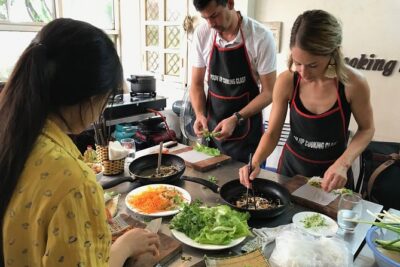
5 Traditional Dishes Hanoi Cooking Class with Market Trip
Read our review →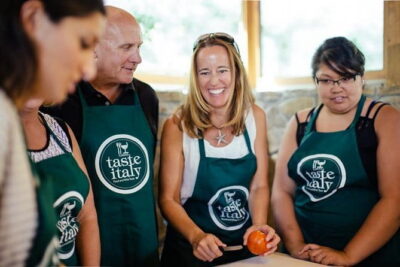
Cooking Class and Lunch at a Tuscan Farmhouse with Local Market Tour from Florence
Read our review →