
Review · SEMINYAK
Nia Balinese Cooking Class
Balinese cooking becomes much clearer when you see the ingredients at the market first. At Nia Balinese Cooking Class, you begin with a morning market visit, then return to Warung Nia to prepare a large shared meal, including Ayam Betutu wrapped in banana leaves and the familiar comfort of Nasi Goreng.
I like the market-to-table format, and I like that you eat what you prepare rather than watching a demonstration and going home hungry. The recipe book and certificate are useful extras, while instructors such as Tommy and Chef Komang bring plenty of humor and energy.
The main drawback is time. This is a five-hour group class, and you may spend much of the morning standing while several dishes are prepared in sequence. If you prefer a short lesson focused on one or two recipes, this may feel long.
Key points to know before booking
- The morning starts at a traditional market, where you see the ingredients before cooking them.
- You prepare up to nine dishes, with some sessions producing even more food.
- Lunch is included, and the portions are generous enough that you should arrive hungry.
- Tommy and Chef Komang are among the instructors, with an energetic, hands-on teaching style.
- The class ends with a recipe book and certificate, useful reminders of the experience.
- The advertised maximum is 15 people, so expect a social group setting rather than a private lesson.
Starting at Warung Nia in Seminyak
The class begins at Warung Nia Balinese Food & Pork Ribs, at Kayu Aya Square on Jalan Kayu Aya, Seminyak. The listed start time is 8:00 am, while the market visit begins around 8:30, so you should arrive ready for a prompt start.
This location is practical if you are staying in Seminyak. The meeting point is near public transportation, but private transportation is not included. The activity ends back at the same meeting point, and staff can help arrange transport after the class, though there is no included drop-off service.
The price is $45 per person. That covers the market visit, cooking instruction, lunch, a recipe book, and a certificate. For a five-hour activity with a full meal and several recipes, I consider that a fair package, especially if you want more than a simple restaurant meal.
The value depends on your appetite for group activities. You are paying for a full morning of food preparation, cultural context, and social time, not a private chef lesson. If you enjoy meeting people from different countries and working around a shared table, the format works well. If you want personal attention at every step, the group structure may feel less tailored.
More Balinese Cooking Classes in Indonesia:
- Ubud: Balinese Cooking Class at an Organic Farm
★ 5.0 · 1,786 reviews - Ubud Cooking Class Bali with Balinese Chef
★ 5.0 · 1,609 reviews - PRIVATE Authentic Balinese Cooking Class in Ubud at Putu’s Home
★ 5.0 · 644 reviews
Seeing ingredients at the market first
The market visit is the part that gives the cooking class its setting. Instead of meeting unfamiliar ingredients only after they have been measured and cleaned, you see where they are sold and learn how they fit into everyday Balinese food culture.
The morning market is scheduled for about 8:30 am. The class information also lists Seminyak Square and the Flea Market Seminyak as itinerary stops, so expect the route to connect the class with Seminyak’s shopping area. The central point of the outing, though, is the traditional market and its ingredients.
This is useful if you are curious about the items in Balinese spice pastes, vegetable dishes, and wrapped preparations. You can look at produce in its original setting before returning to the kitchen. One practical bonus is the chance to buy ingredients yourself. Some participants have used the market visit to find products to take home, though you should check your own country’s customs rules before packing food.
The market can also be the busiest part of the morning. You are visiting early, but it is still a working food market rather than a quiet museum. With a group of up to 15 people, you should expect to move together and share the guide’s attention. Wear comfortable shoes and prepare to be on your feet.
From banana leaves to Balinese spice pastes
After the market, you return to the cooking venue for a snack and a drink before the lesson begins. The class covers nine dishes according to the main description, while some sessions have included ten or eleven preparations. The exact number may vary, but you should expect a large menu rather than a single recipe.
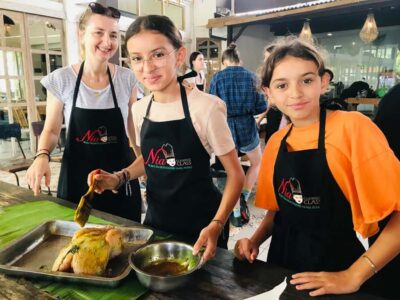
Ayam Betutu is one of the most interesting dishes on the program. The chicken is wrapped in banana leaves, and the folding technique is part of the lesson. That small detail makes the dish more than a standard cooking demonstration. You are learning how presentation, wrapping, and cooking method work together.
Nasi Goreng gives the menu a familiar reference point. If you have eaten Indonesian fried rice before, preparing it yourself helps you connect a restaurant favorite with the cooking process behind it. The full menu also includes fresh pastes and other Balinese dishes, though the supplied details do not give the complete recipe list.
The teaching style is shared and practical. You help prepare the food, then the staff take dishes away to finish them while the group moves on to the next recipe. This keeps the class moving and allows a lot of dishes to reach the table, but it also means you may not personally complete every dish from raw ingredients to final plating.
That distinction matters. I like the variety, since you get a broad introduction to Balinese food in one morning. But if your goal is to master every step of a small number of recipes, the pace may feel spread out. One dish may receive your close attention while another is handled partly by the class team.
Cooking with Tommy or Chef Komang
The instructors are a major part of the experience. Tommy is repeatedly described as a lively host who keeps the class social and easygoing. Chef Komang is also identified as a lead instructor, praised for handling a busy cooking session with patience, humor, and clear direction.
You may find that the class feels more like a shared food event than a formal culinary school lesson. Staff help with preparation, organize the work areas, and keep the next step ready. They also take photos and videos during the activity, according to the experience details shared by participants.
That support is helpful when you are managing several dishes at once. You can focus on chopping, mixing, folding, or cooking without waiting for every piece of preparation to be set up yourself. It also keeps the session moving toward the final meal.
The trade-off is that the group does some of the work together. This is not a private station where you create an individual portion of every dish. You will prepare shared dishes with the other participants, which suits people who enjoy a communal meal but may disappoint anyone expecting a personal cooking project.
More Hands-On Workshops in Indonesia:
- From Ubud: Authentic Cooking Class in a Local Village
★ 4.9 · 1,325 reviews - Ubud: Cooking Class with Transfers and Optional Market Visit
★ 4.9 · 824 reviews - Ubud: Balinese Cooking Class and Market Tour
★ 4.8 · 531 reviews - Seminyak: Balinese Cooking Class & Market Tour
★ 4.9 · 458 reviews
A very large lunch at the end
Lunch is the reward for the morning’s work. The dishes prepared during the class are brought together, and you sit down to eat the results with the group. The amount of food is a recurring feature of the experience, so I would keep breakfast light or plan to arrive hungry.
You will not be waiting until the final minute to taste anything. Snacks and drinks come early, and small bites may appear as the cooking progresses. Still, the main meal is substantial, especially if the class prepares nine or more dishes.
The shared table adds to the social side of the class. You can compare results, talk with people from other countries, and sample dishes you might not have chosen to cook on your own. It also makes the class suitable for friends, couples, and solo visitors who want an easy way to meet people during a Seminyak stay.
Some people may find the lunch too much after a long morning of cooking. That is not a problem if you enjoy a feast, but it is worth knowing that this is not a light tasting menu. Bring an appetite and avoid scheduling another food-focused activity immediately afterward.
What you take home after five hours
The recipe book is the most useful souvenir. A certificate is also included, giving you a simple record of the class. Neither replaces practice, but the booklet can help you recreate the dishes once you return home.
You may also leave with a better sense of how Balinese food is assembled. The market visit shows the ingredients in context, while the kitchen session shows how they are combined into pastes, wrapped dishes, fried rice, and other preparations. That connection is more useful than receiving recipes without any explanation of the ingredients.
The experience also has a strong social result. The class creates repeated chances to work with the people around you, share food, and laugh through the preparation. Tommy’s playful style and the staff’s friendly help are especially useful if you want a relaxed morning rather than a strict lesson.
If you are celebrating a birthday or traveling with friends, the group atmosphere can add a party feel. If you are looking for quiet concentration, choose your expectations carefully. The class is designed to be active and communal.
Timing, group size, and what to wear
Plan on roughly five hours from the 8:00 am meeting time until you return to the starting point. One session finished shortly after 1:00 pm, which gives you a useful guide for planning the rest of your day.
You should be comfortable standing for much of that time. The class includes walking through a market, moving between cooking tasks, and sitting down for lunch only later in the morning. Light clothing and comfortable footwear make sense in Bali’s warm conditions.
The maximum group size is 15 people. That is large enough to create a social atmosphere, but small enough for a lead chef and support team to manage the cooking stations. You should still expect shared instruction rather than a one-to-one lesson.
The class is not recommended for people with a vitamin allergy, as stated in the activity information. If that applies to you, take the warning seriously and ask for clarification before booking. The meal includes many ingredients, and the experience is built around tasting the prepared food.
Cancellation and transport details
Free cancellation is available if you cancel at least 24 hours before the local start time. Cancellations or changes made within 24 hours are not refunded or accepted.
The activity requires good weather and a minimum number of participants. If poor weather or insufficient bookings cause cancellation, you will be offered another date or experience, or a full refund.
You arrange your own way to Warung Nia. Private transportation and drop-off are not included, but staff can assist with transport after the class. Since the activity ends at the original meeting point, you can plan your next stop from Seminyak rather than needing a separate return transfer.
Is Nia Balinese Cooking Class worth booking?
I would book this class if you want a generous, social introduction to Balinese food and like the idea of seeing ingredients at a market before cooking them. The combination of a market visit, several shared recipes, lunch, a recipe book, and a certificate gives the $45 price good value.
I would skip it if you want a short, quiet lesson or complete control over every dish. The five-hour schedule is long, the food is plentiful, and the group format means the staff may finish some preparations while you move to the next recipe.
For most food-focused visitors in Seminyak, this is a useful way to spend a morning. Arrive early, wear comfortable shoes, leave room for a very large lunch, and expect the best parts to be the market context, the hands-on preparation, and the friendly instruction from people such as Tommy and Chef Komang.
FAQ
Where does the Nia Balinese Cooking Class start?
It starts at Warung Nia Balinese Food & Pork Ribs, Kayu Aya Square, Jalan Kayu Aya No. 19-21, Seminyak, Bali.
What time does the class begin?
The listed start time is 8:00 am. The traditional market visit begins around 8:30 am.
How long does the experience last?
The activity lasts approximately five hours and ends back at the original meeting point.
Is lunch included?
Yes. Lunch made from the dishes prepared during the class is included.
How many dishes will I cook?
The main description states nine dishes. Some sessions have prepared ten or eleven dishes, so the exact number may vary.
Is transportation included?
Private transportation and drop-off are not included. Staff can assist you with arranging transport after the activity.
What do I receive at the end of the class?
You receive lunch, a cooking class certificate, and a recipe book.
Just added around Indonesia
- Spice Garden, Jamu & Cooking Class in Bali Village★ 5.0 · 5 reviews
- Pure Bali Village Experience, Cooking & Jamu Class+VIP Transfer★ 5.0 · 16 reviews
- The Authentic Balinese Cooking Experience★ 5.0 · 4 reviews
- Bali: Cooking Class with 5 Balinese Dishes★ 4.9 · 178 reviews
- Seminyak: Vegetarian Cooking Class★ 5.0 · 3 reviews
- Seminyak : cooking class traditional food bali★ 5.0 · 5 reviews
- Pure Bali Village Experience Cooking & Jamu Class, Transfer★ 4.8 · 5 reviews
- Quad ride, waterfalls & aunthentic cooking class in munduk★ 4.9 · 53 reviews
Balinese & Indonesian Cooking Classes, compared.
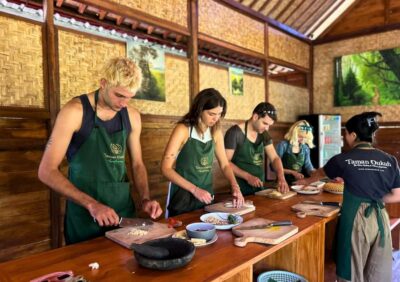
Ubud: Balinese Cooking Class at an Organic Farm
Read our review →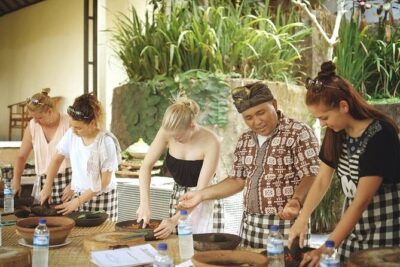
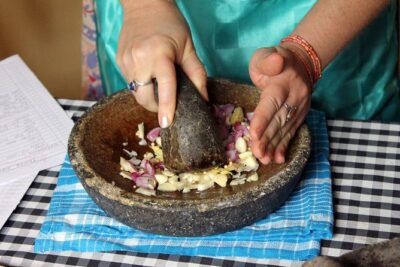
PRIVATE Authentic Balinese Cooking Class in Ubud at Putu’s Home
Read our review →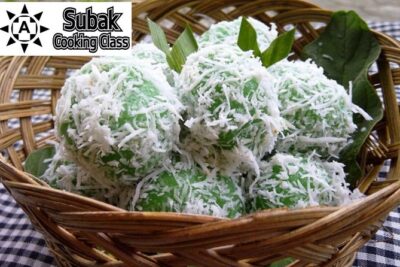
Balinese Ubud cooking school (9 Dish Cooking and Market Tour)
Read our review →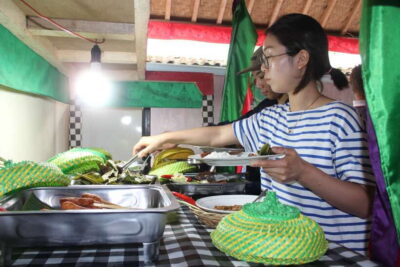
Learn to cook Indonesian food at Gili Cooking Classes Trawangan
Read our review →Browse the lists this tour appears in