
Review · LISBON
Portuguese Vegetarian Cooking Workshop in Lisbon
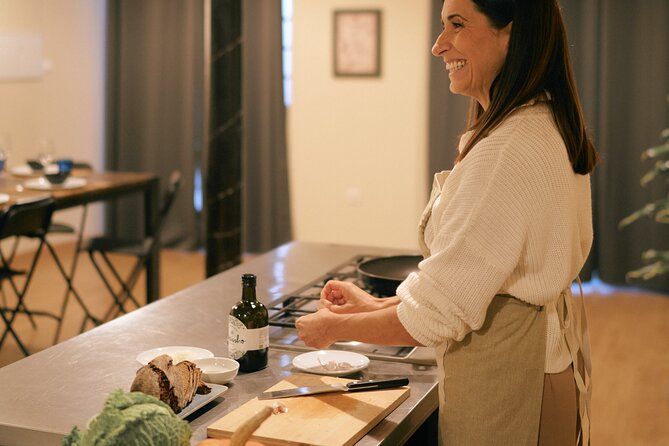
Portugal’s traditional table is built around fish, meat, eggs, and dairy, so this workshop takes on a useful challenge: turning familiar Portuguese flavors into a fully vegetarian meal. With Adelaide guiding the session, you cook together, sit down for lunch, and finish with a vegan version of pastel de nata.
I like the central setting between Bairro Alto and Príncipe Real, where you can reach the meeting point on foot from much of central Lisbon. I also like the shared-table format, since you do not simply watch a demonstration. You help prepare the food, eat the finished dishes, and take the recipes home.
The main consideration is the price: at $360.88 per person, this is a costly three-hour activity, especially for one person. It makes the most sense for a private group that values personal attention, a sit-down meal, and a food experience built around Portuguese culture.
Key points at a glance
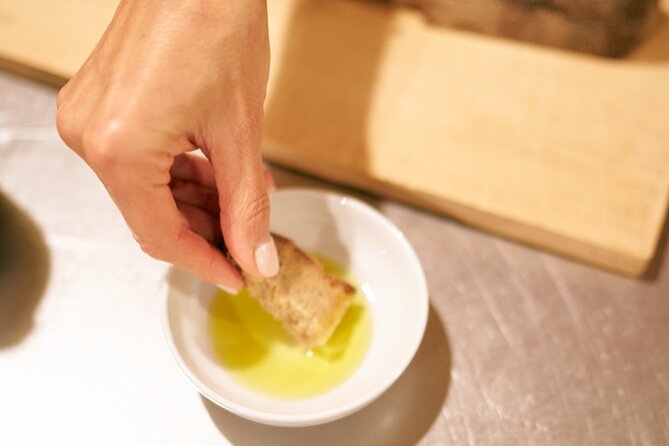
- Portuguese classics without animal ingredients: Prepare tofu à lagareiro, inspired by bacalhau à lagareiro, plus a vegan tarte de nata.
- Adelaide leads the workshop: The host is described as friendly, practical, and welcoming, with a simple approach to teaching vegetarian cooking.
- Lunch is part of the experience: After cooking, you sit at the table for a full meal, dessert, and wine.
- A central Lisbon address: The workshop begins and ends at R. Nova do Loureiro 8, between Bairro Alto and Príncipe Real.
- Private and English-language: Only your group takes part, and the activity is offered in English.
- Plan ahead: The session runs on Tuesdays from 10:30 a.m. to 2:30 p.m., with free cancellation up to 24 hours before the start.
Portuguese cooking with a vegetable-first point of view
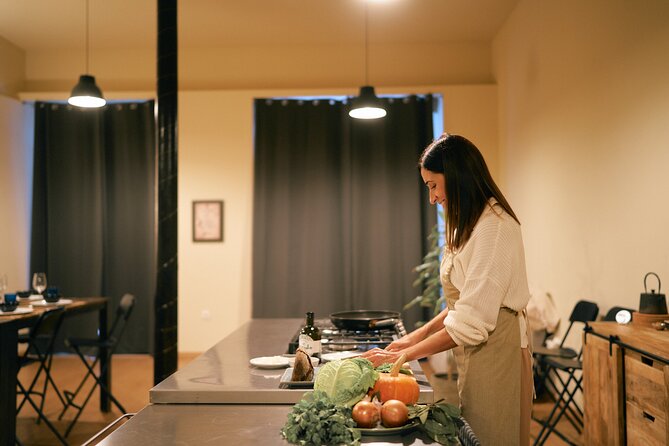
This is not a general cooking class with a few Portuguese touches added at the end. The point is to rethink well-known Portuguese dishes using vegetables and other plant-based ingredients while keeping the seasoning and character of the original food.
That distinction matters. You are not simply being shown how to assemble a salad or prepare a modern dish with no local connection. The menu begins with dishes associated with Portugal, then changes the central ingredients. The result is a workshop about adaptation, not just substitution.
The main course, tofu à lagareiro, takes its cue from bacalhau à lagareiro. The classic version is linked with salted cod, olive oil, garlic, and the generous, simple flavors that make Portuguese food so appealing. Here, tofu takes the place of the fish, while the preparation aims to retain the Portuguese feel of the dish.
The dessert follows the same idea. Tarte de nata is inspired by the familiar pastel de nata, but made without animal ingredients. That gives you a direct comparison with one of Portugal’s best-known sweets, while keeping the meal suitable for a vegan diet.
More Vegan Cooking Classes in Lisbon:
- Oaxacan Vegetarian Cooking Class
★ 5.0 · 235 reviews - Marrakech: Moroccan Cooking Class for vegetarians and vegan
★ 4.9 · 156 reviews - Hoi An: Vegetarian Cooking Class w Local Family and transfer
★ 4.9 · 145 reviews
Meeting Adelaide in central Lisbon
The address is R. Nova do Loureiro 8, 1200-295 Lisbon, in the area between Bairro Alto and Príncipe Real. This is a handy location for a food activity because it sits in a central part of the city with plenty to do before or after the class.
I like the way the location can fit into a walking day. You could pair the workshop with time in Bairro Alto, explore Príncipe Real afterward, or simply use the activity as a pause between sightseeing stops. The area is described as easy to reach on foot and close to public transportation.
The setting itself is presented as pleasant, modern, and prepared for this sort of event. That is useful to know because the room matters in a cooking class. You will spend time preparing food, eating, talking, and watching the host work. A welcoming space makes the three-hour schedule feel more like a meal with a local host than a formal lesson.
Adelaide is the person who gives the workshop its shape. The available feedback consistently points to a host who is warm, practical, and easy to follow. You can expect the tone to be relaxed rather than rigid, with the cooking explained in a straightforward way.
The activity is offered in English, which makes it accessible if you do not speak Portuguese. It is also private, so only your group participates. That can be a major advantage at this price, especially if you want to ask questions, work at your own pace, or book the session as a shared event with friends.
Cooking tofu à lagareiro
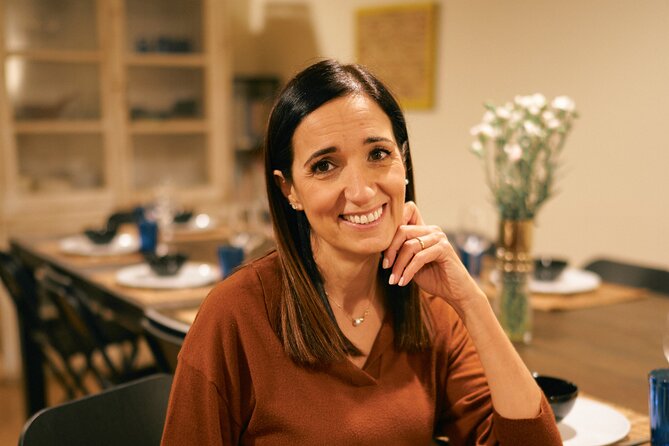
The savory portion is the heart of the workshop. Tofu à lagareiro is the clearest expression of the class’s purpose: it takes a dish strongly associated with Portuguese seafood and rebuilds it with a plant-based centerpiece.
I find this a more interesting cooking lesson than a generic vegetarian class because it gives you a cultural reference point. You learn how a traditional dish can be changed while still keeping its identity through familiar seasonings and preparation ideas.
The available information does not give a step-by-step recipe or a full list of ingredients, so you should not expect a precise technical outline before booking. What is clear is that the dish is designed to preserve traditional Portuguese flavor while using vegetable ingredients only.
One particularly interesting variation mentioned in the food feedback is tofu with a broa crust. Broa is a Portuguese corn bread, and a crisp bread topping adds texture to the tofu. This detail suggests that the dish is not meant to be plain or worthy only as a meat-free compromise. The appeal comes from contrast: a tender main ingredient paired with a seasoned, textured crust.
The teaching style should suit people who want to cook but do not need a professional-level master class. Adelaide is described as practical and simple in her explanations. That is good news if you want techniques you can repeat at home instead of a performance built around complex equipment.
You should also keep your expectations in check. The session lasts about three hours, and the focus is a shared meal rather than an intensive course in Portuguese cuisine. You will gain recipes and a sense of how the dishes come together, but this is not presented as culinary training.
A vegan pastel de nata for dessert
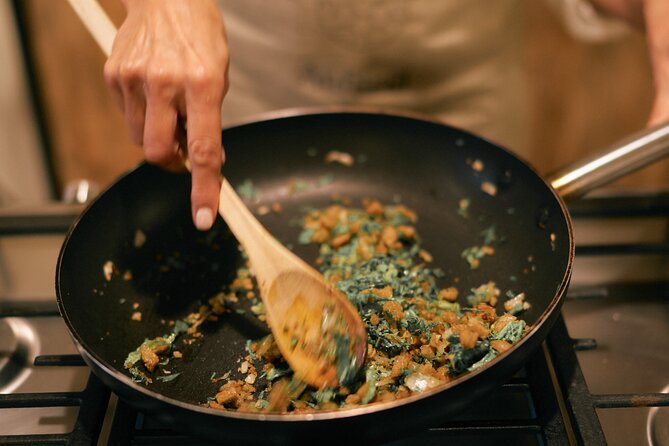
The dessert is a vegan tarte de nata, inspired by pastel de nata. For many people, this may be the most surprising part of the menu. Pastel de nata is so closely tied to eggs, custard, and butter that removing animal ingredients changes the technical challenge.
This is where the workshop can be especially useful for a vegetarian or vegan cook. You are not only learning a savory alternative. You are seeing how a beloved Portuguese dessert can be approached without the ingredients that usually define it.
The dessert also gives the meal a proper finish. You cook the main dish, prepare something sweet, and then sit down to eat the full result. That makes the activity feel complete rather than like a short lesson followed by a quick sample.
The available details do not specify the exact pastry method, filling, or ingredient replacements. If those points matter to you, ask Adelaide when booking or at the start of the session. What you can count on is a plant-based interpretation that aims to keep the flavor and spirit of the original.
More Hands-On Workshops in Lisbon:
- Lisbon: Pastel de Nata Baking Class
★ 4.9 · 2,106 reviews - Lisbon: Traditional Portuguese Cooking Class
★ 4.9 · 592 reviews - Lisbon: 2-Hour Pastel de Nata Cooking Class
★ 4.8 · 461 reviews - Lisbon Portuguese Cooking Class with 3-Course Dinner
★ 5.0 · 445 reviews
Sitting down for the Portuguese table
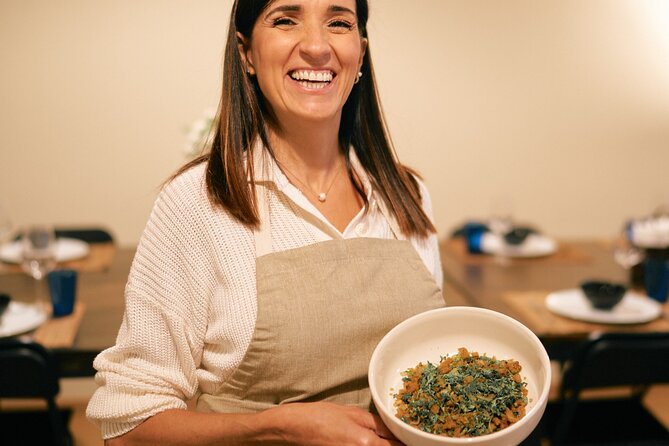
The meal is not an afterthought. Once the cooking is finished, everyone sits together for lunch and dessert, following the Portuguese habit of making a meal social and unhurried.
That shared table is one of the strongest reasons to choose this experience. A cooking demonstration can be informative but passive. Here, you take part in the preparation, then enjoy the result in the same place. The food gives the conversation a natural focus, and the meal lets you judge the dishes for yourself.
Wine is also part of the setting, according to the experience details in the feedback. It is described as pairing well with the food. Since no specific wine or amount is provided, I would not book this expecting a formal wine tasting. Think of it as wine served with lunch, adding to the Portuguese table experience.
The mood is intended to be relaxed and welcoming. That makes the workshop a good match for friends who want an activity with plenty of conversation. It can also work for couples or families who prefer food and culture to a standard sightseeing stop.
The private format changes the feel of the meal. You are not sharing the table with an unknown large group, and you can shape the pace around your own party. The tradeoff is simple: privacy and personal attention help explain the high price.
Is $360.88 per person a fair value?
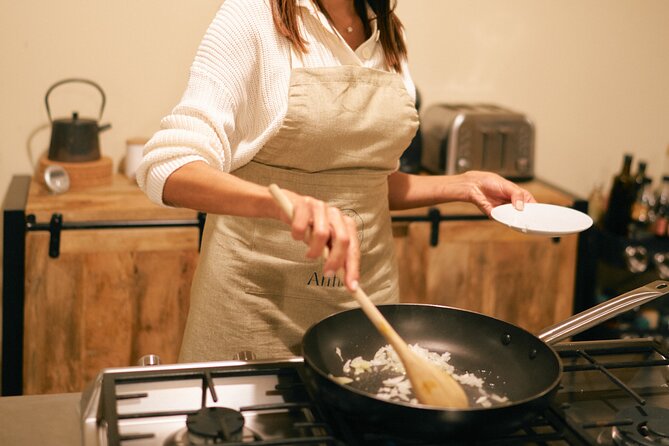
At $360.88 per person, this is not a budget food activity. You should compare it with what you are buying, rather than with the price of a meal in Lisbon.
The fee covers about three hours, a private English-language workshop, hands-on cooking, a complete lunch, dessert, wine, and recipes to take home. It also includes the convenience of a central meeting point and a host-led cultural experience rather than only a restaurant reservation.
For a solo visitor, the cost may be hard to justify unless vegetarian cooking is a major interest. A good Lisbon restaurant can provide a satisfying meal for much less, and a standard market visit or food tour may offer more sightseeing for the money.
For a small private group, the calculation looks better. You are paying for an activity that combines instruction, food, conversation, and a local setting. If your group would otherwise book a private class or spend several hours over a long lunch, the price may feel more reasonable.
I would choose this for the experience itself, not just for the food. The recipes and meal are part of the value, but the real draw is making Portuguese-inspired dishes with Adelaide and then eating them together. If you only want to taste vegan Portuguese food, a restaurant is likely a cheaper option.
Timing, access, and practical planning
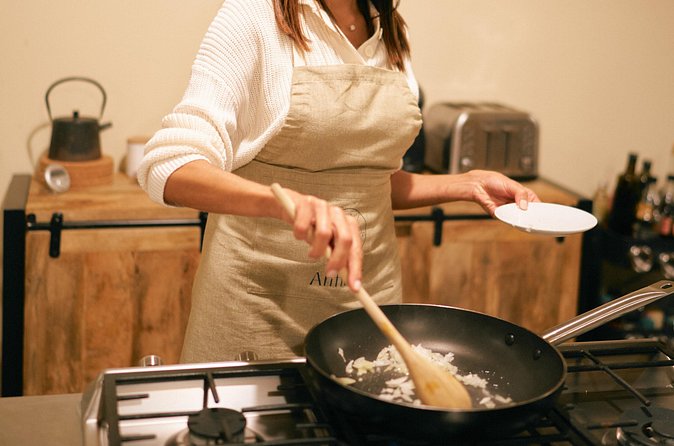
The published operating period runs from December 31, 2025, through June 30, 2026. The listed session is on Tuesday from 10:30 a.m. to 2:30 p.m., although the experience is described as lasting approximately three hours.
That morning-to-lunch timing works well. You can begin after breakfast, cook through the late morning, and finish with lunch. It also leaves part of the afternoon open for Príncipe Real, Bairro Alto, or other central Lisbon plans.
The meeting and ending point are the same, at R. Nova do Loureiro 8. This makes the logistics simple. You do not need to arrange a second pickup point after the meal.
A mobile ticket is accepted, and confirmation is provided at booking. The location is near public transportation, and service animals are allowed. Most people can participate, but the information does not describe the room, kitchen layout, seating, or accommodations for specific mobility needs. If you have access concerns, contact the provider before reserving.
Free cancellation is available if you cancel at least 24 hours before the start time. Changes or cancellations inside that window are not accepted for a refund. The activity also requires a minimum number of participants, so if that minimum is not met, you will be offered another date or experience, or a full refund.
Because the workshop is booked an average of 84 days ahead, I would not leave it until the last few days of a short Lisbon visit. Tuesday availability is limited, and private sessions can fill well before arrival.
Who should book this workshop?

I would recommend it most strongly to vegetarians and vegans who want Portuguese food with a clear local connection. The menu is not simply international plant-based cooking. It takes recognizable Portuguese dishes and shows how they can be rebuilt.
It is also a good fit for curious omnivores. If you want to understand how traditional flavors work without relying on fish, meat, eggs, or dairy, this gives you a direct and tasty lesson.
Friends may get the most from the format. You cook together, share the table, and have enough time for conversation. The private setup also makes it suitable for a special occasion or a group with different levels of cooking experience.
I would be more cautious about booking it for children or anyone looking for a fast activity. The timing is set around cooking and lunch, not quick entertainment. The available information says most people can participate, but it does not give a child-specific format or menu.
The same caution applies to anyone with strict allergies. The food is described as vegetarian and without animal ingredients, but no allergen information is provided. Ask about ingredients before booking if you need to avoid particular foods.
Should you book the Portuguese Vegetarian Cooking Workshop?
Book it if you want a private, food-centered Lisbon experience where the cooking matters as much as the meal. The strongest reasons are the Portuguese focus, Adelaide’s friendly teaching style, the central location, and the chance to make both a savory dish and a vegan version of pastel de nata.
Skip it if your main goal is an inexpensive meal, a broad sightseeing tour, or a long professional cooking course. At $360.88 per person, the cost demands that you value the private setting and the social experience.
For the right group, this is a memorable way to spend a Lisbon morning and lunch. You leave with a full meal behind you, recipes in hand, and a clearer idea of how Portuguese flavors can work on a plant-based table.
FAQ
Where does the cooking workshop begin and end?
The workshop begins at R. Nova do Loureiro 8, 1200-295 Lisboa, Portugal, and ends back at the same meeting point.
How long does the experience last?
The activity lasts approximately three hours. The listed Tuesday hours are 10:30 a.m. to 2:30 p.m.
What food will I prepare?
The sample menu includes tofu à lagareiro, inspired by bacalhau à lagareiro, and a vegan tarte de nata inspired by pastel de nata.
Is the workshop vegetarian or vegan?
The workshop uses only vegetable ingredients. The sample dishes are presented as vegan versions of traditional Portuguese recipes.
Is the activity offered in English?
Yes. The experience is offered in English.
Is this a private activity?
Yes. Only your group participates in the activity.
What days is the workshop available?
The listed opening hours show the workshop operating on Tuesdays from 10:30 a.m. to 2:30 p.m., during the period from December 31, 2025, through June 30, 2026.
Can I cancel for a full refund?
Yes, if you cancel at least 24 hours before the experience start time. Cancellations or changes made less than 24 hours in advance are not refunded or accepted.
Just added around Lisbon
- Private Portuguese Home Cooking Class in Lisbon with Defne★ 5.0 · 4 reviews
- Private Traditional Portuguese Cooking Class in Lisbon with Paula★ 5.0 · 50 reviews
- Lisbon Portuguese Cooking Class★ 5.0 · 23 reviews
- Portuguese Home Cooking Class in Lisbon with Local Mom, Cristina★ 5.0 · 12 reviews
- Private Portuguese Cooking Class in Lisbon with Paulo and Family★ 5.0 · 10 reviews
- Portuguese ‘Petiscos’ Cooking Class★ 5.0 · 31 reviews
- Market Tour and Portuguese Cooking Class in Lisbon with Cristina★ 5.0 · 4 reviews
- Authentic Portuguese Cooking Class and Dinner in a Lisbon Home★ 5.0 · 33 reviews
Vegan & Vegetarian Cooking Classes, compared.
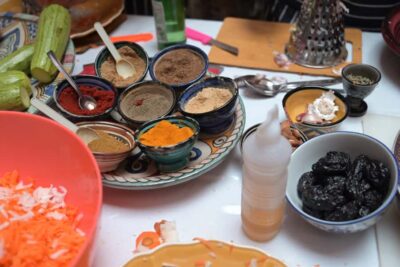
Marrakech: Moroccan Cooking Class for vegetarians and vegan
Read our review →
Hoi An: Vegetarian Cooking Class w Local Family and transfer
Read our review →
Jaipur Market Tour & Vegetarian Rajasthani Home Cooking Class
Read our review →
Ramen & Dumpling Cooking in Tokyo with Chef/Vegan possible
Read our review →
Hoi An/Da Nang: Vegetarian Cooking Class & Basket Boat Ride
Read our review →
Browse the lists this tour appears in