
Review · TANZANIA
Private Market Tour and Tanzanian Cooking Class in Moshi
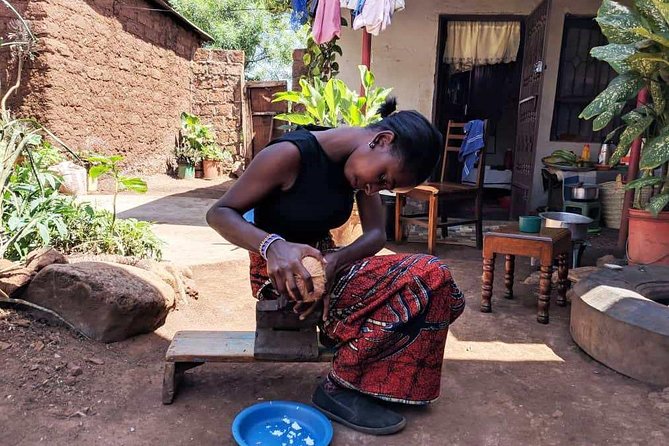
Moshi’s best food lesson may begin far from a restaurant. William takes you through a local market, where you can taste produce, inspect unfamiliar ingredients, and even try dried sardines before heading to his mother Shida’s mud house. I like the private format and the chance to see how everyday food moves from market stall to family table. I also like the hands-on work, especially grating coconut with a wooden buzi and cooking ugali over a wood fire.
The main consideration is that this is a home visit, not a polished cooking studio. You’ll eat outside on benches, the market may feel rough around the edges, and the meal includes peanut brittle and homemade alcohol. That is part of the point, but it may not suit you if you want a formal class or a predictable restaurant setting.
Key points at a glance
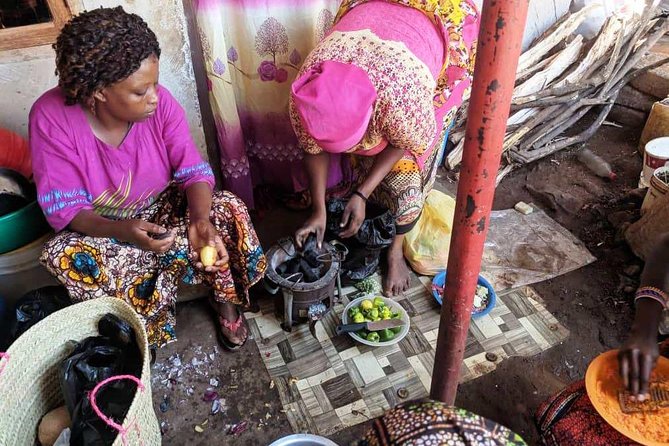
- Market first: William introduces you to local produce, herbs, vendors, and ingredients used in Tanzanian cooking.
- Family home setting: The class takes place at Shida’s home, about 20 minutes from the market by foot or tuk-tuk.
- Traditional coconut work: You use a small wooden seat with a grinder, called a buzi, to shave coconut meat and make fresh coconut milk.
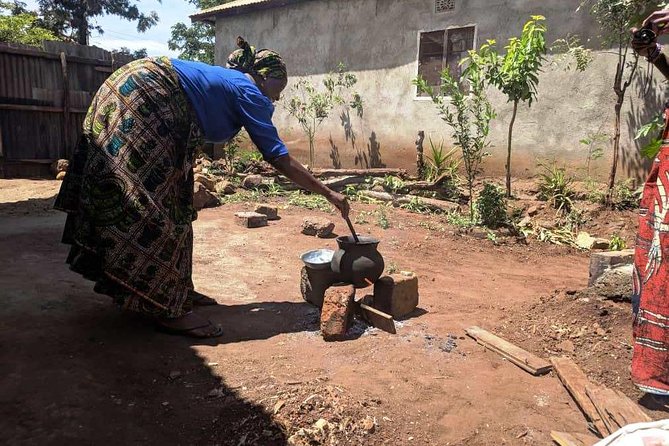
- Ugali by wood fire: You learn to prepare Tanzania’s staple cornmeal dish, then serve it with sautéed vegetables.
- Shared meal: Eat with the family outside, with peanut brittle and homemade alcohol included.
- Private and practical: The five-and-a-half-hour experience includes hotel pickup and drop-off, with only your group taking part.
Why this Moshi food tour feels different
Many food activities keep you at a restaurant or demonstration kitchen. This one begins with the ingredients and ends at a family home. That simple change gives you a better sense of how food fits into daily life in Moshi.
William, a local Tanzanian and Marissa’s husband, handles the market visit and pickup. Shida leads the cooking at her home, with family members involved in the meal. That family connection matters. You are not just watching someone prepare a dish for tourists. You are learning food traditions that belong to the household.
The tour lasts about five hours and 30 minutes, so it takes a serious block of your day. I see that as a benefit if you want a cultural activity with room to slow down. It is less suitable if you are trying to squeeze in several short stops before or after a Kilimanjaro outing.
The experience has a five-star rating from seven reviews, and the strongest praise centers on the personal welcome, the market visit, and the feeling of seeing ordinary Tanzanian life up close. The small review count means I would not treat the rating as the only reason to book, but the praised features match what the tour is designed to do.
More Market Tour Cooking Classes in the world:
- Hanoi Cooking Class: Culture, Local Market & Meaning CSR Impact
★ 5.0 · 5,147 reviews - 5 Traditional Dishes Hanoi Cooking Class with Market Trip
★ 5.0 · 4,890 reviews - Cooking Class and Lunch at a Tuscan Farmhouse with Local Market Tour from Florence
★ 5.0 · 4,831 reviews
Starting at a Moshi market
William picks you up at your Moshi hotel and takes you to a local market. The market is not just a quick shopping stop. He introduces you to fruits, vegetables, herbs, and other ingredients, explains how they are used, and visits preferred vendors to gather what you will need later.
This is the part I like most for first-time visitors. Food names on a menu tell you very little. Seeing the actual produce, smelling the herbs, and watching William choose ingredients gives you a useful frame for the meal ahead.
You may also get to taste some items along the way. One account of the experience included local fruits, vegetables, and dried sardines. That sort of tasting is valuable because it lets you try foods in a setting where you can ask what they are and how people use them.
Do keep your expectations practical. A local market can be crowded, noisy, or less tidy than the food halls found in many European and North American cities. The tour is about seeing a working market, not a display built for visitors. If you are cautious about unfamiliar foods, you can ask questions before tasting.
The market also gives the tour a useful rhythm. You begin by looking and tasting, then move on to preparing the same kind of ingredients yourself. By the time you reach the home, the cooking feels connected to the place rather than tacked onto a standard sightseeing program.
The 20-minute trip to Shida’s home
After the market, you head to Shida’s home, roughly 20 minutes away. This transfer may be a leisurely walk or a tuk-tuk ride, depending on the arrangement for the day.
That short journey helps shift the experience from public market to private household. It also means the activity is not limited to a single venue. You see a little more of the area between the two main parts of the tour, although the available information does not promise a guided neighborhood walk or a sightseeing route.
Shida’s home is described as a mud house. The cooking takes place in a simple family setting rather than a commercial kitchen, and the final meal is served on benches outside the house.
For some people, this will be the strongest part of the day. You get a direct look at the kind of setting where food is prepared and shared. For others, the lack of restaurant-style comfort may be a drawback. There is no indication of air-conditioned seating, formal table service, or a carefully staged kitchen, so book this for the setting and the contact with the family.
Grating coconut with a traditional buzi
The cooking class lasts about one hour and focuses on dishes that are simple in ingredients but require real effort. First comes fresh coconut milk.
You use a buzi, a small wooden seat fitted with a grinder, to shave the coconut meat. This is a memorable detail because it turns a familiar ingredient into a physical task. Instead of opening a carton or pouring from a can, you see how coconut becomes part of a meal through hand work.
The coconut milk is then used as a base for vegetable and stew dishes. You do not simply watch Shida make it. The class is designed to let you take part, with Shida showing you the family method.
I would expect this to be more useful than a quick demonstration because the method is tied to a particular tool and a particular household. You learn not only what goes into the dish, but also how the work is done without modern kitchen equipment.
The class is described as hands-on, but the information does not specify the full menu, the exact vegetables, or how much of the cooking each participant handles. If a certain ingredient or dish matters to you, ask the provider before booking. The clear focus is on coconut milk, vegetables, stew, and ugali.
More Shopping Trips in the world:
- Chiang Mai: Cooking Class, Market & Thai Herbs Garden Tour
★ 4.9 · 4,824 reviews - Chiang Mai: Authentic Cooking Class with Market & Farm Visit
★ 4.9 · 4,546 reviews - Barcelona: Paella Cooking Experience & Boqueria Market Tour
★ 4.8 · 3,661 reviews - Cooking Class Hoi An:Local Market, Basket Boat, Fishing & Cooking
★ 5.0 · 3,660 reviews
Making ugali over a wood fire
The main staple is ugali, a cornmeal dish found across East Africa. The ingredients are basic, but preparing it is not effortless. The cornmeal must be stirred and worked until it reaches the right texture, and the cooking takes place over a wood fire.
This is where the class moves beyond a recipe lesson. Ugali is everyday food, yet making it well calls for patience and strength. Shida takes pride in her family’s method, and that personal connection gives the dish more meaning than a quick sample at a restaurant.
The ugali is served with sautéed vegetables. Together, they make a straightforward, filling meal. You should not expect a long tasting menu or a succession of elaborate courses. The appeal is the staple itself, prepared in a household setting and eaten soon after cooking.
Cooking over wood also changes the pace. You need to pay attention to the fire and the pot rather than rushing through a set series of instructions. If you enjoy practical activities, this part should be a highlight. If you prefer to sit back and watch, remember that the experience is built around participation.
Eating outside with the family
Once the food is ready, you join the family outside the house. The meal is eaten on benches, and the setting is informal.
You may share ugali with the vegetables, peanut brittle, and homemade alcohol. The inclusion of homemade alcohol is worth noting before you reserve. It is part of the offered hospitality, but you do not have to make it the center of your meal. If you do not drink alcohol, clarify your preference with the hosts.
The meal offers the most direct chance to talk with Shida, William, Marissa, and the rest of the household. The experience is not only about learning a dish. It is about seeing how food, family, and hospitality meet around a shared table, or in this case, outdoor benches.
The outdoor setting can be warm and simple. You should wear comfortable clothing and arrive ready for a home meal rather than a formal dining occasion. The supplied details do not specify dietary options, so tell the provider about allergies or restrictions before the day of the tour.
What the $86 price buys you
At $86 per person, this is not the cheapest way to eat in Moshi. You can find a less expensive meal, and market shopping on your own costs little. The value comes from the time, transport, private instruction, and access to a family setting that is difficult to arrange independently.
The price includes a private experience, hotel pickup and drop-off, the market visit, the cooking class, and the meal with drinks. Since only your group takes part, William and Shida can focus on your questions and pace rather than keeping up with a large class.
That private format is especially useful for couples, families, and small groups with different comfort levels. You can ask about ingredients, spend more time at a market stall, or take the cooking slowly. Group discounts may also be available, which can improve the value if you are booking with several people.
I would compare the price with what you want from your Moshi stay. If your goal is simply to eat Tanzanian food, this may feel costly. If you want an activity that combines transport, market orientation, practical cooking, and time with a local family, the price is easier to justify.
The tour is also a good use of time at the beginning or end of a Mount Kilimanjaro visit. It gives you a grounded introduction to Moshi without requiring a full day away from the town.
Who should book this experience
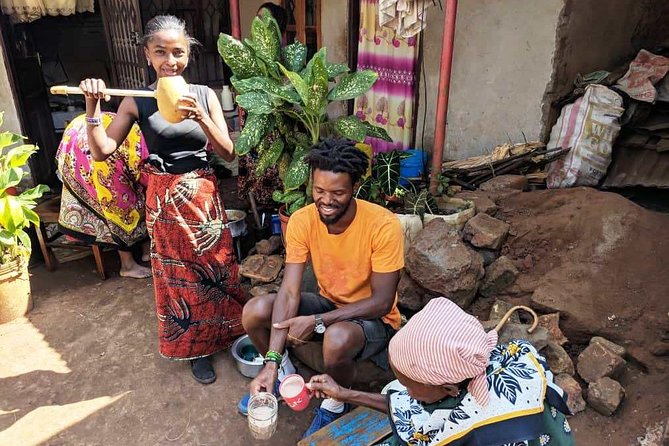
I would recommend it to you if you want direct contact with local people and do not mind a modest setting. It suits visitors who enjoy asking questions, tasting unfamiliar foods, and taking part in simple physical tasks.
It is also a strong choice for anyone who has already seen the main sights and wants an activity connected to daily life. The market and home visit offer more personal contact than a standard restaurant meal.
Families may like the private setup, since the group can move at its own speed. Couples and solo visitors can also benefit from the one-on-one attention. Hotel pickup helps if you are unfamiliar with Moshi or do not want to arrange local transport.
I would think twice if you need a polished cooking school, a fixed menu, or a fully specified schedule. The activity is personal and home-based, so some details depend on the hosts and the day’s arrangements. That flexibility is part of its charm, but it also means you should not expect a commercial production.
Timing, transport, and booking details
Plan on about five hours and 30 minutes from pickup through drop-off. The exact balance between market time, transport, cooking, and the meal is not specified, so leave room around the activity rather than scheduling an important appointment immediately afterward.
Pickup and drop-off are offered at your Moshi hotel. The transfer from the market to Shida’s home takes about 20 minutes by foot or tuk-tuk.
The activity is private, and mobile tickets are available. Confirmation is provided at booking. You can cancel for a full refund if you do so at least 24 hours before the local start time. Cancellations or changes made inside that window are not accepted for a refund.
Because the tour is booked through Traveling Spoon, it is sensible to share food restrictions, alcohol preferences, and any mobility concerns before the date. The published details do not provide a specific accessibility statement, so ask directly if walking, tuk-tuk transport, or the outdoor home setting may be difficult for you.
Should you book the Moshi market and cooking class?
Book it if you want a small, personal experience built around real food and family hospitality. The best reasons are specific: William’s market tour, the chance to taste local produce and dried sardines, the buzi coconut grinder, wood-fired ugali, and a meal at Shida’s home.
Skip it if you want a polished kitchen, a detailed restaurant menu, or a short activity. At $86, you are paying for access, transport, instruction, and time with a family, not just for lunch.
For most visitors who want more than a photo stop in Moshi, I think the private format makes the cost worthwhile. Go with curiosity, comfortable clothes, and an appetite for a simple meal prepared the traditional way.
FAQ
Where does the cooking class take place?
The class takes place at Shida’s home, described as a mud house in Moshi. You eat outside on benches with the family.
How long does the full experience last?
The experience lasts approximately five hours and 30 minutes.
Is hotel pickup available?
Yes. Pickup and drop-off are offered at your Moshi hotel.
Is the tour private?
Yes. Only your group participates in the activity.
How far is Shida’s home from the market?
The home is about 20 minutes from the market by walking or tuk-tuk.
What food do you prepare?
You learn to make fresh coconut milk, vegetable and stew dishes, and ugali, a cornmeal staple served with sautéed vegetables.
What is included with the meal?
The home-cooked meal includes ugali and vegetables, along with peanut brittle and homemade alcohol.
What is the cancellation policy?
You can cancel at least 24 hours before the start time for a full refund. Cancellations or changes made less than 24 hours before the start time are not accepted for a refund.
More Hands-On Workshops in the world
- Half-Day Thai Cooking Class at Organic Farm in Chiang Mai
★ 5.0 · 19,087 reviews - Florence: Pasta Cooking Class with Unlimited Wine
★ 4.9 · 10,285 reviews - 3 in 1 Cooking Class near Navona: Fettuccine, Ravioli & Tiramisu
★ 5.0 · 7,376 reviews - Florence: Pasta & Tiramisu Cooking Class with Unlimited Wine
★ 4.9 · 6,708 reviews
Just added around the world
- Authentic Pasta and Tiramisù cooking class at spanish steps★ 4.5 · 14 reviews
- Rome: Pasta Cooking Class, Dinner & Wine in Authentic Restaurant★ 5.0 · 38 reviews
- Rome Cooking Class★ 5.0 · 4 reviews
- Rome: Private Cooking Class with Market Shopping Tour★ 5.0 · 3 reviews
- Roma Foodie Experience: Cooking Class★ 5.0 · 16 reviews
- Pizza, Gelato & Suppli Cooking Class by Colosseum★ 5.0 · 79 reviews
- Rome – Tagliatelle Cooking Class with sit down Meal & Prosecco★ 4.5 · 3 reviews
- Rome: Lasagna, Fettuccine Pasta and Tiramisu Cooking Class★ 5.0 · 100 reviews
Cooking Classes with a Market Tour, compared.
Hanoi Cooking Class: Culture, Local Market & Meaning CSR Impact
Read our review →
5 Traditional Dishes Hanoi Cooking Class with Market Trip
Read our review →
Cooking Class and Lunch at a Tuscan Farmhouse with Local Market Tour from Florence
Read our review →
Chiang Mai: Cooking Class, Market & Thai Herbs Garden Tour
Read our review →
Chiang Mai: Authentic Cooking Class with Market & Farm Visit
Read our review →
Barcelona: Paella Cooking Experience & Boqueria Market Tour
Read our review →
Cooking Class Hoi An:Local Market, Basket Boat, Fishing & Cooking
Read our review →
Hoi An Cooking Class(Market,BasketBoat Crabfishing&Cooking Class)
Read our review →Browse the lists this tour appears in