
Review · COOKING CLASSES
The Art of Baking Danish Pastry
The best part of this Copenhagen experience is simple: you do not just eat Danish pastry, you learn how to make it. At Chef Frederik Terrible’s school in Frederiksberg, you spend a busy morning kneading, rolling, folding, filling, and baking enough pastries to take home in boxes.
I like the small maximum of 12 people, which gives Frederik room to check your dough and correct your technique. I also like the practical finish: coffee and tea with the pastries, plus recipes sent by email so you can try again at home. The main thing to consider is the sheer quantity. You may leave with roughly a dozen pastries per person, or even more, so plan to share or carry them carefully.
Key points to know before booking
- You make the pastries yourself: This is a hands-on workshop, not a demonstration followed by a tasting.
- Chef Frederik teaches in English: Expect clear instruction, a quick pace, and plenty of chances to ask questions.
- The class makes a generous haul: Many participants leave with two full boxes, so bring a sensible way to carry them.
- The menu covers Danish classics: You work with cinnamon rolls, Spandauer, and poppy seed and sesame twists.
- The morning timing works well: The 9:00 am start leaves the rest of your Copenhagen day open.
- Frederiksberg adds a small planning wrinkle: The school is outside the city center, and finding the exact entrance can take care.
Why this pastry class works so well
Copenhagen has no shortage of bakeries, but eating a pastry tells you only half the story. This class shows you what makes the pastry Danish: the handling of the dough, the folding, the fillings, and the care needed to get a crisp, tender result.
You begin at 9:00 am at Grundtvigsvej 10A in Frederiksberg, west of central Copenhagen. The class lasts about three and a half hours. That sounds long for a baking lesson, but the time is used well. You are busy for most of the session, and the work moves through several stages instead of lingering over one recipe.
I especially like the balance between instruction and action. Chef Frederik first demonstrates the method, then you repeat it at your own station. That makes the class useful for beginners, while still giving experienced home bakers a chance to refine their technique.
The atmosphere is friendly but focused. Frederik is described as funny, patient, and firm, which is a good mix in a pastry class. Dough has a way of exposing rushed work, so clear instructions matter. You can expect him to move around the room, watch what you are doing, and help when a fold or filling needs attention.
More Dessert Classes in the world:
- 3 in 1 Cooking Class near Navona: Fettuccine, Ravioli & Tiramisu
★ 5.0 · 7,376 reviews - Florence: Pasta & Tiramisu Cooking Class with Unlimited Wine
★ 4.9 · 6,708 reviews - Rome: 3-in-1 Fettuccine, Ravioli, and Tiramisu Cooking Class
★ 4.9 · 2,704 reviews
Getting to Grundtvigsvej in Frederiksberg
The meeting point is near public transportation, but you should allow extra time for the final walk. The school can be a little tricky to locate, and the entrance may be on the opposite side of the street from the one suggested by Apple Maps or Google Maps.
That is not a reason to skip the class. It is a reason to avoid arriving at the last minute. The start time is fixed at 9:00 am, and the dough work begins early. If you arrive late, you may need to catch up quickly, though Frederik has helped late arrivals get back into the process.
The activity begins and ends at the same meeting point. That makes the morning easy to plan. You can return to your hotel with your pastry boxes, or continue directly to another Copenhagen sight after the class.
The first lesson: kneading, rolling, and folding
The opening demonstration covers the basic pastry skills. You learn how to knead the dough, roll it to the right thickness, and fold it correctly. These steps are more important than they may sound. Danish pastry depends on careful layers, and rough handling can affect the final texture.
Frederik’s teaching style is practical. He explains the process, shows you what to do, then lets you work. The pace can be brisk, so listen closely when he gives directions. If you are unsure, ask right away rather than waiting until the dough is already shaped.
This hands-on approach is one of the strongest reasons to book. You do not simply watch a chef create perfect pastries while you stand at a distance. You get flour on your hands and make the decisions yourself. That also means your pastries may not look identical to Frederik’s. That is part of the value. You leave knowing what the dough feels like and what to watch for next time.
Making cinnamon rolls and Spandauer
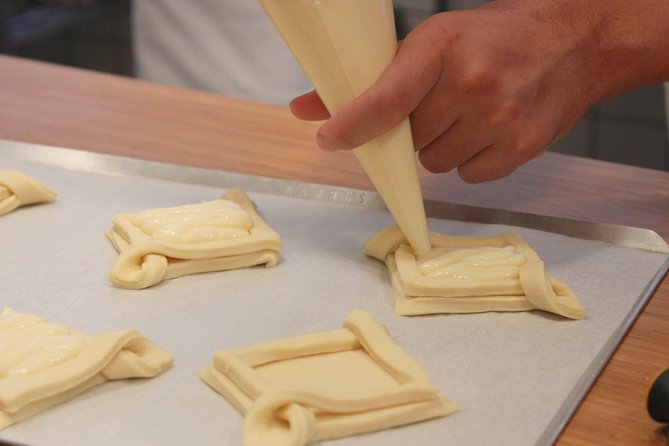
The menu includes cinnamon rolls, known in Denmark as kanelsnegle, and Spandauer, a classic Danish pastry with a filled center. You also make poppy seed and sesame seed twists called frøsnapper.
The cinnamon rolls are an approachable starting point. Their familiar shape makes it easier to see how rolling, filling, and cutting affect the final pastry. They are also a good choice for sharing later, since they travel better than some delicate pastries.
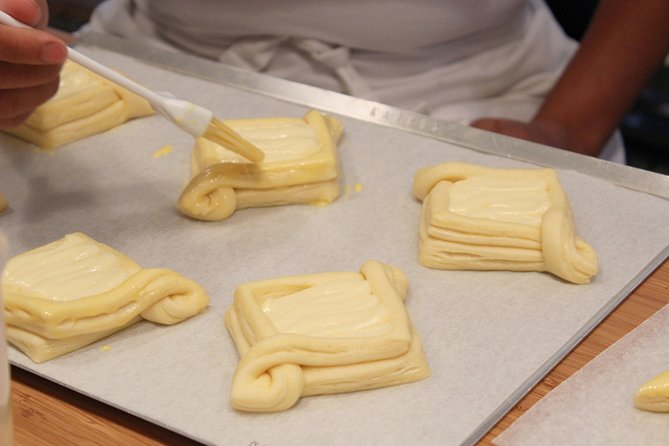
Spandauer gives you a chance to work with the filled pastry style most people picture when they think of a Danish. The shaping requires care, and the filling needs to sit in the right place so the pastry bakes evenly.
The poppy seed and sesame seed twists add a different texture and flavor. They are especially useful for showing how the same dough can become something less sweet and more crisp. Marzipan may also appear in the filling, depending on the pastry selection that day. The recipes and pastry mix can shift during the year, so the exact set is not guaranteed beyond the listed examples.
You make several pastries rather than repeating one item. That gives the class variety and keeps the morning moving. It also explains why you end up with so much food.
More Baking Classes in the world:
- Paris Croissant Small-Group Baking Class with a Chef
★ 5.0 · 910 reviews - Paris: French Croissant Baking Class with a Chef
★ 4.9 · 712 reviews - Paris Macarons Small-Group Baking Class with a Chef
★ 5.0 · 316 reviews - Paris: Croissant Baking Class with a Chef
★ 5.0 · 201 reviews
Baking, coffee, and a very large takeaway
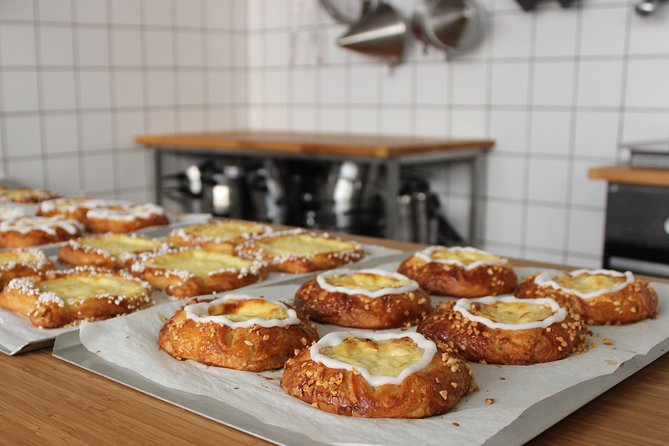
Once the pastries are shaped and ready, they go into the ovens. Then comes the reward: coffee and tea with the finished baking.
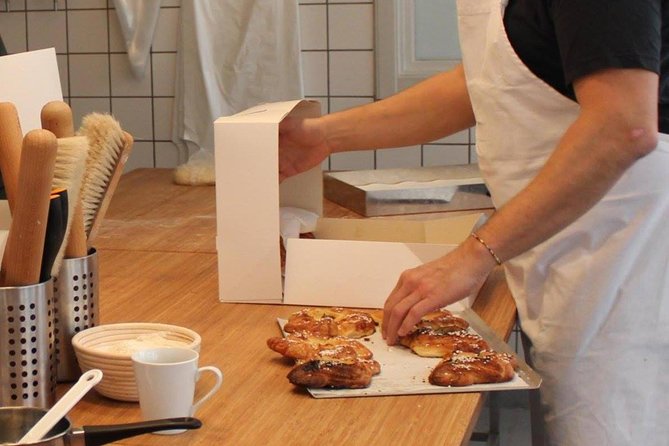
This tasting is not a tiny sample at the end of a long lesson. The portions are generous, and the total output can be startling. Some participants report making about 12 pastries each, while others leave with two full boxes or around 36 pieces in a group. The exact amount can depend on the day’s recipes and how the class is organized.
I would not plan a large breakfast beforehand. You will have food to taste during the class, and you may want room for the finished pastries. At the same time, do not assume you can eat everything before lunch. You will likely need to share with family, friends, or someone back at your hotel.
This is a real practical issue if you book near the end of your trip. The pastries are at their best soon after baking, and a large haul is harder to manage when you are heading to the airport. Booking early in your Copenhagen stay gives you more time to enjoy them.
The takeaway is also part of the value. At $117.23 per person, this is not a cheap breakfast. But the price includes three and a half hours of instruction, ingredients, coffee or tea, a small-group setting, and a substantial amount of finished pastry. If you are traveling with two people, you can easily end up with far more food than you need, but the quantity helps justify the cost for committed food lovers.
What makes Chef Frederik’s instruction useful

A good pastry class needs more than a charming teacher. You need someone who can explain technique without making beginners feel lost. Frederik’s strengths are organization, patience, and clear step-by-step direction.
He keeps the class moving, with preparation handled in advance so you spend your time baking rather than waiting. That makes a difference in a three-and-a-half-hour session. You are not paying to watch a staff member measure every ingredient from scratch.
The class is also social. You work alongside people from different places, and the shared tasks give you an easy way to talk. This suits couples, families, solo visitors who enjoy group activities, and anyone looking for a break from museums and city walks.
Still, the quick pace deserves emphasis. One of the most useful tips is to focus during each demonstration and ask questions while shaping the pastry. You do not need advanced baking skills, but you do need to follow instructions closely.
At the end, the recipes are emailed to you. That turns the class from a one-morning souvenir into a skill you can use at home. You can repeat the pastries, test alternative versions, and share the results with people who did not make it to Copenhagen.
Who should book this Copenhagen activity
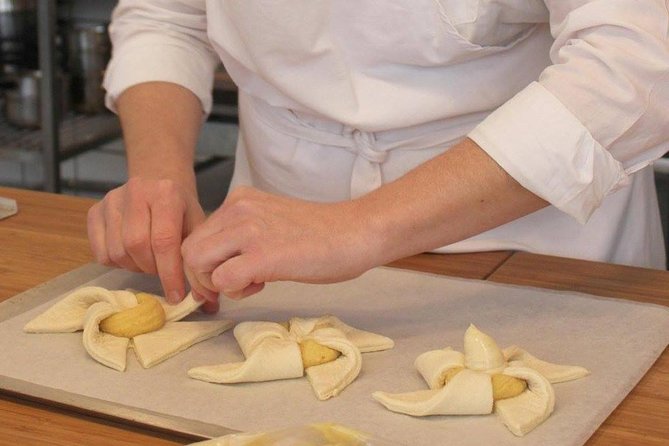
This class is a strong choice if you like food, want a hands-on activity, or prefer learning a local tradition to simply taking another guided walk. It is also a good rainy-morning plan because the core experience takes place indoors.
Beginners are welcome. The instruction is designed to teach the basic techniques, and the chef checks on participants as they work. Experienced bakers can still enjoy the class, especially if Danish pastry is new to them.
I would be more cautious if you dislike group instruction, have little interest in baking, or need a light morning activity. You are busy throughout the class, and the finished pastries create a carrying problem. The class is also non-refundable and cannot be changed after booking, so choose your date carefully.
The activity has a maximum of 12 people and is offered in English. Confirmation is sent within 48 hours, subject to availability. The experience requires a minimum number of participants, and if that minimum is not met, a different date or experience, or a full refund, is offered.
Planning the morning around your Copenhagen schedule
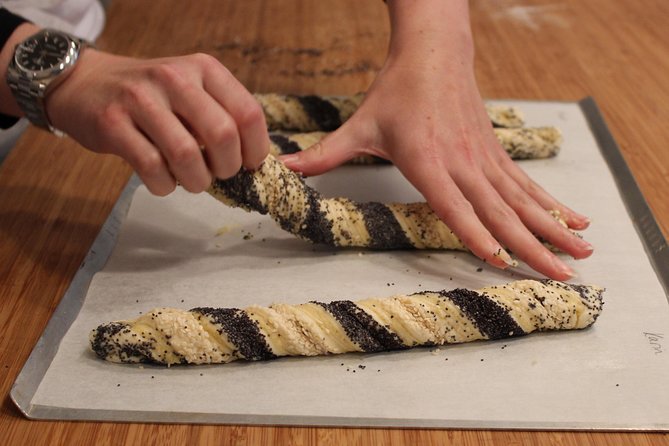
The 9:00 am start is one of the class’s best practical features. Finish around midday, then you still have the afternoon for central Copenhagen, a museum, shopping, or a relaxed lunch.
Give yourself enough time to reach Frederiksberg and find the entrance. Since the location is outside the city center, this is not a step-out-of-your-hotel-and-start-baking activity. Check your route before leaving, and do not rely on a map pin alone for the final doorway.
Wear something suitable for a working kitchen. The supplied information does not specify a dress code, so the safe approach is ordinary comfortable clothing that you do not mind wearing during a flour-heavy morning.
Think ahead about the pastry boxes. You may produce more than you can eat, and you will need to keep the finished goods together for the journey back. If you are staying in a hotel, sharing them later is an easy solution. If you are flying out that day, the timing is less convenient.
Should you book The Art of Baking Danish Pastry?
Book it if you want more than a bakery stop and you enjoy learning by doing. The small group, practical instruction, generous ingredients, coffee, and emailed recipes make this one of the more useful food activities in Copenhagen. The high rating, with 99 percent of participants recommending it, matches the strongest features: clear teaching, good organization, and plenty of pastries.
Skip it if you want a short tasting, dislike a quick hands-on class, or will have no way to handle several boxes of baked goods. For most food-focused visitors, I would schedule it near the start of the trip, arrive early, and keep the rest of the day flexible. That gives you time to enjoy the pastries while they are fresh and still leaves Copenhagen waiting after lunch.
FAQ
Where does the Danish pastry class meet?
The class meets at Grundtvigsvej 10A, 1864 Frederiksberg, Denmark. The activity ends back at the same meeting point.
What time does the class start?
The class starts at 9:00 am.
How long does the baking experience last?
It lasts approximately 3 hours and 30 minutes.
Is the class offered in English?
Yes. The experience is offered in English.
How many people can join the class?
The maximum group size is 12 participants.
What pastries will I make?
The sample menu includes cinnamon rolls called kanelsnegle, Spandauer Danish pastry, and poppy seed and sesame seed twists called frøsnapper.
Do I get to eat the pastries during the class?
Yes. After baking, tea and coffee are served so you can taste the finished pastries.
Can I take pastries home?
Yes. The class produces a generous quantity of pastries, and participants can box them to take away.
Will I receive the recipes?
Yes. The recipes used during the class are emailed to you after the experience.
Can I cancel or change my booking?
No. The experience is non-refundable and cannot be changed for any reason. If the minimum number of participants is not reached and the class is canceled, you are offered another date or experience, or a full refund.
Just added around the world
- Private Cape Malay Cooking Class in Cape Town with a Local Family★ 5.0 · 24 reviews
- Private Moroccan Cooking Class in Casablanca with a Local Expert★ 5.0 · 12 reviews
- Cooking Class and Wine Pairing in Capri★ 5.0 · 57 reviews
- South African Cooking in Cape Town with Local Chef Richard★ 4.5 · 10 reviews
- Langa Township and Bokaap Cooking Class Half Day Tour★ 5.0 · 4 reviews
- Private Authentic Mexican Cooking Class in Cancun with Alberto★ 5.0 · 3 reviews
- Private Authentic Cape Malay Cooking Class in Manenberg with Locals★ 5.0 · 5 reviews
- Cape Town Shore Excursion| South African Cooking & Port Transfers★ 5.0 · 3 reviews
Tiramisu & Dessert Classes, compared.
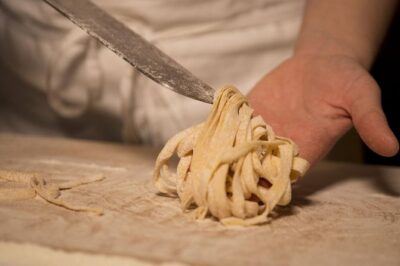
3 in 1 Cooking Class near Navona: Fettuccine, Ravioli & Tiramisu
Read our review →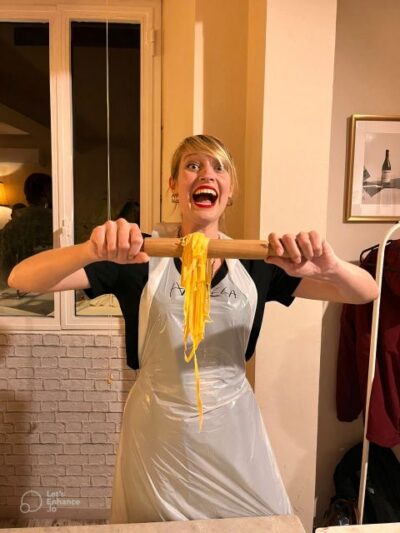
Rome: Pasta Making Class with Wine, Limoncello, and Dessert
Read our review →
Rome: 3-in-1 Fettuccine, Ravioli, and Tiramisu Cooking Class
Read our review →
Florence: Cooking Class Pasta & Tiramisu Making Unlimited Wine
Read our review →
Fettuccine & Tiramisù: Cooking Class with Wine & Limoncello
Read our review →
Florence Cooking Class The Art of Making Gelato & Authentic Pizza
Read our review →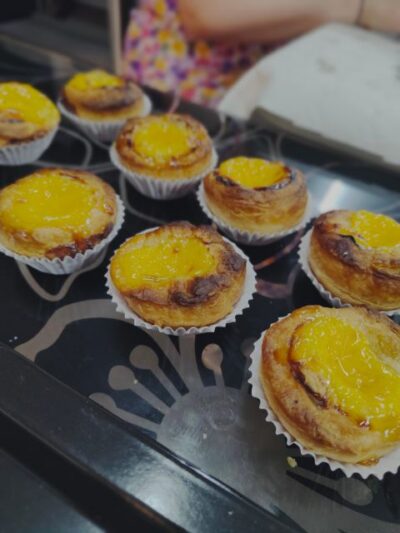
Rome: Pasta & Tiramisu Cooking Class near the Spanish Steps
Read our review →Browse the lists this tour appears in