
Review · INDONESIA
Lombok Traditional Pottery Experience and Village life
A pottery lesson becomes something much more personal in Lombok when it takes place in a Sasak village home. You shape clay beside local makers, cook with the family, and share a meal rather than simply watching a demonstration. Dein and his family provide the warm welcome, while local instructors show you the hand skills behind each piece.
I like the chance to make several items, not just one token souvenir, and I like that the cooking session brings you into everyday village life. The main consideration is timing: your clay work needs about two days to dry and fire, so ask clearly how your pieces will be delivered before you leave.
Key points to know
- Make two to four clay pieces: Depending on your pace, you may create several small pottery items with help from local makers.
- Meet Dein and his family: The visit includes coffee, tea, snacks, conversation, and time with the household.
- Cook a Lombok meal: Fresh local ingredients are prepared with village cooks, then shared together.
- Expect a little mess: Wear clothes that can handle clay and cooking splashes.
- Plan for finished pottery later: Pieces need roughly two days for drying and firing before they are ready.
- Pay $21 for a two-hour cultural session: That is strong value if you want hands-on contact rather than a quick craft demonstration.
Clay, coffee, and village life in Lombok
This experience works because it joins three simple things: craft, food, and conversation. You are not only learning how to shape a pot. You are spending time with a Sasak family and seeing how a traditional skill fits into village life.
The meeting point is Dawa Pottery Studio in Dusun Adong, across from the Alfamart alley. Look for the Dawa Pottery sign. Some descriptions of the village refer to Penuja, so I would save the exact meeting location and check the pin with the provider before setting out. That small bit of planning matters in a local village, where nearby lanes can look similar.
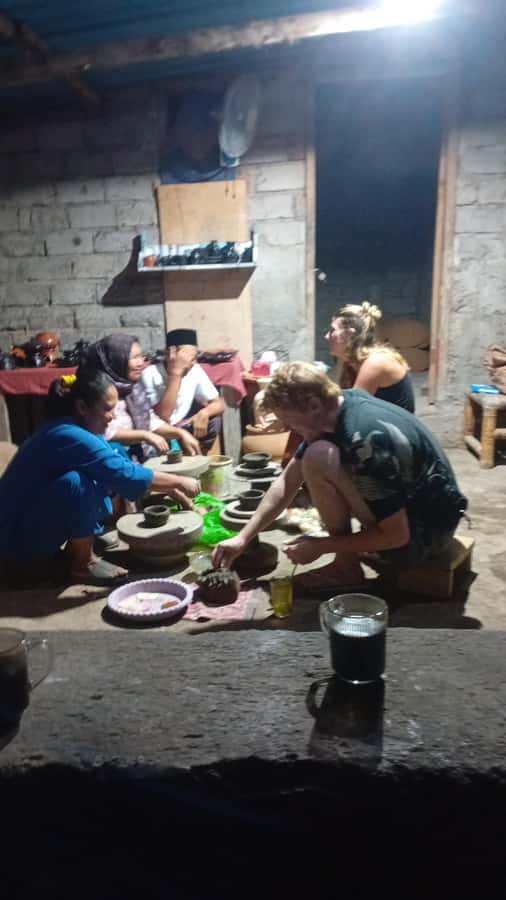
Once you arrive, the visit begins in a relaxed way. You may be offered Lombok coffee or tea and snacks while you meet Dein and members of his family. This early conversation is not wasted time. It gives you a chance to settle in, ask about the pottery, and get a feel for the household before you put your hands in the clay.
The tone is friendly and informal. English guidance is provided, and the activity is also suitable for people who do not have pottery experience. Some village instructors may use little English, but the work itself is easy to follow through demonstration and hand movements. That can make the class feel less like a formal lesson and more like a shared task.
More Farm Cooking Classes in Indonesia
- Ubud: Balinese Cooking Class at an Organic Farm
★ 5.0 · 1,786 reviews - From Ubud: Authentic Cooking Class in a Local Village
★ 4.9 · 1,325 reviews - Balinese Farm Cooking Class by Pemulan Bali
★ 5.0 · 410 reviews
Learning the old hand skills
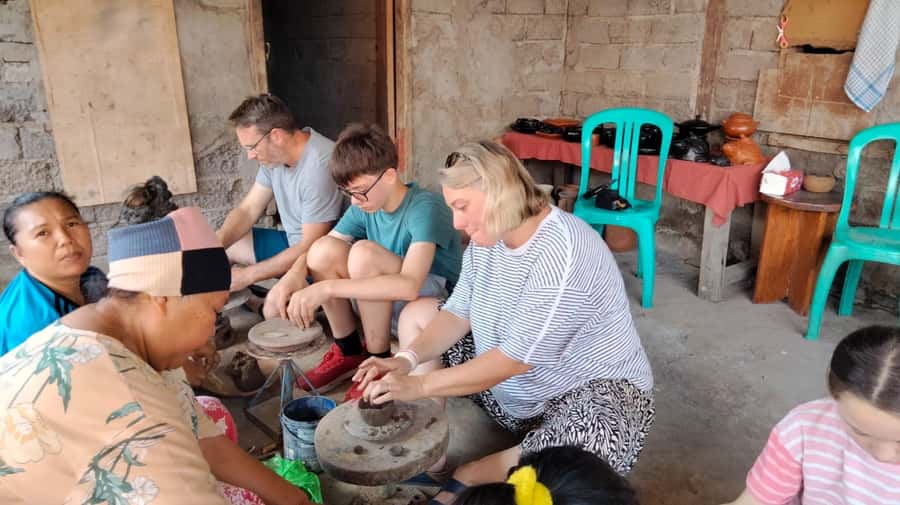
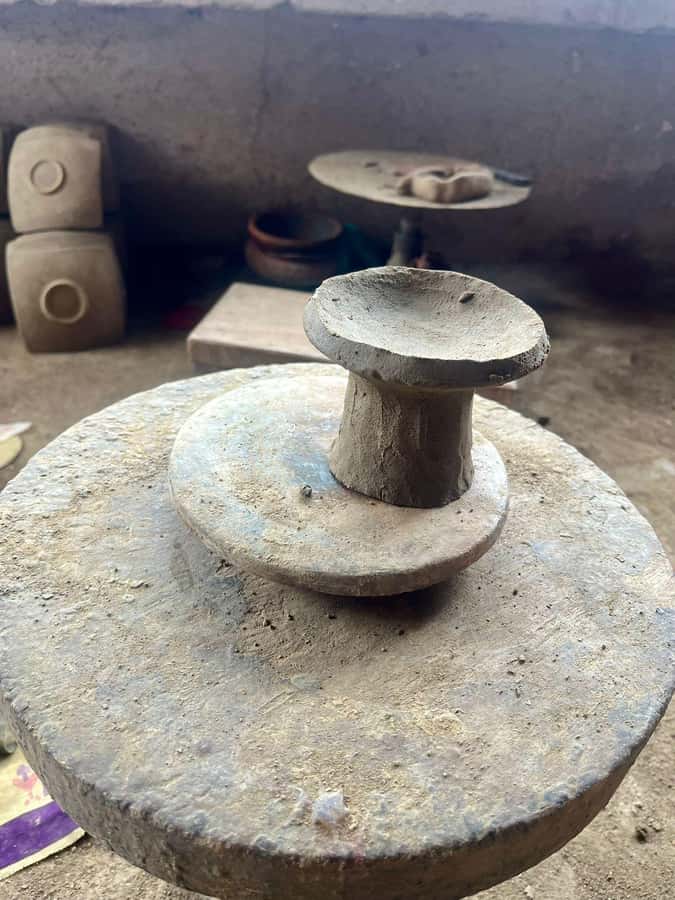
The pottery portion is the heart of the experience. Local Sasak makers show you how to form, smooth, and decorate clay with basic tools and methods passed down through the village. You get to shape the material yourself instead of watching someone else complete the work.
The class is aimed at beginners. You do not need to know how to center clay, control thickness, or finish a rim. The instructors guide your hands and show you how to correct a shape as it develops. Clay has its own opinions, so your first piece may not look perfectly even. That is part of the appeal, not a fault in the class.
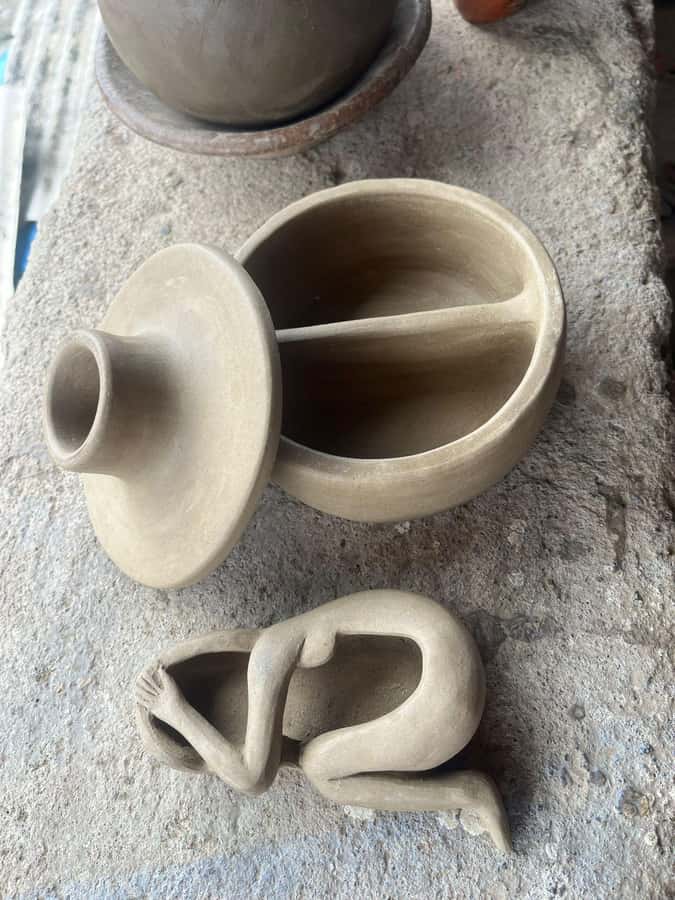
You may make two, three, or even four pieces, depending on your pace. The number is worth noting because many short craft activities give you just enough time to make one basic object. Here, you have room to try again, change the form, or make small items with different shapes.
The tools are supplied, as are the clay and other materials. You should bring comfortable clothing that can get dirty. Clay can work its way onto sleeves and hands, and the cooking session adds another chance for spills. Wear practical clothes rather than your best resort outfit.
The pottery is not finished when you leave. It needs about two days to dry and fire. The provider includes shipping, and finished pieces can be sent on to you. Some visitors had their work delivered to their hotel a few days later. Since the exact delivery arrangement can depend on your location and the firing schedule, confirm it at the workshop. If you are leaving Lombok soon, this is especially important.
Cooking with a Sasak family
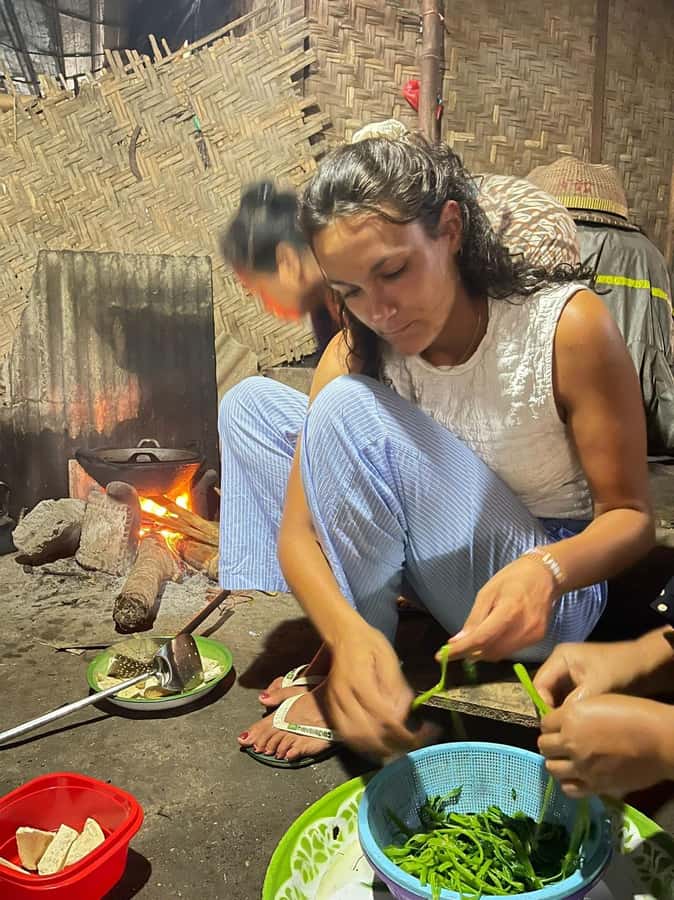
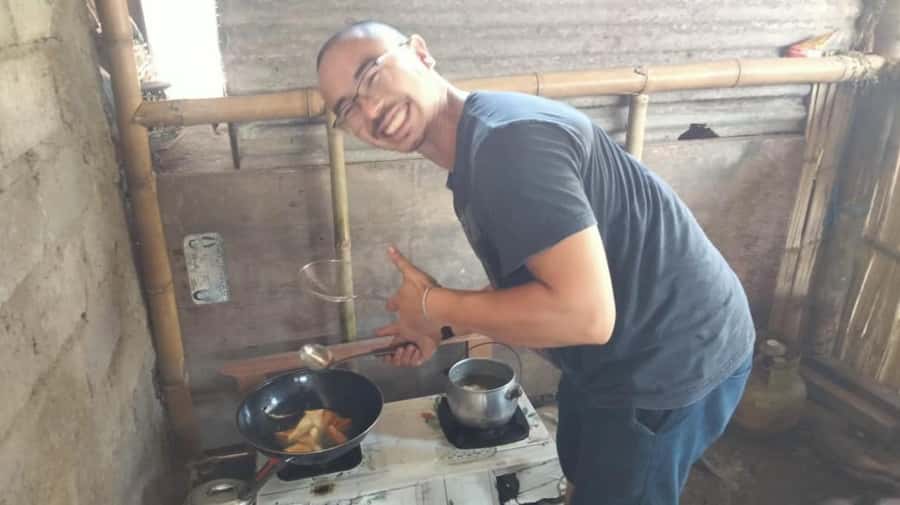
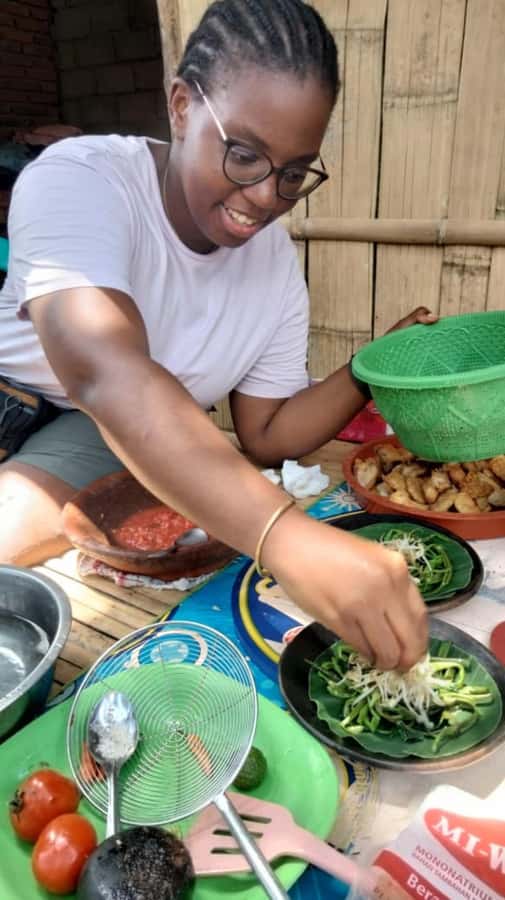
After the clay work, you move to the kitchen for a local cooking session. This gives the experience a useful second half. You are not only looking at village life from the outside. You are helping prepare food and then eating it with the people who made it.
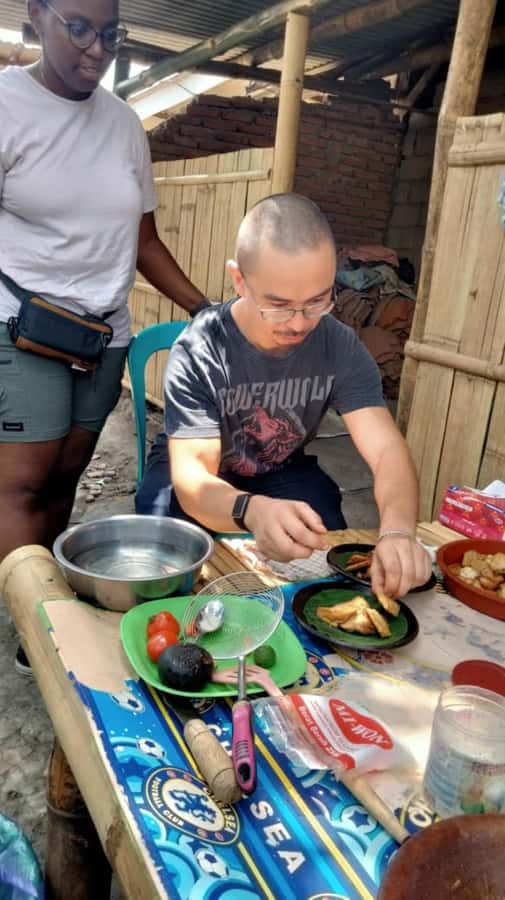
Fresh local ingredients are used, and a woman from the village leads the cooking. The teaching may not always be in fluent English, but smiles, gestures, and shared work carry the lesson along. If you enjoy learning through doing, you will likely find this more memorable than a polished cooking show.
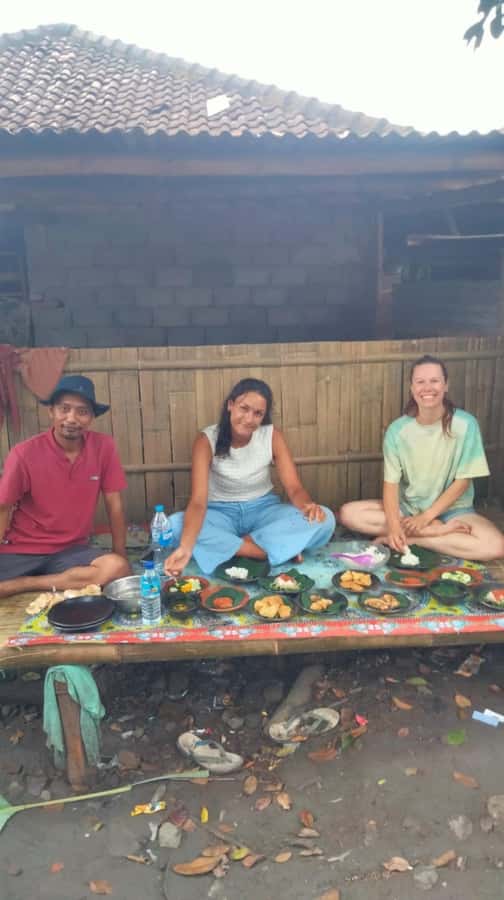
The meal is eaten together in a warm family setting. Food may be shared by hand, which adds another local custom to the meal and makes the experience feel less formal. Vegetarian food is available if you request it in advance.
One especially practical touch is that you may receive extra food to take away. A batch of perkedel jagung, or corn fritters, was prepared for one couple to enjoy later. That is not something you should assume will be included every time, but it shows the generous spirit of the visit.
The cooking portion also makes this a good choice for families. Teenagers can handle both the pottery and kitchen tasks, and children are welcome with parental guidance. Very young children may need close help around food preparation and wet clay, but the activity is designed for a broad age range.
The welcome is the main attraction
The pottery is worthwhile, but the strongest part of the visit is the personal welcome. Dein and his family open their home and village life to you in a direct, friendly way. Coffee, snacks, conversation, a village walk, and time with family members give the workshop a human scale.
You may meet several people during the session, including pottery instructors and village cooks. Not all may speak English, yet that does not prevent a connection. The practical work gives everyone something to focus on, and humor travels well without translation.
This is also a good way to see local skill without turning it into a museum display. You are learning from people who still make pottery by hand. The objects are not merely presented as cultural symbols. You handle the clay, make mistakes, and understand how much patience a finished piece requires.
The family setting means the experience may feel less polished than a large commercial attraction. That is part of its appeal, but it also means you should arrive with a flexible attitude. The pace may be relaxed, and communication may rely on simple English, demonstrations, and gestures. If you need a tightly timed, highly scripted class, this may not be the right fit.
Same place, a different menu:
- Ubud Cooking Class Bali with Balinese Chef
★ 5.0 · 1,609 reviews - Ubud: Cooking Class with Transfers and Optional Market Visit
★ 4.9 · 824 reviews - PRIVATE Authentic Balinese Cooking Class in Ubud at Putu’s Home
★ 5.0 · 644 reviews - Balinese Ubud cooking school (9 Dish Cooking and Market Tour)
★ 5.0 · 540 reviews
What the $21 price really covers
At $21 per person, the value is good. The fee covers a pottery workshop, tools, clay and other materials, English or Indonesian guidance, and shipping for the finished pottery. You also receive access to the cooking portion and the shared meal as part of the experience, though extra food or drinks beyond the class are not included.
The strongest value comes from the range of contact packed into two hours. You get instruction, hands-on making, family interaction, food preparation, and a meal. Many craft activities charge nearly as much for a short demonstration and one small object. Here, you have a chance to produce several pieces and spend time with local residents.
There are limits. Hotel pickup and drop-off are not included, so you must make your own way to Dawa Pottery Studio. Travel insurance is also not part of the price. You should budget separately for transport and any additional food or drinks.
The two-hour duration is enough for a meaningful introduction, but it is not a full pottery course. You will learn the basic process rather than master every stage. The finished work also comes later, after drying and firing. Think of the fee as payment for the time, instruction, materials, meal, and connection, with the souvenir arriving afterward.
Who will enjoy this pottery visit
I would recommend this experience to you if you want a small-scale cultural activity with real participation. It suits couples, families, teenagers, first-time pottery makers, and anyone who would rather meet local people than move from one photo stop to the next.
It is especially useful for a free morning or afternoon because the session lasts two hours. The published starting times can vary, so check availability when you book. If your schedule is tight, leave room for the possibility that a village visit may feel conversational rather than rushed.
The activity is wheelchair accessible, which makes it more practical for many visitors. Still, I would confirm the exact setup at the studio before arrival if you have specific mobility needs, since the available information does not describe the floor surfaces, kitchen access, or restroom arrangements.
You should skip the activity if you have been scuba diving within the previous 24 hours. That restriction is listed for the experience, so plan the order of your Lombok activities with care.
This is not the best choice if you want to collect a finished pot immediately. Your piece must dry and fire first. It may be shipped later, and that delay is part of the process. Ask about delivery to your hotel or another address before you leave the studio.
Practical details before you book
Bring clothes that can get dirty. You may get clay on your hands and clothing, and the cooking part adds more mess. Comfortable clothes are the sensible choice.
No prior pottery skill is needed. You will receive step-by-step help, and the simple tools make the activity approachable. You can concentrate on enjoying the process rather than trying to produce a perfect professional pot.
English guidance is available. The experience information also lists Indonesian, and some of the village instructors may communicate mainly through demonstration. Do not let that put you off unless you need a detailed spoken lesson at every step.
Vegetarian options are available on request. Tell the provider ahead of time rather than waiting until the meal begins.
The experience allows free cancellation up to 24 hours before the start for a full refund. You can also reserve now and pay later, which helps if your Lombok plans are still shifting. Travel insurance remains your responsibility.
The meeting point deserves one final check. Go to Dawa Pottery Studio in Dusun Adong, across from the Alfamart alley, and look for the Dawa Pottery sign. Because Penuja also appears in descriptions of the village, confirm the exact map location when you reserve.
Should you book the Lombok pottery experience?
Book it if you want personal contact, practical craft, and local food in one short visit. The chance to make several pieces, cook with a Sasak family, and share a meal gives the $21 price real value.
I would be cautious only if your schedule cannot accommodate pottery delivery after firing, if you expect hotel transport, or if you prefer a polished class with constant English commentary. For everyone else, this is a thoughtful way to spend two hours in Lombok. You leave with muddy hands, a full stomach, and a handmade souvenir that arrives after it has completed its own slow trip from wet clay to finished pottery.
FAQ
Where does the Lombok pottery experience take place?
It meets at Dawa Pottery Studio in Dusun Adong, across from the Alfamart alley. Look for the sign marked Dawa Pottery. The village is also referred to as Penuja in some descriptions, so confirm the exact meeting point before arrival.
How long does the experience last?
The activity lasts two hours. Starting times vary, so check availability for the date you want.
Do I need pottery experience?
No. The class is suitable for beginners, and local makers guide you through shaping, smoothing, and decorating the clay.
Can I take my pottery home?
Yes, but the pottery needs about two days to dry and fire first. Shipping is included, and finished items can be sent to you. Confirm the delivery details with the provider at the workshop.
Is food included?
The experience includes the cooking session and the meal prepared during the class. Additional food or drinks are not included. Vegetarian options are available upon request.
What should I wear?
Wear comfortable clothing that can get dirty. Clay and cooking may leave marks on your clothes.
Is the activity suitable for children and wheelchair users?
Children are welcome with parental guidance, and the activity is listed as wheelchair accessible. Specific access arrangements for the studio and kitchen should be confirmed if you have particular mobility requirements.
Just added around Indonesia
- Lombok: Tetebatu Walk, Waterfall, Monkey Forest & Cooking★ 5.0 · 7 reviews
- Jambangan bali cooking class with morning market tour★ 5.0 · 35 reviews
- Gili air: Kaktus traditional cooking class★ 5.0 · 92 reviews
- From Garden to Table: Indonesian Cooking Class in Yogyakarta★ 4.9 · 24 reviews
- Experience the Art of Cooking Authentic Balinese Cuisine★ 5.0 · 6 reviews
- Cooking Class in Lombok★ 4.8 · 7 reviews
- Cooking Class 3 Courses Balinese Dishes★ 4.9 · 10 reviews
- Ubud: Balinese Cooking Class with Hotel Transfers★ 4.8 · 17 reviews
Farm & Countryside Cooking Classes, compared.
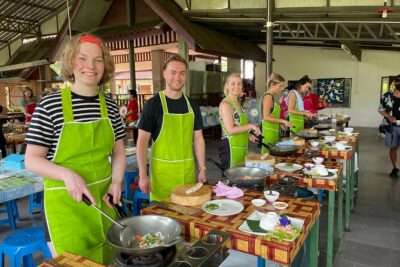
Half-Day Thai Cooking Class at Organic Farm in Chiang Mai
Read our review →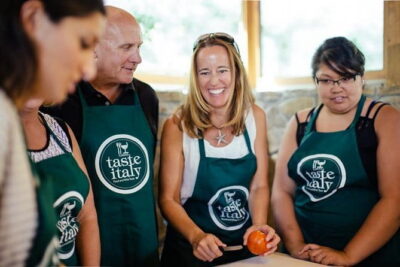
Cooking Class and Lunch at a Tuscan Farmhouse with Local Market Tour from Florence
Read our review →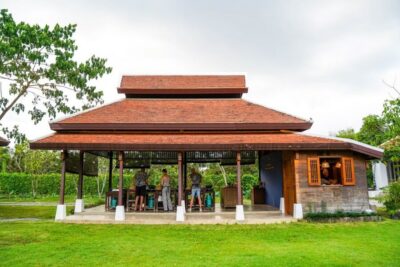
Chiang Mai: Authentic Cooking Class with Market & Farm Visit
Read our review →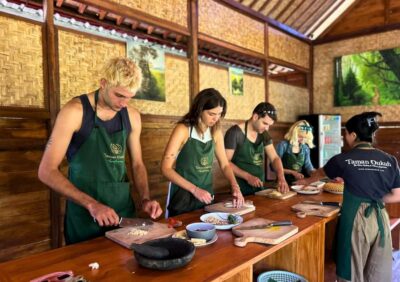
Ubud: Balinese Cooking Class at an Organic Farm
Read our review →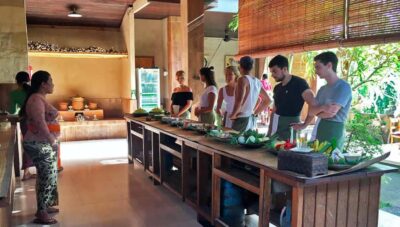
Ubud: Authentic Cooking Class in a Local Village
Read our review →
Chiang Mai: Cooking Class with Organic Farm at Mama Noi
Read our review →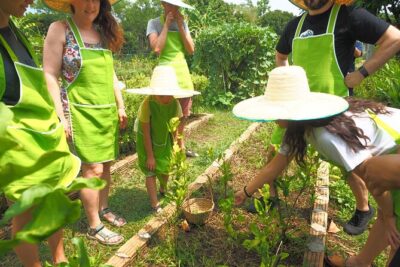

Hands-On Cooking Class & Farmhouse Tour on the Amalfi Coast
Read our review →Browse the lists this tour appears in