
Review · INDONESIA
Gili air: Kaktus traditional cooking class
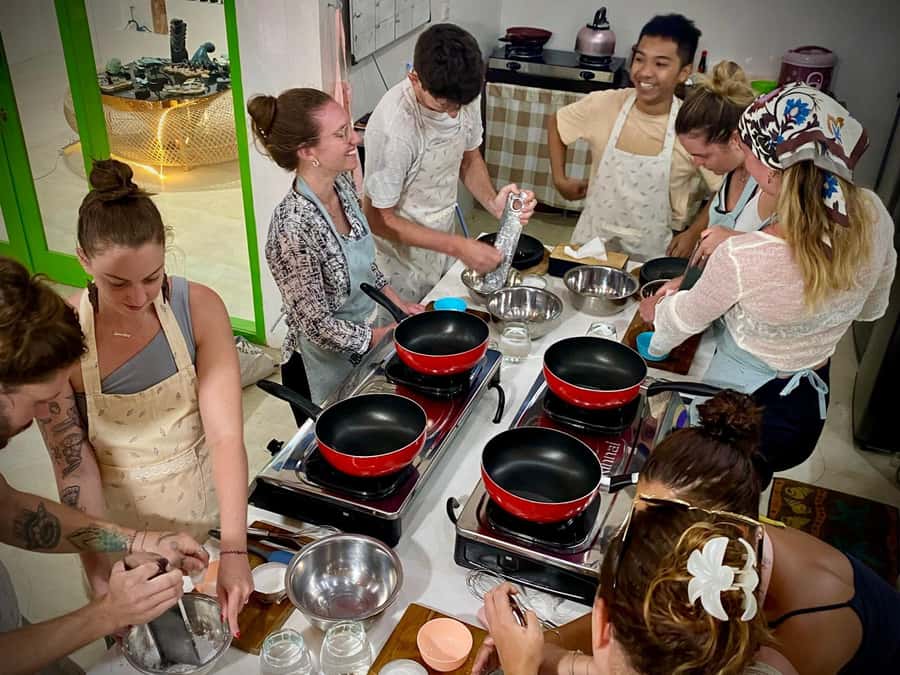
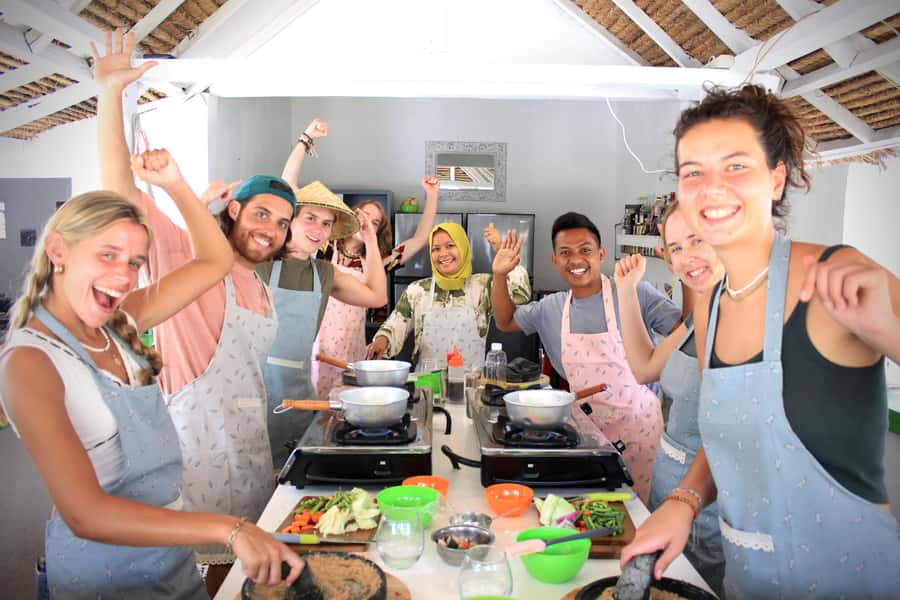
The best part of this Gili Air cooking class is its old-school approach. You make coconut milk from fresh coconut and grind peanut sauce in a cobek, the traditional mortar and pestle used in Indonesian kitchens. I like that the class treats these steps as part of the meal, not as chores to rush through. I also like the tiny group size, capped at two people, which gives the instructor room to explain, correct, and chat.
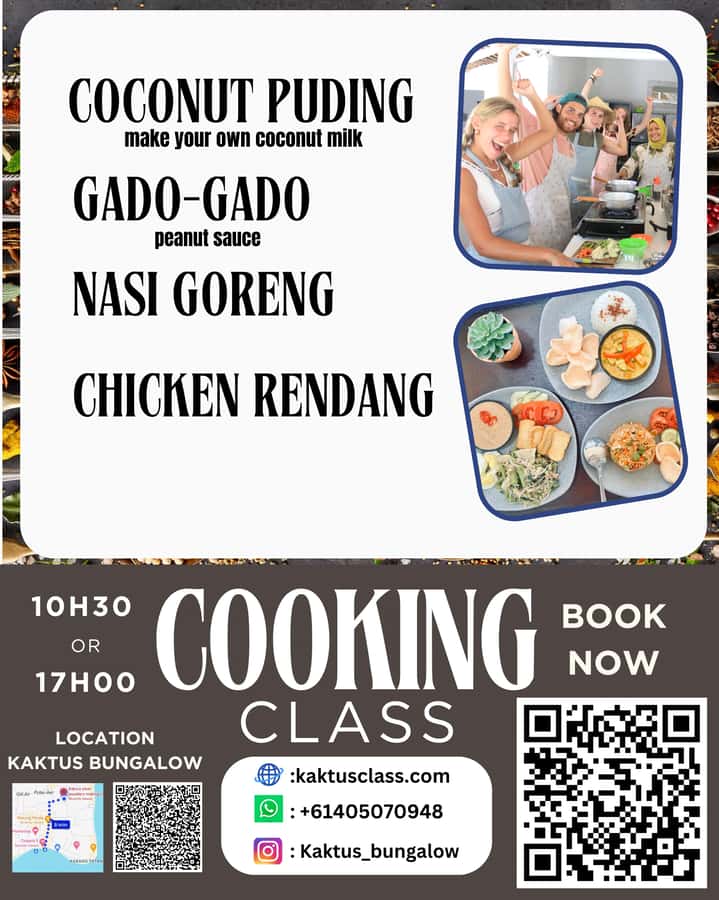
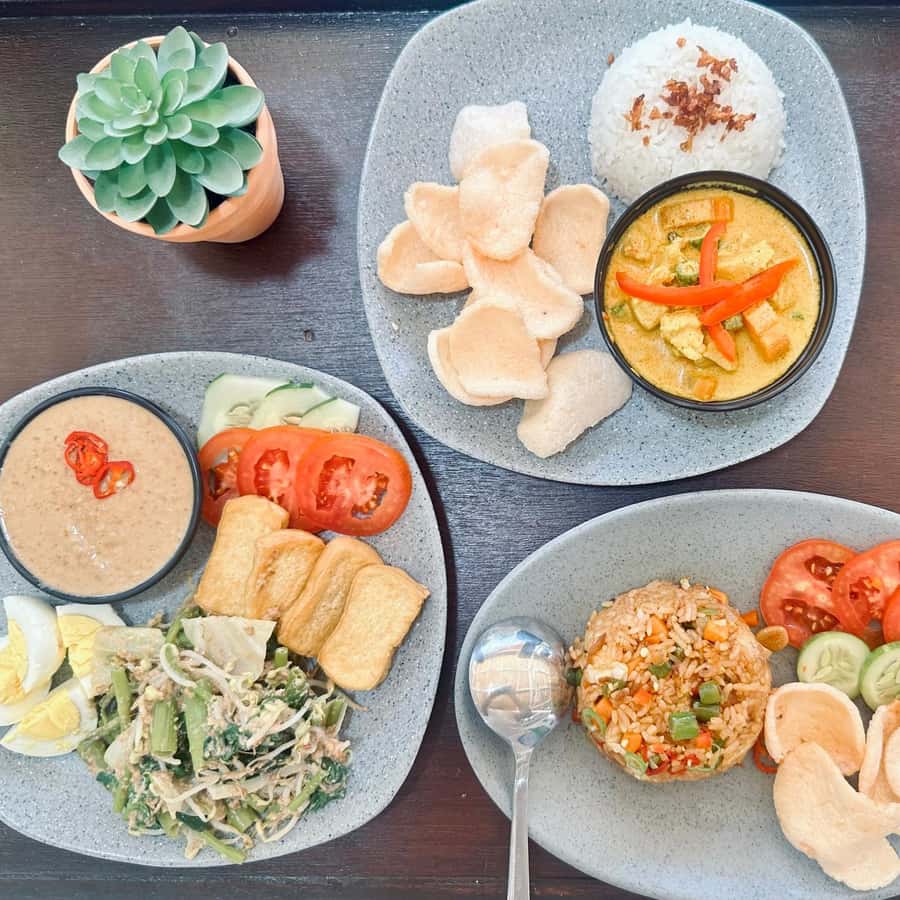
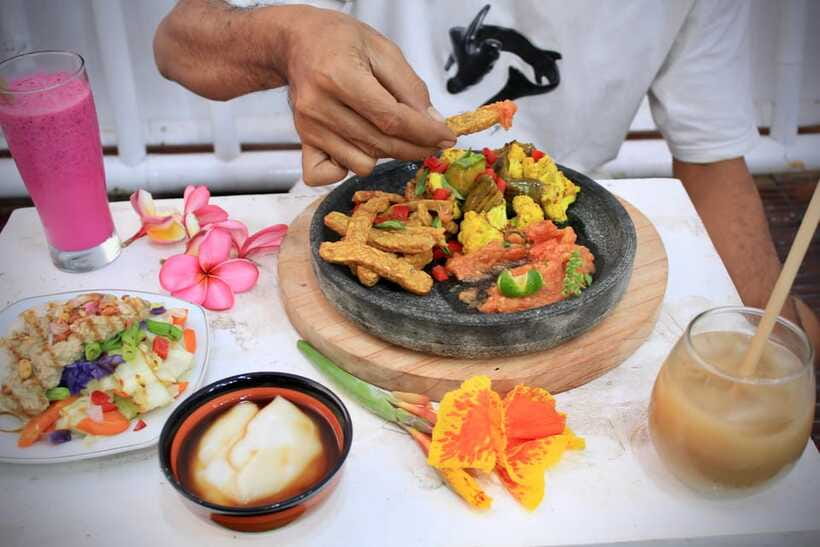
You should come hungry. Past menus have included nasi goreng, chicken rendang, gado-gado, lalapan, bubur sum sum, and other dishes, with some sessions producing three or even four courses. The main consideration is that the exact menu may vary, and two hours can pass quickly when several dishes are cooking at once.
Key points to know before booking
- Make coconut milk from scratch: Fresh coconut becomes one of the class’s most useful ingredients.
- Use a traditional cobek: You grind peanut sauce by hand, building its aroma and texture the old-fashioned way.
- Expect a generous meal: You eat the dishes you prepare, and portions may be large enough for leftovers.
- Work with a very small group: The class is limited to two participants, so instruction should feel personal.
- Learn recipes for home: Recipe instructions may be supplied digitally, giving you a way to repeat the dishes later.
- Plan for an easy island activity: The class lasts two hours, includes ingredients, food, water, and toilet access, and is wheelchair accessible.
Why this cooking class fits Gili Air so well
Gili Air is an easy place to spend a day doing very little. That is part of its charm, but after several hours by the pool or beach, a practical activity can be welcome. Kaktus Traditional Cooking Class gives you something to do with your hands while still keeping the relaxed mood of an island afternoon.
I like cooking classes that explain why a dish tastes the way it does. Here, the focus is not just on chopping ingredients and following a printed recipe. You see how coconut becomes milk, and how a mortar and pestle changes a peanut sauce. Those small steps help you understand Indonesian food rather than simply eating it at the end.
The class is taught in English, and the instructors are described as patient, friendly, and gentle. Kai and Sas are among the instructors named by past participants, while Brice is also mentioned as a kind and patient teacher. Since the group limit is two people, the experience should feel closer to a private lesson than a large demonstration.
More Hands-On Workshops in Indonesia:
- Ubud: Balinese Cooking Class at an Organic Farm
★ 5.0 · 1,786 reviews - Ubud Cooking Class Bali with Balinese Chef
★ 5.0 · 1,609 reviews - From Ubud: Authentic Cooking Class in a Local Village
★ 4.9 · 1,325 reviews
The first step: turning fresh coconut into milk
One of the most useful parts of the class is learning to make coconut milk from fresh coconut. Coconut milk appears in many Indonesian dishes, but it is easy to treat it as something that simply comes from a carton. Starting with the coconut shows you the work behind the ingredient and the role of fresh produce in local cooking.
I find this kind of lesson especially useful because it is easy to remember. You are not just watching someone pour a prepared ingredient into a pan. You are handling the coconut and seeing how a basic local product becomes part of a sauce or curry.
This can also help you judge the pace of the class. Traditional preparation takes time, and the instructors appear to give attention to each stage instead of racing toward the final plate. If you want a quick recipe demonstration with little hands-on work, this may feel slow. If you enjoy understanding the method, the pace is a strength.
The cobek and the flavor of hand-ground sauce
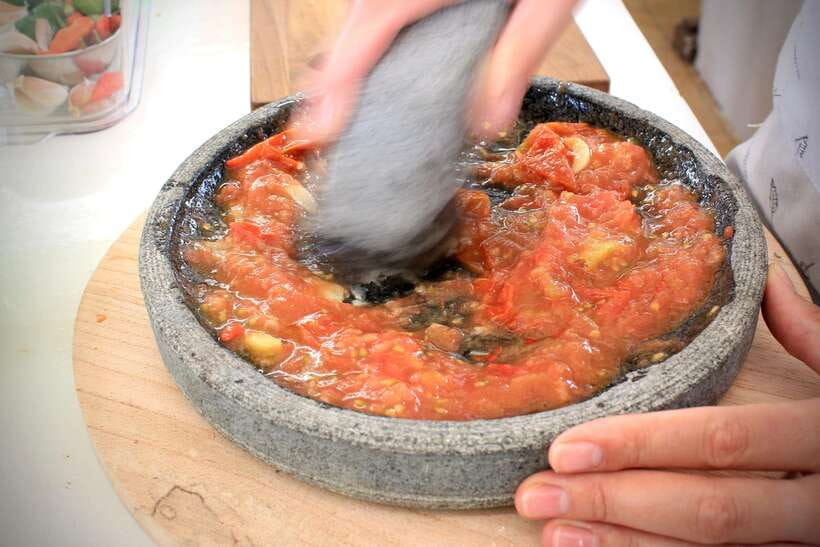
The cobek is a traditional Indonesian mortar and pestle. In this class, you use it to make peanut sauce. That detail matters because the cobek is more than a decorative piece of kitchen equipment. Grinding ingredients by hand lets you see how the sauce comes together and gives the preparation a physical rhythm.
I particularly like this step for anyone who has eaten gado-gado or other Indonesian dishes with peanut sauce and wondered what creates the flavor. You learn that the sauce is not just a sweet topping added at the end. The grinding process brings together the ingredients and produces a texture that feels more substantial than a smooth bottled sauce.
The cobek also gives the class a clear link to home cooking. You are learning a method you can understand and repeat, even if you later adapt it to the tools available in your own kitchen. Do not expect every part of the process to be fast or perfectly tidy. That is part of the point.
Nasi goreng, Indonesia’s familiar comfort food
Nasi goreng is the best-known dish named in the class description, and it is a smart choice for a cooking lesson. The dish is familiar enough to appeal to first-time visitors, but it also leaves room for learning about seasoning, heat, and timing.
You get to prepare the dish rather than simply watch it being made. The class presents nasi goreng alongside other Indonesian food, so it becomes part of a wider meal rather than the entire focus. That is helpful if you already know nasi goreng from restaurant menus and want to try something less familiar.
The exact contents and preparation can vary by session. Past classes have included several different combinations of main dishes, vegetables, sauces, and dessert. I would book this for the chance to learn Indonesian cooking techniques, not for a guaranteed fixed menu beyond the dishes specifically listed for your date.
A few more cooking classes around Indonesia worth a look
- Ubud: Cooking Class with Transfers and Optional Market Visit
★ 4.9 · 824 reviews - PRIVATE Authentic Balinese Cooking Class in Ubud at Putu’s Home
★ 5.0 · 644 reviews - Balinese Ubud cooking school (9 Dish Cooking and Market Tour)
★ 5.0 · 540 reviews - Ubud: Balinese Cooking Class and Market Tour
★ 4.8 · 531 reviews
Chicken rendang and slow-building flavor
Chicken rendang is another featured dish. It is known for its concentrated seasoning and deep color, and it gives you a chance to work with a curry-style preparation rather than a simple fried rice dish.
The class description emphasizes the color and taste of the rendang. That makes it a useful contrast with nasi goreng. You are not preparing several dishes that all use the same technique. One dish centers on rice and frying, another on a seasoned curry, and the peanut sauce brings in the cobek method.
Two hours is not a long time for an elaborate meal, so the class may focus on practical preparation rather than a long restaurant-style cooking process. That is fine for a holiday lesson, but you should not expect a full professional chef course. The value is in learning several recognizable Indonesian dishes in one sitting.
Menus may change, and that can be a good thing
The featured dishes include nasi goreng and chicken rendang, but past sessions have covered a wider set of recipes. Gado-gado, lalapan, and bubur sum sum have all appeared, and one class produced two main meals and a pudding. Another session covered three dishes, while one participant described cooking four dishes.
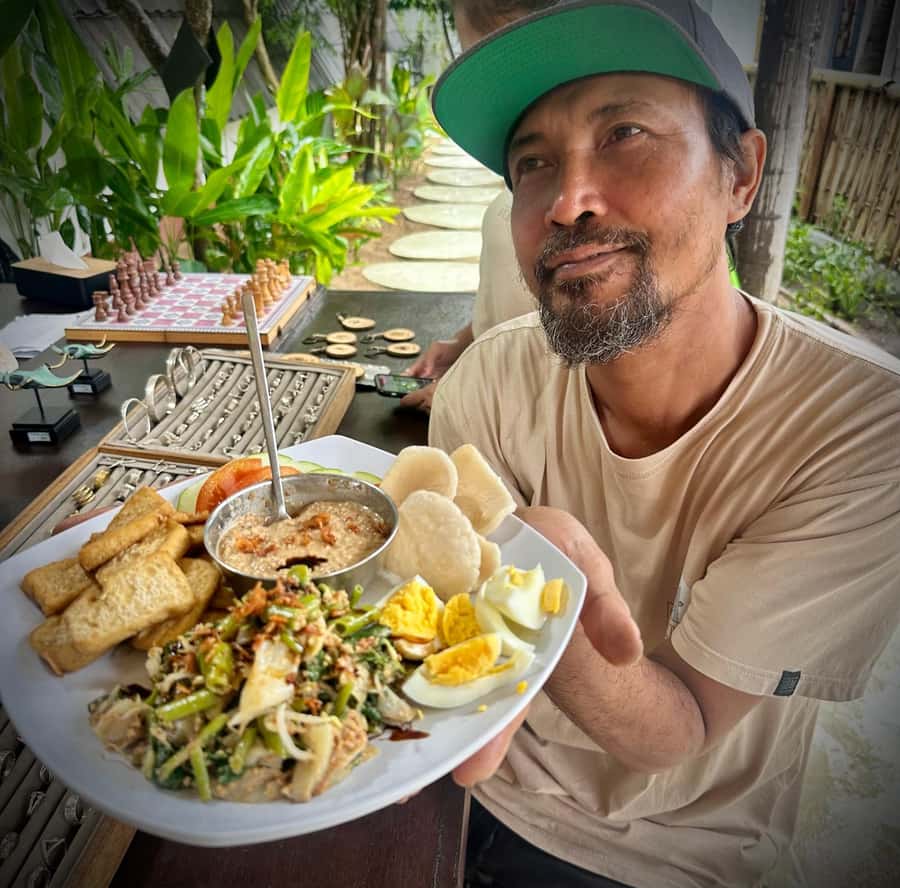
This variety is useful if you want more than one kind of Indonesian food. Gado-gado gives you a reason to use the peanut sauce, lalapan introduces another style of meal, and bubur sum sum adds a sweet finish. You might also appreciate the chance to try foods you have not ordered in restaurants.
The tradeoff is predictability. If a specific dish is the main reason you want to book, confirm the menu before you pay. The information provided names the main featured dishes but also shows that recipes can vary. I would see the changing menu as a bonus, provided you arrive open to learning something different.
Eating what you prepare
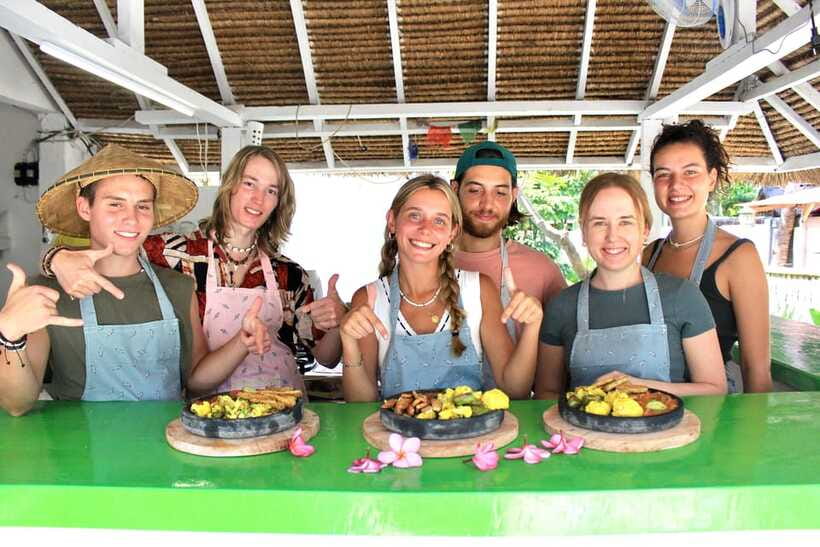
The class ends with the most important practical lesson: you eat the food you have cooked. Ingredients, food, and fresh water are included, so the price covers more than instruction alone.
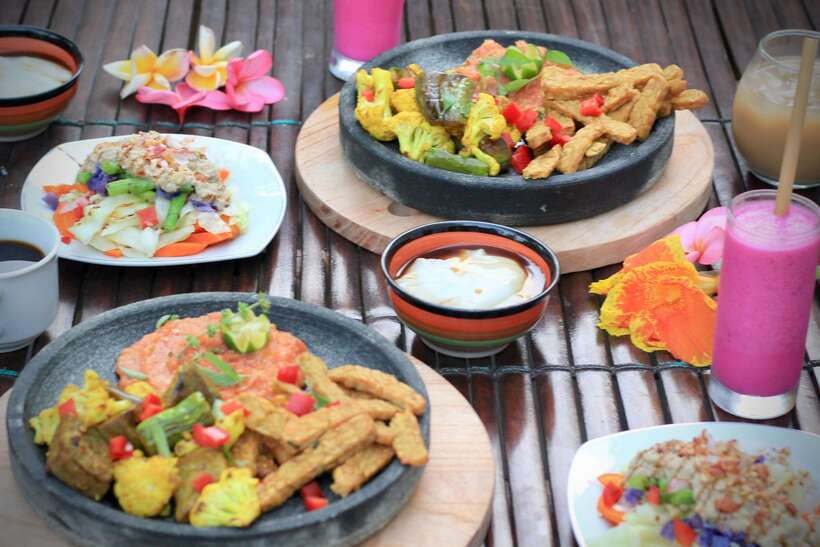
Portions appear generous. One session produced enough food that the participants could not finish it, and another person was able to take the rest away. That makes the $27 price more attractive, especially if the class functions as both an activity and a substantial meal.
Still, I would not book it only as a cheap lunch. The food is the reward, but the main value comes from the preparation, the personal instruction, and the chance to repeat the recipes at home. If you are not hungry or do not enjoy eating the foods you cook, part of the experience will be lost.
Friendly instructors and a calm teaching style
The instructors are repeatedly described as patient, kind, and easy to follow. Kai is praised for being helpful and entertaining, and Sas is described as gentle and considerate when one participant was feeling unwell. Brice is also noted for clear instructions and patience.
That human side matters in a small cooking class. You may be asked to handle unfamiliar ingredients or tools, and a calm teacher makes it easier to ask questions. A group of two also means the instructor can spend more time with you than would be possible in a large class.
The style sounds relaxed rather than formal. You should expect guidance, conversation, and hands-on preparation, not a strict culinary-school lesson. I see that as a good match for Gili Air, where the best activities tend to feel friendly and unhurried.
What the two-hour schedule means for you
Two hours is long enough to prepare several dishes but short enough to fit neatly into a day on Gili Air. You could use it as a break from the beach, a daytime plan, or a food-focused activity before another evening outing.
Because the class may include several courses, listen closely when the instructor explains the order of work. Some ingredients may need attention earlier than others, and the timing of rice, sauce, curry, and dessert can become busy. The class is hands-on, so you will get more from it if you take part rather than wait for the instructor to do every step.
The short duration is also a limitation. You may not explore every ingredient or regional variation in Indonesian cooking. I would treat this as a practical introduction with several recipes, not an exhaustive study of the cuisine.
Who will get the most from Kaktus
I would recommend this class to couples, friends, or solo visitors who want personal attention. With only two participants allowed, it is especially suitable if you prefer a quiet lesson and do not want to cook in a crowded group.
It also works well for anyone who likes to recreate holiday meals at home. Recipe instructions may be provided digitally, and several participants valued having recipes they could try again after returning home. That turns the class into a useful souvenir rather than a meal you forget once you leave the island.
Families and people with limited mobility may also find the practical setup helpful because the activity is listed as wheelchair accessible. The available information does not describe every physical detail of the venue, so I would still confirm any specific access needs before booking.
Price, booking flexibility, and one name to check
At $27 per person, the class offers good value if you want instruction, ingredients, a full meal, and a small group. The price is easier to justify than a standard restaurant meal because you leave with cooking skills and, in some cases, digital recipes.
You can cancel up to 24 hours in advance for a full refund, and the reserve-now, pay-later option gives you some flexibility. Starting times vary, so check availability for your preferred day.
One practical point deserves attention: the supplied experience-provider name says Kaktus silver jewellery making class, while the activity itself is Kaktus Traditional Cooking Class. That appears to be a naming mismatch. I would confirm that your reservation is for the cooking class before finalizing plans.
Should you book this Gili Air cooking class?
I would book it if you want a small, friendly activity with real hands-on work. The fresh coconut milk, cobek-made peanut sauce, generous meal, and chance to learn dishes such as nasi goreng and chicken rendang give the class more substance than a simple cooking demonstration.
I would hesitate only if you need a fixed menu, want a longer chef-led course, or dislike rich, strongly seasoned food. For most food-minded visitors on Gili Air, $27 is a fair price for two hours of instruction and a meal you help create. Check the day’s menu and confirm the booking name, then come ready to cook and hungry enough to try everything.
FAQ
How long does the Kaktus Traditional Cooking Class last?
The class lasts two hours. Starting times vary, so check availability for your preferred date.
How much does the cooking class cost?
The price is $27 per person.
What dishes will I cook?
The class features nasi goreng and chicken rendang, along with traditional Indonesian cooking methods. Past sessions have also included gado-gado, lalapan, bubur sum sum, other main dishes, and pudding. The exact menu may vary.
Will I eat the food I prepare?
Yes. Food is included, and you eat the dishes prepared during the class. Portions may be generous enough to leave some food unfinished.
Is the class taught in English?
Yes. The instructor language is English.
How many people can join?
The class is limited to two participants, making it a small-group experience.
Can I cancel or pay later?
You can cancel up to 24 hours in advance for a full refund. You can also reserve your place and pay later, keeping your plans flexible.
Just added around Indonesia
- Spice Garden, Jamu & Cooking Class in Bali Village★ 5.0 · 5 reviews
- Pure Bali Village Experience, Cooking & Jamu Class+VIP Transfer★ 5.0 · 16 reviews
- The Authentic Balinese Cooking Experience★ 5.0 · 4 reviews
- Bali: Cooking Class with 5 Balinese Dishes★ 4.9 · 178 reviews
- Seminyak: Vegetarian Cooking Class★ 5.0 · 3 reviews
- Seminyak : cooking class traditional food bali★ 5.0 · 5 reviews
- Pure Bali Village Experience Cooking & Jamu Class, Transfer★ 4.8 · 5 reviews
- Quad ride, waterfalls & aunthentic cooking class in munduk★ 4.9 · 53 reviews
Cooking Classes, compared.
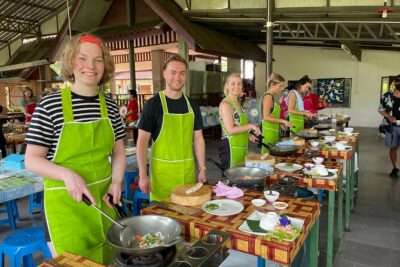
Half-Day Thai Cooking Class at Organic Farm in Chiang Mai
Read our review →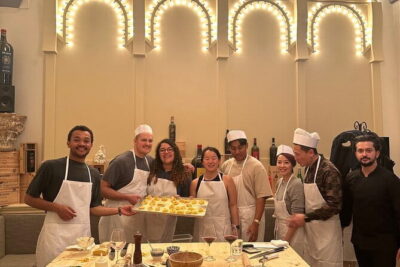
Florence: Pasta Cooking Class with Unlimited Wine
Read our review →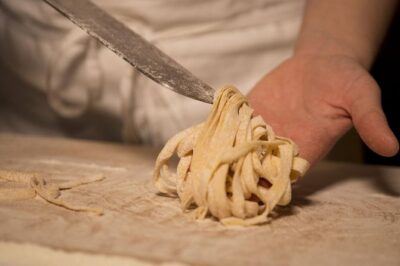
3 in 1 Cooking Class near Navona: Fettuccine, Ravioli & Tiramisu
Read our review →
Hanoi Cooking Class: Culture, Local Market & Meaning CSR Impact
Read our review →
5 Traditional Dishes Hanoi Cooking Class with Market Trip
Read our review →
Cooking Class and Lunch at a Tuscan Farmhouse with Local Market Tour from Florence
Read our review →
Chiang Mai: Cooking Class, Market & Thai Herbs Garden Tour
Read our review →Browse the lists this tour appears in