
Review · TOKYO
AKEMI’s SUSHiKiTCHEN: A fun sushi cooking lesson in Tokyo
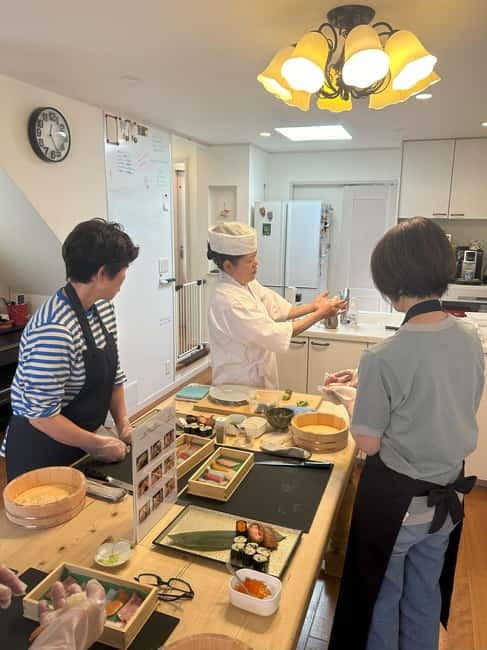
The best part of AKEMI’s SUSHiKiTCHEN is the setting: you learn sushi in a Japanese home, not at a large cooking school. Akemi Castellano teaches the techniques and food culture, while her husband Dan helps create a warm, well-organized experience. I like the small six-person limit and the full meal at the end, complete with sake, dessert, and matcha tea.
I also like that the lesson begins with the basics, especially vinegar rice and the preparation of fish for sushi. The main limitation is the fixed menu, so you cannot choose the types of sushi you make. People with food or animal allergies cannot be accommodated, and children must be at least 10 years old.
Key points to know before booking
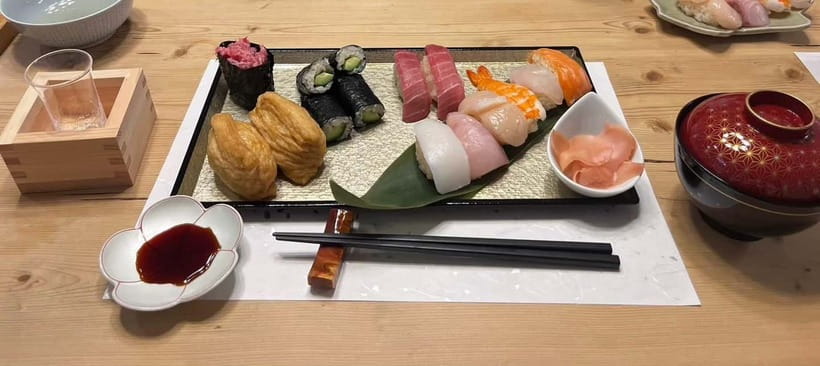
- Four sushi styles in one lesson: Make nigiri, maki-sushi, gunkan, and inari, rather than focusing on just one roll.
- A real home setting: Akemi and Dan welcome you into their house, with station pickup available if you need help finding it.
- Small group teaching: The class is limited to six participants, with room for individual help.
- A complete meal afterward: Eat the sushi you prepare, then enjoy Japanese sake, dessert, and tea.
- Convenient Tokyo access: The house is reachable from Shinjuku and Shibuya, usually by train followed by a walk.
- Plan for a set menu: Vegetarian food is available by request, but the sushi selection itself is not customizable.
Learning sushi in Akemi’s Tokyo home
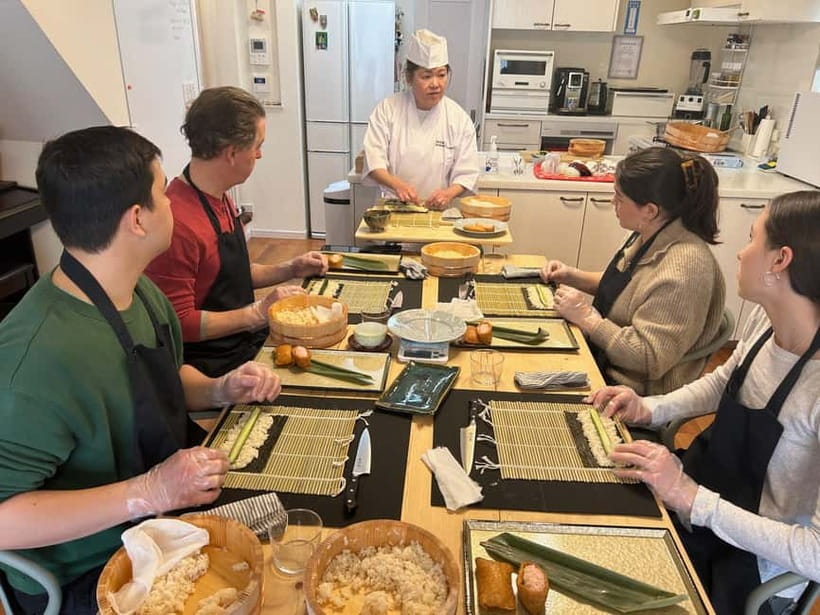
Sushi lessons can go in two directions. Some are quick demonstrations built around a single roll. Others are formal culinary classes that may feel more like school than a meal with a local family. Akemi’s SUSHiKiTCHEN sits in the middle: you receive careful instruction, but the atmosphere is relaxed and home-based.
That setting matters. Sushi is not just fish placed on rice. The balance depends on rice temperature, seasoning, knife work, proportions, and the way each piece is formed. In a home kitchen, you can ask questions as you work and see how the food fits into everyday Japanese dining.
Akemi is a trained sushi chef, and the class is taught in English and Japanese. Her husband Dan is part of the welcome and organization. The pair have been praised for clear English, friendly communication, and the way they work together. That makes this a good choice if you want instruction without the stiffness of a formal professional kitchen.
The class lasts three hours. You can book a morning session with lunch or an afternoon session with dinner. That timing makes it easy to fit into a Tokyo sightseeing day, though you should expect the lesson and meal to occupy a solid block of time.
More Sushi and Japanese Classes in Tokyo:
- Sushi Making Tokyo Roll and Authentic Japanese Sushi Class
★ 5.0 · 3,971 reviews - Tokyo: Roll and Authentic Sushi Making Class in Asakusa
★ 4.9 · 1,957 reviews - Tokyo: Sushi Making Class in a Happi Coat near a Famous Spot
★ 4.9 · 1,377 reviews
Getting there from Shinjuku or Shibuya
The home is conveniently located for access from two of Tokyo’s main transport hubs, Shinjuku and Shibuya. You will need to make your own way there using Google Maps or a similar app, or ask to be met at the nearest train station.
That station pickup is a useful option, particularly if you are unfamiliar with residential Tokyo addresses. One participant described taking the Metro, then walking about 10 minutes through a pleasant neighborhood. Another chose station pickup instead of walking. The best practical advice is to decide in advance which option you want and tell the hosts before the lesson.
Do not treat the address as if it were a public cooking studio with a large sign. You are going to a private home, so careful navigation matters. Allow enough time to find the station exit and make the final walk without rushing.
The neighborhood walk is part of the appeal, but it is also the one point where you need to be self-sufficient. If you are not comfortable navigating Tokyo rail stations, request the meeting service.
Starting with vinegar rice and sushi culture
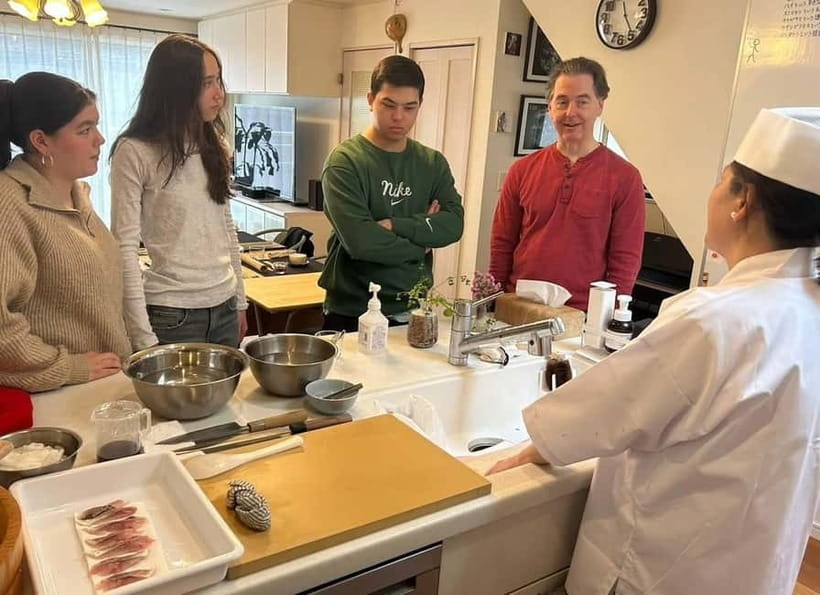
The lesson begins before you shape a single piece. Akemi explains the role of sushi in Japanese food culture and introduces the history of Edo-style sushi. This background gives the practical work some context, especially for nigiri, the hand-pressed style associated with Tokyo.
You will learn how vinegar rice is prepared. That may sound simple, but it is the base of almost everything that follows. The seasoning must complement the seafood without overpowering it, and the rice must hold together while remaining pleasant to eat.
This is one of the strongest parts of the class for beginners. If you only learn how to roll a finished sushi mat, you may leave with a trick but not much understanding. Here, the process starts with the rice, so you see why sushi depends on more than fresh fish.
The ingredients are carefully selected, including the rice, vinegar, and seafood neta. Neta is the sushi topping or ingredient placed on the rice. Akemi also demonstrates how fish are prepared for sushi, giving you a look at a step that is often hidden from diners.
The class is not presented as advanced chef training. You will receive guidance through the process and then try the techniques yourself. Expect a hands-on lesson, not just a demonstration from across the room.
Four kinds of sushi, four different techniques
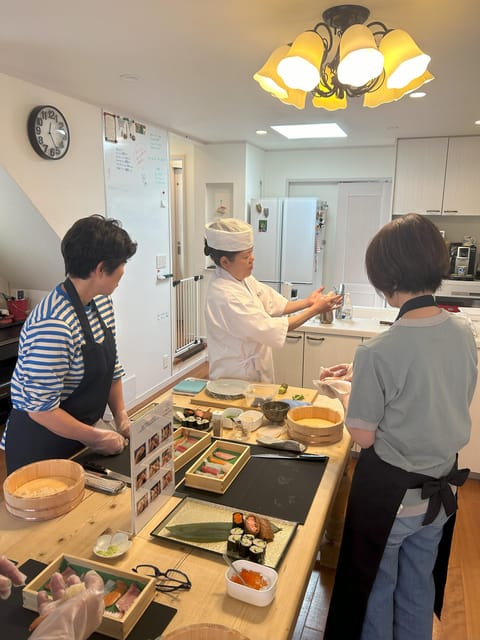
The set menu covers four familiar styles. Each one teaches a different skill, which is why the class feels more useful than a single-roll workshop.
More Hands-On Workshops in Tokyo:
- Tokyo Sushi Making Class in Tsukiji with Professional Chef
★ 5.0 · 1,177 reviews - Ramen & Gyoza Cooking Class in Tokyo with Local Supermarket Visit
★ 5.0 · 823 reviews - Tokyo: Tsukiji Fish Market Sushi Making Class with Pro Chef
★ 4.9 · 506 reviews - Tokyo: Sushi Making Class
★ 4.9 · 390 reviews
Nigiri sushi
Nigiri is the classic hand-pressed piece: a small portion of vinegar rice topped with fish or another ingredient. The challenge is making a neat piece with the right amount of rice and enough pressure to hold it together without crushing it.
Akemi leads you through the shaping process. For many people, this is the most meaningful technique to learn because it reveals how much control goes into the sushi served at a good counter. Your first pieces may be uneven. That is part of the fun, and the small group allows Akemi to offer individual corrections.
Maki-sushi
Maki-sushi is rolled sushi, usually formed with seaweed, rice, and fillings. You will learn how to distribute the ingredients and roll the sushi into a firm shape before cutting it.
Maki is likely to feel familiar to anyone who has seen sushi-making videos, but the details are less automatic than they appear. Too much filling makes the roll difficult to close. Too much rice changes the balance. This part of the lesson gives you a useful understanding of proportion and handling.
Gunkan sushi
Gunkan, or battleship sushi, uses a strip of seaweed around the rice to create a small open cup. It is designed for softer or loose toppings that would not sit neatly on ordinary nigiri.
The shape is simple in theory but requires a tidy base and an even seaweed band. It is a good contrast to nigiri because you are building a container rather than pressing a topping onto rice.
Inari sushi
Inari uses fried tofu pockets filled with sushi rice. It is the gentlest and perhaps most surprising style in the set, especially for anyone who thinks sushi always means raw fish.
One participant singled out the tofu sushi as an unexpected favorite. That makes inari particularly valuable in the class: it broadens your idea of what sushi can be and gives vegetarian participants a meaningful part of the meal, even though the full menu should be confirmed in advance.
Because the selection is fixed, you cannot choose only nigiri or request a particular fish. That restriction keeps the class organized and gives you a balanced introduction to several styles, but it may disappoint you if you want a highly personalized lesson.
Eating the meal you made yourself
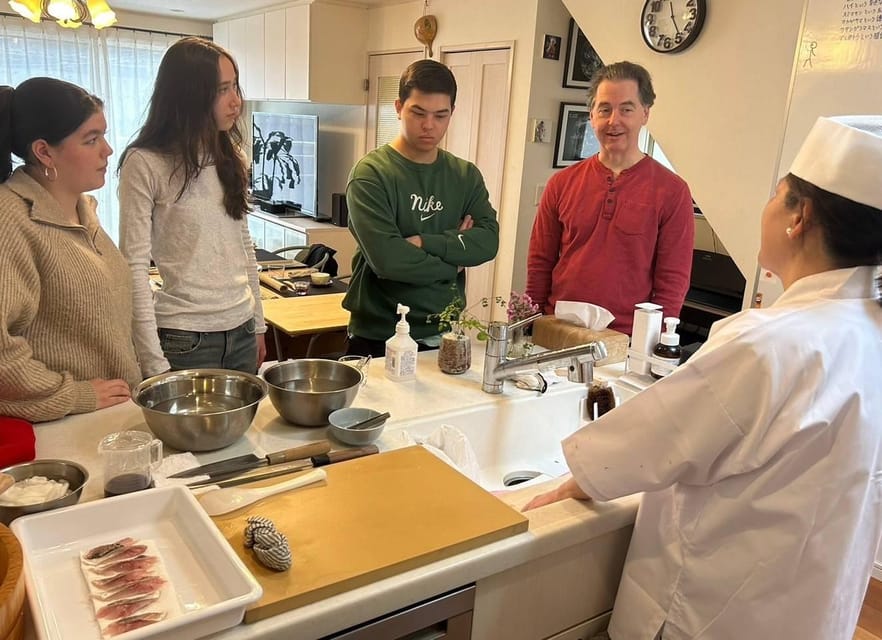
After the preparation, you sit down to eat the sushi you made. This is not just a final photo opportunity. It is the point where the techniques become practical. You can see how rice seasoning, topping size, shape, and texture affect the finished bite.
The meal is accompanied by Japanese sake for adults, along with dessert. Matcha tea and other drinks may also be included, and families can receive nonalcoholic drinks for children. The exact extras should not be treated as a separate promise beyond the listed sake and dessert, but the hosts are known for adding thoughtful touches.
The atmosphere is intentionally social. You are in a home with a small number of participants, rather than moving through a production line. That makes the class a good fit for couples, families with older children, and friends who want a shared activity.
It also means you should be comfortable with a personal setting. This is not a private restaurant table or a silent professional workshop. The reward is a more direct connection with the people teaching you and with the food itself.
The value of $103 for three hours
At $103 per person, the class is not the cheapest way to eat sushi in Tokyo. You can find excellent sushi meals for less, especially if your only goal is to taste a few pieces.
The price makes more sense when you count what is included: three hours of instruction, a demonstration of fish preparation, lessons on vinegar rice, four sushi styles, the meal you prepare, sake, dessert, and the use of a small-group home setting. You are paying for participation and teaching, not just a plate of food.
The six-person limit is important to the value. A large class could make hands-on correction difficult. Here, each participant has a better chance to receive help with shaping nigiri, rolling maki, or forming gunkan. For a family of four, the group size can even mean a nearly private class if no other participants join.
I would consider the price fair for someone who cares about sushi or Japanese cooking. It is less compelling for someone who simply wants lunch and has no interest in learning how the food is made.
Who should book this lesson
I would recommend this class to anyone who wants a food experience with real instruction and a local setting. It works especially well for:
- Sushi fans who want to understand the techniques behind familiar pieces
- First-time visitors looking for a personal Japanese cooking activity
- Couples or friends who prefer a small class to a large group
- Families with children aged 10 and older
- People who enjoy learning about food culture along with cooking
- Visitors staying near Shinjuku or Shibuya who want an easy half-day activity
The class is also a good match for adults who want to try sake in a relaxed setting. Families can still participate, since nonalcoholic drinks are available for children, but remember that the minimum age is 10.
Vegetarians should request the vegetarian option when booking. The provided information says this is available, but it does not describe every ingredient or promise a fully separate menu. If your diet is strict, confirm the details before paying.
This is not suitable for anyone with food or animal allergies. The hosts state that they cannot accommodate allergies, even if you notify them in advance. That is a firm reason to choose another activity if cross-contact or specific ingredients are a concern.
Booking details that affect your day
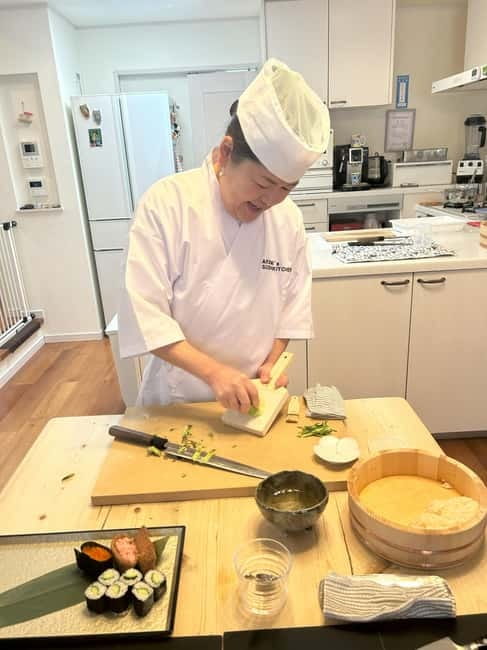
You can cancel up to 24 hours before the activity for a full refund, and the reserve-now, pay-later option helps if your Tokyo schedule is still changing. Starting times vary, so check availability for the date you want.
The instructors speak English and Japanese. The small group is limited to six participants. You can choose a morning lesson with lunch or an afternoon lesson with dinner.
The meeting point deserves a little planning. Most participants find the home using a map app, but station pickup can be arranged. If you choose to walk, one route took about 10 minutes from the station, though your exact walk will depend on the rail line and exit.
The class has received a perfect five-star rating from five verified bookings, with praise focused on the warm welcome, clear teaching, food quality, English communication, and careful organization. Those are the aspects I would value most here because they directly affect whether a hands-on class feels comfortable or confusing.
Should you book AKEMI’s SUSHiKiTCHEN?
Book it if you want to do more than eat sushi. The strongest reasons are the home setting, the small group, the careful start with vinegar rice, and the chance to make four distinct styles before sitting down to eat.
Skip it if you want a flexible menu, a short tasting, or a low-cost meal. The fixed selection and allergy restriction are real limits, and the $103 price only pays off if you value the lesson as much as the food.
For the right person, this is a thoughtful three-hour introduction to sushi and Japanese food culture, with enough hands-on work to make the meal feel earned.
FAQ
Where is AKEMI’s SUSHiKiTCHEN located?
It is in Tokyo on Honshu, with convenient access from Shinjuku and Shibuya. The experience takes place in Akemi’s home.
How long does the sushi lesson last?
The lesson lasts three hours.
What types of sushi will I make?
You will make nigiri-zushi, maki-zushi, gunkan sushi, and inari sushi.
Is the meal included?
Yes. You eat the sushi you prepare as lunch or dinner, depending on whether you choose the morning or afternoon session.
Are drinks and dessert included?
Japanese sake and dessert are included. Matcha tea and other drinks may also be served.
Is a vegetarian option available?
Yes. A vegetarian option is available, and you should indicate your preference when booking.
Can I choose which sushi types I make?
No. The class follows a set menu, so participants cannot select the sushi they will make.
Can children join the lesson?
Children must be at least 10 years old.
Can the class accommodate food or animal allergies?
No. The hosts state that they cannot accommodate customers with food or animal allergies. You should still inform them beforehand if you have an allergy.
Can I be met at the train station?
Yes. You can find the home yourself with Google Maps or a similar app, or request a meeting at the nearest train station.
Just added around Tokyo
- Tokyo: Private Japanese Cooking Class with a Local Chef★ 5.0 · 81 reviews
- Ramen Making from Scratch with Tokyo Mom(Vegan Option Available)★ 5.0 · 39 reviews
- Shibuya Tokyo: Sushi Making Class (Vegan/Vegetarian/Halal)★ 4.7 · 29 reviews
- Ramen & Dumpling Cooking in Tokyo with Chef/Vegan possible★ 5.0 · 107 reviews
- Tokyo Haneda: Bento & Ramen Gyoza Cooking Class in a Local home★ 5.0 · 9 reviews
- Hands-on Japanese Cooking in a Shinjuku Home Kitchen with Satoru★ 5.0 · 19 reviews
- Private Home Cooking in Yanaka – Local Flavors in a Warm Setting★ 5.0 · 173 reviews
- Japanese Home Cooking Class & Walk in Todoroki Temple Tokyo★ 5.0 · 88 reviews
Japanese & Sushi Cooking Classes, compared.
Sushi Making Tokyo Roll and Authentic Japanese Sushi Class
Read our review →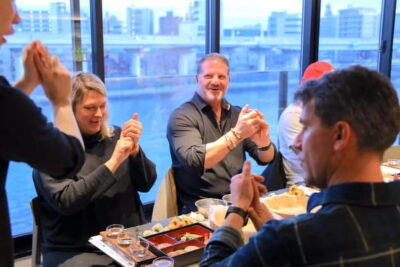
Tokyo: Roll and Authentic Sushi Making Class in Asakusa
Read our review →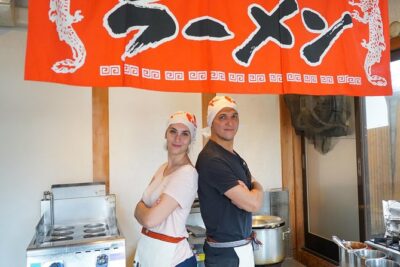
Ramen Cooking Class at Ramen Factory in Kyoto
Read our review →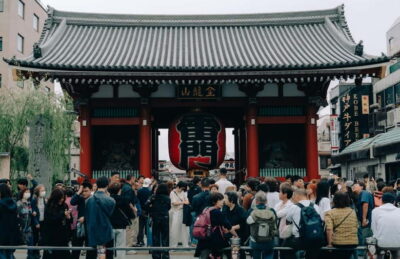
Tokyo: Sushi Making Class in a Happi Coat near a Famous Spot
Read our review →
Sushi Making Tokyo! Popular Maki Sushi & Japanese Sushi(+Recipe!)
Read our review →
Sushi Making Osaka Roll and Authentic Japanese Sushi Class
Read our review →
Tokyo Sushi Making Class in Tsukiji with Professional Chef
Read our review →
Ramen & Gyoza Cooking Class in Tokyo with Local Supermarket Visit
Read our review →Browse the lists this tour appears in